
You spent ten hours today locating a critical memory leak, balancing cloud server compute costs, or triaging a chaotic sprint backlog. Your executive brain is fried. Yet, when you finally shut down your work laptop, you do not always want to collapse onto the couch, try your luck at BetGoodwin casino, or passively dissociate in front of a streaming service. Instead, you sit down at your battle station, boot up a complex strategy game, a tactical shooter, or a deep RPG, and voluntarily spend three hours managing another intricate system.
This is the developer’s paradox—and it is a feature, not a bug. Cognitive research and game design theory explain why these sessions actually work as mental recovery. Let’s look closely at why it’s ok to be a gamer. Engaging in interactive virtual systems isn’t mindless escapism. When you play, you’re stepping into a loop of active executive recovery, cognitive conditioning, and social connection that passive entertainment just can’t touch.
Key Takeaways
Strategic and cooperative gaming taps into our need for autonomy through interactive environments built on a “series of meaningful choices.”
Virtual worlds serve as vital modern social “third places” where collaborative tasks—like taking down an undead dragon with twenty fellow warriors—build transferable real-world communication skills.
Targeted play triggers cognitive plasticity, which can actually level up your reading, language acquisition, and processing speed.
Table of Contents
How Interactive Agency Builds Psychological Well-Being
Interactive play offers an elegant feedback system that passive media cannot mimic. When you watch a movie or scroll through social feeds, you are an observer of someone else’s agency. When you play a game, you are the system’s central operator.
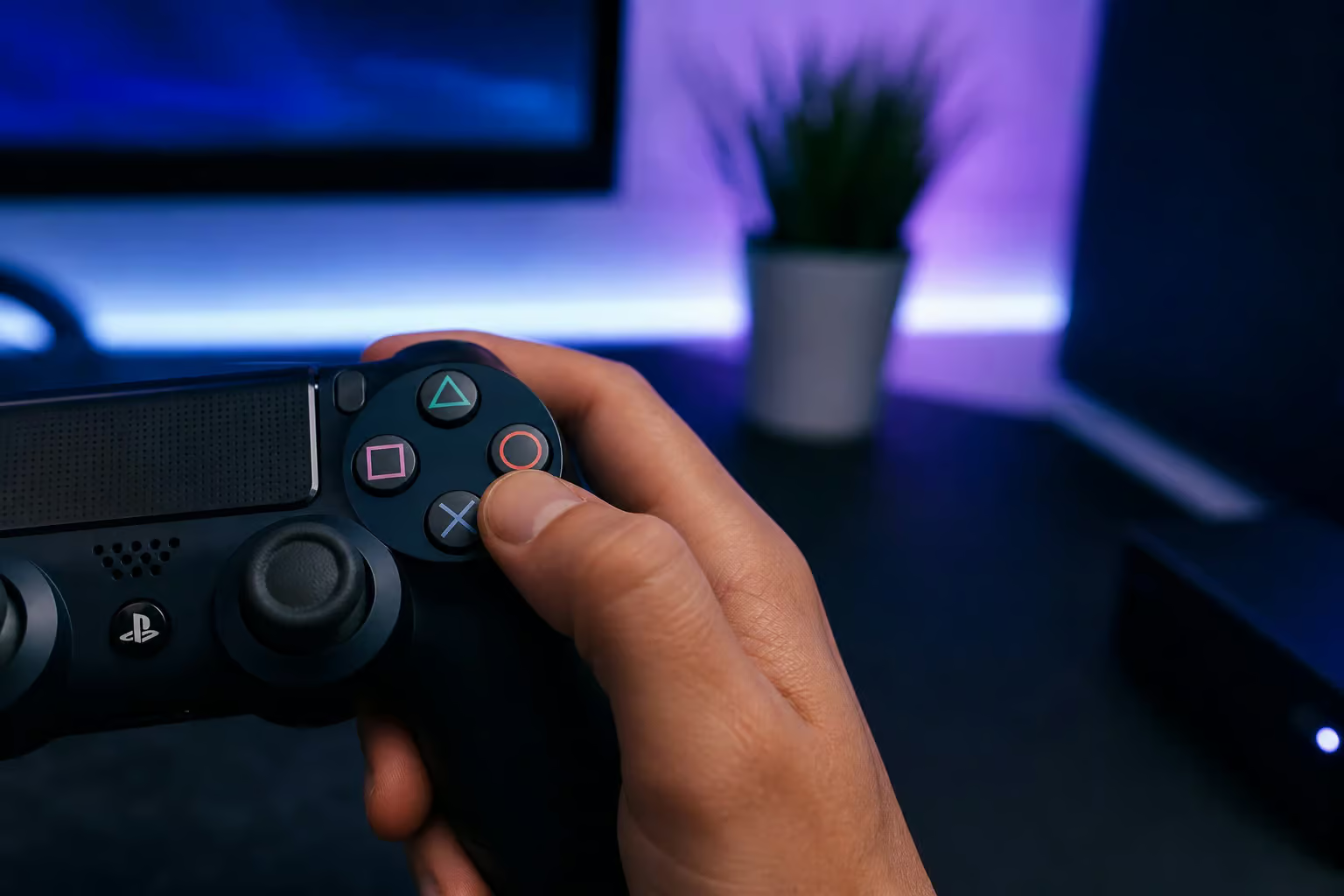
Modern games give you structured environments where your choices determine the outcome, testing your skills through constant, iterative challenges.
This loop has real physiological benefits, too. In a chaotic job where variables shift constantly and rewards feel abstract, gaming offers a predictable feedback loop. Facing those challenges and earning clear wins helps regulate your stress response. Instead of watching stress happen passively to a character on a screen—which can keep your physical stress levels elevated—direct control over a virtual environment allows you to conquer challenges firsthand. This process actively keeps escalating cortisol spikes at bay and reinforces a healthier sense of agency that you carry back into your physical life.
Why the Autonomy of Meaningful Choices Beats Passive Relaxation
True mental recovery doesn’t require you to power down your brain. Instead, it happens when you exercise your mind on your own terms, completely free from real-world consequences. This is where virtual environments outshine other forms of entertainment.
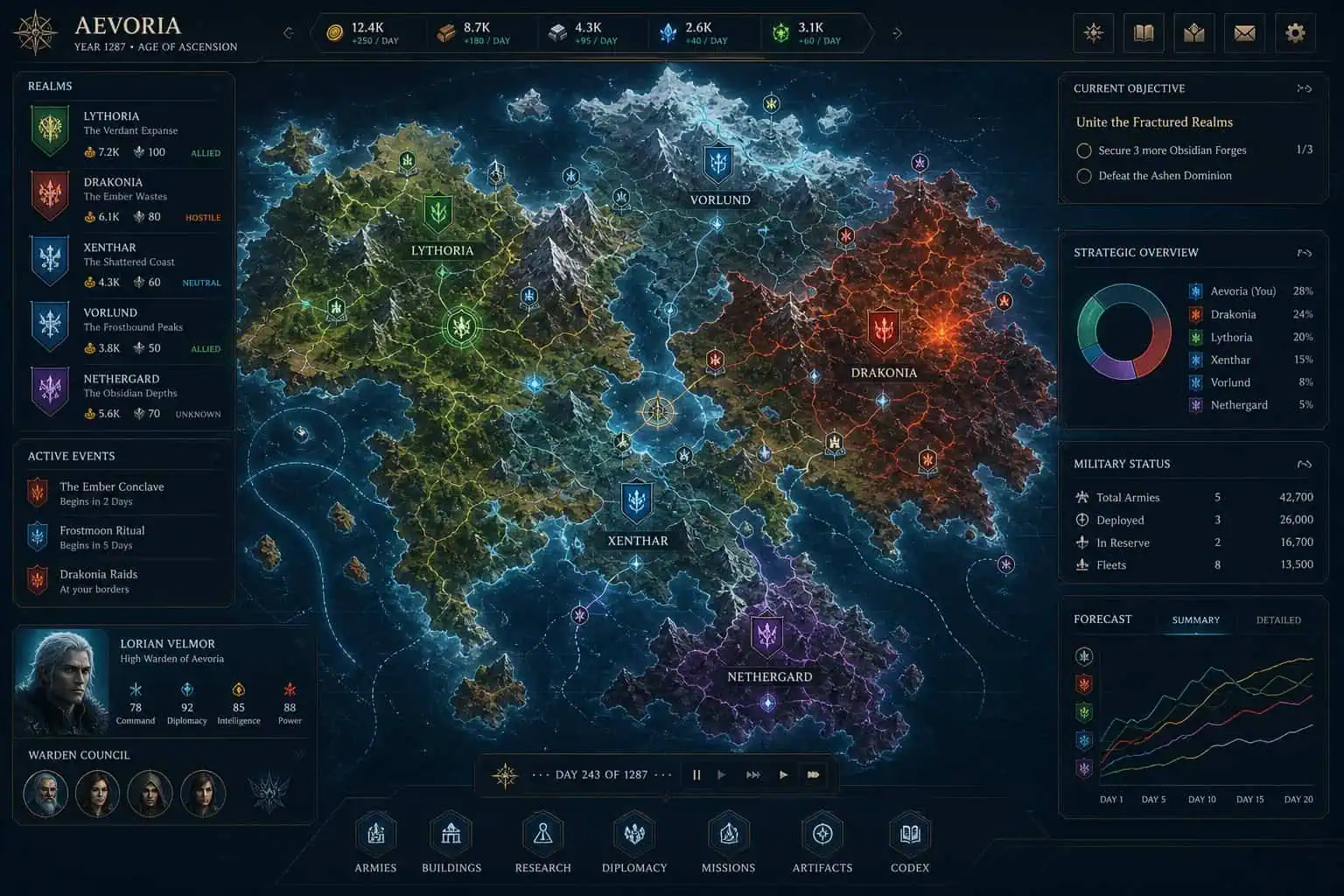
Legendary game designer Sid Meier famously defined a game as a “series of meaningful choices.” When you play, you are stepping into a low-stakes sandbox engineered for personal sovereignty. Within these digital spaces, you make decisions, experience the consequences, and iterate on your strategies on your own timetable.
This explains the completion paradox, where players often prioritize autonomy over completing the final main story arc. The real value lies in the personal sovereignty of that ‘series of meaningful choices.’ It’s about the moment-to-moment gameplay, the freedom to build your own path, and the satisfaction of finally carving out your own autonomy. For anyone working a job with rigid rules and high-pressure top-down structures, gaming acts as a necessary laboratory for independent agency, whether through casual sessions or by dedicating oneself to becoming an extreme online gamer.
From Action Gaming to Real-World Cognitive Plasticity
Neuroplasticity describes how our brains adapt to new experiences, and gaming acts as a potent engine for that change. By consistently engaging with specific digital systems, we refine our neural pathways, essentially training our minds to operate more effectively across diverse environmental stimuli.
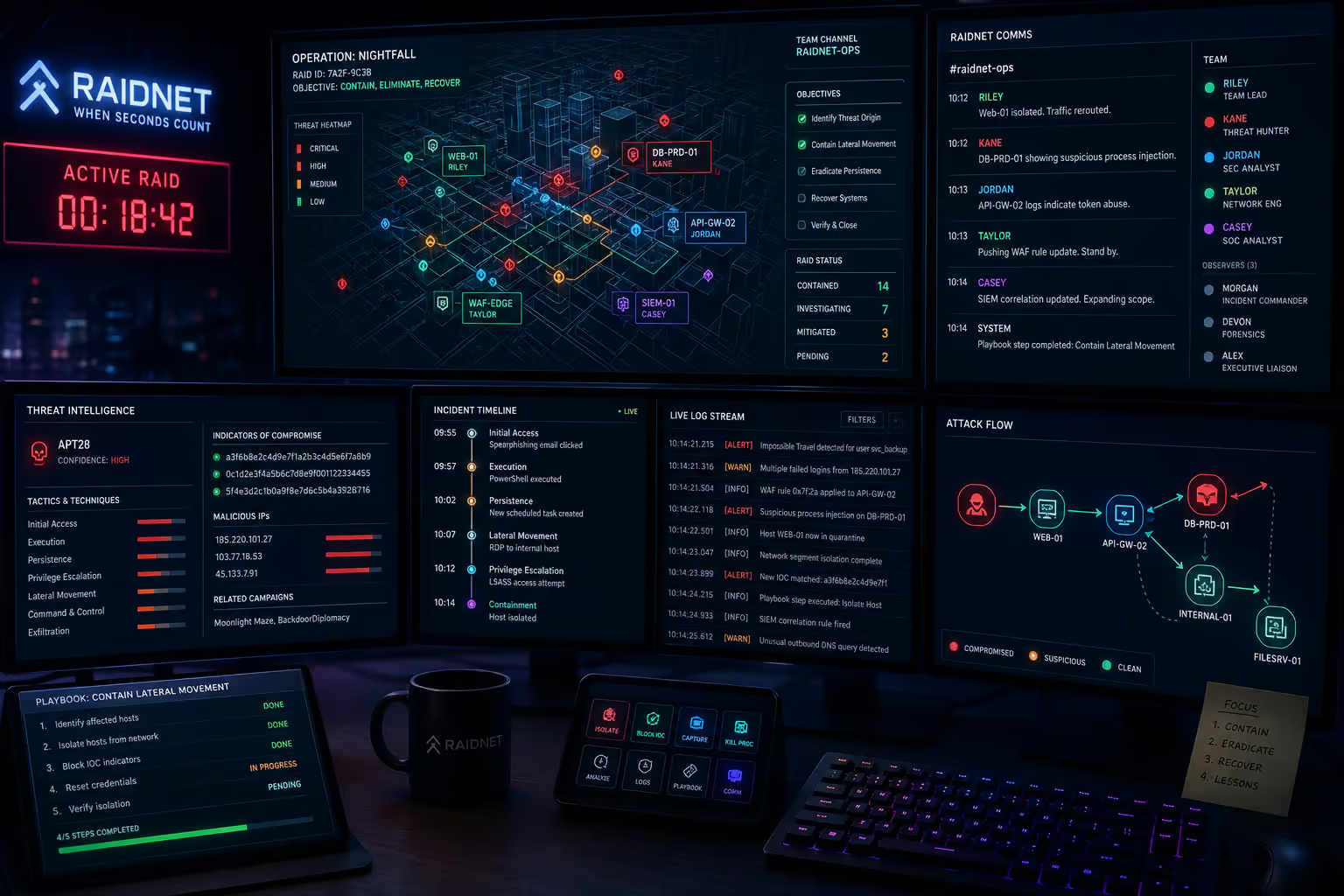
How Structural Play Hones Processing Speed and Language
Years ago, Dr. Kawashima’s Brain Training showed us that the human brain exhibits cognitive flexibility, proving we can improve our basic cognitive abilities through targeted software play.
Modern scientific research on transferable skills confirms this. It turns out that studying different types of gamers shows that people who play action games tend to have faster reaction times and processing speeds. Plus, navigating text-heavy RPGs or coordinating quick tactical callouts sharpens reading and language skills, making gamers pretty efficient at parsing info under pressure.
Digital Raid Mechanics as Real-World Professional Laboratories
Think about the traditional corporate world’s struggle to teach collaborative teamwork through dry seminars. Now, compare that to the structural complexity of a high-end multiplayer raid.
Planning to take down an undead dragon with twenty fellow warriors is not just a digital hobby; it is a masterclass in cross-functional project management. To succeed, a group of twenty distinct people must delegate roles, manage resource bottlenecks, execute real-time communication, and run complex verbal triage under pressure. These multiplayer environments serve as digital training grounds where players develop collaborative soft skills that transfer directly to school group projects or professional IT incident management.
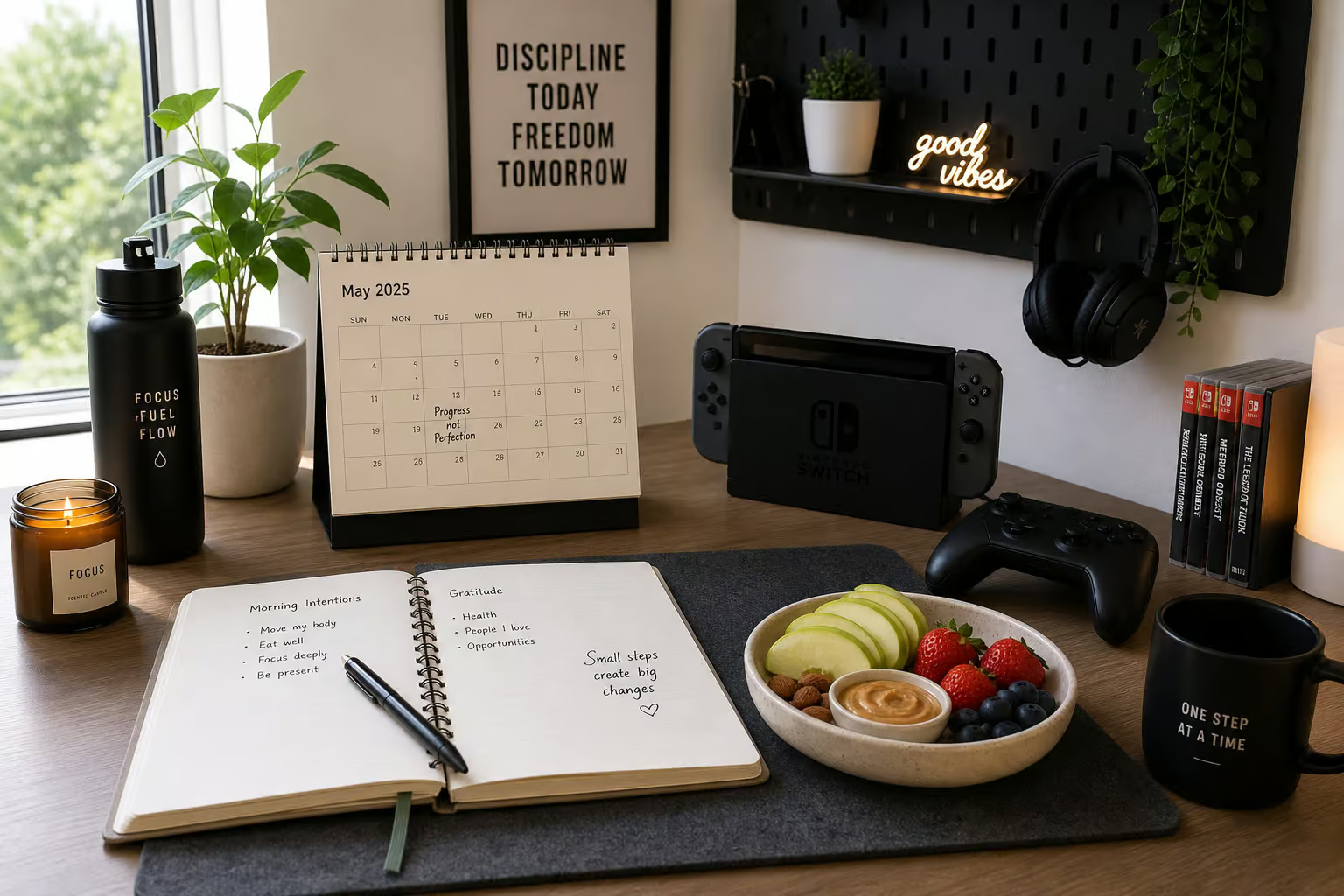
Why Virtual Worlds Are the Modern “Third Place”
For years, sociologists have talked about the importance of “third places”—those physical spots like local cafes, bowling leagues, or community halls that exist outside of home and work. As those physical environments have declined, virtual spaces have stepped up to fill the void.
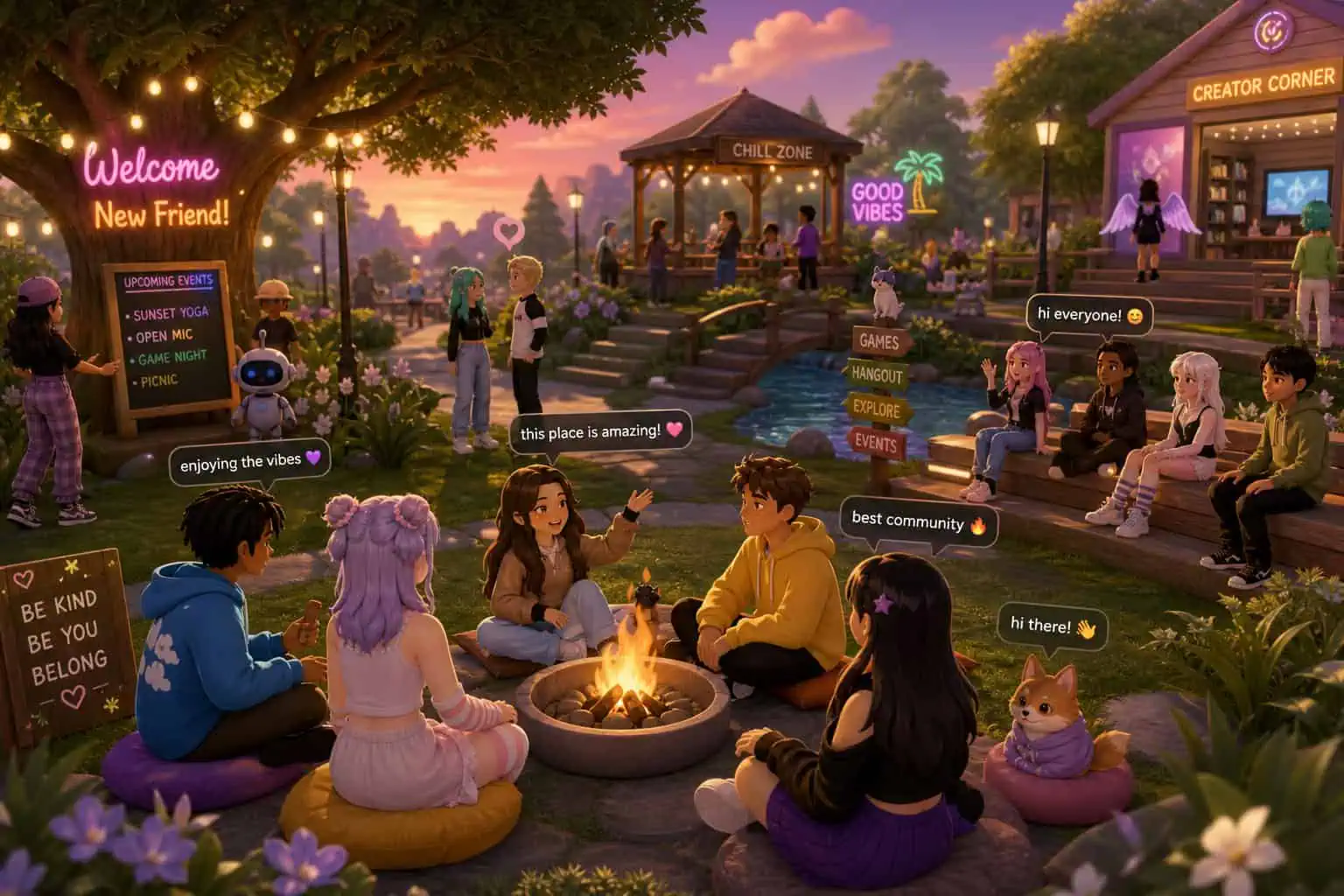
Today, interactive environments serve as prime social hang-out spots. Players log on to compete, collaborate on collective objectives through team-based mechanics, or simply use the interface as a digital backdrop to talk about their day.
We saw this dynamic play out through the adoption of Animal Crossing: New Horizons during the COVID-19 lockdowns. When the physical world locked down, people turned to these colorful, low-stress environments as their go-to for social contact. For millions, game worlds became vital primary social channels rather than a secondary alternative to real-world gatherings.
How Narrative Agency Turns Players into Ethical Accomplices
When you read a book or watch a movie, you are viewing moral dilemmas through a glass window. If a character makes a devastating mistake, you can feel pity, but you do not feel responsible. Interactive storytelling shatters that comfortable distance.
In deep narrative games, you are granted narrative agency. You are the actor who must physically press the button to decide who to save, who to feed, or how to allocate scarce medicine. You become an active accomplice in how the story unfolds.
Prestige titles like The Last of Us rely on narrative agency to generate empathy. By forcing you to make difficult personal decisions, games generate a level of empathy and ethical accountability that static screens cannot match. They don’t just tell you stories; they challenge you to think, weigh consequences, and sharpen your real-world moral reasoning.
How to Balance Gaming with Daily Responsibilities
To keep your play diet productive and restorative, you need to manage your gaming hours with the same thoughtful systems design you apply to your professional work.
How to Choose Video Games That Provide Genuine Mental Benefits
Not all games are created equal. If you want the best restorative vibes, look for these high-yield systems: – Strategy & RPGs: Deep narrative pathways, resource management, and tactical design satisfy your need for autonomy.
- Action & Shooters: Fast-paced systems keep your reaction times sharp and fine-tune your information processing speeds.
- Cooperative Multiplayer: Built-in community platforms let you recharge your social battery.
Avoid predatory, slot-machine style games that rely on endless loot boxes, mind-numbing repetitive grinding, and aggressive visual clutter designed to hook your attention without offering actual cognitive rewards.
What Defines a Healthy Amount of Time to Spend Gaming Per Week
Play is healthy when it fulfills your need for autonomy, as long as your job, family, and health stay on track.
Signs That Gaming Is Becoming a Negative Influence on Your Life
Be honest with yourself about warning signs. If play transforms from a restorative social tool into a protective shield—such as using virtual accomplishments to run away from serious real-life crises, neglecting basic personal care, or feeling irritable the moment you step away from the screen—it is time for a system reset.
Consider stepping back for a week-long digital fast, redesigning your schedule, or reaching out to a professional counselor to get your control loops back in order.
Managed with intention, active virtual worlds remain an efficient method to recharge an analytical mind.
Frequently Asked Questions
Why is it okay to be a gamer?
Gaming provides active recovery for the brain, allowing you to regain a sense of autonomy that is often missing in high-pressure professional roles. Unlike passive entertainment, interactive systems foster cognitive plasticity, social connection, and a predictable feedback loop that helps regulate your stress response.
Does gaming increase cortisol?
Actually, engaging in interactive gaming can help keep escalating cortisol spikes in check by providing a controlled environment where you exercise meaningful agency. By shifting from a state of passive stress to active problem-solving, you can effectively manage your physiological response to professional pressure.
Why do 90% of gamers never finish games?
This phenomenon often reflects the ‘completion paradox,’ where the true motivation behind play is the exercise of personal sovereignty rather than reaching a narrative end. Players frequently prioritize the freedom to make meaningful, moment-to-moment choices in a sandbox environment over simply hitting the final credits.
Are 48% of gamers girls?
Demographic statistics regarding gamers vary, but the gender split in gaming has moved toward parity in recent years. Gaming is no longer a niche hobby, serving as a primary social ‘third place’ for diverse audiences to collaborate, compete, and connect regardless of identity.
How does gaming improve cognitive processing speed?
Consistent play trains the brain to adapt to diverse stimuli, refining neural pathways through iterative challenges. Action-oriented games are specifically linked to improved reaction times, while tactical games help sharpen language acquisition and the ability to parse complex information under pressure.
What is the ‘third place’ in the context of gaming?
A ‘third place’ is a social environment distinct from home and work where people congregate to build community and maintain relationships. As physical spaces like community halls have declined, high-end multiplayer game worlds have become vital digital meeting spots for collaborative social interaction.
How can I tell if my gaming habits are becoming unhealthy?
The transition from restorative to negative influence typically appears when you use gaming as a shield to avoid real-life responsibilities or crises. If you find yourself neglecting personal care or experiencing irritability when away from the screen, it is a sign to step back for a digital reset.