
You typed “character ai girlfriend bots” into a search bar, and the internet happily complied with millions of results. Bots named Girlfriend, bots with anime avatars, bots promising late-night conversations. And then you hit the platform itself and found something odd: Character AI’s own docs never use the word girlfriend. Their Safety Center describes the whole thing as a platform for interactive entertainment spanning stories, roleplay, and original Characters.
That’s not corporate dodgeball. It’s the actual product spec.
Girlfriend bots on Character AI are user-made roleplay characters, full stop. There’s no official companion tier, no girlfriend product line, nothing the company built for dating. What exists is a giant, free, user-generated character system that people have pointed at romance-shaped problems. Sometimes it works. Often it doesn’t, for reasons that are structural, not fixable with better prompts.
How good is it at the thing people actually want from it? One hands-on reviewer scored it 8.1/10, explicitly as a roleplay platform, not an adult romance app. Girlfriend-app roundups keep including it anyway: Washington City Paper slots it at #7, purely as the best free option. Both facts are honest. They’re also about two different products that happen to share a URL.
So here’s the shape of this piece: what Character AI is actually built for, where girlfriend-style bots genuinely work, the three walls you’ll hit (filters, memory, visuals), what it costs as the free tier tightens, and the point at which a dedicated girlfriend app makes more sense. Let’s take the hope apart and put it back together as a decision.
Key Takeaways
Girlfriend bots on Character AI are user-made roleplay characters, not an official product; the platform’s own Safety Center describes it as entertainment built around stories and roleplay.
A hands-on reviewer rated it 8.1/10 for roleplay, and one girlfriend-app roundup ranks it #7 solely as the best free option, because filters block adult content, memory breaks in long scenes, and appearance is avatar-only.
c.ai+ costs $9.99/month or $94.99/year (~$7.92/month), but the free plan is genuinely usable, and if you need NSFW, persistent memory, or realistic visuals, dedicated apps do those jobs better.
Table of contents
Table of Contents
What Character AI actually is (and isn’t)
Character AI is an interactive entertainment and roleplay platform, per its own Safety Center, not a girlfriend app. That’s the answer, and the category confusion around it is honestly the most interesting part of this story.

The breadth of the bot catalog makes the point better than any definition could. You can chat with a vampire prince, a therapist-style bot, a historical figure, a character from your favorite game, a fake roommate, a language tutor, or a private bot only you can see. That’s not a dating app’s lineup. That’s a roleplay mall. A girlfriend bot lives in there somewhere, between the Shades of Grey pastiche and the Jane Austen bot, but it’s one store among thousands, and the mall was never designed around it.
So why do girlfriend-app roundups keep ranking it? Because from the outside, millions of user-made characters, many of them romantic looks like a girlfriend platform. Washington City Paper put it at #7 in a girlfriend-app roundup with the “best free option” label attached. That ranking says more about the category than the product. It’s the free slot, and free is doing a lot of work in that sentence.
Sign-up tells you what the product thinks it is. Email or an app login, a birthday, basic setup, and you’re dropped into millions of user-made Characters. Two minutes, no gatekeeping quiz, no dating photos, no fake match system. Compare that to any actual girlfriend app, which wants to know your preferences, sells you a persona, and walks you through a companion-configuration flow. Character AI skips all the theater.
From where we sit at GeekExtreme, the closest analogy isn’t a companion app at all. It’s like building an NPC for a game, or drafting a character sheet before a session. You’re defining a personality, a mood, a speaking style, and then running scenes with it. That framing matters, because it predicts everything that follows: the parts of this that reward authorship work well, and the parts that assume a persistent companion fall apart.
A character sheet doesn’t remember last session unless someone built that. More on that wall shortly.
Sign-up, age rules, and the late-2025 verification shift
Generally yes, it’s safe to sign up and low-friction, but verification is the moving part. Email or app login, a birthday, basic setup, and you’re in, on the app or in the browser, same flow. Minimum age is 13, or 16 in Europe. No dating photos, no match system, nothing that behaves like onboarding for a dating product.
The late-2025 change is the part worth knowing. Users under 18 lost access to open-ended chat, and age assurance is what decides which version of the platform you get. The system sorts you, not your settings. The AP reported this amid child-safety lawsuits and AI companion risk concerns, so it’s a real policy shift with real context behind it, not a UI tweak.
For most adults, none of this involves ID. Checks can trigger if the system suspects someone’s under 18, though, and the reported experiences get weird. Trustpilot reviewers describe passport and driver’s license photo requests and face scans. One reviewer, Aliyah Garcia, reported that her ID, showing a 1980 birth year, was misread as belonging to an 18-year-old, and she was still blocked. Usually fine, occasionally weird.
And reviewers claim kids using parents’ IDs can slip through the checks, which, if true, is a hole in the whole plan. That’s their claim, not ours.
Building a girlfriend-style bot that actually works
A good girlfriend-style bot is a prompt-writing job. Output quality scales directly with how much effort you put into the character definition, full stop.
The pattern with first-time builders is almost universal: they write two lazy lines, get flat generic replies, and blame the platform. The fix isn’t the platform. Give the bot a clear job, a mood, and a speaking style, and the same character transforms.
Quick test: If your bot’s replies could belong to any character, the prompt is too thin — add a mood, a job, and a speaking style, then rerun the same scene.
I built a bench of weird test bots to see how far this scales, and the results were lopsided in an instructive way. The cold fantasy guard worked great, and honestly so did the sarcastic best friend and the soft comfort character.
The messy villain was, predictably, the most fun. The fake interview coach was the lesson: it was uselessly nice, praising every weak answer, until I told it to be harsher. It needed permission to be honest. How well the character performs comes down entirely to the prompt behind it.
The rules I wish I’d known on day one, in the exact phrasing that worked:
- “Do not speak for the user.” Tell your bot not to put words in your mouth, or it will.
- Use short replies unless the scene needs detail. Short replies keep things snappy; go long only when the scene earns it.
- “Keep the mood slow and tense.” Otherwise it rushes everything.
- “Do not confess love too fast.” A bot will escalate from a first greeting to total devotion within six messages if you let it, which is exactly why the rule exists. Speedrunning the romance is a real failure mode. Set the pace early.
- “Ask questions, but not every message.” A bot that quizzes you on every single turn feels like an HR interview with a vampire.
Prompt rules and pacing control
That last pair of rules is really one lesson: the bot defaults to maximum intensity, and you have to dial it in. Mood pacing, reply length, question frequency, and confession speed all need explicit instructions, because the model’s natural instinct is to escalate and over-perform.
One structural note: the public library is a grab bag. Some bots are excellent; some were clearly made in 20 seconds. Private bots are where the control lives. The tradeoff, compared to dedicated girlfriend builders, is less pixels, more soul. You don’t get a visual character creator, but you get real control over what’s inside the bot’s head.
Chat quality: where girlfriend-style roleplay feels alive (and breaks)
Tone consistency is the genuine win here. A dramatic bot stays dramatic, a soft friend bot stays calming, and the chat just flows when it works. I threw romance, fantasy, comedy, and practical tasks at it, and the best chats came from short setup, strong mood, and a clear scene. In my reviewer testing, a warm, calm comfort bot stayed pleasant until around the 20-minute mark, when the same “I’m here for you” style lines started repeating. The other failure modes I hit were looping and echoing my own words back at me, and that’s alongside the comedy of the accidental kind: one bot told me “I don’t care” and then spent three paragraphs insisting how deeply it cared. That contradiction is the failure mode to expect.
Memory: the dealbreaker for long-term companions
Long chats collapse because Auto Memories captures key details but couldn’t be edited at review time, and the retention that works in short chats doesn’t survive long scenes. In short chats, names, mood, and scene all stick. In long ones, the bot forgets locations and promises from ten messages earlier.
The failure examples are funny-sad in exactly the wrong way. One bot forgot it was in a castle setting and acted like it was in a coffee shop. Another forgot a promise I’d gotten from it ten messages back. A fantasy test bot improvised rain and tension beautifully, then forgot the locked gate the whole scene was about. Great atmosphere, zero plot. c.ai+ claims better memory, which is worth noting as a claim, not a verified spec.
Here’s the pattern: people treat the platform like a persistent companion, invest weeks in one character, and then hit the wall the moment it contradicts an established detail. Across platforms, the best AI waifu apps handle this differently. GirlfriendGPT testers report a 16,000-token memory that still recalls details from five sessions back, and WithMy referenced weeks-old conversations. A YouTube creator’s Character AI bot forgot his favorite food almost immediately.
That’s the structural takeaway: memory, not the famous filter, is the real dealbreaker. You can plan around a filter. A bot that forgets the plot mid-scene is unfixable.
The filter wall: what passes and what breaks
Yes to light flirting and dramatic tension, no to adult content, full stop. There’s no workaround and this isn’t one. The guidelines ban pornographic content and nudity along with grooming, gore, extremism, self-harm promotion, hate, and privacy abuse, and the line is broad enough that it catches things you wouldn’t expect to be in its path.
I pushed on this with a flirty-bot test to see exactly where the wall sits. Light flirting passed fine. Adult content got blocked, and the bot visibly dodged the mood, pivoting awkwardly to safer conversational ground. If you’ve read girlfriend-app marketing, recognize that pivot for what it is: not a broken AI, but the platform’s design doing exactly what it was built to do. It’s the most recurring pattern in user reviews of the platform.
The more interesting finding is the collateral damage on scenes that were never adult. Fight scenes go soft. Dark fantasy loses its teeth. Trustpilot users report censorship of even the word “shooting.” When your villain can’t villain, that’s a design constraint, not a glitch.
Appearance, voice, and media: avatar vs. full girlfriend builder
No. If you want a realistic visual, talking girlfriend, Character AI can’t deliver it, and no amount of prompt work changes that. Appearance is avatar-only: you get an avatar plus a character idea, and that’s the whole visual system. There’s no hair, body, outfit, or face builder, anime or realistic, for that kind of experience you’d need one of the dedicated AI girlfriend apps. The chat is the product.
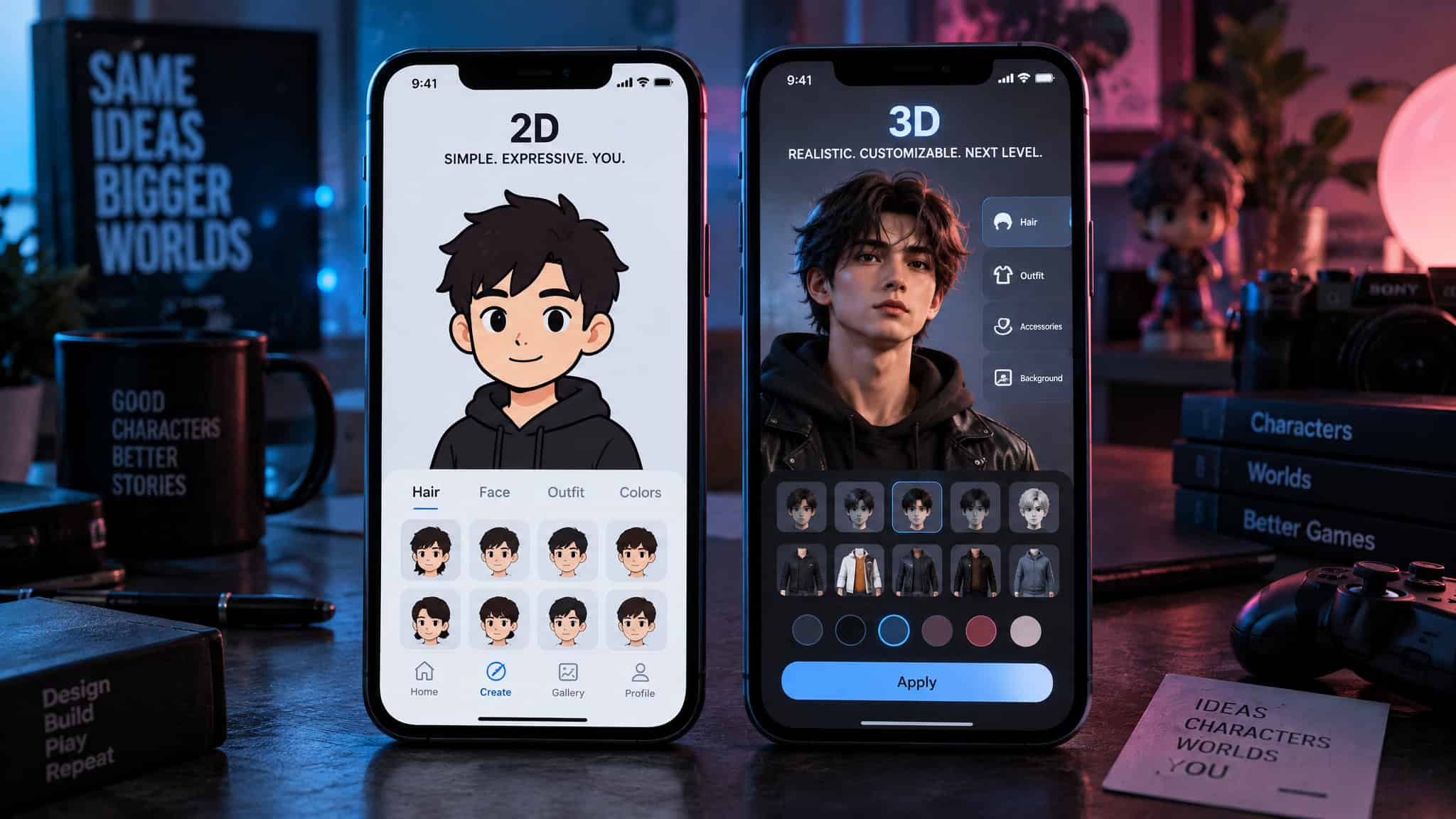
Images and video tools
The media layer is a bonus on a text-first product, and the 2025 update made it genuinely better. You get 5 image attachments per day on the free plan, unlimited on c.ai+, and the photo and scene recognition is honestly kind of delightful: the character can actually see what you send it. Tiny wizardry. Imagine Chat and AvatarFX exist too, but they’re extras, not reasons to pick this over a dedicated image-generating girlfriend app.
Voice and AI calls
Voice is weirder and cooler than expected, with caveats. There’s a Character Voice library including user-made public voices, and custom voice creation by upload or recording is free for everyone. AI calls get stored as text chats, so your calls leave a transcript, which is worth knowing. Some voices are genuinely good; others sound like a bored audiobook robot.
And structurally, note the contrast among the leading AI girlfriend apps: Kupid AI characters proactively send morning check-ins. Character AI never initiates contact. It waits for you, always.
Costs and the tightening free tier
The free plan is genuinely usable, and it effectively is the trial, because there’s no clear public free trial. Free gets you basic chat models, character chats and creation, some voice access, and the public bot library. c.ai+ costs $9.99/month or $94.99/year, which works out to about $7.92/month, and auto-renews. Perks: better memory, ad-free chats, the latest models, no slow mode, unlimited voice calls, plus extras like more muted words and voice memos. Website subscriptions run through the customer portal; app subscriptions through Apple or Google Play. Prices may vary, but that’s the shape of it.
c.ai+ pricing and perks
Who should actually pay? Occasional users should stay free, no hedging. c.ai+ makes sense for ad-haters, daily users, slow-mode haters, memory seekers, and heavy voice or swipe users. The reviewer’s own take: worth maybe one month, yearly only if it becomes a daily routine.
Ads, caps, and Charms
The trajectory matters more than the price tag. Trustpilot complaints cluster on ads between messages, daily swipe caps, and slow mode, which is the free-tier tax getting heavier over time. Then there’s Charms, the in-app currency, earned by doing chores: daily log-ins, enabling notifications, creating a persona, using Imagine Chat, posting to the feed. Charms are tied to your account, non-transferable, no cash value, and may become purchasable. That last clause is worth a calm flag: it’s a potential future paywall worth watching, nothing more.
Platform landscape: when to switch to a dedicated girlfriend app
Switch when you need one of the three things Character AI structurally can’t do: adult content, persistent long-term memory, or realistic visuals. If none of those are on your list, stay; the free roleplay is genuinely good. If any of them are, here’s the capability-by-capability breakdown.
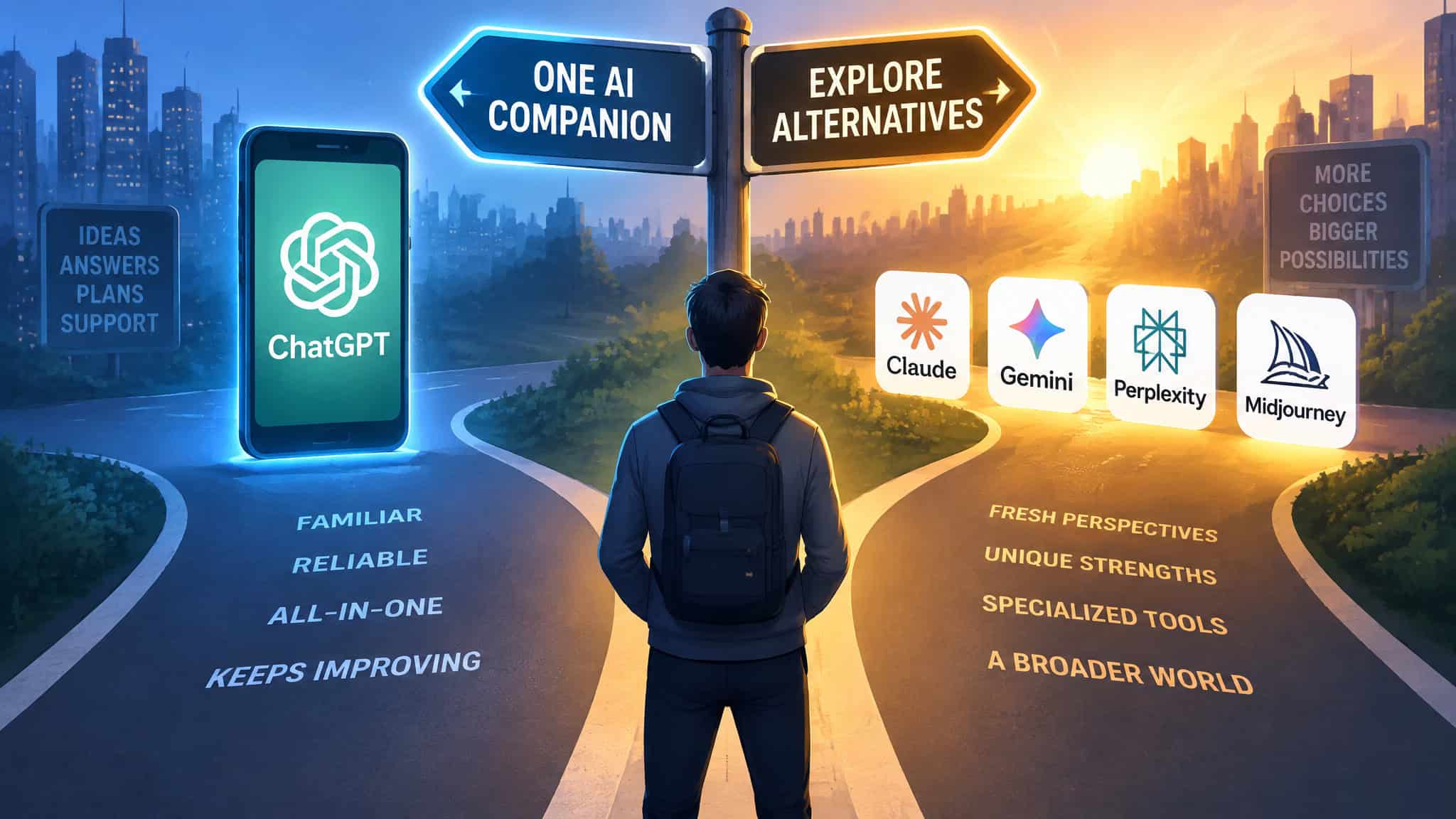
Character AI vs Candy AI splits cleanly. Character AI wins on its massive free library of public bots, roleplay in fan styles, and text chat that costs nothing. Candy AI, at $12.99/month, is stronger for adult girlfriend setups, with chat, voice, images, and video-style features. That’s not a coincidence; Candy markets itself around AI companions, so of course the companion-shaped features are its core. Different tools for different moods, and picking per capability beats picking a winner.
Replika, PolyBuzz, and permissive roleplay apps
Replika is the other archetype: an everyday AI companion rather than a roleplay playground. Its app listing covers text, voice calls, video chat, sharper memory, check-ins, and image creation, at $19.99/month with a 3.4 Trustpilot score from 457 reviews. If what broke for you on Character AI was memory, Replika is the daily-companion answer; our full Replika review digs into what changed there. PolyBuzz may feel more open for romance, though that “may” is a vibe reviewers report, not a verified policy.
Janitor AI is no-filter but requires DIY API keys with per-message cost, so it’s a tinkerer’s option. CrushOn AI and YumeAI round out the dedicated girlfriend-app field as other purpose-built options in this space. Character AI’s counterweight is the bigger name and the stronger public character culture; nothing else has that library.
The 30-day, 50-app test and conflicting rankings
The published rankings disagree with each other, and that’s worth knowing before you trust any of them. Chicago Reader put OurDreamAI at #1, praising realism at $19.99/month. Washington City Paper put Kupid AI at #1, at roughly $17.99/month, citing 40+ appearance options, proactive voice messaging, and $1.3M in seed funding. Those are two separate attributed roundups, not merged truth, and neither is our testing.
The most credible ground truth I found is a YouTube creator, Way Of Reason, who spent 30 days testing 50+ companion apps and narrowed the field to just four. Character AI scored 6/10 as casual roleplay, with the favorite-food forgetting almost immediately. Janitor AI got 7/10. Chai AI got 7.5/10, mobile-only with about 70 free messages a day at around $15/month.
The top pick at 9/10 was WithMy: long-term memory, image generation, human-sounding voice calls, and recall of weeks-old conversations. Thirty days and fifty apps narrowing to four is a decent proxy for how sparse this landscape actually is. Our deeper best AI girlfriend comparison covers the spec cuts across these platforms.
User sentiment and the decline narrative
The 8.1/10 reviewer score and the 1.2/5 Trustpilot rating aren’t a contradiction; they’re reviews of two different eras of the platform. Trustpilot currently shows character.ai at 1.2/5 from 400 reviews, with another snapshot at 1/5 from 731. Both snapshots exist; I’m not averaging them. The wry detail: Trustpilot categorizes it as a Dating Service, which is the category confusion again, now in rating form.
Competitor Trustpilot ratings give that score some context, and they’re mixed too: JOI sits at 4.1 from 268 reviews, replika.com at 3.4 from 457, Janitorai at 2.8 from 31, Talkie AI at 2.7 from 63, Polybuzz at 2.3 from 21, and Spicychat at 2.0 from 63. Character AI isn’t an outlier so much as part of a category where nobody’s scores look like a normal app’s.
Before leaning on that score, the honest caveat: the company hasn’t invited reviews, so they may not be representative. The complaint clusters are consistent, though: ads between messages, daily swipe caps, mandatory verification, censorship of words like “shooting,” removed models, and memory that got worse after updates. The named color is vivid. Lucas Goforth reported his avatar upload blocked despite paying $9.99/month.
Lisa chamouleau described a “fake world” addiction critique alongside a “maximum 100go per day” cap. Unhappy reviewers report switching to Emochi, AIGolov.com (better memory, smoother commands, in their experience), and Spicy AI for NSFW fandoms, attributed to them, not endorsed here. For balance: a 4-star reviewer called it a “chill out app” while griping about the ads.
Ethics and healthy use: what AI companionship is and isn’t
No, these platforms don’t replace human relationships. They simulate them, and both companion-app sources carry disclaimers saying exactly that. Some users report strong emotional bonds that feel real and still aren’t equivalent to human connection, which is the honest version of the warning.
The substantive layer is more interesting than the boilerplate. This market has gone mainstream, running on advanced LLMs and heavy customization tooling. The majority of companions are female-designed, and they’re overwhelmingly created by cishet men, which raises real questions about objectification and stereotype reinforcement that the space is still wrestling with. Most companion image models are trained on scraped internet data without artist or subject consent, a legal and moral gray zone that hasn’t been resolved anywhere. And the late-2025 under-18 restrictions, arrived at amid child-safety lawsuits, are the platform’s own safety response to that pressure.
The fairest framing: these are mirrors and sandboxes for low-risk self-exploration. What you get out of one depends on your intent and self-awareness. Which is true of most tools, honestly.
Verdict: who Character AI girlfriend bots actually serve
Character AI girlfriend bots earn an 8.1/10 as roleplay platforms, fan-style chats, comfort conversations, and story scenes, and they’re the wrong tool for adult AI romance, realistic girlfriend media, or long-plot memory. Pros: a huge public library, a genuinely useful free plan, strong roleplay when well-made, character and voice creation, fun voice calls. Cons: filters that hurt romance and dark roleplay, memory that breaks in long scenes, ads and slow mode, and c.ai+ not fixing everything. The decision rule: stay for free roleplay and comfort chats; switch early if you need NSFW, persistent memory, or visuals.
Frequently Asked Questions
What is Character AI actually built for versus AI girlfriend apps?
Character AI’s own Safety Center describes it as an interactive entertainment platform for stories, roleplay, and original Characters — a roleplay mall, not a dating product. Dedicated girlfriend apps are built around a persistent companion: configured personas, memory, visuals, and proactive check-ins. Character AI rewards authorship; girlfriend apps assume a relationship.
Why does Character AI forget things in long roleplay chats?
Auto Memories captures key details, but retention that works in short chats doesn’t survive long scenes — bots forget locations and promises from ten messages earlier. It’s structural, not a prompt problem: the platform treats characters as roleplay scenes, not persistent companions. c.ai+ claims better memory, though that’s a claim, not a verified spec.
Is Character AI free or do you need c.ai+ for a good companion experience?
The free plan is genuinely usable — basic chat models, character creation, some voice access, and the full public library — and it effectively is the trial. c.ai+ costs $9.99/month or $94.99/year (~$7.92/month) for better memory, no ads, no slow mode, and unlimited voice calls. Occasional users should stay free; c.ai+ is worth maybe one month unless it becomes a daily routine.