So I took the problem seriously: I spent 40 hours testing 16 different party games with 25 different people across real-world settings — game nights, a Renaissance faire hotel room, and my own bachelor party. What you’re getting here is everything that survived those sessions, organized by how they play.
Key Takeaways
A Fake Artist Goes to New York won the test so hard that two testers ordered it on their phones mid-session. It’s the rare social deduction game where everyone draws every single turn — nobody sits idle.
The best party games can be taught in under five minutes. Just One, That’s Not a Hat, and Codenames all hit this mark, and they create more genuine interaction than games that take twenty minutes to explain.
Watch out for games that eliminate players early. Ultimate Werewolf Extreme adds 40 roles but gives the moderator almost nothing to manage them with, and eliminated players just sit around. Meanwhile Blood on the Clocktower keeps dead players involved — but costs $160 and needs nine people to work.
Table of Contents
What makes a great party game — and how we tested
For this guide, I tested 16 games across multiple gatherings with a total of 25 participants. We played in three distinct settings: a standard game night where people expected to learn something new, a Renaissance faire hotel room where half the group was still in costume and energy was high, and my bachelor party, where stakes were low — nobody wanted to ruin a celebration with a bad game choice.
Top party games at a glance
These are the five games that consistently delivered across every test session. Each creates a different social dynamic, so I’ve grouped them by how they actually play rather than just alphabetical order. If you only have time to read about one or two, start here.
A Fake Artist Goes to New York — social deduction through drawing
This is the game that started a chain reaction. During my bachelor party test, two people pulled out their phones in the middle of a round and ordered copies before we’d finished. I get it.
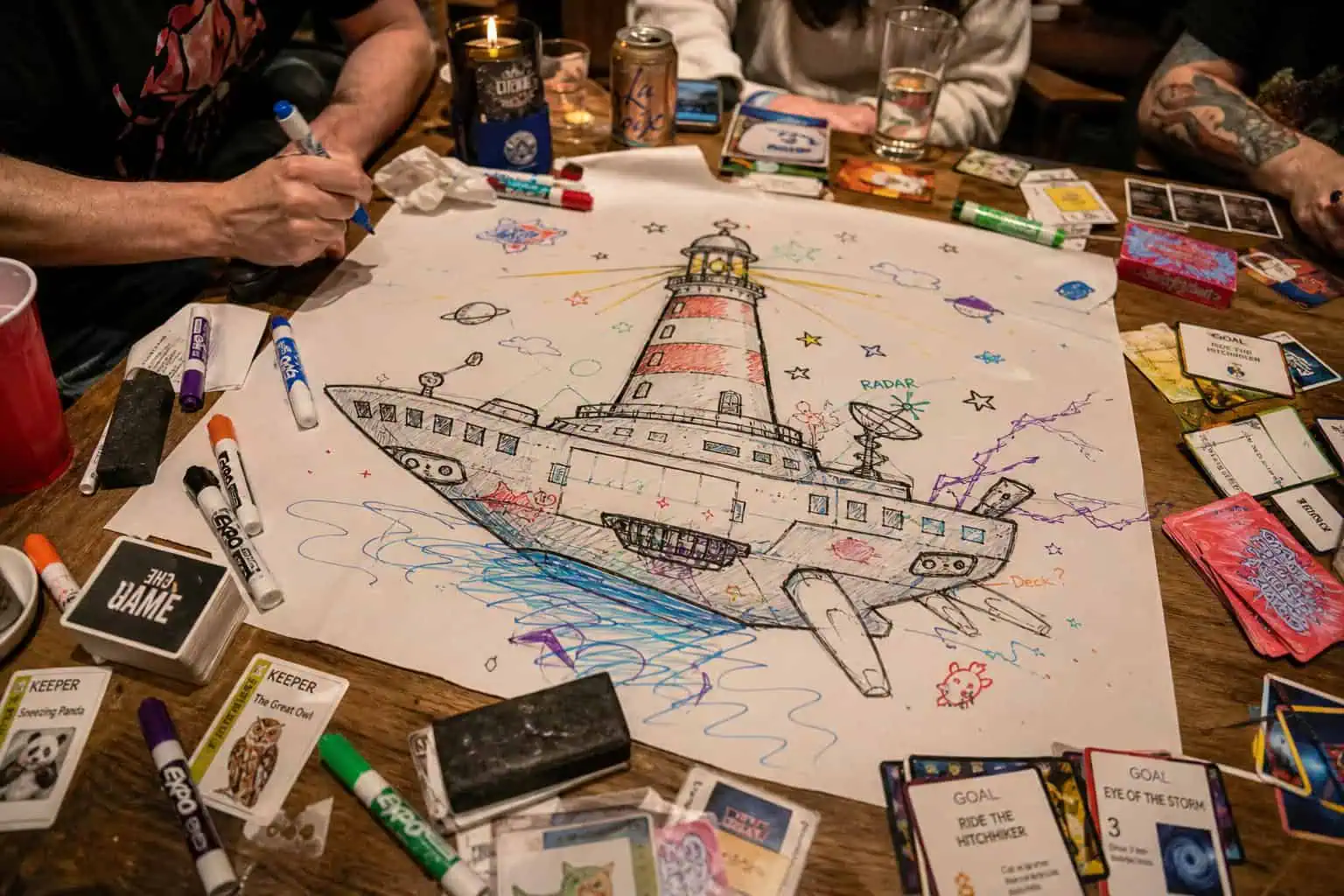
Here’s the setup: the clue-giver writes a secret subject — something like “lighthouse” or “spaceship”, on dry-erase rectangles for everyone except one player. That player gets a rectangle with an “X” on it. They’re the fake artist. Everyone then takes turns adding one continuous line to a shared drawing. The trick is drawing something that proves you know the subject without being so obvious that the fake artist copies you and gets away with it.

After two lines each, everyone votes on who they think the imposter is. If the group correctly IDs the fake artist, that player gets one guess at the subject. Nail it, and the fake and the clue-giver both score a point.
Every player draws on every turn. There’s no sitting around waiting for your turn to bluff or be accused. The drawings end up looking like collaborative graffiti that barely resembles the starting subject. It plays in 30–60 minutes with 5 to 10 players and works for ages 8 and up. If you buy one game from this list, make it this one.
Wavelength — guessing your friends’ opinions
Wavelength is the game that teaches you what your friends think about things. One team secretly moves a dial to what they believe is the center of a hidden target on a spectrum — say, from “wet” to “dry.” The “psychic” on that team sees the target’s exact position and gives a single clue word or phrase. Something like “spaghetti” might land on the wet side; “toast” might be dry.
Then the rest of the psychic’s team interprets the clue and positions the dial. The opposing team can bet on whether they overshot or undershot the target. First to 10 points wins.
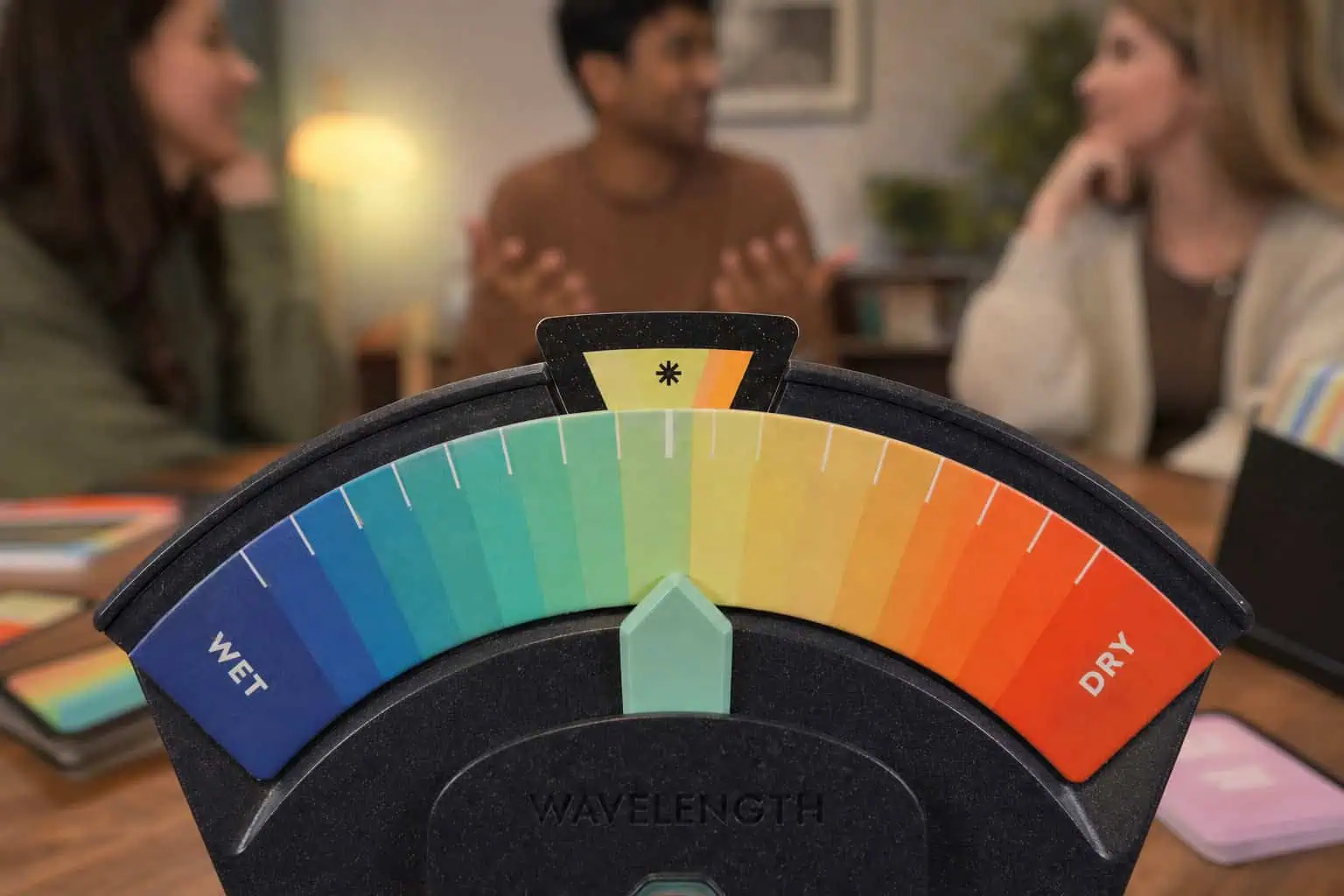
Wavelength works with 4 to 14 players, runs 30–60 minutes, and is rated for ages 12 and up. It scales: you can play with a small group or a whole party, and the dynamic shifts depending on who’s sitting at the table.
Just One — cooperative clue-giving with a clever twist
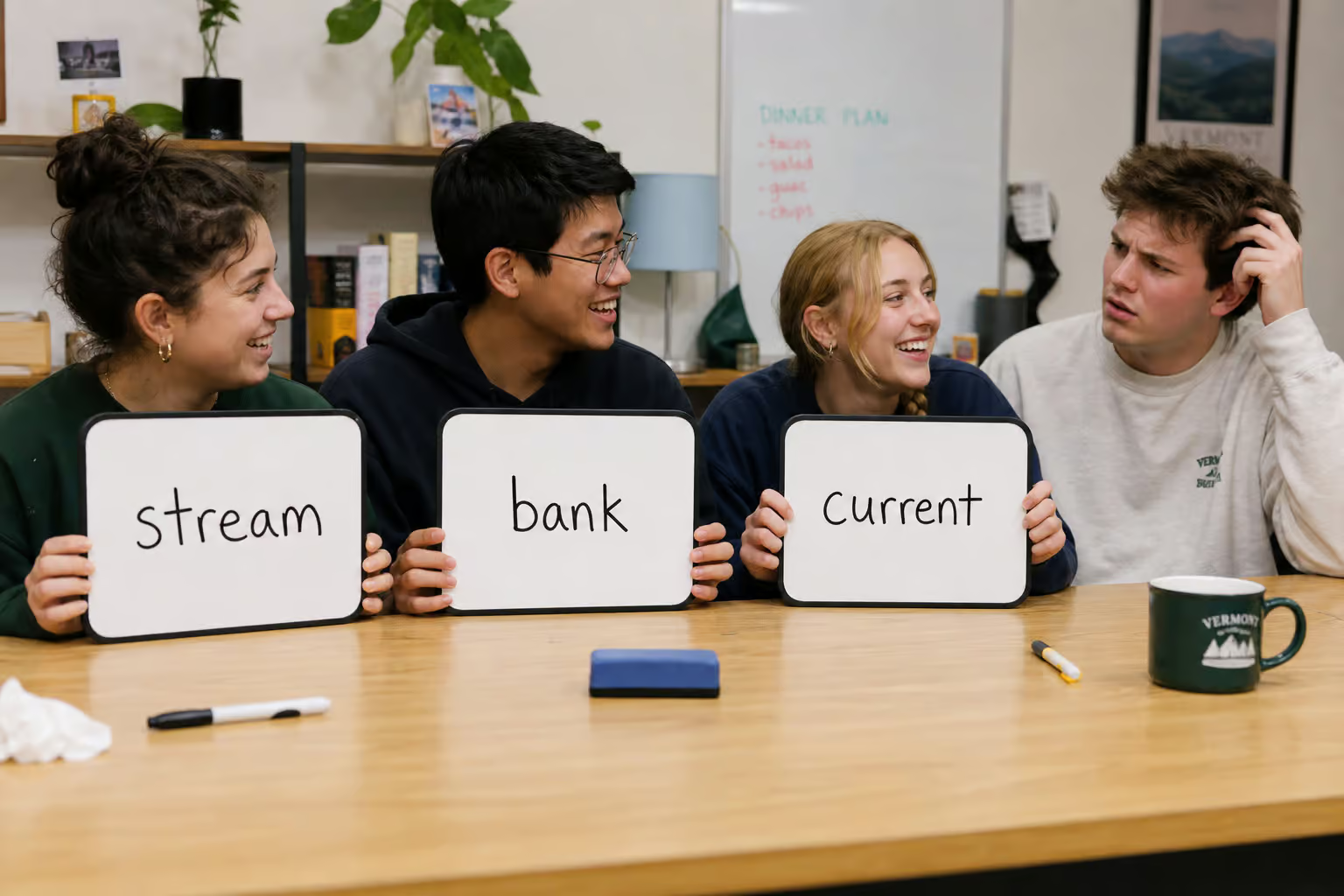
Just One is the easiest game on this list to teach. I’m talking five minutes, tops. The guesser picks a prompt from a card — say, “river”, and everyone else writes a single-word clue on their whiteboard. Sounds simple, right?
Here’s the twist: any duplicate clues get eliminated. If two people both write “water,” those clues vanish. The guesser then sees only the unique remaining words: maybe “stream,” “bank,” and “current.” From those, they have to figure out the original prompt.
Duplicate clues vanish. You can’t write the most obvious association because someone else might have the same idea. You have to find something distinctive but still helpful. A session runs 20–60 minutes with 3 to 7 players and is suitable for ages 8 and up.
I tested this back-to-back with Letter Jam, another cooperative word game, and Just One won. The clue-giving structure is more natural for a party setting, and the five-minute teach means you can pull it out at any point in the night.
Monikers — the game that creates its own inside jokes
Monikers works through a three-pass system that escalates from freeform to impossible. First, teams pick five cards from a hand of ten to build their own deck. Then you play three rounds with the same cards: unlimited words (you can say anything except the words on the card), then one word only, and finally pure charades. Each pass gets harder and funnier because the same concepts keep cycling through different constraints. After a round, the cards get shuffled back, so you’re revisiting the same prompts with fresh restrictions.
By the third pass, you’re referencing clues from the first round — inside jokes form naturally. It’s the opposite of Cards Against Humanity, where the laughs rely on pre-written punchlines. Monikers runs 30–50 minutes with 4 to 16 players and is for ages 14 and up. (Note: CMYK recently released an updated version with new art and prompts; we tested the original, but the mechanics are the same.)
Codenames — the word-association classic
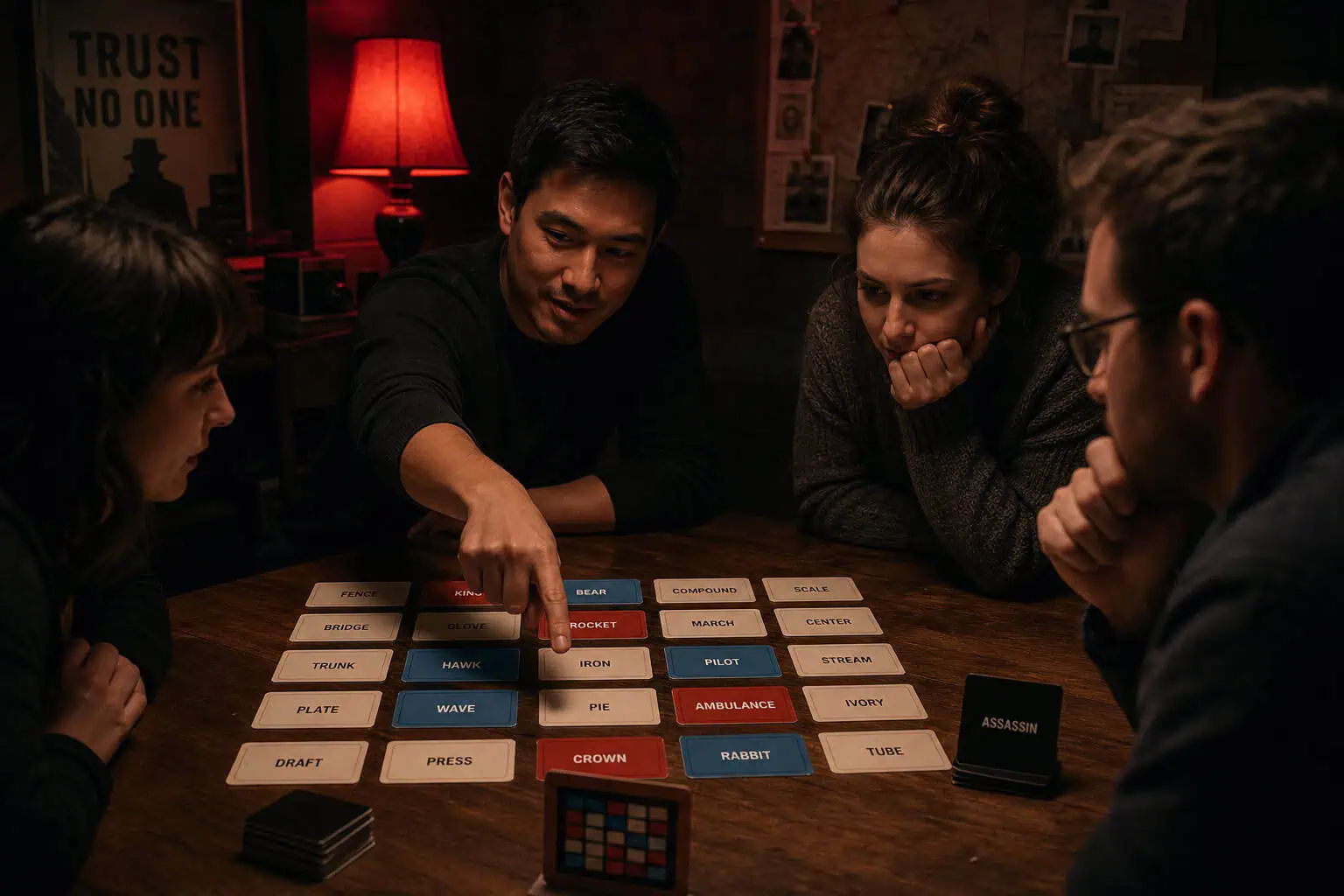
One player on each team gives one-word clues to connect seemingly random words on a grid, trying to get their team to guess the right ones while avoiding the assassin word. It’s a live-action version of the NYT Connections puzzle, but with more shouting and finger-pointing.

I won’t re-explain the full rules here — most people already know them, but it’s worth reiterating that Wirecutter has kept Codenames in its best table games to play with friends and family guide for almost a decade for a reason.
That’s Not a Hat — memory bluffing in 15 minutes
That’s Not a Hat is the quickest game on the list: a full playthrough runs about 15 minutes. Cards with simple objects get passed around face-down. You slide one to the next player, they look at it, then slide it on. The catch is you have to remember what you gave away, because later someone will accuse you of not having it, and you’ll need to bluff your way out. It turns into a game of three-card monte that even the dealer loses track of.
It’s suitable for children and adults, plays with 3 to 8 players, and works as an icebreaker or filler between longer games. No complex rules, no scoring to track — just memory and a little deception in these social games to play with friends.
Social deduction games: bluffing, hidden roles, and ambiguous information
Social deduction games live or die on ambiguous information. If a clue is too direct, the drama evaporates. If it’s too obtuse, players check out. The best games keep everyone engaged with steady, subtle signals — and they don’t let eliminated players turn into furniture. Here’s how the big names shake out in our breakdown of the best social games.
Blood on the Clocktower — deep, expensive, and demanding
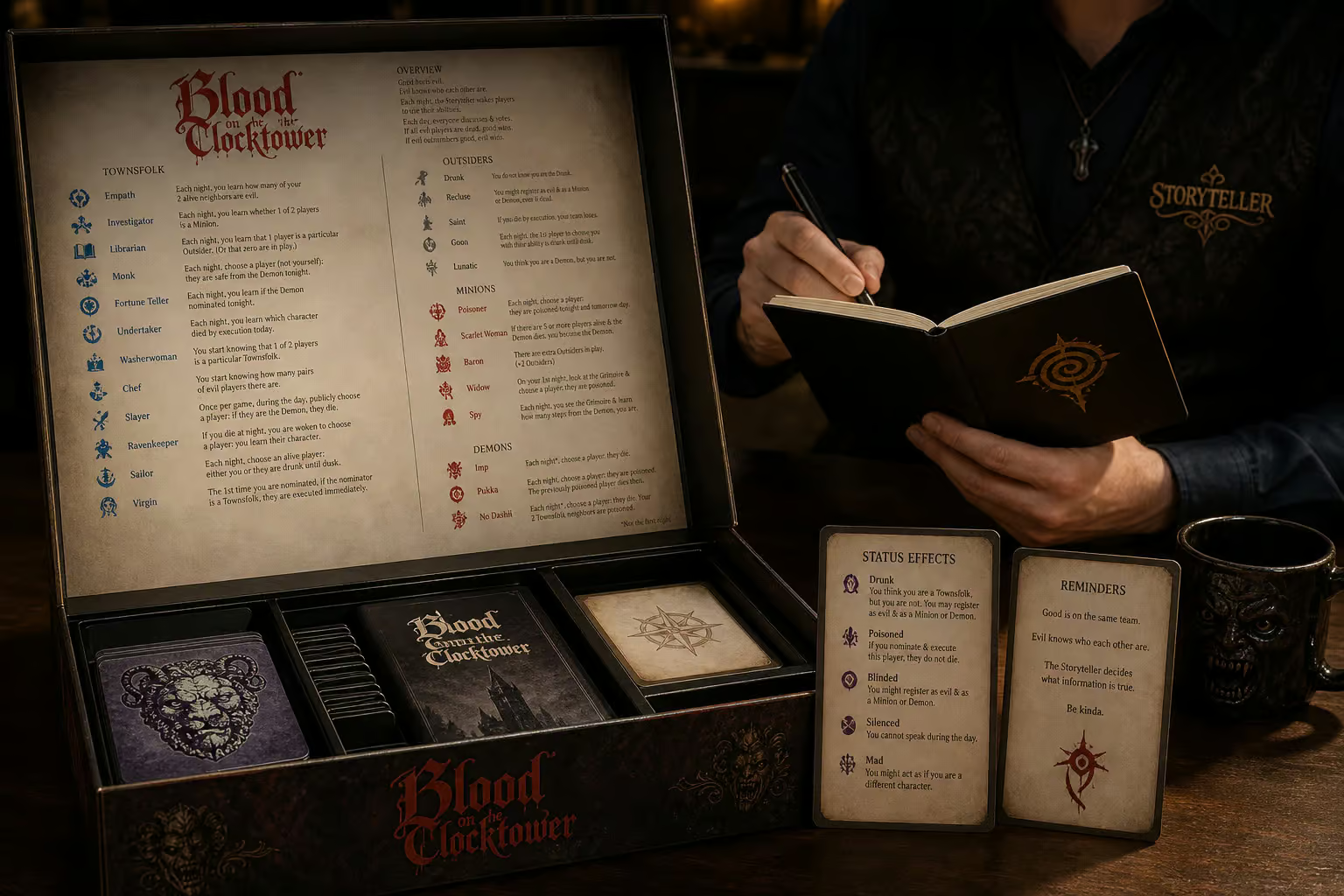
Blood on the Clocktower is the most ambitious social deduction game I’ve ever played. The game master (called the Storyteller) has tools to nudge the game — helping new players find their footing or throwing curveballs at veterans. Even eliminated players can still affect the outcome, so nobody’s left sitting on their hands. The box is huge but packed with role summaries and status effect cards that help run the game, making it one of the most compelling social games for adults I’ve encountered.
But here’s the rub: it costs $160 at the time of publication, and it shines with at least nine players. It’s my personal favorite on this list, but I can’t recommend it without caveats. If you’re not sure your group will commit, start with something cheaper.
The Resistance: Avalon — the best-balanced intro
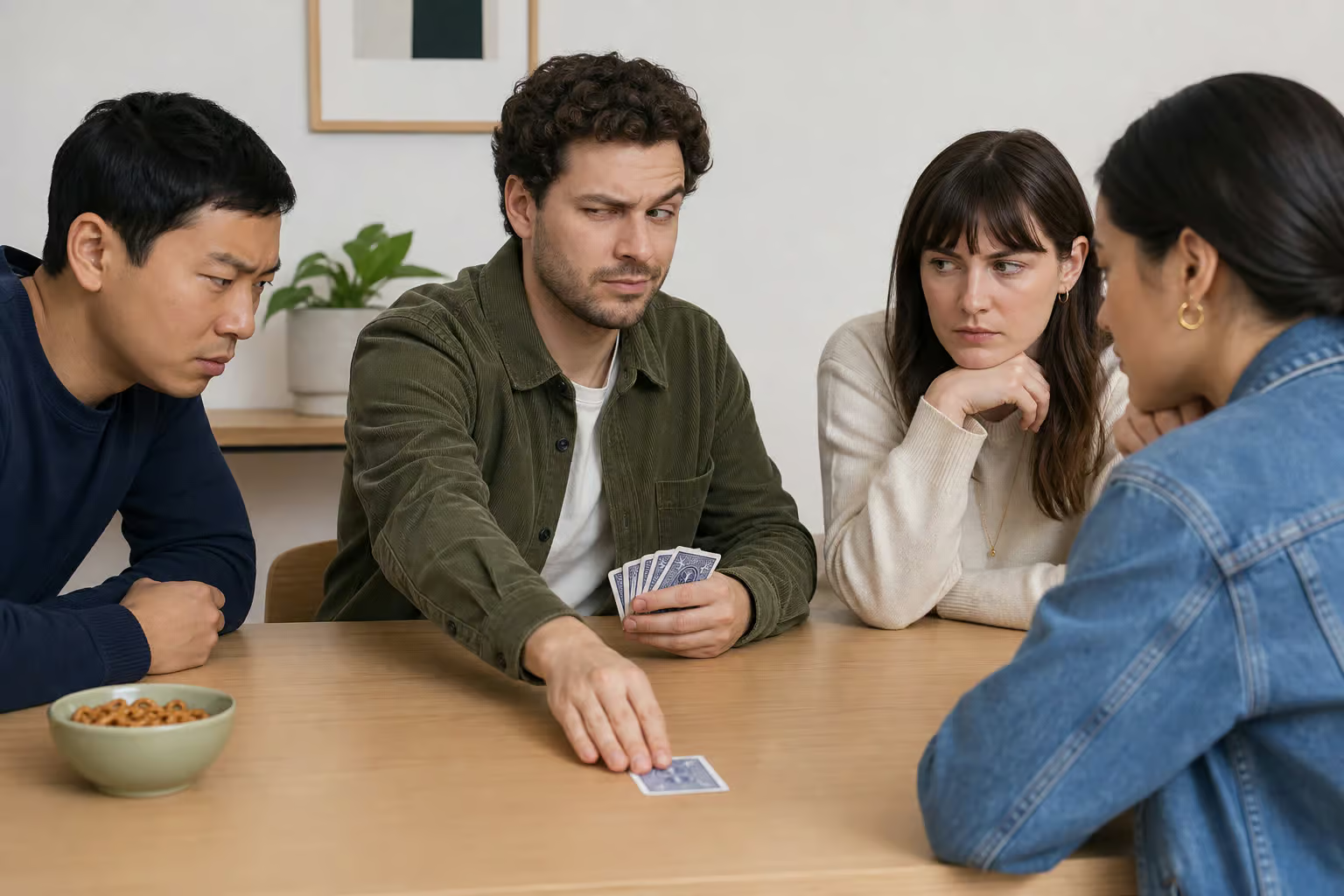
I think The Resistance: Avalon offers a richer and more engaging entry point into social deduction for people who want something meatier than One Night Ultimate Werewolf but cleaner than Blood on the Clocktower. It’s a team-based game where a hidden group of loyal servants of Arthur tries to complete quests while the forces of Mordred sabotage them. The roles are simple enough to explain in a few minutes, but the deduction layers keep experienced players engaged. If you’re new to the genre, start here over Quest or One Night.
One Night Ultimate Werewolf — fast, app-assisted, but shallow
One Night Ultimate Werewolf resolves in a single “day” and “night” — roughly 10 minutes if your group is chatty. No one gets eliminated early because there’s only one round. You can use a companion app to run the game if nobody wants to be the game master, which is a nice quality-of-life feature. But I found The Resistance: Avalon more rewarding. One Night is great for a quick hit, but if your group wants something with depth, Avalon provides a deeper and more compelling experience.
Ultimate Werewolf Extreme — complexity without payoff
Ultimate Werewolf Extreme adds 40 extra roles beyond the classic werewolf and villager. On paper, that means more players can gather information. In practice, the game doesn’t give the moderator much beyond an app and a notepad to manage all those roles — which gets messy fast. Players can get eliminated early and then have to sit out for the rest of the game, which is a bummer in a party game. I’d skip this one unless you’re a Werewolf completionist.
Secret Hitler — thematic sensitivity
Secret Hitler is a social-deduction game set in 1930s Germany. The goal is to stop a fascist takeover, and the game takes a clear anti-fascist stance. However, it does ask one player to take the role of Hitler. That’s a deliberate design choice, but it could be distasteful for some groups.
Some people aren’t going to be comfortable with it, and that’s fair. I include it here for completeness, but it’s not a universal recommendation.
Communication and wordplay games
These games focus on how you talk, hint, and think on your feet — all without complex rulebooks or long setup times.
Decrypto — clever code-interception
Decrypto is a team game where you’re trying to communicate secret codes to your own team without the other team figuring out your pattern. You use word clues to help your team guess a specific number, but the trick is not being so obvious that the opponents intercept. It’s a balancing act. I preferred A Fake Artist Goes to New York — the drawing and bluffing felt more immediate and fun.
Phantom Ink — fun but not top-tier
Phantom Ink has a neat mechanic: one player on each team acts as the “spirit” and knows a secret object. The rest of the team are “mediums” who ask yes/no questions. The spirit answers by writing a single letter at a time. The medium can yell “silencio!” to stop the spirit from writing, preventing the other team from overhearing. I found it fun and easy to learn, but it didn’t land as well as the picks on this list.
So Clover! — cooperative word-association puzzle
So Clover! combines word association with a spatial puzzle. You place cards in a two-by-two grid, then write clues on each leaf of a four-leaf clover to help the other players figure out the layout. It’s a satisfying little logic puzzle, but it’s quieter and more cerebral than the rowdier party games here.

Hues and Clues — color-vision accessible
Hues and Clues is a color-based communication game where you give a clue — “the color of a vintage muscle car”, and your team tries to pick the exact shade from a board of 480 options. Multiple online reviewers with various color-vision deficiencies reported being able to play fine, which is a nice accessibility win. I ended up liking other communication games more, but it’s a solid option for color-themed nights.
Letter Jam — clever but harder to teach than Just One
Letter Jam is cooperative: you can only see everyone else’s letters, not your own, and the group has to collaborate to figure out the word they all spell. I preferred Just One because it’s easier to teach and the clue-giving structure feels more natural for a party setting.
Games that generate organic humor vs. pre-written comedy
Monikers is the poster child for this. Its three-pass system — unlimited words, one word, charades, forces players to get creative, and inside jokes develop organically over a single session. You can also play a DIY version known as Fishbowl: each player writes down 3–5 names or phrases, and you run the same three passes. It’s free and as good.
Cards Against Humanity is the opposite. The laughs come from the cards’ pre-written jokes, not from your group. That can be fun with the right crowd — the crass humor lands sometimes, but it can also alienate people fast. The picks on this list do a better job of generating laughs and keeping everyone included.
Simple physical and no-equipment games
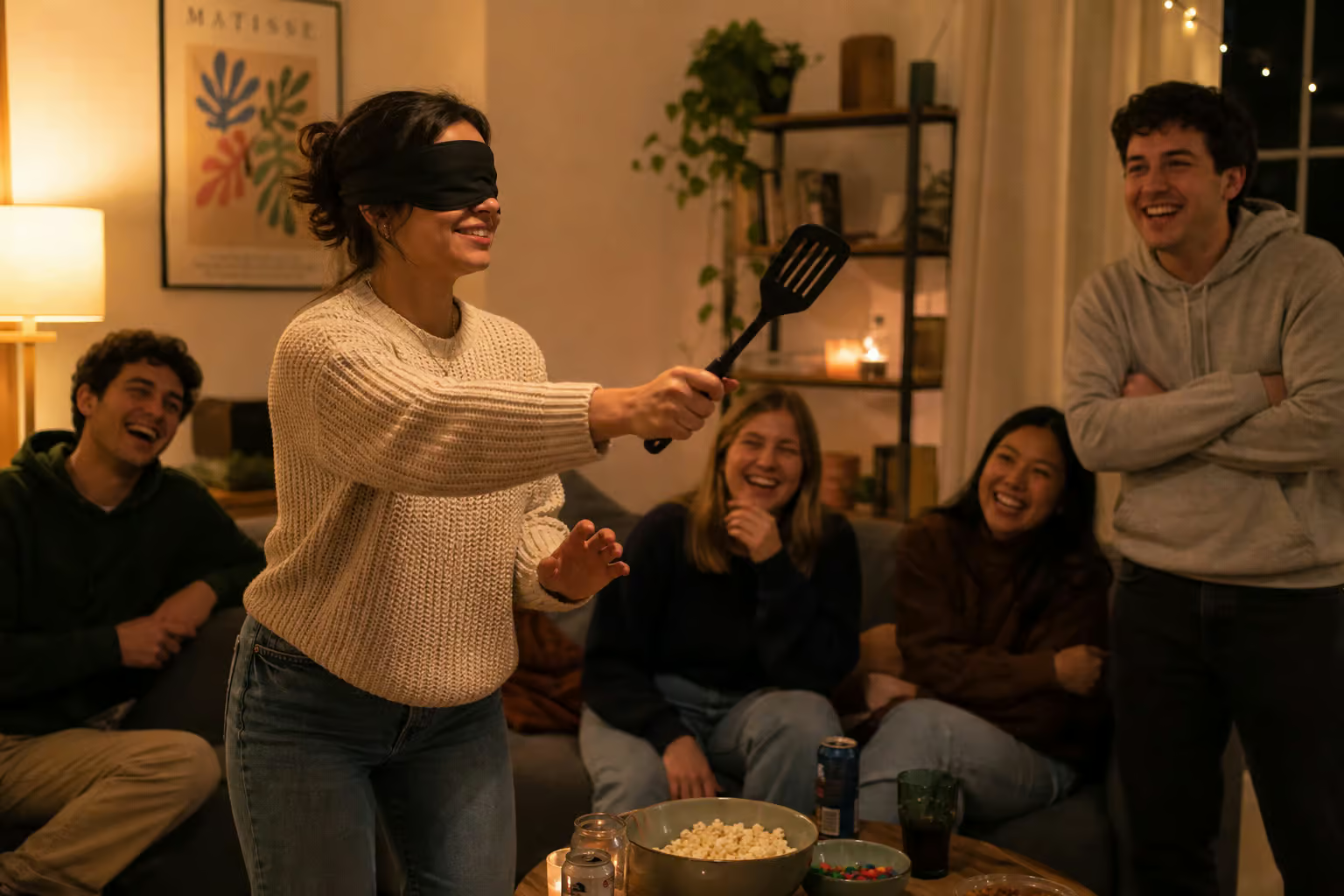
Sometimes you have nothing but people and a willingness to look ridiculous. These games cost zero dollars and require zero prep, but they’ve produced some of the most memorable moments in my testing.
- Ninja: Everyone stands in a circle, counts “Three, two, one, ninja!” and strikes a pose. Players take turns making one sweeping hand motion to hit another player’s hand. If you get hit, you’re out. Circle closes, last two duel. Pure chaos.
- Reverse Charades: One person guesses while everyone else acts out the clue. Much sillier than normal charades because you’re coordinating a group performance.
- Spoons: Classic physical card game — four of a kind, grab a spoon from the center, one player out per round.
- Sardines: Reverse hide-and-seek. One person hides, everyone searches. When you find them, you hide with them. Eventually everyone’s crammed into a closet.
- Telephone Pictionary: Pass a sentence around the circle, then everyone draws what they read, passes the drawing, and the next person writes a caption. The chain degrades beautifully.
- Charade Whispers: Telephone with charades. People at the ends of a line see a word, perform a movement, and it gets copied down the line. The last person guesses — almost always wrong, and that’s the point.
- Balloon Duel: Tape a balloon to each player’s ankle. First to stomp the other’s balloon wins. Gets intense fast.
- Tape Word: Tape a random word on someone’s back. They have to ask questions to figure out what it says.
- What’s That Strange Thing?: Blindfold someone, hand them an object, they have to identify it by touch alone. Works best with mundane household items.
Party games as an on-ramp for non-gamers
Just One teaches in five minutes and works for ages 8 and up. Codenames has been a Wirecutter beginner pick for almost a decade because it works across mixed experience levels. That’s Not a Hat runs 15 minutes and is straightforward enough that the youngest player isn’t lost. These games give the “game teacher” a break — everyone learns by playing, not by listening to a ten-minute rules explanation.
The cost and complexity tradeoff: when depth hurts accessibility
It’s tempting to assume that a more expensive, more complex game is better. That’s not how party games work. The most expensive game I tested — Blood on the Clocktower at $160, requires a dedicated game master and at least nine players. The $20 game, Just One, teaches in five minutes and delivers consistent fun with 3 to 7 people.
Ultimate Werewolf Extreme is another cautionary tale. All those extra roles sound exciting, but the game doesn’t give the moderator enough tools to manage them — just an app and a notepad. Complexity shifts the moderator burden onto one person, and that person has a tough job. If you’re considering a complex social deduction game, ask yourself: who’s going to run this thing? If the answer is “me,” make sure you’re prepared to be on for the whole session.
Games that keep everyone engaged (even eliminated or shy players)
The biggest silent killer of party games is player elimination. When someone gets voted out early and then has to watch for twenty minutes, the energy drops. Here’s how the best games solve it:
- Blood on the Clocktower lets eliminated players still influence outcomes through ghost votes and abilities.
- A Fake Artist Goes to New York has everyone drawing on every turn — no one sits out until the very end.
- Just One is fully cooperative, so there’s no elimination at all. Every player participates in every round.
If your group includes shy or quiet people, cooperative games like Just One or So Clover! work well because no one is put on the spot to perform. For more extroverted groups, Monikers and Reverse Charades reward the willingness to be ridiculous. The key is matching the game to the group’s personality — and that’s easier to do when you have a toolkit of tested options.
People Also Ask
What are some fun social games?
A Fake Artist Goes to New York is a top pick — it’s a social deduction drawing game where everyone plays every turn. Just One is a cooperative word-guessing game that teaches in under five minutes, and Monikers creates organic inside jokes through a three-round escalation of clues and charades.
What are social party games?
Social party games are games designed for groups where interaction, bluffing, communication, and shared laughter matter more than complex rules or individual skill. Examples include Wavelength, where you guess where your friends’ opinions fall on a spectrum, and Codenames, a word-association team game that’s been a Wirecutter favorite for years.
What is the best social deduction party game?
A Fake Artist Goes to New York is the standout — it keeps every player drawing on every turn, so nobody sits idle. The Resistance: Avalon is a better balanced intro to hidden-role games than One Night Ultimate Werewolf, while Blood on the Clocktower is the deepest option but requires a dedicated game master and a larger group.
How do you keep eliminated players engaged in a party game?
Games like Blood on the Clocktower let eliminated players still influence the outcome through ghost votes and abilities. A Fake Artist Goes to New York avoids early elimination entirely by having everyone draw every turn, and Just One is fully cooperative with no elimination at all.
What’s the difference between Monikers and Cards Against Humanity?
Monikers generates humor organically through a three-pass system of unlimited words, one word, and charades — inside jokes form naturally as the same prompts cycle through different constraints. Cards Against Humanity relies on pre-written punchlines on cards, which can be fun but risks alienating players and doesn’t create the same shared creativity.