
I’ve been digging into social gaming platforms for friend groups, and honestly, most of them blur together. You get the same matchmaking lobbies, the same “play with randos or invite a friend” flow, and then you move on. Nothing sticks. But I found two platforms — Gidd.io and CrazyGames, that approach the problem from different directions, and both of them work for the kind of game night that turns into a running inside joke.
Gidd.io treats game night like a curated dinner party with a dedicated butler named Alfred. CrazyGames is a potluck where you show up and grab what looks good. They’re both free, both have real game libraries, and both solve the same problem: how do you get a group of friends playing something together without friction or awkwardness?
At GeekExtreme, we’ve been poking around both for a while. Here’s what I found — and how to pick the one that fits your crew.
Key Takeaways
Gidd.io is a free, cross-platform hub with invite-only rooms and an in-game butler named Alfred who handles rules and moderation so nobody has to be the referee.
CrazyGames gives you instant browser-based access to a curated library of multiplayer games — no download, no account, just pick something from the “most popular” list and go.
Gidd.io’s configurable rules let groups create custom game variants (like “zero-money Capitalista”) that become shared folklore, turning a session into an inside joke before the night ends.
Table of Contents
The best social games to play with friends are the ones that make memories
Gidd.io gives you a private, persistent room where you can tweak rules and build traditions. CrazyGames gives you a giant library of curated titles you can drop into with zero setup. Both work. The question is which kind of energy your group has tonight.
Gidd.io: Private, cross-platform rooms with a butler named Alfred
Okay, so there’s a butler named Alfred. He’s not an AI chatbot — he’s an in-game character who responds to /help, pauses games, and opens the helpbase. He’s the digital referee so nobody in your group has to be the rule explainer. That tells you this platform was designed with intention.

Gidd.io launched in December 2021, so it’s not some fly-by-night project. It runs on Android, iOS, Windows, and Mac — meaning your friend on a phone and your friend on a gaming laptop can play together without drama. Rooms are invite-only, so the host controls who gets in. No randos. No public matchmaking.
The game library covers enough variety that you have everything you need for a full game night. Here’s the rundown.
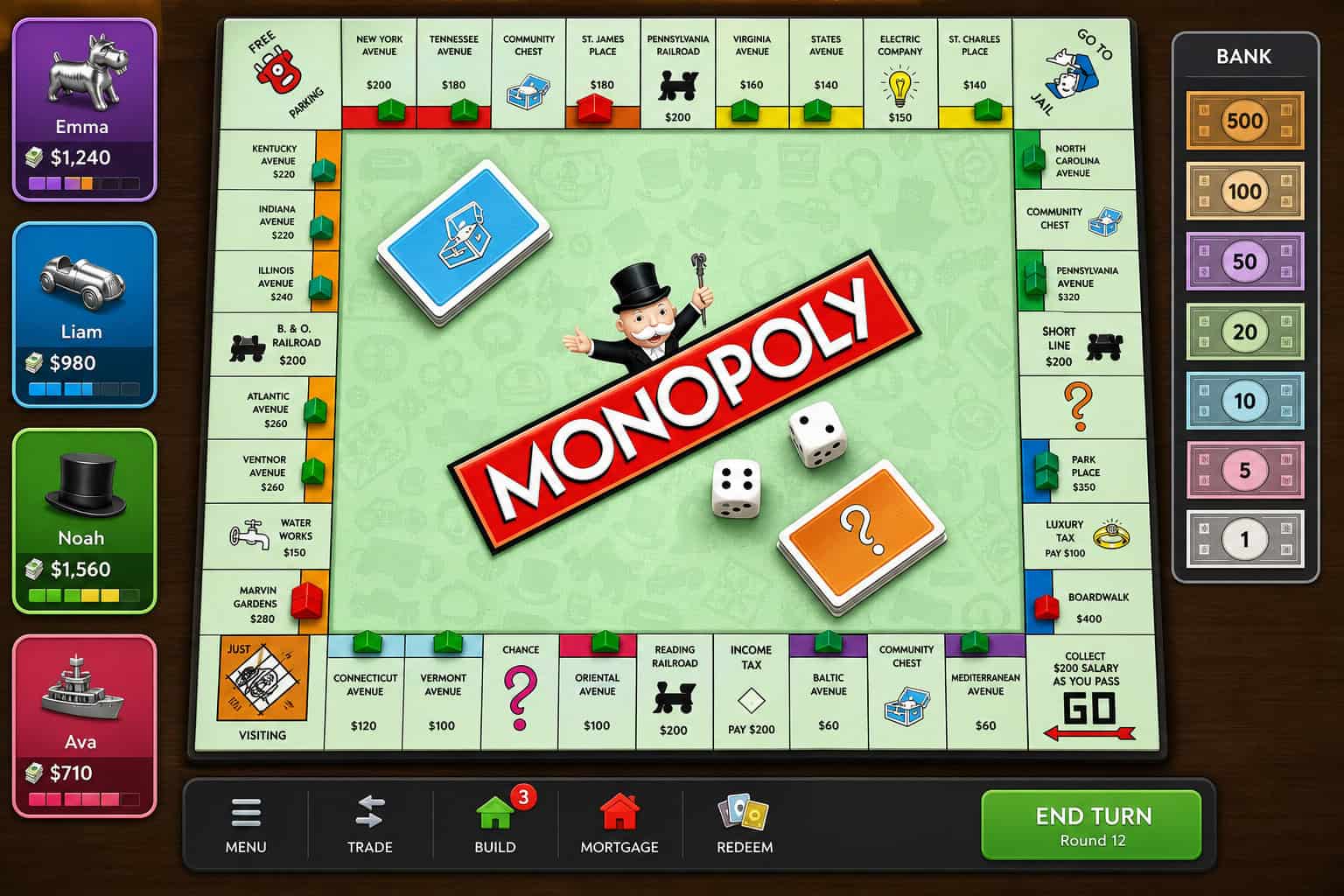
Economy and strategy: Capitalista
Capitalista is the classical economy board game in the lineup. You buy properties, build houses and hotels, collect money from other players, and try not to go bankrupt. The digital version handles all the math and rule enforcement — no arguing over whether a hotel is legal, no slow banking. It’s the classic Monopoly loop without the classic Monopoly arguments.
Card games: Crazy Eights, Texas Hold’em, and 13 Card Rummy
Three card game options that cover different moods:
- Crazy Eights is fast, familiar, good for warming up.
- Texas Hold’em gives you the standard poker variant — two private cards plus five community cards, make the best five-card hand. For when the group wants actual stakes (even if they’re virtual).
- 13 Card Rummy uses a standard 52-card deck plus Jokers, and you form valid sets and sequences to win. The platform auto-validates everything, so there’s no “does that count?” back-and-forth.
Word and drawing games: Categories and Guess Drawing
These are the low-pressure, high-laughter options.
- Categories is basically Scattergories — list words that fit categories starting with the same letter. The platform auto-validates, so you don’t need a designated judge.
- Guess Drawing is draw-and-guess. Digital means the terrible stick-figure giraffe controversy is just funny instead of a rules dispute.
Dice games: Yatzy
Yatzy is Yahtzee by another name. Three rolls per round, you outscore your friends by making the best dice pairings. The platform automates the scoring — no pencil-and-paper math, no “wait, what’s a small straight worth again?”
Social deduction and geography: Werewolf and GeoClash
Two games that shine in very different ways.
- Werewolf is the classic social deduction game — villagers versus werewolves, deception, lies, survival. The platform manages roles and voting automatically, so nobody has to moderate.
- GeoClash is a geography guessing game. You get dropped somewhere on a map, guess a location, and the closer you are the more points you earn. It’s slower-paced and conversational — good for groups that want to chat while playing.
CrazyGames: Instant browser access to a library of curated multiplayer games
If Gidd.io is the curated dinner party, CrazyGames is the potluck. The whole pitch is “no download, no nothing, just play.” And sometimes that’s exactly what you need — especially when someone’s on a phone and someone else is on a laptop and nobody wants to install anything for a round of social games.
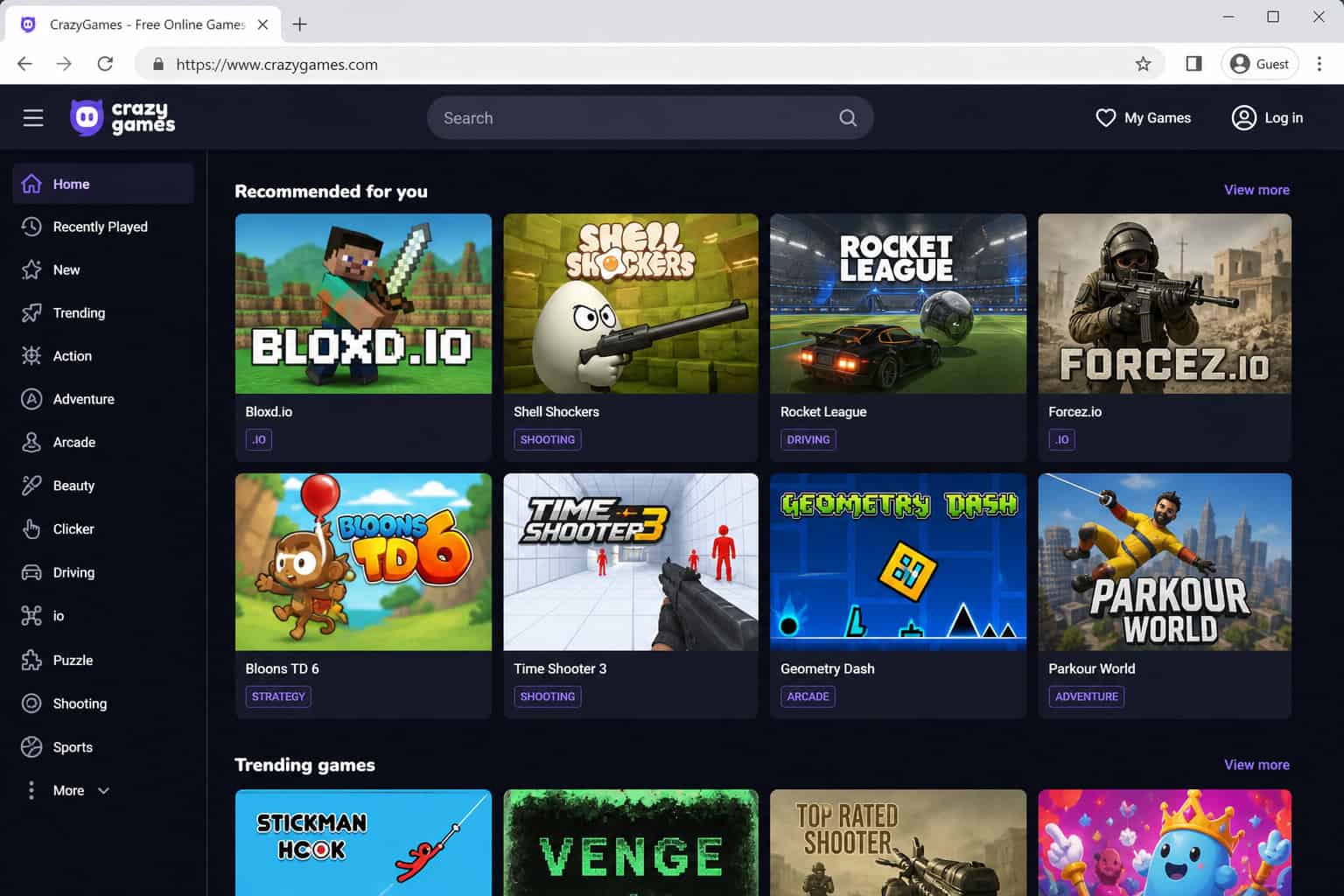
CrazyGames is a free browser-based multiplayer gaming hub. No account required, works on any device with a web browser. You filter by newest, most popular, or top-rated. The curation is useful — it helps you skip the noise and land on something good fast. If you’re looking to bring that same energy offline, you might want to scope out a great social games party, too.
The tradeoff vs. Gidd.io is clear: you give up privacy and persistence for instant access and variety. CrazyGames is for the spontaneous “hey, let’s play something” session. Here’s what you’ll find.
Most popular games on CrazyGames
According to the platform’s own FAQ, these are the titles the community keeps coming back to:
- Bloxd.io — Minecraft-like with a bunch of minigames. Popular among kids.
- Openfront — strategy game.
- BuildNow GG — creative building.
- Grow A Garden (Growden.io) — chill simulation.
- FrontWars.io — war/strategy.
- Smash Karts — chaotic kart racing with battles. Think Mario Kart but browser-based.
- 8 Ball Pool — classic pool.
- SkillWarz — skill-based competition.
- Miniblox — block-building.
- Redcoats.io — historical-themed.
That’s a solid mix. You’ve got building, racing, strategy, and casual — plus a category of social games for adults — enough to cover most group moods.

Best mobile-friendly games on CrazyGames
If anyone in your group is playing on a phone or tablet, these work well without a keyboard and mouse:
- Bloxd.io (yes, it’s also mobile-friendly)
- Mr. Dude: Online Multiverse Challenge — quirky and chaotic.
- Brainrot Arena Online — exactly what it sounds like.
- Grow A Garden (Growden.io) — chill, touch-friendly.
- Poxel.io — pixel-art action.
Action and FPS games: Shell Shockers, Hazmob FPS, Racing Limits, Squid Games
For groups that want fast-paced, competitive sessions:
- Shell Shockers — egg-themed FPS. The premise is silly but the gameplay is polished. It’s popular.
- Hazmob FPS — a more traditional multiplayer shooter with multiple game modes. When you want a “real” FPS without downloading anything.
- Racing Limits — street racing game. Good for the Mario Kart crowd who want something browser-based.
- Squid Games — based on the show, it tests friendship in a treacherous way. Perfect for groups that enjoy betrayal.
Classic and casual fun: Uno Online, TileMan.io, WorldGuesser Free GeoGuessr
Slower-paced options that work great during a video call or when the group wants less adrenaline:
- Uno Online — the classic family-friendly card game. Zero explanation needed.
- TileMan.io — territory-claiming game on a 2D board. Simple, strategic, nostalgic.
- WorldGuesser Free GeoGuessr — geography quiz game. Drop you somewhere in the world, you guess where you are. Good for groups that like trivia and debate.
How to pick the right platform for your friend group
The choice is straightforward once you know your group’s default mode.
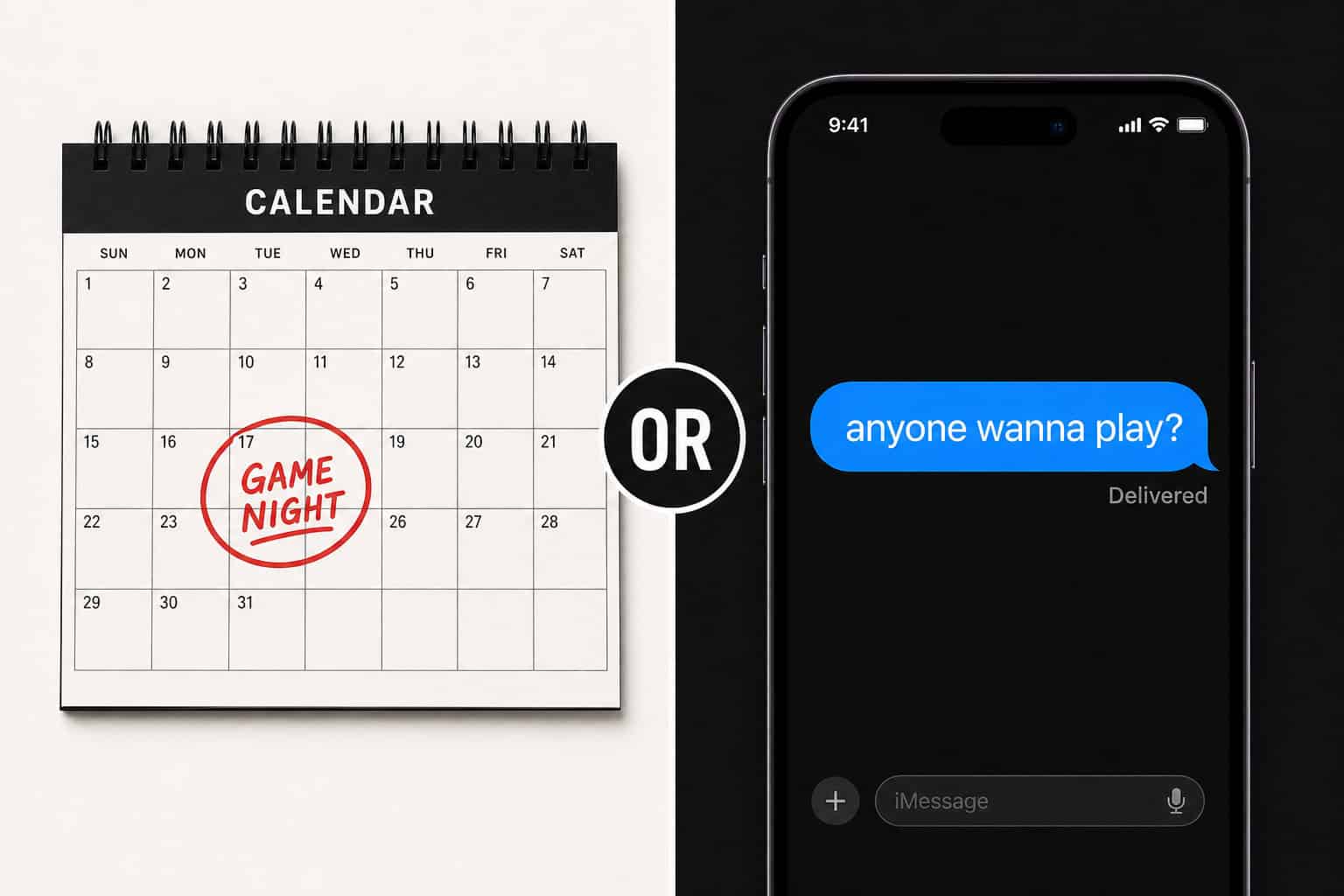
Pick Gidd.io if your group is the type to plan a game night three days in advance. You want privacy, persistence, and customization. You have a mix of devices — Android, iOS, Windows, Mac, and you don’t mind a quick account setup because you plan to come back. Alfred handles the rules.

Configurable rules let you create custom variants that become inside jokes. It’s the structured game night.
Pick CrazyGames if your group is the type to text “anyone wanna play?” at 10 PM. You want to be in a game in seconds. Devices don’t matter — it’s all browser-based. You don’t care about private rooms or persistence. You want variety and discovery. It’s the spontaneous hang.
There’s no right or wrong. It’s about group mood and priorities.
Designing for memories: How configurable rules turn games into inside jokes
Gidd.io’s configurable rules are the weapon. You can tweak starting money, number of rounds, scoring variants — anything. That means your group can accidentally invent “the zero-money Capitalista variant” and it becomes a shared reference. Three months later, someone says that phrase and everybody immediately knows what they mean. The game becomes lore.
CrazyGames achieves the same goal differently. Its curated lists help your group discover the game that fits your specific dynamic — and sometimes the discovery itself is the memory. That first time you all loaded up Shell Shockers and laughed at the egg-on-egg violence.
A quick note on keeping the party going
Gidd.io for the curated, private game night where you build traditions and inside jokes. CrazyGames for the spontaneous, wide-open variety session. Pick the one that matches your group’s energy tonight.
People Also Ask
What are examples of social games?
Social games include anything designed for group play where interaction and shared experience matter more than solo competition. Examples from popular platforms include Gidd.io’s Werewolf, Capitalista, and Guess Drawing, as well as CrazyGames’ Shell Shockers, Uno Online, and WorldGuesser.
Is Gidd.io or CrazyGames better for a group of friends?
It depends on your group’s style. Gidd.io is better if you want private, persistent rooms with customizable rules and cross-platform play — ideal for planned game nights. CrazyGames is better for spontaneous sessions with zero setup, no account required, and a huge library of browser-based titles.
How does Gidd.io’s Alfred butler work?
Alfred is an in-game character that acts as a digital referee. You type /help and he handles rule explanations, pauses games, and opens the helpbase, so no one in your group has to be the moderator or rule enforcer.
What’s the difference between Gidd.io and CrazyGames?
Gidd.io is a private, invite-only hub with configurable rules and a butler that moderates games — it’s for groups who want structure and traditions. CrazyGames is an instant-access browser library with no downloads or accounts needed — it’s for spontaneous play and variety.
How do configurable rules in Gidd.io create inside jokes?
You can tweak things like starting money, rounds, or scoring to create custom game variants — say, a ‘zero-money Capitalista’ game. That absurd variant becomes a shared reference your group remembers and laughs about long after the session ends.

The private rooms versus instant browser access comparison is a fair breakdown — sometimes you want a curated game night with friends, sometimes you just want zero friction. Inside jokes definitely flow better in smaller rooms. For the solo side of things, I lean on RandoPlay; it picks a random free browser game, no invites needed.