There’s a weird gap in the AI girlfriend market: every product page shows off screenshots and video demos, but nobody lets you hear the actual voice before you punch in payment details. So you’re buying an ai girlfriend with voice blind. That felt broken, so we ran the same voice prompts across nine apps over two weeks in early 2026, timed how long each reply took to arrive after we finished speaking, and measured what the free tiers actually let you hear. The answer starts earlier than the app list, though: the first decision isn’t which app.
It’s whether you want a live call or a voice message, because no app tested is great at both.
Key Takeaways
Pick your lane first: no 2026 app excels at both live calls and voice messages. If free real-time voice is the priority, Character. AI is the only genuinely free two-way option (strictly SFW, non-negotiable filter). Pi AI has the most natural voice tested, but it rejects romance entirely.
Live calls pause 2-4 seconds per reply under typical conditions because of a three-step pipeline (transcription, LLM, synthesis); the fastest tested options, Solm8 and Character. AI, hit sub-500ms.
Subscriptions run $120-240/year at monthly rates, and sticker price isn’t the whole bill: Kindroid charges 400 credits per call minute, Candy AI meters voice with tokens, and Replika gates all voice behind ~$19.99/mo Pro with no free preview.
Table of Contents
Real-time call or voice message: pick your lane first
A real-time call means the AI answers the moment you stop talking, like an actual phone call. A voice message is a recorded clip that lands after the fact; you can’t cut it off mid-sentence. That’s the split, and it matters more than the app ranking.
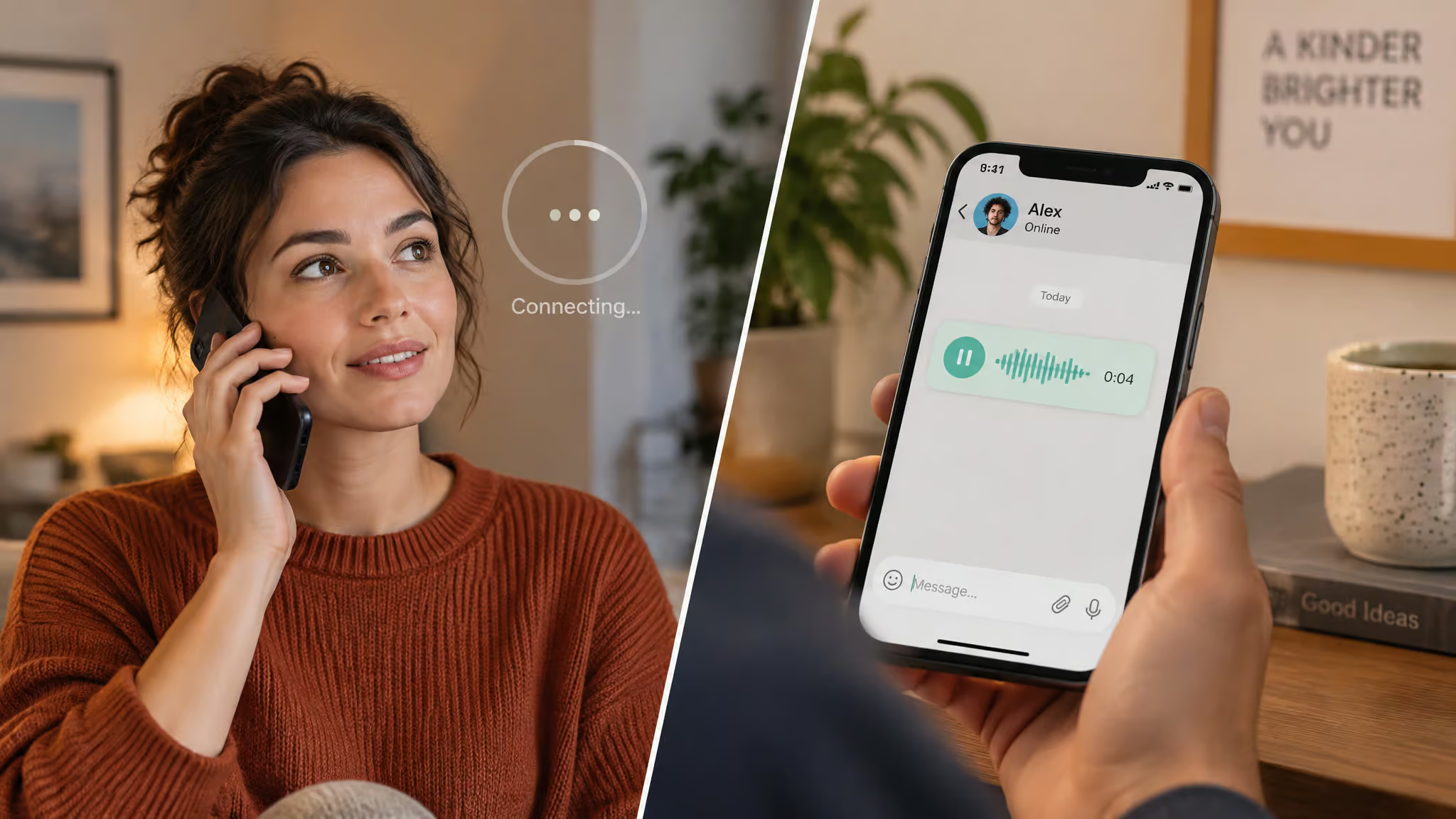
Four voice modes exist across this landscape:
| Voice mode | What it is | Typical latency | Example apps |
|---|---|---|---|
| Real-time call | Live phone-call feel, two-way audio | Sub-500ms best-in-class | Solm8, Character. AI |
| In-app live voice | Push-to-talk or tap-to-talk in chat | ~1-2s | AIKO (push-to-talk), Anima, some Replika tiers |
| Async voice notes only | Recorded clips, no live interaction | N/A (no live interaction; clips arrive fully rendered) | Edem AI, Kissable, DreamGF AI |
| No voice / TTS read-aloud | Text-first apps, possibly robot read-aloud | N/A | Various text-first apps |
That N/A in the third row isn’t a dodge. There’s no latency because there’s no live exchange; the clip arrives already rendered. And here’s the honest thesis: no 2026 app nails both lanes. Async notes can feel more intimate and less pressured, like voicemail from someone who actually thinks before speaking. Real-time feels closest to a phone call, at the cost of that reply pause we’ll get into below.
Why voice notes feel more intimate in 2026
Because they arrive finished. No dead air, no stumbling over the model’s timing, and the emotional delivery is baked in before you press play. It’s not the consolation prize; it’s a different product.
Who should choose the call lane
Anyone who wants the “is someone actually on the other end” feeling and can tolerate a beat of silence before each reply. If a 2-4 second gap would yank you out of the moment, stay in the voice-note lane.
Why live calls pause: the latency pipeline explained
The delay is structural, not a bug anyone forgot to fix. How these AI companions actually work comes down to a three-hop pipeline: your speech gets transcribed to text, a language model generates the reply, and a text-to-speech engine renders the audio, every time you speak. Under typical conditions that adds up to a 2-4 second pause before each reply; in our own testing under ideal conditions, we measured under 500ms to 2 seconds. The gap comes down to test conditions: our clean short exchanges on the fastest apps versus the messy, longer back-and-forth most guides document.
It’s walkie-talkie energy, or that beat where a bad Zoom connection makes everyone hesitate before talking. Nomi and Kindroid have tuned the pipeline down, but nobody can fully engineer the pause away; it’s the physics of the pipeline, not laziness.
Here’s the composite buyer pattern worth knowing: vendor pages promise sub-500ms response, buyers then hit dead air on long unscripted exchanges. Demo prompts are short and predictable. Real conversation isn’t.
Red flag: Sub-500ms claims come from short, predictable demo prompts. On long, unscripted exchanges, expect the 2-4 second pause to show up anyway.
How we scored the apps
We ran identical voice scenarios per app over two weeks in early 2026, measuring call realism, response latency, voice quality and consistency, free-access reality, and overall integration, the same criteria we apply in our best AI waifu apps comparisons. Published weights: Call Quality & Latency 30%, Voice Naturalness 25%, Emotional Range 20%, Voice Variety & Customization 15%, Memory Sync 10%. Scores: Nomi 8.8, Kissable 8.5, Kindroid 8.2, Candy AI 7.5, Pi AI 7.0. Full disclosure up front: Kissable and Edem AI are publisher-owned by the source guides, which disclose the conflict and link a public methodology. And the ranking below reflects documented features, not an independent performance benchmark.
The 9 best AI girlfriend apps with voice, ranked
Here’s the full field, lane-first.
- Character. AI is the only ranked app with free two-way real-time voice. Character Calls hit sub-500ms with fast pickup, it detects when you’ve naturally paused, and you can switch between text and voice mid-conversation. That last one is genuinely cool: start typing, then just start talking.
Skip if: you need anything beyond strictly SFW, because the filter is aggressive and non-negotiable. Free, or ~$9.99-10/mo Plus ($119.88/yr). Android, iPhone, PC, browser.
- Solm8 is the one that gives you a real phone number. Dedicated number, callable from browser, phone, or Telegram, sub-500ms latency. In testing, the reply landed almost instantly after I stopped talking; closest to a real call of anything tested. Catch: ~$15/mo starting, but the full real-time tier runs $60/mo, the priciest setup in the guide, and free voice is about 5 minutes a month. That’s a taste test, not a tier.
- Nomi wins on warmth and memory, not raw latency. The “AI companion with a soul” branding is just branding, but the shared-memory detail is honestly kind of elegant: text the app about a work problem, call five minutes later, and it asks how you’re feeling about it. Voice works across calls plus solo and group chat voice messages (V3), and subscribers can upload samples for custom voices, with ElevenLabs integration available if you run a separate subscription there. 1-2s latency, though calls occasionally hang at peak hours. $15.99/mo, $39.99/quarter, $99.99/yr on US web; App Store prices run higher.
- Kindroid is the tinkerer’s pick. Clone a voice from a short uploaded snippet or design one from scratch; in testing, cloned voices developed metallic artifacting on long sentences, hit-or-miss quality. One rule before you go cloning: get permission before cloning anyone’s voice, and be clear about how you plan to use it. Drive Mode for hands-free conversations on the dashboard is a fun aside, and live video calls with lip-synced avatars are documented, though not personally verified. Credit billing is the friction: 1M free audio credits monthly, 400 credits per call minute, 2,000-4,000 per video minute. Do the math: heavy voice use eats that budget fast. ~$13.99/mo ($37.99/quarter, $139.99/yr).
- Nomi vs Kindroid head-to-head is the real matchup for paid voice. Nomi wins the warm, memory-synced lane at 1-2s; Kindroid wins cloning and customization, with that documented 2-4s reply pause. r/KindroidAI praises the voice breadth and notes the same pause, and r/NomiAI skews positive about emotional depth and memory, though it’s the official community, so weight accordingly. On documented features only, Kindroid ranks #1, Nomi #2, Replika #3.
- AIKO (mobile push-to-talk) is walkie-talkie mode: two-way push-to-talk voice within the chat, with 1-2s latency, Android and iPhone only, ~$15/mo. The free tier gives a taste before the paywall. Note the label: this is a different product from AIKO by Olympus Studio, covered below. Both names get labeled every time.
- Edem AI is publisher-owned, disclosed up front. It does async expressive TTS voice notes in a browser PWA, no native app, with unfiltered roleplay. 100 free signup coins, then paid. Our test note: the voice note arrived a couple of seconds after the message with clear emotional inflection.
- Replika is the veteran, and the verdict is: no, Replika Pro is hard to recommend for voice-first buyers. Voice is gated entirely behind ~$19.99/mo Pro, and in ten days of testing, twice daily, Pro from day 4, we couldn’t trigger voice at all on the free tier. Pro buys voice and video calls, image generation, and romantic/spouse/mentor modes. Documented features include background calls while using other apps (underrated) and AR calls, and Replika ranked third on documented capability.
The origin is worth ten seconds: Eugenia Kuyda built it in 2017 as a memorial project from her deceased best friend’s messages. In 2023 the company locked romantic roleplay behind the paid tier and partially reversed after backlash, which is the concrete answer to “can a vendor take features away?” Pricing: $19.99/mo, $69.99/yr, $299.99 lifetime.
- Candy AI pairs generated images with recorded TTS replies. Async, not live. Voice is locked behind the ~$12.99-13.99/mo subscription and costs tokens on top, so the real monthly cost runs past the sticker. Worse, short-term memory often resets when switching from text to voice, a genuine continuity bug that undercuts the companion premise. Credit where earned: voice generation is fast, with deep emotional and flirtatious inflection in testing.
- Anima is the budget entry: in-app live voice, 1-2s latency, ~$13/mo, voice paid, no free voice. Competent but not the most expressive. Android and iPhone.
- Pi AI is the weird one. Best voice in the piece, not a girlfriend app. Completely free, and the most natural voice we heard: breathing sounds, “ums,” natural pacing, interruptible mid-speech. Voice engine is a 10/10; overall score is 7.0 because it lacks companion features.
It’s strictly platonic, gently but firmly rejects romance and NSFW, and offers no customization. Amazing voice, wrong product for what most people searching this are after.
Free voice reality check: what you actually get without paying
Character. AI is the only app here with genuinely free two-way voice, with the SFW filter as the non-negotiable package deal. Pi AI is also free with the most natural voice tested, but it’s platonic-only. Replika is the counterexample: zero free voice, no way to hear it before paying.
| App | Free voice reality (measured at time of testing) |
|---|---|
| Character. AI | Yes, unlimited two-way calls (slower model, occasional waits) |
| Pi AI | Yes, fully free, most natural voice (platonic only) |
| Replika | No, none |
| Solm8 | Partial, ~5 min/month |
| AIKO (Olympus Studio) | Partial, 100 AP/day including voice |
| Candy AI, Kindroid | No, paywalled |
These apps are the same ecosystem behind the AI girlfriend trend, companions built for emotional support and conversation.
The pattern most buyers hit: free voice isn’t free chat. Voice is gated separately on almost every app, and the common mistake is paying $15-20/mo having never heard the voice. Caps above were measured during our early-2026 testing; they change.
Buyer rule: Never enter payment details before you’ve heard the free tier. Voice is gated separately on almost every app, so the product page never tells you enough.
Does voice justify the premium? Pricing and true cost per minute
Expect $120-240/year at monthly rates ($69-240 on annual plans, 30-60% discounts), and four billing models: monthly subscription, annual subscription, daily action points, or one-time purchase. But sticker price isn’t the real number; cost per minute of voice is. Kindroid’s 400 credits per call minute, Candy AI’s token costs, and Kissable’s in-app “kisses” balance for media all change the math. Replika is the worst deal for voice-first buyers since you pay before you ever hear the voice. Solm8’s $60/mo tier is the price of true phone-call feel, and whether that’s justified depends entirely on how much you’ll use it.
| App | Monthly | Annual/notes |
|---|---|---|
| Romantic AI | $14.99/mo | $89.99 annual; 2D art, limited voice and customization |
| EVA AI | $14.99/mo | $99.99 annual, trial messages free |
Prices are vendor-published figures from the April 2026 price update; they vary by region, App Store pricing runs higher, and they may have changed.
AIKO by Olympus Studio: the no-subscription answer
The cheapest way to get voice without a subscription is AIKO by Olympus Studio: free on Google Play, or a one-time Steam purchase. The Android free tier gives 100 AP/day, roughly 20 messages at 5 AP each, including voice chat, the full animated 3D character, 45 personality traits, persistent memory, and, yes, cooking mini-games. Nobody asked for cooking mini-games. Everyone should get them anyway.
The Steam version is pay once, full access, no daily limits, no recurring charges. And there’s a bonus: an OpenAI-MIT study found paced use is healthier than binge use, and the AP cap enforces pacing structurally. A feature disguised as a limitation. This matters in a market worth $3.08 billion in 2025, growing 20% annually, with 47 million users described as subscription-fatigued.
Voice privacy: what happens to your recordings
It’s mostly okay if you check the right things. Most apps transcribe your voice to text and delete the raw audio, keeping only text logs, which is genuinely reassuring. The caveat: assume microphone input is processed on external servers. Before subscribing, spend five minutes checking the privacy policy, how long audio is retained, and whether you can delete it.
Not legal advice, just homework. And the number that explains why this matters: 2025-2026 breaches exposed 43+ million messages affecting 400,000+ users. One more thing to know: ad-supported free apps have the strongest data-monetization incentive. If you’re not paying, your data is the product.
Which app should you pick? Decision table and closing verdict
Solm8 sounds the most like a real phone call; the dedicated number, sub-500ms latency, and instant reply pickup made it the closest tested. Character. AI is the free call option, and Pi AI holds the most natural voice despite being strictly platonic.
| If you want | Pick | Skip if |
|---|---|---|
| Free voice | Character. AI | You need anything beyond SFW |
| Phone-call feel | Solm8 | $60/mo is too steep |
| Memory + warmth | Nomi | Peak-hour hangs would ruin your calls |
| Voice cloning | Kindroid | The 2-4s pause or cloned-voice artifacting |
| Voice notes all day | Kissable (publisher-owned, disclosed) | You need a live call |
| Expressive voice messages | Edem AI (disclosed) | You need a native app |
| Voice + images | Candy AI | Token costs and memory resets |
| Most realistic free voice | Pi AI | You want romance at all |
| No subscription | AIKO by Olympus Studio | You want live calls |
Before you pay anything, the limitations to carry: Character. AI’s SFW filter is hard-coded, Solm8’s real-call feel costs $60/mo, Kindroid trades the pause and artifacting for customization, Candy AI’s tokens and memory resets undercut the premise, Replika paywalls the entire voice experience, and the latency itself can’t be fully eliminated on any live call. And if “can a vendor take features away” keeps you up, Replika’s 2023 romantic-roleplay paywall and partial reversal is your case study. If the top table doesn’t fit, secondary voice-message options in priority order: DreamGF AI (customizable template characters, memory chat, photorealistic images, encrypted no-ID signup, NSFW on paid tiers, voice messages only; $12.99/mo, $9.99 3-month, $5.99 yearly), Infatuated.ai (deep emotional text, no image gen, $11.99/mo), GirlfriendGPT (5,000 personalities, 15 free msgs/day, $12-33/mo), OurDream AI ($19.99/mo Premium, $9.99 annual-billed), and Apob AI (credit tiers $6-80/mo), with SoulGen and SpicyChat as additional options we won’t embellish without testing. Our full AI girlfriend comparison covers the broader field beyond voice.
So: pick your lane first, then pick your app. And before you enter any payment details, check what the free tier actually lets you hear.
Frequently Asked Questions
Is there a free AI girlfriend app with voice calls?
Character.AI is the only app with genuinely free two-way real-time voice calls, hitting sub-500ms response times — but the trade-off is a strict, non-negotiable SFW filter. Pi AI is also fully free with the most natural voice tested, though it’s strictly platonic and rejects romance entirely. Most other apps gate voice behind a subscription.
Why does my AI girlfriend voice call have a delay before she replies?
The pause is structural, not a bug. Every reply runs through a three-step pipeline: your speech is transcribed to text, a language model generates the response, and a text-to-speech engine renders the audio. That adds up to a 2-4 second pause under typical conditions, and no app can fully engineer it away. Sub-500ms claims usually come from short, predictable demo prompts.
