What Is a Gamer Babe? The Term, the Tension, and the Truth
Look up “gamer babe” and you’ll find a definition: a term for a female video game enthusiast, first recorded around 2005–10. Then you’ll spot the caveat: sometimes disparaging.
Right there, in the gap between “enthusiast” and “disparaging,” the label carries two accusations: she’s not as good, or she’s only in it for the attention. But that surface explanation doesn’t tell you why the term feels so loaded, or where that tension came from. To understand “gamer babe,” you have to dig into the language itself, the market forces that shaped gaming culture, and the experience of being labeled.
Key Takeaways
“Gamer babe” is a marked term — like “turkey bacon” or “Diet Coke,” it linguistically marks the female gamer as distinct from the unmarked, default male “gamer,” carrying implications of lesser skill or inauthenticity.
The gendered marketing of the 1990s — specifically Nintendo’s post-1983-crash research, is the direct industry root of the culture that created the label.
The label persists despite the numbers: women make up 41% of gamers but avoid the “gamer” label due to stigmatization, creating a persistent gap between who plays and who gets called a gamer.
Table of Contents
Why the Label Feels Different: Markedness
Think about how we talk about food. You go to the store for “bacon.” You don’t specify “pork bacon” because bacon is pork. But you absolutely specify “turkey bacon” because it’s the exception to the default.
That’s the linguistic concept of markedness, and a Paizo forum user named Orfamay Quest explained why it applies here. “Gamer” is the unmarked default — and in a culture built around that default, the default is male. “Gamer babe,” “gamer girl,” “girl gamer”, every one of these is a marked term. It signals to the listener that the person being described is a deviation from the norm.
You never hear “gamer guy.” You hear “gamer.” The modifier is only needed when the speaker needs to specify not the default.
How a Market Crash Created a Gendered Hobby
Before the 1980s, video games were marketed pretty neutrally. Nobody had done the demographic research to target a specific gender — games were just games. Then came the 1983 video game crash, caused by market oversaturation and a flood of low-quality titles. It reset the industry completely.
When Nintendo rebuilt the market, they did something new: wide-scale market research into who was actually buying and playing. The data showed boys were playing more. That single data point, combined with a conservative business strategy, set a course that shaped gaming culture for decades.
By the 1990s, the marketing was loud and clear. Ads leaned heavily into hypersexualized female characters, the promise that gaming skill would get you female attention, and jokes about escaping the “old ball and chain.” This business decision created a self-fulfilling cycle: games were marketed to boys, so more boys played, which justified marketing to boys.
The Testing Ritual: Gatekeeping in Practice
I watched my brother play Super Mario Sunshine, Twilight Princess, and Lego Star Wars in the basement. I learned the lore by osmosis — I knew the story of the Hero of Time before I ever held a controller. When I finally got my first Zelda game at age 19 (it was my brother who gave it to me), I was ready.
But that didn’t stop the testing.
A woman mentions she plays games. A man quizzes her on obscure mechanics or lore to see if she’s “real.” I was tested on the spinner mechanic in Twilight Princess — a game I’d watched someone play from start to finish.
This is gatekeeping as social ritual, and it’s unique to women in gaming. Two outcomes come from it: acceptance (she passed the test) or exclusion (she’s a “fake”). The latter is more common. The goal isn’t to welcome someone into the community; it’s to act as a gatekeeper for it. Of course, not every quiz comes from a hostile place — some men may test out of genuine curiosity or a desire to connect, but regardless of intent, the effect is still exclusionary.
Gamer Babe vs. Gamer Girl vs. Girl Gamer
They might sound interchangeable, but word order and word choice carry real baggage here.
Kim Berkley, a game developer who writes about gaming culture, draws a specific line. “Gamer girl” tends to carry the derogatory weight — it implies fakeness or lesser skill. “Girl gamer” is less common and somewhat lighter, but it still puts gender first, emphasizing identity over activity. “Gamer babe” takes this further by adding an appearance-focused layer — you’re not just female, you’re attractive and female.
When you survey what female gamers actually want to be called, the answer is consistent: “gamer women” or nothing at all. Just “gamers.” According to a 2023 survey by the gaming analytics firm Quantic Foundry, most female gamers prefer the label “gamer” without any gender modifier. Dictionary.com sums it up bluntly: many women who play games would rather leave gender out of it, especially when faced with the reductive gamer babe stereotype. They just want to be gamers.
The Weight the Label Carries
The “fake gamer girl” stereotype — sometimes called “gamer gurl” as a dismissive label, shapes how women interact with gaming, and it intersects with an ongoing debate about What does the term gamer girl mean as it evolves from a self-identifier to a marketing tool in streaming and online discourse.

Look at the representation women grew up with in games. Princess Peach spent decades in a tower waiting for Mario. Zelda was often the reward, not the hero. When strong female leads did appear, they were often hypersexualized for the male gaze — Lara Croft’s proportions became a selling point, and Samus Aran’s final reward in the original Metroid was being stripped of her armor.
Then in 2014, Gamergate turned online harassment of women in gaming into an organized campaign. Thousands of people systematically harassed, threatened, and doxed feminist women in the gaming community. It was an enforcement mechanism that sent a message: this space is contested.
Many female gamers hide their gender online. They use male avatars, adopt masculine personas, or use voice changers. It’s a tactic in a community that can turn hostile the moment a female voice is detected.
Can You Own the Label?
Yes, some women actively reclaim the term as a badge of pride.
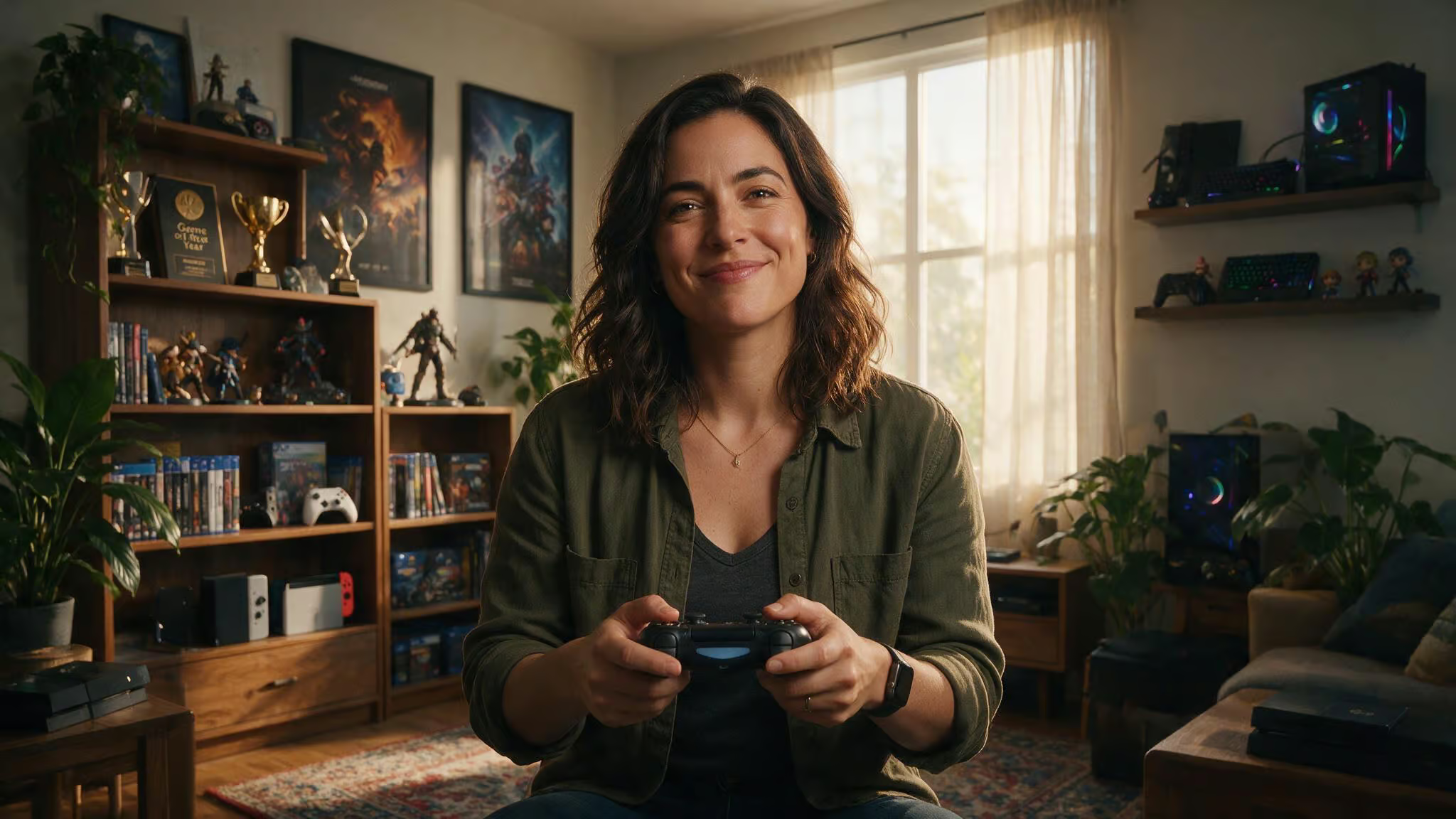
Kim Berkley self-identifies as a “gamer girl” as an act of defiance. Her framing is direct: “Yes, I am a woman who plays games, and I’m here whether the misogynists like it or not.” It’s the same trajectory that “geek” took — once an insult, now a badge of identity, which raises the question of are gamers nerds or geeks?
The counterexamples to the stereotype are abundant. Dignitas is widely regarded as the world’s best all-female CS:GO team, practicing six hours daily. Pokimane earned $1.5 million in 26 months as a streamer. Kim Swift developed Portal, one of the most elegantly designed games ever made. Alyssa Finley was the executive producer on Bioshock and Bioshock 2, a franchise that has sold over 34 million copies.
The word still gets used as a weapon more often than a compliment, and some women see reclaiming it as ignoring the harm it causes.
The Numbers Don’t Match the Stereotype
Women make up roughly 41% of all gamers. Almost half. As of 2016, the split was 59% male, 41% female.
So why does the stereotype persist? Because women are significantly less likely to self-identify as gamers. They fear the stigmatization that comes with the label. A 2015 study on self-reporting habits revealed that men underestimated their weekly play time by about an hour.
Women underestimated by more than three hours. They were playing more than they — or the culture, gave them credit for.
The Community Still Can’t Agree
Is “gamer babe” ever okay? The community itself is split on this.
In a Paizo forum discussion, users laid out the full range. Some see the term as inherently exclusionary — it marks women as not “real” gamers. Others view it as a neutral description of a demographic reality, like specifying “turkey bacon.” One user, Aranna, offered a pragmatic take: when a boy calls her a gamer girl, he usually just wants to play with her. Sometimes it’s an invitation.
Others express total indifference — I don’t care what you call me, I just want to play games. But the cautious consensus, backed by Dictionary.com, is clear: use these terms carefully. If you want to be safe, just say “gamers.”
The meaning depends entirely on who says it, to whom, and with what intent. That instability is the clearest sign that the term is still in active contest.
Let People Play
The “gamer babe” label is a product of linguistic markedness, a specific historical marketing decision, and decades of gatekeeping culture. Some women wear it proudly as reclaimed territory. Others hear it as a challenge to their legitimacy. Many just want it dropped entirely.
You don’t have to be an esports champion or a top-earning streamer to be a “real” gamer. The only requirement is that you play. If someone quizzes you on your Call of Duty knowledge, challenge them to a game. If someone says Animal Crossing isn’t a real game, double down on building your dream island.
Refer to female gamers the same way you’d refer to anyone who plays. Call them gamers. Let the label fade into the background where it belongs, and let the games speak for themselves.
People Also Ask
What does it mean to be a gamer girl?
A gamer girl is a female video game enthusiast, but the term carries baggage. It’s a marked label that implies she’s a deviation from the default male gamer, often suggesting lesser skill or inauthenticity. Many women who play games prefer to just be called gamers.
What does gamer mean in slang?
In slang, ‘gamer’ is the unmarked default term for someone who plays video games, and in gaming culture, that default is assumed male. When you hear ‘gamer’ without a modifier, it typically refers to a male player, which is why terms like ‘gamer girl’ or ‘gamer babe’ exist to specify the exception.
What is a gamer girl slang?
Gamer girl is slang that often carries derogatory weight, implying fakeness or lesser skill compared to the default male gamer. It’s a marked term that puts gender first, and many women in gaming find it reductive or dismissive.
What’s the difference between ‘gamer girl’ and ‘girl gamer’?
Word order matters: ‘gamer girl’ tends to carry more derogatory weight, implying fakeness or lesser skill, while ‘girl gamer’ is somewhat lighter but still emphasizes gender over identity. Both are marked terms that distinguish the player from the default male gamer.
Why do some women reclaim the term ‘gamer girl’?
Some women self-identify as gamer girls as an act of defiance, similar to how ‘geek’ was reclaimed from an insult to a badge of identity. It’s a way of saying, ‘Yes, I’m a woman who plays games, and I’m here whether the misogynists like it or not.’
