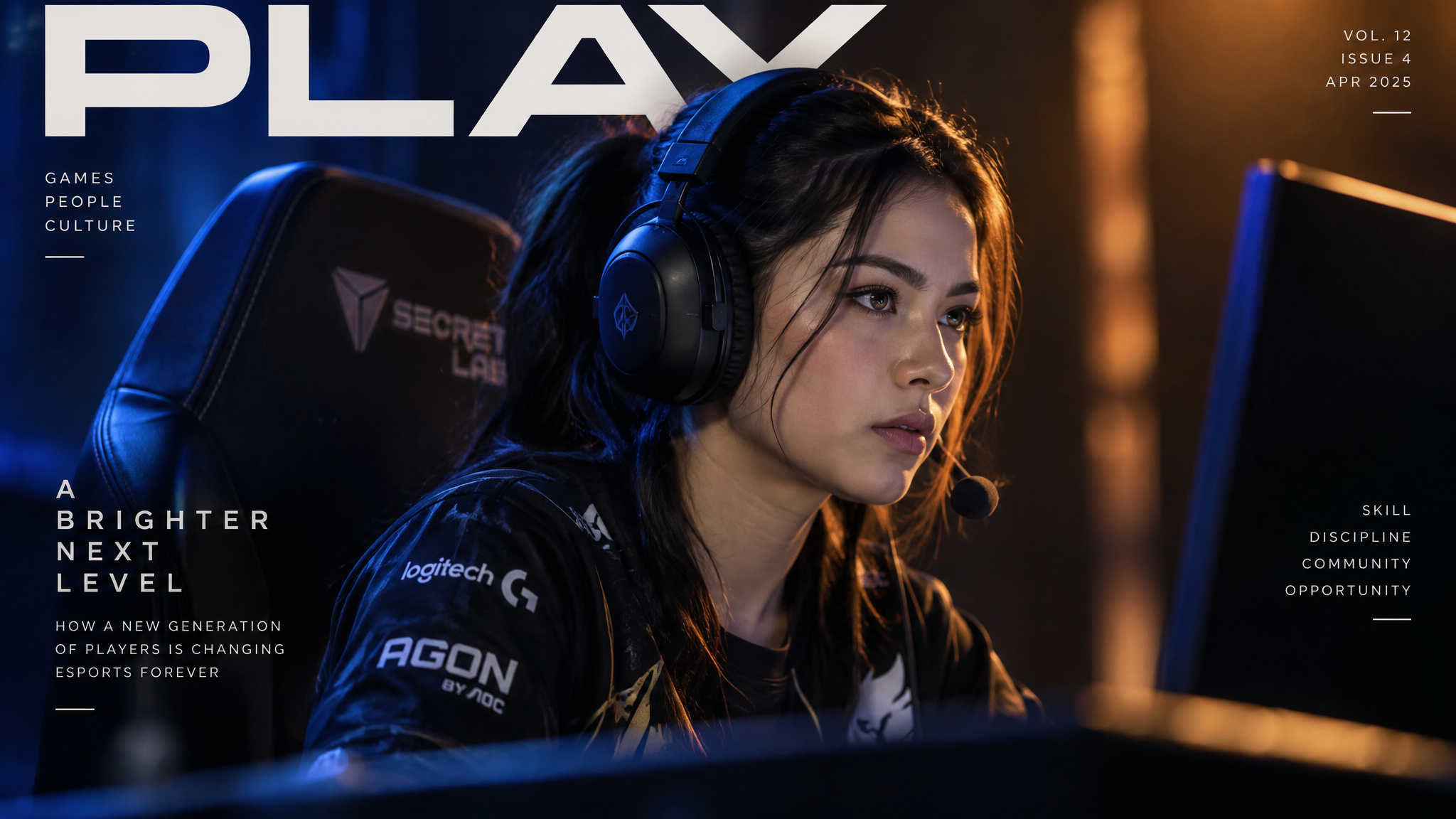
Every tournament season, the same label shows up in a bracket listing: a women-only queue sitting next to the open events, a Game Changers qualifier, a “female division” with nothing explaining what it actually gates. So, what does female esports mean? Esports itself is just organized competitive video gaming; the “female” prefix doesn’t mark a separate sport. It marks a policy decision governing bracket entry, and this piece walks through that decision in real tournament rules, in hard numbers, and in a dispute that’s still burning.
Key Takeaways
“Female esports” bundles three different things: a tournament eligibility rule, women’s leagues and rosters like VALORANT Game Changers, and the wider women-in-esports ecosystem.
In July 2014 the IeSF opened its male-only world championship events to all genders within a day of community criticism, but kept the female divisions, arguing open brackets alone can’t deliver equality.
About 35% of esports gamers are female while only around 5% of professional players are, and a 2025 Honor of Kings study ties that drop-off to harassment rather than disinterest.
Table of Contents
What does female esports mean? One term, three meanings
Female esports is the teams, leagues, and specialized circuits dedicated to women, and under some organizers to marginalized genders more broadly, in competitive video gaming. Most major tournaments are technically open to all genders. Women can and do enter open brackets, and female divisions run in parallel with open events. They’re an additional queue, not a replacement for the main one.
The label actually collapses three structurally different things, and arguments about one frequently get mistaken for arguments about another:
- A tournament rules category. A line in the ruleset deciding who may enter a specific bracket. The cleanest worked example: at the 2014 world championship run by the International e-Sports Federation (IeSF), “Open for All” events and “Female Competition” events ran side by side for the same titles. Two tournament queues, one with open entry, one women-reserved.
- Women’s professional leagues and all-female rosters. VALORANT Game Changers is the flagship: a full competitive circuit built for women and marginalized genders, with its own teams, qualifiers, and championship path.
- The broader women-in-esports ecosystem. Advocacy organizations, grassroots communities, mentorship networks, the support structure wrapped around the first two.
Which meaning you’re arguing about changes the argument entirely. A dispute over a bracket rule is about who gets gated out of one queue. A dispute over a league tier is about whether a parallel circuit deserves resources at all. Neither is the same conversation as the one about community culture. Commodity definitions flatten all three into a single blob, and the interesting stuff lives in the seams between them.
How a female division actually works: the IeSF’s 2014 reversal
Esports doesn’t sort every competitor by gender across the board, and the concrete proof is what the IeSF actually did in July 2014. The whole case reads like a hasty repair job: facing community pressure, the governing body pushed through a rules change, and the specifics of that change are on record.
The amended BAKU 2014 lineup
I pulled up the press release for this one, and the timeline is wild. On July 2, 2014, the federation’s gender-division policy got called into question. An emergency Board session convened the same day. The press release shipped July 3, 2014.
One day between bug report and emergency meeting, one more to push the fix live. For a governing body, that’s a response cycle most software teams would envy. The story also traveled beyond esports circles: Kotaku covered the reversal, and Leon Hurley’s write-up kept it in front of mainstream games readers.
The patched structure had two categories running side by side: “Open for All” events, and events reserved for women. The open slate at the 6th e-Sports World Championship BAKU 2014:
- DOTA 2, teams of 5, with rosters explicitly allowed to be entirely male, entirely female, or mixed
- StarCraft II: Heart of the Swarm
- Ultra Street Fighter 4
- Hearthstone: Heroes of Warcraft
- Tekken Tag Tournament 2, newly added as Open for All
That last line is my favorite spec detail. Tekken Tag Tournament 2 had initially been set as female-only, and the release added the open event “for consistency.” The policy cut in both directions: the patch didn’t just open doors, it converted a women-only title into a dual-queue format. Meanwhile, female-only StarCraft II and Tekken Tag Tournament 2 events ran in parallel with the open ones, same as before.
Why the female division stayed
Here’s the asymmetry critics seized on: the male-only categories dissolved into Open for All, and the female categories were retained. The IeSF didn’t abolish gender division. It abolished it in one direction only.
The organization’s published rationale, on the record in that same release: female gamers make up roughly half the world’s gaming population but only a small percentage of esports competitors, and female-only competitions exist to improve representation in a male-dominated industry. Without deliberate effort, the IeSF argued, esports can’t achieve true gender equality.
Read that closely, because it contains a concession most people miss. The same organization that had been running male-only events was saying, in its own press release, that open brackets alone apparently can’t change representation. That’s the strongest organized counter to “just let everyone compete together,” and it comes from the organizer itself. Whatever you think of the policy, the reasoning is documented, and women’s circuits still run on essentially the same logic today.
Why women-only divisions exist: the participation funnel in numbers
Women are underrepresented at the professional tier of esports because of barriers, not disinterest, and two numbers show the shape of the problem:
- About 35% of esports gamers are female (Hilbert 2019)
- Only around 5% of professional players are women (Darvin et al. 2021)
The drop-off happens between casual play and the pro tier, which is exactly the gap women-only circuits target. The IeSF’s own framing said the same thing back in 2014: half the gaming population, a small share of competitors, and an admission that open competition alone won’t close it. There’s historical precedent for doubting the “women just aren’t interested” explanation, too. After Title IX, female participation in traditional US sports rose roughly 1,000% (Darvin et al. 2021), which makes the pre-Title IX version of that claim look shaky, and the esports version inherits the problem.
The research base was thin as well: fewer than 200 esports-focused academic articles had been published through March 2018, so the funnel went largely unexamined in print. The institutional side was moving, though: by 2018, over 200 schools provided varsity support for collegiate esports, nearly $15 million in esports scholarships had been committed, and Chinese universities were establishing Esports Management and Esports Commentary majors.
Bottom line: The gap isn’t interest — it’s the funnel between casual play and the pro tier, and that’s precisely where women-only circuits aim.
All of this plays out inside a mainstream industry: China became the world’s largest digital gaming market in 2016 with 163 million esports viewers, esports was a medal event at the 2023 Asian Games, and the IOC’s stance has been positive. The remaining bottleneck is visibility. With extremely low female representation among pros and in senior management, young women can’t aspire to what they never see.
What actually drives women out: harassment and the visibility problem
The harassment question deserves a straight answer before any theory, and there’s a study that provides one.
What the Honor of Kings study found
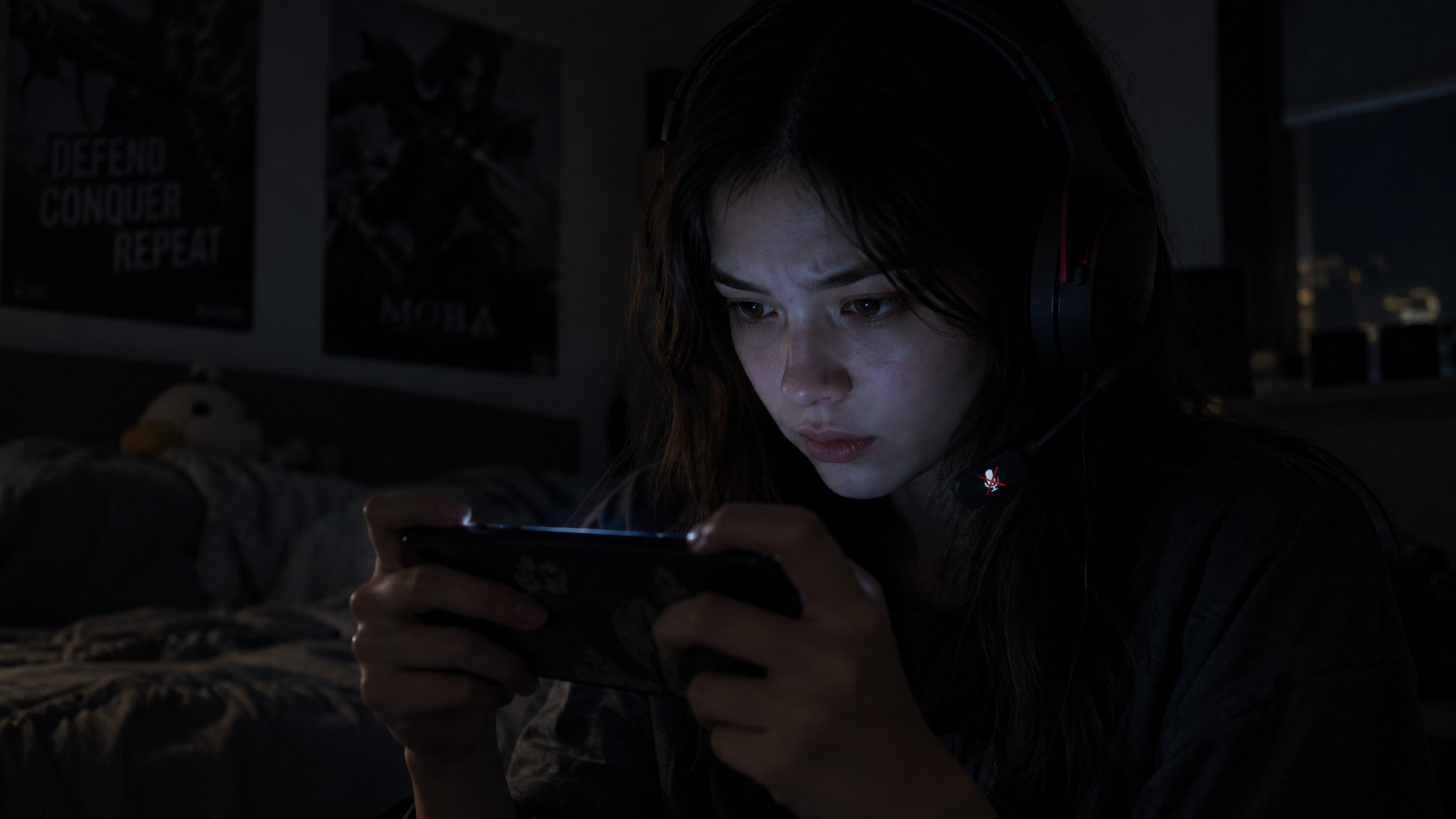
Yes, the harassment is documented and specific. The cleanest source is Tang, Peng, Ma & Sum (2025), published 06 February 2025 in Humanities and Social Sciences Communications (vol. 12, article 144, DOI 10.1057/s41599-025-04392-z): 31 female players aged 18-29 in six focus groups of 4-6, which the authors describe as the first study of women as primary players in mobile esports. Their finding, kept honestly as a correlation: underrepresentation correlates strongly with gender-based harassment and toxic behavior, not lack of interest. A woman plays well, her gender becomes known via voice chat or stream, and the conversation shifts from her play to her gender. The researchers call this the identity recognition shift, where merit-based evaluation flips to gender-based exclusion.
The log excerpts are the receipts:
“Let’s surrender. It’s a girl playing” (P14)
“Was it your boyfriend playing for you?” (P19)
That second one is credit theft: a high rank gets reassigned to an imaginary man. P18 avoids voice chat entirely to hide being a woman, a defensive habit players developed in response to the platform’s shortcomings. Honor of Kings does ship anti-toxicity tooling. AI detection, quick replies, reporting, but a participant reported difficulty actually getting toxic players punished, and no source evaluates whether the moderation works.
One bright spot the authors flag: female teammates stood up for participant P27, and they suggest increased female presence could disrupt the homogeneous environments where this behavior flourishes. Their suggestion, not a guarantee, but it lines up with the study’s broader point that low female participation in esports roles traces directly to the hostile environment other players create (Fox and Tang, 2017).
The role trap
P23 refused the support slot male players kept assigning her and put in hours in the jungle specifically to show women belong there. The deepest cut is P5 questioning whether her own role preferences are even authentic or male-imposed. The study attributes all of this to what it calls hegemonic geek masculinity, athletic and geek masculinity merging into a continuation of toxic gamer culture. That’s their framework; the observable behavior is teammates deciding your role for you.
The rest of the barrier stack
Compressed: participation buys socializing and accomplishment through ranking systems, including provincial and city rank emblems, a genuinely appealing touch, but costs time and emotional distress, plus device and network expenses and a sense that elite play is out of reach, a perception finding rather than a measured skill gap. Parents were mostly neutral or supportive, but a minority hold gendered beliefs, and P31 doesn’t dare play at home. The study itself carried the trappings of institutional rigor, ethics approval dated June 26, 2023, under ref. SBRE-22-0775, and its reception, roughly 15,000 accesses, 20 citations, and an Altmetric score of 4, shows how much demand there was for this evidence. Institutional money was moving too: nearly $15 million in esports scholarships had been committed by 2018.
Segregation or equity? Why the same tournament reads two ways
Women-only esports tournaments get read as segregation by critics and as the first pressure-free competitive space by the women who enter them, and both readings attach to the same signup form. Steph, an organizer who runs an esports organization, started women-only Mortal Kombat events and got called divisive and unnecessary for it. The reversal is the story: she had opposed women-only events herself, then ran brackets and a team of men and watched women decline stream appearances over heckling, comments about their looks, and Twitch chat abuse waiting in the VODs afterward. Her design rationale, in her framing: remove the societal pressure so players can concentrate on performance and build resilience gradually. These are spaces for early-stage development, a starting point rather than the endpoint, because male-dominated local fighting-game-community scenes leave women nowhere comfortable to practice.
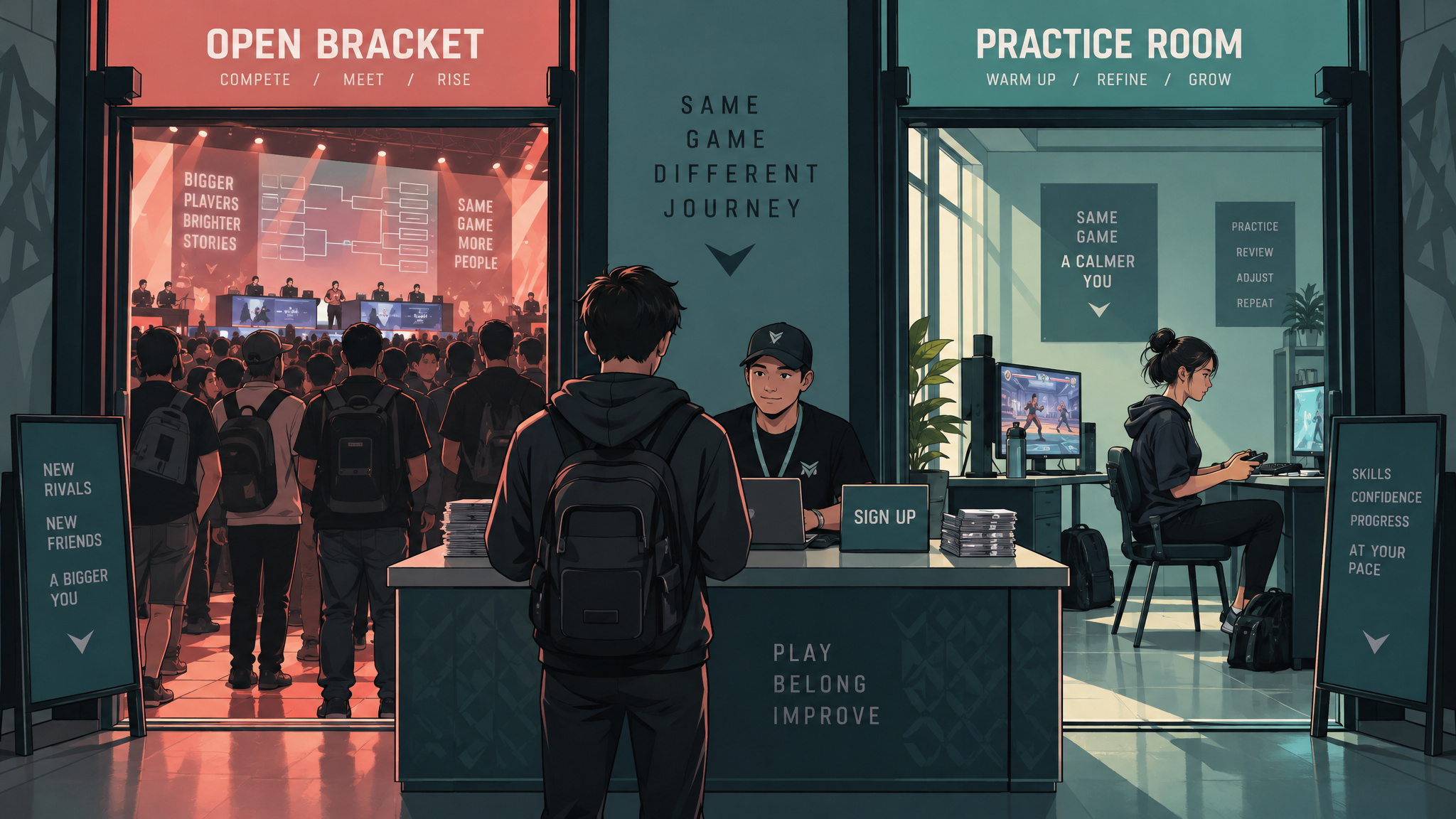
Then the collision that makes this more than both-sides mush. The meritocratic objection, in Aziza’s words about the FGC, that “all that matters are your buttons,” undercuts itself, because the documented evidence shows skill evaluation flips to gender-based the moment a woman is identified. If skill alone really decided things, gender couldn’t alter how skill gets judged. And the IeSF’s own 2014 concession, that open competition alone can’t deliver equality, is the organizer-side counter to “just let everyone compete together,” from the organization that ran the male-only events.
Both readings are real. That’s why the debate persists.
Who counts as female? The live boundary dispute
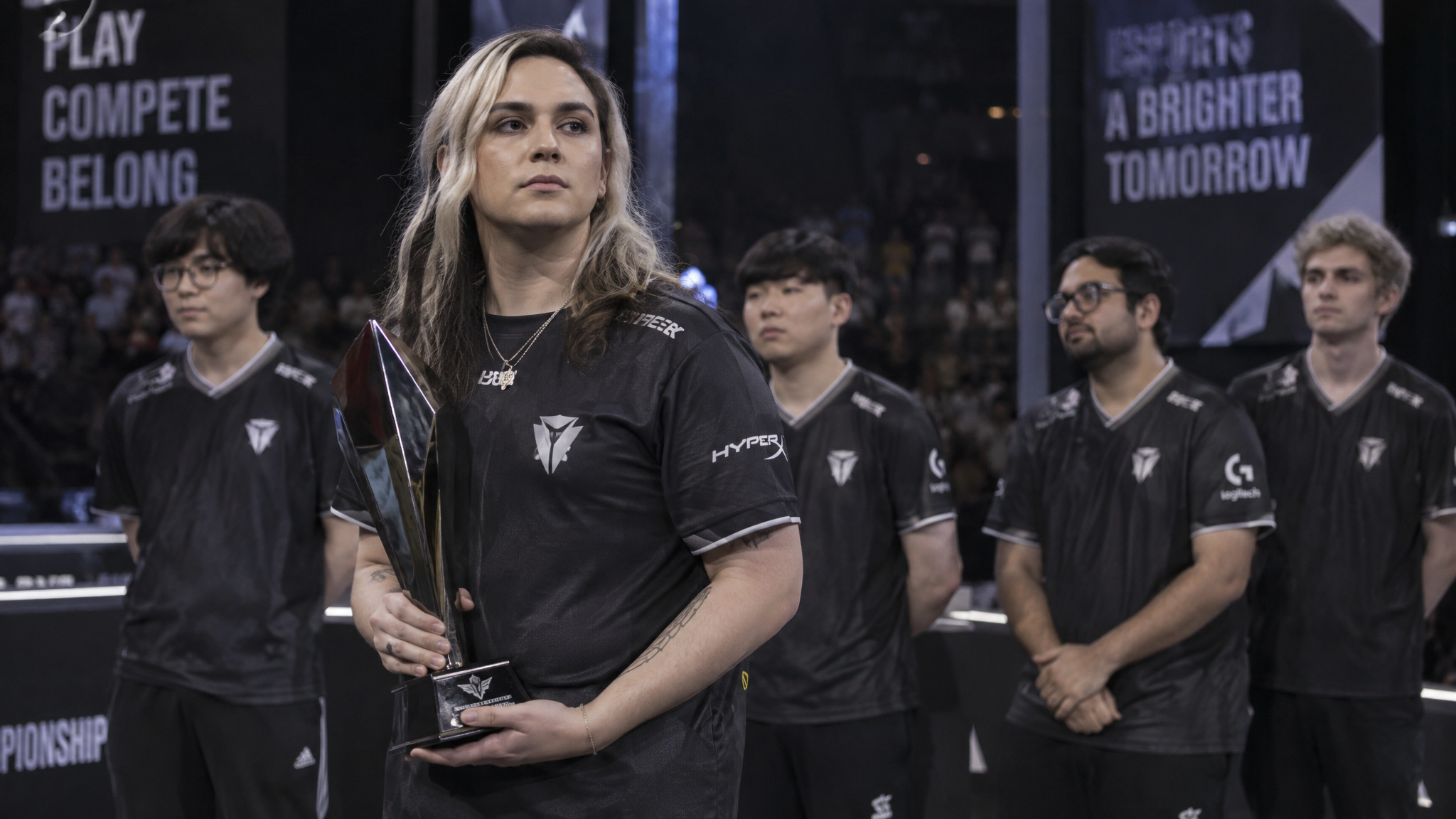
Some women-only divisions explicitly include trans women, and some explicitly do not. Two live eligibility models operate under the same “female esports” label, and the real contest today is over who defines “female,” not simply women versus men.
Two implementations
VALORANT Game Changers runs on a “marginalized genders” umbrella, trans-inclusive by design, offering a safe environment for competition and skill development alongside community space for connection and growth. Against that: femaleplayersTN’s girls-only VALORANT tournament, which per leaked Discord screenshots limited participation to players who are “biologically female.” One leaked message, quoted as-is: “We think that it’s not fair to let transgenders play our tournaments,” attributed to members’ religious beliefs. The organizer’s stated goal was creating a space for women; the exclusion rule sat right next to it.
The failure pattern around that rule is a sequence: criticism started over an AI-generated social graphic, accounts criticizing the AI usage got blocked, author Lea Maas (@N3ylani) was blocked on May 1, 2026 after asking about trans inclusion, and the organization later issued a public statement thanking supporters and specifically thanking Asmongold, a signal of which audience it courts. The Game Changers community’s reaction was firmly negative. Billie “billieidk” Purdie, VALORANT on-air talent, supplied the implicit contrast: be clear in community communication and open to feedback instead of shutting voices down.
What happens to trans players in women’s events
Vader, a trans player, was part of the event-winning duo at The Milk Cup 2025, an October 2025 Fortnite tournament for women and marginalized genders, and got hit with transphobic and sexist rhetoric anyway. Winning didn’t shield her. Asuna, a trans player, won in the Queen of the Hill series and was then harassed, misgendered, and outed with pre-transition photos. Steph’s policy is the contrasting config, and it’s short enough to quote verbatim: “a woman is a woman.”
Under that view, identity or birth status doesn’t affect inclusion. xhellokayla frames the trans contribution as infrastructure work: trans individuals have spearheaded safe grassroots competitive environments for years. Esports Insider‘s editorial argument, labeled as theirs, is that trans representation matters for all genders and progress begins with hearing marginalized voices out. There’s no settled consensus on trans eligibility, and both positions have receipts.
Do women-only circuits work? Function, friction, and the design alternative
Female esports leagues like VALORANT Game Changers are demonstrably developing talent and community, but the evidence doesn’t prove they produce open-bracket champions. Neither the promotional nor the dismissive framing holds up.
- Function: Sarah “sarah” Simpson’s assessment, from her X post and kept as a practitioner’s read rather than a measured outcome, is that Game Changers has been “incredibly successful” at developing talent of marginalized genders and inspiring young people who would never have tried competing.
- Friction: Honor of Kings has a professional women’s league, the Honor of Kings Women’s Open, that’s less promoted and valued than the men’s, and a female pro faces skill scrutiny with mistakes magnified (participant P22). Separate structures can be devalued even while they exist.
- The design counter-example: Honor of Kings attracted over 100 million female players in China by 2017 (Yaqi et al. 2021) through design, not division: QQ/WeChat social integration plus art styles and hero skins catering to female audiences, producing a female player share that matched or surpassed the male share in the otherwise male-dominated MOBA genre. Yet a women’s league still emerged, and toxicity persisted. Design lowers the entry barrier; it doesn’t fix competitive culture. It’s the cleanest natural experiment in this debate, and almost nobody cites it.
- Remedies beyond tournaments: the researchers’ checklist runs anti-harassment protocols, more female representation in competitions and management, education and training, early exposure, funding and sponsorship programs, plus all-female teams and mentorship (Darvin 2020, Luo and Chen 2024, Andrews and Crawford 2021).
No source demonstrates a proven pipeline from women’s circuits to open-bracket champions. What the record does document elsewhere is the money side, which the earnings data behind the “gamer babe” label breaks down player by player.
Quick answers: the questions searchers ask next
Short answers to the questions that follow naturally from everything above: what the term itself means, how the participation numbers break down, whether women have reached the professional tier, and where to find women’s teams and events. Each one pulls from the record already laid out in this piece.
What “esports” stands for
Short for “electronic sports”: organized competitive video gaming, recognized as a sport in several countries, considered in about 40 others, and a medal event at the 2023 Asian Games.
Whether half of gamers are female
Per the IeSF’s own statement, female gamers make up roughly half the world’s gaming population; the esports-specific figures are about 35% of esports gamers and around 5% of professional players.
Whether women have become professional players
The evidence documents circuits, leagues, and named winners like Vader at The Milk Cup 2025 and Asuna in the Queen of the Hill series, plus Game Changers’ talent development, though this article includes no individual pro-player profiles, which is exactly what many readers want next.
Finding women’s teams and events nearby
There’s no location-specific data here, and male-dominated local scenes are the documented pattern, so the practical route is following women’s circuit organizers and grassroots women-only series like Steph’s Mortal Kombat events; the getting-started guide to female esports near you covers the local-tournament and community entry points in detail.
Frequently Asked Questions
What does esports stand for?
Esports is short for “electronic sports”: organized competitive video gaming. It’s recognized as a sport in several countries, under consideration in about 40 others, and was a medal event at the 2023 Asian Games.
Is esports divided by gender?
Not across the board. Most major tournaments are technically open to all genders, and women can and do enter open brackets. Female divisions run in parallel as an additional queue, not a replacement — the IeSF’s 2014 championship, for example, ran “Open for All” events alongside women-only StarCraft II and Tekken Tag Tournament 2 events.
Why are there no women in esports at the professional level?
There are some, but very few — around 5% of pros — and the documented cause is the funnel between casual play and the pro tier, not disinterest. A 2025 Honor of Kings study tied underrepresentation to gender-based harassment and toxic behavior, and the IeSF itself conceded back in 2014 that open competition alone can’t close the gap.
Why do tournaments have female-only divisions?
Organizers argue that open brackets alone can’t deliver equality when women make up roughly half the gaming population but a small share of competitors. Women-only events are framed as pressure-free spaces for early-stage development — a starting point, not the endpoint — because male-dominated local scenes often leave women nowhere comfortable to practice.
Are women-only esports tournaments divisive or necessary for equality?
Both readings attach to the same signup form, which is why the debate persists. Critics call them segregation; the women who enter them describe the first pressure-free competitive space. The meritocratic objection undercuts itself, though — documented evidence shows skill evaluation flips to gender-based the moment a woman is identified, so “skill alone decides” doesn’t hold in practice.
What harassment do women face in esports and gaming communities?
The documented pattern includes gender-based harassment the moment a woman’s identity becomes known via voice chat or stream — comments like “Let’s surrender. It’s a girl playing” and credit theft such as “Was it your boyfriend playing for you?” Some players avoid voice chat entirely to hide being a woman, and organizers report women declining stream appearances over heckling and Twitch chat abuse.