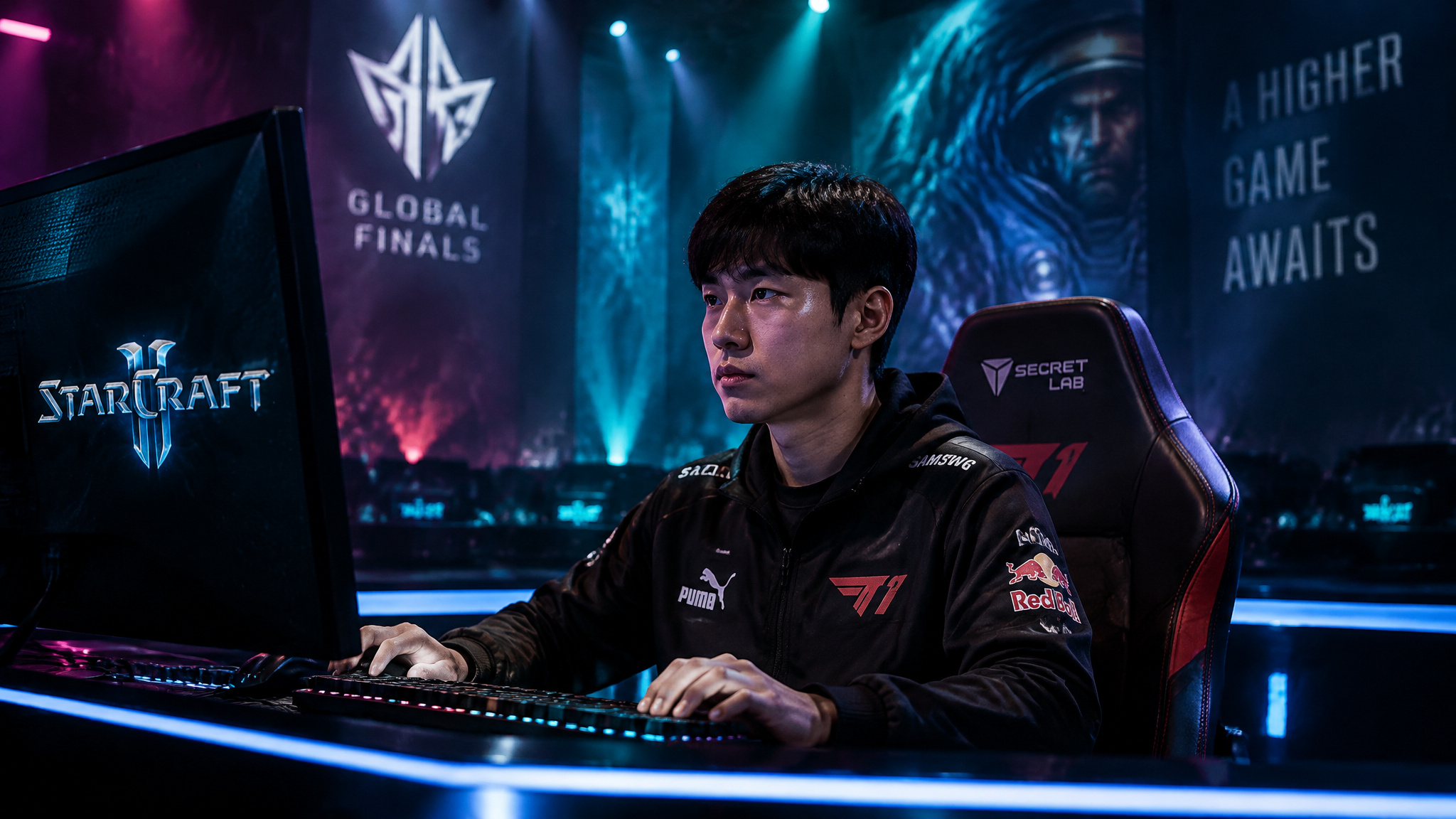
If you want the defensible answer to who is the best female esports player of all time, it’s Sasha “Scarlett” Hostyn: $471,250 in career earnings as of 2024, the first woman to win an Intel Extreme Masters tournament (2018), and two Guinness World Records on the shelf. That’s not a vibes pick. Those are receipts you can audit.
But “best,” “highest-earning,” and “most famous” are three different questions, and they have three different sourced answers. This list ranks across games and eras rather than re-running a single-game earnings table, because esports is a global billion-dollar industry that was historically male-dominated, and the women who dominated their own scenes deserve to be judged against their own eras. Here’s the ranking, the methodology behind it, and the people who earned their spots.
Key Takeaways
Scarlett (Sasha Hostyn) is the best female esports player of all time: $471,250 earned as of 2024, first woman to win Intel Extreme Masters in 2018, and Guinness records in 2016 (career earnings) and 2022 (43 tournament wins).
The top 5: Scarlett, Liooon, vilga, Mystik, and potter, ranked on career prize earnings plus major titles, weighted across games and eras.
A cited 718% pay gap between top male and female champions, based on 2018 data, is the uncomfortable backdrop to every earnings figure in this piece.
Table of Contents
How this all-time ranking was built
The top 5 female gamers of all time are Sasha “Scarlett” Hostyn (StarCraft II, $471,250, first woman to win IEM), Li “Liooon” Xiaomeng (Hearthstone’s first female world champion, $241,510), Ksenia “vilga” Kluenkova (Counter-Strike, $200,000 WESG payday plus four straight ESL Impact LAN titles), Katherine “Mystik” Gunn (the former Guinness record holder at $122,000), and Christine “potter” Chi (five Women’s Electronic Sports World Cup titles and a coach-player role at Evil Geniuses).
The game spread is wider than most people assume. The top women compete across StarCraft II, Hearthstone, CS:GO and CS2, VALORANT, Street Fighter, Halo, Dead or Alive, and Teamfight Tactics. As of 2018, the concentration sat in five titles: Counter-Strike, Dead or Alive, Street Fighter, StarCraft, and Halo; today’s list spreads into VALORANT, Hearthstone, TFT, and Apex Legends. That shift matters, because a ranking frozen in one era misses half the careers.
Our criteria are deliberately conversational: career prize earnings plus major world titles, weighted across games and eras. Esports Insider’s profiles were last updated June 15, 2026 and rank on competition wins, popularity, and legacy. Geek Vibes Nation and Scope Weekly supply much of the profile data underneath both approaches, with additional sourced coverage from Dot Esports and GameRant and profile contributions from Anne Howard, Antonia Haynes, Ashley Rosa, and Duncan Proctor. The era weighting is the part we refuse to skip. Raw-earnings rankings have a built-in failure pattern: they reward whoever played in the biggest-prize era, not whoever dominated hardest. Kasumi Chan’s era-leading $55,000 in Dead or Alive 4 sits roughly 4x below vilga’s single $200,000 WESG 2017 prize, and that gap is mostly about when they played, not how good they were.
Dominance within your own scene is the fairer cross-era metric, and it’s the one we applied. If you want the pure money table without the era adjustment, our highest-earning female esports players breakdown covers that separately.
Honest caveat: reasonable people could reorder the top 3, and we’d read that argument. That’s the GeekExtreme way of doing this. We publish the methodology and its weaknesses instead of pretending the ranking is settled law.
Sasha “Scarlett” Hostyn: StarCraft II’s record-breaker
Scarlett is the best female esports player of all time, arguably, on StarCraft II achievements, and she’s also the highest-earning. Both claims trace back to the same résumé, so let’s walk it.
The origin story is genuinely good. In 2012, Scarlett won the Playhem “Sponsor Me!” Tournament, and the prize was literally a trip to Las Vegas to compete at IPL 4, where she reached the open qualifiers. A tournament whose reward is more tournament.
That’s a side quest that turned into a main storyline. By 2014 she’d banked more than $110,000 and Polygon named her one of gaming’s most admirable people, which is the point where you stop calling any run a novelty and start calling it a career.
Then 2018: Scarlett became the first woman to win an Intel Extreme Masters tournament in South Korea. Keep the scope exact, because the scoped version is already enormous. IEM South Korea is a serious room to win in, full stop, and she won it.
The records stack up from there. Guinness gave her a 2016 World Record for highest career earnings by a female competitive game player, and in 2022 a second one for most wins by a female gamer: 43 victories. That’s the kind of consistency stat that survives skepticism. A 2018 snapshot had her at $197,172 in StarCraft II winnings at age 23; the career total reached $471,250 as of 2024.
She’s also wandered into Dota 2 along the way, results unattached, the classic “holds her own in a second game” move. She currently plays for Shopify Rebellion.
Here’s the succession thread that ties this list together: Katherine Gunn’s Guinness-record $122,000 was the old earnings ceiling until Scarlett surpassed it. The ceiling moved roughly 4x in under a decade. That’s the arc.
Li “Liooon” Xiaomeng: Hearthstone’s first female world champion
Li Xiaomeng, playing as Liooon, became the first woman to claim a major esports world championship in Hearthstone, taking the Hearthstone Grandmaster Global Finals at BlizzCon 2019 at age 23. Beyond that, she was the first champion from mainland China since the world tournaments began in 2014, a baseline that gives “first” its weight.
Her earnings came with unusual efficiency: $241,510 across nine Hearthstone tournaments, reported elsewhere as over $240,000. Nine events for that total is the part worth noticing. Her victory speech encouraged women to join esports and is credited with inspiring hundreds of new female players, and “hundreds” is the sourced scale, which is already impressive without inflation. Then the detail we love most: Hearthstone World Champions receive a card tribute, and hers is the Mok’Nathal Lion, with flavor text “Never underestimate a lioness when her pride is on the line.”
Tiny wizardry. She has since retired from professional Hearthstone; the win and the card stand.
One distinction worth making: a “first” is a different kind of greatness than a prize-money record, and Liooon’s case rests on the former.
Ksenia “vilga” Kluenkova: Counter-Strike longevity and leadership
vilga is one of the best female Counter-Strike players, and her case runs on three dimensions: prize scale, team titles, and organizational leadership. She’s a Russian player who excelled across CS:GO and Counter-Strike 2, meaning she didn’t restart when the game did. That version-swap survival is exactly the kind of thing this audience respects. Her Counter-Strike career started in 2008, which is tenure, not trivia.
The beats: $200,000 for the WESG 2017 World Finals Female win with Russian Forces, her largest single prize and the largest single prize by a female player in the sourced data. Four consecutive ESL Impact LAN titles with Nigma Galaxy, ESL Impact Katowice 2023 included, which you’d describe the same way you’d describe any dominant team run, because that’s what it was. Then the organizational arc that earnings-only rankings miss entirely: she founded the Fearless Cheetahs, which disbanded in April 2024, the messy, normal reality of esports orgs, and by July 2024 she was captain of NIP Impact, the Ninjas in Pyjamas squad. Months later. She didn’t sit out a year.
Katherine “Mystik” Gunn: the record holder Scarlett dethroned
Mystik is the former Guinness record holder Scarlett dethroned, and the “highest-earning female gamer” record was never a static fact. It’s a relay, and this is the leg before Scarlett’s.

Katherine Gunn’s career began around two decades ago in the PMS female gamer clan, a different era of esports entirely, and a 2007 Championship Gaming Series invitation put her on Carolina Core as a Dead or Alive player. League-franchise esports before that was the default model. She placed second in her first CGS competition and hit the semis in her second, so she showed up competitive from event one.
Then the wild one: she won WCG Ultimate Gamer season two in 2010 playing Halo, for $100,000. Yes, there was a whole show, and she won it. It was a reality-TV win rather than a standard bracket, which makes the number no less real. Career stats, compact: $122,000 total, a Team EnVyUs roster spot, Halo: Reach focus, 261K Twitch followers.
She also runs the cosplay and gaming team Less Than 3 (LT3), which, of course she does, alongside her own site at KatGunn.com. One hedge stays intact: one source dates her Guinness record to 2015, another to 2016. The record is the point; the exact year is disputed. Scarlett later surpassed her, and no exact handoff date exists in the record.
Christine “potter” Chi: five titles, two games, one coach-player role
Christine Chi, known as potter, ranks on titles and influence rather than prize money: five Women’s Electronic Sports World Cup wins by 2021 make her case even though her earnings are modest. She began competing in 2005 in a Counter-Strike women’s tournament, and the 16-year span between that start and the fifth title is the actual story. Sourced coverage describes her as standing among the world’s best Counter-Strike players, and we’re keeping that attributed rather than restating it as our own verdict.
She retired from Counter-Strike in 2018, picked up VALORANT in 2020, and joined Evil Geniuses’ mixed-gender team as both coach and player. Most retirements end the story; hers added a chapter. And the dual role is two jobs at once, the kind of split that makes you respect the workload.
Honest numbers: more than $35,000 across 24 tournaments. Twenty-four events is the durability stat here, and the volume speaks for itself. Roughly 80,000 followers on X and 29,000 on Instagram round out the reach.
Ricki “HelloKittyRicki” Ortiz: Street Fighter’s offline specialist
Ricki Ortiz is one of the best female Street Fighter and fighting-game players, with a résumé built almost entirely at LANs. She’s been gaming competitively since 2003, the longest explicit start date in these profiles, which is two decades of FGC clock time. She plays for Evil Geniuses and is known for Chun-Li in Street Fighter and for Marvel vs Capcom, the kind of one-character main the FGC builds a whole reputation around.
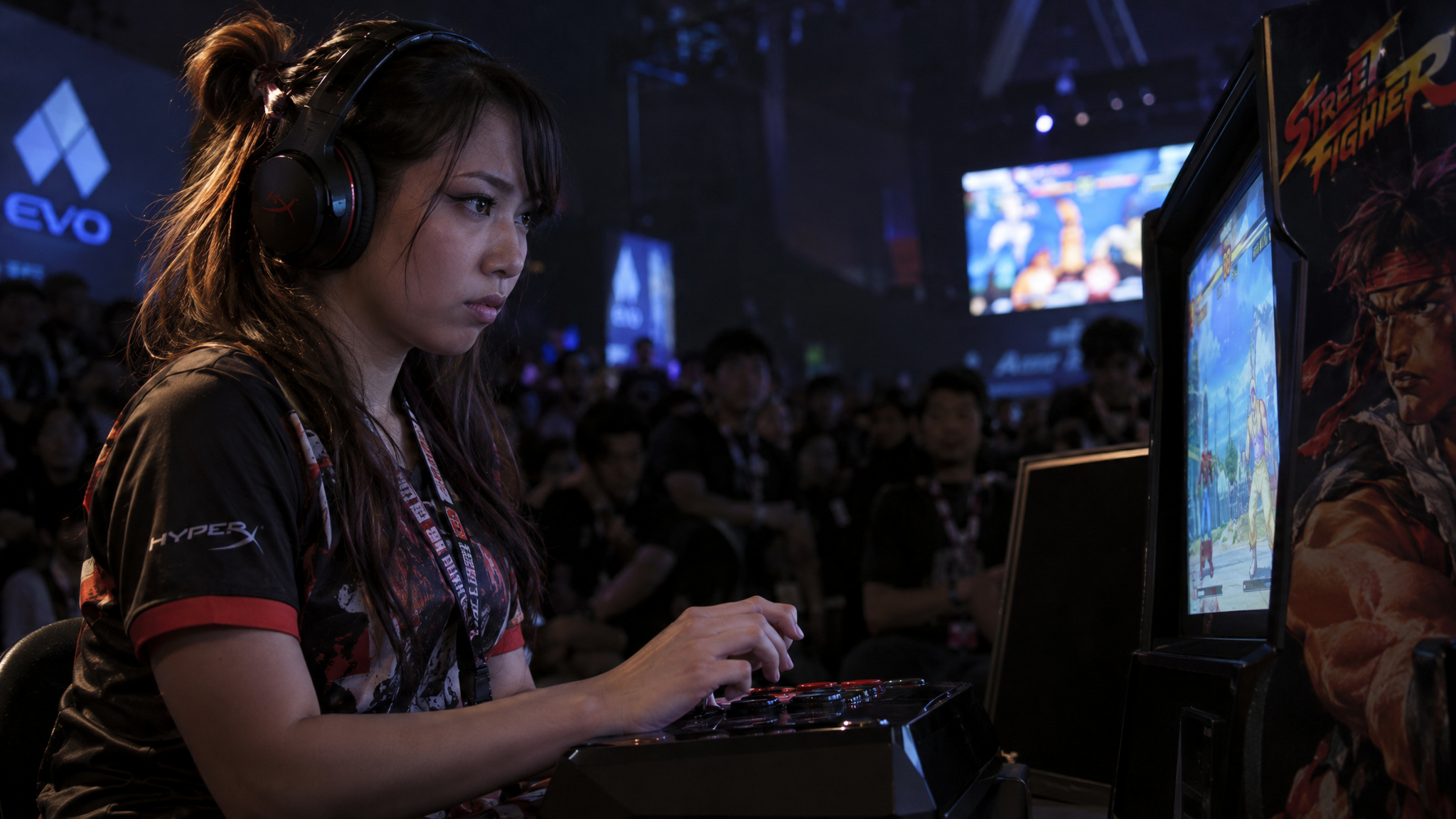
The results back it up: more than 10 Street Fighter tournament wins, which is a pile of wins rather than one lucky weekend, plus second place at Capcom Cup 2016 playing Street Fighter V, worth $60,000 on the season’s big stage. And the defining detail: she dislikes playing online because of lag. Of course she does. The earnings split proves the preference is a strategy, not a quirk: $80,530 won on offline matches alone per Scope Weekly, with total winnings reported as approximately $80,000 per Geek Vibes Nation.
Both figures stand with their sources; we’re not averaging them. The offline-over-online pattern shows up across fighting games, and Ortiz is its named example. It even bridges to the current era: Street Fighter 6 still runs legacy characters like Chun-Li alongside newcomers like A.K.I., so her main never left the roster.
Rumay “Hafu” Wang: fame versus competitive results
Hafu is arguably the most famous girl gamer, and that’s a different leaderboard than the “best” one. Audience scale and competitive results are different currencies, and Rumay Wang holds both. Over 1.3 million Twitch subscribers, with gaming since 2008 as the long runway behind the seven-figure following. She specializes in World of Warcraft and Teamfight Tactics, which is real range across very different game shapes.
The competitive proof keeps “famous” from reading as “just a streamer”: she was named the #1 Teamfight Tactics player in 2019, no hedging needed, it’s sourced, and took second place in a 2019 Hearthstone tournament worth $20,000. Sourced coverage calls her one of the most popular esports Twitch streamers of her generation, and that framing is impressive without inflation. So land the distinction explicitly: Hafu tops the fame list, Scarlett tops earnings and titles, and conflating the two is the most common error in this entire content space.
Janet “xchocobars” Rose: the multi-game streamer-competitor
So, are there sourced female wins in League of Legends and Fortnite? Yes, but the honest answer is that deep female pro profiles in those games aren’t well supported by the available evidence, and this section would rather say so than pad. Janet “xchocobars” Rose is the strongest sourced data point: Canadian, started on YouTube, became a Twitch star, the classic era platform migration made before it was the obvious play. She was nominated for Streamer of the Year in 2019, a nomination, kept accurate.
Her competitive diet spans League of Legends, Fortnite, and Apex Legends, with Hearthstone on the side. Multi-game, not a one-title specialist. Her first big win was the 2019 Twitch Rivals trophy in League of Legends, the breakthrough that made the rest legible. Beyond that trophy and Hafu’s multi-game streaming, the sourced material doesn’t support dedicated female LoL or Fortnite pro profiles, and manufacturing them would be worse than admitting the gap. Turning that limitation into trust is the move most competitors won’t make.
Kasumi Chan and Sarah Lou: the Dead or Alive 4 pioneers
Before the modern prize pools, Dead or Alive 4 under the Championship Gaming Series produced two of the era’s leading women, and both belong on this list. Their earnings look small next to today’s numbers, but they led their own scene at the time, which is exactly how this ranking judges them.
Marjorie “Kasumi Chan” Bartell
Kasumi Chan is a Dead or Alive 4 player who won $55,000 from her games, and she also works as a software developer for a financial services company. Top-tier player and shipping code is a hell of a dual-class build. She also appears in Esports Insider’s closing list of other successful female players, quiet confirmation she belongs in the conversation.
Sarah “Sarah Lou” Harrison
Sarah Lou is a British Dead or Alive 4 player who won $50,000, and her older sister Ruth competes in the same Dead or Alive scene, making it a two-sister household.
One era clause covers both: these sums were era-leading under the Championship Gaming Series structure, and this list judges them against their own scene, not modern prize pools.
How big is the pay gap in esports earnings?
The cited figure puts the earnings gap between top male and female esports tournament champions at 718%, from an Esports Bets graphic cited by Scope Weekly, based on 2018 data. Date it every time, because it is not current. The abstract number gets concrete through one verifiable pairing in the same data: Katherine Gunn, at $122,000, was the only woman in the top 11 to out-earn her comparable male player, Jason Brown, who earned $45,200 in Halo. One name beating the head-to-head, which is exactly the point the comparison makes.
The 2018 revenue picture and its limits
Newzoo projected $696 million in esports revenue for 2018, growing to $1.5 billion by 2020 as brand investment doubled. Those are dated projections, not verified outcomes. Newzoo CEO Peter Warman’s point was that esports accelerates the convergence of established industries, paraphrased and attributed rather than quoted. Top-tier tournaments paid up to $2 million per competition while smaller ones offered tens of thousands, and that spread itself explains why player earnings gaps look so extreme.
The sources show the gap’s size but don’t explain its causes. Tournament structure, sponsorship access, and scene investment are plausible framings the evidence doesn’t confirm, so we won’t pretend otherwise.
Rising stars and the modern prize landscape
The all-time list is settled for now, but the pipeline behind it isn’t empty. Below: the up-and-comers most likely to earn a future spot, and what today’s Esports World Cup pays the players chasing one.
The watchlist
Ava “florescent” Eugene, Maya “Caltys” Henckel, and Karnthida “dodonut” Chaisrakeo lead the rising players most likely to crack a future all-time list. Handles first, real names attached, and no invented stats, because the pipeline doesn’t need decoration. Scarlett still holds the veteran crown as the best current female player, which is the direct answer to the question the title implies. Honorable mentions worth knowing: Petra Stoker, Michaela “mimi” Lintrup, and Kasumi Chan.
What today’s prize pools pay
The modern Esports World Cup is the landscape the next generation is competing in. xiaohai won $250,000 in the 2025 EWC Street Fighter 6 competition, a single-event payday that dwarfs most career totals on this list, and the Chun-Li thread connects straight back to Ricki. AG.AL took the EWC 2026 Club Championship and its $7 million title in Paris; the event spanned seven weeks, featured 24 games, and drew more than 2,000 players across 200 clubs and 25 tournaments. The size speaks for itself. Counter-Strike 2 returns to the EWC in 2027 and 2028, which is the forward-looking note for the CS names on this list. None of this moves anyone up the ranking, it’s just what the next generation is playing for.
Quick answers
Short versions of the questions this piece answers at length, pulled straight from the ranking and sourcing above. Each answer links back to the full section where the receipts live.
The best overall
Scarlett, by earnings and titles: $471,250 as of 2024, first woman to win IEM in 2018, two Guinness records.
The top 5
Scarlett (StarCraft II records and earnings), Liooon (Hearthstone world champion), vilga (Counter-Strike titles and the $200,000 WESG win), Mystik (the dethroned Guinness record holder), and potter (five Women’s ESWC titles).
The most famous
Hafu, by audience: over 1.3 million Twitch subscribers, explicitly a different leaderboard than the “best” answer.
The 48% question
That figure describes general gaming participation, not professional esports competition, and the sourced material here covers the pro scene only. The evidence doesn’t bridge that gap, so we won’t either.
Frequently Asked Questions
Who is the highest earning female esports player?
Scarlett (Sasha Hostyn), with $471,250 in career earnings as of 2024. She took the record from Katherine “Mystik” Gunn, whose Guinness-record $122,000 was the previous ceiling — meaning the top mark moved roughly 4x in under a decade.
Why do female esports players earn less than male players?
The size of the gap is documented, but its causes aren’t confirmed by the available evidence. Tournament structure, sponsorship access, and scene investment are plausible framings, and the extreme spread in prize pools — top-tier tournaments paying up to $2 million while smaller ones offered tens of thousands — helps explain why player earnings diverge so sharply.
Who was the first woman to win a major esports world championship?
Li “Liooon” Xiaomeng, who won the Hearthstone Grandmaster Global Finals at BlizzCon 2019 at age 23. She was also the first champion from mainland China since the world tournaments began in 2014, and earned $241,510 across just nine tournaments before retiring.
Who are the best female Street Fighter and fighting game players?
Ricki “HelloKittyRicki” Ortiz, who has competed since 2003, mains Chun-Li in Street Fighter, and has more than 10 Street Fighter tournament wins including second place at Capcom Cup 2016 worth $60,000. She’s known as an offline specialist — roughly $80,530 of her winnings came from LAN play, since she avoids online matches because of lag.