
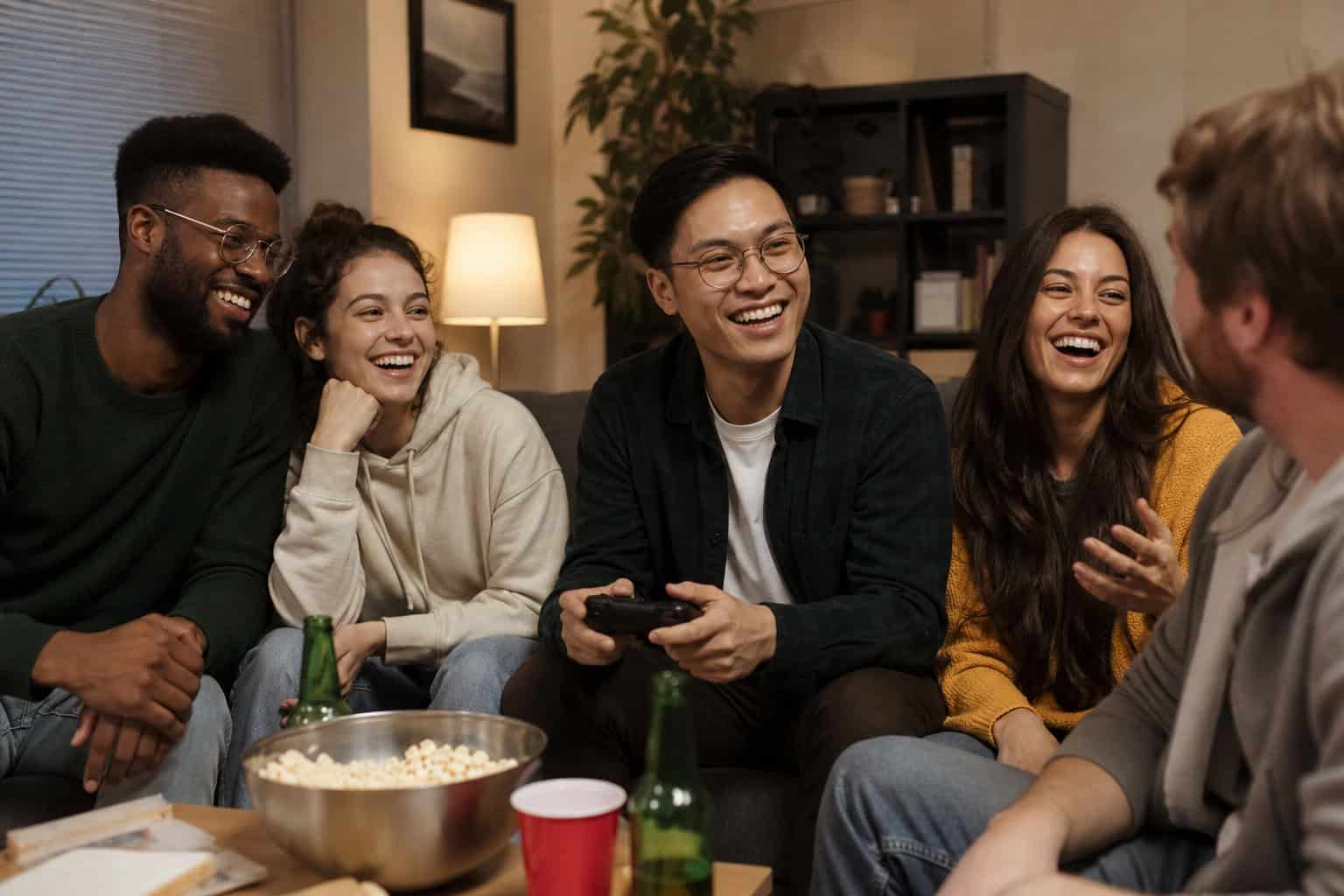
Andrew Fishman, a clinician who works with teens, puts it: the headset turns solitary screen time into real-time conversation. You’re physically alone, but you’re hanging out. The numbers support him: 77% of boys play online games with friends at least once a month. That’s not niche behavior. That’s the norm.
Key Takeaways
77% of boys play online with friends at least monthly — online gaming is a mainstream social activity, not an isolating one
A 2006 study of over 5,800 in-game messages found 3.2× more socio-emotional content (thanks, jokes) than task-oriented talk, and positive messages outnumbered negative ones 2.6 to 1
Games like Minecraft, Overcooked! 2, and Keep Talking and Nobody Explodes engineer social interaction through collaboration, chaos, and low-pressure communication — and some therapists even use Dungeons & Dragons as group therapy
Table of Contents
What Gamers Actually Talk About
You’d think in-game chat is mostly shouting about objectives or trash talk. The data says something else.
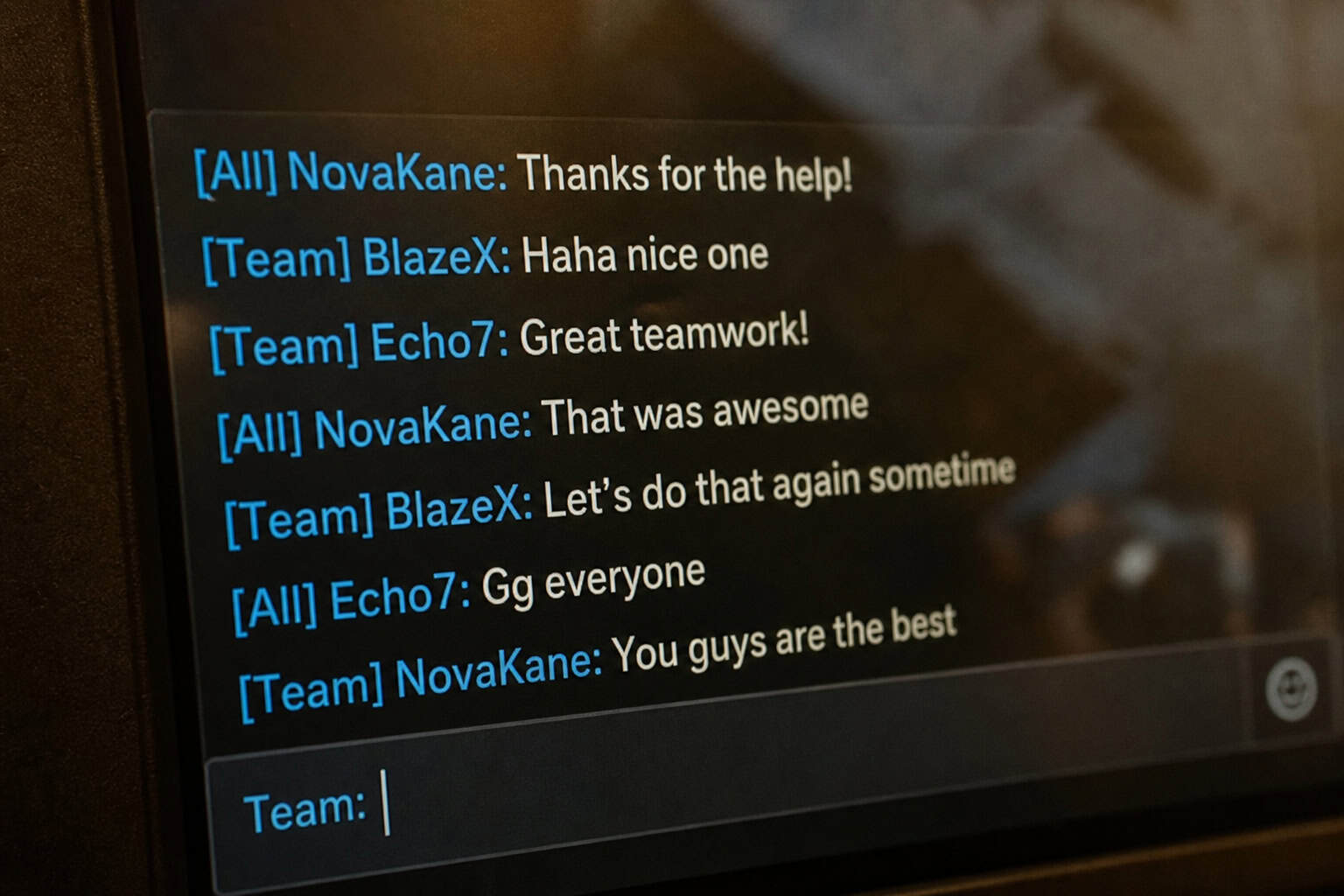
A 2006 study by Pena and Hancock analyzed over 5,800 messages from an online game. They sorted them into two categories: socio-emotional (“Thanks for the help,” “Haha nice one”) and task-oriented (“How do I open this door?”). The result? Socio-emotional messages outnumbered task-oriented ones by a factor of 3.2. And when it came to emotional content, positive messages were 2.6 times more common than negative ones.
Safe Spaces for Connection
For those who find traditional social interaction challenging — autism spectrum, social anxiety, shyness, insecure attachment, depressive symptoms, online games offer low-pressure communication. You don’t have to respond immediately. There’s no physical presence to manage. You can take a breath, think, and engage on your own terms.
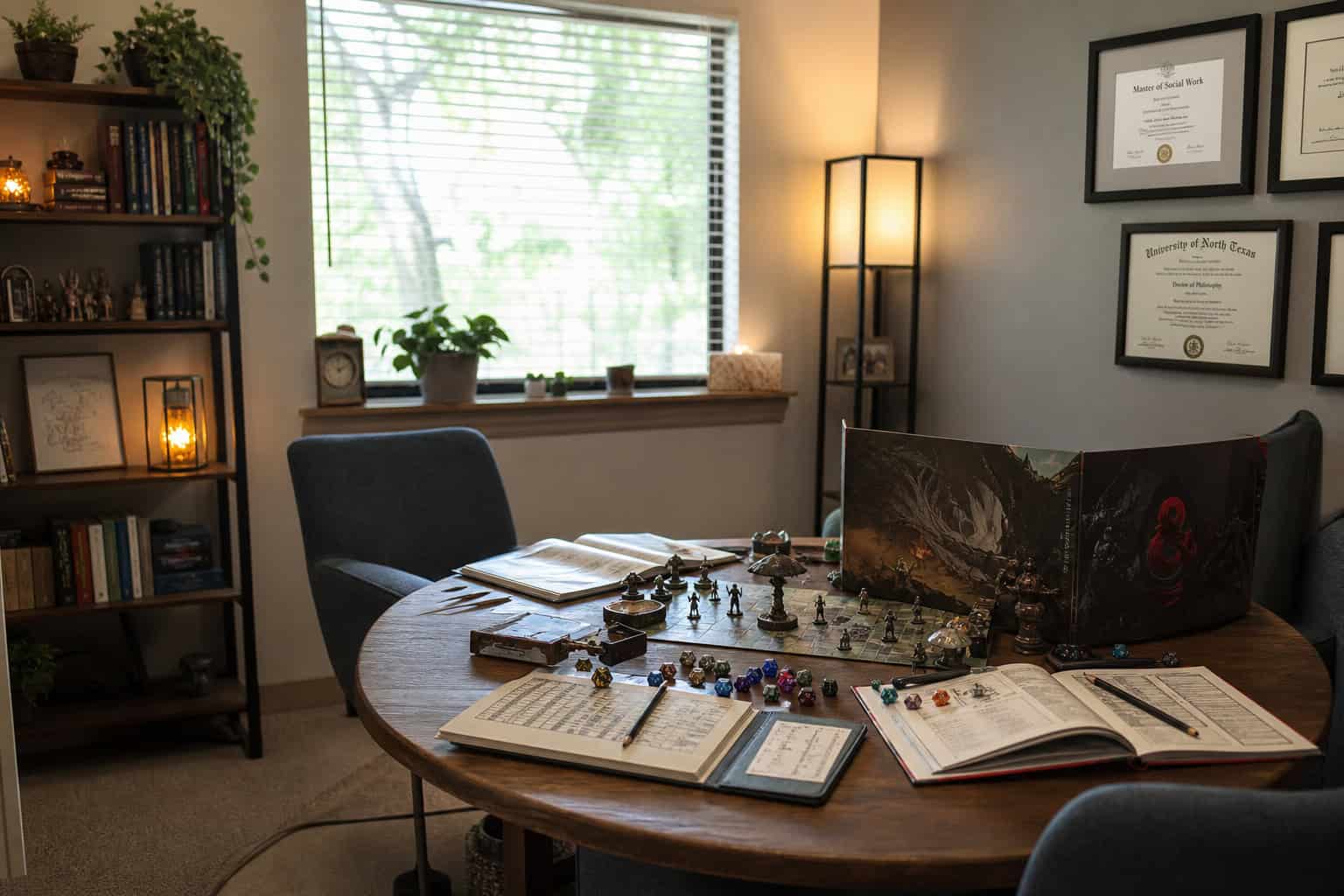
Fishman calls it a “safe place” for these populations. And the research agrees: Kowert et al. (2014) and Bessiere et al. (2012) both found that online gaming can build social skills and confidence that transfer to face-to-face interactions.
People who meet in games often end up hanging out in person. The digital bridge leads to the real world.
Therapists are using Dungeons & Dragons as group therapy — a structured collaborative activity that builds communication and teamwork. Fishman himself runs “Level Up: A Group for Gamers,” a clinical program that uses gaming as a framework for social development.
Platform Tradeoffs: Where the Social Cost Hides
Choosing where to play socially involves friction. Every platform has a different cost, and I don’t mean just money.
Xbox One and PS4 are the easiest entry point. Built-in Party Chat works, even between games or while watching Netflix. The catch? About £45 per year for online access. That’s the price of a game you’ll never play but have to buy anyway.
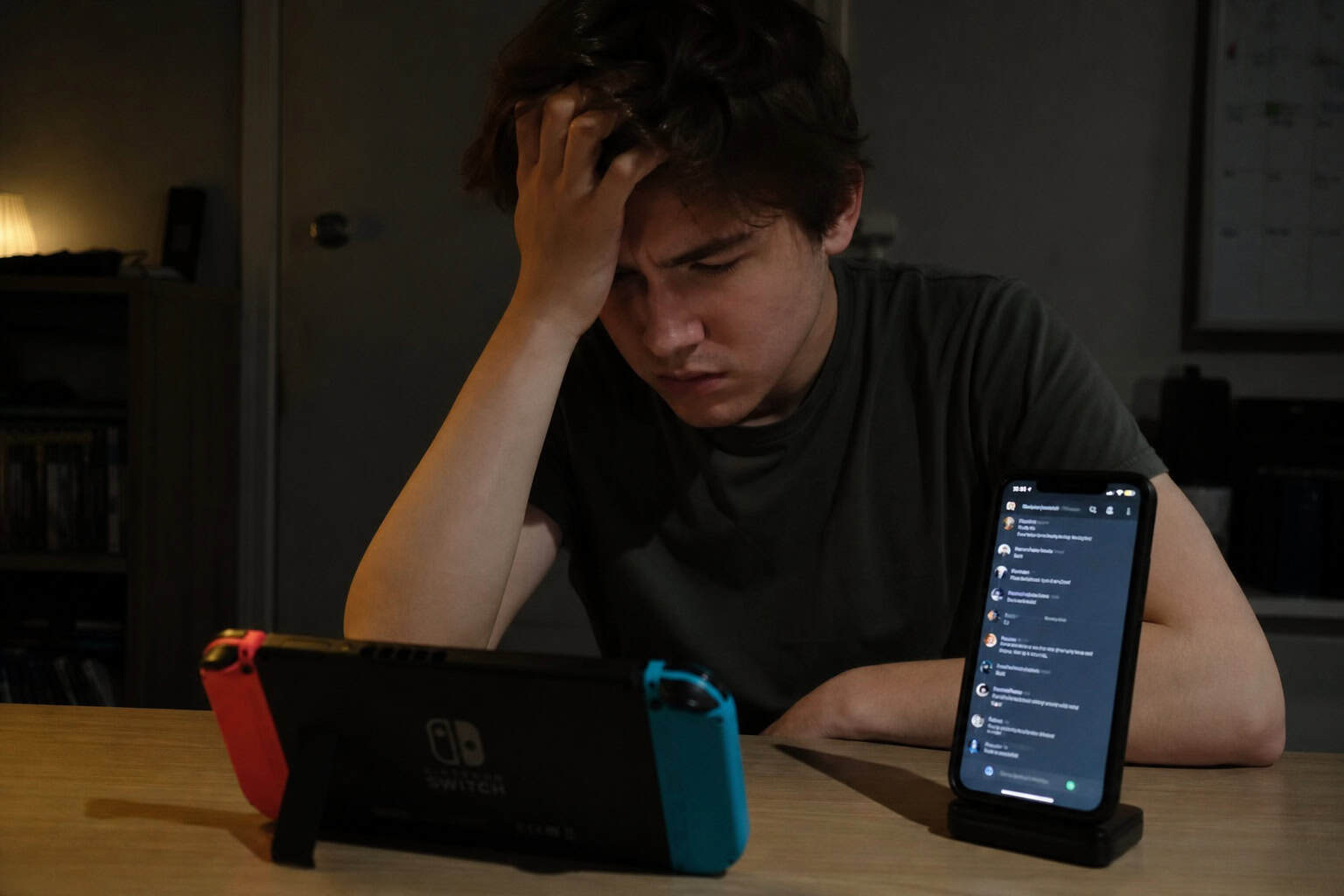
Nintendo Switch has a notable problem: to chat with friends, you need to download a mobile phone app. And even then, only a minority of games support it. It’s a workaround, not a social hub.
PC is the flexible powerhouse. Steam, GOG, and itch.io for games. Discord for voice chat and screen share — which is where things get interesting. I’ve got a friend stuck in California who regularly shares his Sims 4 screen on Discord to show off the houses he’s built. It’s show-and-tell with zero pressure. Free platforms, but you need a computer.
Mobile runs on any recent smartphone (last 3-4 years). Apple Arcade costs £4.99/month for exclusives like Sociable Soccer and Butter Royale. Most games are free with ads or freemium models.
No single platform wins. Each one asks you to trade something — money, convenience, hardware, for the social features you want.
Console Games That Get the Social Part Right
Here are games that turn a solo activity into a group hangout. Player counts matter, so I’ve included them.
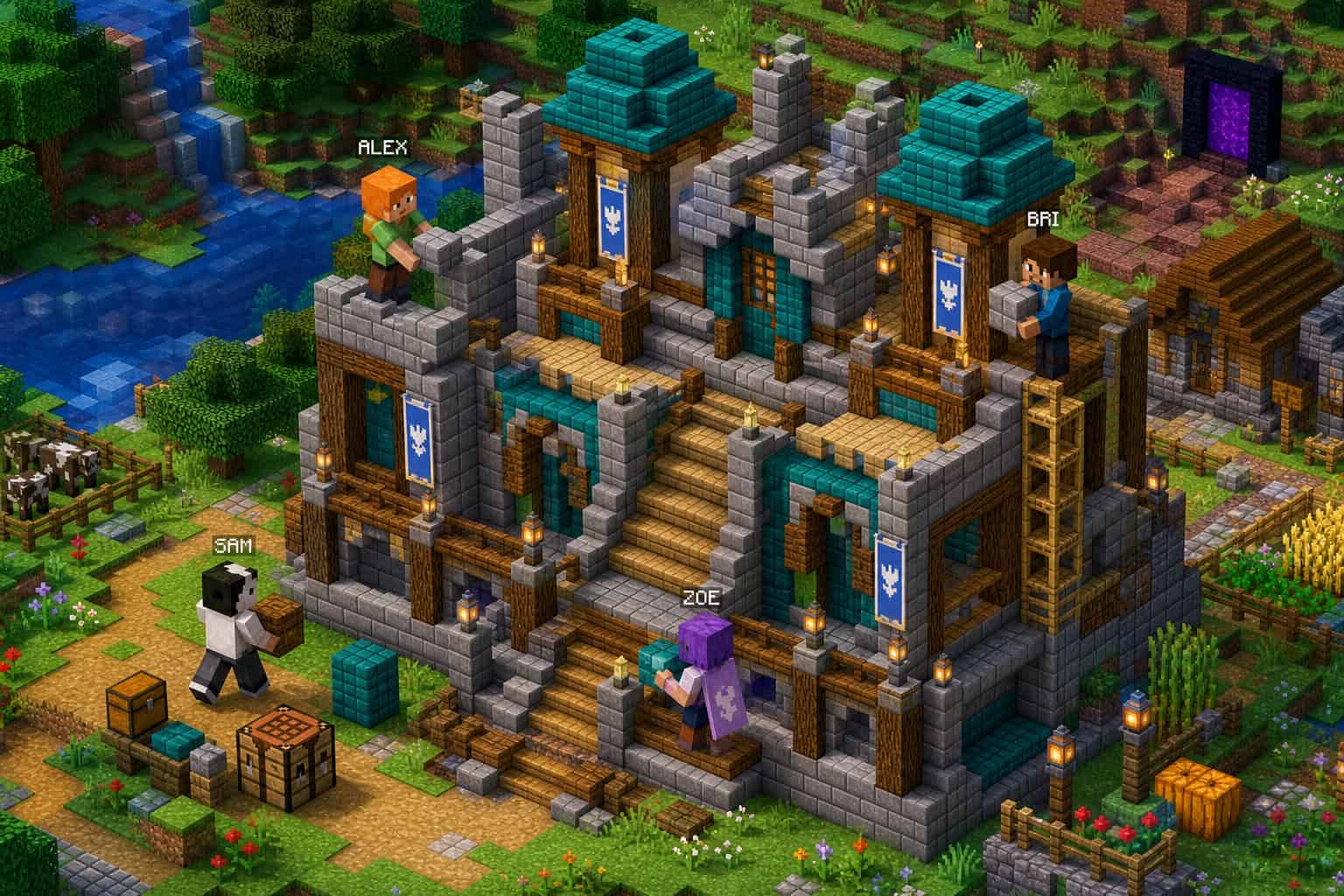
Minecraft — Up to 8 players. It’s digital Lego with a fantasy skin. You can collaborate on huge builds (someone once recreated the Taj Mahal in block form) or just mess around in mini-games.
Fortnite: Battle Royale — 100 players per match, squad mode for teams of four. The creative mode lets you build your own levels. It’s not all about winning, half the fun is building forts and sailing boats with friends.
Sea of Thieves — Up to 4 players. You sail a pirate galleon together, searching for treasure. It’s designed to get people working in sync, someone steers, someone mans the cannons, someone patches holes. Enchanting and hilarious when things go wrong.
Friday the 13th — Up to 7 players. One person is randomly chosen as Jason, the rest scramble to escape. Asymmetric horror that forces cooperation (and panicked screaming).
GTA Online — 4-player heists. You plan and execute multi-stage robberies, each person taking a different role. It’s like a digital Ocean’s Eleven, though at least one player needs to have reached the right skill level to unlock the heists.
Don’t Starve Together — 4-player survival. You gather resources and try not to die in a hostile world. It’s a test of who you trust in a life-or-death (game) situation.
Dead By Daylight — Similar to Friday the 13th but with a wider roster of monstrous killers. More variety, same frantic teamwork.
Red Dead Online — GTA Online with horses. Slower, more atmospheric, but same heist-and-hangout loop.
Mobile Games for Social Connection
Mobile gaming happens where you already are — sofa, bed, train. Here’s what works socially.
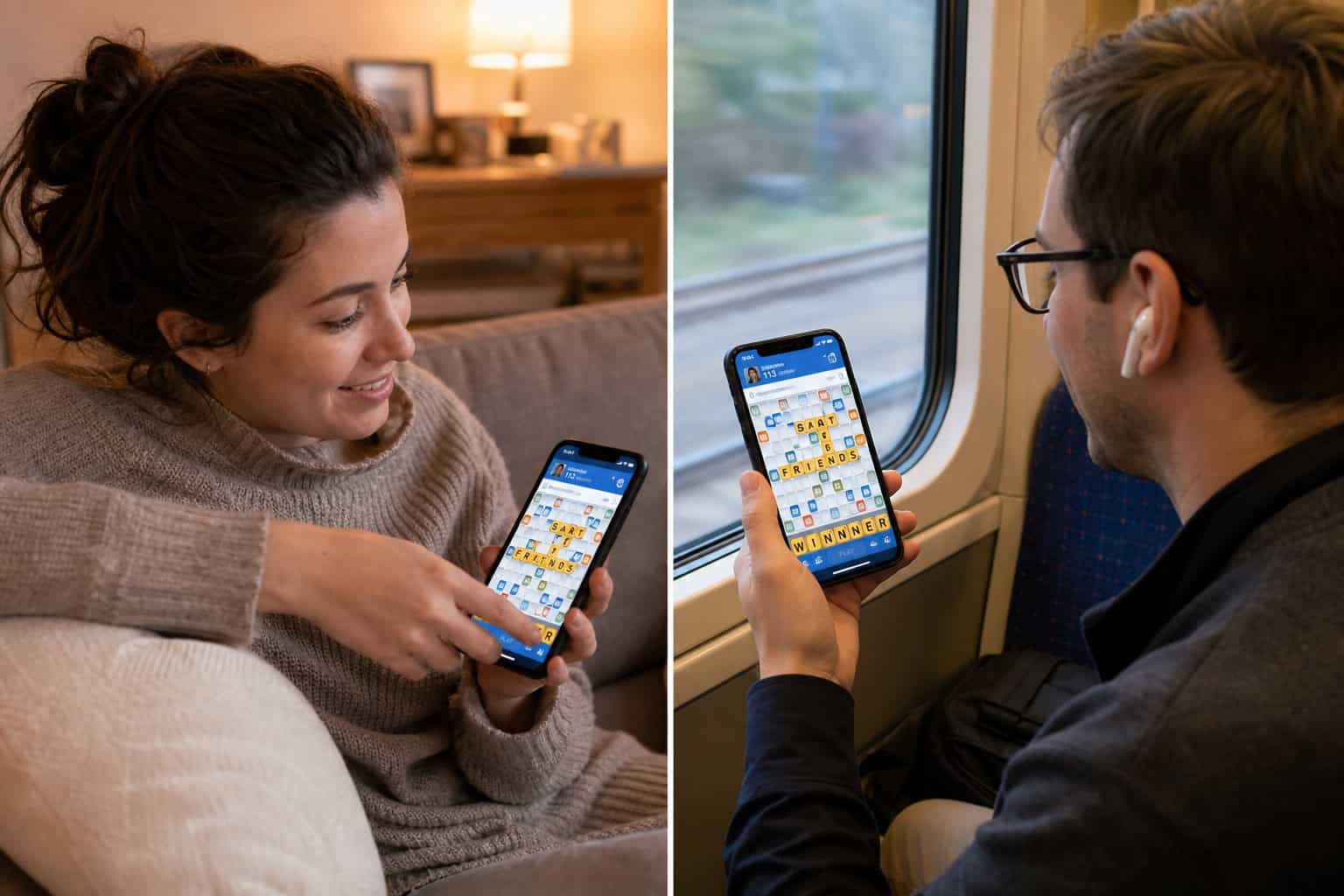
Words With Friends Classic — Released in 2009 and still going. Turn-based Scrabble-like matches with in-game chat. Asynchronous, low-pressure. Reviewers called it “a marvellous tonic” for isolation, and it remains a standout among social games that let you connect without pressure.
Golf Clash — Rapid-fire golf matches. You can play Facebook friends. Quick, competitive, and community-driven.
Mario Kart Tour — Freemium, but finally has proper friend matchmaking. Took a while to get there, but it works.
Clash Royale — Real-time PvP with a clan system. Clans let you do friendly matches and swap cards. Beyond just digital apps, social gaming is a design shift for connection, and this is one of the better mobile recreations of real-world social networks.
Pokémon Go — Niantic adapted it for home play during lockdown: more spawns, discounted incense packs that last one hour (instead of the usual 30 minutes). The Go Battle League lets you battle trainers worldwide. It’s still a social game, even if you’re not walking around.
Sociable Soccer — iOS only, Apple Arcade exclusive. From the team behind Sensible Soccer. Card-based team building, 60-hour campaign, and online multiplayer, which shows how gaming is good for you by fostering meaningful social connections and teamwork across cultures.
Asphalt 9: Legends — Club feature lets you create driving clubs, add friends, challenge each other, and run league tables.
Butter Royale — Top-down, food-themed battle royale. 32-player battles, squads of four. Kid-friendly alternative to Fortnite.
Kahoot! — Trivia platform used by schools and families. You can play with a group by casting the quizmaster’s phone to a TV. Free options available.
Super Stickman Golf 3 and Golf Battle — Quick mobile golf games for playing with friends. Simple, fun, no commitment.
PC Games: Where Social Can Get Weird (In a Good Way)
PC gaming’s superpower is Discord — free voice chat plus screen share. That opens up options that don’t exist on consoles.
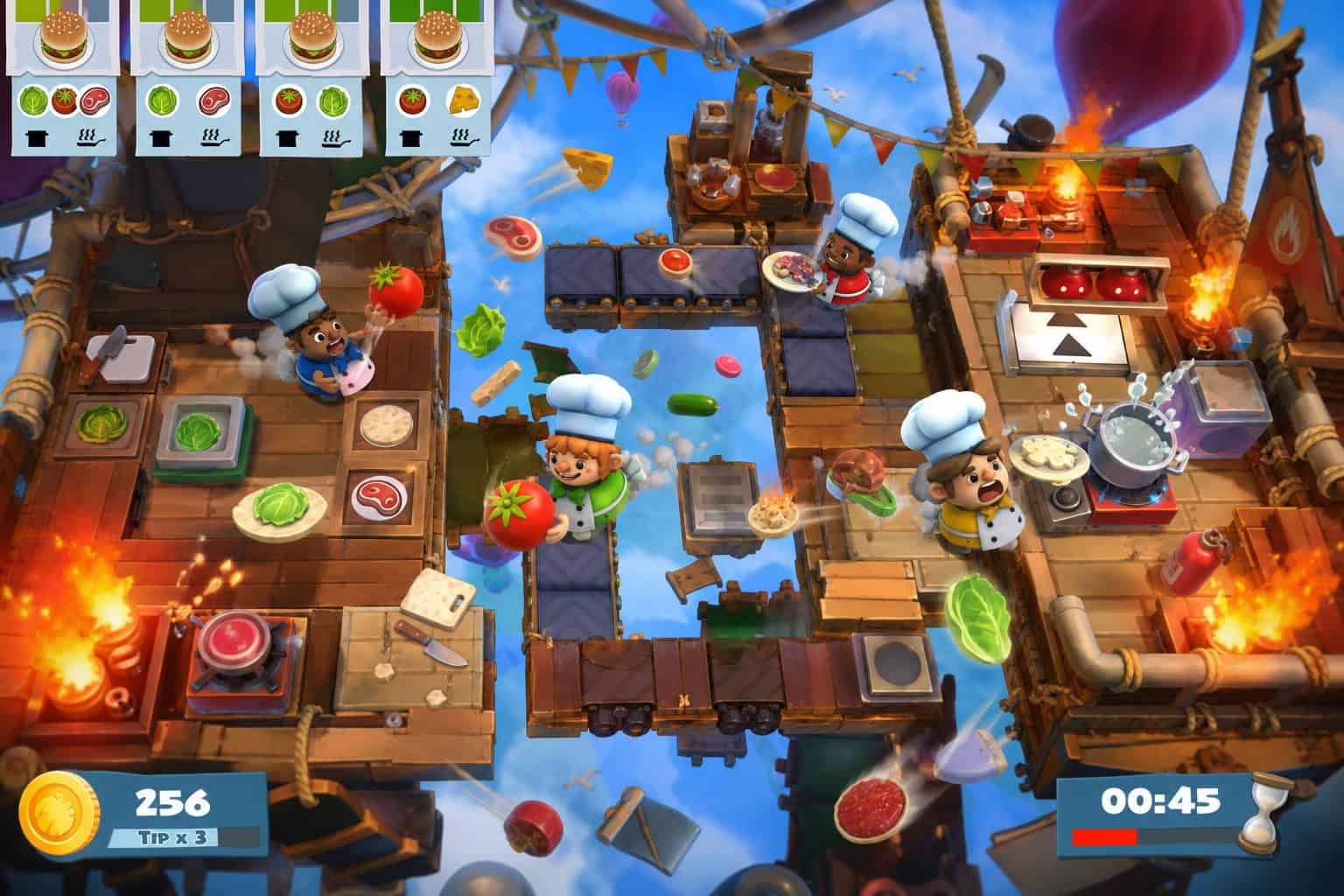
Overcooked! 2 — 4-player chaotic cooking. You prepare meals in kitchens with absurd obstacles (moving platforms, portals, fire). Guaranteed laughter.
Stardew Valley — 4-player farm co-op. Plant crops, raise animals, fight monsters, court villagers. Soothing and time-consuming in the best way.
Tick Tock: A Tale for Two — Co-op puzzle game where each player sees a different version of the same world. You have to communicate to solve puzzles. Better when you’re not in the same room, it forces real description.
Man of Medan — 2-player horror. Shared story mode where each person controls a different character. About 4 hours. The story’s not amazing, but it gives you something to talk about.
Civilization VI — Turn-based strategy. You can step away at any time, so it’s perfect for a relaxed game night. Tutorials make it accessible.
Rocket League — Car soccer. Easy to learn, hard to master. Multiple modes for different group sizes.
Ticket to Ride — Classic board game, now digital. Simple, proven social activity.
Tabletop Simulator — Not a game itself, but a platform to play any board game online. Endless possibilities.
Diablo III — Mindless button-bashing with friends. Run around a fantasy land, kill hordes, collect loot. Great for unwinding together.
Keep Talking and Nobody Explodes — One player defuses a bomb, another reads the manual. Neither player sees what the other sees. Frantic, silly, and only one copy needed to play, perfect for remote groups.
Worms W.M.D. — Turn-based artillery with cartoon violence. Nostalgic and kid-friendly.
The Sims 4 + Discord Screen Share — This is a wild one. Someone builds a house, shares their screen, and everyone watches and comments. It’s show-and-tell social gaming, and it works well.
Chaos and Shared Fun: Why Falling Down Together Bonds Us
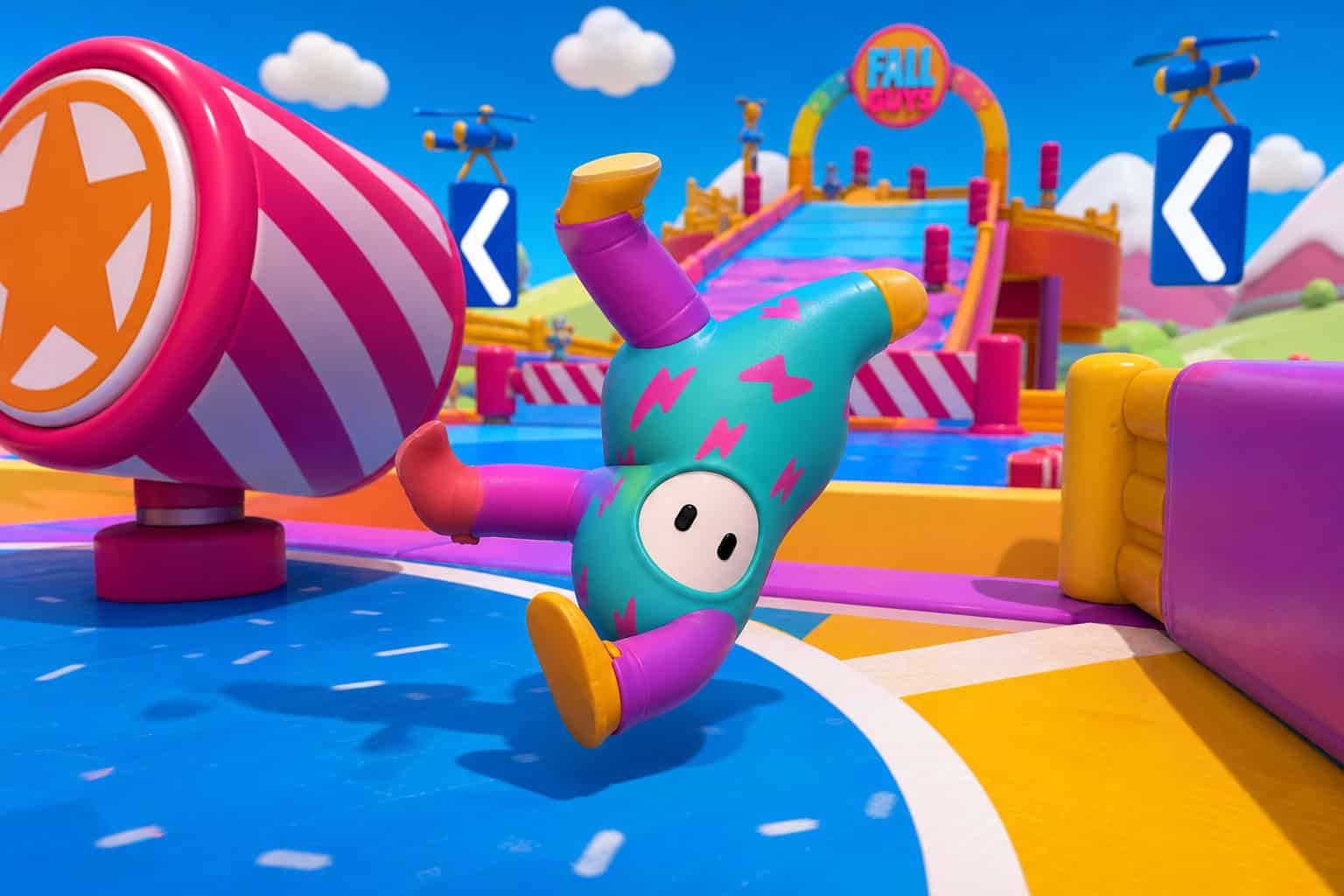
The rounds I remember aren’t the ones I won. They’re the rounds where something absurd happened — a Fall Guys physics glitch, a Mario Party minigame that randomly eliminated everyone, an Overcooked kitchen that turned into a firestorm.
Safety and Parental Guidance: The Real Picture
The fear is real: predators, toxicity, strangers with bad intentions. But the data shows something encouraging. According to Elgersma and Common Sense Media (2017), incidents of predators using games to meet children have decreased significantly. Reporting features and chat filters work. The infrastructure is getting better.
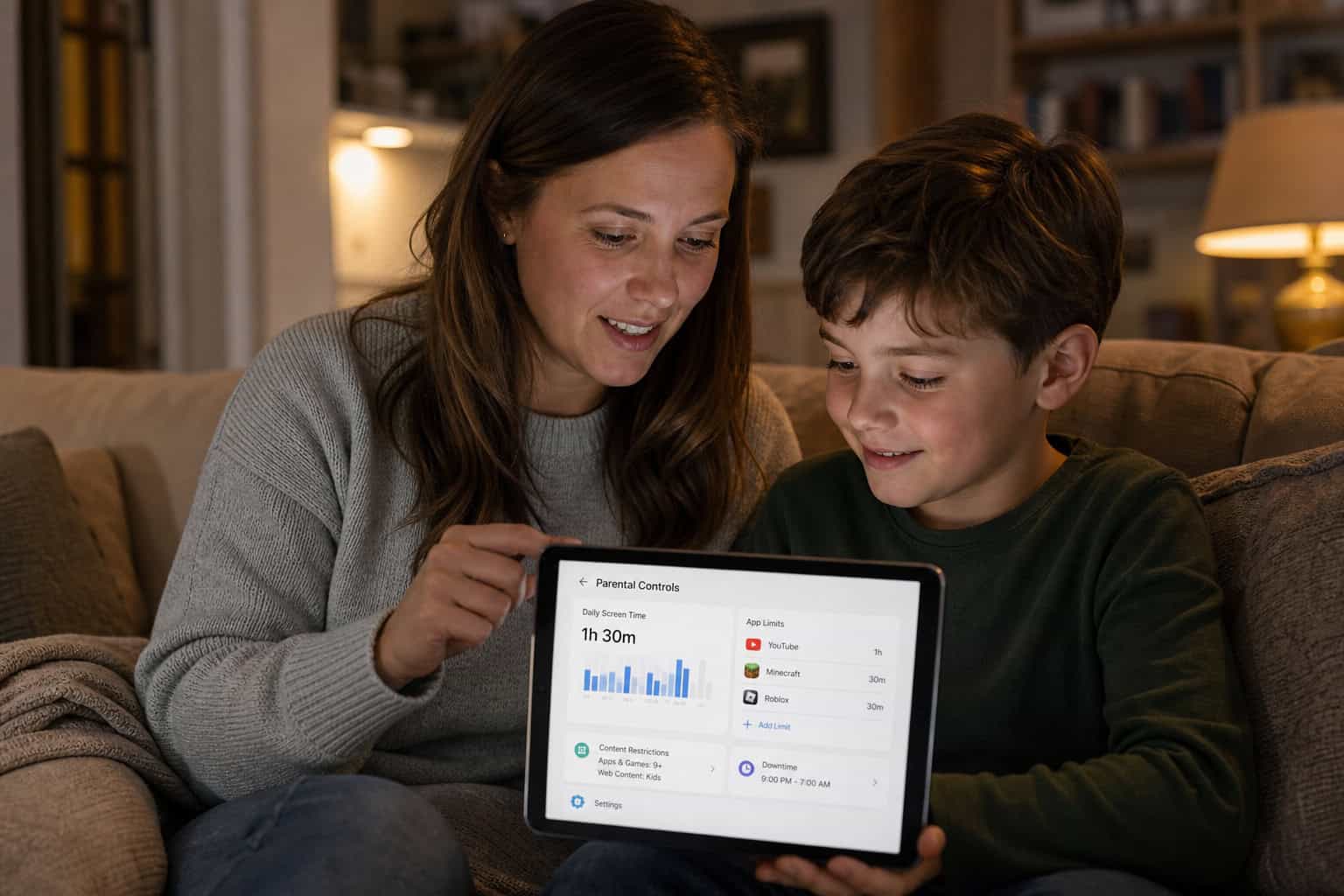
That doesn’t mean parents should check out. Monitoring and open conversations are still essential. But the framing matters. The same tools that keep kids safe also make these spaces more social.
So Next Time You See a Headset
Gaming is a legitimate social activity. The evidence: 77% of boys play online with friends. In-game chat is positive and relationship-building. Vulnerable people find safe spaces.
Therapists use games as tools. Safety is improving.
Frequently Asked Questions
What are good social games for older adults?
Turn-based or low-pressure mobile games like Words With Friends Classic are ideal because they allow asynchronous play and chat without requiring quick reactions. Board game adaptations like Ticket to Ride or digital versions of classic games also work well, since older adults may already be familiar with the mechanics. The key is choosing games that emphasize conversation and collaboration over reflexes or fast-paced action.