Imagine it’s Friday night, and you want to catch up with a friend who lives three time zones away. You could schedule a video call, sit stiffly in front of your webcam, and try to force a conversation through a screen that feels like a remote corporate stand-up. Or, you could boot up a cooperative sandbox game, run around gathering resources to build a ridiculous virtual monument, and let the conversation flow naturally while your digital characters chop down digital trees.
This is the real answer to the question: what is social gaming? It’s a multi-faceted design philosophy that spans both remote digital spaces, like the best social casino platforms, and physical out-of-home venues. At its heart, social gaming is an evolutionary proxy for human bonding, built around “interaction buffers”—shared, low-stakes activities that give our hands something to do while we connect.
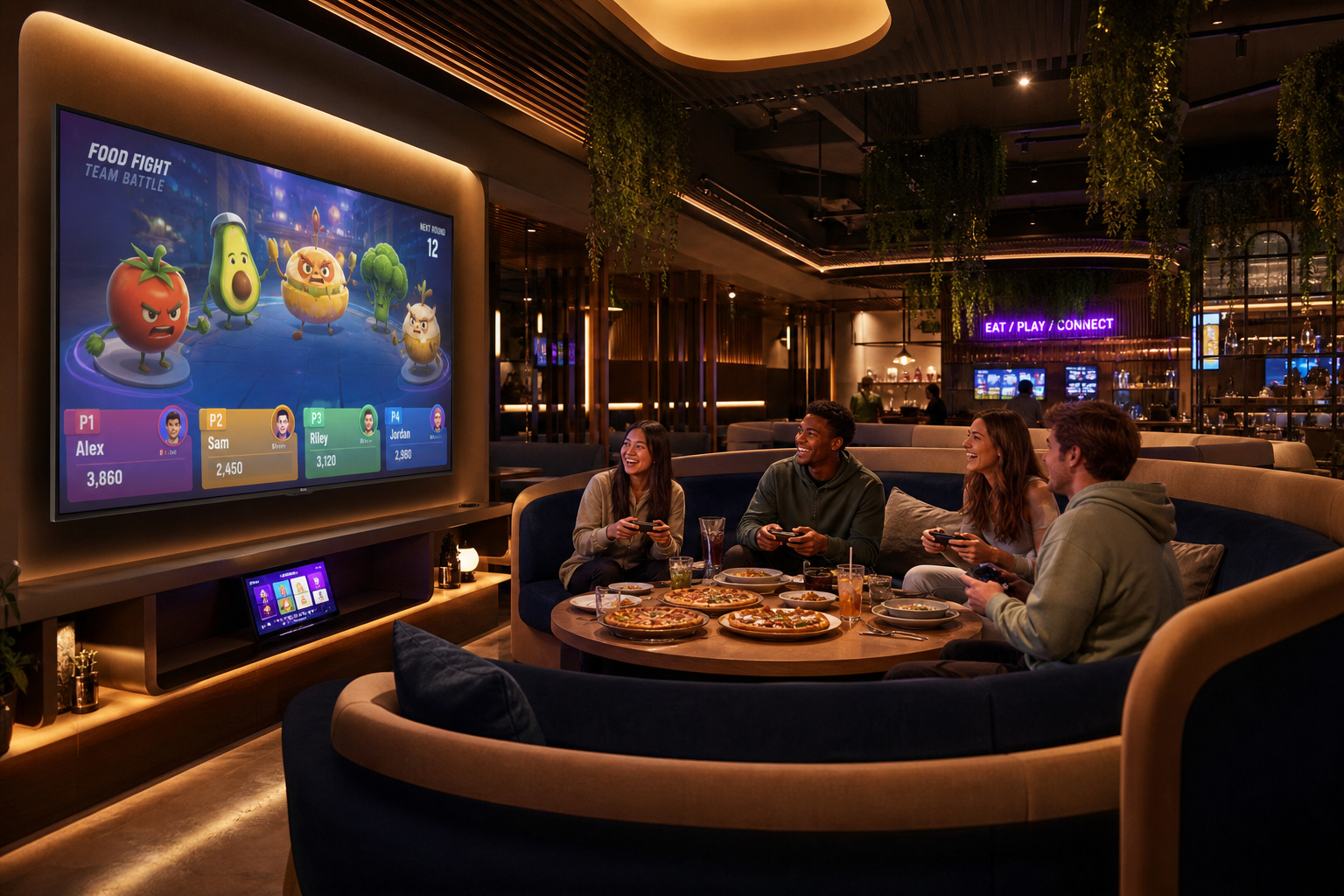
In the modern gaming landscape, we see this play out in two primary ways. There’s the digital model, which uses real-time or turn-based features like matchmaking, direct invites, in-game chat, and leaderboards to turn a software interface into a lively digital hangout. Then there’s the physical Location-Based Entertainment (LBE) model, often called “eatertainment,” which brings this same philosophy into physical buildings. In these spaces, we see a departure from the classic, loud arcade layout.
Instead of eating a soggy slice of pizza at a separate food court before walking down a dark hallway to play a loud cabinet, modern spatial design places the controllers, the shared food platters, and the parallel drink slots right at your designated playing station. Eating and playing happen simultaneously in the exact same footprint.
Key Takeaways
The secret to a great physical social experience is what we call “zoning math“: gameplay and food just have to happen in the same spot, not in separate rooms.
To get people actually connecting, you need clever table and seating shapes—like Topgolf’s curved couches or Electric Shuffle’s custom counters—that keep players facing each other instead of staring at a screen.
Behind the scenes, free-to-play games run on serious payment tech.
Table of Contents
The Evolutionary Shift from Competition to Connection
In industry circles, people love to throw around the term “competitive socializing” to describe modern play-and-eat venues. But when you look at the system mechanics of human interaction, that term is almost an oxymoron. Intense, hyper-focused competition is actually a terrible catalyst for socializing.
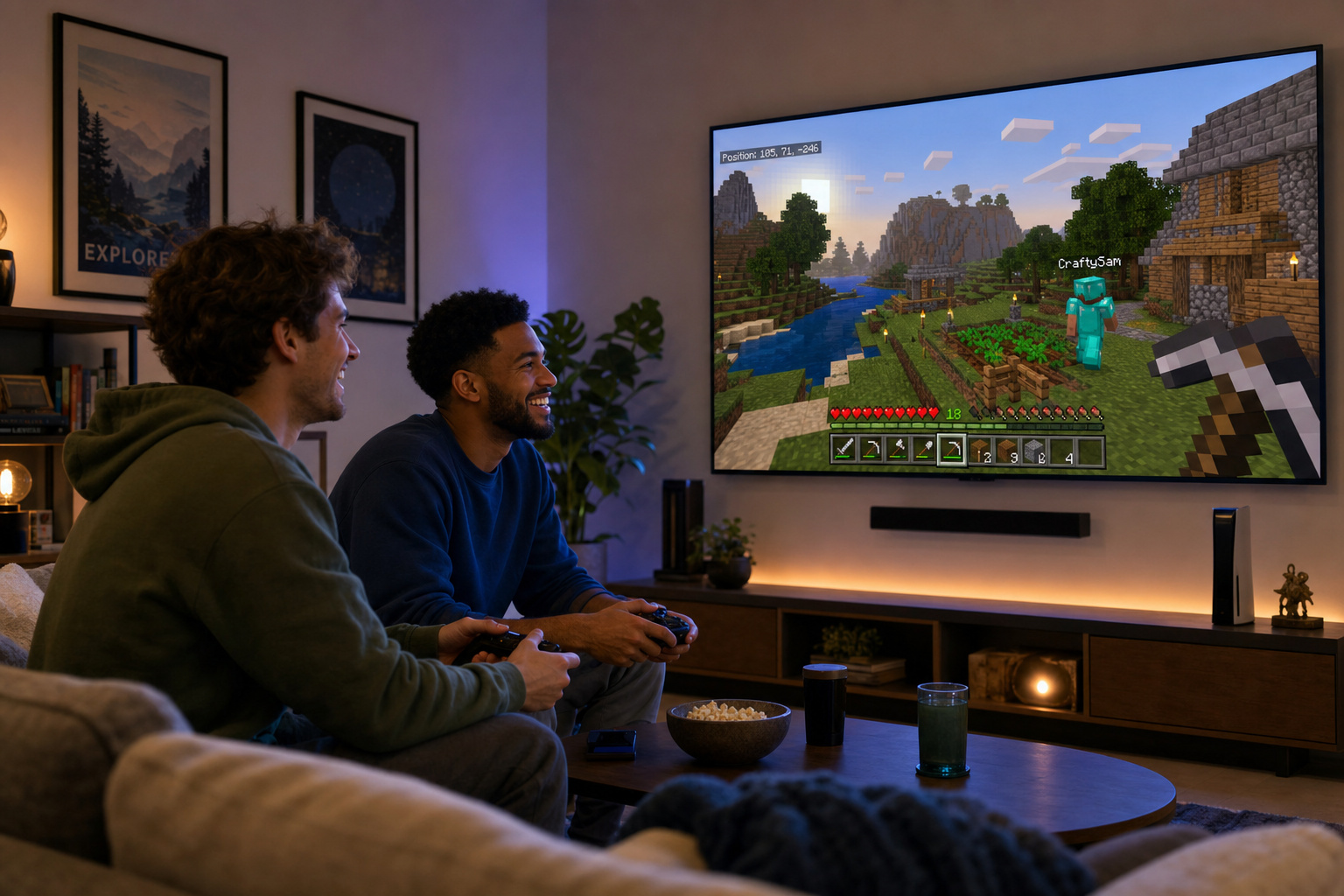
Think about the cognitive load of a high-stakes competitive game. If you’re playing a high-APM (actions per minute) shooter or managing a complex, twitch-reflex tactical game, your brain is entirely locked into the screen’s state. Your heart rate rises, your focus narrows, and your ability to carry on a lighthearted conversation drops to zero.
True social gaming operates on a completely different framework. It uses the game as an interaction buffer—a structural pause button. Whether you’re waiting for a turn on a physical board or grinding to build a base in a digital sandbox, those mechanical gaps act as a pressure release valve. Losing needs to feel just as funny and low-stakes as winning. The goal of the game system isn’t to crown a ruthless victor; it’s to act as a conversational lubricant.
Our team at GeekExtreme experienced this mechanical shift firsthand. We used to spend our weekends getting stressed in sweaty, competitive ranked multiplayer lobbies, deal with toxic matchmaking systems, and sign off feeling more exhausted than when we logged on. To fix this, we transitioned to hosting our own dedicated, low-stakes cooperative game servers. Moving the focus away from mechanical domination toward building things together turned our digital space back into a genuine “third place” where we could hang out, build, and talk without the constant performance pressure.
Physical Venues: How Architecture Acts as a Catalyst
When we look at out-of-home entertainment, the primary driver for venue attendance is human socialization rather than the game itself. We don’t leave our houses just to interact with a mechanical game system; we go to be around people. Unfortunately, traditional venue design has a long history of getting this wrong.
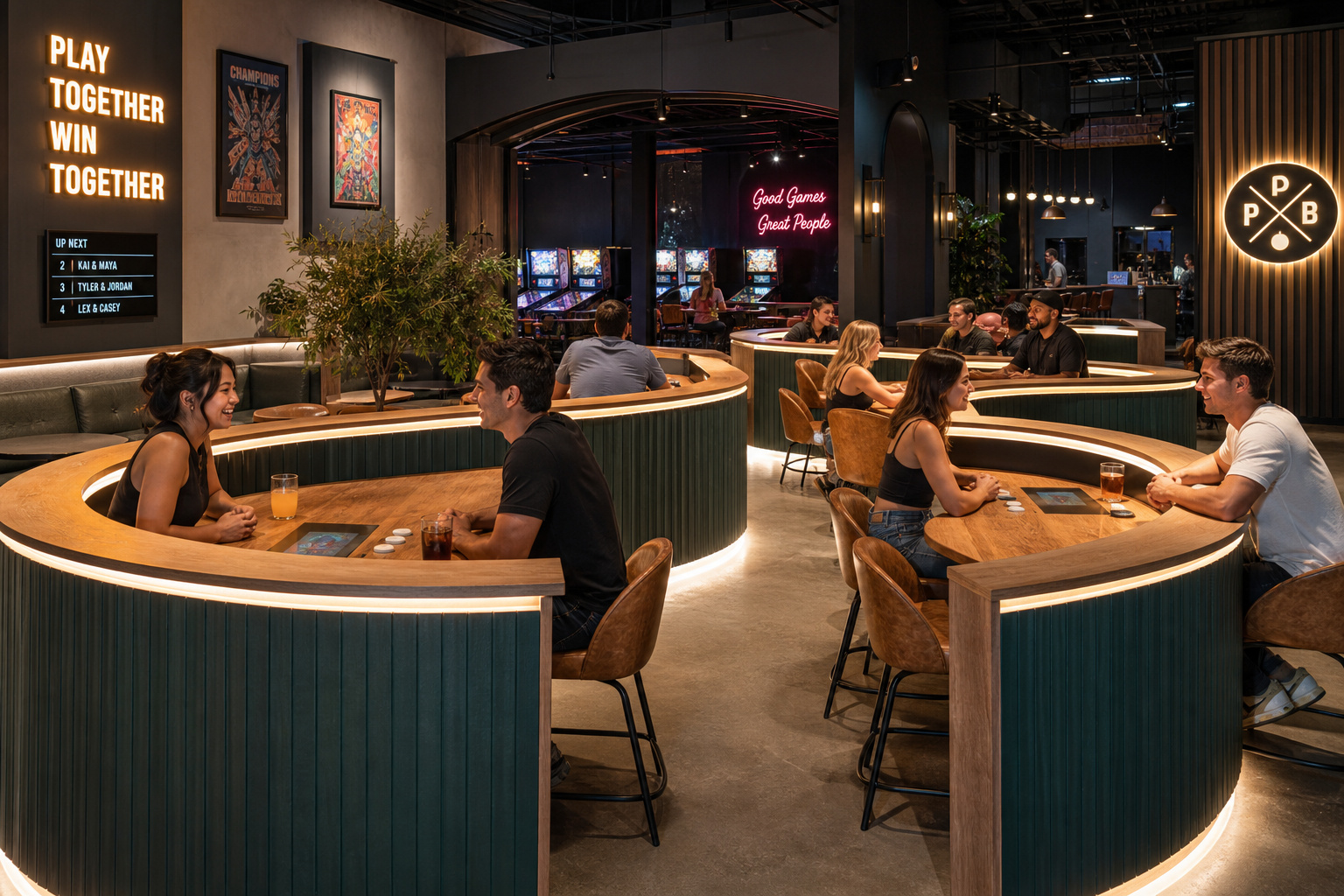
For decades, the industry lumped everything into the generic Family Entertainment Center (FEC) bucket. Take classic, adult-focused locations like Dave & Buster’s. While legendary, these early models often suffered from flawed spatial setups that separated operations. They attempted to appeal to everyone simultaneously, resulting in a disconnected layout where people ate in a quiet booth on one side of the venue and played games in a chaotic, noisy room on the other.
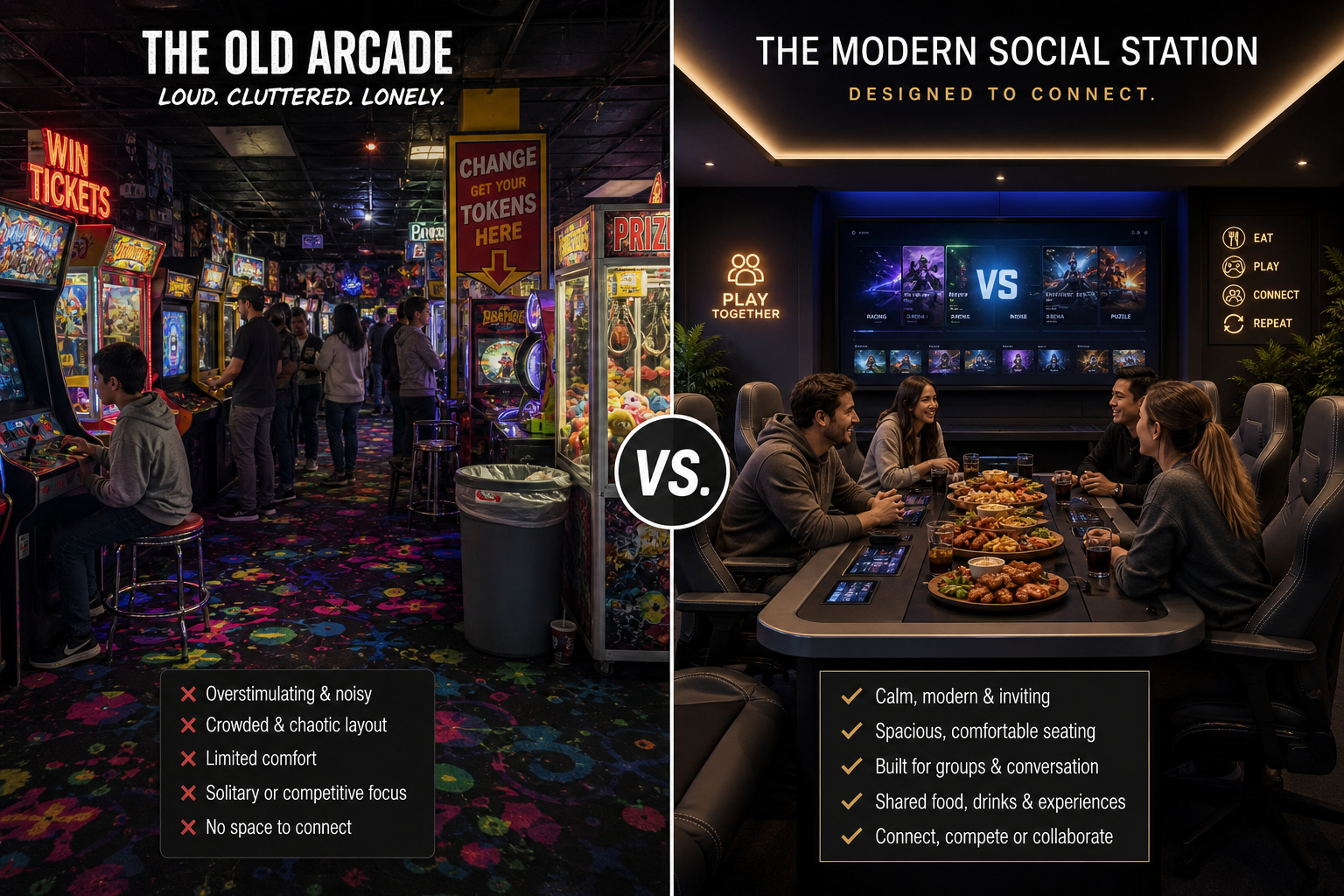
Modern social gaming eatertainment venues succeed by changing this layout fundamentally, solving the “zoning math” of physical play to better fit today’s gaming culture. True physical social gaming requires a singular, simultaneous session where eating, drinking, and playing reside in the exact same footprint.
Furthermore, we don’t even need to be online at the same time to maintain these connections. Using persistent private servers or casual mobile apps allows friends to engage via asynchronous chat, building long-term relationship bonding across widely different time zones. You can jump onto a shared world, drop off a chest of built items for your friend, leave a joke on an in-game signpost, and log off. It’s a low-pressure, persistent way to say “I’m thinking of you” without requiring anyone to coordinate complex calendar invites.
The Evolutionary Psychology of Modern Human Connection
We did not build relationships by staring in silence at each other. Instead, our evolutionary biology tells us we survived by forming highly cooperative, tight-knit tribal groups—bonding through shared tasks, hunting, and structured play. in silence at each other; we bonded by doing things together—hunting, sitting around a communal hearth, sharing tasks, and playing structured games.
When the post-pandemic world reopened, we saw a surge in out-of-home social entertainment and experiential hospitality attendance. This wasn’t a temporary trend. It was a collective realization that purely digital, screen-only isolation left our deep-seated cooperative biological needs entirely neglected.
We crave high-fidelity, physical connection. Gathering at an out-of-home venue to share a meal while engaging in a simple, physical game is the modern technological equivalent of gathering around an ancient, shared hearth. It fulfills our wired-in biological urge to play, share food, and feel connected to a tribe.
The Economics and Compliant Backend of Connected Play
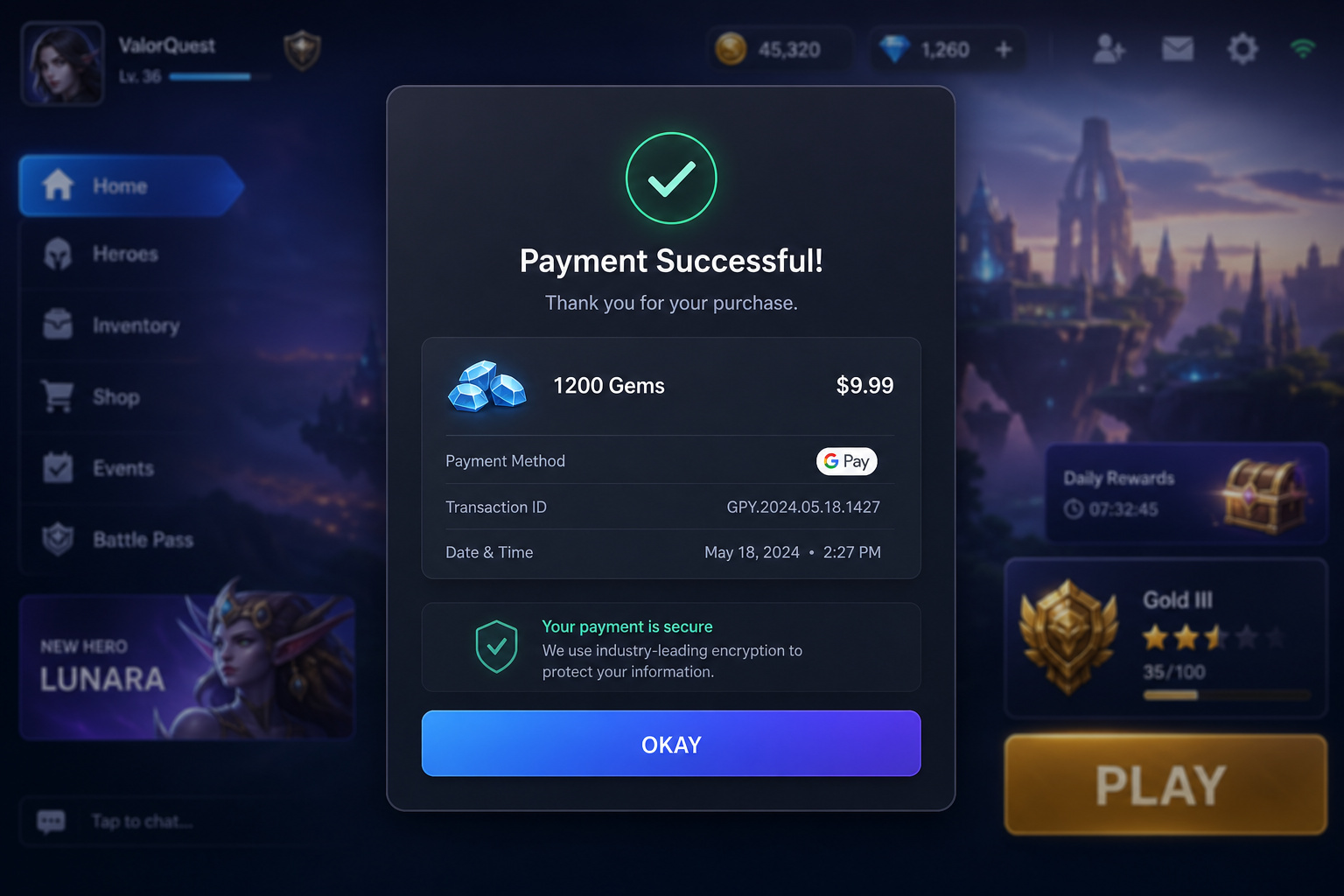
Most digital social platforms run on a free-to-play model to lower the barrier to entry, but behind those cute avatars and cozy farms lies a complex—and strictly regulated—payment architecture. so anyone can join instantly. To keep the servers running, developers count on a quiet loop of microtransactions, subscriptions, and ad-supported models.
When millions of players buy cosmetic upgrades, battle passes, or in-game currencies across international borders, they rely on specialized payment processing systems (like Xsolla) and high-risk merchant accounts to prevent transaction failures or security bottlenecks. If a transaction lag spikes or gets flagged during an international purchase, the social illusion is broken instantly.
To prevent these hiccups and ensure transactional security, platforms look to specialized payment and insights firms. The good ones focus heavily on managing risk and maintaining transaction trust across modern digital networks.
This compliant backend framework ensures that digital transactions pass through clean, secure, and highly regulated payment pathways. Whether you’re booking an appointment or dropping some coins to gift a teammate, having those FINTRAC-compliant rails running in the background means the money stuff stays safe, fast, and invisible. At the end of the day, successful social gaming relies on systems—architectural and technical—built from the ground up to keep us connected.
Frequently Asked Questions
What is the meaning of social gaming?
Social gaming is a design philosophy that uses games as a tool for human connection rather than just mechanical challenge. It functions as an interaction buffer, providing a low-stakes, shared activity that allows conversation and bonding to happen naturally without the pressure of intense competition.
What is an example of a social game?
Social games can range from digital cooperative sandboxes, where players work together to build virtual structures, to modern ‘eatertainment’ venues like shuffleboard or golf-integrated hospitality spaces. In these environments, the game provides a shared, low-pressure task that keeps participants engaged while they socialize.
Is social gaming gambling?
No, social gaming is not synonymous with gambling. While some digital platforms utilize similar payment architectures to facilitate microtransactions for virtual items or game access, the focus is on cooperative play and communication rather than wagering money for financial gain.
What is the difference between competitive gaming and social gaming?
Competitive gaming focuses on high-speed intensity and mechanical domination, which can narrow your cognitive focus and inhibit social interaction. Social gaming, by contrast, uses the game mechanics as a structural pause button, prioritizing relaxed cooperation and long-term relationship building over crowning a victor.
How does spatial design impact social gaming in physical venues?
Effective physical venues use what is called ‘zoning math,’ which means placing food, drinks, and gaming controls in the same physical footprint. By using specific furniture shapes that force players to face one another rather than a screen, these spaces turn the act of playing into a communal, face-to-face experience.
Why does social gaming use cooperative rather than competitive mechanics?
Intense competition often forces the brain into a high-stress, narrow state that makes light conversation difficult. Cooperative mechanics act as a conversational lubricant, allowing players to work toward a shared goal at their own pace, which keeps the social experience open and low-pressure.
Can I maintain social connections through gaming without being online at the same time?
Yes, many modern platforms allow for asynchronous interaction, where you can leave items, messages, or building progress for friends to find later. This approach enables long-term bonding and frequent check-ins without the need for everyone to coordinate their busy schedules for a live session.