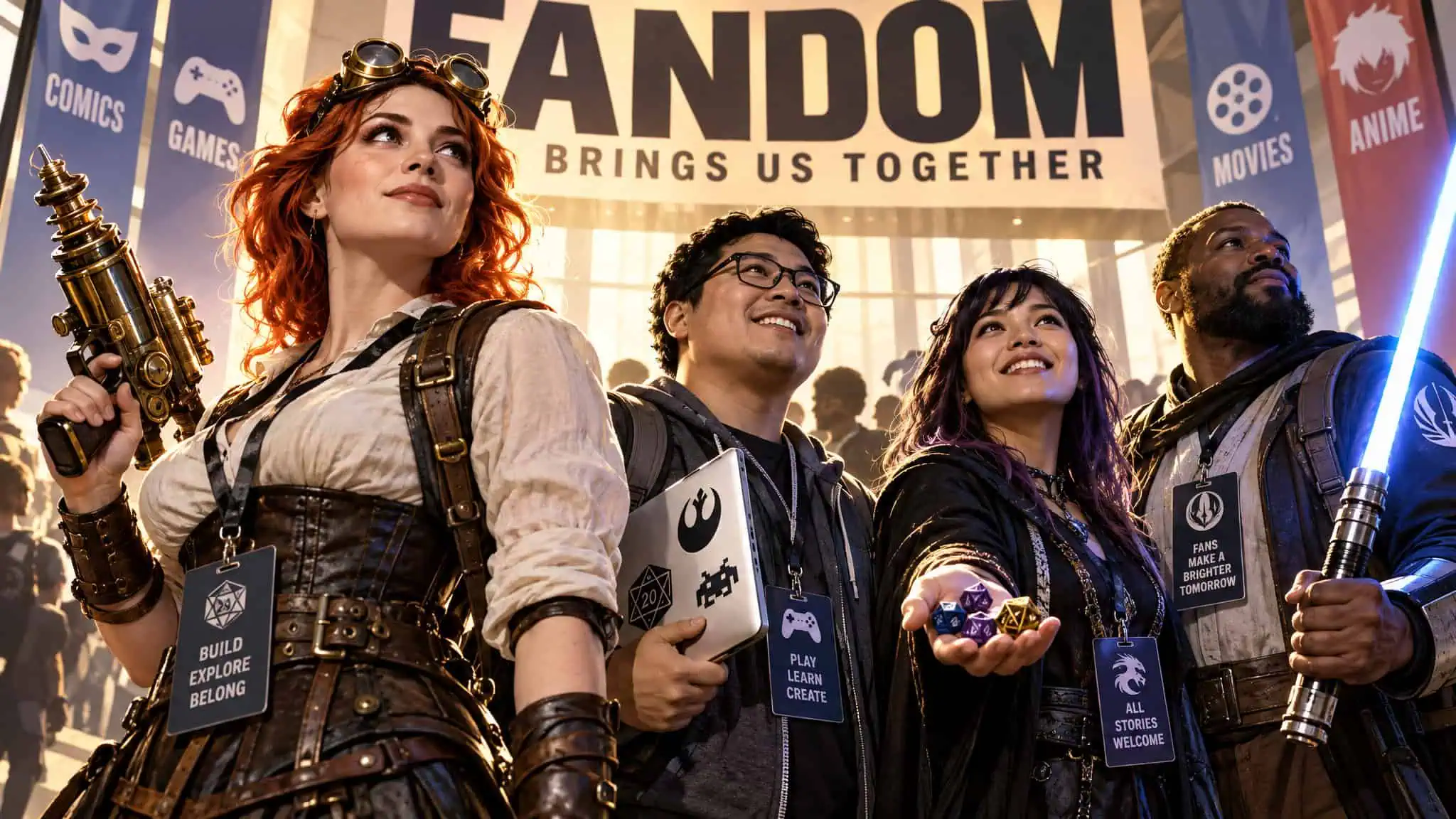
Two fans can stand in the same convention hall line and have almost nothing in common except the badge lanyard around their necks. One spent six months machining brass gears for a Victorian raygun; the other stayed up until 3 a.m. compiling a custom Linux kernel or memorizing paper stats for a tabletop campaign.
A single brainy, socially awkward stereotype, typified by the film Revenge of the Nerds, once lumped every geek and nerd together. Today, sorting through the distinct types of geeks means navigating a sprawling subculture map that includes a 69-subcategory, 143-page Wikipedia “Nerd culture” category tree and two competing 1-to-10 geek rankings published on June 14, 2010 by the Compendious Communications blog in “Levels of Geekdom.”
On July 22, 2004, the big online geek question was whether a propeller beanie suited nerds or geeks better. By June 14, 2010, the conversation had shifted to sorting out the distinct types of geeks in existence, a six-year jump from a binary debate to mapping specialized subcultures. All of these rankings and categories are informal and non-definitive, and most enthusiasts belong to several at once.
Key Takeaways
The Canadian Oxford Dictionary defines a geek through devotion to a specialized or technical interest (derived from the dialect word “geck,” meaning fool) and a nerd as a studious or unfashionable person, though a July 2004 WebmasterWorld debate concluded the words mean the same thing and differ only in connotation.
On the June 14, 2010 Compendious Communications 1-to-10 effort scale, hands-on builders outrank media consumers because making a costume takes more effort than reading ten sci-fi books, placing Vintage Virtuosos at Level 1, Sci-Fi/Fantasy Book/Media Nuts at Level 4, Steampunk costumers at Level 8, and LARPers at Level 10.
Wikipedia’s “Nerd culture” tree spans 69 subcategories and 143 pages, led by Video game culture (54 subcategories, 183 pages), Science fiction fandom (93 pages), and Otaku (11 subcategories, 44 pages), while real-world technical geeks run Major League Baseball front offices like the 2014 Los Angeles Dodgers “Geek Squad.”
Table of contents
Table of Contents
Geek vs. nerd: what the words mean
A geek is an enthusiast devoted to a specialized or technical hobby, whereas a nerd is defined by studious, overly intellectual personality traits. Traditional consensus frames nerds around academic pursuits and geeks around immersive hobbies and fandom communities. In a July 21 to 24, 2004 WebmasterWorld forum thread, posters surfaced the Canadian Oxford Dictionary definitions to test that line. That dictionary defines the term geek (derived from the English dialect word geck, meaning fool) as North American informal usage for a nerd or someone thoroughly devoted to one usually technical interest at the expense of social interaction. It defines the term nerd as North American slang for a foolish, feeble, or uninteresting person ridiculed as studious, puny, or unfashionable.
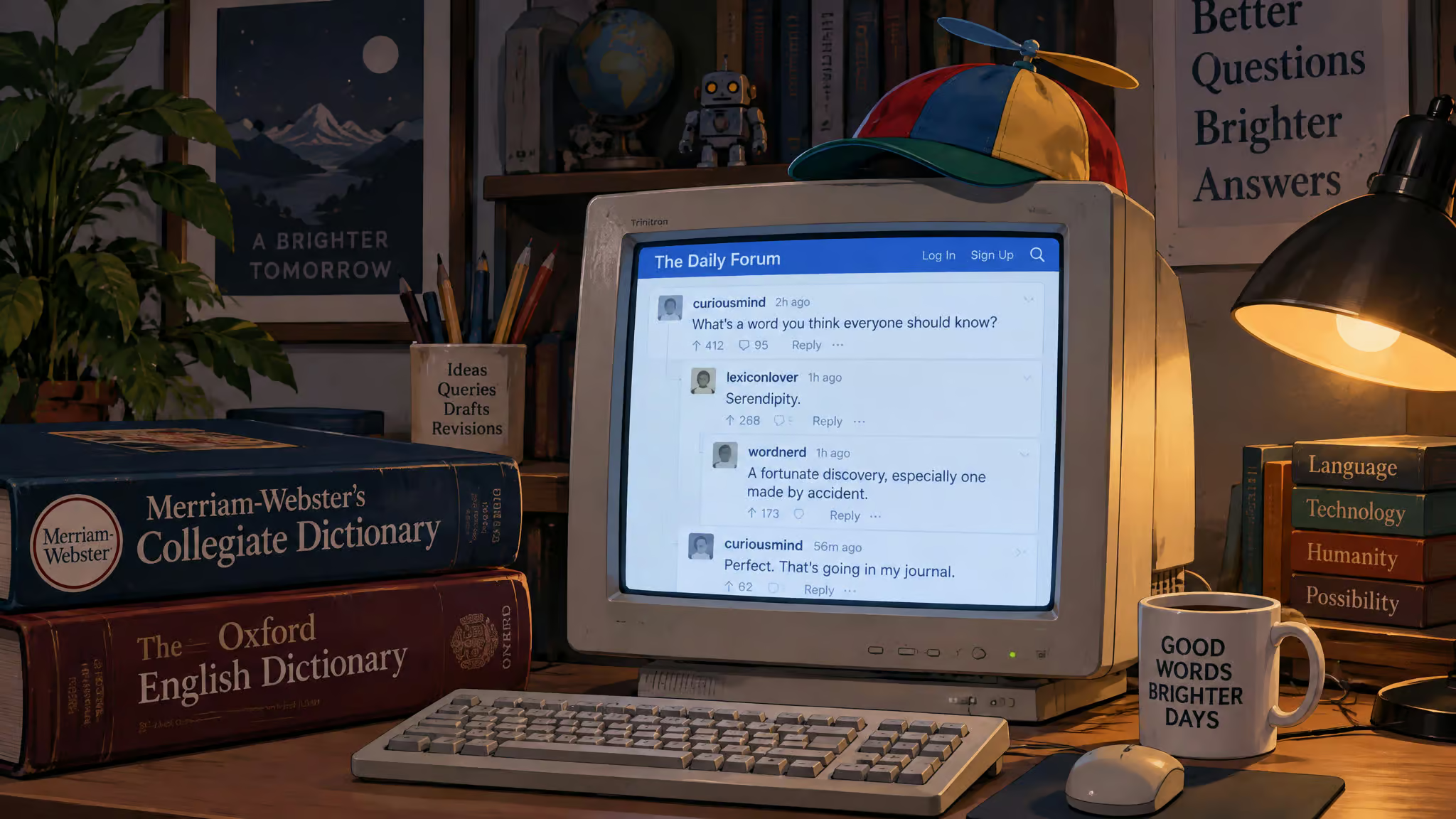
How dictionaries and forums split geek and nerd
When forum posters on WebmasterWorld debated the boundary on July 21 and 22, 2004 (with core posts timestamped between 4:08 p.m. and 8:35 p.m. GMT on July 21), they produced mirror-image rules. Poster Teknorat argued that a nerd is defined by personality and may never have touched a computer, whereas a geek is shaped by personal passions and practical skills. Meanwhile, chadmg described a geek as simply a socially inept nerd, and mivox immediately reversed the formula to claim a nerd is a socially awkward geek.
To test the boundary, mivox proposed a litmus test: someone excited about freeware or open-source software for a PDA or laptop is a geek if they have friends to tell about it, and a nerd if they don’t. Poster TheDoctor doubted anyone could reliably tell the two apart. Meanwhile, killroy noted that geekiness had become just one trait among many rather than an all-consuming identity, meaning geeks could be sporty, socially popular, and dating, and proposed a recursive definition of a geek as “somebody who gets along extraordinarily with other geeks.”
The personality traits linked to a nerd
A nerd is a person characterized by academic focus, high school grades, social awkwardness, and an obsession with non-mainstream hobbies. Video creator OlbenGC compiled working definitions from online sources, noting the profiles are oversimplified for brevity. In his breakdown, traditional nerds lean toward solitary intellectualism and hate sports. By contrast, geeks are a type of nerd who focus on subjects they care about, follow tech trends, and enjoy hobbies that don’t have to be non-mainstream. In the 2004 WebmasterWorld thread, Teknorat added that a nerd would never socialize beyond a predefined world, and chadmg argued that nerds are held to a higher standard than geeks, making Bill Gates more of a nerd than a geek.
Where dork, dweeb, and hipster fit in
Nerd and geek separate along lines of studious personality versus specialized hobby devotion, while dork functions as a broad youth-era synonym and dweeb has no settled boundary in these community taxonomies. While nerd and geek carry detailed dictionary and forum criteria, the 2010 Compendious Communications blog treats dork simply as an interchangeable youth label alongside geek and nerd under the old Revenge of the Nerds stereotype, and the boundary for dweeb is left undefined.
OlbenGC contrasts geek and nerd with a working definition of a hipster: someone who follows non-mainstream trends, listens almost exclusively to indie and alternative bands, abandons anything that hits the mainstream, and favors Apple hardware. Forum poster chadmg traced “geek” back to a circus freak who bit the heads off chickens. He concluded the labels mean the same thing and differ only in connotation, and noted they still sting as insults when aimed at strangers.
How Star Wars brought geeks into the mainstream
Star Wars made geek culture mainstream through sheer audience scale, pulling millions of fans out of the basement and ending their exclusion from mainstream American society even though Star Trek premiered 11 years earlier. Before Darth Vader’s first metallic gasps echoed in theaters, a single brainy-outcast stereotype typified by Revenge of the Nerds covered geeks, nerds, and dorks alike. In its June 14, 2010 post, the Compendious Communications blog weighed four candidate origins for modern geekdom: 1930s pulp science fiction magazines such as Astounding, cheesy 1950s sci-fi movies, the original late-1960s Star Trek television series, and Star Wars.
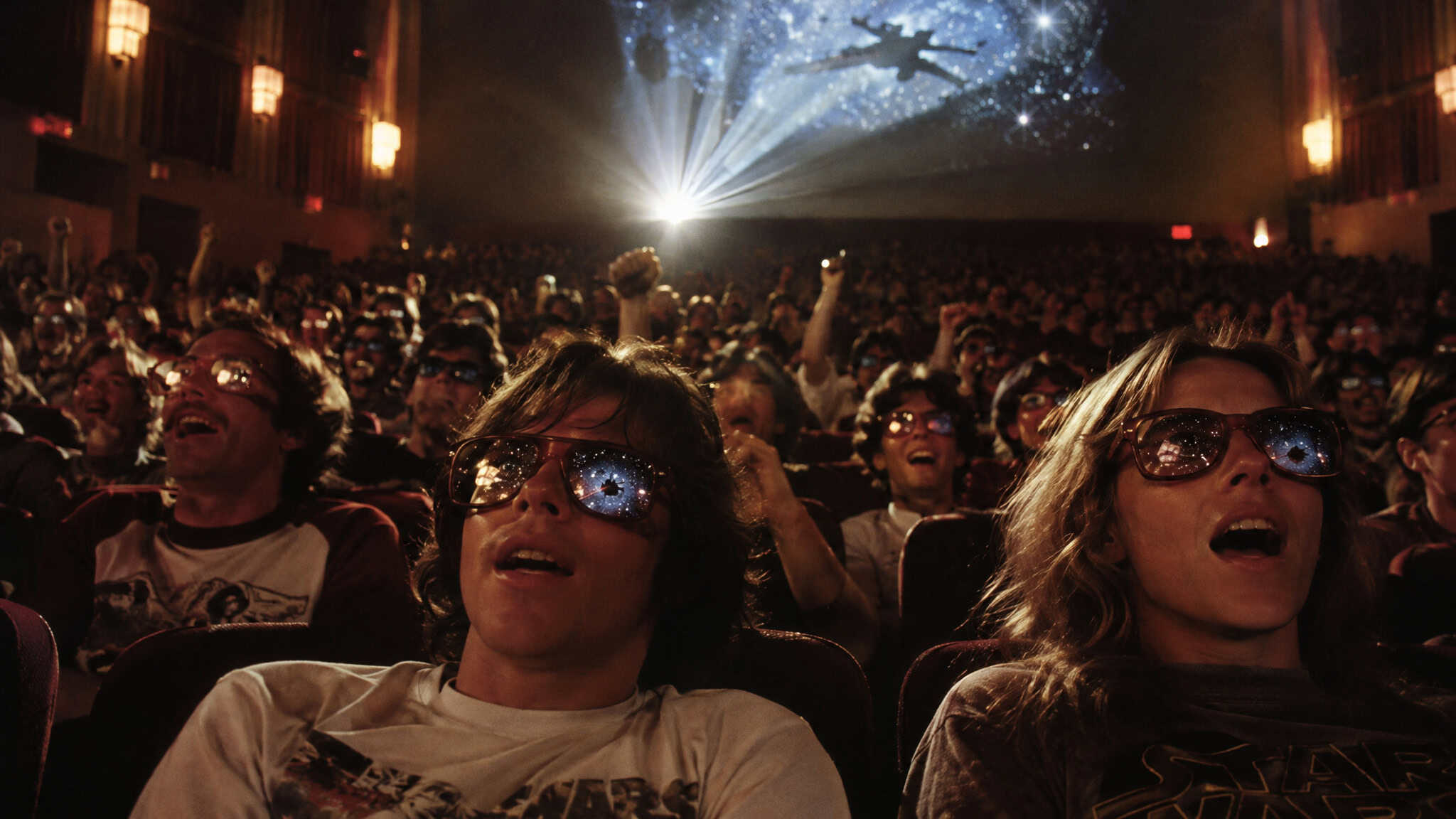
While Star Trek beat Star Wars to screens by 11 years, the blog argued Star Trek wasn’t the true starter of modern geekdom. Instead, the millions of fans who publicly embraced Star Wars turned geeks into a cultural force.
Geek types, ranked 1 to 10 by effort
The main types of geeks fall into four broad clusters:
- Pop-culture fandom geeks: Devoted fans of sci-fi and fantasy franchises like Star Wars and Star Trek, comic books, and anime and manga.
- Gaming geeks: PC, console, and mobile video gamers, alongside tabletop players of Dungeons & Dragons, strategy board games, and trading card games.
- Tech and computing geeks: Hardware builders, coders, webmasters, and gadget enthusiasts who follow technology trends.
- Costume, craft, and lifestyle geeks: Cosplayers, steampunk prop builders, historical re-enactors, vintage fashion collectors, and Live Action Role-Players (LARPers).
When communities rank these subcultures by dedication, hands-on creation outranks passive media consumption. On the June 14, 2010 Compendious Communications 1-to-10 effort scale (where 10 is highest), finding or making a costume takes more effort than reading ten sci-fi books, costumes paired with elaborate props rank higher still, and LARPers claim Level 10.
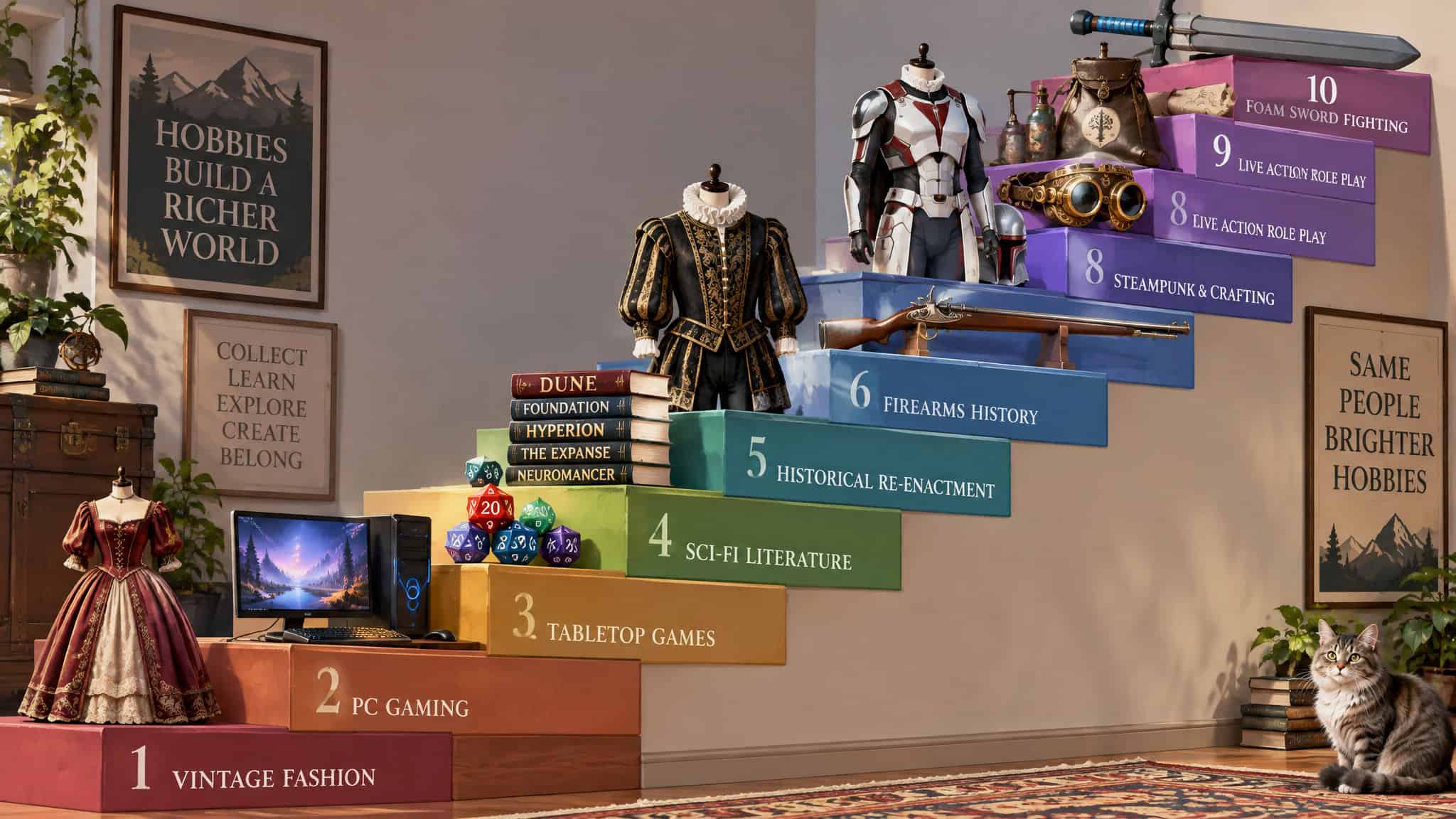
The blog’s ranking is explicitly non-definitive, with the author claiming membership in at least four categories. A second parallel 1-to-10 dedication taxonomy on the same blog keeps a slightly different order: Vintage Virtuosos (1), Computer Nerds (2), Gamers (3), SciFi/Fantasy Book/Media Nuts (4), Renaissance Faire participants (5), War Re-enactors (6), SciFi/Fantasy costumers (7), Steampunk costumers (8), D&D and World of Warcraft gamers (9), and LARPers (10).
Level 1: Vintage Virtuosos
Vintage Virtuosos obsess over the 1920s, 1930s, and 1940s, regularly wearing found or self-made vintage clothes, swapping patterns, and gathering online at the Fedora Lounge. They sit at Level 1 rather than with the costumers because vintage clothing is wearable in everyday life.
Level 2: Computer nerds
Computer nerds build their own machines, create websites, and rarely leave the house. Weird Al Yankovic’s “It’s All About the Pentiums” and “White & Nerdy” serve as their unofficial anthems.
Levels 3 and 9: Gamers, from Monopoly insults to dungeon masters
Level 3 covers board games and simpler console or computer video games, from deep strategy titles discussed on BoardGameGeek.com to lighter Facebook games like FarmVille (complete with frequent status updates), governed by one strict rule: asking a Level 3 gamer to play Monopoly is an insult. In the parallel taxonomy, Level 9 (the second-highest gamer tier) covers Dungeons & Dragons and online role-playing quest games like World of Warcraft, where serving as a Dungeon Master takes serious geek dedication and tracking character stats on paper is considered extra geeky.
Level 4: Sci-fi and fantasy book and media nuts
These classically minded geeks read heavily, follow genre movies and television, and travel to conventions to see media personality guests. Comic book geeks slot into this same tier.
Level 5: Renaissance Faire participants
Renaissance Faire participants dress in full Elizabethan period garb, put on English accents, and act and sing in character at faires. Pirate aficionados are grouped here too.
Level 6: War re-enactors
War re-enactors stage the Revolutionary War, Civil War, World War I, and World War II. Their gear has to survive hours in mud and foul weather while they lug heavy equipment and carry real, non-plastic guns that fire blanks or powder only.
Level 7: Sci-fi and fantasy costumers
Sci-fi and fantasy costumers make up a huge slice of fan-run sci-fi conventions and outrank war re-enactors because their outfits come from fictional worlds and must be built from scratch, with top builds rivaling Hollywood pros. Furry fandom is included in this tier.
Level 8: Steampunk costumers
Steampunk costumers edge out Level 7 sci-fi and fantasy costumers solely because of their elaborate Victorian props, which the Compendious blog describes as “un-friggin-believable.”
Level 10: LARPers
LARPers combine Dungeons & Dragons character role-play with full sci-fi or fantasy costuming, putting them at the peak of the 10-level effort hierarchy.
Fandom geeks: sci-fi, comics, and anime
Geek hobbies and interests center on active franchise participation, spanning heavy genre reading, comic collecting, convention travel, fan fiction writing, and digital art creation. While flagship sci-fi, comics, and anime communities anchor pop-culture geekdom, Wikipedia’s “Nerd culture” category maps the broader ecosystem across 69 subcategories and 143 pages, nested under Academic culture, Computing culture, and Youth culture. That category tree covers anime clubs, cosplay, and tech-entrepreneur biographies.
Science fiction fandom and Worldcon
Science fiction fandom forms one of the oldest organized pillars in the Wikipedia tree, where the category covers sci-fi conventions and Worldcon across 93 pages and 25 files.
Trekkies: Star Trek’s named fandom
Inside sci-fi, the Star Trek fandom category holds 39 pages, anchored by the dedicated identity page for “Trekkie.”
Anime and manga fandom, from clubs to Crunchyroll
The Anime and manga fandom category spans local anime clubs, conventions, specialized terminology, websites, and industry pages. Streaming and publishing infrastructure shows up in a 14-page Crunchyroll category (covering Crunchyroll News and Crunchyroll manga) alongside Hidive.
Otaku: the identity term and its costs
Wikipedia’s Otaku category branches into 11 subcategories and 44 pages that cover hardcore anime and manga fandom alongside the social history of discrimination against otaku.
Comics fandom, from collecting to conventions
The Comics fandom category tracks the hobby across comics fan clubs, the comics industry, comic book collecting, and dedicated comic book conventions.
Fan fiction and FanFiction. Net
Participatory writing lives in a 41-page Fan fiction category, with FanFiction. Net cataloged as a core community organization.
Digital art platforms: DeviantArt, Pixiv, and beyond
Visual fan creation runs through a 169-page Digital art category and specialized art communities including DeviantArt, Pixiv, Newgrounds, Niconico, Elfwood, and Gaia Online.
Gamer geek culture: video games, cards, and competitions
Gaming geeks range from casual console or Facebook players to people sinking hundreds of hours into MMOs, tracking tabletop RPG stats on paper, building trading card decks, or speed-solving puzzles. While the Compendious effort scale splits casual board and console players from hardcore Dungeon Masters, Wikipedia’s category map shows gaming’s footprint across 54 subcategories and 183 pages.
Video game culture: the biggest subcategory of all
Video game culture is the single largest subcategory inside Wikipedia’s nerd-culture map, holding 54 subcategories and 183 pages, including dedicated gaming conventions.
Magic: The Gathering and Flesh and Blood
Tabletop card-game geeks rally around deck-building staples listed in the category, led by Magic: The Gathering and the Flesh and Blood card game.
BattleBots, Rubik’s Cube, and Chess.com
Beyond controllers and dice, competitive and analytical gaming pursuits in the tree include BattleBots, Rubik’s Cube speed-solving, programming contests, and Chess.com.
Costume, craft, and maker subcultures
Hands-on craft and costuming subcultures appear in both Wikipedia’s fandom categories and the high-effort tiers of the 2010 Compendious scale, groups that turn fictional worlds into physical builds.
Cosplay: 99 listed cosplayers and cosplay restaurants
Wikipedia’s Cosplay category lists 99 individual cosplayers by name and extends into commercial subculture spaces like cosplay restaurants.
Furry fandom and its conventions
Furry fandom carries its own Wikipedia category covering furry conventions, mirroring its placement inside Level 7 (sci-fi and fantasy costumers) on the Compendious effort scale.
Brony fandom: My Little Pony’s grown-up following
The Brony fandom category documents adult fans of My Little Pony across dedicated conventions, comics, and fan fiction.
Steampunk: conventions and Victorian props
Steampunk holds a dedicated Wikipedia category that includes steampunk conventions, matching its Level 8 Compendious ranking earned through elaborate Victorian props.
Geek media, archetypes, and slang
Franchise labels like Trekkie, otaku, and brony sit alongside computing jargon like Geek Code and leet, plus webcomics, sitcoms, and academic literature that document and parody the culture.
xkcd and Randall Munroe’s books
Webcomic xkcd and creator Randall Munroe hold dedicated entries alongside his books What If?, Thing Explainer, and How To.
The Big Bang Theory and other geek TV
The Big Bang Theory appears in the category alongside several other television shows centered on nerd and geek culture.
Comic Book Guy and Professor Frink
The Simpsons characters such as Comic Book Guy are cataloged under nerd-culture epithets and pop-culture archetypes.
Geek Code and leet
Classic computing self-identification systems and text jargon live on in entries for Geek Code and leet.
American Nerd: geekdom studies itself
Self-reflective nerd-studies literature is represented by the book American Nerd alongside sibling cultural titles.
Geek communities, brands, and Geek Pride Day
Shared conventions, creator networks, and annual holidays tie these separate fandoms into a recognizable public ecosystem.
Fan conventions: from Worldcon to multigenre
Wikipedia’s fan conventions category spans 18 subcategories, covering gaming, anime, furry, My Little Pony, sci-fi, steampunk, comic book, and multigenre conventions.
Geek & Sundry and geek-branded media
Commercial and creator hubs include Geek & Sundry alongside other geek-branded media and commerce organizations.
Vlogbrothers, Nerdfighteria, and Crash Course
The Vlogbrothers category (built around the Green brothers) encompasses the Nerdfighteria community and Crash Course.
Geek Pride Day
Geek Pride Day carries its own entry and aligns with Geek Appreciation Day, the occasion behind creator XOashleykateXO’s “10 Types of Geeks” video.
Geek identities around the world and across fandoms
“Gen Z nerd” has no settled definition in these community taxonomies; instead, the record shows geek culture evolving as subculture meanings shift across decades (just as 1980s punks differ from 2000s punks, as OlbenGC notes) and new demographic, digital, and international identities branch out from the classic sci-fi, comics, and gaming triad.
Geek girl: Girl Geek Dinners and Team Unicorn
The geek girl concept includes organizations like Girl Geek Dinners and Team Unicorn. In XOashleykateXO’s gamer-geek profile, she knows everything about every game, plays the most popular titles, likely runs a gaming YouTube channel, keeps a phone packed with game apps, and buys and tests nearly every new release.
Black Nerd Problems
Black Nerd Problems is cataloged as a dedicated nerd-culture organization and commentary hub.
VTubers, maid cafés, and Japanese idol culture
Japan-influenced nerd culture concepts in the tree include VTubers, kawaii, maid cafés, and Japanese idols.
Disney adults
Disney adults and a companion Disney jargon category represent theme-park and franchise-lifestyle fandom.
Jubensha and Oshikatsu: geekdom beyond the West
International geek practices include Jubensha (Chinese live-script murder-mystery role-play) and Oshikatsu (Japanese fan-support practice).
The “10 types of geeks” list, one type at a time
In her Geek Appreciation Day video “10 Types of Geeks,” YouTube creator XOashleykateXO profiles nine named types (covering gamer geek plus the eight below, while counting herself as a gamer, computer, film, and pet geek) and leaves the tenth type unnamed in the transcript. The numbers in her profiles are playful stereotypes rather than statistical data.
Book geek
Reads non-stop, visits Barnes & Noble weekly, searches Amazon for book series, and asks for books on birthdays.
Smart and school geek
Wears “nerd glasses” and pulls straight A grades.
DIY geek
Mixes two items to make something better, demonstrated in the video by crafting a card from ribbon and a folder.
Computer geek
Loves coding and gaming, shows off personality through custom keyboards, and excels at tech.
Cosplay geek
Dresses as characters like Elsa and Anna and play-fights costumed villains in the park.
Film and video geek
Loves filming and running YouTube channels packed with how-to videos.
Music geek
Owns 100+ songs across genres, memorizes nearly every lyric, and drops song quotes into everyday conversation.
Pet geek
Films pets for YouTube (like the host’s dog, Cooper), keeps up to a hundred pets, and pays large vet bills for an injured animal.
Which type of geek are you?
Geek types work like overlapping badges: someone can easily qualify as both a nerd and a geek, and belonging to several subcultures is the norm. The 2010 Compendious author claims at least four categories, XOashleykateXO claims four, and 2004 forum poster killroy frames geekiness as one character aspect rather than an entire personality. Here at GeekExtreme, we see that overlap firsthand as geeks who obsess over hardware specs and subculture taxonomies in the same breath.

The Geek Test and the multi-type rule
To figure out your geek type from your interests and habits, the online Geek Test calculates a geekness percentage and ranks takers from plain “Geek” up to “Dysfunctional Geek.” The Compendious blog points out that it’s comprehensive, but still misses less obvious corners of geekdom, so its authors built a non-definitive 1-to-10 geek ranking where ten is the highest and a single person can match multiple groupings, weighted by effort, where making or finding a costume outranks reading ten sci-fi books and adding elaborate props ranks even higher.
“You might be a geek if…”: the 2004 lists
In the July 2004 WebmasterWorld thread, grelmar posted a geek self-check: bookmarking only WebmasterWorld, Slashdot, and Dilbert Online for entertainment; reading Wired the way the masses read Weekly World News; and threatening a breakup over not getting a gift from happyworker.com. Grelmar’s checklist also included naming and etching every computer, running SETI@home on every machine, treating Doritos, Cheetos, Coffee, and Pizza as the four food groups (eatable one-handed while typing), and recalling high-school RPG sessions as the glory days of social existence. Poster mivox added looking for a “next” link at the bottom of a paper magazine page, getting frustrated you can’t cut and paste while writing longhand, and keeping old RPG character sketchbooks with the stats still memorized.
Other forum members pitched in with their own markers. Poster limbo adapted the old adage (“It is better to be thought a fool then to open your mouth and remove all doubt”) to argue that being seen as a geek beats being seen as cool.
Webwork recalled being called “the brain” as a kid, wearing glasses from 4th grade, playing varsity basketball alongside marching band, and marrying the first girl he ever kissed, while asking whether geekiness is a badge of honor or still chic. Macguru asked “what is difference between a widget and a gizmo,” and lorax noted that geeks aren’t mass-produced: there are just enough folks around who grasp backlinks and screen scraping when he needs a hand.
One outfit, eight labels: a self-classification case
Creator OlbenGC has worn all black, thick-rim glasses (“before it was cool”), and a beard since childhood, accumulating eight labels over the years: metalhead, punk, goth, emo, Satanist, nerd, geek, and hipster. Running himself through his own checklists, he concludes he’s a geek: he’s disqualified from hipster because he lacks fashion sense, listens to a wide range of music, doesn’t mind things going mainstream (citing Rick and Morty‘s “I’M PICKLE RICK! WUBALUBADUBDUB!”), and prefers PC and Android over Apple, and he’s only marginally a nerd because he had below-average grades and loves sports, especially MMA.
When geeks run a Major League front office
The Los Angeles Dodgers front office proves that technical, number-crunching geek identity operates at the top of elite sports analytics, provided data is balanced with human scouting. On November 10, 2014 (as reported by the Los Angeles Times at 1:42 p.m. PT), the Dodgers hired Farhan Zaidi from the Oakland A’s as general manager. Armed with an MIT bachelor’s degree and a Cal (Berkeley) economics doctorate, and reportedly working 16 hours a day crunching numbers, Zaidi opened his press conference by joking that he brought along a tiny screwdriver to fix a reporter’s laptop.
He joined Andrew Friedman (President of Baseball Operations), Josh Byrnes (VP of Baseball Operations), Gabe Kapler (farm director), and Billy Gasparino (scouting director) in an analytically driven front office whose quantitative staff was nicknamed the Geek Squad. Zaidi and team president Stan Kasten both dismissed the Moneyball-style turf war pitting Billy Beane and the character based on Paul DePodesta against traditionalists. Zaidi noted that packing the front office entirely with sabermetricians would be overkill and advocated a balanced mix; Kasten backed the veteran scouting department by repeatedly calling for more scouts.
Baseball analytics traces back to quirky metallurgist Earnshaw Cook, whose slide rule sits in the Hall of Fame after he tried to prove Ty Cobb was better than Babe Ruth; the LA Times noted sabermetrics was still in relative adolescence and a respected tool that would eventually put all teams on an even statistical playing field. In the 2004 WebmasterWorld thread, killroy shared a business parallel: after leaving college for financial reasons, he earned a comfortable living through affiliate marketing, whereas his friends who graduated as C programmers ended up in low-level tech roles because they possessed coding skills without entrepreneurial drive.
When geek labels become insults
Geek and nerd labels aren’t inherently offensive now, except when applied to strangers to fill gaps in what someone knows about them. When enthusiasts claim labels like Trekkie, cosplayer, or computer geek for themselves, the terms work as shorthand for shared passions. As OlbenGC observes, however, people routinely sort unfamiliar individuals into stereotype boxes such as weeb, jock, basic, nerd, geek, or hipster to fill in what they don’t know about a person, and those profiles still carry traits that land as insults. Wikipedia tracks that friction directly through a dedicated category for “Epithets related to nerd culture” alongside its documentation of discrimination against otaku.
Geek categories work best as a map for finding your own hobby communities rather than a label maker for boxing other people in.
Frequently Asked Questions
How do you define geek?
The Canadian Oxford Dictionary defines a geek—a term rooted in the dialect word “geck,” meaning fool—as a North American informal word for a nerd or someone deeply devoted to a specialized, usually technical interest over socializing. In everyday subculture maps, it separates people driven by passionate hobbies, practical skills, and fandoms from purely academic types. That devotion can cover anything from coding and hardware builds to sci-fi conventions and tabletop role-playing.
geek meaning vs nerd definition: what is the difference?
The split comes down to immersive hobbies versus academic personality traits. A geek is driven by hands-on skills, tech trends, and specialized fandoms, while the Canadian Oxford Dictionary defines a nerd as a studious, unfashionable person tied to solitary intellectualism and high school grades. As 2004 WebmasterWorld forum posters joked, if you get excited about open-source PDA software and have friends to tell about it, you are a geek; if you don’t, you are a nerd.
What are the defining personality traits of a nerd?
Traditional nerd profiles center on intense academic focus, straight-A grades, solitary intellectualism, and social awkwardness. Video creator OlbenGC notes that classic nerds gravitate toward non-mainstream obsessions and actively dislike sports, whereas 2004 forum poster Teknorat argued a true nerd rarely socializes outside a predefined bubble and might never even touch a computer. Because nerds are held to an academic standard rather than a hobbyist one, figures like Bill Gates often get classified as nerds first.
nerd vs geek vs dork vs dweeb: what sets each label apart?
Nerd and geek divide neatly between bookish intellect and passionate hobby devotion, whereas dork and dweeb lack strict community boundaries. The 2010 Compendious Communications taxonomy treats dork as a catch-all youth synonym lumped under the old Revenge of the Nerds stereotype, leaving dweeb completely undefined. By contrast, a hipster is defined by chasing indie music, ditching anything that turns mainstream, and favoring Apple gear over PC and Android.