
If you want to know how to scale a startup, you need to abandon the YouTube moguls hawking empty promises of hands-off wealth and start treating your business like a complex software pipeline. Scaling isn’t about magical passive income; it’s a mathematical reality bounded by a strict 168-hour ceiling of physiological capacity every week. Escaping that 168-hour ceiling means transitioning from trading direct labor for cash into compiling high-leverage operations.
Building this architecture prevents system failure during growth and forced scaling. To scale operations without breaking them, you’ve got to reverse-engineer the progression: establishing compliant bases, manipulating cash flow with tools like an SBA loan calculator, mastering the craft, and deploying algorithmic automation.
Key Takeaways
Automating unorganized workflows scales chaos, but deploying strategic AI tools like LegionAI can cut response times by 70% and reduce operational errors by 60%.
Structuring a compliant Delaware entity with platforms like Stripe Atlas provides proximity to 75,000+ startups and appealing legal blueprints for top-tier funds like Y Combinator and General Catalyst.
Squeezing out a 45-60 day lead on your COGS builds a natural cash buffer, letting you bootstrap early hires without taking on venture debt.
Table of Contents
Lay the Institutional-grade Legal Foundation Before Writing Code
Let’s talk technical debt, but the legal kind. Before you write a single line of code or market your minimum viable product, you need an institutional-grade foundation. You want to set up structures that appeal natively to institutional investors including Y Combinator, a16z, and General Catalyst to ensure cap table compliance and facilitate future equity distribution.
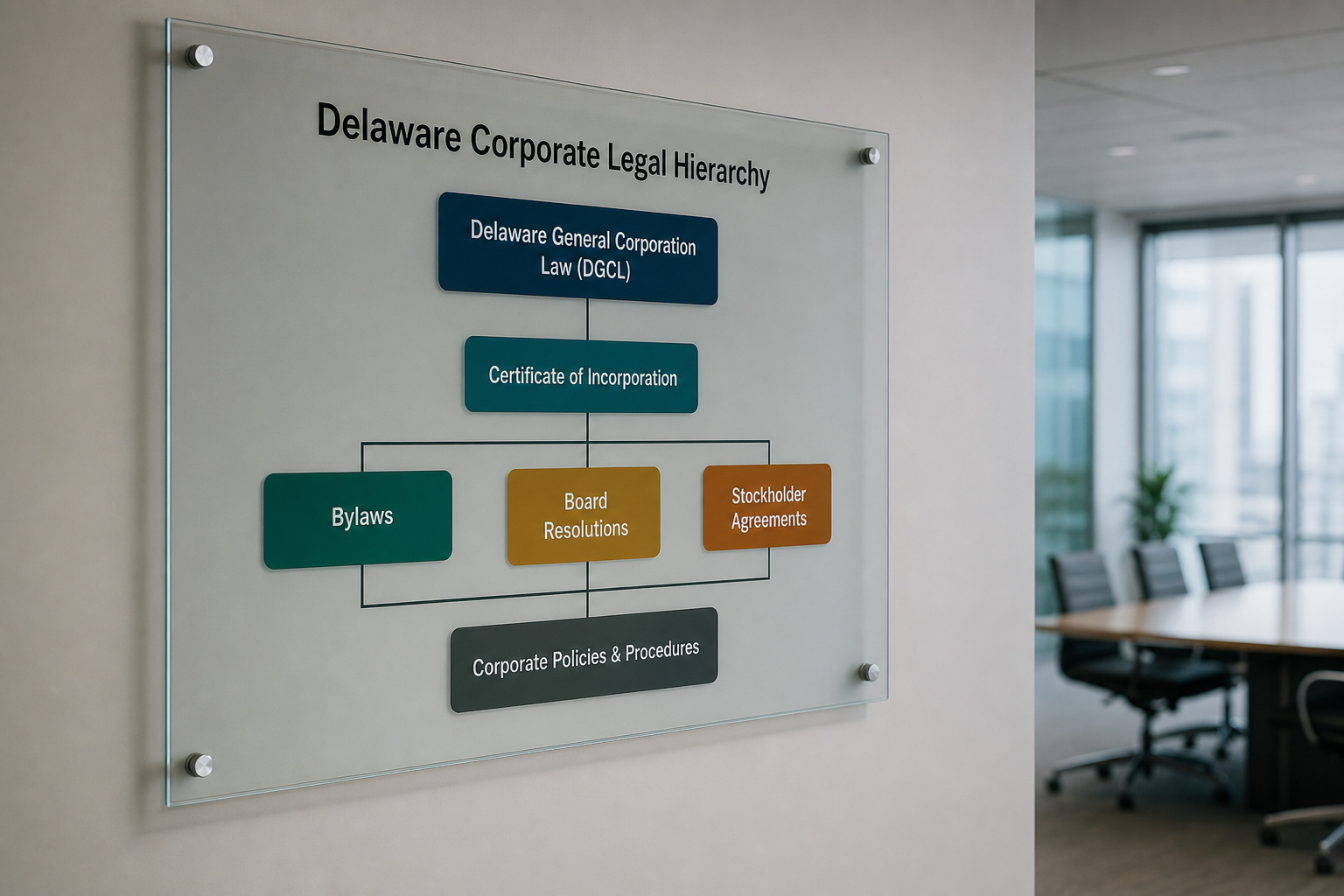
The most elegant way to compile this base layer is using Stripe Atlas to spin up a Delaware C Corp. With over 75,000+ companies incorporated this way, the corporate documents are built in collaboration with Cooley, meaning your equity distribution is venture-ready right out of the repository. Establish this Delaware entity immediately and file an automatic 83(b) tax election to lock in low tax liabilities, protecting your founder equity before the company’s valuation scales. This setup prevents complex fundraising bugs by ensuring cap table compliance.
Master the Craft Until You Hit Total Personal Capacity
Scaling dictates that you must achieve craft mastery before you earn the right to transition into management oversight over the process. If you delegate before you understand the mechanics, a quality collapse occurs as key performance indicators deviate from the validated baseline required for selling a startup.

Acting as the Solitary Node in Your System
At first, you are the solo sales representative, the developer, and the bookkeeper. You’ve got to execute the entire feedback loop manually, conducting your own ground-level Market research and refining Customer segmentation to precisely understand your target market and their pain points. This manual phase is how you locate the friction points in your minimum viable product by refining Customer segmentation and purchasing behaviour.
The RedditCuts Deployment Model
Think about scaling a physical entity—a progression we’ll call the “RedditCuts” model. As a solo barber, your output is strictly throttled by the speed of your hands. So, you establish the first RedditCuts location, mastering the local sector. Once your schedule is full, you open adjacent chairs for others.
Then, you spin up a second branch—RedditCutsDeluxe. Eventually, you initialize a third. This forces a binary choice: put down the scissors and manage the system, or stay capped. Use this progression to time the shift from manual labor to managing the organisational structure and executing your strategy via data analytics.
For capital-heavy trade services, this model adapts by shifting the focus from individual chairs to scaling expensive hardware and specialized fleets. You maximize the utilization rate of a single expensive asset first, organically funding your operational footprint before financing secondary rigs or expanding regional coverage.
The Emotional Toll of Pure Management
When you finally step away from the tools to strictly oversee the system, a deep sense of emotional isolation often sets in. You are no longer executing the familiar, dopamine-driving tasks of your craft, but instead wrestling with the abstract complexities of leading people. A common struggle for early-stage founders is navigating this void without automatically reverting to comfortable micromanagement.
“To scale operations without breaking them, you’ve got to reverse-engineer the progression: establishing compliant bases, manipulating cash flow, mastering the craft, and deploying algorithmic automation.”
Finance Early Teams Using the COGS Lead Time Float
To safely scale your sales force, you should pay early-stage representatives a base salary rather than relying on chaotic commission-only reps, funding these fixed-cost employees completely through an organically engineered cash float.

Engineering Your Accounting Timelines
Instead of raising venture debt to pay early salaries, try hacking the timeline between your inbound revenue and outbound costs. Through smart logistics and tight inventory management, if you can engineer a 45-60 day COGS lead time, you organically generate a cash float that safely covers initial fixed salaries before your own manufacturing or software-as-a-service bills come due. You are effectively self-funding your headcount scaling by exploiting the latency in your own supply chain.

Tuning Existing Revenue Loops
Before you start financing top-line expansion, you need to optimize the database you already have. Use data analytics to dig into your user cohorts, studying their purchasing behaviour to systematically reduce customer churn and increase customer lifetime value (LTV) through strategic Pricing optimization and natural cross-selling. Fine-tuning the revenue streams of your existing active users reduces the necessity for customer acquisition by using Pricing optimization to increase lifetime value. When you do tap into that financial float to hire new reps, they’ll be feeding a highly efficient, profitable baseline.
Extract, Document, and Outsource Specific Operational Chunks
Creating repeatable processes to ensure consistent quality requires extracting fully validated workflows and isolating them into explicit operational chunks. You simply cannot hand chaotic internal pipelines to new human capital and expect them to scale efficiently. This targeted handoff involves assigning these carved-out tasks to pre-vetted candidates through specialized sourcing platforms like Pearl Talent. Once these workflows are handed over, you’ve got to empower your external talent with specific cross-functional decision-making authority so they can execute autonomously without bottlenecking leadership.
To pull this off, you must systematically write down raw, messy documentation of current organic workflows to successfully onboard this talent; imperfect instructions still function as delegation frameworks compared to having nothing written down. Beyond outsourcing via Pearl Talent, shift focus toward building a self-sustaining audience base. Rather than burning your server runway on volatile paid ads, foster an organic community using platforms like Skool. It’s a lower-overload, high-retention way to maintain audience engagement while your external hires execute the operational modules you just shipped out.
Amplify Workflows Using Strategic AI and Infrastructure Credits
Wait to deploy automation until a process is validated, then apply it strictly as a force multiplier.
Smarter Execution and Data Handling
Once your core funnel is clean, automated outreach isn’t just about spamming output; it becomes a statistical game of error reduction and speed. Implementing AI-powered systems like LegionAI for high-volume lead nurturing drastically improves the accuracy of internal processes. Getting this right drives workflow optimisation, cutting organizational response times by 70% and reducing operational errors by 60%, ensuring you continuously hit core key performance indicators like bumping response rates up to 25%.
Leveraging Institutional Credits
Scaling an infrastructure stack today doesn’t require a bloated budget. The current ecosystem allows you to build a unified operational architecture using cloud computing and software-as-a-service vendor credits. By adopting AI innovators like Runway, ElevenLabs, and Leonardo AI, you can stream heavy multimedia pipelines at a fraction of the traditional cost. Lock in partner discounts and credits across platforms like AWS, Carta, and Perplexity for highly cost-effective cloud computing and administrative tools. This creates a synchronized, automated tech ecosystem structured as a Delaware C Corp to function as an institutional-grade startup.
Frequently Asked Questions
How to scale a startup successfully?
Scaling successfully requires you to stop trading your limited 168-hour work week for cash and start architecting a repeatable, high-leverage business pipeline. You must reverse-engineer the growth process by establishing a compliant Delaware C Corp, mastering your craft until personal capacity is hit, and only then automating workflows once they are already validated.
Why does 90% startup fail?
Many startups fail because they attempt to automate or delegate chaotic, unrefined workflows before achieving a validated baseline. Failing to document processes or neglecting foundational institutional structures, like proper cap table compliance, creates critical system failures that prevent a business from scaling beyond the founder’s manual capacity.
What are the 4 pillars of Scaling Up?
Scaling requires four specific actions: establishing a compliant legal base for institutional investors, manipulating cash flow to fund operations, mastering the craft as a solitary node, and deploying algorithmic automation as a force multiplier. This architecture allows you to transition from a manual operator to a leader who manages the structural systems of the company.
How can I finance early hires without taking on venture debt?
You can generate an organic cash float by engineering a 45-60 day lead time on your Cost of Goods Sold (COGS). By optimizing your supply chain and payment timelines, you effectively use the latency between inbound revenue and outbound costs to self-fund initial fixed-cost salaries.
Is it better to automate early or delay scaling operations?
You should always delay automation until a workflow is fully validated, as automating unorganized processes simply scales chaos. Once a process is refined and documented, tools like LegionAI can be used to dramatically reduce operational errors and accelerate response times.
When should I transition from doing the work myself to managing others?
You should transition only after you have achieved total personal capacity and mastered every mechanic of the feedback loop. Delegating before you understand the baseline leads to quality collapse, meaning you must act as the solitary node in your system until the operational process is robust enough to be handed off.
Why is a Delaware C Corp necessary for a new startup?
A Delaware C Corp is the standard for institutional-grade foundations, providing the legal infrastructure that major funds like Y Combinator and General Catalyst require. Using platforms like Stripe Atlas allows you to generate venture-ready documents, ensure cap table compliance, and facilitate future equity distribution from day one.
