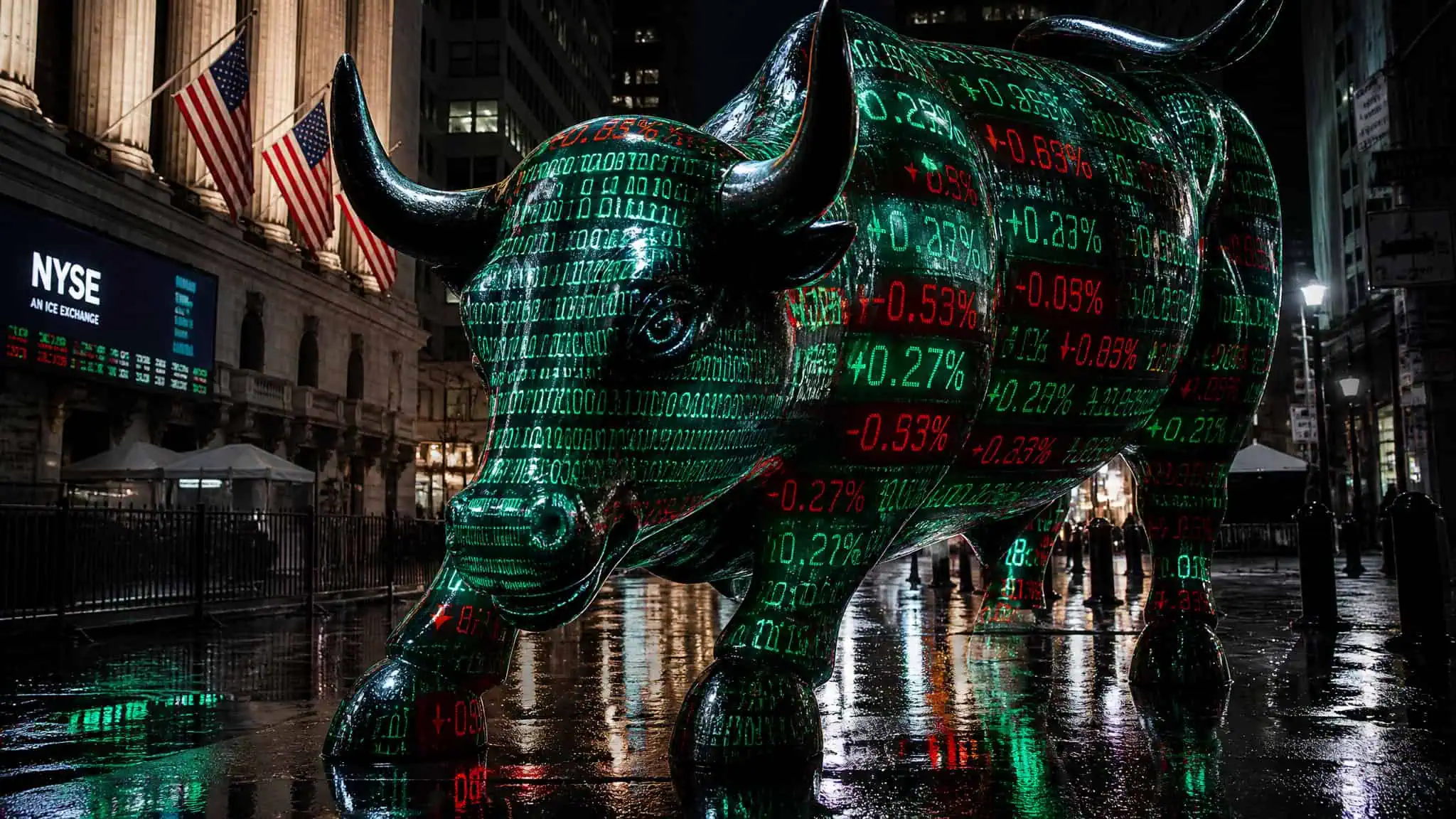
The exchange operator behind the New York Stock Exchange just agreed to pour up to $2 billion into a website where people bet on whether Taylor Swift will drop an album and whether the Fed will cut rates. That’s not a metaphor. Intercontinental Exchange, the company that runs the NYSE, is betting big on Polymarket, a crypto-based platform that looks, to the naked eye, like a gambling site with good branding.
That’s the moment prediction markets officially stopped being a niche internet curiosity and became something Wall Street wants a piece of. The same week, traditional hedging infrastructure was humming along with record sugar futures open interest, because of course it was. The old economy and the new betting economy are apparently going to coexist.
So what are these things, really? Why did they suddenly show up in your brokerage app? And can you actually make money on them, or is this just legalized gambling with extra steps?
I spent a while digging into the mechanics, the legal mess, and the platform horror stories. Here’s the full picture.
Key Takeaways
Prediction markets are platforms where you buy and sell binary event contracts that pay $1 if a specific outcome happens and $0 if it doesn’t; the price reflects the market’s implied probability, so a 65-cent “yes” contract means the market thinks there’s a 65% chance.
The legal status is a genuine turf war: the CFTC claims authority over event contracts as derivatives under the Commodity Exchange Act, while states like Arizona argue they’re gambling and have filed criminal charges against Kalshi even as the CFTC simultaneously sued Arizona to assert federal authority.
A March 2026 study of 1.4 million Polymarket users found 70.8% lost money overall, the median user lost just $2, and the top 1% of traders captured 84% of all gains, making the profitability distribution more extreme than venture capital or day trading.
Table of Contents
What You’re Actually Buying
The core instrument is elegantly simple. You’re buying an event contract: a binary yes/no question with a deadline. The contract has a nominal value of $1. If the event resolves in your favor, the contract pays out that $1.
If it doesn’t, you get nothing. Zero. The price you pay reflects the market’s perceived probability of that outcome.
Here’s a concrete worked example. Say there’s a contract on whether the S&P 500 will close above 7,000 by the end of 2025. You think it will. The contract is trading at 25 cents.
You buy 1,000 contracts. That’s $250 at risk. If the index closes above 7,000 on the final trading day of 2025, each contract pays $1, so you collect $1,000. Your profit: $750 on a $250 outlay. If the index closes anywhere below 7,000, your contracts are worth nothing and you’re out the full $250.
That’s the whole mechanic. The price is an implied probability. A 65-cent contract means the market collectively thinks there’s a 65% chance that outcome happens. The matching is done through an order book, like a stock exchange, and the clearing is handled by the platform.
This is structurally identical to binary options. You’re making a bet that resolves to either a full payoff or nothing. The instrument doesn’t care about the wrapper.
The range of questions is genuinely everything. Election outcomes, Fed rate decisions, sports games, economic indicators, Taylor Swift album releases, Bill Ackman’s Twitter activity. If someone can phrase it as a yes/no question with a deadline, someone will create a market for it.
The platforms running these contracts include Kalshi and Polymarket as the big players, but also PredictIt, the Iowa Electronic Markets, ForecastEx, Crypto.com, Robinhood, Webull, NinjaTrader, Interactive Brokers, and others. Some have account caps: PredictIt limits you to $3,500 per contract, and the Iowa Electronic Markets, a University of Iowa project, caps accounts at $500.
The Legal Fight Is a Mess
Here’s where things get genuinely wild. The same product can face criminal charges and federal protection at the same time, depending on which government agency you ask.
The Commodity Futures Trading Commission (CFTC) claims jurisdiction over event contracts as derivatives under the Commodity Exchange Act. Their argument is that these are financial products falling under federal commodities law. State regulators have a different view: they say the CFTC is overreaching, and that many event contracts fall squarely within their traditional authority over gambling.
This isn’t a theoretical debate. Arizona’s attorney general filed criminal charges against Kalshi. At the same time, the CFTC sued Arizona, Connecticut, and Illinois to assert federal authority and block state interference. The same product, simultaneously facing criminal prosecution at the state level and federal protection. That’s the regulatory landscape in a nutshell.
Nevada and Minnesota have banned prediction markets entirely, though those bans are being challenged in court. As of June 2026, fifteen other states are in active legal disputes against prediction market operators. Proposed federal legislation would ban sports betting on prediction markets, which would pull a huge category off the table.
The timeline shows how fast the tide turned. The CFTC banned Polymarket from taking U.S. bets in 2022. PredictIt won its case against the CFTC in July 2023. An injunction in October 2024 let Kalshi keep operating while its case wound through the courts.
The CFTC dropped its case against Kalshi in May 2025. The Trump administration abandoned federal enforcement against Polymarket in late 2025. Polymarket restored full access to U.S. users in May 2026.
Scholars are split. Some law professors call sports prediction markets “one of the starkest cases of regulatory arbitrage that can be imagined.” Others propose frameworks to distinguish investing from gambling, like a risk-reallocation test. Some argue the CFTC should delist any contract without genuine hedging or pricing uses, which would strip out most of the entertainment-driven volume. There’s no consensus, and that uncertainty is the point. The legal ground you’re standing on can shift with a single ruling.
The practical risk is real: a platform where you’ve deposited funds could become illegal in your state overnight. Nevada and Minnesota have already done it. Your funds might be frozen, your positions unsettled, and your recourse limited to whatever the platform decides to do.
Where You Can Actually Trade
The platform landscape breaks into three rough tiers, and the differences matter more than the marketing.
First, the CFTC-regulated U.S. platforms. Kalshi is the largest of these, operating as a regulated exchange with clearing and compliance infrastructure. PredictIt exists in a weird academic-ish space with per-contract caps. The Iowa Electronic Markets is literally a University of Iowa research project with a $500 account limit. ForecastEx is another regulated venue offering event contracts.
Second, the brokerage integrations. This is where prediction markets started reaching mainstream retail investors. Robinhood offers sports and economic event contracts through partnerships with Kalshi and ForecastEx. Interactive Brokers has contracts via ForecastEx.
Webull does economic and financial market contracts through Kalshi. NinjaTrader offers contracts through a partnership with Tradovate. Crypto.com offers politics, economics, financial market, and sports contracts through its subsidiary.
Third, the crypto-native offshore platforms. Polymarket is the global leader here. It operates on USDC (the Circle stablecoin, pegged 1:1 to the dollar), which means you fund your account by sending stablecoins. It was banned in the U.S. for years, though some Americans used VPNs to get around the ban, and it acquired a licensed derivatives exchange, QCEX to restart U.S. operations.
The tier you choose matters. Regulated venues have clearing infrastructure, compliance obligations, and some recourse if something goes wrong. Crypto-native platforms live in a grayer zone where the rules are whatever the platform decides they are. The difference isn’t just about features; it’s about legal protection and tax reporting.
Platforms generate revenue through several mechanisms: they charge trading fees on each transaction, earn interest on the float of user funds held in custody, and often act as market makers, profiting from the bid-ask spread. These revenue streams are what sustain the platforms and also contribute to the negative expected value for the average participant.
The Institutional Gold Rush
The money flowing in proves this category has graduated from internet curiosity to financial product.
The headline is the Intercontinental Exchange investment in Polymarket: up to $2 billion. That’s the company behind the NYSE deciding the future of markets includes prediction contracts. It’s a signal moment for the whole category.
Then there’s the Gemini-Apex deal. Gemini Titan, which secured a Designated Contract Market license in December 2025, is becoming the sole regulated platform for crypto event contracts disseminated via Apex’s brokerage infrastructure. Apex Clearing Corporation is registered with the CFTC and the National Futures Association. That’s not offshore gray area; that’s compliance infrastructure being built for the category.
The arrangement is non-exclusive and covers sports, economics, and broader financial events. Gemini Olympus also secured a Derivatives Clearing Organization license in April 2026.
Prediction market ETFs have debuted, which means you can now gain exposure to this category through standard brokerage accounts. Goldman Sachs has been using AI to analyze signals from Kalshi and Polymarket as data inputs for their research. American Equity, a major retirement income provider, has also integrated prediction market data into its retirement income strategies, using these signals to inform product design and risk management. That’s not a fun hobby; that’s institutional adoption.
The volume projections are staggering. Predictions of $1 trillion in market volume by 2030 get thrown around. Whether that’s accurate remains to be seen, but the direction is clear.
In Canada, the CIRO authorized Wealthsimple and Interactive Brokers Canada to facilitate event contracts. Wealthsimple launched “Wealthsimple Predict” powered by Kalshi, with restricted categories: economic forecasts, environmental forecasts, and financial indicators. There’s a 30-day minimum term, no leverage, and political contracts are banned.
The Statistical Cold Water
Here’s the part where the hype meets reality. A March 2026 study analyzed 1.4 million Polymarket users and $20 billion in trading volume from November 2022 through March 2026. The finding: 70.8% of users lost money overall. The median user lost just $2. The top 1% of traders captured 84% of all gains.
From a different angle, Islamic finance principles, which prohibit gambling (maisir) and excessive uncertainty (gharar), would classify most prediction market contracts as impermissible, since they involve betting on uncertain outcomes rather than genuine trade or investment. This perspective highlights how cultural and religious frameworks can view these markets as closer to wagering than to investing.
Let that sink in. The median loss is tiny because most trades are small. But the concentration of gains is more extreme than venture capital or day trading. This is not a normal retail investment distribution.
The house and the sharpest traders extract nearly all the value, which raises the question: do people make money on prediction markets? The data suggests that only a disciplined few, who control position sizing and exploit low-probability edges, consistently come out ahead.
The median loss being $2 is almost a trick of the numbers. Most participants lose small amounts because they’re betting small amounts. The structure guarantees that outcome. The spread, the platform fees, and the informed traders all take their cut before the median participant sees anything.
Finance professor Richard Warr from the Poole College puts it bluntly: prediction markets should be treated as entertainment, not investment. An Ipsos poll from April 2026 in Canada found 75% of respondents view prediction markets as gambling and 69% believe they primarily benefit insiders. Public perception is firmly negative, and the data supports the skepticism.
The expert consensus is captured in one line: “Unless you’re very lucky or extremely good at forecasting, your expected financial return is zero.” That’s Charles Martineau, and it hits the core issue: the markets are good at predicting outcomes, but being good at predicting doesn’t mean you’ll profit, because the pricing already reflects the consensus probability, a dynamic frequently dissected in Prediction markets Reddit communities, where enthusiasts trade both forecasts and the collective wisdom (or folly) behind them.
The Forecasting Paradox
So here’s the weird thing. If everyone loses, why is Goldman Sachs paying attention? Why is the NYSE operator investing billions?
One reason is that prediction market returns often show low correlation with traditional asset classes like stocks and bonds, making them potentially useful for diversification. However, their high volatility and negative expected value for most participants mean they are not a reliable hedge; they might serve as a speculative overlay rather than a core portfolio component.
Because prediction markets are genuinely good at forecasting. A NBER working paper by Diercks, Katz, and Wright found that Kalshi’s forecasts perform comparably to or better than established benchmarks. Kalshi’s track record on Federal Reserve rate decisions is essentially flawless. It uniquely provides probability distributions for GDP growth, unemployment, and core inflation, which gives economists probabilistic views they can’t get elsewhere.
That’s the paradox: a market can be informationally efficient, with prices reflecting true underlying probabilities, while simultaneously being a negative-sum game for the median participant. The forecasting value and the investment value are completely decoupled.
The market is good at aggregating information. The collective wisdom of people putting real money on the line produces accurate probabilities. But the spread, the platform fees, and the sharpest traders capture any edge before you can get to it. The information is valuable to institutions analyzing the signals, not to the retail bettor trying to profit from the signal.
Academic critics point out the darker side. Some argue these markets erode information integrity. Others point to the drift into contracts tied to Taylor Swift albums and Bill Ackman’s tweets as evidence that the category is more entertainment than serious forecasting. The same mechanism that produces accurate Fed forecasts also produces markets on celebrity drama.
The Risks Nobody Warns You About
Beyond losing your bet, there are structural risks that don’t exist in traditional markets. All of them stem from the same root: prediction markets operate in a regulatory vacuum where the platform’s rules are the only law that matters.
The Kalshi Khamenei case is the clearest example. Kalshi offered a market on whether Ali Khamenei would be ousted as Supreme Leader of Iran. After his assassination on February 28, 2026, the question resolved in favor of the “yes” side, with $54 million wagered on that outcome. Kalshi refused to pay out, citing its own rules against death-related bets.
Instead of paying the $54 million in winnings, Kalshi reimbursed initial wagers and fees. A lawsuit is pending.
The platform changed the rules after the event. That’s the risk in its purest form.
Insider trading is not regulated in prediction markets. There are no insider trading laws covering them in the U.S. In Israel, authorities charged two individuals with leveraging classified intelligence to place bets on Polymarket. Six new Polymarket accounts placed large “yes” bets on U.S. strikes on Iran and netted over $1.2 million. When you’re betting on geopolitics, the people with classified information have a structural edge, and there’s no legal framework to stop them.
Tax handling is another surprise. Your winnings are reported on 1099-MISC forms as ordinary income, not capital gains. That’s a higher tax rate than long-term capital gains, and it can mean an unexpected tax bill at the end of the year. Short-term capital gains rates apply, which are the same as ordinary income rates, so there’s no tax advantage to this activity. You may write off as much as $3,000 in annual losses, with carryover, but that’s a small cushion.
Finally, there’s the addiction angle. Prediction markets are a new medium for gambling addiction, with the same neurological hooks as sports betting or casino games but presented as a sophisticated financial product. The National Council on Problem Gambling runs the 1-800-GAMBLER helpline if things get out of hand.
Where the Line Actually Falls
The uncomfortable question: are prediction markets just gambling? The honest answer is more complex than a clean yes or no.
The sports betting numbers are instructive. In 2024, 20% of Americans wagered on sports, a rise from 12% in 2023. The typical sports bettor outlaid over $3,200 that year. 14% of bettors accumulated debt from gambling. And here’s the key stat: 31% of bettors considered their wagers to be a form of investing. That mindset is dangerous.
The line between investing and gambling isn’t drawn by the instrument; it’s drawn by time horizon and expected value. A 30-day binary wager yields negative expected value for the median participant. A diversified equity position held for decades has positive expected value. The prediction market contract is short-term, everything-or-nothing risk on an uncertain future event. That’s gambling by any reasonable definition.
Richard Warr’s framing is worth taking seriously: prediction markets should be thought of the same way as sports betting or a casino visit. The entertainment value is real, but the investment thesis collapses under scrutiny.
Certified financial planner Chris Woods points out that consistent investing beats sports betting over a 10-20 year horizon. That’s not controversial; it’s math. The expected value of a single binary bet is negative for the average participant. The expected value of diversified equity investing over decades is positive. The difference in compounding outcomes is enormous.
Even the CFTC’s original legal argument against Kalshi was that its markets constituted gambling. The agency that eventually dropped its case spent years arguing the opposite position.
The tax angle clarifies the government’s view. The OBBBA (2025) changed sports betting loss deductions, making only 90% deductible starting in 2026. Gambling losses are treated differently from investment losses in the tax code. The IRS treats prediction market winnings as ordinary income, and losses are capped at $3,000 per year, which is the gambling loss treatment, not the capital loss treatment.
What This Means for You
If you’re still curious after all that, here’s the practical reality. The median user lost $2. That’s the cheapest lesson available. But the distribution behind it is brutal: 70.8% of users lost money, and the top 1% captured 84% of all gains.
If you decide to participate, treat it as entertainment. Set a specific budget, an amount you’re comfortable losing for the fun of being part of the prediction game, and don’t exceed it. Don’t bet money you can’t afford to lose. Limit yourself to special occasions rather than making it a daily habit.
Know the tax reality. Winnings are ordinary income, reported on 1099-MISC forms. You can deduct up to $3,000 in losses per year. State tax treatment varies. Your unexpected windfall might come with an equally unexpected tax bill.
Know the platform reality. Regulated U.S. venues like Kalshi offer clearing and compliance infrastructure. Crypto-native platforms like Polymarket live in a grayer zone. The tier you choose determines your legal protections and tax reporting.
Know the legal reality. The situation is genuinely unsettled. A court ruling can make your platform of choice illegal in your state, potentially freezing your funds. Nevada and Minnesota have already shown how fast that can happen.
The honest takeaway is this: prediction markets are fascinating forecasting tools, and the institutional money flowing in confirms their value as information aggregators. But for the median participant, they’re entertainment, not investment. The market is good at predicting the future. It’s terrible at making you money.
People Also Ask
Can you actually make money on prediction markets?
Yes, but only a disciplined few consistently profit. The top 1% of traders capture 84% of all gains, while the vast majority lose money. To come out ahead, you need to control position sizing and exploit low-probability edges that the market hasn’t priced in.
Are prediction markets legal in the US?
It’s a legal mess. The CFTC claims authority over event contracts as derivatives, but states like Arizona argue they’re gambling and have filed criminal charges against operators. Some states like Nevada and Minnesota have banned them entirely, while others are in active legal disputes. The regulatory landscape can shift with a single ruling.
How do prediction markets pay out?
You buy a binary contract that pays $1 if the event happens and $0 if it doesn’t. If you’re on the winning side, the platform pays you $1 per contract. If not, you lose your initial stake. The price you pay reflects the market’s implied probability of that outcome.
Why are prediction markets so accurate at forecasting?
They aggregate information from people putting real money on the line, which produces accurate probabilities. A NBER working paper found Kalshi’s forecasts perform comparably to or better than established benchmarks, especially for Fed rate decisions. But the forecasting value is decoupled from the investment value—the market is good at predicting, not at making you money.
What happens if a prediction market platform changes its rules after an event?
You can lose your winnings. In the Kalshi Khamenei case, the platform refused to pay out $54 million in winnings after the event resolved in favor of the ‘yes’ side, citing its own rules against death-related bets. Instead, it reimbursed initial wagers and fees, and a lawsuit is pending. This is a structural risk in a regulatory vacuum.