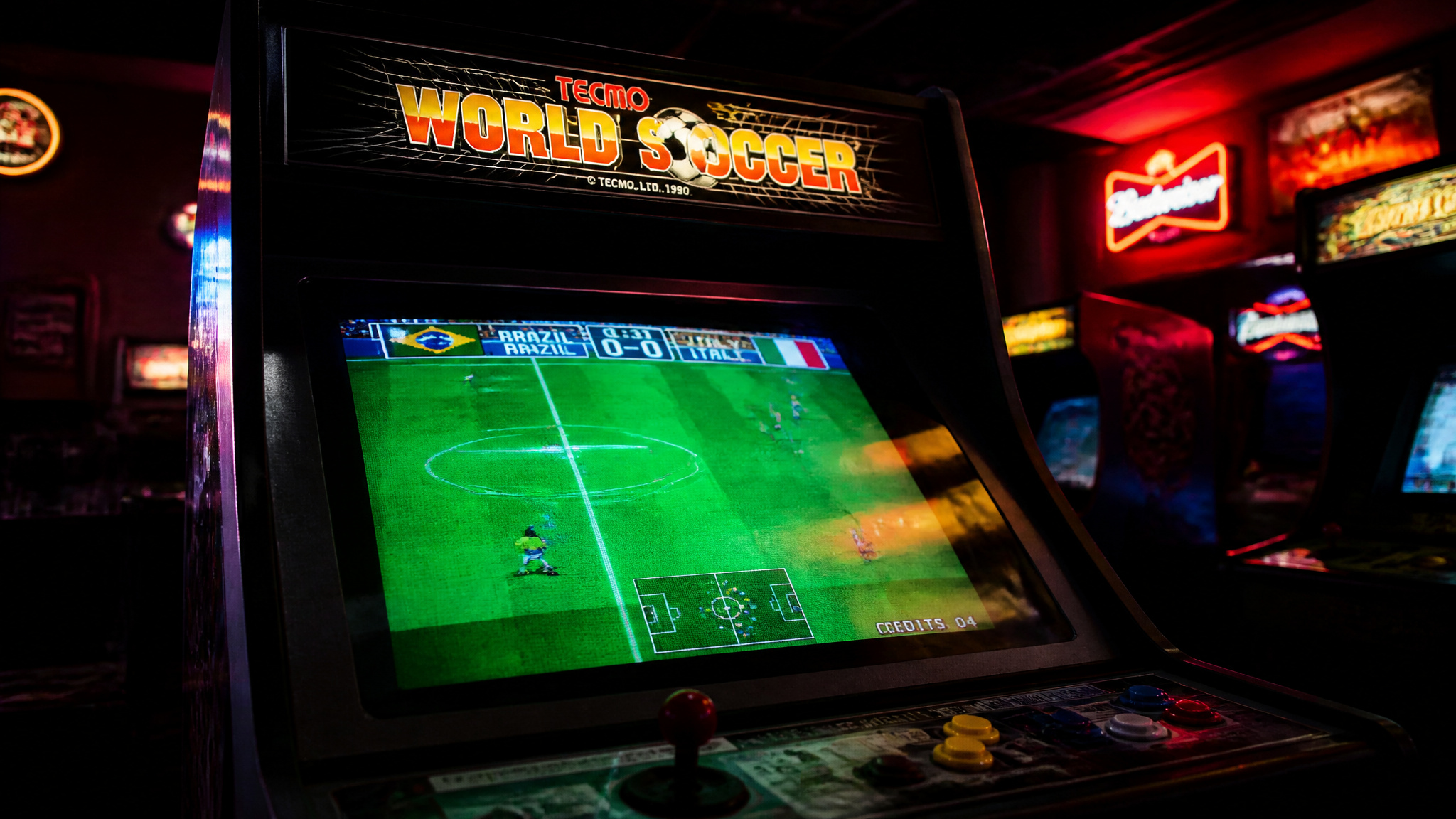
Okay, so a blast from the past. I remember plugging in my first football game and thinking it was the peak of technology. It probably had a green pitch and two blobs for players, but it was magic. Now, we’re looking at ray-traced stadium lighting and 20,000 individually animated fans. The genre didn’t just evolve; it underwent a full Cambrian explosion.
We’ve gone from a 1973 Pong variant to a multi-billion dollar industry in just over fifty years. That’s a wild arc, and it’s easy to get lost in the noise when you’re trying to figure out which games are actually worth your time.
So, I went down the rabbit hole. I’ve been digging through the archives, looking at the pivotal releases, the commercial giants, the cult classics, and the weird experiments. Here’s the state of the art, ranked by what makes each game worth playing.
Key Takeaways
The genre’s biggest split is between simulation (EA Sports FC) and pure fun (Sensible World of Soccer, Super Mario Strikers) , and your preference determines which is “best.”
Konami’s eFootball free-to-play rebrand is a case study in how a pivot can go wrong, scoring a dismal 2.7 user rating after abandoning its loyal PES player base.
If you want depth over reflexes, Football Manager 2007 (rated 8.6) remains the highest-rated management sim, offering a level of strategic control no arcade title can match.
Table of Contents
The Birth of Football Gaming: Arcade Origins and the 8-Bit Era (1973-1983)
To understand where we are, you have to respect the truly humble origins. The first arcade soccer game, Taito’s Soccer from 1973, wasn’t a simulation at all. It was literally a Pong variation with goalposts drawn on the screen. Elegant in its simplicity, sure, but about as close to real football as a graphing calculator is to a quantum computer.
Then came the first home console version, Magnavox Odyssey Soccer in 1974. This is where things get delightfully weird. To make the game work on your TV, you had to tape a transparent plastic overlay to your screen to simulate the pitch. It was primitive, but it was a start.
The genre got its first “wow” moment in 1980 with Pelé’s Soccer (also known as Championship Soccer). This was the first console football game you could play at home with a scrolling field, which solved the problem of fitting an entire pitch on a screen. It even had a little celebration screen when you scored. It wasn’t just a Pong clone anymore; it felt like a match.
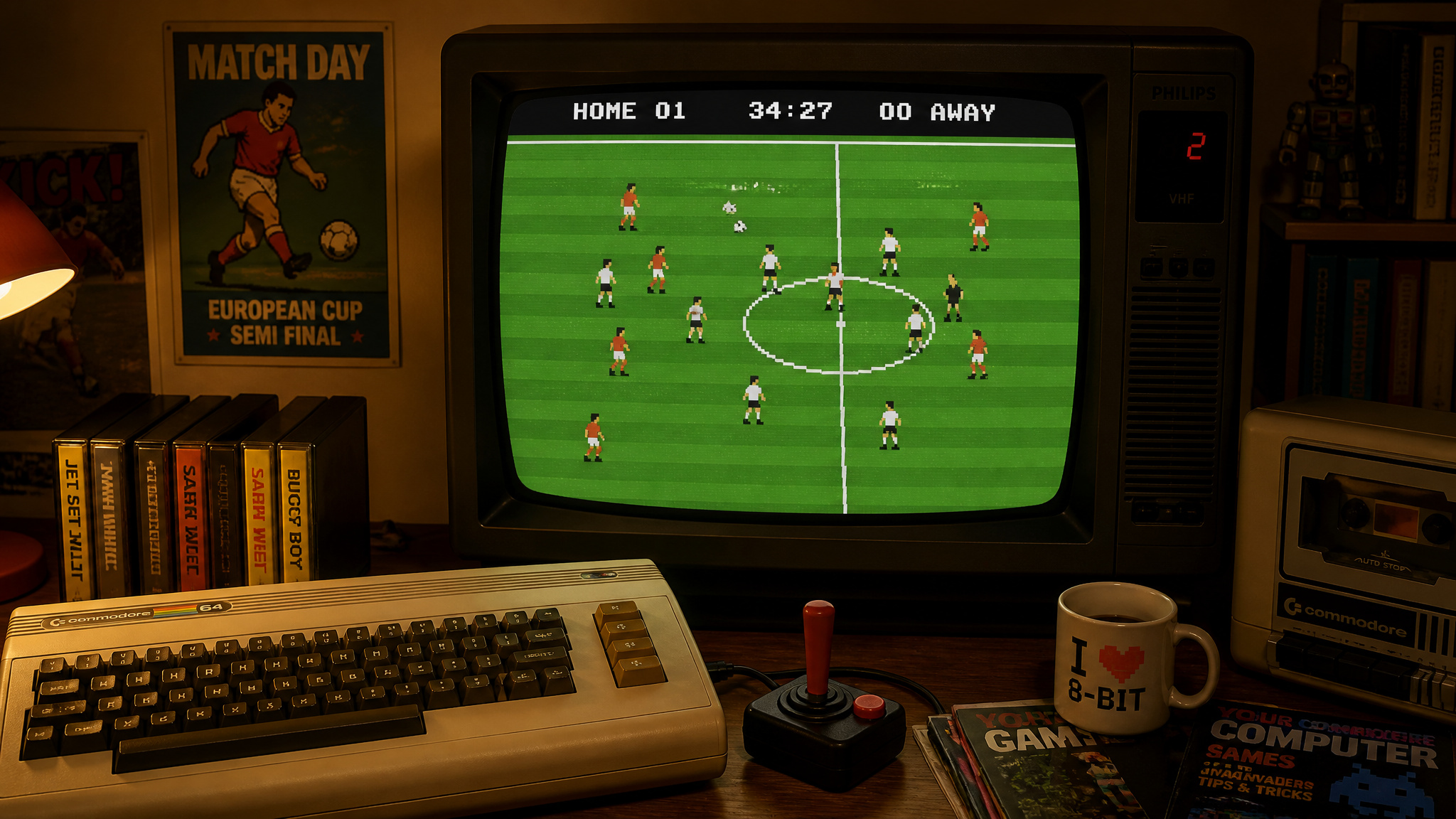
The 8-bit era brought some real progress. Thorn EMI Soccer in 1982 was the first home computer soccer game to achieve success, and it was released on both cartridge and floppy disk. A year later, Andrew Spencer’s International Soccer for the Commodore 64 set a “pick-up-and-play” template. It skipped offsides and fouls entirely, but gave you throw-ins and goal kicks.
That design choice created a fluid, instantly accessible two-player experience. These were the foundation stones, and even though the 1983 video game crash cut the party short, the groundwork was laid.
The FIFA Dynasty: 1993 to 2023, From Isometric Beginnings to EA Sports FC
The modern era kicked off in 1993 with FIFA International Soccer. That isometric viewpoint was a bold choice, but it launched the biggest franchise in sports gaming. Even in its early years, you could see the potential. By FIFA 97, I was hooked, that was my first virtual football experience, and the indoor football mode was a fun distraction, much like exploring football betting websites adds a different layer of engagement for fans today.
The late 90s were where FIFA found its identity. Road to World Cup 98 brought official kits and a dedicated Road to World Cup mode, which was huge at the time. But it was World Cup 98 that became the series’ first real high-water mark with an 8.1 user rating, thanks to a tweaked engine and an editor. Around this time, EA also released the infamous Animal Soccer World, a bizarre title featuring teams called the Wild Dogs and Lionkings, which somehow manages to hold a 1.3 user rating. It was a meme before memes existed.
The 2000s were all about feature creep and licensing muscle. FIFA 2000 brought MLS licensing, while FIFA 07 packed in 27 leagues. FIFA 08 introduced Be a Pro Mode, letting you live out your career as a single player. But the real turning point came in FIFA 09 with the introduction of Ultimate Team. It started as a fun mode, but it became the franchise’s financial engine, steering the series for the next decade and a half.
Gameplay kept getting smarter too. FIFA 10 gave us the first true 360-degree dribbling, finally freeing us from the eight-direction grid of old. Manager Mode received over 50 improvements, and the new goalkeeper intelligence, slide tackle targeting, and lofted through balls made the game feel more like actual football. Then came FIFA 12 with its Impact Engine and Tactical Defending, a generational leap that Gamespot highly praised.
By FIFA 18, the game was running on the Frostbite 3 engine with 82 stadiums. The visuals were stunning, but the cracks were starting to show. FIFA 19 dipped to a 6.4, and FIFA 20 hit a low of 5.3, even with the promising VOLTA street mode. The annualized churn had outpaced meaningful innovation. When FIFA 23 rolled around as the final title under that name, the series had already transitioned to EA Sports FC 24 and 25, a rebranding that felt less like a bold new direction and more like a necessary re-founding. Notably, FIFA 16 (2015) was the first in the series to include women’s national teams, a landmark for inclusion.
The Konami Rivalry: Pro Evolution Soccer to eFootball
You can’t talk about FIFA’s rise without talking about its sparring partner. Konami kicked off Pro Evolution Soccer in 2001, and the rivalry was instantly electric. PES fans will tell you that during the mid-2000s, Konami was winning on pure gameplay feel. Winning Eleven 8 International was the cream of the crop in 2005, even though teams were unlicensed.
This was the core paradox of PES. The series felt incredible. PES 6 reached an 8.3 rating and featured an International Challenge Mode. The controls were responsive, the ball physics felt organic, and the flow of the game was unmatched. But while FIFA had the official Premier League branding, PES players were stuck with generic team names.
Konami licensed La Liga, Eredivisie, Ligue 1, and Serie A for PES 2008, but the Premier League remained a sore spot. They got the UEFA Champions League, the Europa League, and the Copa Libertadores, but they could never quite pull together the full package.
Despite the licensing headaches, the series had its peaks. PES 2016 finally fully licensed Arsenal, Atletico Madrid, and Barcelona with 24 stadiums, and PES 2017 scored a solid 7.9. But the decline was real. After PES 2018 and 2019 slipped into the 6s, Konami made a bold gamble: a free-to-play pivot.
The result was eFootball 2022, which promptly cratered with a catastrophic 2.7 user rating. It was a critical disaster that felt like abandoning the loyal fanbase for an experiment that failed on arrival.
The Management Simulation: Football Manager and Championship Manager
While FIFA and PES fought over the pitch, a different kind of football game was quietly building a kingdom in spreadsheets, one of the many different kinds of online games that thrive on simulation rather than reflexes. The management genre’s origin story begins with the 1982 Football Manager on the ZX Spectrum and Commodore 64. It had real players and clubs from the top four English divisions, but used a random player population as a memory-saving hack, which added a draft-like layer.
The breakthrough came with Championship Manager ’93, which finally had real player names, the Premier League, and a transfer system. It set the template. The series peaked with CM 2001/02 at a legendary 8.7 rating. But the genre is defined by the 2003 split.
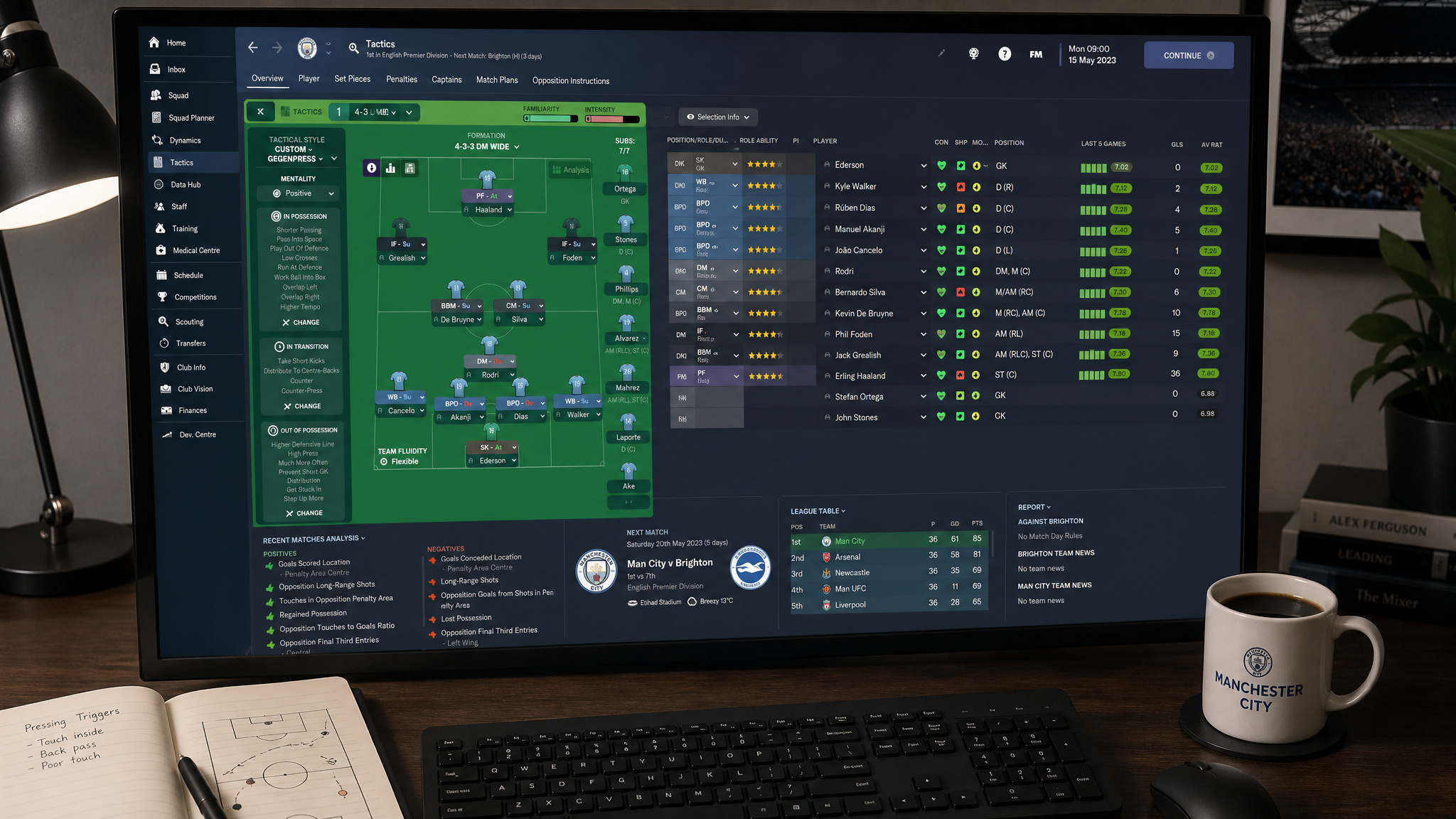
Championship Manager 4 introduced a brilliant 2D Match Engine, letting you watch your tactics unfold on screen instead of just reading text. This was the last CM produced by Sports Interactive before they split with the publisher. SI took the game’s engine and codebase, while the publisher kept the name. Out of that divorce came Football Manager, and SI’s version won by doubling down on database depth.
FM 2007 is the crown jewel of the series, with over 100 new features and the highest user rating in the genre at 8.6. It wasn’t just a game; it was a simulation of the entire footballing world. This is the quiet intellectual heart of football gaming, where your decisions matter more than your reflexes. It’s a niche, but for those who love it, nothing else comes close. Meanwhile, Football Manager 2022 has been described as the top of the football simulation genre, a testament to the series’ enduring quality.
Arcade Classics and Cult Favorites: When Fun Beats Realism
Not every game needs to simulate the offside trap. Sometimes, you just want to have fun, and the arcade subgenre has been delivering that for decades.
The crown jewel here is Sensible World of Soccer (1994). It had simple controls, a huge player database of 1,500 clubs and 27,000 players, and a 20-season career mode. It was easy to pick up and nearly impossible to put down, creating a local multiplayer culture that outlasted technically superior simulations. The original Sensible Soccer scored an 8.1, but the European Champions 92/93 Edition hit an 8.4 by adding red and yellow cards and better goalkeepers.
Kick Off 2 (1990) took a faster, more aggressive approach. With easy scoring and a tournament scene that lasted decades, it was all about pure, unadulterated fun. Then there was Nintendo World Cup, which showed that football games could be pure comedy, with cartoon violence and outrageous goals.
In the modern era, Super Mario Strikers and its sequels took that comedy and ran with it. The 2005 original scored a 7.2 from Gamespot, but it wasn’t just a score; it was an experience. Arcade-style, cartoonishly brutal, and filled with environmental disasters, it’s a game you play with friends, not to win a simulated title. These games prove that simple controls often create deeper social gameplay than hyper-realistic physics. Other arcade cult favorites include Sega Soccer Slam, a 3-on-3 brawler with special moves, and FIFA Street, which brought panna and futsal modes to the mainstream.
Anime and Licensed Adaptations: Captain Tsubasa, Inazuma Eleven, and Family-Friendly Football
If you want football where a shot can shatter the goal, welcome to the anime universe. These games treat the sport as a shonen battle manga, where special moves and superpowered shots are the norm.
Captain Tsubasa is the originator here. Vol. II: Super Striker on the NES holds an 8.1 user rating, a beloved entry for anime fans. The series got a modern revival with Rise of New Champions (2020) and a surprisingly strong mobile entry, Dream Team (2017), which scores an 8.3. Meanwhile, Inazuma Eleven turned the genre into a team-based RPG where you’re recruiting players and unleashing devastating special techniques on the pitch. With multiple sequels, spin-offs, and an upcoming Victory Road, it’s a full-blown franchise.
This subgenre captures younger and non-traditional audiences that FIFA and PES never reach. It’s the only place where you’ll find a group of kids saving the world with a bicycle kick. Yes, there are some licensed disasters out there like Disney Sports Soccer (a 4.3 rating), but the anime-heavy hitters are doing something genuinely different, and they’re doing it well, even as esports vs. sports viewers continue to debate which side demands quicker thinking.
Technical Milestones: 3D Graphics, Physics Engines, and Stadium Fidelity
So, how did we get here? Every major technological leap in football gaming came from solving a specific problem. Scrolling made the pitch feel alive, 3D made players look human, databases made the world feel real, and physics engines made gameplay believable.
The 3D breakthrough came in 1994 with Virtua Striker, which was arcade-only and featured international teams like Brazil and Italy. It was mind-blowing at the time. A year later, Actua Soccer brought a full 3D graphics engine to home consoles with 44 national teams. It was a massive technical leap, even if the 5.5 user rating reminds us that early 3D had growing pains.
The database revolution, starting with Sensible World of Soccer and scaling to FIFA 15‘s 16,000+ players, made the world feel authentic. The 360-degree turning point in FIFA 10 freed us from the grid. Then came the engine era: FIFA 12’s Impact Engine and FIFA 14’s EA Sports Ignite engine with dynamic stadiums. Each generation builds on the last, which is why the Frostbite-era games feel so far removed from even the early 2010s.
Platform Evolution: From Arcade Cabinets to Mobile Phones
Your choice of platform has always determined your football experience. Sega’s arcade strength produced Virtua Striker, while Nintendo’s family brand gave us Mario Strikers. Sony’s PlayStation dominance made it the default home for FIFA and PES, a fact that persists through the PS5 generation.
Home computers were the original home of strategy, hosting the first Football Manager and later becoming the kingdom of PES and alive modding communities. The Nintendo Switch sits in between: portable and family-friendly with titles like Inazuma Eleven and Mario Strikers: Battle League, but often two generations behind in FIFA fidelity.
Mobile gaming has democratized access while fragmenting the experience. Dream League Soccer is a surprisingly strong free alternative with a 7.8 rating, while Captain Tsubasa’s mobile effort proves anime licenses work on phones. The platform shapes the experience more than any single feature.
The Modern Frontier: Free-to-Play, Esports, Modding, and What’s Next
The genre is at a genuine inflection point. The FIFA name is gone, Konami’s free-to-play pivot collapsed critically, and a wave of indie and challenger titles represent the most diverse upcoming slate in the genre’s history.
The Esports and Competitive Scene
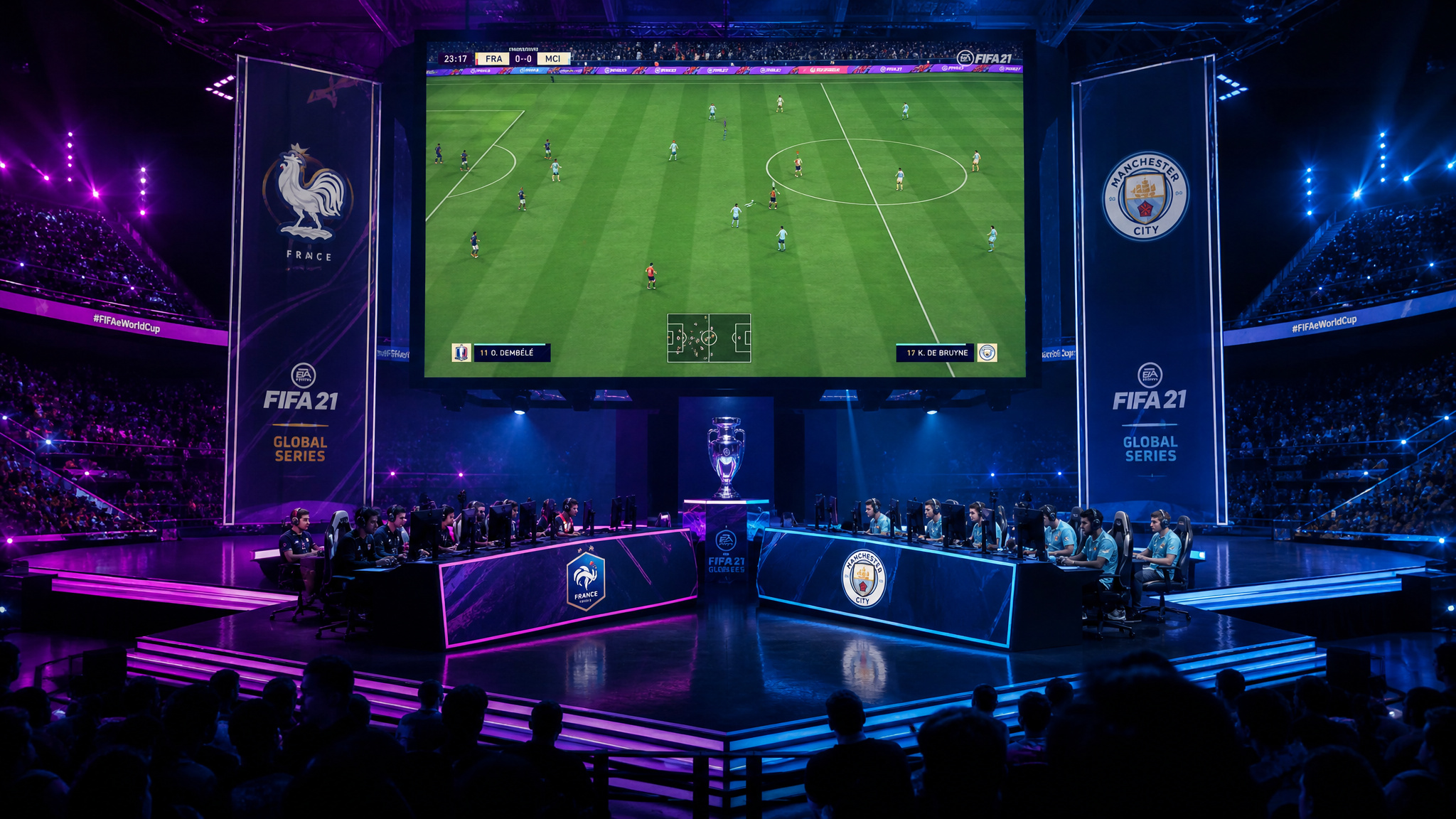
If competitive ranking is your thing, EA Sports FC is the only serious current option. Its FUT Champions weekends and Ultimate Team tournaments are a massive draw. The eFootball championships shrank dramatically after the tech issues at launch, and while Football Manager has its own niche competitive scene, it’s more about community than a corporate esports league.
Modding Communities and Game Longevity
For PC players, modding support matters for longevity. Football Manager has an incredible modding community that extends the game for years with database updates, custom graphics packs, and tactical overhauls. The PES Patch community has long added licensed kits and stadiums that Konami never delivered. Even older FIFA titles on PC (FIFA 07 through FIFA 14) have dedicated fans updating squads and adding current kits.
Monetization and What “Best” Means for Different Budgets
Let’s talk money. Ultimate Team packs became FIFA’s financial engine, and they are a controversial microtransaction system. Free-to-play titles like eFootball are free but critically derided. Mobile games are free-to-play but heavily monetized, with a significant gap between free and competitive play. If you want the best content-per-dollar, management sims like Football Manager offer hundreds of hours for a single purchase without a single microtransaction nagging you.
Looking ahead, the next “best” football game might not come from the giants at all. There’s Rematch from the maker of Sifu, the stadium-focused Copa City, and a slew of indies that could shake things up.
So, What’s the Best?
Here’s the honest truth: there is no single “best” European football video game. The correct answer depends entirely on what you want out of it. So, here’s your personal guide:
- For simulation purists wanting the most realistic match play: Frostbite-era FIFA / EA Sports FC titles remain the benchmark.
- For football intellectualism: Football Manager is the genre’s deepest experience.
- For local multiplayer: Sensible World of Soccer for the retro vibe, or Super Mario Strikers for pure, unadulterated chaos.
- For family gaming: Inazuma Eleven and Captain Tsubasa: Rise of New Champions are your best bets.
- For mobile: Dream League Soccer is the strongest free alternative.
- For budget-conscious players: Football Manager offers the best content-per-dollar on the market.
The genre’s journey over 50 years, from plastic overlays to Frostbite-engine stadiums, mirrors the sport’s global rise. These games aren’t just simulations; they’re a cultural institution in their own right, and the next great chapter might just come from a place none of us are expecting.
Frequently Asked Questions
Why did Konami’s eFootball fail?
Konami’s pivot to a free-to-play model with eFootball 2022 was a critical disaster, scoring a dismal 2.7 user rating. The game abandoned its loyal PES player base and launched with major technical issues, shrinking its esports scene and damaging the brand’s reputation. It’s a case study in how a bold gamble can go wrong.
What is the best football game for local multiplayer?
For retro vibes, Sensible World of Soccer (1994) is the crown jewel, with simple controls and a 20-season career mode that made it a local multiplayer staple. For pure, unadulterated chaos, Super Mario Strikers (2005) offers cartoonishly brutal, arcade-style fun that’s perfect for playing with friends.
