
You’ve seen the shot. Hair tied back, automatic handguns strapped to her thighs, a tank top that somehow looks both tactical and absurd. Angelina Jolie stands in a freezing Icelandic landscape wearing a revealing little top and a floppy furry hat, while every extra behind her is bundled in parkas. It’s ridiculous. It’s also unforgettable.
The outfit from Lara Croft: Tomb Raider (2001) isn’t just a video game hand-me-down. It’s a carefully engineered package that balances sex appeal with action-hero credibility, shaped by rating-board constraints, practical filming needs, and the character’s own odd backstory. One review at the time described it perfectly: hair tied back, weaponry strapped to gorgeous legs, huge breasts monolithically immobile, no disempowering cleavage. That tension — sexualized but armored, controlled but absurd, is what makes the costume worth a closer look than most action-hero wardrobes get.
The films themselves aren’t great. The 2001 movie scraped by with two out of five stars; the 2003 sequel scored zero. But the outfit? It earned its place in pop culture through a combination of deliberate design and happy accidents. Let’s break down what she wore, why she wore it, and where the logic collapsed in the most entertaining ways.
Key Takeaways
The 2001 outfit’s minimal cleavage was driven by the PG-13/12 rating, not character modesty — the “hi-tech assault sports bra” kept Jolie’s exaggerated bust immobile during action scenes.
The iconic Iceland scene breaks costume logic entirely: Lara wears a revealing little top in sub-zero weather while every other character is bundled up, with only a floppy furry hat as a concession to the cold.
The 2003 sequel’s production notes spent more than a paragraph on costume design, including a silver diving suit whose fabric was sourced from Japan specifically for its underwater appearance — revealing where the filmmaking team’s true priorities lay.
Table of Contents
The Anatomy of the 2001 Outfit: What She Wore and Why
Every element of Lara’s 2001 costume was chosen to communicate competence and control, from her practical hairstyle to the immobile chest piece. Here’s a breakdown of each component and the design logic behind it.
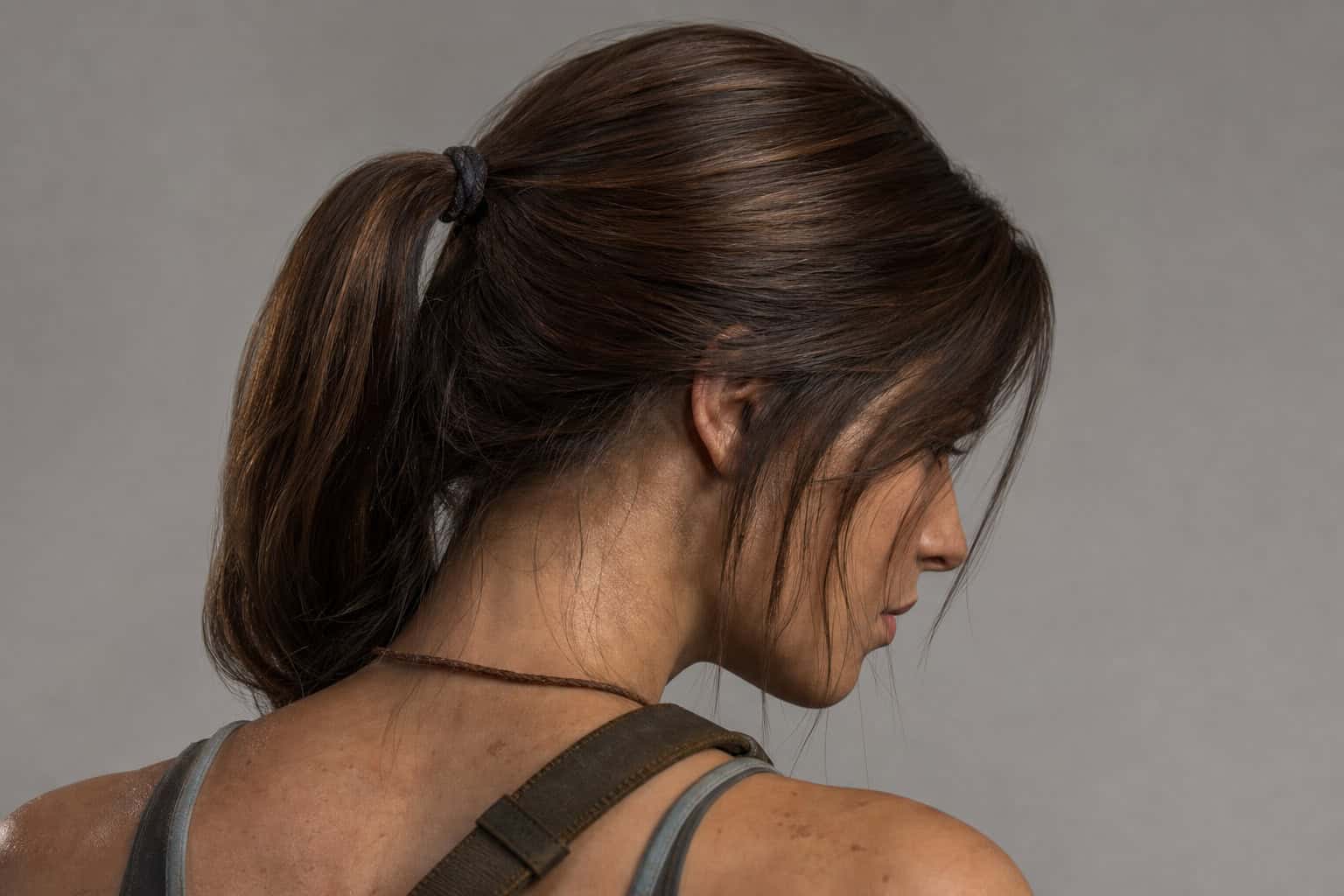
Hair Tied Back and the No-Nonsense Silhouette
The first thing you notice in any 2001 scene is the hair. It’s tied back — zero chance of it getting in her face during a fight. It’s the kind of practical choice that signals competence without needing a line of dialogue. The character is in control, and the hairstyle tells you that before she even draws a weapon.
That controlled silhouette extends to the whole look. No loose fabric, no draping, nothing that could catch on a handhold or slow a roll. Lara Croft moves like someone who’s been doing this since she was eight years old — which, given the backstory, she has.
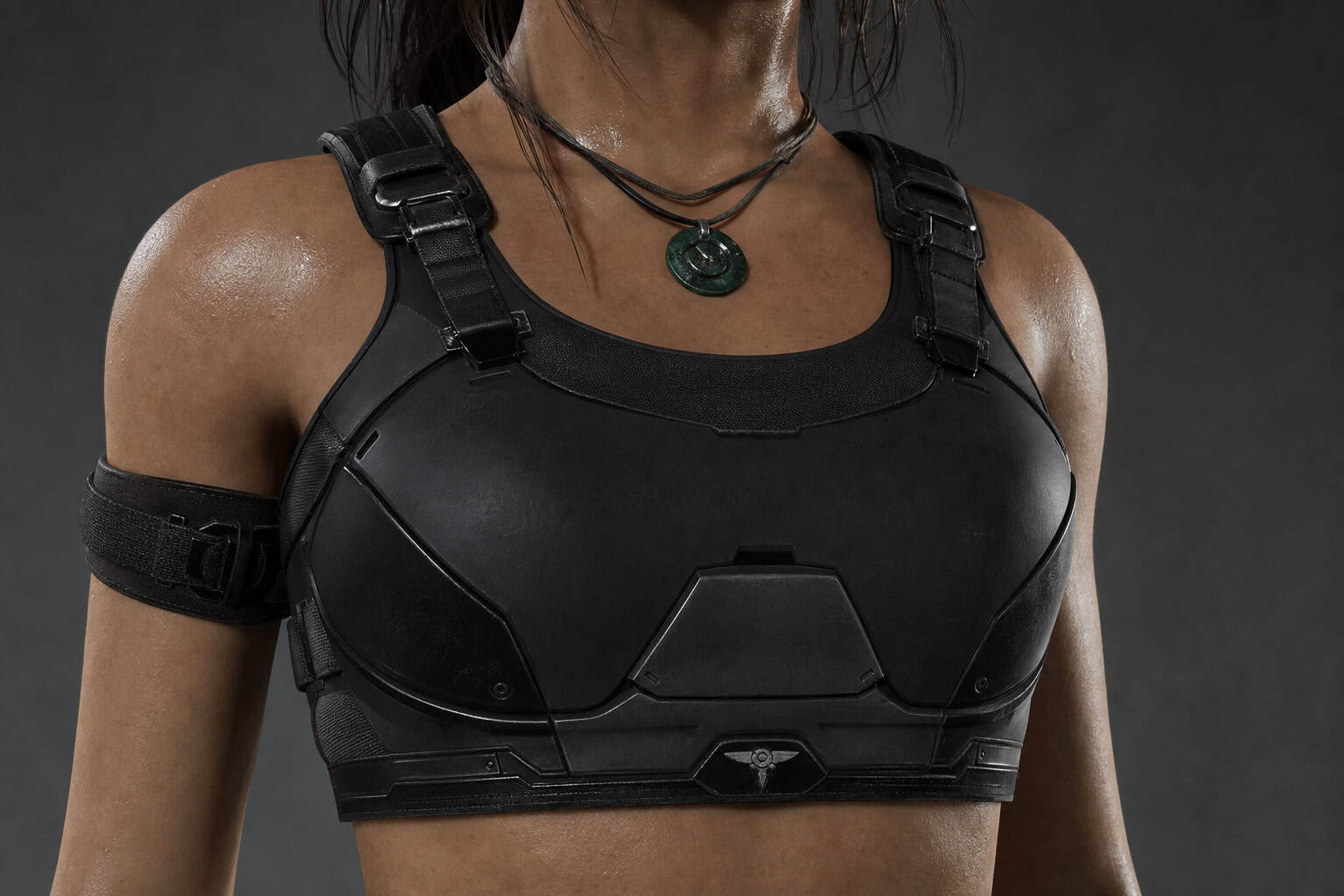
The Immobile Chest and the PG-13 Sports Bra
This is the detail that makes the outfit interesting. The film’s costume team had to work around Jolie’s figure while satisfying a PG-13 rating in the US and a 12 certificate in the UK. The result? A “hi-tech assault sports bra” — not the exact phrase from the review, but the spirit is perfect. It’s a top that keeps everything locked in place.
She can run, fight, roll, and punch out a shark without any distracting movement. The chest is prominent but immobile, almost armor-like.
The lack of cleavage isn’t character modesty. It’s censorship-driven design. The rating board forced the costume to be less revealing than it might otherwise have been, and that constraint gave the outfit a kind of integrity. Lara is sexualized — Jolie was a major sex symbol, but she’s not vulnerable. The immobility of the chest transforms it from a sexual feature into a visual shorthand for control.
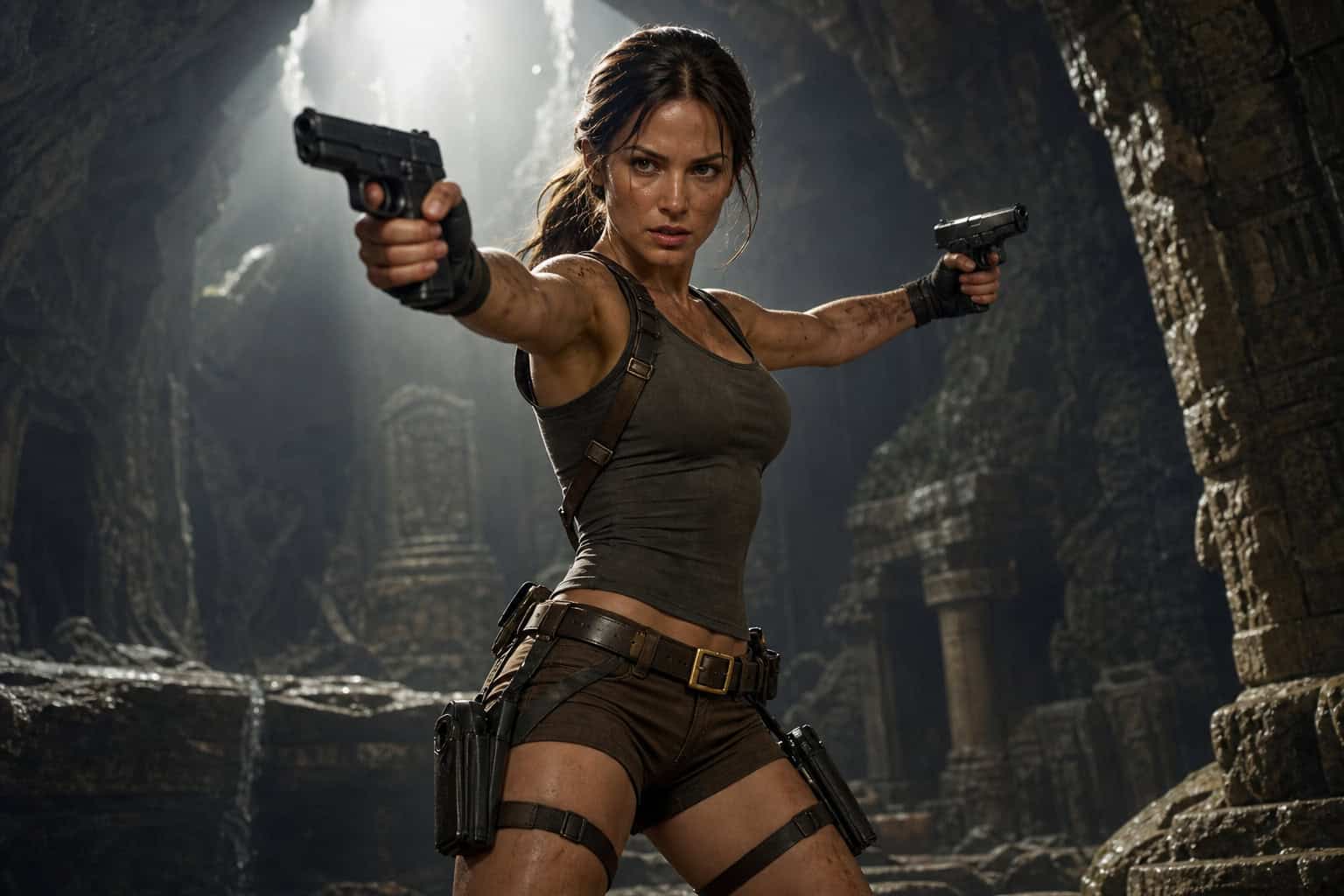
Weaponry on Legs: Holsters That Do Double Duty
The thigh holsters for her twin automatic handguns are the most functional piece of the outfit. They’re not fashion accessories — they’re a quick-draw utility belt that also happens to frame her silhouette. The guns are part of her outline. You can’t think of Lara Croft without picturing those holsters.
This is pure action-hero design. The weapons are visible, accessible, and visually integrated into the costume. They tell you she’s always ready for a fight, and they make the outfit read as “dangerous” before you register anything else.
The Iceland Scene: When Silhouette Trumped the Weather
If there’s one moment that defines the costume’s contradictions, it’s the Iceland sequence. Lara is there to retrieve the second half of a mystic amulet that controls time — standard McGuffin stuff. The environment is clearly cold. Every other character is wrapped up in heavy coats, scarves, weather-appropriate gear. Lara, the fearless tomb raider and role model for young women who has captivated fans with her intelligence, beauty, and brawn, wears a revealing little top and that floppy furry hat.
The hat is the detail that saves the scene from being a wardrobe fail. It’s her one concession to the cold, and it’s almost a joke: Fine, I’ll cover my head, but that’s it. The rest of the outfit is pure silhouette preservation. The costume designers knew that dressing Lara in a parka would break the iconic look, so they didn’t. They chose visual recognition over realism.
It’s not a mistake — it’s a deliberate tradeoff. Action movie costumes routinely sacrifice environmental logic to keep the character’s outline intact. Lara’s Iceland look is the most visible example of that principle in action.
Field note: Action films routinely sacrifice environmental realism for silhouette recognition. If Lara wore a parka in Iceland, she’d stop being instantly identifiable as Lara Croft.
From Jungle to Underwater: The 2003 Costume Shift
The sequel, Lara Croft: Tomb Raider: The Cradle of Life (2003), took a different approach to wardrobe. The 2001 film’s outfit was grounded — tank top, cargo shorts, boots, tactical gear. The 2003 version leans more toward the fantastical, and the production notes make it clear that the costume department became the star of the show, a shift that can be fully appreciated in a deep dive into the Lara Croft Angelina Jolie outfits.
The Silver Diving Ensemble: Fabric Sourced for Underwater Effect
The silver diving suit is the most notable new addition. It’s sleek, futuristic, and designed to photograph well underwater. The production notes reveal that the fabric was sourced from Japan specifically because it looked better when submerged. That’s a level of detail for a costume that appears in a handful of scenes.
It’s also a signal of where the film’s creative energy went. The diving suit looks impressive. The plot? Not so much.
The film spends more effort explaining why the suit looks the way it does than it does explaining why Pandora’s Box needs to be kept away from a mad scientist and a sparkly orb. The costume became the focus, and the script didn’t stand a chance.
The Silk Bomber Jacket as a Production Notes Star
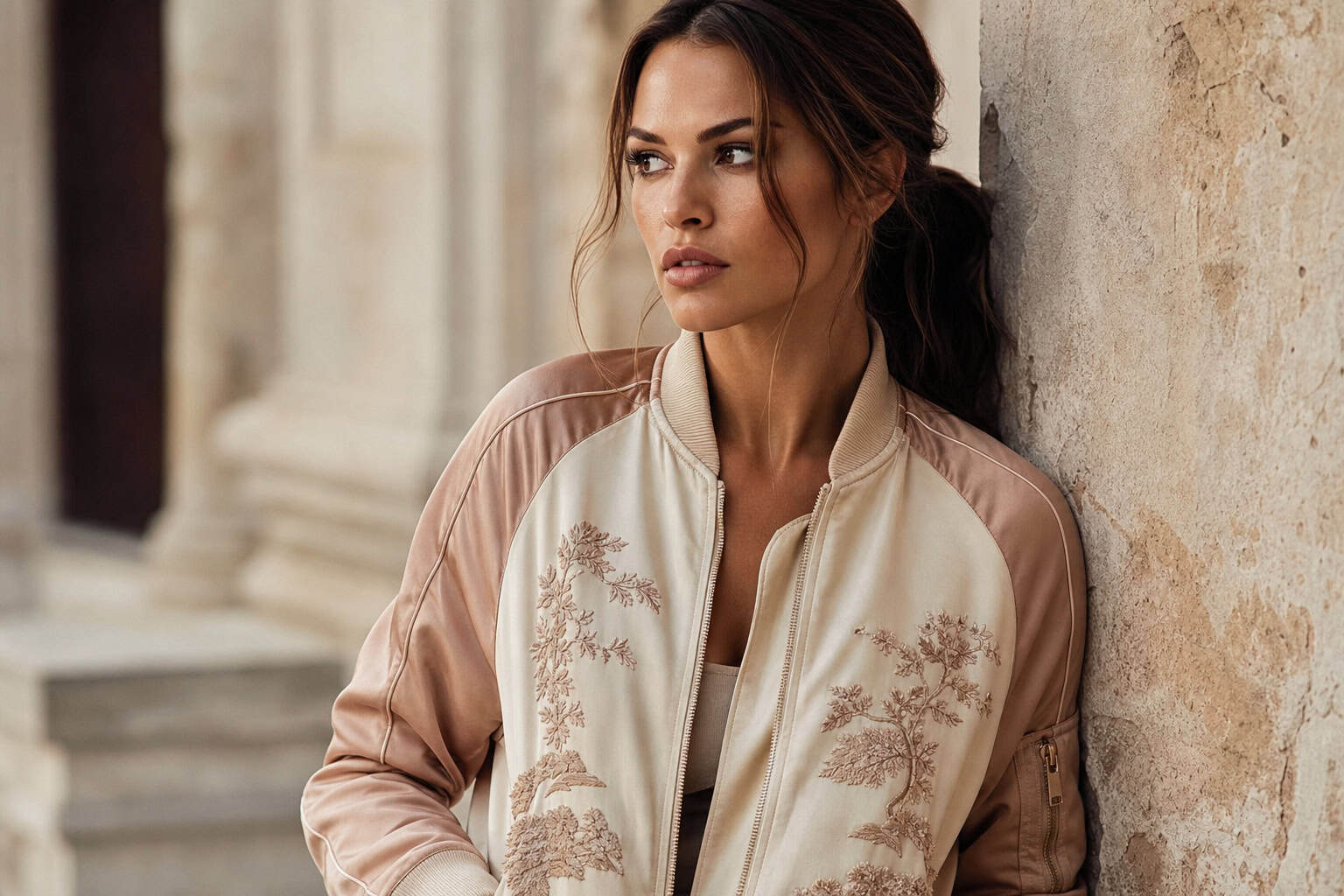
Then there’s the bomber jacket. Sandy cream and pinkish-beige silk, described in the production notes with the kind of detail usually reserved for character introductions. It’s a specific, almost luxurious piece that stands out from the tactical gear of the first film.
A jacket getting that much attention in the official production notes tells you something about the filmmaking priorities. The costume design wasn’t supporting the character — it was the main event. The 2003 film is an expensive, star-driven action movie where the outfit got more care than the story.
Dressed for Danger, Not the Weather: Costume Logic in Extreme Environments
The Iceland scene isn’t an outlier — it’s a pattern. Action film costume designers routinely sacrifice environmental realism to preserve a character’s iconic silhouette. Lara Croft’s outfit is a case study because the tradeoff is visible.
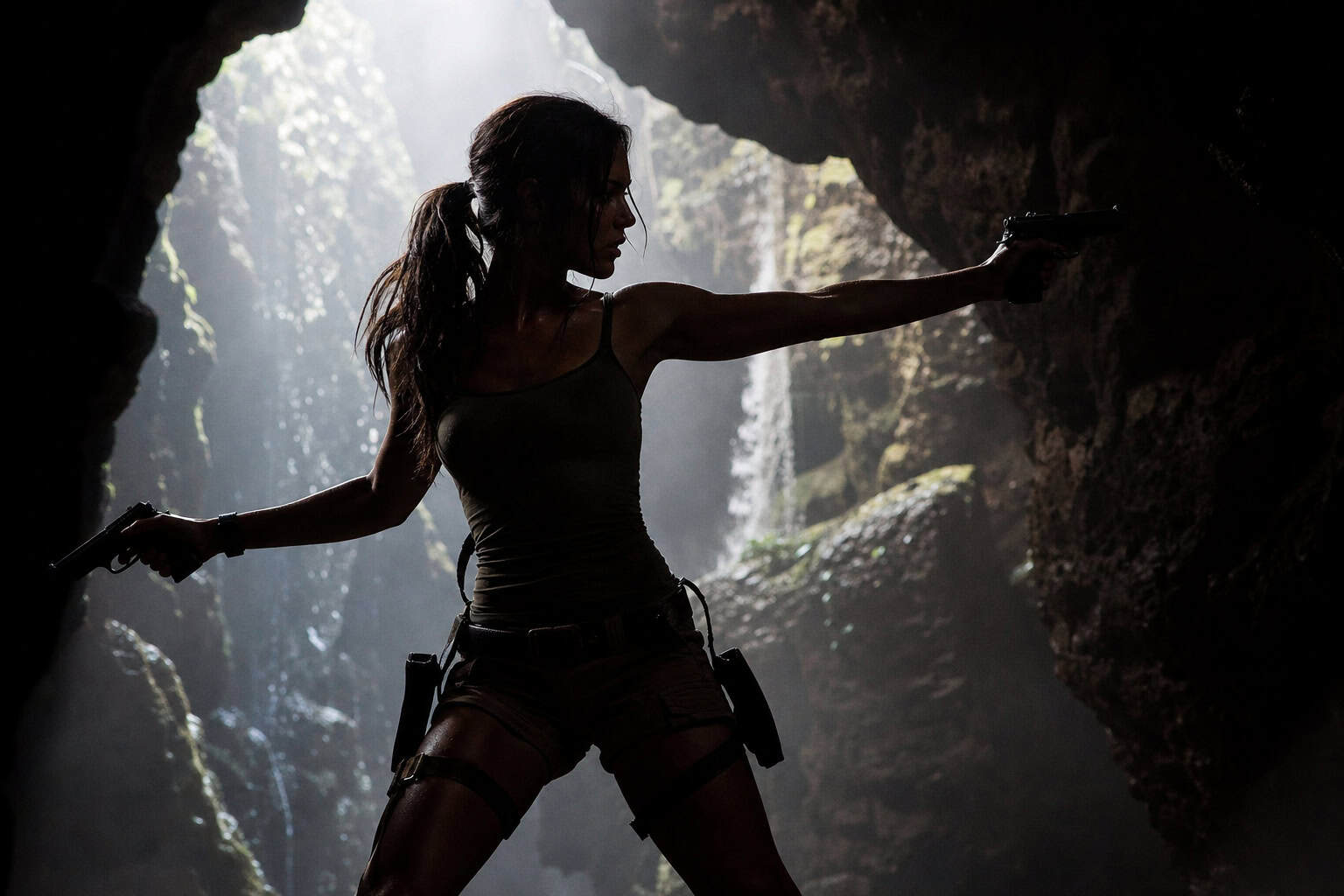
The principle is simple: silhouette consistency over climate logic. The audience needs to recognize the character instantly, even in a dark underwater cave or a snow-covered ruin. If Lara showed up in a puffy jacket in every cold location, she’d stop being Lara Croft. She’d be someone else borrowing her gear.
The 2003 silver diving suit follows the same logic. It’s not a practical diving outfit — it’s a sleek, form-fitting piece that preserves Jolie’s figure and the character’s visual identity underwater. Real diving gear would be bulky and anonymous; examining the specific Angelina Jolie Tomb Raider outfit size and measurements reveals how her physique directly influenced the suit’s fit and its on-screen functionality. The silver suit is recognizable.
This is how action movies work. The costume exists to serve the character first and the environment second. Pointing out the impracticality isn’t a critique — it’s an observation about the genre. Examining the Angelina Jolie Tomb Raider costume design, Lara Croft’s outfit breaks realism in the same way every superhero costume does.
The Power Paradox: Sexuality Under Control
Let’s address the obvious issue. The outfit is sexualized. Jolie is a sex symbol, and the costume emphasizes her body. But the design team managed to balance that with credibility through a series of specific choices.
The immobile chest, the minimal cleavage, the dominant posture — none of these are accidents. The PG-13/12 rating created a constraint that prevented the costume from tipping into full objectification. Lara is sexualized, but she’s in control. The guns, the stance, the lack of gratuitous skin, it all adds up to a character who’s aware of her appearance but doesn’t let it make her vulnerable.

The phrase “no disempowering cleavage” captures the paradox. The outfit is revealing, but it doesn’t leave her exposed. The sexual element is present but contained. The costume doesn’t strip her of agency — it packages her as someone who uses every tool available, including her own appearance, without being defined by it.
I’m not going to pretend this is some deep feminist statement. The films are pulpy action movies directed by guys who came from commercials. But the costume achieves something more interesting than it had any right to, partly because of constraints that had nothing to do with intentional design.
The Billionaire Adventurer: How Backstory Shapes the Wardrobe
The outfit makes more sense when you factor in who Lara Croft is. She’s Lady Lara Croft, daughter of Lord Richard Croft, who died when she was eight. She’s technically a photojournalist, but that’s a cover story that doesn’t survive contact with the plot. She’s a tomb raider — she blows things up, she doesn’t brush dust off them.
The key detail is the money. Lara is wealthy. She doesn’t buy her gear off the rack — she has fabric sourced from Japan because it looks better underwater. The silver diving suit, the silk bomber jacket, the custom-made holsters, these are luxury purchases that only someone with unlimited resources would make.
The backstory also explains the isolation. Lara lost her father as a child. She doesn’t appear to have friends in any conventional sense. She dresses for function and control because she answers to no one. The outfit is the uniform of someone who has been running her own life since age eight and has no interest in compromise.
The aristocratic title — Lady Lara — adds a layer of absurdity that the films never fully embrace. The character is a posh English noblewoman who fights the Illuminati and punches sharks. The costume bridges that gap: it’s expensive, bespoke, and impractical for anyone who isn’t a billionaire adventurer.
From Pixels to Film: Adapting the Iconic Look
The video game version of Lara Croft was a product of 1990s 3D graphics: exaggerated proportions, a braid that somehow defied physics, and a wardrobe that became the character’s most recognizable feature. The film adaptation had to translate that into something that worked on a real human body under a PG-13 rating.
The filmmakers kept the visual package: tank top, shorts, holsters, braid, automatic handguns. They dropped the game’s weirder elements — the ambiguous sound effects during the death sequence, the unsettling silences, the uncanny atmosphere. Instead, they leaned on the costume to carry the game identity.
It was a smart tradeoff. The films couldn’t replicate the game’s tone, but they could give audiences a Lara who looked like the one they remembered. The costume became the primary carrier of game identity in a PG-13-compliant package.
The game’s exaggerated proportions are still there, but they’re rendered as immobile, almost armor-like. The silhouette is recognizable as Lara Croft, but it’s been sanitized for the rating board. The adaptation works because the costume does the heavy lifting of visual recognition. You see that outfit and you know who she is, regardless of the plot quality.
What the Outfit Legacy Leaves Behind
The Lara Croft movie outfit is iconic not because it’s perfectly designed, but because nearly every element resulted from a specific constraint. The PG-13 rating forced minimal cleavage and immobile construction. The Iceland location created a visible break between costume logic and realism. The film’s budget allowed for custom fabric sourcing from Japan. The character’s backstory — isolation, wealth, trauma, justified the bespoke quality of every piece.
The combination of competing priorities — sex appeal vs. credibility, realism vs. silhouette, game accuracy vs. rating limits, produced something more memorable than any single “good” design decision could have managed. The immobile chest, the floppy hat, the Japan-sourced diving suit, the production notes that spent paragraphs on a bomber jacket, all of these details add up to an outfit that sticks in your head because it’s a mess of tradeoffs that somehow coheres.
It’s not a perfect costume. It’s not even a great one, if you’re judging by real-world functionality. But it’s a fascinating artifact of how action movies make visual choices under constraints. The outfit works because it had to work within boundaries that most wardrobes never encounter. And somewhere in that tension between censorship, practicality, and iconography, a look was born that still demands a second look twenty years later.
Frequently Asked Questions
What kind of outfit does Lara Croft wear?
In the 2001 film, Lara wears a tank top, cargo shorts, thigh holsters for twin handguns, boots, and a tied-back hairstyle. The top is a ‘hi-tech assault sports bra’ designed to keep her chest immobile during action scenes, driven by PG-13 rating constraints rather than modesty.
What does Lara Croft symbolize?
Lara Croft’s outfit symbolizes a power paradox: sexualized but armored, controlled but absurd. The costume balances sex appeal with action-hero credibility through specific design choices like minimal cleavage, dominant posture, and visible weaponry, packaging her as someone who uses every tool available without being defined by them.
What is the Lara Croft style guide?
The Lara Croft style guide from the 2001 film centers on a controlled silhouette: hair tied back for zero interference during fights, an immobile chest piece to prevent distracting movement, and thigh holsters that double as quick-draw utility and visual framing. Every element was chosen to communicate competence and control before she even draws a weapon.
Why does Lara Croft wear a revealing top in the Iceland scene?
The Iceland scene sacrifices environmental logic for silhouette preservation. Costume designers knew dressing Lara in a parka would break her iconic look, so they kept the tank top and added only a floppy furry hat as a concession to the cold. It’s a deliberate tradeoff: visual recognition over realism, common in action films.
How did the PG-13 rating affect Lara Croft’s costume design?
The PG-13 rating forced the costume team to minimize cleavage and keep Jolie’s chest immobile during action scenes, resulting in a ‘hi-tech assault sports bra’ that functions almost like armor. This censorship-driven constraint prevented the outfit from tipping into full objectification and gave it a kind of integrity — sexualized but not vulnerable.