Three hours. That’s how long I spent getting wrecked by Manus, Father of the Abyss. The Dark Souls boss had me pinned in that arena, reading his attack patterns the hard way — eating every overhead slam, every dark magic orb, every reach-across-the-room grab. I knew the fight.
I couldn’t execute. And somewhere around the two-hour mark, real life started tapping my shoulder: work in seven hours. I put the controller down, defeated.
I came back a week later, fought Manus again, and didn’t get hit once.
That’s not brag — that’s evidence. Evidence that the most powerful thing I did in that week was stop playing. The brain kept working while I wasn’t looking. This article is what I learned from that fight, and from hundreds of hours of failure in other games, about why stepping away isn’t quitting — it’s an active performance strategy.
Key Takeaways
A 3-hour failed session against Manus, Father of the Abyss, followed by a one-week break, produced a flawless victory — the brain consolidated attack patterns during downtime.
Over 500 hours in Guilty Gear Strive, yet it took weeks of daily practice plus breaks to internalize May’s charge inputs — muscle memory needs rest, not just repetition.
The tilt threshold is crossed when winning feels like relief instead of joy (Heroes of the Storm is the warning sign), and that salt bleeds into real life unless you step away.
Table of Contents
Why stepping away actually makes you play better
So what happened inside my head during that week away from Dark Souls? The grinding sessions taught me Manus’s moves. The break let my brain file those patterns into long-term memory — digest all that visual data and movement timing without my conscious effort steering it wrong.
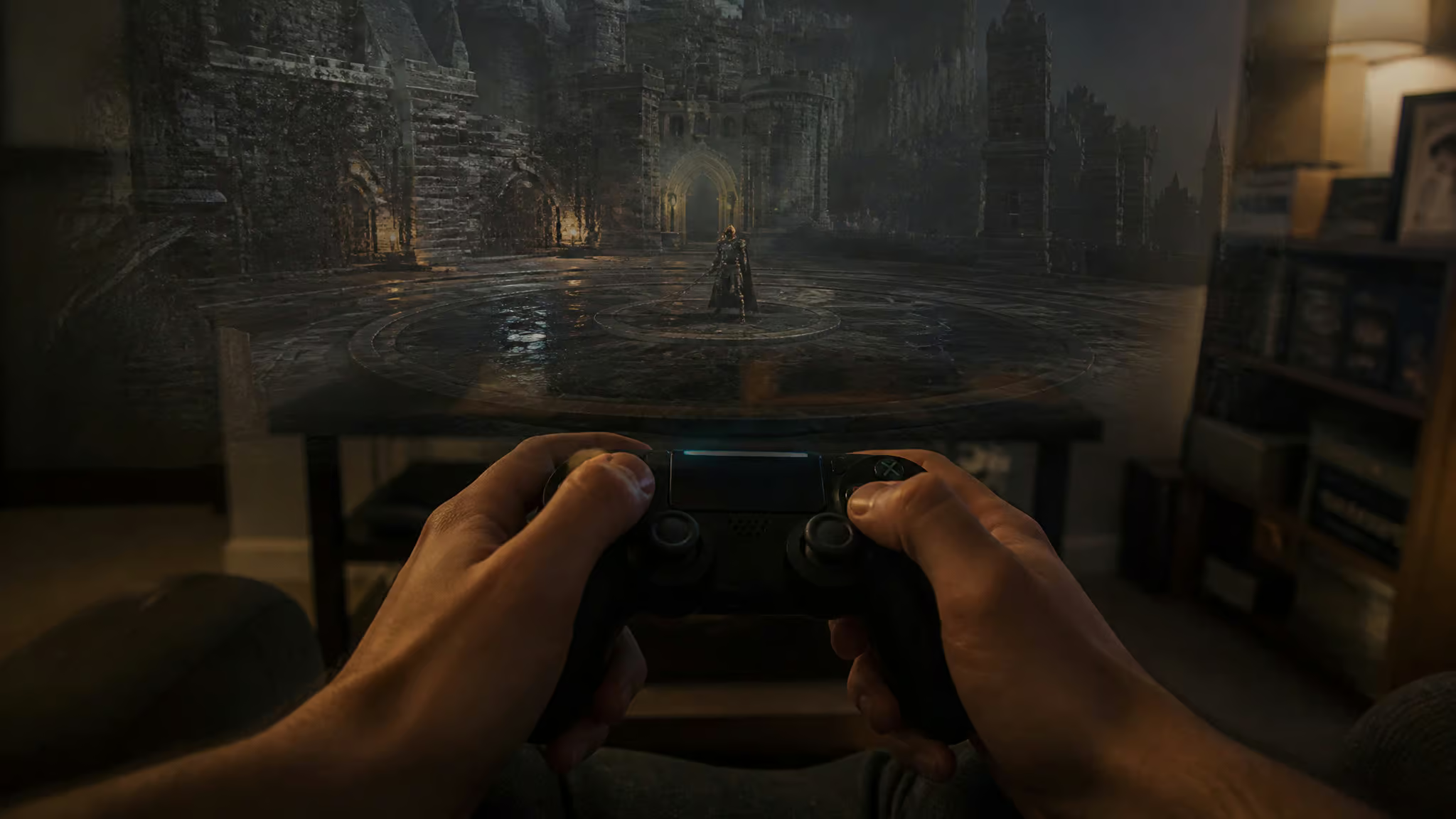
I saw the same thing happen in Guilty Gear Strive. I’ve sunk over 500 hours into that game, and I’m still learning basic stuff. May’s charge inputs — the ones where you hold a direction then press the opposite plus a button, took me weeks to land consistently. I practiced her combos every day.
They didn’t stick until I gave my brain nights and weekends to sort itself out. Recently I got comfortable weaving her super moves and the command throw into my gameplan. That comfort didn’t come from brute force. It came from repeated cycles of practice, break, practice, break.
How the Manus fight proves the point
The first session was three hours of failure. The second session, one week later, was flawless. Between those two points, my brain was doing work I couldn’t see — internalizing the tells, the dodge windows, the positioning.
The Guilty Gear Strive learning curve
If someone said that they have 500 hours in a fighting game and they’m still learning how to charge a move you’d laugh. Every time I stepped away, muscle memory caught up. The combos I hammered for weeks became second nature after I stopped hammering.
The tilt threshold: when winning stops feeling good
I formed a toxic relationship with Heroes of the Storm. Not because I was losing — because even when I won, I was in a foul mood. The victory felt like relief, not joy. That’s the moment frustration crossed from productive challenge into harmful tilt.
Continued frustration compounds. It makes your performance worse and it ruins the little enjoyment you might extract from the match. You’re trapped in a feedback loop: play worse, get saltier, play worse again. The salt doesn’t stay in the game.
It leaks. I get huffy and short with everyone after a salty session. It throws off my ability to play other games or get tasks done. My friend Mir noticed the same pattern in their own play — it’s not just me.
The compounding effect
Frustration is a multiplier. A little tilt makes you miss one shot, then you’re annoyed, then you overcommit to the next fight, then you die, then you’re really annoyed, and now you’re just feeding. Stubbornness only makes it worse because you think “one more game” will fix it. It won’t.
When salt leaves the game
The cost of a bad gaming session isn’t the lost ranked points. It’s the hour of short temper afterward, the canceled plans, the inability to focus on anything else. I’ve caught myself snapping at my parents after a rough round. That’s not who I want to be. Mir’s observation confirmed I wasn’t alone in that spillover.
The 60-second reset: micro-breaks that actually work
The most common recommendation is to take a break of 5-10 minutes every hour. Better to take a short break every hour than a longer break every 2-3 hours. But I needed something I’d do, not something I’d ignore after the next death.
Reader tip: if you struggle to remember to take breaks, use your console’s built-in tools. The PS4 and Xbox let you set session timers that alert you after a chosen interval, and the Nintendo Switch has parental controls that can limit playtime for adults who want an external nudge. No app needed — it’s in your settings.
So I turned deaths into exercise. Every time I fail a boss or lose a match, I do 30 seconds of jogging in place. Right there in my room, no leaving the setup. Some gamers do push-ups or burpees instead.
The point isn’t the exercise routine — it’s the trigger. The death is already a natural pause point. Might as well make it useful.
The hourly anchor
Set a timer if you have to. The consistency matters more than the duration.
Turn deaths into exercise
I’m partial to jogging in place because it’s quiet, doesn’t require floor space, and I can keep watching the death replay. 30 seconds is long enough to reset my heart rate, short enough that I don’t lose focus, and a meta-analysis of micro-breaks suggests that even such brief pauses can boost vigor and reduce fatigue. Other people swear by push-ups. Pick any activity that gets you out of the chair for half a minute.
Wrist and hand care
A grip strengthener is a quiet lifesaver. I’ve recommended them to friends with fatigued wrists and carpal tunnel syndrome, and a systematic review of casual videogames similarly highlights the benefits of low-impact hand exercises. But if your fingers start to get blisters on them, you need to give them a break from the game or just take a break entirely from gaming until the common video game injuries and what to do about them subside. Don’t go too hard too fast — start light, like any training. There’s a simple stretch routine on YouTube with corny background music that does the trick without needing a yoga mat.
Beyond the screen: what to do when you’re not gaming
The hardest part of a break isn’t the not-playing. It’s finding something else to do that scratches the same engagement itch. TV and social media don’t restore energy — they’re passive, screen-based, draining. I wanted to read more during the pandemic; instead, I found myself turning to a review of commercial games to understand why I kept choosing them over books.
I did not read more. Because games are more stimulating, and I kept choosing them, but learning how to enjoy video games again helped me see that taking breaks is key to staying sharp.
What worked: face-to-face conversation. I talked to my parents live, in person, no phone in hand. I took my wheelchair outdoors for a spin. More downtime makes picking up a book more likely.
Why passive entertainment won’t cut it
Scrolling X or watching a show feels like a break, but your brain is engaged in the same low-energy consumption mode. You’re not recovering. You’re switching stimuli.
What actually works
Conversation, movement, and reading. The break allowed more time to take my wheelchair outdoors for a spin.
It’s not about a list of hobbies. It’s about noticing what activities give you a different kind of fuel.
The one-week reset: how I planned a gaming fast
I didn’t plan a gaming fast. I went to a church service about two weeks before writing this, and the pastor talked about fasting from non-food items such as social media and TV. I thought: what if I just tried that with games for a week, the same way some people pick up an ACE social casino habit to unwind?
The rules were simple: one week, no personal gaming. The only exception was work-related projects — I’m a gaming journalist and streamer, so I can’t fully unplug.
But the goal wasn’t quitting forever. It was to set boundaries and be content with time offline, which meant I had to get serious about gaming time management rather than just hoping the week would fix my habits.
Half a week in, I was seeing benefits. I talked to my parents face to face. I took my wheelchair outdoors for a spin. I was more aware of the need to get away from the desk. The fast hadn’t cured anything, but it showed me what space felt like.
One thing I hadn’t anticipated: the pull of limited-time events and ranked decay. Live-service games are designed to make you feel like you’re missing out if you skip a season or a daily challenge. The fix is simple — uninstall the game or mute its notifications, set a specific return date on your calendar, and remind yourself that the game will be there when you come back. The FOMO is manufactured, and recognizing that makes it easier to ignore.
What inspired the fast and how it was structured
A church sermon about fasting from non-food items. One week, work projects allowed — that’s the whole structure.
Setting rules that stick
The goal is to be okay with not playing, not to never play again. Frame it as an experiment, and you’ve got something worth trying.
Early results
Half a week in: I talked to my parents face to face, took my wheelchair outdoors for a spin, and was more aware of the need to get away from the desk.
The return: what to expect when you pick up the controller again
I died on the way back to Manus. A minor enemy got me. So much for the flawless return narrative. But then the fight happened — clean, no hits taken. That first death was rust. The underlying improvement was still there.
If you’re returning after months or years away, the adjustment is different. Start with a familiar game you know well — something that rebuilds confidence without demanding peak execution. Expect rust: your muscle memory for combos, map layouts, and reaction times will be off. Set a time limit for your first few sessions so you don’t push through frustration, and don’t expect the same reflexes you had before the break. They’ll come back, but it takes longer than a week.
The first session back feels wrong. Your fingers are slow, your reads are off. That’s not a verdict on skill loss. It’s a diagnostic.
Treat it like one. Identify where you’re rusty, then trust that the break-consolidated knowledge is in there.
Why the first session back always feels wrong
Rust is temporary. The brain’s internalized improvements are not.
Your body on gaming: the physical reasons you need a break
Here’s a number that stopped me: extended screen viewing cuts your blink rate in half, according to CBS News. Half. Your eyes are literally not working the same way after an hour of gaming. That leads to dry eyes, eye strain, and eventually computer vision syndrome.
And then there’s sleep. Bright screens disrupt melatonin production — the Cleveland Clinic recommends keeping bedrooms screen-free and avoiding screens at least an hour before bed. I struggle to fall asleep using a BiPAP machine. Any additional help to sleep is welcome. For people with Duchenne muscular dystrophy, sleep is extra critical because of the recovery needs.
Eyes
Extended screen-viewing can strain eye muscles and cut blink rate in half, causing dryness. Take breaks not just for your rank — for your corneas.
Sleep
Bright light from video games can interrupt sleep or increase time to fall asleep. The Cleveland Clinic says an hour before bed, no screens. I’ve found that dimming the monitor doesn’t help as much as just stopping.
Broader screen time effects
For children and adults alike, excessive screen time affects sleep, physical activity, and mental health. The AAP has shifted away from counting minutes and toward evaluating quality — but the baseline recommendation of screen-free bedrooms and pre-bed screen avoidance holds.
The gentle game: how design can make breaks less necessary
Not every game has to be a Manus-style wall. Some developers are building break-friendly design into the experience. MIO: Memories in Orbit — a Metroidvania from French indie studio Douze Dixièmes, is a perfect example.
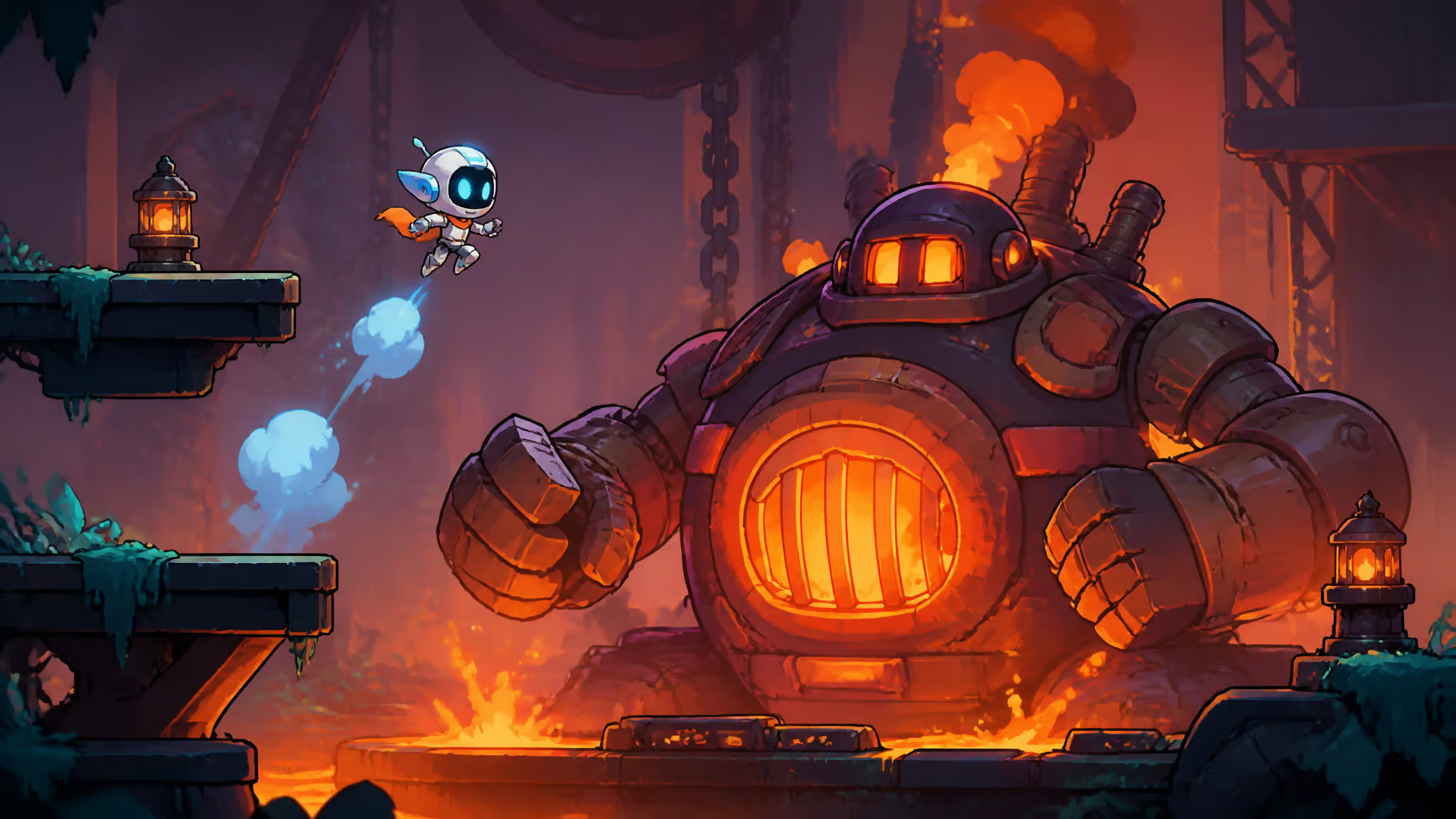
Cel-shaded art. Set aboard The Vessel, a colossal ark of malfunctioning robots. Mio can double-jump from the start. There’s a Pacifist Mode where enemies only attack if provoked, and Eroded Bosses that lower a boss’s health after each failed attempt. I didn’t use Eroded Bosses because I enjoyed learning the patterns, but having the option changes the emotional temperature of the game completely.
The Calderon Unyielding Furnace boss fight is the standout. Timed hits to the hypnotic beat of the song. My smile never tensed into a grimace — that’s the difference between a challenging game and a punishing one. MIO values mood, movement, and empathy over difficulty.
What MIO does differently
Double-jump from the start, Pacifist Mode, and Eroded Bosses. A versatile toolkit including grappling hooks, projectile orbs, decoy clones, and a mod system with capacity limits that force trade-offs. The game refuses to be grueling for its own sake.
How flexible difficulty reduces the need for breaks
When you have control over difficulty, you don’t have to brute-force past frustration. You can tune the experience to stay in the flow zone. That means fewer tilt spirals and longer sustainable sessions. It’s not about making games easy — it’s about making them adjustable.
When gaming is your job: special considerations for professionals
I’m a gamer, streamer, and esports journalist. A break for me looks different than a break for someone who plays purely for fun. During my week-long fast, I had to play for work-related projects. And honestly, I sometimes play when I should be working — the line blurs.
Stress from deadlines reduces the enjoyment of games. You start associating your hobby with obligation. The fast opened up time for better quality work because I wasn’t constantly pulled toward the monitor by “just one more match.”
The work-gaming boundary problem
When your job and your hobby are the same thing, you can’t just “take a break” without consequence. The trick is to define clear boundaries — work-only play during the fast, no personal sessions. That separation is harder than it sounds, but it’s the only way to get rest.
Putting it all together: your break starts now
The guy who spent three hours failing against a Dark Souls boss came back and won without taking a hit. Not because he grinded harder. Because he stopped.
Start small: one hourly micro-break, or one gaming-free evening.
The goal isn’t to quit gaming. It’s to have a healthier relationship with it. Sometimes the most powerful move is to put the controller down.
People Also Ask
Is it okay to take a break from video games?
Yes, taking breaks is not only okay but essential for improving performance and maintaining mental health. Stepping away allows your brain to consolidate learning and muscle memory, and it prevents tilt from compounding. Even short micro-breaks can reduce fatigue and boost vigor.
How does taking a break improve gaming performance?
Breaks allow your brain to consolidate patterns and muscle memory into long-term memory, which is essential for skill improvement. For example, a week away from a boss fight can lead to flawless execution because the brain processes the fight during downtime. Without breaks, frustration and tilt can degrade performance.
What is tilt in gaming and how do you avoid it?
Tilt is a state of frustration where losing or even winning feels like relief rather than joy, leading to worse performance and negative spillover into real life. To avoid tilt, recognize when you’re in that feedback loop and step away. Micro-breaks, like doing 30 seconds of exercise after a death, can reset your mindset.
Can micro-breaks during gaming actually help?
Yes, micro-breaks as short as 30 seconds can boost vigor and reduce fatigue. Turning deaths into exercise—like jogging in place or doing push-ups—provides a physical reset without leaving the game. The key is consistency: short frequent breaks are more effective than long infrequent ones.