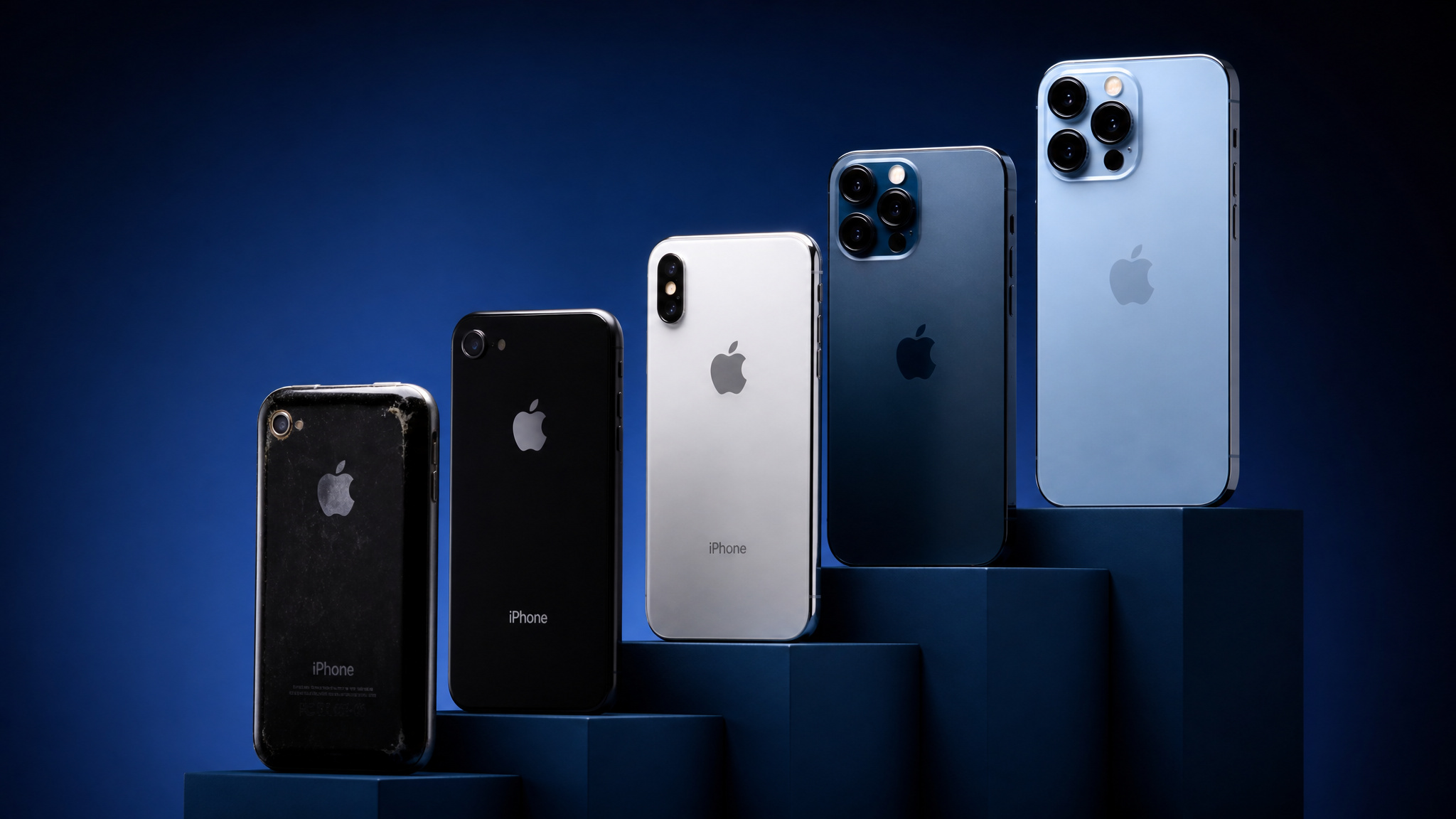
Okay, so the short answer on how to get a cheap iPhone in 2026: certified refurbished (older models dip under $100), trade-in credits, carrier promos that hand you a phone for free, government subsidies that quietly gut your monthly bill, and locked prepaid bundles like Walmart’s $99 iPhone 13. The trick, and the reason none of these is universally the cheapest, is that the sticker price is never the real price. The real price is phone plus required plan plus lock-in duration, and every deal below gets read against that rule.
“Cheap” actually splits into price floors, so figure out which one you’re shopping for. There’s the under-$100 tier, where older refurbished models like the iPhone XS Max, XR, and SE live at Gazelle. Then roughly $99-249 for locked prepaid bundles, and the near-free tier of carrier promos, where the phone costs nothing but the plan has opinions.
For a baseline number that everything gets measured against: the iPhone 17e starts at $599 for 256GB. Every discount in this article gets compared to that.
Key Takeaways
Gazelle sells certified refurbished iPhone XS Max, XR, and SE models for under $100, with a 55-point inspection, 30-day returns (minus a $15 restocking fee), and a one-year WarrantyLife warranty included.
Apple’s trade-in credit reaches up to $685 against the $599 iPhone 17e, meaning the credit can actually exceed the phone’s price depending on your old device.
Qualifying readers can stack ACP (up to $30/month, $75 on Tribal Lands) with Lifeline (up to $10/month, $35 on Tribal Lands) for up to $40/month off Straight Talk plans, which works out to $480 a year.
Table of Contents
Pick your iPhone tier before chasing any deal
The $599 iPhone 17e is Apple’s budget baseline right now, and here’s the fun part: it starts at $599 for 256GB, the same price as the 16e but with double the base storage. That’s the rare upgrade where the “price hike” is zero. Preorders are live with a March 11 release.
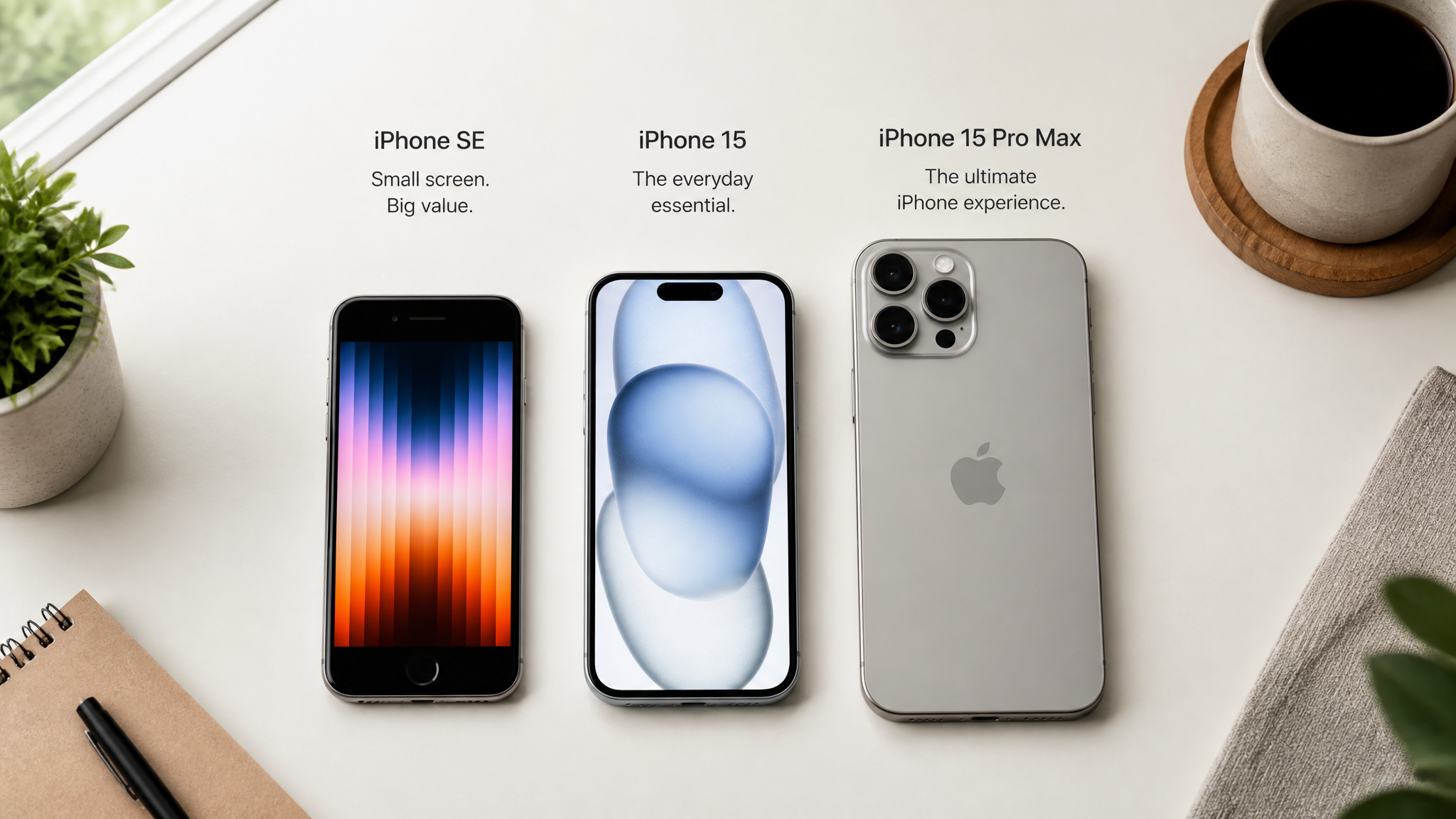
Before you start deal-hunting, decide which tier you actually want, because chasing the biggest discount backwards leads to the wrong phone. Quick rundown:
- Pro and Pro Max: You’re paying for advanced cameras and premium materials. If the camera system is the whole point, this is the tier.
- Regular iPhone: Balanced performance at a lower price. Honestly the sensible default for most people.
- SE: Small screen, physical button, fewer advanced capabilities. Affectionate but honest: it has fans and it has limits, and if you’re one of the fans, you already know.
The 17e bench test, spec-sheet style: 6.1-inch OLED at 60Hz (yes, 60Hz is the concession, and it’s an honest one), Apple A19 chip, 48MP rear and 12MP front cameras, Apple Intelligence support, 20W wired and 15W MagSafe wireless charging, and it ships with iOS 26. Current-gen silicon in the cheaper body is the value story here.
One aside that matters more than it sounds: iPhone 15 and 16 moved to USB-C, off Lightning. Wider accessory compatibility, faster charging, and one fewer dongle in the junk drawer. When you’re buying older generations, that’s a reason to weigh going a bit newer than you planned.
Buy certified refurbished, and score the refurbisher by numbers
Cheapest legitimate tier first: Gazelle’s iPhone XS Max, XR, and SE regularly come in under $100. These are the budget legends, the phones that still slap, and getting to that price is exactly how waiting out flagship status pays off. Newer stuff too: the 16, 16 Pro, and 16 Pro Max sit hundreds below retail, plus iPads if your drawer situation is different.
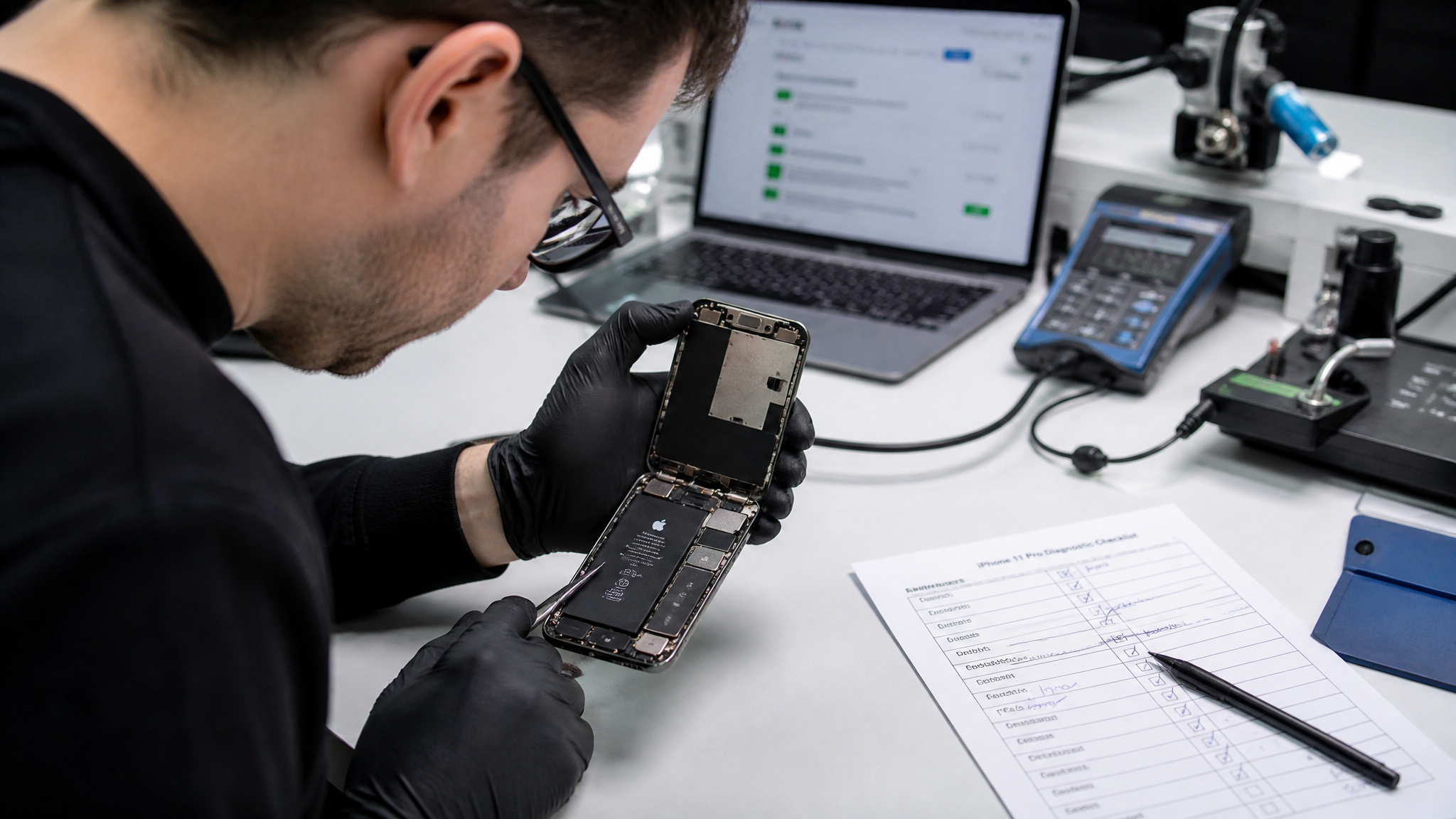
But “buy refurbished” is useless advice without a way to judge the seller. So score the refurbisher like a spec sheet, using Gazelle’s actual published terms as the benchmark:
- Inspection depth: Every in-stock phone gets a 55-point functional and cosmetic inspection covering WiFi, 5G, camera, screen, filters, buttons, and ports. That checklist is more convincing than any “tested and certified!” banner.
- Return window, priced honestly: 30 days from delivery, full refund minus a $15 restocking fee. Both numbers matter. The escape hatch exists, and using it costs fifteen bucks.
- Warranty length and claim speed: A one-year WarrantyLife warranty comes with each sale, and most internal-component and battery-health claims get handled within two business days. You’re not mailing a phone into a void for three weeks.
- Real total: Free standard shipping, and customer support runs 7 days a week.
Two setup details worth caring about: every phone gets a factory reset and an update to the latest iOS before it ships. That second part has a quiet security angle, since an old unsupported build is how accounts and data get sketchy. And the listings describe cosmetic imperfections honestly. That sounds minor until you’ve bought something online and played condition roulette.
Quick test: Before buying refurbished, read the cosmetic disclosure list like a spec sheet — the condition grade is data, not decoration.
So, is certified refurbished actually reliable? Yes, with the caveat that the refurbisher is what makes or breaks it. The mechanism is the answer: reputable refurbishers sell genuine Apple devices restored to factory settings. The caution is real though, so stick to qualified, trustworthy refurbishers or you’re risking scams and counterfeits. The trust signals are easy to check, too: a documented inspection process, a real return window, and an actual warranty. Best Buy’s own guidance backs this up: certified pre-owned means same quality for a lower price. That’s a second voice, not just one site’s pitch.
One cautionary pattern that keeps recurring among first-time refurbished buyers: someone picks the lowest condition grade to save $30-50, then gets surprised by wear the listing actually disclosed. The scratches were in the description.
Side effect worth one line: refurbished and trade-in buying keeps devices out of landfills, which is good engineering at the ecosystem level.
Use trade-in credits, which can exceed the phone’s price
Here’s my favorite number in the whole roundup: Apple’s trade-in credit goes up to $685 against the $599 iPhone 17e. Wait, the credit exceeds the phone? Yes, depending on your old device. That’s not a promise for every trade-in, but the ceiling bends the math in your favor, and it’s why this figure tops anything else I’ve seen in the Apple Black Friday deal section.
Best Buy runs up to $600 off, but two triggers have to fire: a trade-in of an older device plus activation at purchase. Say both, because “up to $600” doing all the heavy lifting is how people get surprised at checkout. Some programs also add bonus credit during promotional windows, so timing can beat buying today.
There’s a second trade-in play: selling outright. Gazelle’s flow is pleasantly fast. An offer takes about two minutes on the site (faster than picking a phone case), they cover shipping for the inspection, and payment lands instantly after condition is confirmed. No mystery about when cash arrives. This is the move when you want to keep your current plan untouched.
The real technique is channel comparison. Check your phone’s trade-in value across Apple, Best Buy, and an outright sale before committing anywhere. Also note the mechanics: credits typically arrive after purchase as adjustments, not as an upfront price cut, so your out-of-pocket number today is higher than your final number.
Carrier “free phone” deals: how each one actually structures free
If you specifically want no-trade-in routes, two carriers qualify: Verizon’s iPhone 17e is free with a new line of service (no trade-in), and AT&T’s runs $5.99/month with any unlimited plan (also no trade-in), and if you’d rather skip carrier lock-in entirely, iPhone Black Friday deals on unlocked models are worth comparing. Everyone else wants something from you first. Here’s how each structure works:
T-Mobile
Free 17e, but the trigger is specific: you have to switch from Metro to T-Mobile. That’s the path switchers should know about. There’s also free with a trade-in plus select unlimited plans, but the Metro switch is the exact trigger, so name it when you talk to them.
Verizon
Free with a new line on select unlimited plans, and no trade-in required. That’s the rare low-friction version of a carrier freebie. If you were already considering adding a line, this deletes the phone cost.
AT&T
$5.99/month with any unlimited plan, no trade-in. Quick links round it to $5, but the real figure is $5.99, because nerds notice these things and I’d rather you notice first. The simplicity is the selling point here: no trade-in ritual, a small monthly number.
Xfinity Mobile
New customers get the 17e free with a trade-in. Existing customers get up to $400 off with a trade-in plus an unlimited plan. Keep that split straight, because the new-customer freebie and the existing-customer discount are different deals.
The cross-cutting warning, and it applies to all four: in practice, “free” usually means bill credits spread over 24-36 months against a required plan or new line, which is often pricier than what you’re on now. The recurring pattern: shopper sees the banner, switches, and the monthly plan delta quietly eats the subsidy. The fine-print structure decides the deal, not the headline.
Red flag: If a “free” phone requires a specific plan or line, price that plan against your current one first — the monthly delta can eat the entire subsidy.
Government subsidies: ACP + Lifeline can beat any phone discount
If you qualify by income, this path beats every phone discount above. The Affordable Connectivity Program knocks up to $30/month off Straight Talk monthly plans with data, up to $75/month on Tribal Lands. Lifeline stacks on top at up to $10/month, up to $35 on Tribal Lands. Combined: up to $40/month, or $110/month on Tribal Lands.
At $40/month, that’s $480 a year, which is more than most one-time phone discounts will ever save you. Eligibility is income-based and not guaranteed, so verify before you plan around it.
The checkable number for Lifeline: your Straight Talk plan needs at least 4.5GB of data. You can verify your plan against that threshold in about ten seconds. The discount applies to every Straight Talk monthly plan with data, and once you’re approved it applies automatically. No coupon codes, no rebate forms. Tiny wizardry. Straight Talk also lets you change plans every month, so the flexibility survives the discount.
One trap, disclosed by the program’s own checkout warning: buying more plans in advance than the discount allows means the full plan price gets charged on the extras. That’s the single gotcha in an otherwise clean deal, so just buy plans as you go.
Locked prepaid bundles: the $99 iPhone 13, and what it costs you besides $99
The wild one of the roundup: Walmart sells an AT&T-locked iPhone 13 (128GB) for $99, with in-store activation and a select AT&T prepaid plan. Online it’s $249, down from $299 regular. Priced as of Feb. 25, and the offer runs through May 15, so this deadline is real, not manufactured. The Walmart-AT&T prepaid partnership is what makes this deal exist at all.
Every condition travels with that $99, so here’s the compact checklist: AT&T lock, 128GB storage, activation at the electronics counter with an associate, required plan. The activation is an errand, not a mail-order convenience.
And here’s the honest math. The Unlimited Enhanced Plus or Ultra prepaid plans via the partnership start at $45/month. So $99 is a phone-plus-plan contract in disguise. That can still be a great deal, but compare it against the $249 online price or a slightly pricier unlocked refurbished phone you can move between carriers whenever you feel like it.
Is a 4.5-year-old iPhone 13 worth it? Actually, yes, mostly. iPhone upgrades are iterative, not revolutionary, so the gap between the 13 and current models is smaller than the calendar suggests. If you’re the person who doesn’t need the newest thing, that’s a legit preference, not a compromise. Side note from the same partnership: a Moto G (128GB) or Galaxy A16 (64GB) runs $49.88 online or free in-store with a new line, if the iPhone tax isn’t your thing.
Unlocked vs carrier-locked: buying for freedom
Unlocked iPhones with no-contract plans let you change carriers without penalties or fees, and unlocked specials show up frequently. So on a budget the question is: do you want to switch penalty-free? If yes, buy unlocked. Refurbished sellers offer both flavors: Gazelle sells phones locked to T-Mobile or Verizon, or unlocked for anything.
The hidden line item nobody notices they’re paying: buying no-contract means skipping the monthly device-payment drip that rides along on so many plans. That drip is real money, it hides.
The hinge is your current situation: if you already love your plan, locked and bundle savings work fine; if you value switching freedom, they don’t.
Pay a bit more for unlocked and keep your options open. It’s a settings-toggle decision, not a philosophy debate.
When to buy: Black Friday is an amplifier, not a strategy
I’ll admit my own routine here: I always check BackMarket before paying full price anywhere, because I’ve never once wanted to pay more than necessary, and phone deals get especially good around Black Friday. That’s a browsing habit, not a purchase history, but it’s earned.
The counterpoint matters though: cheap iPhones are not a Black-Friday-only event. Best Buy, Apple stores, and carrier stores run deals year-round, and new ones are happening right now, outside any major sale event. Meanwhile, dated offers reward acting over waiting. The Walmart deal expires May 15; no amount of patience extends it.
If you need to spread out the cost, Smartpay offers 24-month terms on Gazelle purchases, with pricing tied to excellent credit. It’s a payment-spreading option, and you should read the terms before leaning on it. That’s the whole credit note.
Which path fits you: the decision framework
One rule to carry out of here: true price = phone + required plan + lock-in duration. Plan prices depend on data amount, number of lines, add-on features like texting, international, and extra data, and phone type. Older phones actually cost less to attach to plans, which is the sneaky real-cost win of buying last year’s model. And if you’re Wi-Fi-primary, downsizing to a limited-data plan is legit; prepaid is legit too. Price the plan before the phone, because the plan is the recurring cost.
Where you land:
- No phone, or willing to switch: Carrier promo. Verizon’s new-line freebie or the T-Mobile Metro switch are the specific paths.
- Want carrier freedom: Unlocked refurbished. Pay a little more, keep the ability to leave.
- Tightest budget: Sub-$100 older models, the XS Max, XR, and SE tier.
- Qualifying income: ACP + Lifeline stacked, up to $40/month, which is $480 a year.
- Happy with your current plan: Trade-in (Apple’s up to $685) or a bundle like that $99 iPhone 13.
Match the discount mechanism to your situation, then verify the fine print. That’s the entire method, and it’s saved me from more bad “free” phones than I can count.
Frequently Asked Questions
Where is the cheapest store to buy an iPhone?
Walmart currently sells an AT&T-locked iPhone 13 (128GB) for $99 in-store with activation and a select AT&T prepaid plan ($249 online). Gazelle is the cheapest store for older unlocked or carrier-locked refurbs under $100. Best Buy runs up to $600 off with a trade-in plus activation. No single store wins universally — compare the phone price plus any required plan.
Are certified refurbished iPhones as reliable as new ones?
From reputable refurbishers, yes — these are genuine Apple devices restored to factory settings and updated to the latest iOS, and Best Buy’s own guidance says certified pre-owned means same quality for a lower price. Judge a refurbisher by numbers: a deep inspection checklist (Gazelle uses 55 points), an honest return window, and a real warranty. The main risk comes from unqualified sellers, where scams and counterfeits are a genuine concern.