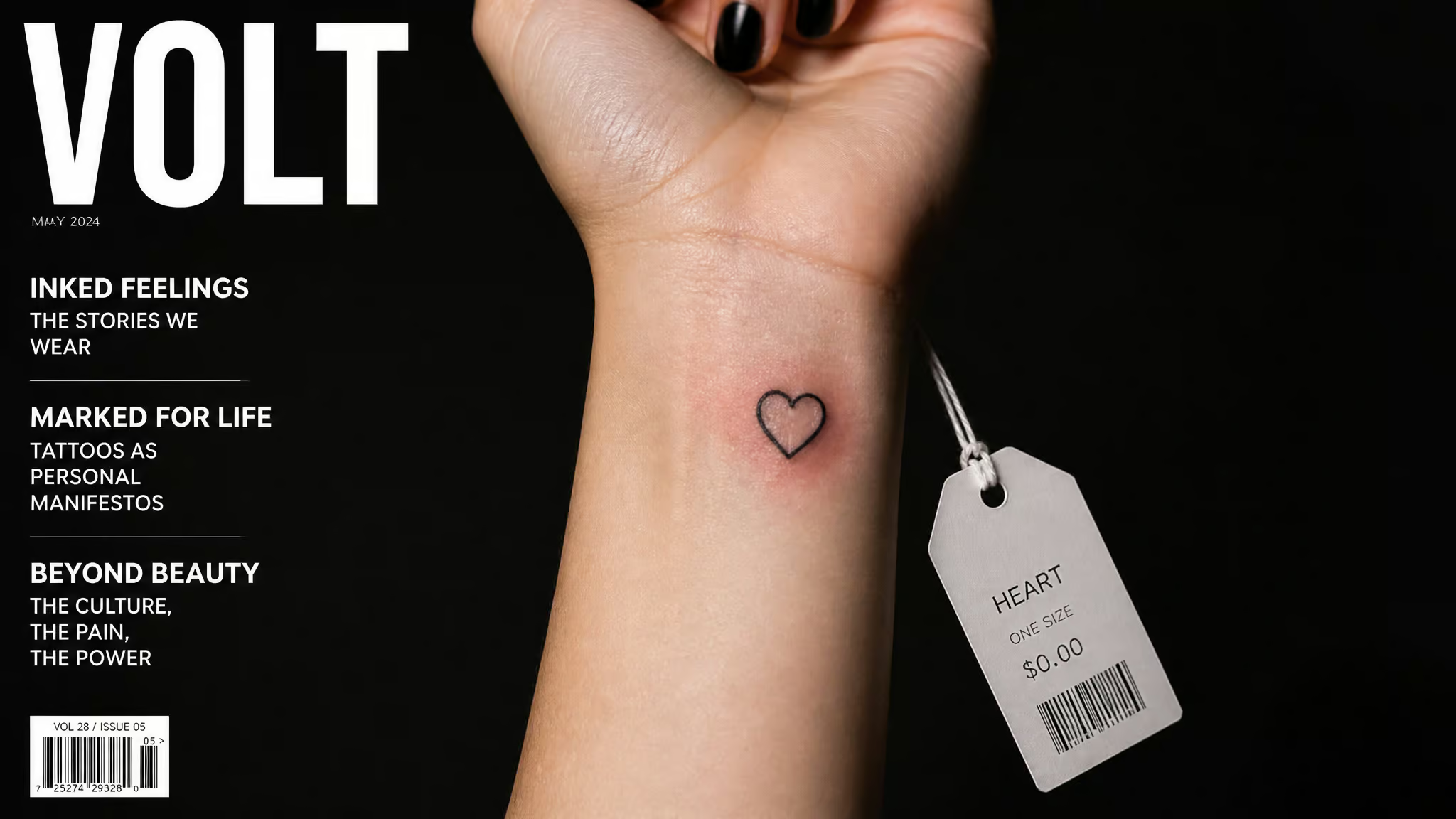
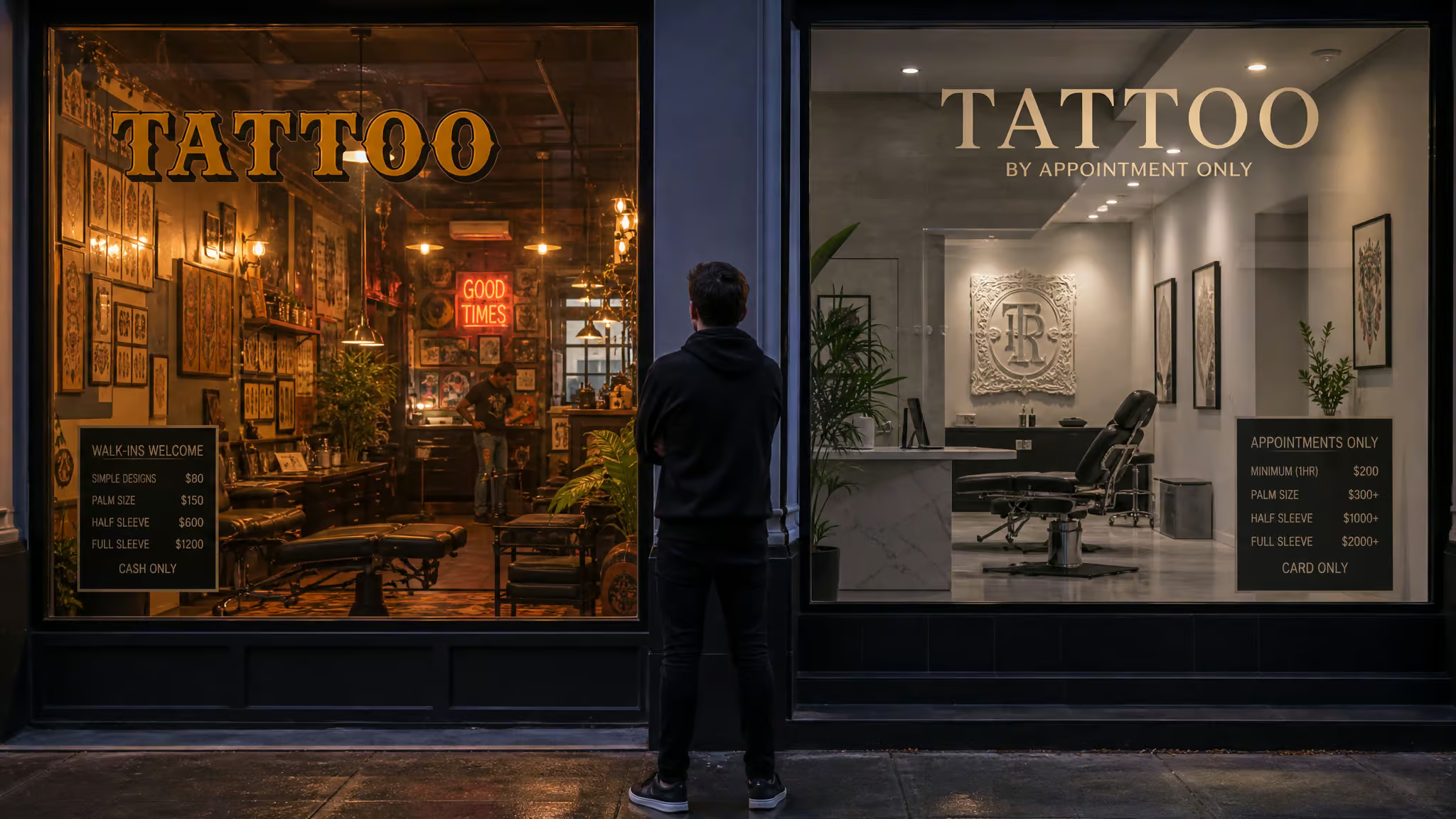
I dug into how tattoo pricing actually works recently, and the thing that hooked me was a question that sounds simple: what does a small tattoo actually set you back? Turns out the honest answer starts with two shops in the same city. In Portland, Ever True Tattoo publishes a $60 shop minimum. Icon Tattoo Studio, a few miles away, publishes $150.
That’s the same 1-inch heart costing $60 at one door and $150+ at another, both legitimate shops, both within walking distance of each other. So the flat “$50 to $300” range everyone quotes online isn’t wrong, it’s the wrong unit of measurement. The real variable isn’t size. It’s the studio’s minimum, the artist’s tier, and how many hours of detail work your design quietly demands. So I did what I always do with a weird pricing system: pulled it apart.
Key Takeaways
A small tattoo typically runs $50, $300, most commonly $100, $250 for a 2-4 inch piece, but published shop minimums in Portland alone span $60 to $200, so the same tiny tattoo costs wildly different amounts across town.
Price tracks hours of skilled work, not inches: a 3-inch fine-line script takes about 10 minutes while a 3-inch micro-realism piece takes roughly 8 hours.
A $150 quote is really a ~$200 commitment once you add a 15-20% tip and $15, $30 in aftercare, and the rate also bundles in 4+ unpaid design hours per client, supplies, and rent.
Table of Contents
How much does a small tattoo cost: the direct answer
A small tattoo typically costs $50, $300, and most 2-4 inch pieces land between $100 and $250. That’s the range map. Your mileage will vary depending on where the shop sets its floor and who’s holding the machine, but that’s the baseline before we start adding modifiers.
Breaking it by size first. Tiny pieces, under 2 inches, run $50, $100, though one source in my stack says $100, $200, and I’m flagging that disagreement rather than smoothing it over. Sources disagree and pretending they don’t would be worse than showing you the spread. The reason tiny tattoos cluster so tightly near the bottom of their band: most of them land exactly at the shop minimum. A 1-inch outline doesn’t take long, so the studio’s floor price is effectively the price. Small pieces, 2 to 4 inches, run $100, $250.
But size is only half the spec sheet. Cross it against artist experience and the ranges explode:
| Size | Junior (1-3 yrs) | Experienced (5+ yrs) | Pro/famous |
|---|---|---|---|
| Tiny (under 2 in) | $75, $100 | $150, $200 | N/A |
| Small (2-4 in) | $150, $300 | $200, $450 | $400, $1,000 |
| Medium (4-6 in) | $300, $600 | $400, $800 | $700, $1,500 |
| Large/1-day (7-12 in) | $500, $1,000 | $900, $1,900 | $2,000, $3,500 |
That empty pro column for tiny work is interesting. Nobody lists a pro rate for a sub-2-inch piece, and the most plausible read is that famous artists don’t take them. Their books are full of big custom projects; there’s no slot for your finger tattoo.
Underneath all of it sits a simple formula: price = hourly rate × time, plus fees for complexity, color, and placement. And here’s the plot twist: for most small and medium tattoos, artists don’t actually run that formula live. They quote a flat price per piece, built on the same underlying time estimate. The formula is the engine; the flat quote is the interface.
The shop minimum: the real floor price of a tiny tattoo
A shop minimum is a studio’s fixed floor price, typically $50, $250 overall and $100, $200 at reputable mid-range shops, and it covers setup, materials, and the artist’s base time. For a tiny tattoo, it’s also almost always what you’ll actually pay.
The best data I found is a published directory of Portland shops, which works like a spec sheet across vendors. Same city, same tiny tattoo, and look at the spread:
| Shop | Minimum | Hourly | Notes |
|---|---|---|---|
| Ever True Tattoo | $60 | ~$160 | Cash only, walk-ins |
| Atlas Tattoo | $100 | $200 | Appointment only |
| Grizzly Tattoo | $100 | $150, $200 | On N Williams Ave since 2011, books months out |
| Sea Tramp Tattoo | $100 | Cash only, founded 1978 | |
| Wonderland Tattoo | $100 | $200 | Opened 2014 |
| Icon Tattoo Studio | $150 | Operating since 1999 |
That’s a 2.5x spread on the floor price alone, before a single line gets drawn. Sea Tramp deserves its own footnote: founded in 1978 by Bert Grimm, rumored (and I want to stress rumored) to have inked Bonnie and Clyde, and it takes walk-ins 363 days a year. Two days off a year.
Now the arithmetic you came for, run straight off these tables. Frame all of it as what you’d likely pay, not guarantees:
- $100 buys a 2-inch script at a $60-minimum shop like Ever True, but it doesn’t even clear the door at Icon, where the minimum is $150.
- $50 gets you a tiny outline only at shops whose minimum sits at or below $50. Those exist, but they’re the low end of the band.
- A 1-inch tattoo runs roughly $50, $150 depending on which artist tier you book and where the minimum sits.
And here’s the composite first-tattoo surprise that shows up again and again: someone walks in with a $100 budget, the shop minimum eats all of it, and the conversation about design detail never even starts. The minimum isn’t a fee on top of your tattoo. For small work, it is the tattoo.
Field note: At a $60-minimum shop and a $150-minimum shop a few miles apart, the identical tiny tattoo can more than double in price before design detail even enters the conversation.
Size is a proxy for time: why detail sets the price
A small tattoo can cost more than a big one because price tracks hours of skilled work, not inches of skin. Once that clicks, every weird quote you’ve ever heard makes sense.
The single best comparison I found: two 3-inch tattoos. One is fine-line script that takes about 10 minutes. The other is micro-realism that takes about 8 hours. Same ruler measurement.
One of those is a coffee break; the other is a full workday. This is wild to me, and it’s the whole mental model in one example.
The controlled experiments back it up. Two forearm tattoos, both 5 square inches: black lettering takes about an hour and runs ~$200. A detailed three-color botanical takes 3-4 hours and runs ~$500. Same size, 2.5x the price. Or go cross-size: a 3-inch micro-realism eye runs about $450, while an 8-inch bold graphic piece runs about $600.
The tiny one nearly catches the big one. Don’t read that as “small always costs more” either; the size-vs-price outcome can go either way, and that last example proves it, since the 8-inch piece does come out ahead.
My favorite data point in the entire stack: a chrome rubber ducky. Clean, an artist in Chicago with about 3 years in, charged $600 for a roughly 3-hour piece, which works out to about $200 an hour. Chrome rendering is detail-hungry no matter whose résumé it sits on. Small, shiny, absurd, and priced like a mid-range phone. Tiny wizardry.
There’s a counterintuitive corollary too: bigger pieces often work out cheaper per inch, because open space fills fast. Tiny micro-realism is the worst cost-per-square-inch deal on the menu, which is exactly backwards from reader intuition. And a field pattern worth naming: the tell that someone misunderstands pricing is asking for a price per inch. Artists hear that the way a developer hears can’t you just estimate it in lines of code.
Artist tiers and how quotes are actually calculated
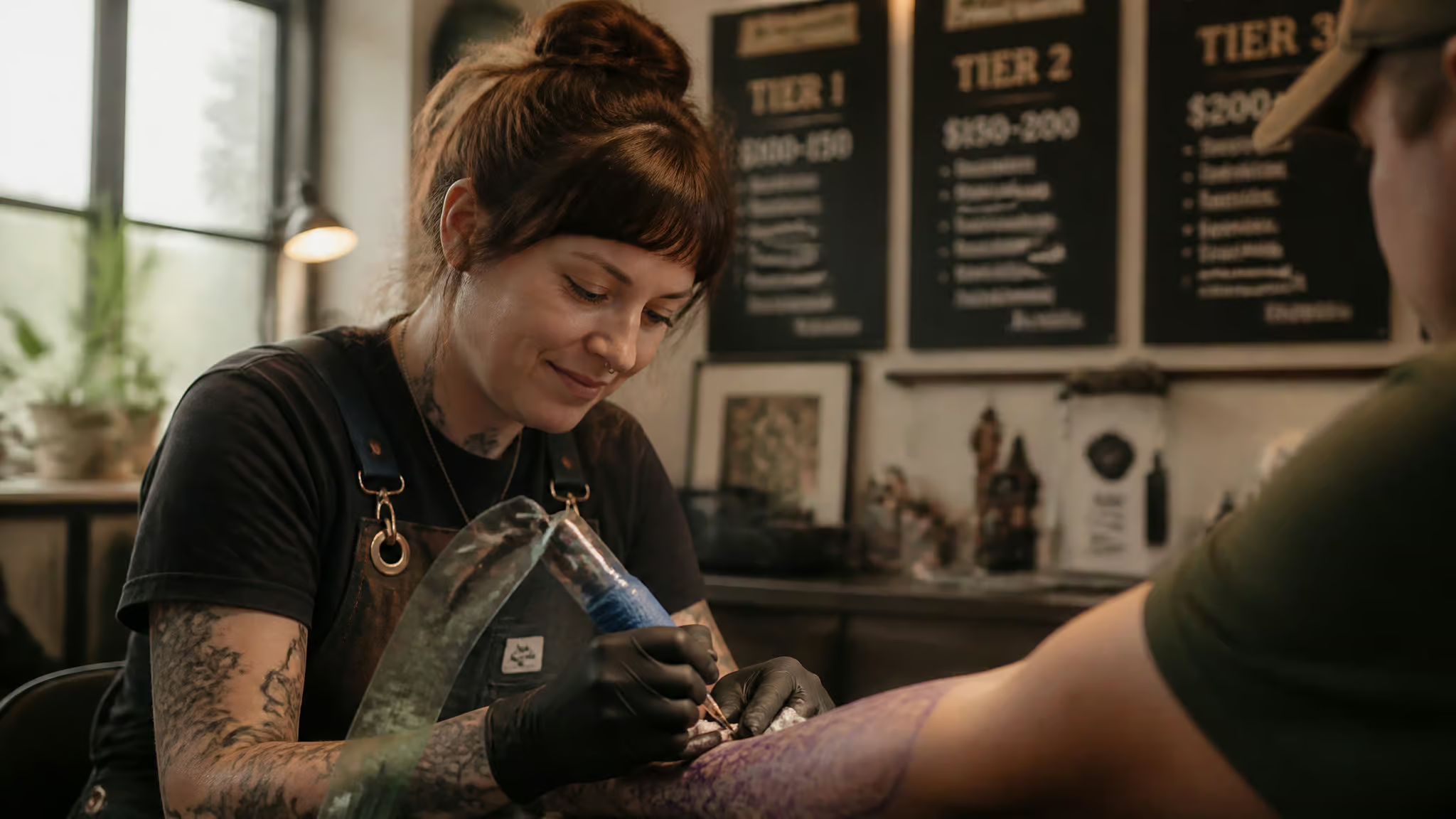
Artists calculate price as hourly rate × time, plus complexity, color, and placement fees, but most small tattoos get a flat per-piece quote built on that same time estimate. The math runs underneath either way.
What each level charges
The skill tier basically sets the rate card:
| Tier | Experience | Hourly | Full day |
|---|---|---|---|
| Junior | 1-3 yrs | $50, $130 | $500, $1,000 |
| Mid-level | 3-7 yrs | $100, $175 | |
| Experienced | 5+ yrs | $150, $300 | $1,200, $1,900 |
| Senior/specialty | $175, $350+ | ||
| Pro/famous | $300, $500 | $2,000, $3,500 |
The reasoning per tier tracks the labor. Juniors are slower but cheaper, which is a fair trade if your design is simple. Experienced artists work faster with more refined output, so the higher rate buys speed and consistency. Senior specialists command specialist rates, like a contractor who only does one weird thing well. And the pro tier is the named boss fight: awards, recognition, waitlists, $2,000, $3,500 for a day.
Worked example, because the math isn’t scary: 3 hours × $150/hr ? $450. That’s the whole formula in one line.
Hourly, per-piece, or day rate
Three pricing methods exist, kind of like three API options hitting the same endpoint. Hourly runs $100, $500+. Flat per-piece covers most small and medium work. Day rates run $1,000, $5,000+ for 6-10 hour sessions.
Hybrids are common and honestly kind of elegant. One structure: $200/hour or $1,200 flat for a full day. Do the implied math, past six hours, the day rate wins, which is the shop nudging you toward the better-value option for big work. Another: $250 for the first hour, then $150 after, which exists because setup is front-loaded and gets amortized as the session goes on.
The takeaway that kills the analysis paralysis: no method is inherently best. Compare total cost, not calculation method. You’re buying the tattoo, not the pricing interface.
Real artists, real totals
Eden Body Art Studios has published enough real numbers to run like a benchmark set:
- Ash, ~4 years in: $150/hr × 6 hours = $900. The formula landing in reality.
- Monica, ~8 years: $2,000 flat for ~14 hours across 2 days. Curious readers can run the implied per-hour themselves; I’ll note it’s below the experienced-tier hourly band, which is what happens when a flat quote is set before the hours balloon.
- Cass, ~3 years: $1,400/day × five sessions (35 hours) = $7,000. The multi-session reality check.
Wider sample, same treatment: Barbara in LA, 10 years in, charged $1,300 for 5 hours, about $250/hr. Julia in Norway, ~5 years, charged a $1,200 day rate for a skull-and-rose piece. Specs and results, no rankings.
What moves your small tattoo quote up or down
Choosing full color over black-and-grey adds roughly $25, $75 to a small piece, because full color adds 20-40% more time. That percentage is the real headline; the dollars are just what it converts to on small pieces. On a sleeve, the same multiplier adds hundreds, and once the bill climbs that high, how much to tip a tattoo artist becomes a real budgeting question too.
Color has a second cost that compounds over time: it needs earlier touch-ups. This is the total-cost-of-ownership point, and the TCO analogy fits better here than it has any right to. Full color isn’t a one-time surcharge; it’s a maintenance schedule.
Placement works as a difficulty modifier: same tattoo, harder canvas, higher bill. Ribs, sternum, neck, hands, fingers, feet, face, and inside joints carry premiums, because those areas need extra skill, setup, and time. Outer forearm, calf, arms, and legs are the easy-mode canvas and don’t. That’s the whole explanation; no pain-scale lecture required.
The LA photo-example catalog shows how wide the gap gets inside a single size class. Small color work at 2.5×1.5 inches runs $250, $350 with a junior and $350, $450 with an experienced artist. Small 2-inch script runs $100 with a junior, $150, $250 experienced. The outline-versus-full-color-realism gap is the widest within-size spread in the data. One bonus observation from the catalog that made me go huh, neat: neck placements were marked too difficult for juniors, which is geographic pricing data doubling as a skill boundary.
Read the whole section as self-negotiation, then: drop the color, pick a forgiving placement, simplify the detail. Each lever moves the quote before you ever message the artist.
The real total: what a $150 tattoo actually costs you
Add roughly 35% to any quote, a 15-20% tip plus $15, $30 for aftercare lotion and wrap, so a $150 tattoo is a ~$200 commitment. Budget for the number with the tip baked in and the sticker shock disappears.
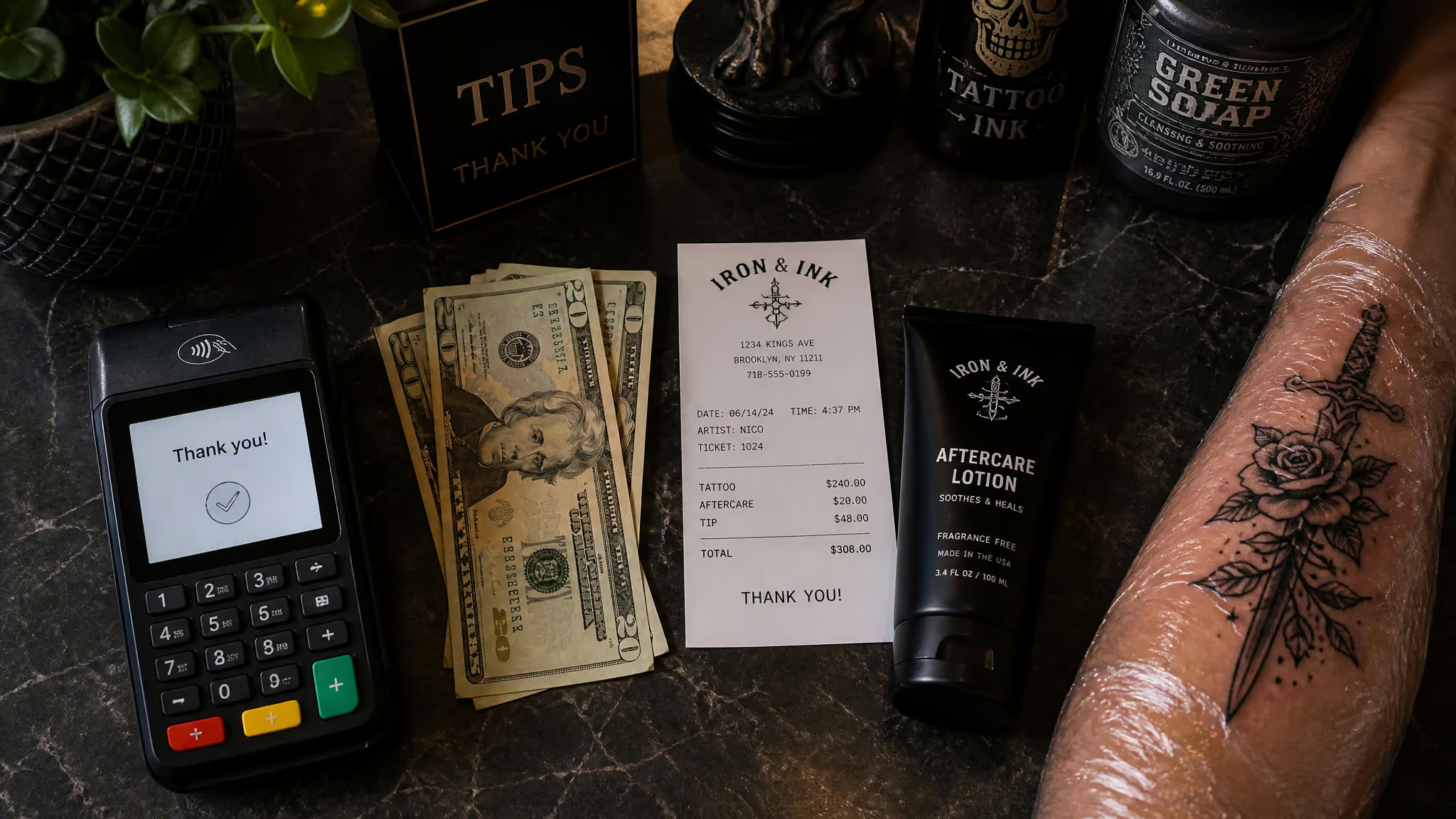
Why does the quote feel high in the first place? One practitioner has laid out what goes into it: 4+ unpaid hours per client of consulting, reference hunting, and design, all dev time before the deploy, baked into the rate. Working days often run from 8am to after 10pm, a 14-hour day, not a cozy 9-to-5. The rate also carries the shop’s bill of materials: rent, sterilization compliance, machines, ink, software, accounting, staff.
So the classic complaint, “20 minutes of needle time for $150?”, misprices the service the way judging a game by its install size misprices the game. The needle time is the demo; you’re paying for everything that shipped with it. Keeping it light: nobody’s asking you to feel bad, just to read the full invoice.
Comparing quotes without buying a tattoo you’ll regret
For a permanent small tattoo, the experienced artist’s $150, $300/hr is usually worth it over a junior’s $50, $130/hr, so long as the design isn’t simple enough to forgive the slower pace. State of the junior tier, honestly: the quality is okay but slower, not bad. Cheap correlates with inexperience; that’s a correlation, not a verdict on any individual artist.
One red-flag detector when comparing quotes: time discrepancy. If one artist quotes two full days for a design and another quotes half that, question the fast one. The slower artist is probably investing detail hours the faster one is planning to skip.
And the permanence punchline: removal costs hundreds to thousands of dollars over years. No source gives small-piece-specific removal pricing, so treat that as a broad risk caveat rather than a line item. Still, it reframes the bargain. A low-skill artist risks a mediocre permanent tattoo the way an unskilled defence lawyer risks your case, the stakes are the point. “Buy once, cry once” applies to machines, keyboards, and apparently also to ink.
Quick test: If one artist quotes double the hours another does for the same design, suspect the fast quote is skipping detail hours, not finding efficiency.
What about expensive artists with big Instagram followings?
Yes, mostly: artists with big followings and full books charge fairly, because demand-based pricing is market valuation, not unfairness. If someone’s booked out months and should raise rates, a high price is the market telling you what the slot is worth.
Two skeptical footnotes, though. Follower count doesn’t equal skill, marketing and photo editing inflate popularity, and years of experience don’t always correlate with skill either. The metrics that actually predict a good result: healed-work photos and the waitlist, not like counts. Check the healed portfolio before you check the engagement.
Last composite pattern: a common mistake when quote-shopping is assuming the cheaper quote is the same product for less. Cheaper quotes often come from slower juniors, or quietly exclude color and placement premiums. Compare like for like.
Location economics: why the same tattoo costs different money in different cities
There’s no reliable single price for small tattoos near you, but the named markets give you the method for estimating your own. Los Angeles photo examples run small 2-inch script at $100 with a junior up to small color at $350, $450 with an experienced artist. Austin-area rates average $120, $150/hr per Austin artist Amanda Rae. Portland’s published minimums span $60, $200. Three cities, three different rate cards, same basic spec sheet.
Austin is the case study in what happens to local prices when the market gets squeezed. In 2024, True Blue Tattoo closed as the I-35 expansion project displaced the block; Triple Crown closed after pandemic-era strain, with owner Scott Ellis relocating to Prague and comparing oversaturated Austin to a city with a thousand bands in every neighborhood; Moon Tattoo and Rock of Ages announced closures. Out in Kyle, Texas, Rise and Shine lost its lease amid road construction, and owners Brandon and Becca Basma Smith have been guesting at Classic Tattoo in San Marcos. The supply-side explanation, per Rae: pandemic-era costs for gloves, machines, and ink plus rent hikes pushed rates up, and tattooers collectively need to raise rates. Fewer shops, higher fixed costs, higher prices.
Internationally, the Bali-vs-Perth comparison shows the same force at full scale. Cost of living runs about $800/month in Bali versus about $1,300/month in Perth excluding rent, roughly a 40% gap, and inner-city rent diverges even harder, around 66%, per numbeo.com. On top of that, Western Australian studios follow a strict Code of Practice, where even plastic-wrapping tattoo beds costs a few hundred dollars a year in compliance. Some markets have no regulations or inspections at all, which drops operating costs and therefore prices.
Cheaper elsewhere isn’t a scam. It’s a different cost structure.
Honest limitation, stated plainly: no source in my stack supplies state-level ranges beyond these named markets. Treat city rates as the method, not a table to memorize.
Getting more tattoo for your money
Want more tattoo per dollar? You control the big levers before you ever talk to anyone: simplify the design, go black-and-grey instead of full color, and pick a forgiving placement like the outer forearm or calf. Those aren’t downgrades; they’re tradeoffs you’re choosing knowingly.
Then two structural moves most people miss. First, the counterintuitive one: stacking several small tattoos is the worst-value path, because each one re-triggers the shop minimum and the setup. It’s the fixed-cost trap, like paying shipping on three separate orders instead of consolidating a cart. Combine your ideas into one planned piece and you pay the minimum once. No source quantifies the savings, but the direction is clear, and it matches the cost-per-inch logic from earlier: one larger piece often beats several small ones per dollar.
Second, flash days and walk-ins. Tattoo 34 PDX runs flash Wednesdays and Sundays, Birdhouse does daily walk-ins, and Sea Tramp takes walk-ins 363 days a year. Flash designs mean the artist already drew the design in advance, so you get a skilled artist’s work below custom rates, with the honest tradeoff that your choice is limited to the flash designs on the wall. Good odds you find something you’d have picked anyway.
And if you want a runnable estimate, here’s the checklist I’d actually use:
- Measure the size in inches.
- Match a size tier (tiny $50, $100, small $100, $250, medium $250, $500, large $500, $1,200, sleeve $1,000, $5,000+).
- Adjust up for detail, the biggest lever.
- Add 20-40% for color.
- Check the placement premium.
- Add a 15-20% tip and $15, $30 for aftercare.
Bring 2-3 reference images and have your placement confirmed before you message the shop; sharper inputs get faster, sharper quotes. There are also free cost calculators now where you plug in size, style, color, and placement and get a ballpark in under a minute, handy utility, use it as a sanity check, not a gospel number.
The real question was never how many inches $100 buys. It’s whose time you’re buying, and how much of it. That’s what the whole system decomposes to: $50, $300 for most small work, with the shop minimum, the artist tier, and the detail level deciding where you land, and about $200 as the true total once tip and aftercare count. If you remember one thing, buy the artist, not the size. Run the checklist, pick your number, and you’ll be able to defend it at any counter in any city.
Frequently Asked Questions
How big would a $50 tattoo be?
Typically a tiny outline under 2 inches, and only at shops whose minimum sits at or below $50. Those shops exist but are the low end of the band, since most published shop minimums run $50-$250. At most reputable shops, $50 barely covers the floor price before any design detail.
How long do tiny tattoos last?
A tattoo is permanent regardless of size, so a tiny piece lasts as long as any other ink — the real risk to its lifespan is quality, not scale. That’s why the artist’s healed-work portfolio matters more than the price tag: a low-skill tiny tattoo can mean hundreds to thousands of dollars in removal costs over years if you regret it.
What is a realistic price range for a small tattoo in 2026?
Most small tattoos run $50-$300, with 2-4 inch pieces most commonly landing between $100 and $250. The published shop minimums in a single city like Portland span $60 to $200, so the identical tiny tattoo can more than double in price across town before design detail even enters the conversation.
What’s the difference between a junior artist and an experienced artist for a small tattoo?
Juniors (1-3 years) charge $50-$130/hour and are slower but okay quality; experienced artists (5+ years) charge $150-$300/hour and work faster with more refined output. For a permanent small tattoo, the experienced artist’s rate is usually worth it unless your design is simple enough to forgive a junior’s slower pace. Check healed-work photos, not follower counts, before booking either.