Here’s a fact that stopped me when I first stumbled across it: Dictionary.com defines “gamer girl” as slang for a female video game enthusiast, with its first recorded use in the 2005–2010 era — and then the dictionary itself adds a sensitive note, warning that the term is “sometimes disparaging.” That’s unusual. Most demographic labels don’t come with a built-in hazard label from the lexicographers.
Now try looking up “gamer babe.” No dictionary entry exists. Not in Dictionary.com, not in Merriam-Webster, not anywhere official. One is a contested descriptor that the dictionary flags as potentially weaponized. The other is so narrowly defined by sexualization that it never made it into the lexicon at all.
I’ve been called “gamer babe” in voice chat by strangers. Here’s what the evidence actually says.
Key Takeaways
“Gamer girl” is a Dictionary.com–recognized term first recorded 2005–2010, flagged as “sometimes disparaging” because it’s used to imply a female gamer is less skilled, more casual, or faking interest for attention.
“Gamer babe” has no standard dictionary definition — its meaning is derived from “babe” (sexualized attractive woman) plus “gamer,” and in practice it’s almost never a self-identifier; it’s a label applied by others that centers appearance over gaming identity.
The safest, most respectful term is simply “gamer,” as recommended by Dictionary.com and echoed by many female gamers who prefer to leave gender out of the conversation entirely.
Table of Contents
What “gamer girl” means: From neutral descriptor to contested label
The term “gamer girl” carries a dual identity: it can be a neutral descriptor or a weaponized label, depending on context and intent.
The dictionary definition and its sensitive note
Let’s look at what Dictionary.com actually says. “Gamer girl” is slang for a female video game enthusiast. That’s the bare meaning. But the entry includes a sensitive note that reads: The term gamer girl is employed by some to differentiate female gamers from the traditional male gamer demographic, but not without controversy. The controversy has two main flavors.
First, the term has been used to imply that a female gamer is inherently less skilled or more casual. You hear it in dismissive comments like she’s just a gamer girl, she doesn’t really play. Second, it carries the accusation of faking interest for attention — the infamous “fake gamer girl” stereotype. Both are classic gatekeeping moves. The dictionary itself is saying: be careful with this word, because it’s been weaponized.
Real-world usage: WSJ, LA Times, and Kim Berkley’s reclaiming
But here’s where it gets interesting. The term still functions as a neutral descriptor in mainstream media. The Wall Street Journal, in a January 2026 article, described a game character option as “gamer girl Kira.” The Los Angeles Times, in April 2025, reviewed a novel about a boy gamer and a girl gamer constructing a video game empire from scratch. No negative connotation in either case — just a straightforward identifier.
Then there’s Kim Berkley, a female game developer who deliberately calls herself a “gamer girl” as an act of reclamation. She draws a direct parallel to how “geek” evolved from a playground insult into a badge of pride. Berkley’s position is: “Yes, I am a female and a gamer, and I’m present whether the misogynists like it or not.” Other women prefer “gamer women” or just “gamers” — no gender qualifier at all.
What “gamer babe” means: The objectifying label without a dictionary entry
Unlike “gamer girl,” “gamer babe” lacks any official recognition, which itself reveals how the term functions primarily as an objectifying label rather than a neutral identifier.
Why “gamer babe” has no dictionary definition
The absence of a dictionary entry for “gamer babe” isn’t a gap — it’s a finding. The meaning comes entirely from the word “babe,” which carries strong sexualized overtones, plus “gamer.” The combination centers visual appeal over gaming identity. If someone calls you a “gamer babe,” they’re not describing your playstyle or your game library, they’re commenting on your appearance.
How “gamer babe” functions in practice: Appearance over skill
The closest we have to community discourse on this comes from a Nexus Mods forum thread from February 2018. A user named Skagens observed that “girl gamer” is often used to describe women who stream where the focus is on their appearance, not their skill. That dynamic is even more pronounced for “gamer babe,” a label that has since fueled a market for gamer babe merchandise — from clothing to accessories, raising questions about whether such branding empowers or objectifies female gamers.
In the same thread, no one self-identified as a “gamer babe.” That’s telling. The label is applied by others, not chosen. It’s a term you get called, not a term you use for yourself. And when it’s used, it’s almost always in a context that reduces the person to a visual commodity.
The “fake gamer girl” trap: How labels inherit distrust
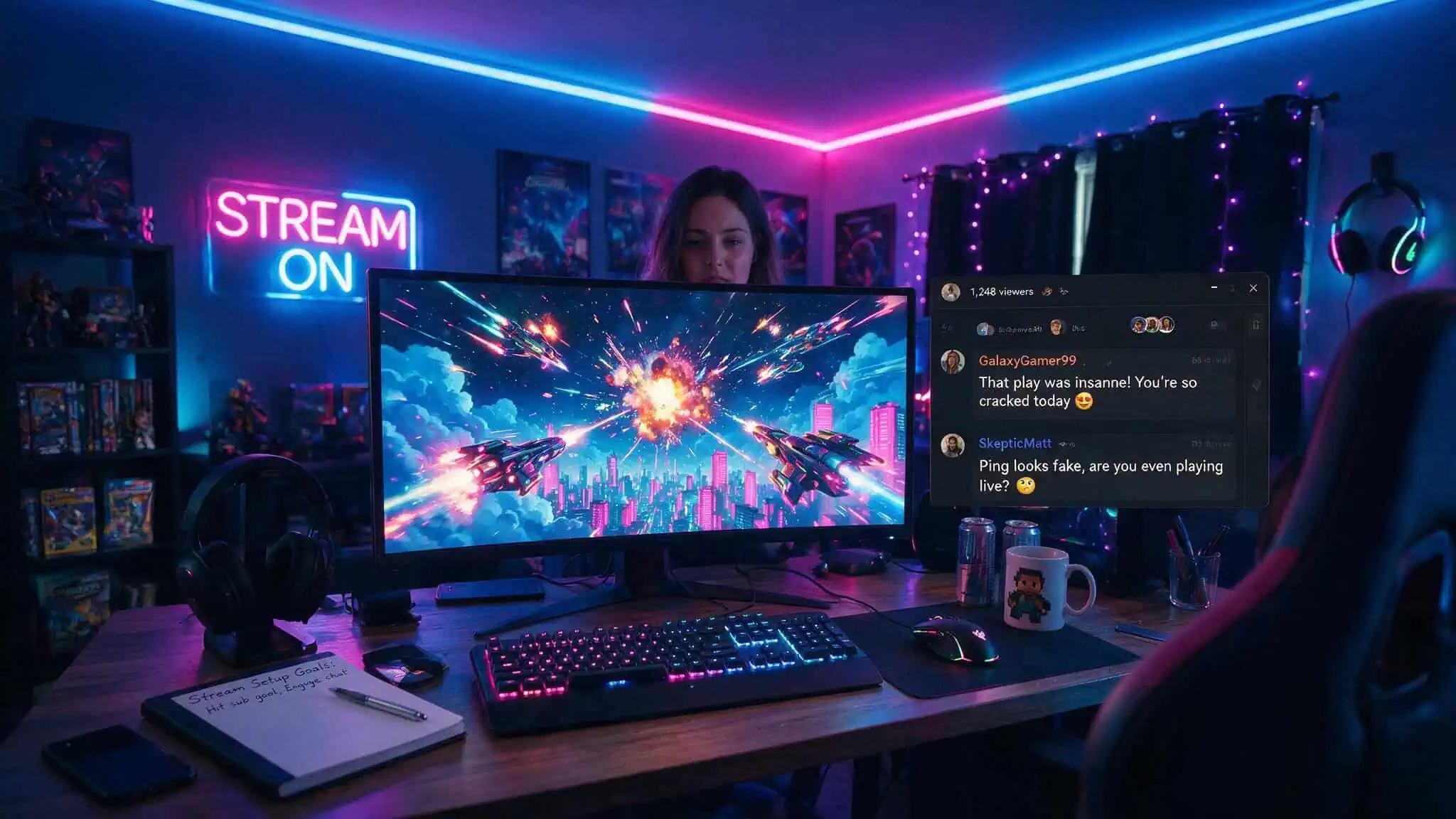
But “gamer babe” intensifies the “fake gamer girl” stereotype by making the label itself an accusation of performance. If you’re called a “gamer babe,” the implication is that your value is in your looks, not your gaming chops, a double-edged sword navigated by gamer babe streamers who must constantly balance appearance and skill to build their audiences.
But here’s a concrete counterexample. Meet Stavetskaya, a Nexus Mods forum user who shared her gaming history in that same 2018 thread. She started playing PC games at 23 with Neverwinter Nights. Then she worked through Baldur’s Gate, Divine Divinity, Fallout, Elder Scrolls, Mass Effect, and Devil May Cry.
She met her husband in World of Warcraft — she played a healer, he played a tank, a classic MMO romance. She’s played League of Legends. And she started making mods six months before the thread, sharing them on Nexus.
Modding represents a deeper level of engagement. She’s not just consuming games — she’s building content for them. She also mentioned skills in cooking, sewing, knitting, drawing, and writing.
What women gamers actually think: A spectrum of reactions
Female gamers don’t agree on these labels. Some reject them outright; others accept them cautiously.
The “gamer” consensus: Dropping gender entirely
Dictionary.com’s sensitive note gives a clear recommendation: referring to female gamers simply as gamers is the safest choice. Kim Berkley notes that many female gamers prefer “gamer women” or just “gamers,” and addresses how labels such as “gamer girl” often single out women rather than treating them as regular gamers. Skagens in the forum thread said they don’t care about gender, only about whether a player is entertaining and skilled.
“Gamer girl”: Contested but sometimes reclaimed
Berkley’s reclaiming strategy is real, but it’s not universal. The dictionary’s sensitive note exists for a reason. Some women see “gamer girl” as still problematic because it emphasizes gender first. Others are fine with it in neutral contexts.
“Gamer babe”: A label applied, not chosen
Almost no one calls themselves a “gamer babe.” The forum discussion makes this clear. Skagens’ observation about appearance-focused streaming is the closest parallel. But there’s a minority viewpoint worth noting.
One forum user, Fkemman11, argued that some women flaunt their gender in gaming spaces and then complain about the consequences, perpetuating the cycle of scrutiny. It’s a controversial take, but it adds necessary tension to the debate.
The marketing divide: Person vs. persona
The way these labels are used in media and marketing reveals a fundamental split between treating someone as a full person versus reducing them to a visual persona.

“Gamer girl” in media: A character, a person
Both the WSJ and LA Times examples use “gamer girl” as a neutral descriptor — no scare quotes needed. “Gamer girl Kira” is a character option in a game. “A gamer boy and a gamer girl” are protagonists in a novel.
“Gamer babe” as a pitch: The commodity label
The search query “gamer girl photos” is a clear signal — people are searching for visual representations, not identities. Compare that to the neutral media usage above, and you see the difference: character vs. commodity. One describes a person; the other describes a persona designed to attract attention.
Beyond labels: The “No True Gamer” fallacy
The gatekeeping behind these labels is not new; it stems from a long history of questioning who truly belongs in gaming culture.
The historical roots of the gatekeeping
Twenty years ago, the stereotype held that women didn’t play games, and if they did, it was casually. Game themes were geared toward a male market. A forum user named Fkemman11 recalled friends telling his little sister that Legend of Zelda was “for boys only.” That’s the kind of gatekeeping that built the conditions for the “fake gamer girl” stereotype.
The philosophical framework: No True Scotsman and authenticity theory
A user named montky dropped a reference to the “No True Scotsman” fallacy — a description of the gatekeeping. If you don’t fit someone’s arbitrary definition of a “real gamer,” you’re dismissed as an impostor. Montky also brought up “Authenticity Theory” (Sartre, Magritte, Baudrillard), which is a fun detail but more philosophy than most readers need. The “No True Scotsman” reference is the one that lands.
Comparing mobile apps and FPSs as a measure of “real gamer” status creates a false comparison, like Console vs. PC — different ecosystems, different experiences. And as Todd Howard put it, gaming is for everyone, not just nerds or men.
Which term to use, and why it matters
Based on the evidence, here’s the practical guidance in three tiers:
- “Gamer” — safest, universally respectful, and the recommendation from Dictionary.com itself.
- “Gamer girl” — contested, can be reclaimed by individuals, but be aware of the baggage. When in doubt, follow the lead of the person you’re talking to.
- “Gamer babe” — avoid unless it’s a self-identifier, which it almost never is. It’s a label applied by others, centered on appearance, and carries the strongest objectifying connotations.
Todd Howard’s quote is worth repeating: gaming is for everyone. The labels we use should reflect that openness, not police it.
People Also Ask
What is the difference between a girl gamer and a gamer girl?
The terms are often used interchangeably, but ‘gamer girl’ carries more baggage. ‘Girl gamer’ tends to be a neutral descriptor for a female who plays games, while ‘gamer girl’ has been flagged by Dictionary.com as ‘sometimes disparaging’ because it can imply a female gamer is less skilled, more casual, or faking interest for attention. In practice, both labels emphasize gender over gaming identity, which is why many women prefer simply being called ‘gamers.’
What is a gamer girl called?
A female gamer can be called a ‘gamer girl,’ but the term is contested. Many women prefer ‘gamer’ without a gender qualifier, or ‘gamer women’ as a more respectful alternative. ‘Gamer babe’ is another label, but it has no dictionary definition and is almost always applied by others to sexualize appearance rather than acknowledge skill. The safest and most universally respectful term is simply ‘gamer.’
Is ‘gamer babe’ a real term?
No dictionary recognizes ‘gamer babe’ as an official term. Its meaning is derived entirely from the word ‘babe,’ which carries strong sexualized overtones, combined with ‘gamer.’ In practice, it’s almost never used as a self-identifier; it’s a label applied by others that centers appearance over gaming identity. The absence of a dictionary entry is itself a finding that the term functions primarily as an objectifying label.