It’s happened to all of us. You’re having a conversation, maybe about a vacation you’re half-planning, a weird new gadget, or a brand of dog food you’ve never bought, and an hour later, an ad for exactly that thing appears on your feed. It feels impossible to explain any other way. Your phone was listening. It had to be.
I’ve been down this rabbit hole more than once, and the answer is genuinely stranger than eavesdropping. Your phone probably isn’t recording your conversations and shipping them off to serve ads. But the way it does know what you’re thinking about is, in some ways, more invasive than a microphone ever could be. So I went digging through the research, the lawsuits, and the technical architecture to figure out what’s actually going on.
Key Takeaways
No consumer phone continuously points a microphone at your life to build ad profiles. Both iOS and Android lock down background mic streaming, and a controlled Northeastern University study detected no signs of apps capturing ambient sound.
The ads that feel like proof of surveillance actually come from behavioral data: your ad ID, your search history, your social circle’s searches, and data broker profiles that follow you across devices.
Real privacy threats are elsewhere, things like session replay SDKs capturing your screen and keystrokes, Facebook logging call metadata, and spyware like Pegasus that targets specific people, not everyday users.
Table of Contents
The Short Answer: No, Your Phone Isn’t a Wiretap
Let’s get the verdict out immediately: your phone is not secretly recording your everyday conversations and feeding them into an ad system. The microphone is not streaming audio to a server somewhere so a marketing algorithm can catalog what you talk about.
The technical evidence is about as solid as it gets. Since Android 9 shipped in 2018, no app can just grab background microphone audio on Android; you have to grant permission. iOS has had the same kind of guardrails for even longer. A study from Northeastern University took this question seriously, they monitored network traffic looking for any sign of covert audio recording and found nothing indicating apps were secretly transmitting what they heard. Independent security researchers who monitored the Facebook app have done the same thing and come up empty.
So why does it feel so true? The myth persists for a reason, and it’s worth taking seriously.
Why You Feel Like Your Phone Is Listening to You
You’re not being paranoid. The “phone is listening” feeling is real, and it comes from a couple of well-documented cognitive mechanisms that make the world look much creepier than it is.
The first is the frequency illusion, also known as the Baader-Meinhof phenomenon. Once something enters your awareness, you start seeing it everywhere. You mention a specific hiking boot brand to a friend, and suddenly those boots seem to be in every ad you scroll past. The ads were always there, you just started noticing them because the topic was already in your working memory.
The second is confirmation bias. You talked about tents, you saw a tent ad, you locked onto it as evidence that you’re being watched. The thirty ads you saw for, say, crypto apps and meal kits in the same session? Those don’t register, because they don’t match anything you said out loud.
Advertisers barrage you constantly, device makers and platforms deliberately flood your feeds with messages all day, so the one ad that matches your recent conversation feels significant against that noisy backdrop. It’s not that the system made a lucky guess. It’s that your brain is wired to spotlight the match and file away everything else.
The Evidence: What We Actually Know
Let’s build a case file. The best evidence says phones aren’t recording your conversations for ads. The honest evidence also says the question isn’t groundless, and there are real reasons to keep asking it.
The Controlled Experiments
- The Northeastern University study is the closest thing we have to a controlled test. The study detected no apps transmitting captured audio from phones.
- Processor and network monitoring experiments, running a silent room against one with audio, found no meaningful differences in activity. If your phone were chewing on audio constantly, you’d expect to see it in the CPU usage.
- An experiment by Wandera mocked up the classic scenario: systematically playing pet-food ads and then silence to a pair of Android and iOS devices. No microphone activation, no suspicious data transfer. The phones remained as quiet as a freshman watching finals week.
The Honest Caveats
The story gets messier in the legal world. Apple agreed to pay $95 million to resolve a class action in early 2025 over claims that Siri picked up private conversations and then triggered related ads. The plaintiffs alleged that the assistant’s accidental activations caught real conversations and used them for targeting.
Amazon is in a similar boat. A federal judge in Seattle ruled in early 2025 that Alexa users could take legal action against the company for deceptive recording and retention of audio for commercial use, including AI training.
There’s also a study that muddies the water. Researchers at Esade and two other Spanish universities ran ten trials with 27 participants, placing a phone a meter away from a conversation and watching what ads appeared. In 100 percent of the tests, the ads shown included at least one tied to the general subject (tourism). In half the trials, the advertisement matched the exact destination being discussed.
I’ll flag that honestly: this is a small sample with no real controls, so it’s not equivalent to the big-name studies. But it’s why this myth refuses to die, it’s not settled fact, just the evidence people cite when they’re convinced something’s wrong.
How Voice Assistants Actually Work
To understand why your phone isn’t recording you, you need to know what the microphone is actually doing. It comes down to the wake word.
Your phone’s assistant listens for a specific phrase, “Hey Siri,” “OK Google,” “Alexa”, and that detection happens on a dedicated neural chip right on the device. It’s not streaming audio to the cloud and waiting for a response. The audio only gets sent to the servers after the wake word fires. Full continuous processing, where the phone actually parses everything you say and sends it off, would drain your battery within hours. That’s the real reason for on-device processing: it’s about efficiency, not your privacy.
The privacy protection is a fortunate side effect of competent engineering, not the goal. That’s worth being honest about.
A few important caveats though. Voice assistant software is enabled by default, so that wake-word listener might be running even if you’ve never once used the assistant. Accidental activations happen, someone on TV says “Hey Siri” or you mutter something that sounds close, and those false triggers can send short clips to servers. That’s not surveillance, but it is a real limitation of the wake-word model.
And for full honesty: voice-activated devices have been known to transmit audio to servers anyhow, as with Siri recordings that Apple contractors listened to. On-device processing is the architecture, but it’s not always the reality, the question of Is Your Phone Listening to You? deserves a closer look. The system is designed to be efficient, not to protect you from everything.
How Targeted Ads Actually Work
So if you’re not being listened to, how do the ads know? The answer is that your phone has built a shockingly detailed model of you from behavioral data, and your phone number can be used to track you, allowing it to predict what you’ll want next.
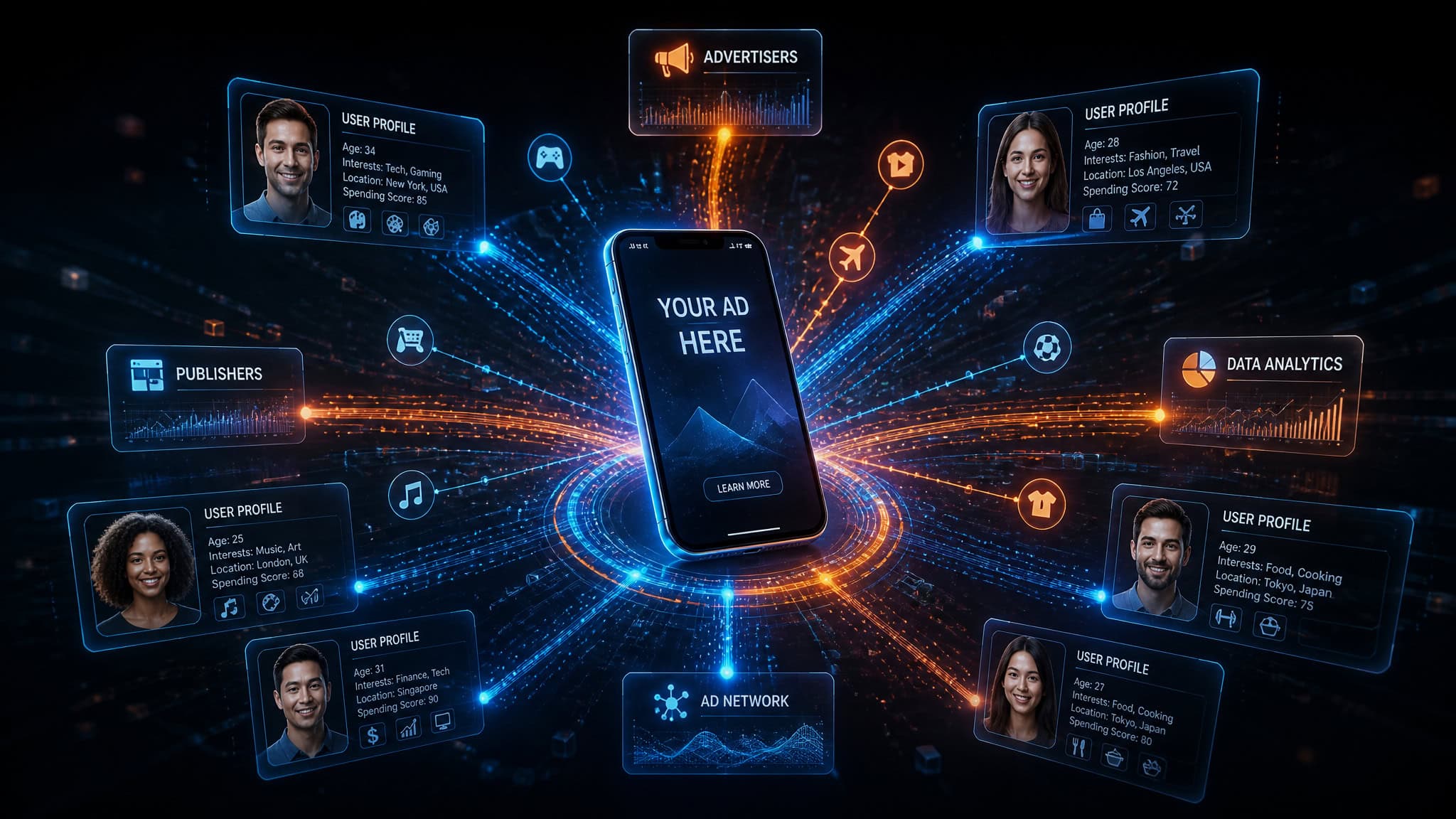
Here’s the machine:
- Your phone has an advertising ID, unique to you, that links your activity across apps and websites.
- Search queries, webpages, and product listings viewed for more than a few seconds all feed into a behavioral profile.
- Data brokers buy this data from app developers, enrich it with offline purchase data like loyalty card transactions, and sell the consolidated profiles to advertisers.
- Companies like Acxiom claim to hold 2.5 billion consumer records. LiveRamp builds direct connections between your loyalty card purchases and the advertising ID on your phone.
Then there’s the social layer. If your friend searches for something, a restaurant, a piece of camping gear, a specific show, their search can become your ad signal. Advertisers link users through shared IP addresses, devices on the same network, or logged-in accounts. You don’t need a microphone at all; the model just needs to know who you’re associated with, and it can infer your interests from what your social circle looks up.
There’s a famous case study in a tech blog where the author ran a tabletop roleplaying game in which characters discussed buying army surplus clothes, bakery items, and metal alloy machines, topics no one at the table had any reason to be searching for. The next day, they started seeing military-clothes ads. No one at the table had searched for those topics online, and the phones weren’t being used during the game to keep the atmosphere. The most likely explanation isn’t a listening mic; it’s the bizarre quilt of social data, demographic overlaps, shared network connections, and a lot of predictive modeling, that paints you into a corner.
The system is basically a database query. Your phone isn’t overhearing you; it’s running a probabilistic model that guessed (correctly, a lot of the time) what you’d be interested in based on everything it already knows about you and people like you.
The Real Privacy Threats (and Why You’re Looking at the Wrong Thing)
Here’s where the fear should actually be pointed. The worst-case scenarios are real, but they’re not coming through your microphone for ad targeting.
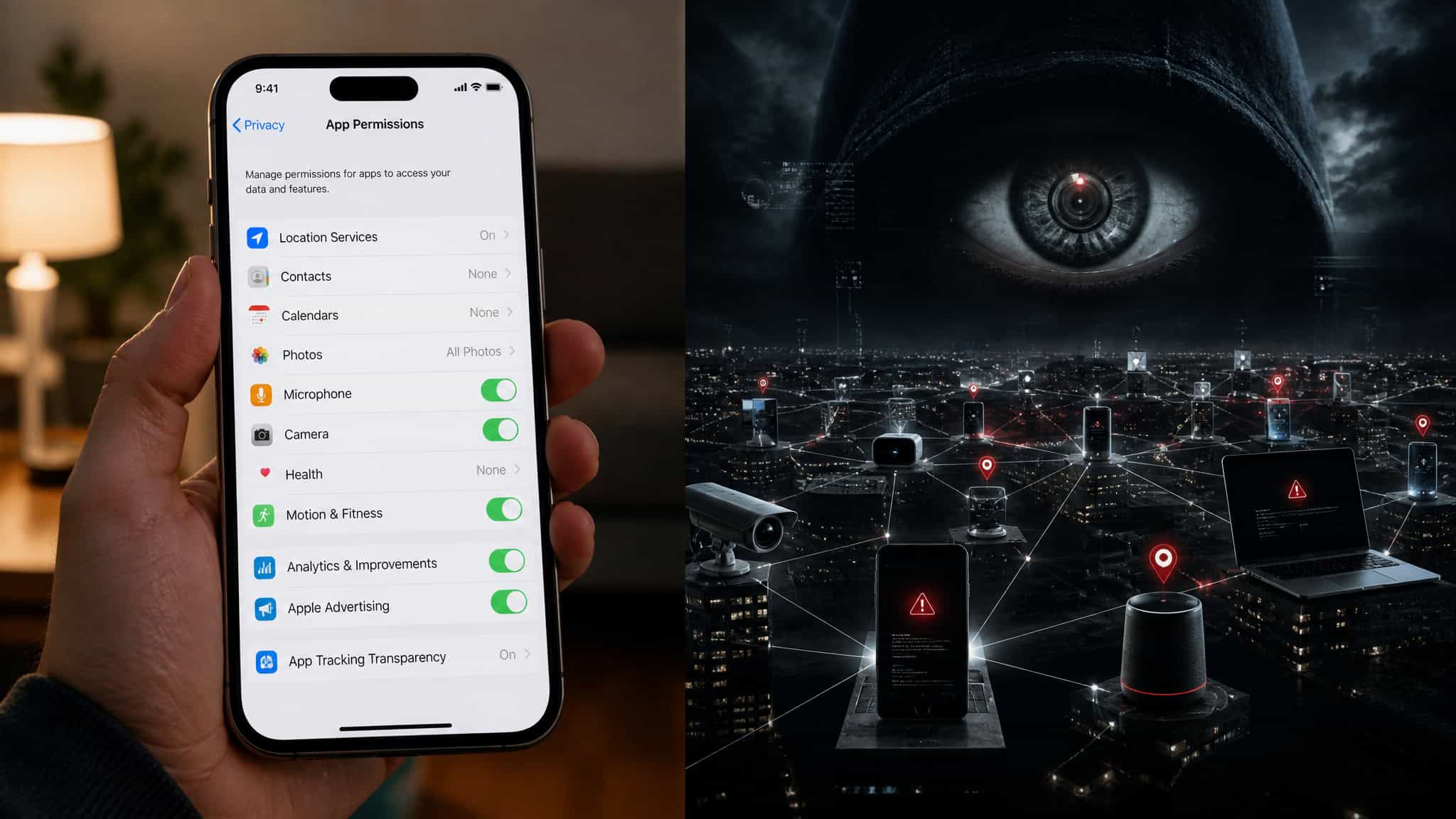
The most notorious eavesdropping tool is Pegasus, made by Israel’s NSO Group. It’s commercial spyware that can remotely activate a phone’s microphone and camera by exploiting zero-day vulnerabilities, it installs itself without any user interaction. But here’s the kicker: it’s sold exclusively to governments, costs millions of dollars per deployment, and is confirmed to have targeted journalists, lawyers, activists, and political figures. An ordinary consumer is about as likely to be hit by Pegasus as to be struck by lightning.
The stuff that is happening to everyone is much more mundane and much more routine.
- Session replay SDKs, found by researchers at Princeton in 2018, sit inside retailer and airline apps and capture everything on your screen, keystrokes, forms filled, content viewed, without telling you.
- Facebook can track users across all devices, record call and text metadata on Android, and even observe typed but unsent messages.
- TikTok admitted in 2022 that it grabbed clipboard data on iOS far more often than its functionality required.
And yes, there are documented cases of voice-related data going sideways: Samsung smart TVs sent recordings of private conversations to third parties for speech recognition analysis back in 2015. Webex was caught listening even when users were muted in 2022; Cisco said it was collecting audio to support the user experience, then stopped.
Those are real, and they’re the reason the microphone fear isn’t pure paranoia. But they’re the exception, not the rule. There’s no current proof that services are actively listening for ad targeting, but past cases show it could be discovered again.
What Voice Data Actually Does Get Collected
Here’s the distinction that matters. The microphone isn’t always on, but your voice searches are absolutely part of your ad profile.
When you ask Siri or Alexa a question, that search input is treated like any other query. Google has been explicit that voice search queries feed into a broader search and interest profile that informs ads across its properties. Amazon has said Alexa voice interactions shape interest-based ads across Amazon and partner sites. The search terms are shared with advertising platforms like Google Ads, the same way a typed query would be.
So the pathway is: voice query ? ad platform ? ad profile ? targeted ads. Your voice data follows a documented path through a standard commercial system. It’s not surveillance; it’s a search engine with a voice interface. But it absolutely does inform what you see later.
The Legal Framework (and the Gap It Leaves)
Here’s the legal tightrope, and it explains a lot about why this feels so weird.
In the United States, recording a private conversation without at least one party’s consent is a federal crime under the Electronic Communications Privacy Act. If your phone were wiretapping you, that’s a federal felony, the kind of thing a prosecutor would salivate over. This framework exists, and it works: Apple settled the Siri lawsuit for $95 million, and Amazon is facing a class action over Alexa.
Meanwhile, the system that actually profiles youReal-Time Bidding, or RTB, is perfectly legal. RTB is a Google initiative that collects information via cookies, including your tastes, geographic location, and consumption habits, then sells it to advertisers through a bid-based, real-time auction that happens in milliseconds with every page load. The Electronic Frontier Foundation has called it among the most privacy-invasive surveillance systems on the web, and it’s all completely lawful.
The core difference is consent. Wiretapping is illegal because no one agreed to it. RTB is legal because you agreed to it somewhere in a terms-of-service agreement you almost certainly didn’t read, only 3 percent of Americans always read privacy policies, and 34 percent have never read one. Nobody reads the fine print, so the system that runs on metadata and interests sails through, while the thing that would genuinely violate your ears empties wallets in court.
Bottom line: The legal system protects you from wiretapping but leaves the far more pervasive data-profiling industry untouched, because consent is buried in fine print no one reads.
What You Can Actually Do
Resetting your advertising ID, auditing app permissions, and using a VPN can meaningfully reduce your exposure. These steps take under an hour and need no technical expertise. They won’t make you invisible, but they’ll make it much harder for anyone to build a detailed profile on you.
Here’s what moves the needle, in order of impact:
- Reset your advertising ID. Do this every few months, or just turn off personalized ads at the system level entirely. On iOS and Android, this severs the link between future data and your history. It doesn’t delete your existing profile, but it breaks the chain.
- Audit microphone permissions. On iOS, go to Settings ? Privacy and Security ? Microphone. On Android, it’s Settings ? Privacy ? Permission Manager ? Microphone. Both show every app with mic access. Revoke it for anything that doesn’t need audio as a core function, games don’t need to know what you’re saying.
- Delete your voice history. Apple and Google store a transcript of every voice request by default. Go into your account settings for Siri, Google Assistant, or Alexa and wipe it at least twice a year.
- Use a VPN. It encrypts your traffic, masks your IP from sites and apps, and prevents IP-based cross-device tracking. It’s also genuinely useful on public Wi-Fi, where unencrypted traffic can be intercepted.
- Keep your OS and apps updated. Updates patch the vulnerabilities that spyware exploits. If you’re on an old version, you’re carrying around known holes.
- Think twice about sideloading. Apps outside the official Apple and Google stores haven’t passed a security review. There are legitimate reasons to sideload, but the risk is real.
And a couple of honest limits: deleting an app doesn’t remove data already shared with third parties. A factory reset generates a fresh advertising ID and wipes local data, but broker databases keep your profile. The database analogy applies here too. You’re not deleting the record; you’re just breaking the connection.
The most reliable privacy move remains the most obvious one: if you really want a conversation to stay private, don’t have it within earshot of a powered-on device. A powered-off phone can’t run software or transmit data. That’s the gold standard. (Airplane mode doesn’t count, it kills the radio but the software still runs locally, and an app with mic permission could technically record and upload later when connectivity returns.)
Your phone isn’t listening to you to sell you things. It doesn’t need to. It has two decades of your digital behavior, your friends’ search histories, your loyalty card purchases, and a model that’s scarily good at predicting what you want next. That’s not a wiretap. It’s just a very, very smart database query, and it’s weirdly worse that way.
Frequently Asked Questions
How do I stop my phone from listening to me for ads?
Your phone isn’t actually listening to your conversations for ads, but you can reduce the creepy feeling by resetting your advertising ID, auditing microphone permissions, and deleting your voice history. These steps break the link between your data and your identity, making it harder for advertisers to build a profile on you.
Why am I seeing ads for things I talked about?
It’s likely due to behavioral data, not eavesdropping. Your phone tracks your searches, browsing, and even your friends’ searches, then uses that to predict what you’re interested in. The feeling that it’s listening is amplified by the frequency illusion—once you mention something, you start noticing ads for it that were already there.
Do Android phones listen to your conversations?
No, Android phones do not continuously listen to your conversations for ad targeting. Since Android 9, apps must get explicit permission to access the microphone, and a Northeastern University study found no evidence of apps transmitting captured audio. The microphone only activates for wake-word detection, like ‘OK Google,’ and even then, audio is only sent to servers after the wake word fires.
What is the difference between your phone listening and voice assistants like Siri or Alexa?
Voice assistants listen for a wake word on a dedicated chip on your device, and only send audio to servers after that wake word fires. They don’t stream everything you say. However, voice searches you make are treated like typed queries and can inform ads, but that’s a documented path, not covert surveillance.