
There was a time when the biggest graphics leaps were obvious the second they hit the screen. A demo would flip over and your jaw would do the rest, no explanation required. Those moments got rarer as GPU generations turned incremental, but NVIDIA just went for one anyway with DLSS 5, its most significant graphics breakthrough since real-time ray tracing debuted in 2018. It ships this fall, it’s already the most hotly argued graphics feature in years, and I caught a short, early, unoptimized look at it during GTC in March, where NVIDIA’s annual developer conference set the stage for the feature’s debut.
I can report that DLSS 5 is amazing. I wasn’t expecting to say that.
“Amazing” and “settled” are different words, though. Jensen Huang, NVIDIA’s CEO, had to step in and defend the feature publicly against a fast-growing backlash. The demo I saw ran on two GeForce RTX 5090s, each starting at $1,999. It only works on Nvidia hardware.
And a loud bloc of players is convinced it’s AI slop smeared over artists’ work. So here’s the whole picture: what DLSS 5 does, why the demo floored me, and where the doubts live.
Key Takeaways
DLSS 5 reads each frame’s color and motion vectors and uses an AI model to add photoreal lighting and materials that match the game’s own 3D geometry, live at up to 4K. It’s a step past DLSS 4.5, which already draws 23 of every 24 pixels with AI.
The GTC demo ran on two GeForce RTX 5090s, one for rendering and one for neural effects, at a $1,999 starting price each. NVIDIA says it targets single-GPU performance, but RTX 30- and 40-series support isn’t confirmed.
DLSS 5 arrives fall 2025, following about three years of development. It’s Nvidia-only, AMD users fall back to FSR, and next-gen consoles look unlikely to get it since Xbox Project Helix and the PS6 are built around AMD hardware.
Table of Contents
How DLSS 5 works: neural rendering beyond upscaling
DLSS 5 reads each frame’s color and motion vectors, runs an AI model trained to understand characters, hair, fabric, skin, and lighting, and adds photoreal lighting and materials that match the game’s own 3D geometry, live, at up to 4K.
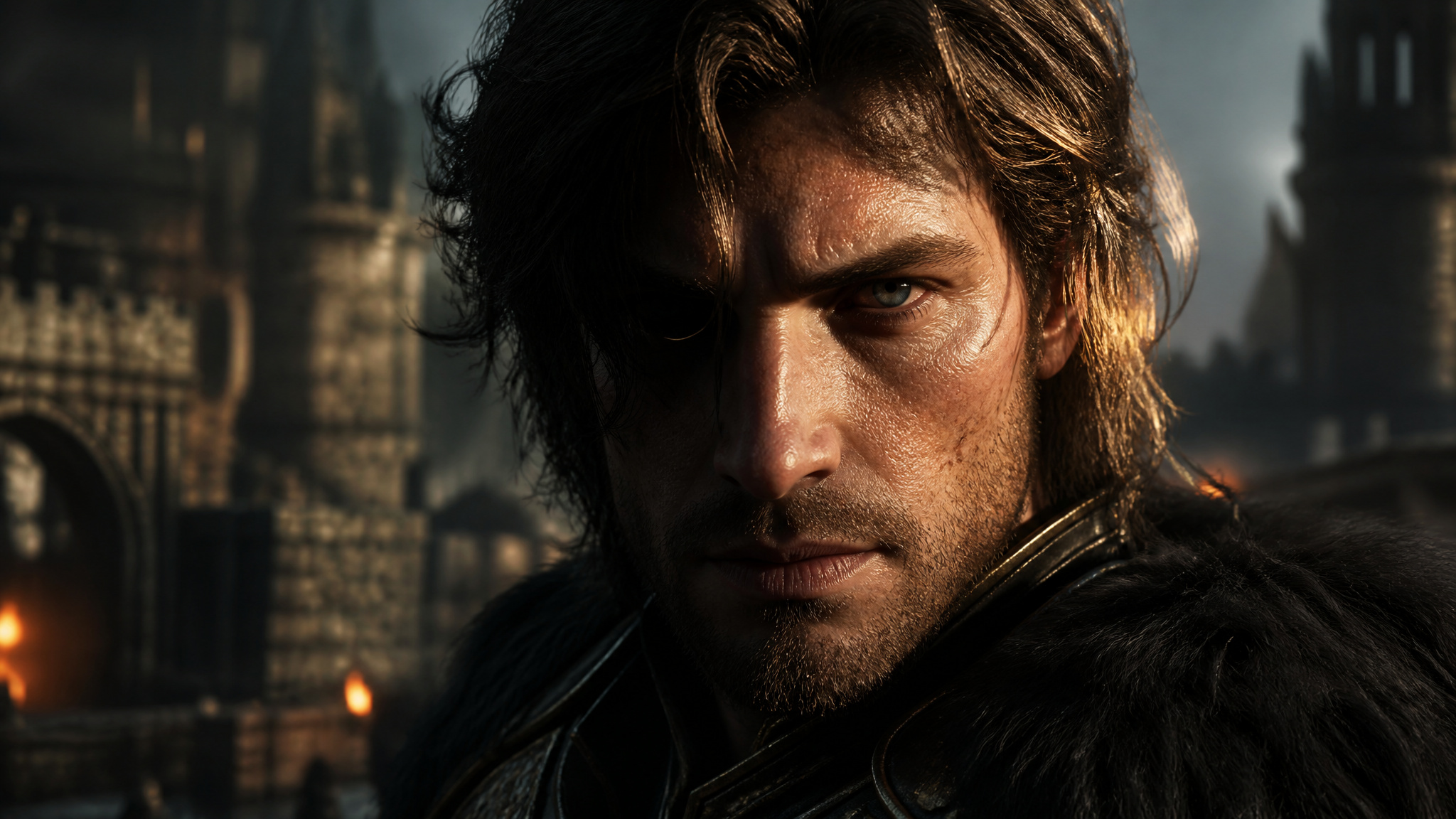
What DLSS 5 actually does to each frame
The key part is that the lighting and materials match the game’s own 3D geometry. That’s what separates this from a filter or a generic AI glow-up. The model doesn’t slap a pretty texture on top of the render. It looks at the actual scene the artist built, reads where the light is coming from, and re-renders the surfaces it finds there with materials that make sense for them.
How the model learns to read a scene
The model is trained end to end on messy scene semantics: characters, hair, fabric, translucent skin, and environmental lighting in any condition, from front-lit to overcast. That’s why it can make skin catch light the way skin does, or let a coat sheen the way fabric should. It isn’t guessing in the abstract. It’s re-lighting the real model.
Upscaling reconstructs missing pixels. Frame generation synthesizes whole frames. DLSS 5 adds visual information the renderer never produced.
It enhances what’s already there, which is why a dated character model can be transformed without anyone rebuilding it. That one property drives both the magic and the controversy.
The evolution of DLSS: from upscaling to understanding
Here’s the number that shows how far this has come: under DLSS 4.5, which landed at CES this year, AI already draws 23 of every 24 pixels on screen. Almost the entire frame is AI-authored. The story of DLSS has been the AI quietly taking over one pixel at a time, and DLSS 5 is the logical endpoint.
The 23 of every 24 pixels jump under DLSS 4.5
DLSS started in 2018 as an AI performance booster, first for upscaling, then for frame generation, and it has since found its way into more than 750 games. Version 4.5 already has the AI doing nearly all of the drawing. The shift with 5 is that the AI stops compensating for hardware limits and starts defining visual quality. It’s not reconstructing what’s missing anymore. It’s enhancing what’s already rendered.
How DLSS 5 slots into Streamline and Reflex
Integration stays on the same NVIDIA Streamline framework used by DLSS and Reflex, so the plumbing for developers is familiar. the tooling changes, but the integration path doesn’t, which makes it easier for studios already using DLSS to pick up 5.
Why AI became the only way forward
NVIDIA’s argument for why brute force can’t get there is a number I keep coming back to: 375,000 times. That’s the compute jump from the GeForce 3 in 2001 to the GeForce RTX 5090 in 2025. And it still isn’t enough, because the only thing growing faster than GPU muscle is the gap between real-time rendering and photorealism.
GeForce 3 and the programmable shader (2001)
The GeForce 3 introduced programmable shaders back in 2001, which is when graphics stopped being fixed-function and started being code.
CUDA with GeForce 8800 GTX (2006)
CUDA arrived with the GeForce 8800 GTX in 2006, and that’s the foundation that let GPUs do more than push pixels. It turned them into general-purpose compute engines, which is what made everything after it possible.
Real-time ray tracing with GeForce RTX 2080 Ti (2018)
Real-time ray tracing debuted with the GeForce RTX 2080 Ti in 2018, and that’s still NVIDIA’s benchmark for its own breakthroughs. We’ll come back to that.
Path tracing and neural shaders with GeForce RTX 5090 (2025)
The RTX 5090 launched this year with path tracing and neural shaders, and that’s the hardware DLSS 5 is designed around.
Across that whole span, compute climbed 375,000 times, and still a real-time game frame gets a 16-millisecond budget while a photoreal Hollywood VFX frame can take minutes to hours. Brute force alone can’t close that gap, and as games push frame rates ever higher, how many fps is good for gaming becomes a question tied directly to how much headroom those budgets allow. NVIDIA’s bet is that the only remaining path is an AI that understands the scene and helps render it, which is exactly what DLSS 5 was built to do. Each generation redefined graphics: rasterization, shaders, ray tracing, neural rendering. DLSS 5 is the latest shift.
Hands-on at GTC: the potato faces moment
I’ve spent 15-plus years covering this stuff, including five-plus years based in China, so I’ve seen a lot of graphics demos. I joined PCMag in 2017, and that’s where I’ve been reporting on this beat ever since. The one that sold me on DLSS 5 was Oblivion.
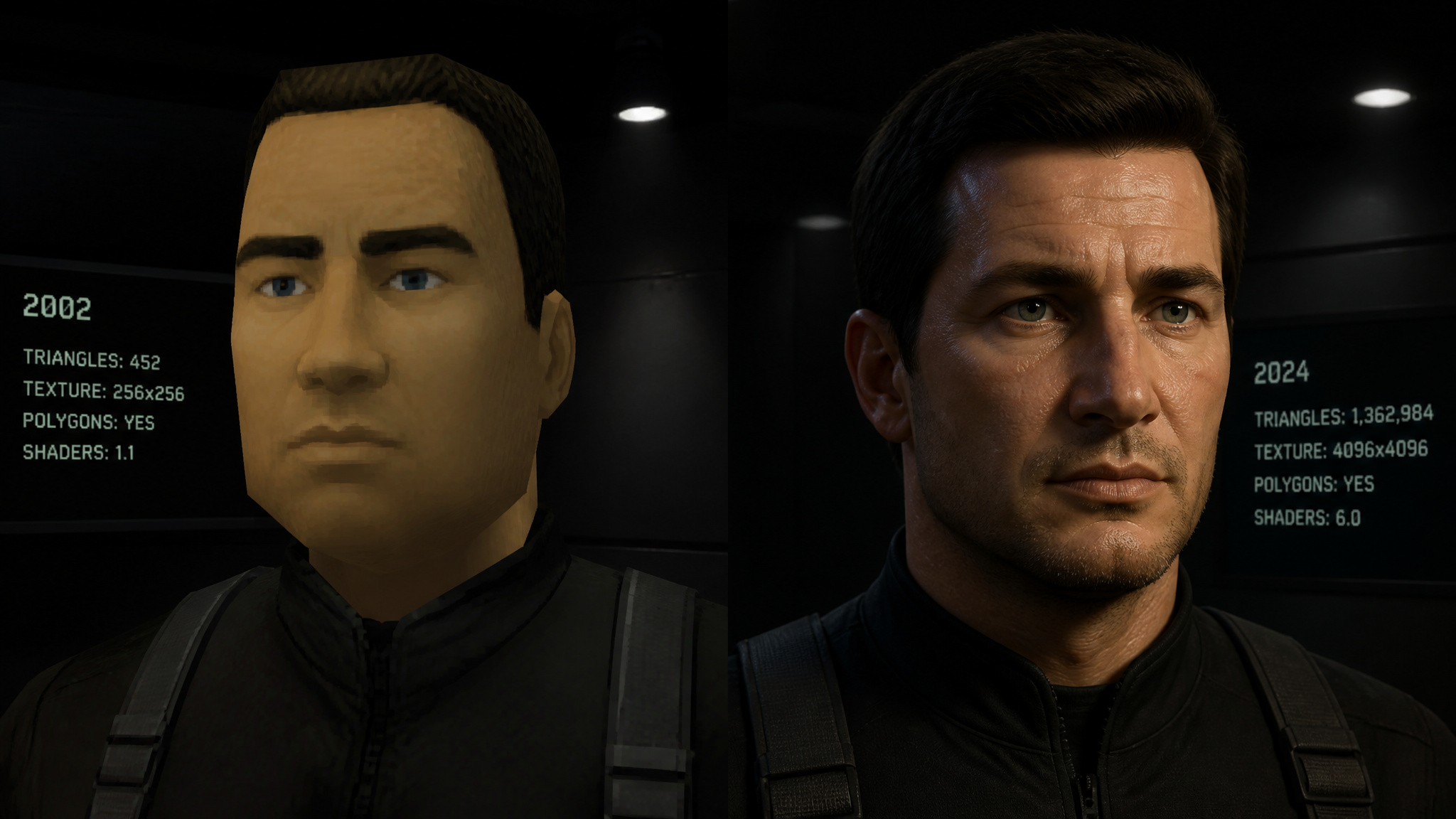
Oblivion’s potato faces go photoreal
The Elder Scrolls IV: Oblivion Remastered demo showed dated character models, the kind the community affectionately calls potato faces, and DLSS 5 transformed them into photorealistic visages. Skin caught light, features had definition, and the whole thing read as real in a way the original model never could. I’ve watched a lot of “before and after” rendering demos in my time, and this one made me lean into the screen.
Assassin’s Creed Shadows came next, and its forests looked indistinguishable from real-world photography. The variety in the foliage and the rocks made the landscapes read like photos, not renders. Hogwarts Legacy was shown too.
Not a filter: rocks, trees, water, and characters
Here’s the observation that matters most: this is not a simple face filter. I watched DLSS 5 add photorealism to rocks, trees, water, and characters. Whatever it touches, it re-lights and re-materials based on the actual 3D model underneath, and NVIDIA confirmed it preserves the game models before enhancing them.
The demo was raw and unoptimized, the kind of early build you normally don’t read too much into. But it still surprised me more than once, and it left me asking a question I didn’t expect: is this the next real leap?
The cost of amazing: two GPUs and a $1,999 price tag
The demo ran on two GeForce RTX 5090s. One card rendered the game, the other handled the neural effects, and each card starts at $1,999. That’s roughly a $4,000 setup to show off a feature.
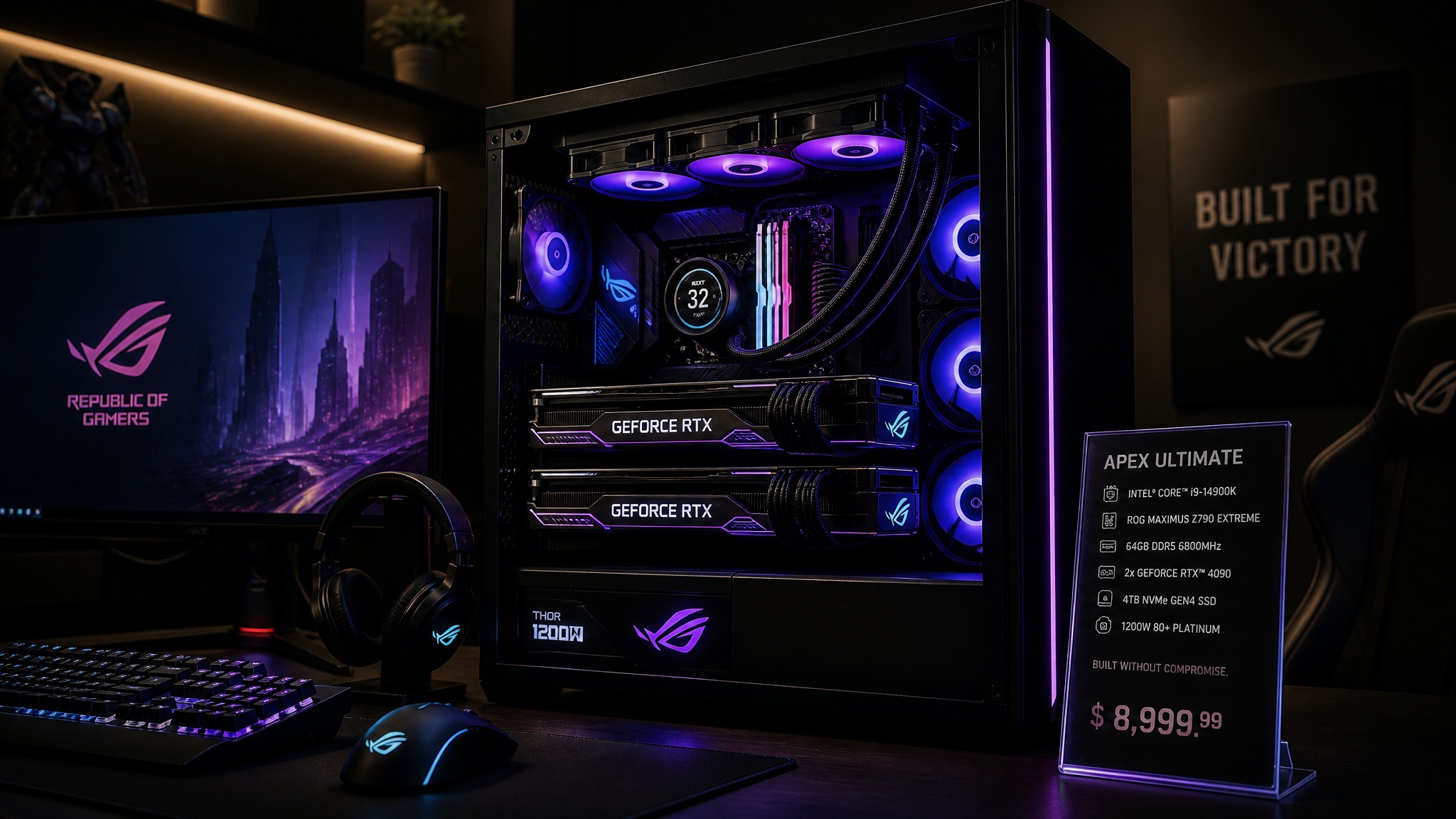
Why the demo needed two GeForce RTX 5090s
NVIDIA is explicit that the target is single-GPU performance, and it’s worth repeating that this was raw, unoptimized code. But the two-card setup is a real signal about where the cost lives right now. DLSS was born to boost frame rates on weaker hardware, and whether 4K is worth it hinges on the same trade-off. DLSS 5’s headline demo demanded the most expensive consumer GPUs ever sold. That irony wasn’t lost on anyone in the room.
It’s also worth connecting the dots here: the PC market is dealing with an AI-driven memory shortage that’s inflating GPU prices. That’s separate from DLSS 5 itself, but it gates who gets to see this tech at launch. I waited outside Best Buy during the pandemic-era RTX 3000 shortage, so I know supply crunches shape who ends up with the good stuff.
Whether the two-GPU setup is permanent or a stepping stone remains open. It might preview a future where neural rendering becomes its own compute task, the way sound cards were separate hardware before they got integrated into motherboards. That’s speculation on my part, not something NVIDIA has said. And one practical unknown: NVIDIA hasn’t confirmed whether RTX 30- or 40-series cards will even support DLSS 5, though how long gaming PCs last often hinges on such features being viable across multiple generations.
Bottom line: The two-card demo is a signal about current cost, not the final architecture — but it means the wow factor at launch lands with a wealthy minority.
What the memory shortage means for who gets DLSS 5
The combination of price and scarcity means the wow factor at launch lands with a wealthy minority. That could change as optimization improves and prices settle, but it’s the honest state of things this fall.
The controversy: AI slop or artistic tool?
The fight is over who owns the final image: the artist who made it, or the AI that makes it photoreal. It’s a legitimate question, and it’s exactly why Jensen Huang found himself publicly defending his own feature.
Why critics called it an Instagram filter
The backlash came fast. Critics called DLSS 5 an “Instagram-like filter” and an “AI slop generator,” arguing it overrides the original vision of the artists who designed the characters and environments. When a dated Oblivion face suddenly looks photoreal, the worry is that the AI is rewriting the art, not preserving it. The potato-face moment worked almost too well for its detractors.
NVIDIA’s answer: intensity, color grading, and masking
NVIDIA’s counter is that it preserves game models and hands developers controls for intensity, color grading, and masking. In other words, artists decide where and how strongly the enhancements apply. Huang described DLSS 5 as a “GPT moment for graphics,” framing it as blending handcrafted rendering with generative AI.
Bethesda, the studio behind the Oblivion demo, followed up with its own clarification: the lighting shown was an early look, their art teams will adjust the final effects under artists’ control, and players will be able to turn it off. That’s a studio actively managing expectations on its own marquee feature.
Here’s the contrarian observation worth making: the backlash may prove the feature works. The demo did exactly what NVIDIA promised. The argument isn’t about capability. It’s about taste and authorship, and those are worth arguing about.
There’s also an open question that deserves air: if AI alters how a classic like Oblivion looks, does it change the historical record of how the game was originally made? I don’t have an answer, and I’m not sure NVIDIA does either.
Who’s got DLSS 5 onboard
The confirmed publishers are Bethesda, CAPCOM, Hotta Studio, NetEase, NCSOFT, S-GAME, Tencent, Ubisoft, and Warner Bros. Games. The headline games include Starfield, Resident Evil, Assassin’s Creed Shadows, Hogwarts Legacy, and The Elder Scrolls IV: Oblivion Remastered. The strongest endorsement on the board is Todd Howard calling DLSS 5 “amazing” for Starfield, with Bethesda intending to bring it to Starfield and future titles, citing a history with NVIDIA that goes back to Morrowind.
Todd Howard on Starfield
That Starfield endorsement matters both because of Howard’s track record and because Starfield is the kind of wide-open game where a lighting and materials overhaul will be most visible.
CAPCOM’s Resident Evil and Ubisoft’s Assassin’s Creed
CAPCOM’s Jun Takeuchi is on board for Resident Evil, pushing visual fidelity in a horror series that lives and dies by atmosphere. And Ubisoft’s Charlie Guillemot, whose Vantage studio is working on Assassin’s Creed Shadows, put it this way: “The way it renders lighting, materials and characters changes what we can promise to players. On Assassin’s Creed Shadows, it’s letting us build the kind of worlds we’ve always wanted to.”
The full roster of supported games
Beyond the big names, the support list also includes AION 2, Black State, CINDER CITY, Delta Force, Justice, NARAKA: BLADEPOINT, NTE: Neverness to Everness, Phantom Blade Zero, Sea of Remnants, and Where Winds Meet. That’s a global roster, from Korean and Chinese studios to the usual Western suspects.
The noteworthy thing under all the enthusiasm is the hedging. Even Bethesda, the most enthusiastic partner, walked back expectations publicly. The backing is real and broad, but the studios doing the backing are carefully leaving themselves room to tune the final result. That’s context, not criticism.
The platform divide: Nvidia-only and the console question
DLSS 5 is Nvidia-specific, full stop. AMD users will rely on FSR, NVIDIA’s rival upscaling tech, and that’s a bigger deal than it sounds. The divide could widen further with the PS6, which is expected to use AMD hardware, potentially leaving next-gen consoles without DLSS 5.
AMD users get FSR
The practical result is a two-tier visual experience. Nvidia owners get photorealistic characters and environments; everyone else gets the original render. This is a bigger divide than resolution or frame rate, because it changes how the same game fundamentally looks on different hardware.
To match it, AMD would need a neural rendering model trained on scene semantics and anchored to 3D content, which is a different kind of approach than FSR’s current one. I’m not claiming FSR is worse here, only that it’s a different approach in kind, not just degree.
Why next-gen consoles are unlikely to get DLSS 5
Both the next Xbox, codenamed Project Helix, and the PS6 are built around AMD hardware. That makes DLSS 5 on those consoles unlikely, though I should be clear that’s an inference from the AMD partnerships, not a confirmed fact. The console question matters because more players will experience the next generation on those machines than on high-end gaming PCs, and they’d be missing the marquee feature of the generation.
When DLSS 5 arrives and whether the wait is worth it
DLSS 5 arrives in fall 2025, following about three years of development. The demo I saw was raw and unoptimized, so the launch question is whether NVIDIA can get this onto a single GPU without wrecking frame rates. Everything else, the controversy included, is downstream of that.
For anyone weighing a GPU purchase, the honest advice is to wait for real benchmarks before committing. The rest of us can watch two open questions resolve: whether single-GPU performance holds up, and whether the final games ship with the artistic control NVIDIA promises.
The promise is real, and I saw it. The reaction is real, and plenty of it is earned skepticism about taste and authorship. The remaining doubt is execution, which is exactly where a fall launch will settle it. DLSS 5 earns the hype, but it hasn’t earned your money yet.
Frequently Asked Questions
Why are people angry at DLSS 5?
Critics call DLSS 5 an ‘Instagram-like filter’ or ‘AI slop generator,’ arguing it overrides the original artistic vision by making dated characters and environments photoreal. The controversy centers on who owns the final image—the artist or the AI—and whether the tech rewrites rather than preserves the original art.
What is the controversy surrounding DLSS 5?
The controversy is about authorship and taste: critics argue DLSS 5’s AI rewrites the original art, while NVIDIA says it preserves game models and gives developers controls for intensity, color grading, and masking. The backlash may actually prove the feature works, but it raises questions about whether altering classics like Oblivion changes the historical record.
What is DLSS 5 and how does it work?
DLSS 5 is NVIDIA’s next-generation neural rendering technology that uses an AI model trained on scene semantics—characters, hair, fabric, skin, and lighting—to re-render surfaces in real time. It reads each frame’s color and motion vectors, then adds photoreal lighting and materials that match the game’s 3D geometry, going beyond upscaling to enhance the actual image.
Is DLSS 5 worth it?
The promise is real—the demo showed photorealistic transformations of characters and environments—but the cost is steep: the demo required two RTX 5090s at $1,999 each. NVIDIA targets single-GPU performance, but until real benchmarks and final games ship, it’s wise to wait before spending money.
