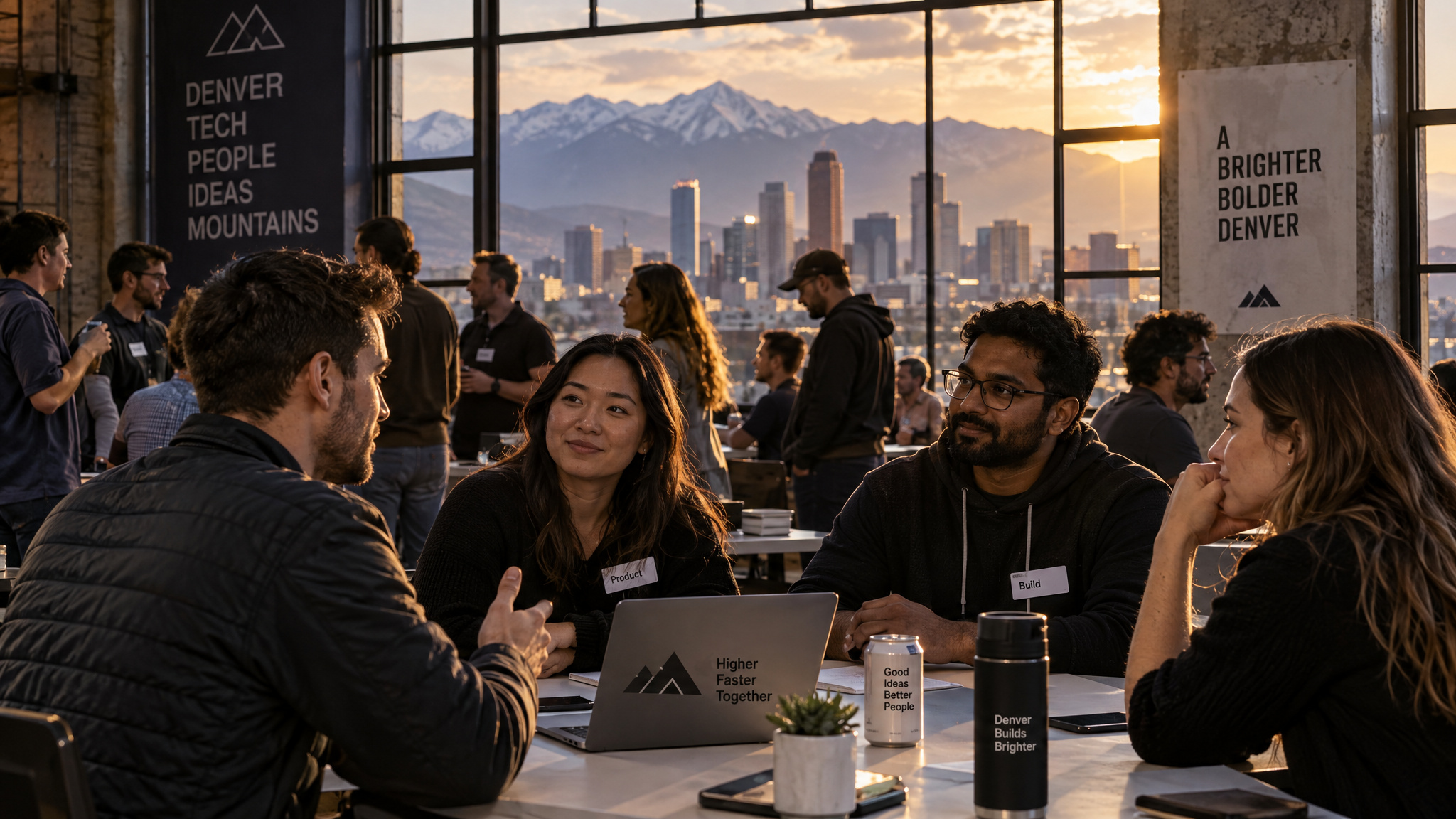
I was in Denver a few weeks ago and dropped into a local tech meetup just to see how the room felt in person. If you read GeekExtreme regularly, you know our reflex is to bypass the glossy relocation brochures and look at the actual wiring underneath. I talked with a ton of attendees that night. We traded notes on shipping products and debugging stacks, and then I spent a good chunk of time talking with one fellow who was having a heck of a time finding a good personal injury attorney after getting hurt at work.
Nobody in that circle was workshopping a rehearsed elevator pitch or reciting talking points about a mountain utopia. Builders stood around folding tables with drinks in hand, trading advice on software architecture right alongside tips for that frustrating legal search.
That practical, unvarnished exchange is the real operating system of the Denver tech scene. Most outsider roundups treat Colorado like a static directory of corporate campuses, or they pretend every local startup is riding an endless wave of easy money. Walk into the rooms where people actually gather, though, and you find an ecosystem held together by recurring neighborhood meetups, warehouse coding nights, and founder dinners designed to keep people from burning out in isolation. Engineers here also build physical hardware under brutal real-world constraints: Ursa Major’s rocket engines get test-fired about 200 yards from the desks where they were designed, and Urban Sky’s reusable stratospheric balloons launch out of ordinary parking spots.
Looking under the hood also means reading the honest ledger of wins and losses. The local tech workforce grew 11% between 2021 and 2023, and homegrown angel groups and exited founders are writing checks so young companies no longer have to pack up for the coasts. At the same time, venture capital dollars in Colorado and across the country have been cut by more than half since their 2022 peak, Techstars closed its longtime Boulder program, and $40 billion software giant Palantir reportedly packed up its Denver headquarters for Miami. You can’t understand how this place works without looking at both sides of that board.
Key Takeaways
Colorado’s tech workforce grew 11% between 2021 and 2023 while tech-related businesses jumped 24.3%, even as statewide venture capital funding fell by more than half from its 2022 peak.
The ecosystem runs on a two-city division of labor separated by a 45-minute drive, pairing Boulder startups and research density with Denver’s enterprise scale, local angel networks like the 850-member Denver Ventures, and deep-tech builders such as Ursa Major and Urban Sky.
High-profile departures including Techstars ending its original Boulder program on June 6, 2024 and Palantir’s reported headquarters move to Miami have pushed local leaders to rebuild around community-backed funding, quantum computing, and recurring in-person gatherings.
Table of Contents
Denver tech scene by the numbers
The Denver tech scene is Colorado’s primary software, deep-tech, and startup hub, pairing rapid workforce and business expansion with a sharp post-2022 contraction in outside venture capital. While local tech employment and company formation outpaced the broader state economy between 2021 and 2023, total venture funding fell by more than half from its 2022 peak, forcing a shift toward Colorado-based investors. According to a Colorado Technology Association report, tech workers in the state grew 11% between 2021 and 2023 compared to 6.1% for the overall workforce, and PitchBook data shows Colorado ranked 12th nationally in venture capital invested last year even as local venture investor counts climbed 168% over 15 years to reach 99.
The people packing into that meetup room a few weeks ago sit inside a labor market that kept adding headcount even while national checkbooks tightened. The trick to reading this ecosystem’s health is keeping headcount growth and venture deal volume separate:
- Share of state employment: Roughly 10% of Colorado’s entire workforce holds a technology job, per the Colorado Technology Association.
- Business formation pace: Tech-related businesses in Colorado grew 24.3% between 2021 and 2023, double the growth rate of businesses across the overall state economy.
- City-level job creation: Denver added roughly 39,000 jobs recently, pushing local employment growth 1.2% above the national average.
- Venture capital contraction: Both U.S. and Colorado venture capital totals were cut by more than half in the two years following the 2022 peak, according to PitchBook.
- Monthly deal flow: Deals still clear the bar regularly; Built In Colorado reported that Colorado companies pulled in over $40 million in venture funding in March alone.
- Local investor expansion: Having 99 Colorado-based venture investors on the ground after that 168% fifteen-year climb means early-stage teams face a different local funding landscape than they did a decade ago, setting up a homegrown capital shift that cushions the pullback from coastal funds.
The Denver-Boulder tech corridor
The Denver Tech Center (DTC) is an enterprise hub south of downtown Denver that hosts major employers like DISH Network, Comcast, and RE/MAX, complementing the broader Denver-Boulder tech corridor. Rather than acting as a single merged city, the regional network splits startup mentorship, enterprise scale, and capital across Denver, Boulder, and Colorado Springs. Founders and developers choose between Boulder’s dense startup mentorship and university research pipeline and Denver’s larger employer base and investor pool, separated by a real highway commute of about 45 minutes (and longer in traffic) that keeps the two developer circles distinct.
That two-city partnership sits at the center of Episode 1 (“The New Gold Rush”) of PBS12’s five-part STREET LEVEL STARTUPS series, hosted by Katie O’Block and produced by Richard Taylor, which examines Colorado startup history alongside investment tips from University of Colorado law professor Brad Bernthal. Boulder startups carry the founder-mentor lineage of Brad Feld, Techstars, and Foundry Group alongside builders like consumer robotics maker Sphero, security firm LogRhythm, and kids’ coding company Bitsbox, while Colorado Springs adds companies like FoodMaven.
Denver tech meetups and networking events
Denver tech meetups and networking events run through recurring neighborhood gatherings in the River North Art District (RiNo), campus workshops on Platt Street, and an annual August conference. Newcomers and local engineers plug into the community by picking groups organized around specific programming languages, artificial intelligence demos, or daily coworking schedules. Monthly coding groups anchor the calendar at RiNo offices like Code Talent at 34th and Blake and Cuttlesoft at 33rd and Lawrence, while the monthly AI Builders Meetup draws more than 600 attendees, a turnout cited by Denver Startup Week co-founder and former Colorado Technology Association CEO Erik Mitisek.
Developer meetups: DenverScript, PyDENCO, and Develop Denver
- DenverScript: A monthly JavaScript meetup hosted at Code Talent at 34th and Blake in RiNo.
- PyDENCO: A smaller monthly Python group that gathers a block away at Cuttlesoft at 33rd and Lawrence.
- Develop Denver: A two-day annual conference held every August, with past sessions covering “What Is a Graph Database?”, “Mind the Gap: Improving Diversity in Tech”, and “Saying No to Your Boss’ Bad Design Ideas”.
AI Builders, Galvanize, and General Assembly
- AI Builders Meetup: Pulls 600-plus people a month to test and discuss new AI tooling.
- General Assembly: Runs free events on coding, data, business, and marketing, mostly out of Industry RiNo Station.
- Galvanize: Hosts daily web development, data science, and community events at its Platt Street Denver campus, and produced two entrepreneurship interview series airing Thursdays at 9:00 p.m. on PBS12.
These rooms run on the same unfiltered peer support I saw at that meetup a few weeks ago, where the conversation swung straight from code to finding a workplace-injury lawyer.
How the Denver tech scene rebuilt after COVID
During the COVID-19 pandemic, in-person tech gatherings across Colorado dropped to almost zero before organizations chiseled their way back year by year, as Erik Mitisek noted in reporting by The Colorado Sun‘s Tamara Chuang and Jeremy Sparig. To fix how remote work “takes the place out of place” even when Boulder likely holds as many or more entrepreneurs than ever, Gnip co-founder Eric Marcoullier (whose past startups were acquired by Twitter, Yahoo, and News Corp) launched monthly Thunderview CEO Dinners in March 2023 at spots like Mercury Cafe and The Pearl, paired with Monday office hours at Boulder’s Rayback Collective and Fridays at Denver’s Union Station.
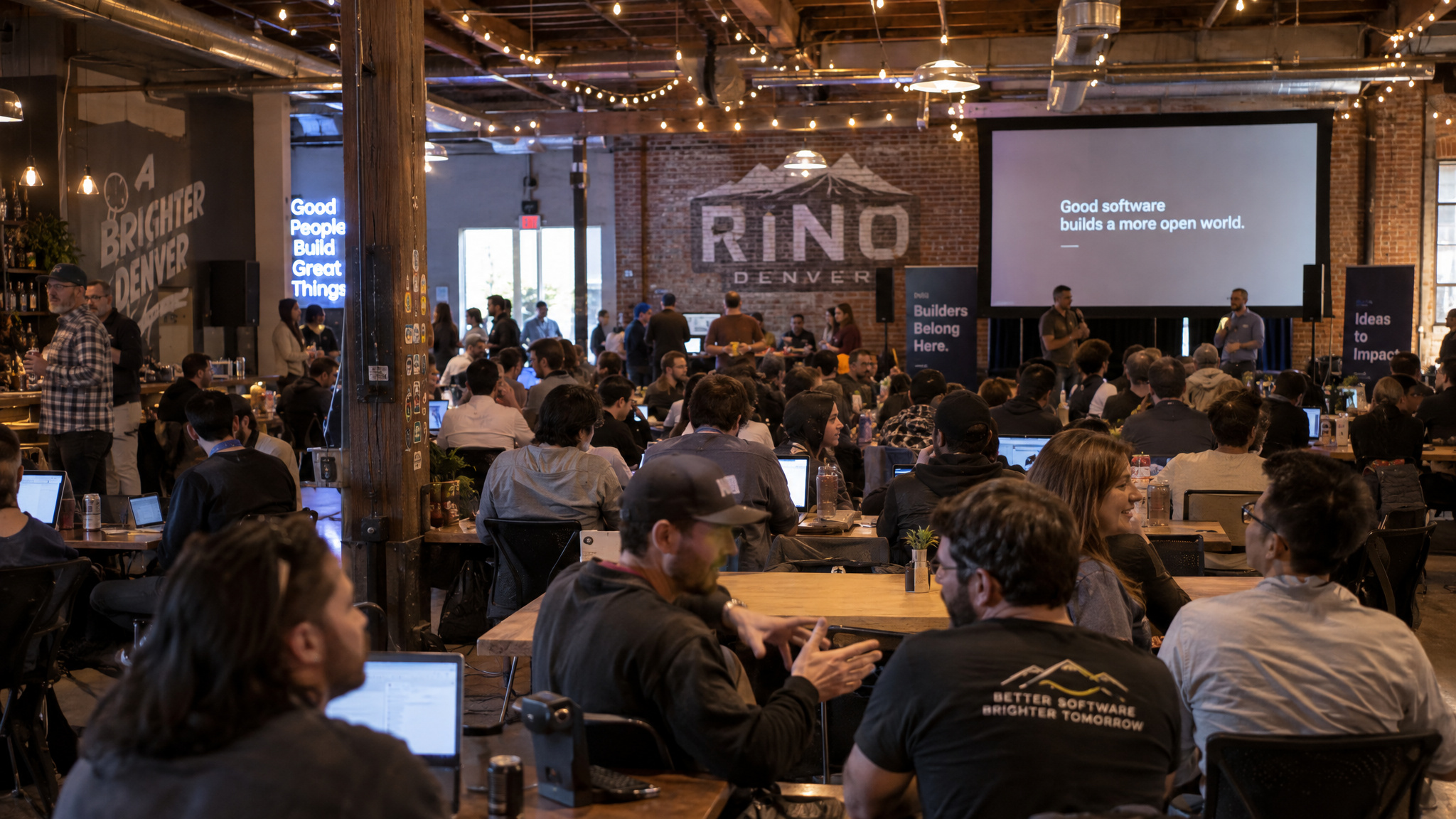
Vibe coding at ID345: the Turdminator demo
At one Thunderview dinner with about three dozen participants, Danny Newman, who sold Roximity, runs Switchboard, and turned a RiNo warehouse into the ID345 coworking space for biweekly vibe coding meetups, ran a live crowdsource-to-product session. Using OpenAI o3, Anthropic’s Claude, Lovable, and Manus, he built The Turdminator, an on-demand pet-waste pickup service, within an hour before dessert arrived, beating out crowd pitches for Uber for helper monkeys and an Amazon tariff price tracker.
The AI caution from inside the room
Ala Stolpnik, an ex-Googler who moved to Boulder three years ago and founded AI startup Wisary, drove down about a half-dozen times for the “electric” dinners because they ease CEO and co-founder loneliness. Still, she warned that AI tools won’t replace engineers anytime soon, since real companies require customer feedback, user data protection, and serious security architecture.
Denver startup origin stories
PBS12’s STREET LEVEL STARTUPS frames Colorado’s startup wave as a continuation of the state’s gold-rush heritage of risk-taking, showing how weekend hackathons turn into full-stack companies.
Norma and Parsyl: founding at a Startup Weekend
In Episode 2, produced by Emily Swank of Fanny Pack Films, co-founders Lauryn, Rachel, and Sienna met at Techstars Startup Weekend Women in Denver, spotted a femtech gap, and built Norma (“know your normal”), a breast-health mobile app and IoT device. The episode also profiles Parsyl (Ben Hubbard, Rebecca Kinney, Alex Haar, and Souleymane Sawadago), which built a sensing device, mobile app, and web platform to insure sensitive cargo and partnered with Gavi, The Vaccine Alliance, to track vaccine shipments into rural Uganda and Senegal.
The three phases of a Denver startup
Episode 3 (“Three Phases of a Startup”), produced by Gary Stebbins of Ruby Hill Broadcast and Video, traces the arc from Phase 1 inspiration at Denver’s Guild Education (CEO Rachel Carlson) and Colorado Springs’ FoodMaven (CEO Patrick Bultema), through Phase 2 business growth, to Phase 3 liquidity events via Boulder’s LogRhythm (profiling Andy Grolnick, contact Tyne Darke).
From Sphero to Bitsbox: the range beyond software
In Episode 4 (produced by Tamara Banks), Boulder consumer robotics maker Sphero (Adam Wilson, David Millage, and Jessicca Shaffer) shows how it helped build an iconic character originally designed to teach kids to code, alongside Boulder’s Bitsbox, which teaches coding to kids as young as six. Another episode produced by Brandon Carter of Very Productions profiles first-responder support startup GeoSpiza, water-conservation company Rachio, and personal-styling tech startup Spruce.
Denver’s deep-tech and hardware layer
Colorado’s hardware builders tackle physical engineering limits and regulatory realities that pure software hubs rarely touch, as documented by Bloomberg Originals.

Biofire: the smart gun that needs its own computer
Because facial recognition requires far more processing power than reading a fingerprint, Biofire had to pack a hardened onboard computer inside its sci-fi-styled smart gun, whose final version arrived in April. Founder Kai Kloepfer started the project at age 15 after the Aurora theater shooting near his home, won an Intel International Science and Engineering Fair award with a non-functional prototype, and spent 10 years (now 25) building a firearm that registers users in under a minute. In a demo, a Navy SEAL couldn’t fire it unregistered while a reporter dad test-fired it cleanly. Kloepfer aimed the design at stopping child and teen firearm access after guns surpassed motor vehicle accidents as the leading cause of death for U.S. children and teens in 2020. The project has since drawn anonymous investors, death threats, and heat from pro-gun critics fearing mandates alongside anti-gun critics who oppose gun manufacturing altogether.
Urban Sky: reusable stratospheric balloons
Hating the thousands of pounds of single-use plastic waste in traditional ballooning, ex-World View founders Andrew and Jared built Urban Sky (“the SpaceX of the stratosphere”) around sensor miniaturization. Their reusable balloons carry payloads under six pounds, launch about 10% full from any safe legal parking spot, deflate on command from Mission Control, and have hit a record three reuses on the way toward hundreds. Unlike the 2023 suspected Chinese spy balloon, Urban Sky flies NASA- and Air Force-funded thermal infrared payloads to track wildfires and captures car- and roof-level imagery more cheaply and frequently than satellites without resolving individual people.
Ursa Major: why rocket companies should buy engines, not build them
Noise permits make it impossible in Los Angeles to test rocket engines right beside the factory, so Ursa Major CEO Joe Laurienti co-located development and testing within about 200 yards in a Denver suburb. Selling the sub-$1 million Hadley engine and developing the larger Ripley engine, Ursa Major argues rocket startups and the Air Force shouldn’t spend five years and tens or hundreds of millions of dollars building engines from scratch when even SpaceX outsourced its turbo pump (which endures -300°F to thousands of degrees and 0 to tens of thousands of RPMs) for years and Boeing buys from Pratt & Whitney and Rolls-Royce. The model serves commercial and defense demand across NASA, the Air Force, and the Space Force, including rocket companies recovering from launch failures, rather than mimicking vertically integrated rivals like Blue Origin.
Denver venture capital and the shadow talent market
The gap between Colorado’s halved venture capital totals and its 168% surge in local venture firms explains why young companies that once had to relocate to the coasts for funding rarely leave now.
The venture capital paradox
Veteran founders are recycling big exits directly into deep tech. Dan Caruso, who sold Zayo Group for $8.4 billion plus debt in 2019 and authored Bandwidth, invests through Caruso Ventures, sits on Endeavor Colorado’s board, and backs quantum, AI, and space tech.
Denver Ventures: from 100 members to 850
Rebranded from Denver Angels (founded in 2016), Denver Ventures debuted a $20 million fund, which is less than half the over $40 million in VC funding Colorado companies raised in March. Under CEO David Prichard, the group added about 10 investors a month organically, climbing from roughly 100 members in 2019 to around 850. More than 500 of them actively write checks, and the group holds a $4 million stake in Centennial-based Boom Supersonic.
The ‘shadow talent market’ hiding in remote work
Kirk Holland, managing director at Denver’s Access Venture Partners with nearly 25 years investing in Colorado, coined the term “shadow talent market” for the deep pool of Colorado tech workers employed remotely by out-of-state companies who can be recruited into local startups next.
Denver tech losses: Palantir, Techstars, and the AI bill
Recent corporate exits and legislative battles show the corridor adjusting to real friction rather than coasting on pandemic-era rankings.
Palantir’s move to Miami
Single-source reporting from techbuzz.ai claims that $40 billion enterprise software firm Palantir Technologies moved its headquarters and classified government contract work from Denver to Miami after Mayor Francis Suarez pitched zero state income tax and crypto-friendly rules during the pandemic. Critics note Miami’s thinner talent, university pipeline, and infrastructure, yet the departure still raises real talent-retention questions for Denver engineers.
Techstars leaves Boulder, and the relaunch
Founded in Boulder in 2006, Techstars shut down its Boulder, Seattle, and Austin programs, holding its final Boulder Demo Day on June 6, 2024 at the Boulder Theater. Former Techstars executive and Matchstick Ventures partner Nicole Glaros, who also kicked off a grassroots push for a Denver NWSL franchise, is working with former colleagues to relaunch Boulder Techstars around its original community-funded model of local investors, mentors, and alums.
The state AI bill that galvanized founders
When Colorado lawmakers passed a controversial state AI bill that caught the tech sector off guard, busy founders volunteered for industry committees to push back against rules they warned could harm local businesses.
The generational handoff and GiveFirst
Explaining why the old Boulder accelerator model drifted when outside institutional investors took over, Nicole Glaros pointed out that those distant backers weren’t living in these communities and their kids weren’t going to soccer practice together. That insistence on local roots mirrors the succession plan of Brad Feld, who moved to Boulder in 1995, spent 30 years in Colorado, is about to turn 60, and co-founded Foundry Group and Techstars with David Cohen, David Brown, and Jared Polis.
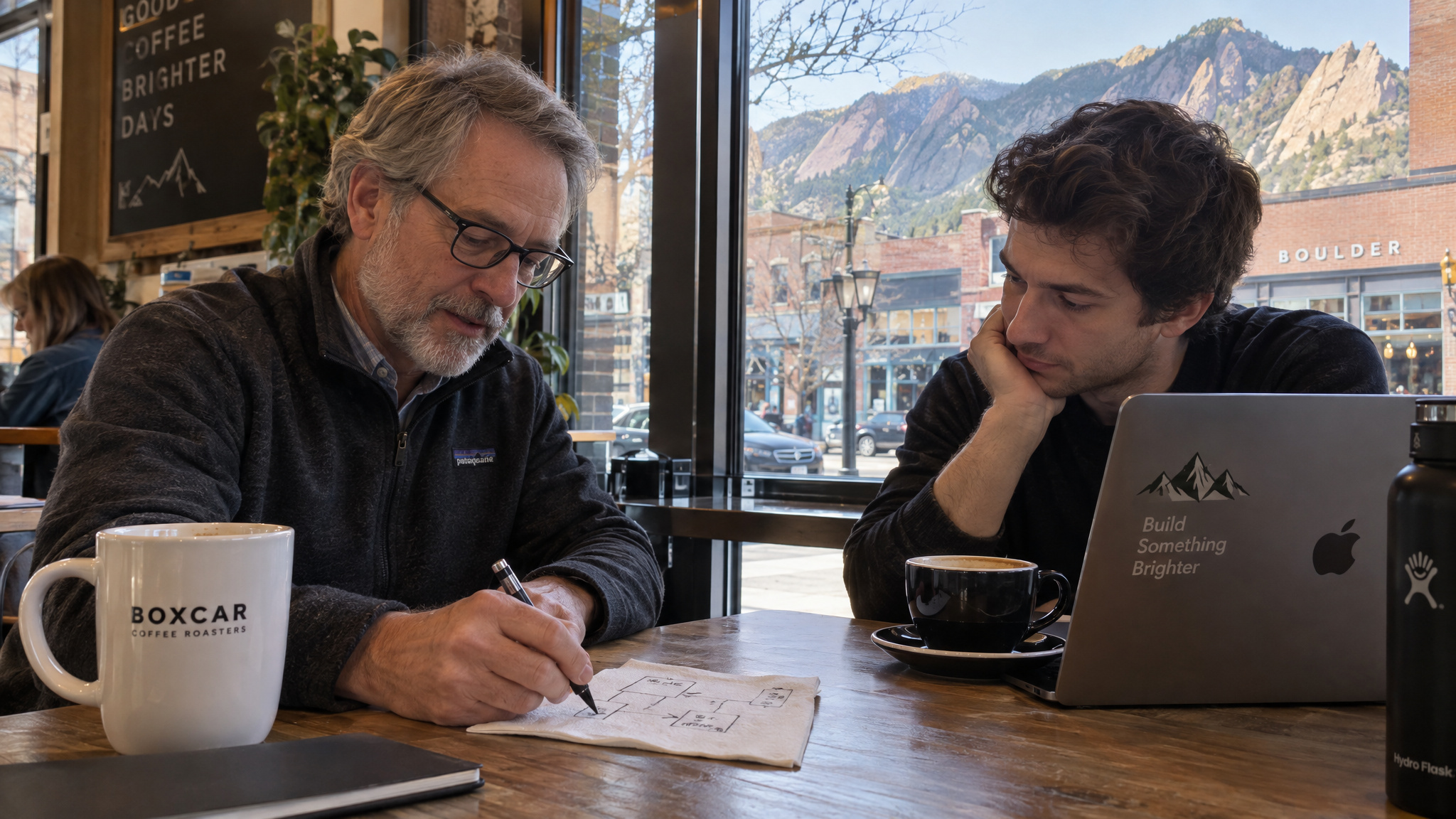
Feld coined “startup communities” and the “Give before you get” (GiveFirst) ethos to build a positive feedback loop rather than charity. After a two-year public hibernation, he re-emerged in April with a new book on GiveFirst, having helped secure Colorado’s quantum hub designation and signed a letter opposing the state AI law. With Foundry having raised its final fund last year, Feld argues communities stay vibrant only when older leaders step aside for next-generation builders who scaled nationally without leaving Colorado, including CEOs Bryan Leach of Ibotta and Lee Mayer of Havenly, alongside newer funds Matchstick Ventures (Natty Zola and Ryan Broshar) and Range Ventures (Chris Erickson and Adam Burrows).
Who the Denver tech scene is for
Across the corridor, inclusion is built into how organizations launch and hire rather than treated as an HR afterthought. In Episode 4 of PBS12’s STREET LEVEL STARTUPS, nonprofit accelerator Sistahpreneurs (profiling Makisha Boothe and Brittney Rae Reese) delivers affordable coaching, training, and services tailored to Black women entrepreneurs, who represent the fastest-growing yet lowest-earning entrepreneur group in the United States. Episode 2 highlights female-owned and -led Bold Betties (profiling Laura Feeney and Niki Koubourlis), which runs women-led outdoor adventure tours across chapters in 40 U.S. cities to strip the intimidation factor out of male-dominated outdoor recreation.
That structural approach shows up inside venture-backed tech teams too. It spans from Norma’s founding team coming together at Techstars Startup Weekend Women in Denver to the shop floor at Ursa Major, where the rocket engine maker maintains a workforce that’s noticeably more gender-balanced than the typical 9-to-1 male skew across the aerospace industry.
Working in Denver tech: jobs, culture, and the relocation question
Working in Denver tech revolves around hybrid downtown offices, remote setups, and local developer job boards rather than one uniform corporate schedule. Engineers weighing a move have to look at each company’s office schedule and a large remote-worker pool, though public reporting doesn’t pin down specific Denver tech salary benchmarks like whether $120,000 is a good salary. On the ground, fintech Homebot (which acquired Quo Finance and brought over co-founders Neel Yerneni and Tucker Haas) brings staff into its LoDo office on Thursdays for catered lunches, a weekly sync, and biweekly “Demos and Drinks,” cloud data platform Matillion (integrating Snowflake, Google BigQuery, and Microsoft Azure Synapse) runs a people-first hybrid downtown office with five volunteering days around values of collaborative, passionate, honorable, and caring, and remote video-streaming company Wowza Media Systems keeps dog-friendly Denver and Berlin offices where Director of Security and Compliance Elizabeth Koehler notes the monthly Women of Wowza meeting won longer maternity leave. Developers hunt roles on Built In Colorado’s daily job board, the #topic-gigs channel on Denver Devs Slack, and coworking hubs like Enterprise Coworking, Industry Denver, Industry RiNo Station, Catalyst Health, Industrious, WeWork, and Battery 621, trading old-Denver clichés like the Buckhorn Exchange for sunshine and trail time.
Where the Denver tech scene is heading
Colorado now holds an official U.S. quantum computing hub designation, backed by Elevate Quantum, which grew from nothing two years ago to tens of thousands of followers. Meanwhile, Boulder just lured the Sundance Film Festival away from Utah. Denver Startup Week (co-founded in 2012) rebranded to Colorado Startup Week in March to tell a statewide story as communities recalibrate after pandemic top-five rankings, and in May, Eric Shu of Access Venture Partners teamed with Boulder’s Massive Capital Partners, building on Endeavor Colorado, launched in September 2019 with events at board members’ homes, for the inaugural Deep Tech Summit on robotics, space tech, and quantum computing. At the end of the Bloomberg Originals feature, after fishing the Big Thompson River with Ursa Major’s Joe Laurienti, Adam Kline of Golden Shoulders sings a closing song about leaving Denver, a lyric the corridor’s builders keep proving wrong.
