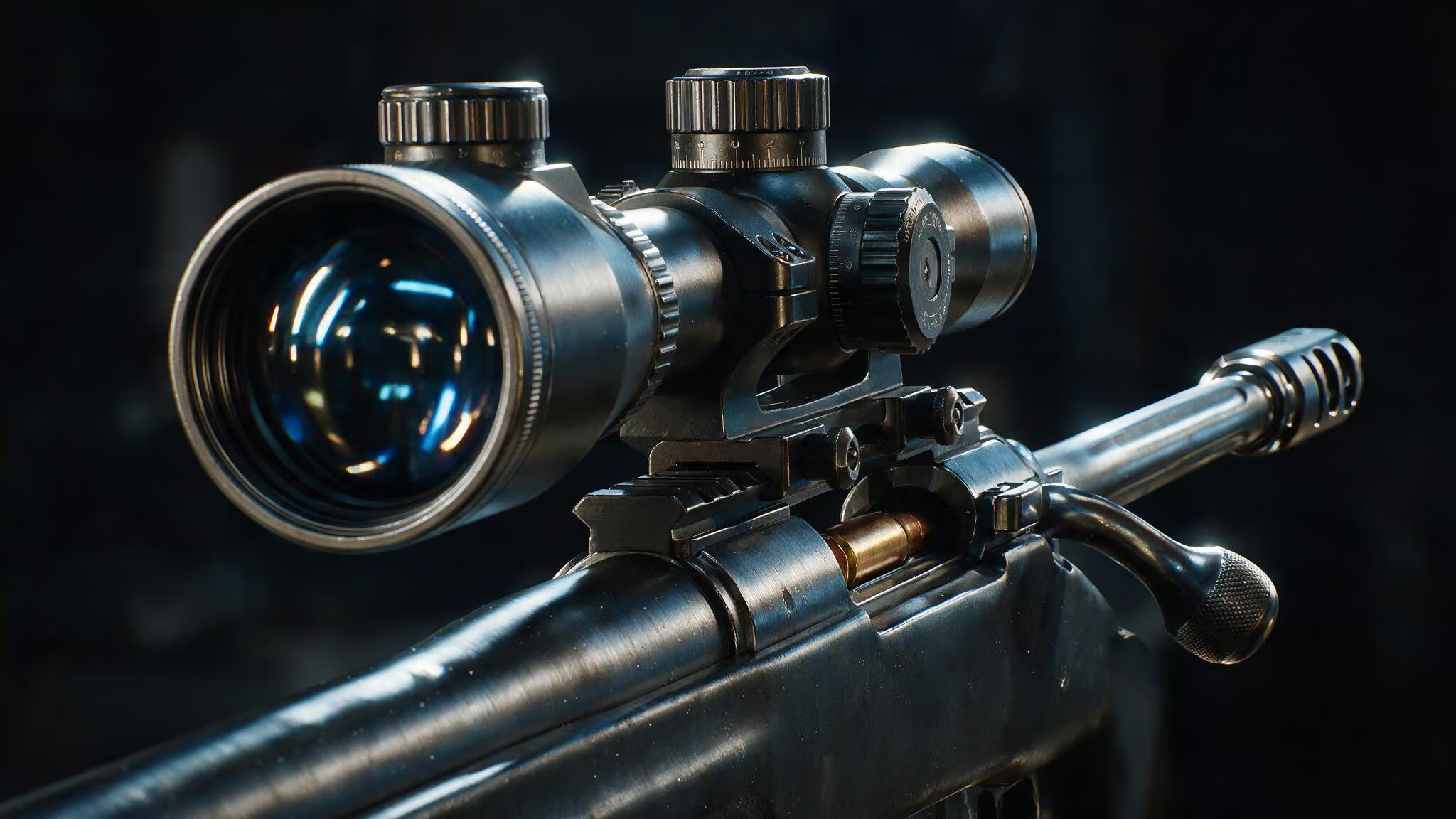
If you’ve played Counter-Strike for more than five minutes, you’ve heard the AWP’s distinct firing sound. That thump-thump-BOOM sound echoing through a corridor. The kill feed lighting up with a single name. The sudden realization that someone on the other team just erased one of your teammates from existence with a single, deliberate click.
The AWP stands as the most recognizable weapon in Counter-Strike history, appearing in every version since 1999, but it’s not overpowered. It’s a weapon defined by tradeoffs, and every patch, every pro roster move, every skin price tag reflects that tension. Let’s dig into the story behind the rifle that’s been terrorizing server browsers since 1999.
Key Takeaways
The AWP kills in one shot to the chest, arms, or head regardless of armor, but leg shots deal only 86 damage and leave a target alive—a critical exception most guides skip
Valve cut the magazine from 10 rounds to 5 in the November 18, 2022 patch, making every shot count and reshaping the entire economy around the weapon
Only four AWPers—ZywOo, m0NESY, sh1ro, and molodoy—rank among the top 20 highest-rated players in Big events in 2026, revealing a structural shortage of elite snipers in professional play
Table of Contents
What Is the Counter-Strike AWP?
OK, so the AWP is based on a real rifle—specifically the Accuracy International Arctic Warfare Police variant. If you look closely at the barrel in CS:GO, there’s a tiny engraving that reads “ACUMEN MULTINATIONAL ENGLAND AKA OAKRIDGE TN.” That tiny text connects the digital model to an actual factory in Tennessee, and it’s the kind of detail that makes this weapon feel grounded even when someone’s slapping a dragon decal on it.
The in-game AWP fires.338 Lapua Magnum rounds, which explains its one-shot kill capability to the chest, arms, or head. It’s a bolt-action sniper rifle available to both teams, and it’s appeared across Valve’s entire library: the Magnum Sniper Rifle in CS 1.6, the AWSM in Left 4 Dead 2, and the AWPer Hand in Team Fortress 2 (which was actually a pre-order bonus for Global Offensive). It’s not just a Counter-Strike weapon—it’s a Valve weapon, reused and reimagined across multiple franchises.
But what makes it the AWP—the one players argue about on forums, build strategies around, and spend hundreds of dollars on skins for—is the mechanical identity it carries. One shot, one kill to the chest, arms, or head regardless of armor. Provided you actually hit the shot.
AWP Stats and Mechanics
The AWP’s stats define its role as a high-risk, high-reward sniper rifle. Understanding its damage profile, movement penalties, and magazine constraints is essential to mastering the weapon.
One-Shot Kill Zones and Damage Profile
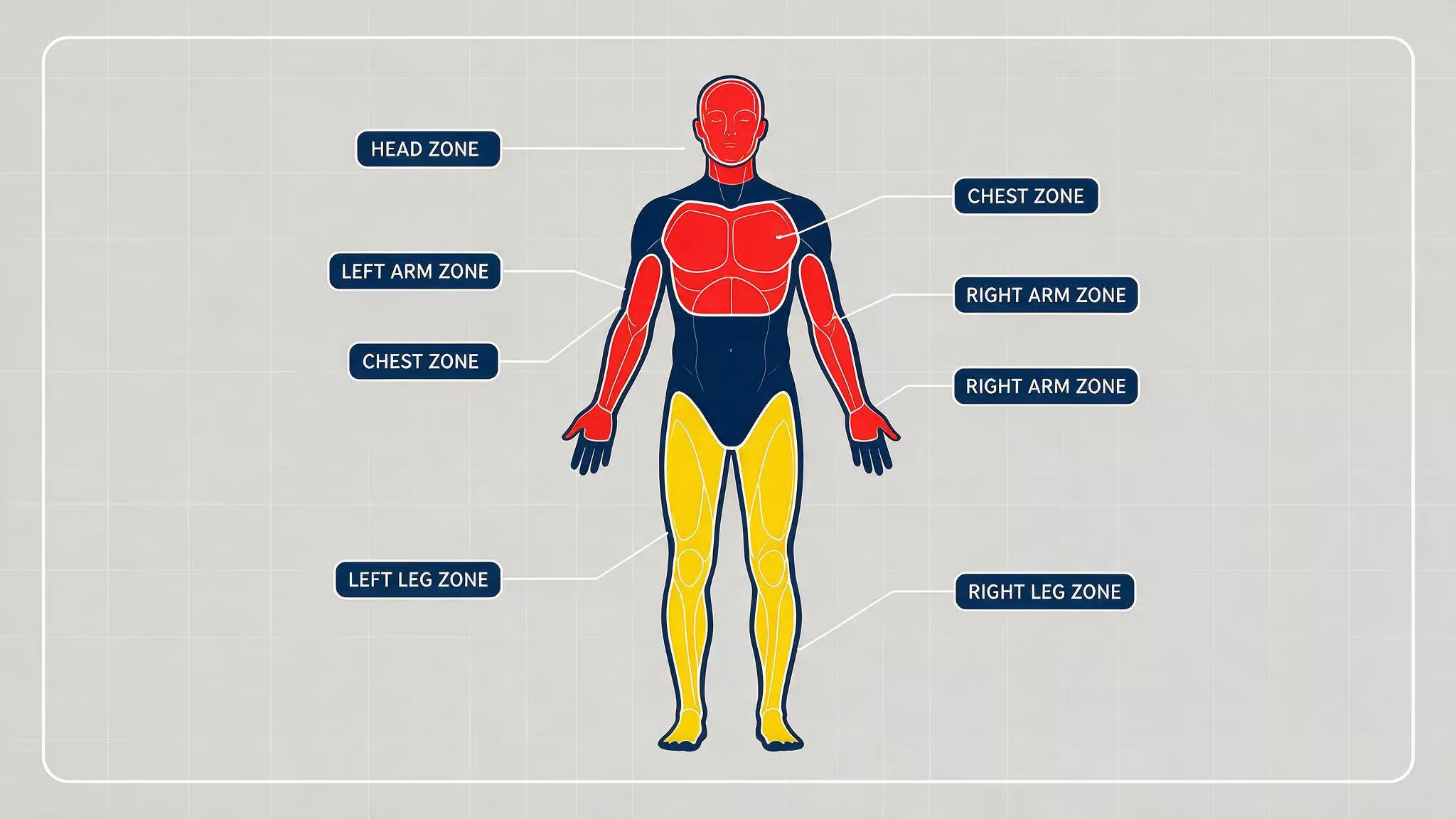
Here’s the part everyone knows: the AWP kills with one hit to the chest, arms, or head, armor or not. That’s the promise, and it’s what makes people scream “OP” when they get picked from across the map.
But there are three exceptions that most players don’t think about until they’re on the wrong end of them. First: leg shots. A bullet to the leg does 86 damage. That’s not lethal.
You’ve probably been that person who shot an enemy in the shin and watched them hobble away. Second: the VIP in Assassination mode absorbs 200 damage worth of armor and survives a body shot. Third: the Lab Rat in Danger Zone has 120 HP and also survives one body shot. Headshots still kill both instantly, but these edge cases matter in specific modes.
The leg shot exception matters because leg shots deal only 86 damage and leave a target alive. It’s the difference between a clean pick and a wounded enemy calling out your position.
Magazine, Reload, and Fire Rate Across Game Versions
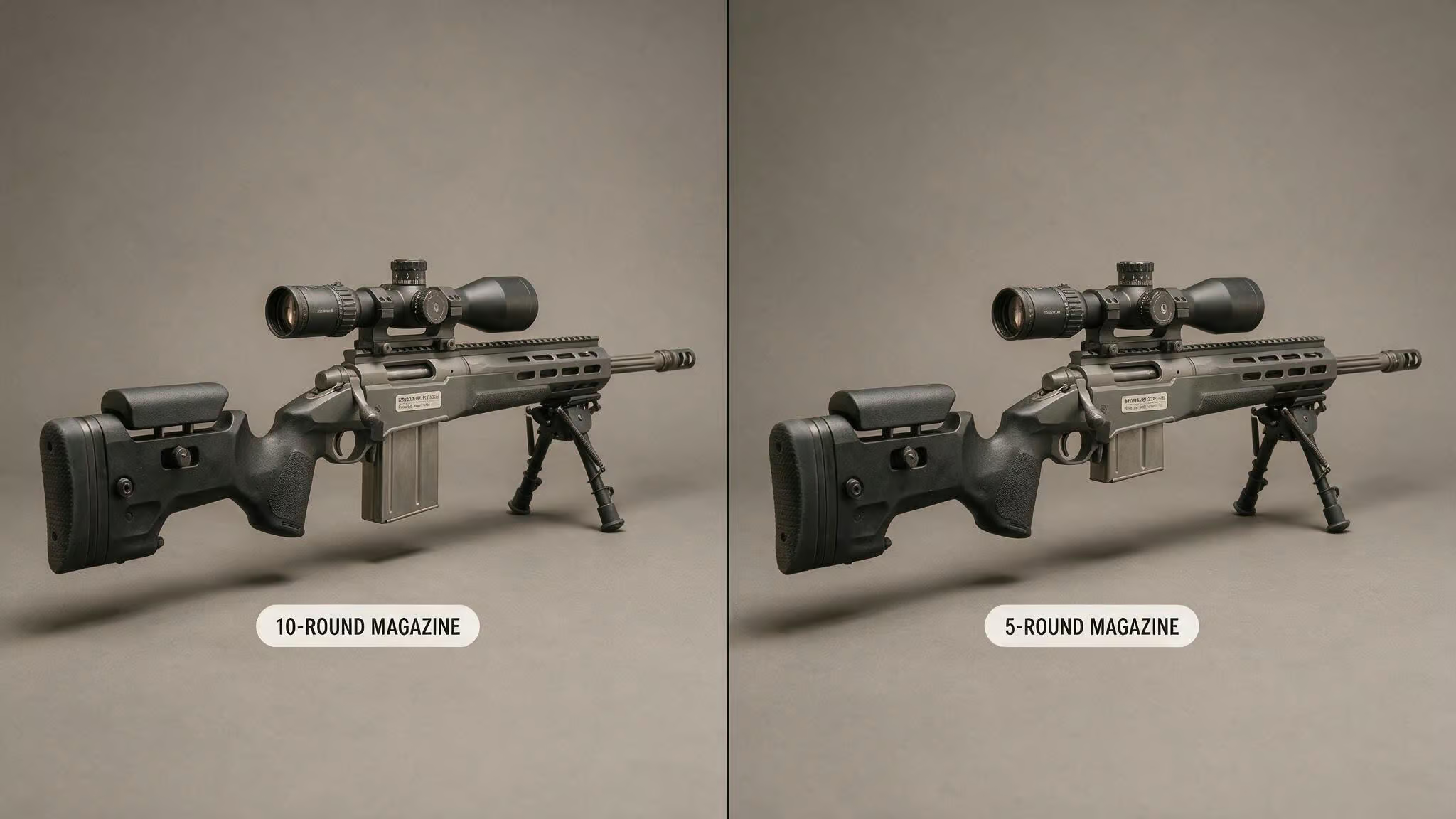
The AWP’s magazine and reload stats have shifted across Counter-Strike versions: 10 rounds in CS 1.6, Condition Zero, and Source; 5 rounds in CS:GO and CS2, and those changes tell a story about how Valve thinks the weapon should work.
In CS 1.6, Condition Zero, and Source, the AWP carried 10 rounds. Reload took about 2.5 seconds. The kill reward was $300. The weapon carried 10 rounds—you could miss a few shots, cycle through, and still have plenty of ammo to work with.
Then came Global Offensive. The magazine stayed at 10 rounds initially, but the reload stretched to 3.7 seconds. The kill reward dropped to $50 before being bumped to $100 in January 2013. And then, on November 18, 2022, Valve cut the magazine from 10 to 5 rounds.
This was the most consequential balance change to the AWP in the game’s history. It forced every shot to count, changed how teams manage economy around the weapon, and made the 5-round magazine the defining constraint of modern AWP play.
That $100 kill reward? You need 48 kills with the AWP to break even on its $4,750 price tag. Most players never get 48 AWP kills in a single match. Economically, the AWP is a bet, not an investment.
Movement Penalties, Scope Blur, and the 0.3-Second Rule
The AWP’s movement profile—200 HU/s unscoped, 100 HU/s scoped—is where the tradeoffs really bite. Unscoped, you move at 200 hammer units per second. Scope in, and that drops to 100 HU/s. You move at 100 HU/s scoped and your firing sound is extremely loud and distinct, making you a slow, loud target.
The scope blur mechanic—introduced specifically in CS:GO—takes about a second to clear after you scope in; an immediate shot is highly inaccurate. Fire during that blur window and your shot’s wildly inaccurate. Then there’s the 0.3-second stationary delay: you must be standing still for roughly 300 milliseconds before your scoped shot will land precisely. This is the most overlooked mechanic in AWP gameplay.
It’s not about twitch aim. It’s about patience, positioning, and knowing exactly when you’re stable enough to fire.
And then there’s the deploy animation. Set to 1.25 seconds in August 2012, that’s how long it takes to pull the AWP out and get it ready. The sound signature gives away your position immediately. Everyone on the server knows you’re holding an angle.
These are design choices—scope blur, 0.3-second delay, 1.25-second deploy—that preserve the skill gap. The AWP rewards discipline, not reflexes.
AWP Balance History
Valve has adjusted the AWP across multiple patches, each change reflecting a deliberate design philosophy. These updates have shaped how the weapon is used in competitive play.
Major Balance Patches and Design Philosophy
Valve has been tweaking the AWP since 1999, and the pattern is clear: make the weapon harder to use while preserving its one-shot kill. Every change reinforces the idea that the AWP should be a high-skill weapon, not a crutch.
The scope blur in CS:GO was introduced specifically to prevent quick-scoping, as the blur makes immediate shots highly inaccurate. The deploy animation got locked at 1.25 seconds in August 2012. Scoped movement speed was lowered to 100 HU/s in March 2015. The magazine cut from 10 to 5 in November 2022 was controversial because it directly limits how many kills you can get in a single engagement. The reload was refactored in March 2026 to discard remaining ammo when you reload before the magazine is empty—another nudge toward careful shot economy.
The crouching acceleration fix in February 2020 resolved a hidden inconsistency where movement spiked after firing. Most players felt it but couldn’t name it. That’s the kind of patch Valve does: invisible to everyone except the people who spend thousands of hours with the weapon.
Less-Known Fixes and Visual Improvements
Not every change is about balance. Some patches are about feel. The scope blur was adjusted in October 2016 to blur less when double-scoped. Sound fidelity was improved in September 2016 so gunshot tails spread naturally through the environment.
The magazine drop animation was added in July 2016. Deploy animations got improved in August 2025. The viewmodel was fixed in February 2015.
These are polish changes. They don’t shift the meta, but they affect how the weapon feels in your hands. And in a game where muscle memory matters, feel is everything.
How to Use the AWP Effectively
Mastering the AWP requires positioning, patience, and smart habits—not just good aim. The following tips cover the key techniques for getting the most out of the rifle.
Aim for the Chest, Not the Head
The chest is a bigger target and still kills in one shot to the chest, arms, or head regardless of armor. Only aim for the head when the enemy is behind cover with only their head exposed. Watch lower-ranked AWP gameplay and you’ll see players constantly going for the headshot. They’re making the shot harder than it needs to be.
Wallbanging Through Cover
The AWP has very high penetration power, effective for wallbanging. Through one wall surface, you’ll deal about 53 damage. Through two surfaces, about 25. A headshot through walls still kills instantly. This makes the AWP uniquely effective for holding known positions where you can pre-fire through common cover.
Weapon-Switch After Each Shot
Switch to your knife or pistol immediately after firing. This prevents automatic re-scoping and keeps your field of view clear. It also gets your sidearm ready if you need to follow up or retreat. Every pro does this. It’s one of the first habits to build.
Peeking and Positioning Fundamentals
Stand still while firing. Moving decreases accuracy, period. When peeking, strafe out and then stop, don’t crouch around corners. Crouch-peeking makes you predictable.
Use cover while cycling the bolt, and relocate after one or two kills. The first shot gives away your position. The second shot confirms it. By the third, someone’s already flanking you.
Avoid holding the scope too long. You lose peripheral vision, and in a game where map awareness is everything, tunnel vision is fatal.
Close-Range Engagement Strategy
The AWP is a liability at close range due to its low rate of fire and poor accuracy when not using the scope. The slow fire rate and terrible unscoped accuracy mean you’ll lose to anyone with a rifle or SMG who lands their shots. Pair it with a CZ75-Auto, Tec-9, or Five-SeveN as your backup. When you get rushed, switch, strafe, and retreat. Don’t try to out-duel someone at point-blank with a bolt-action — the Counter Strike AWP real name is the Accuracy International Arctic Warfare, a weapon built for long-range precision, not close combat.
Pre-CS:GO Jump-Crouch-Zoom-Fire (Historical)
In CS 1.6, there was a technique: jump from a corner, crouch in midair, zoom in, and fire. The scope blur mechanic in CS:GO made this obsolete, but it’s worth knowing so you understand why the weapon works the way it does now. That trick represented a different era of AWP play.
The Marker-Pen Exploit (CS 1.6/CZ)
Some players in CS 1.6 and Condition Zero would hold primary attack to retain accuracy, or mark a dot on their monitor to fire unscoped. Both are useless in Source and GO—firing without the scope is as inaccurate as running and shooting. Don’t try this at home.
How to Counter the AWP
While the AWP is powerful, it has clear weaknesses that can be exploited. Knowing how to counter it is just as important as knowing how to use it.
Tactical Counters
The most direct counter is utility: smokes block sightlines, flashes blind the AWPer, and a coordinated rush with multiple players overwhelms the single shot. Never stand still in known sniper lanes; the 0.3-second stationary delay means even small movements can force a miss.
The AWP’s loud and distinct firing sound makes it easy for enemy players to locate the AWP user. If you hear it, you know exactly where the shot came from. Use that information to flank or reposition.
Economic Counter: Kill the AWPer, Claim the Weapon
This is an important counter and the one most articles skip. The AWP costs $4,750 with a $100 kill reward. That’s 48 kills to break even. If you kill the AWPer and pick up their weapon, you’ve erased that investment.
You’ve turned their $4,750 purchase into your free weapon, and you’ve forced them to spend another $4,750 to get it back. Before you do, you might wonder, what does AWP stand for in CSGO? It originally comes from the Arctic Warfare Police sniper rifle, a detail that clears up a common myth.
This changes how you approach an AWPer. Don’t just try to out-snipe them. Pressure the economy. Force them to miss, then claim the weapon. You win the exchange even if you lose the round.
Unique Survivability Exceptions
The VIP in Assassination mode absorbs 200 damage and survives one body shot. The Lab Rat in Danger Zone has 120 HP and survives one body shot. Headshots kill both instantly. And here’s a quirk: the AWP is the only weapon that can one-shot an armored teammate with a headshot in Competitive mode. Some community servers ban it for this reason.
AWP Skins
AWP skins are among the most sought-after items in Counter-Strike, with a market driven by rarity, condition, and collection history. Understanding how this market works can help you make smarter purchases.
How the AWP Skin Market Works Differently
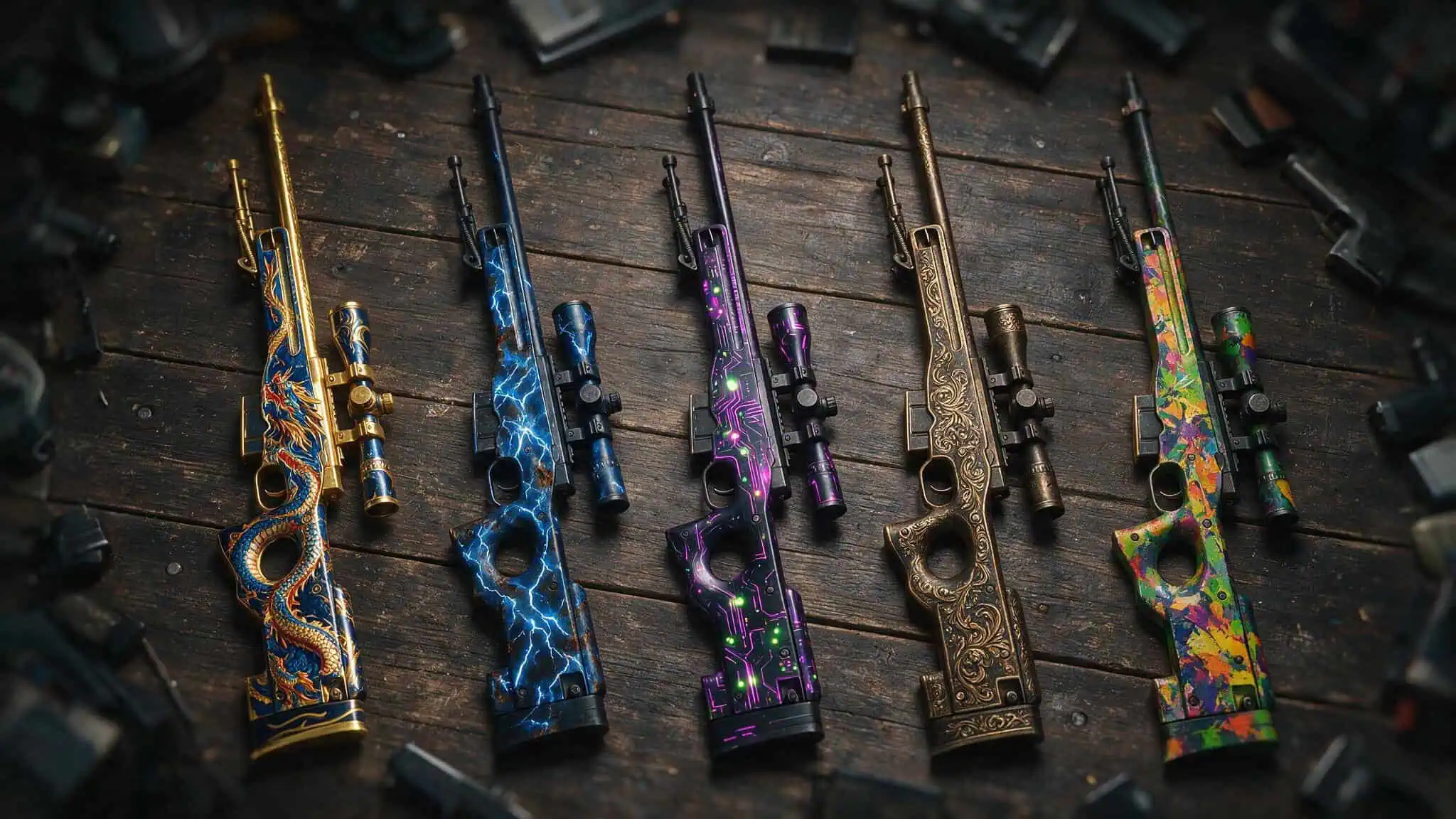
AWP skins are among the most expensive non-knife items in the game, with prices ranging from $0.20 to over $1,860, and the market dynamics are different from other weapons. Prices range from $0.20 for a Field-Tested Safari Mesh to over $1,860 for a Field-Tested Desert Hydra. Wear sensitivity is extreme—Factory New versus Battle-Scarred can be a 10x price difference on the same skin.
StatTrak variants exist on 27 of the 52 AWP skins, and they command a 30-100% premium. That premium is higher than on most other weapons because AWPers tend to be specialists who want visible kill tracking. It’s a status marker, not just a counter.
Cheapest AWP Skins
You can own an AWP skin for $0.20, less than a single in-game purchase. Cheap options include Safari Mesh at $0.20 Field-Tested, Arsenic Spill at $0.51 Field-Tested, and Capillary at $0.97 Field-Tested. These won’t turn heads, but they’ll make your AWP look like it belongs to a real player instead of a default loadout.
Most Expensive AWP Skins
At the high end, you’ve got Desert Hydra at $1,860.48 Field-Tested, Fade at $1,499.94 Factory New, and Silk Tiger at $1,118.41 Factory New. Factory New condition is critical for investment-grade skins; a Battle-Scarred version can be a fraction of the price. A Battle-Scarred version of the same skin can be a fraction of the price.
Notable AWP Skins
The Dragon Lore is the crown jewel, belonging to the Cobblestone Collection and becoming unobtainable when Cobblestone was taken out of the active map pool. It belongs to the Cobblestone Collection, and it became unavailable after Cobblestone was taken out of the active map pool. Factory New examples have sold for five figures. Its value isn’t just about the design—it’s about the emotional attachment to the map and the nostalgia of its removal. The Dragon Lore is a cultural artifact.
The Gungnir (Norse Collection) is another high-tier discontinued skin with mythological theming. The Medusa (Gods and Monsters Collection) sits in the same tier. The Asiimov (Phoenix Case) is a popular, affordable staple that represents a whole era of AWP design. Hyper Beast, Lightning Strike, and Chromatic Aberration each capture different moments in Counter-Strike’s visual history.
A Common Buyer Mistake
Don’t assume the skin name alone determines value; check the collection source and wear condition. Check the collection source—discontinued collections like Cobblestone and Norse command premiums that active-case skins will never match. And check the wear. Factory New versus Battle-Scarred can mean a 10x price difference on the same skin. That leather-bound Dragon Lore in Well-Worn might look good in the preview, but it’s worth a fraction of the Factory New version.
The AWP in Professional Play
The AWP has shaped professional Counter-Strike for decades, but the role of the dedicated AWPer is becoming increasingly rare at the highest level. Recent roster moves highlight a growing shortage of elite snipers.
The Elite AWPer Shortage in 2026
Only four AWPers—ZywOo, m0NESY, sh1ro, and molodoy—rank among the top 20 highest-rated players in Big events in 2026. That’s four. In a professional scene with hundreds of players.
This is a structural shortage: the AWP role takes years to master because it demands mechanics, game sense, patience, and team coordination all at once. The $4,750 cost and slow fire rate make the AWPer team-dependent. A struggling AWPer can sink a team’s economy and morale simultaneously.
Case Studies: FaZe, G2, and Heroic’s 2026 Roster Moves
Teams are responding to this shortage by gambling on young talent, as seen in FaZe, G2, and Heroic’s 2026 roster moves. FaZe Clan acquired JBOEN on a loan deal from BIG Academy—he had 13 LAN events on record and posted a 1.18 debut rating. The move was low-risk with high upside, and included a buy option.
G2 Esports replaced SunPayus with r1nkle, a 21-year-old AWPer. They framed it openly as a gamble on volatile but high-ceiling talent.
Heroic signed MartinezSa, bringing him to his first English-speaking team at age 25. That’s a language adaptation risk for a player already in his mid-20s by esports standards.
Why the Gamble Season Is Happening Now
The math is simple: elite AWPers—ZywOo, m0NESY, sh1ro—are locked into top teams. ZywOo, m0NESY, and sh1ro aren’t going anywhere. Every other team has to raid Tier 2 and Tier 3 for hidden talent. This creates a structural market inefficiency where young AWPers get promoted faster than riflers.
Teams are betting on raw talent over experience, using short-term loans and buy options to manage risk. It’s not a fad. It’s the logical outcome of a role that produces only four elite players in a given year.
AWP Trivia
The AWP has a rich history beyond its in-game stats, with quirks and connections that span multiple Valve titles. These lesser-known facts add depth to the weapon’s legacy.
Sound and Model Reused Across Valve Games
The AWP’s firing sound in CS:GO originates from the AWSM in Left 4 Dead 2. If you’ve played both games, you’ve heard the same shot. The model also appears in Team Fortress 2 as the AWPer Hand, a promotional item for pre-ordering Global Offensive.
Bot Behavior and Friendly Fire Quirks
In older Counter-Strike games, bots armed with the AWP always switch to their pistol after firing five rounds, regardless of remaining ammo. It’s a quirk of the bot logic that’s been there for decades.
The AWP is also the only weapon that can instantly kill an armored teammate with a headshot in Competitive mode. This is why some community servers ban it outright.
The German Left 4 Dead 2 Variant
The German version of Left 4 Dead 2 features an AWP with a 20-round magazine and a higher rate of fire. That’s a regional variation due to content restrictions. If you ever wondered what a fully-automatic AWP might feel like, Germany has you covered.
The AWP’s Legacy
The AWP is a high-risk, high-reward weapon defined by tradeoffs. It’s a high-risk investment that requires team support, map control, and economic discipline to pay off. Valve made it harder to use over time—1.25-second deploy, 5-round magazine, 100 HU/s scoped movement—because the one-shot kill is so powerful.
The perfect AWP moment isn’t an ace. It’s a single, decisive pick that wins a round. One shot through a smoke, one peek onto a long angle, one moment of patience while the enemy runs into your crosshair. That shot wins the round before the fighting even starts.
And that’s why the AWP endures. Not because it’s easy. Because when you land that shot, you’ve earned it.
Frequently Asked Questions
What is an AWP in Counter-Strike?
The AWP is a bolt-action sniper rifle in Counter-Strike based on the real-world Accuracy International Arctic Warfare Police variant. It fires .338 Lapua Magnum rounds and kills in one shot to the chest, arms, or head regardless of armor, making it the most iconic and high-risk, high-reward weapon in the game.
Is the AWP banned?
The AWP is not banned in standard Counter-Strike competitive play, but some community servers ban it because it’s the only weapon that can instantly kill an armored teammate with a headshot. It’s also banned in certain casual or custom game modes due to its one-shot kill power.
Why is the AWP so expensive in skins?
AWP skins are among the most expensive non-knife items because of rarity, collection source, and wear condition. The Dragon Lore, for example, belongs to the discontinued Cobblestone Collection and has sold for five figures in Factory New condition, while even budget skins like Safari Mesh start at just $0.20.