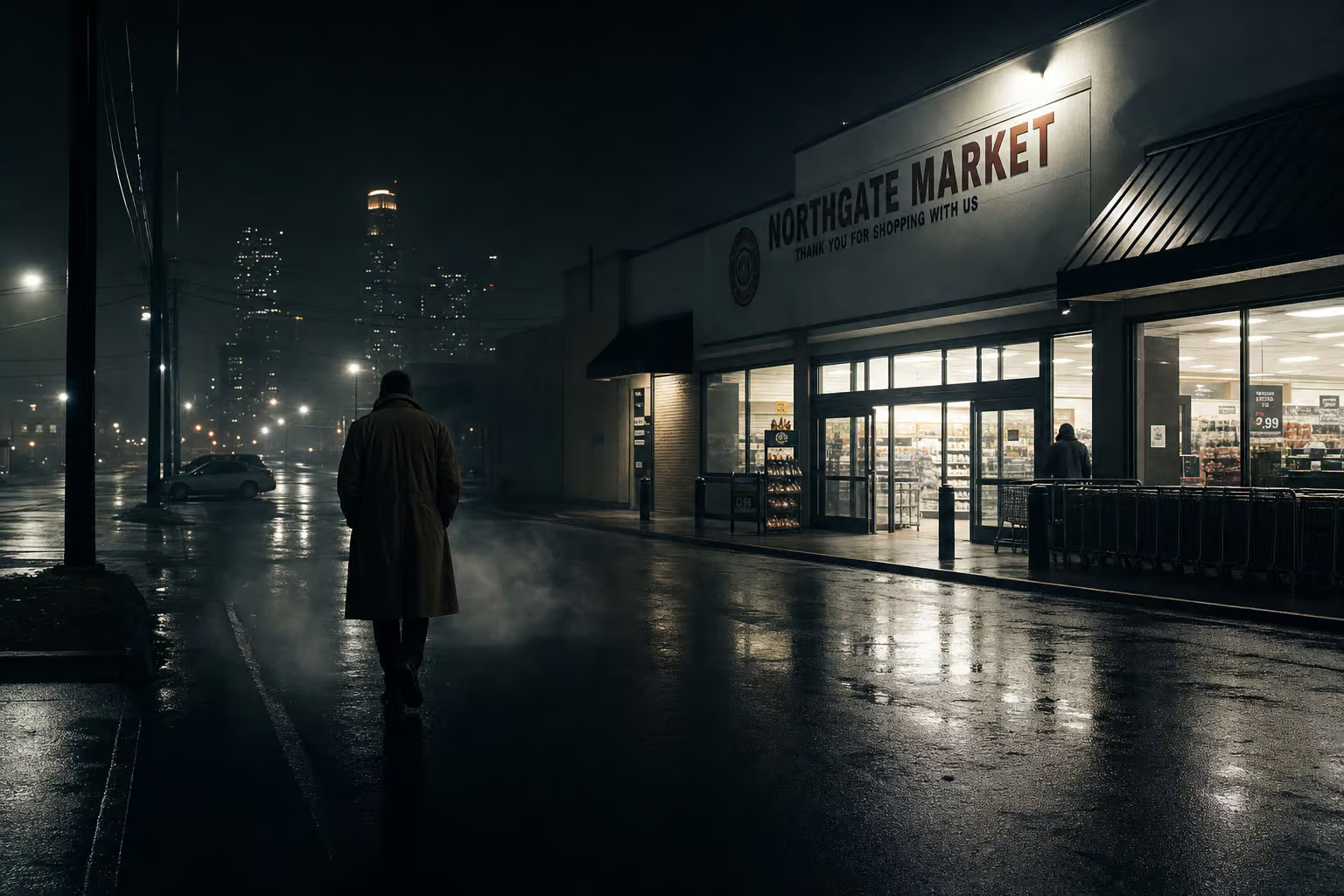
Here’s the strangest thing about Citizen Vigilante: it almost got to call itself The Dark Knight. Warner Bros. legally blocked that—you can’t just name your Uwe Boll vigilante movie after the second-best Batman film and hope nobody notices. A deep dive into where was Citizen Vigilante made reveals how the story’s tone and authenticity were shaped by its filming locations and country of origin, which tells you about the headspace this thing was made in.
The film landed June 19, 2026, with a dedication card that reads to rape victims in Europe who were betrayed by our legal system. It stars Armie Hammer. It’s banned in Germany. Critics are calling it morally bankrupt exploitation.
Audiences gave it a 6.8/10 from 14,000 votes on IMDb. And I spent 1 hour 29 minutes watching a red shopping basket vanish between camera cuts.
Key Takeaways
Citizen Vigilante holds a 44% Rotten Tomatoes score from critics but a 6.8/10 IMDb user rating (with a 6.1 unweighed mean), suggesting either genuine audience appeal or a coordinated review campaign
The film’s original title ‘The Dark Knight’ was legally blocked by Warner Bros., and it opens with a hooded black man killing a mother in broad daylight—two facts that frame the experience
Technical flaws include reused footage to pad the 1h 29m runtime and a continuity error where a shopping basket disappears mid-scene
Table of Contents
Quick Facts
Uwe Boll wrote, directed, and produced this thing. If you know his name from House of the Dead, Alone in the Dark, or BloodRayne, you’ve got expectations. Armie Hammer plays Sanders, an ex-US Army officer. Costas Mandylor—recognizable from the Saw franchise—plays Interpol Chief Henry, the guy chasing him.
The supporting cast is mostly European actors: Désirée Giorgetti as Elsa, Steffen Mennekes as Owen, Neb Chupin as SWAT Leader Pierre, Mukit Abdul Hamid as Yusuf, Fares Mongy as Ibrahim, Hila Harush as Dehlia, plus a handful of others you’ll recognize if you watch a lot of Croatian-German co-productions.
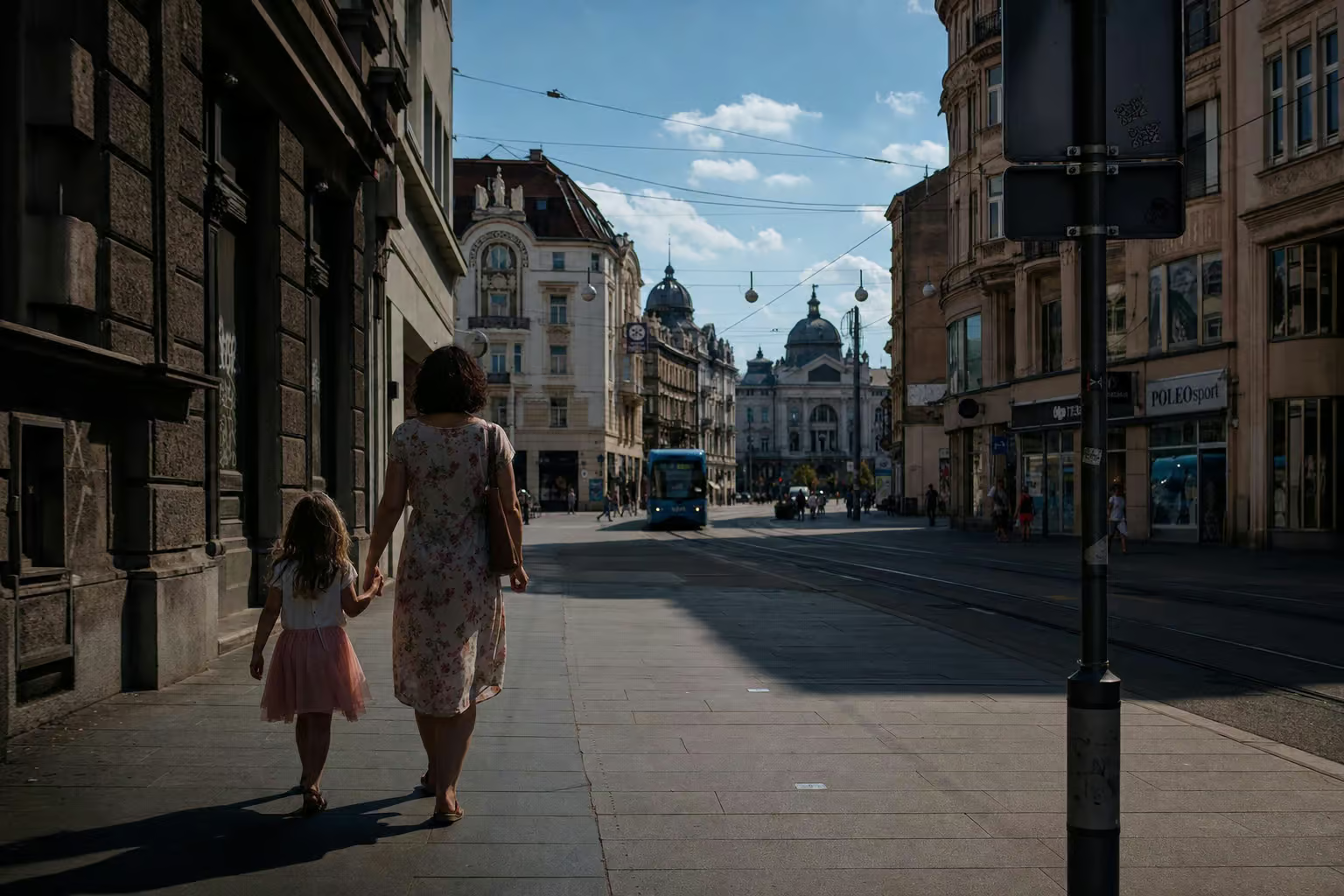
Speaking of which: filmed in Zagreb, Croatia, co-produced by Croatia and Germany through Borvel Film and Event Film Distribution. Quiver Distribution handled the US release. It’s 1h 29m, Not Rated, English language. Genres listed as B-Action, One-Person Army Action, Action, Crime, Thriller—which is accurate.
You can rent or buy it on Fandango at Home, Apple TV, and Amazon US.
Plot Summary
Sanders is an American ex-Army officer living abroad. When the legal system fails crime victims, he starts hunting criminals himself. He records blurred-face manifestos about how the courts protect offenders and re-traumatize survivors. The videos go viral.
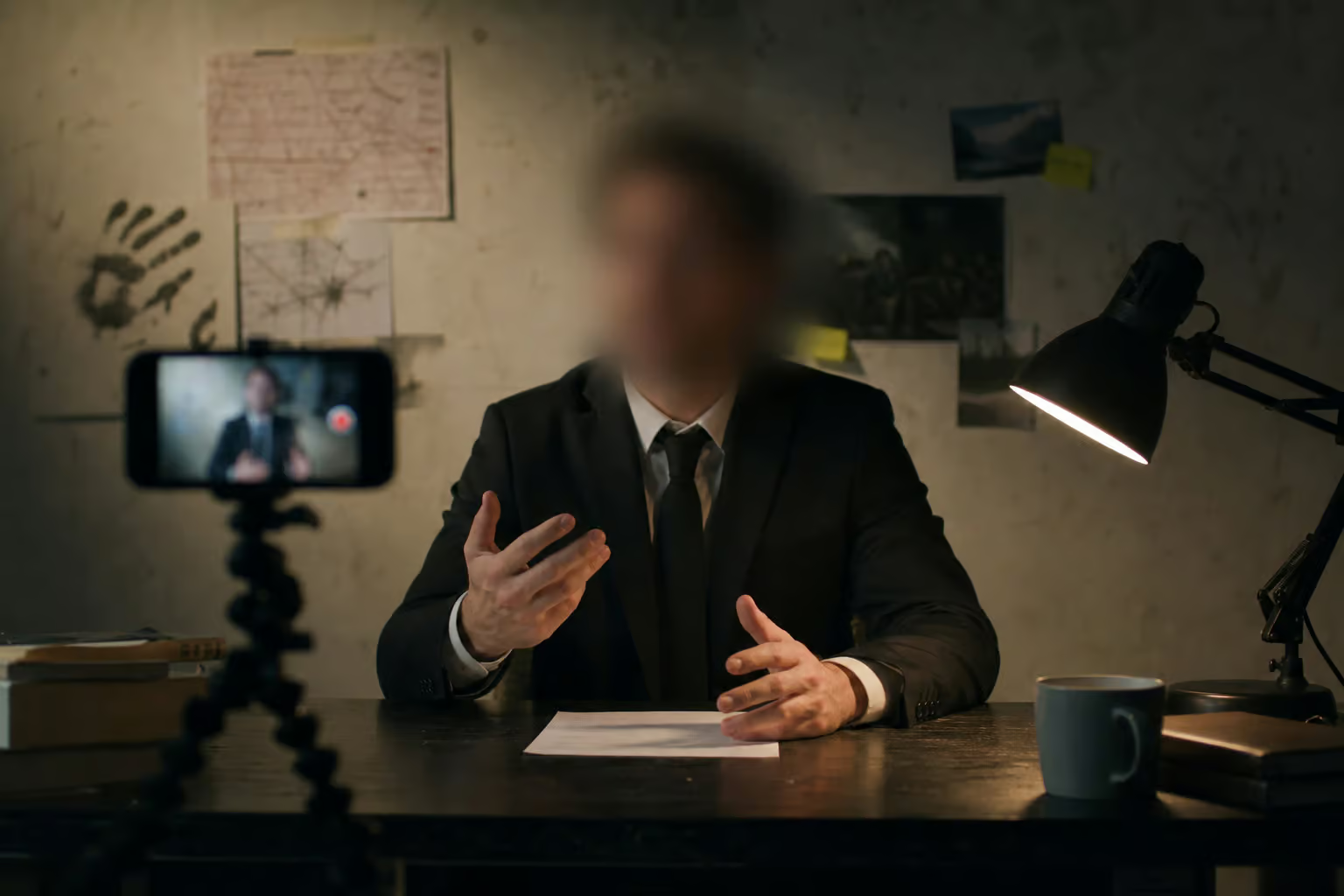
Influencers praise him. Interpol Chief Henry tries to stop him.
Here’s the weird part: Sanders funds his vigilante crusade with rent money from properties he inherited from his late father. That’s a specific detail that says about the character’s privilege—and the film’s bizarre relationship with class critique.
The opening scene shows a hooded black man killing a mother while her son watches in broad daylight. Later, the parents of a rapist insist they are teaching their son Quran values. Sanders stops a liaison with a sex worker mid-encounter to scold her about mold on the walls.
That mold scene. It’s the moment where you either lean in or check out. It’s bizarre, awkward, and memorable.
The nonlinear structure debate
The movie jumps around in time. Variety called it “pointlessly nonlinear”—just bad editing that doesn’t serve the story. A user review from Hannah127 argues it’s intentional, that the fractured timeline mirrors fragmentation.
I lean toward Variety on this one.
Performance Review
Armie Hammer is a divisive element in a divisive movie. Variety says “little of that spark is visible”—that his character comes off as xenophobic and entitled, delivering self-righteous monologues without the charisma he used to have. User reviews paint a different picture: nuanced, compelling, preparation that grounds a morally thin character.
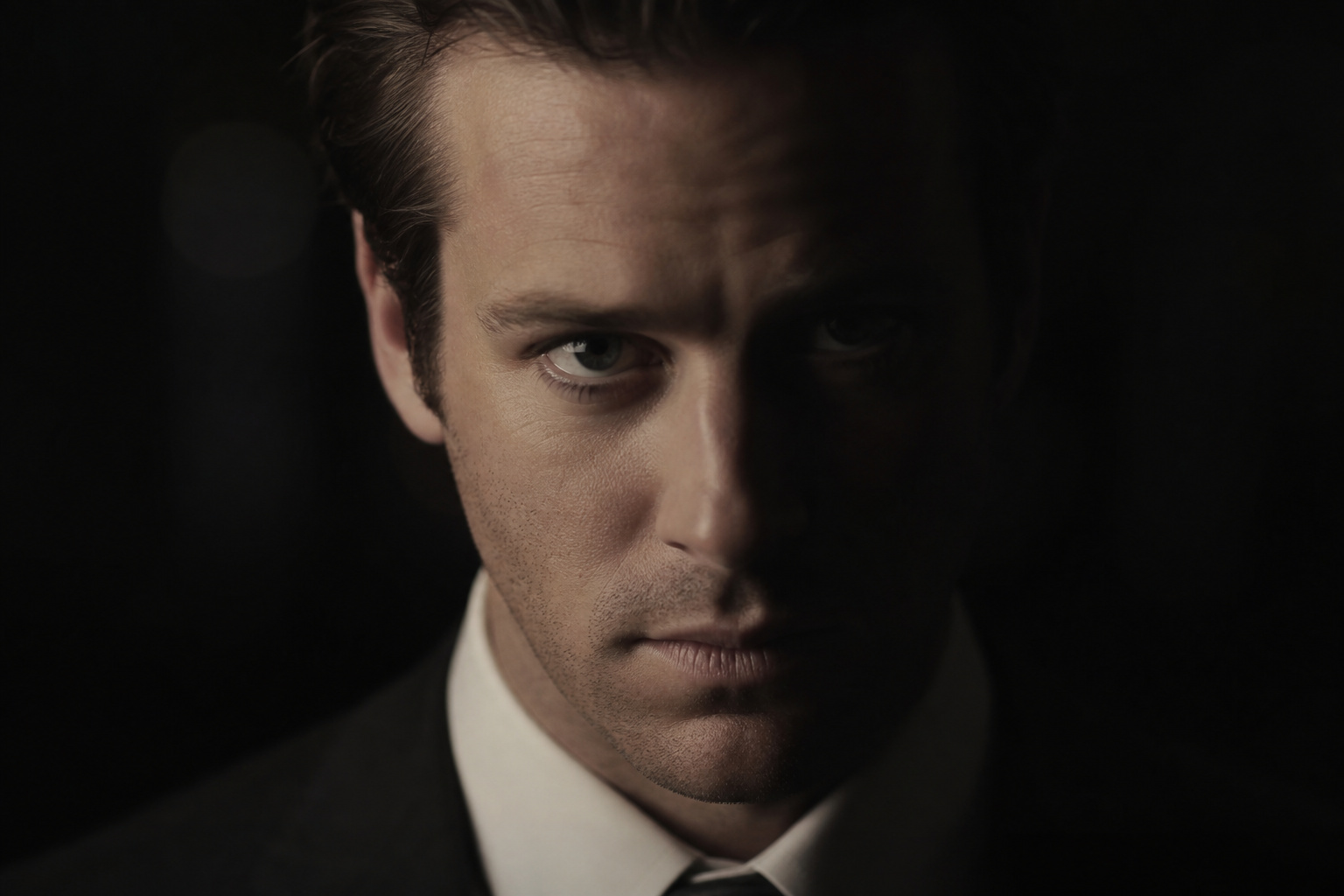
Hammer commits hard to the role, and there are moments where you can see what defenders are talking about—a quiet intensity that suggests he knows who this guy is. But the character itself is so poorly written that no amount of craft can salvage it. He’s reciting screeds, not having conversations.
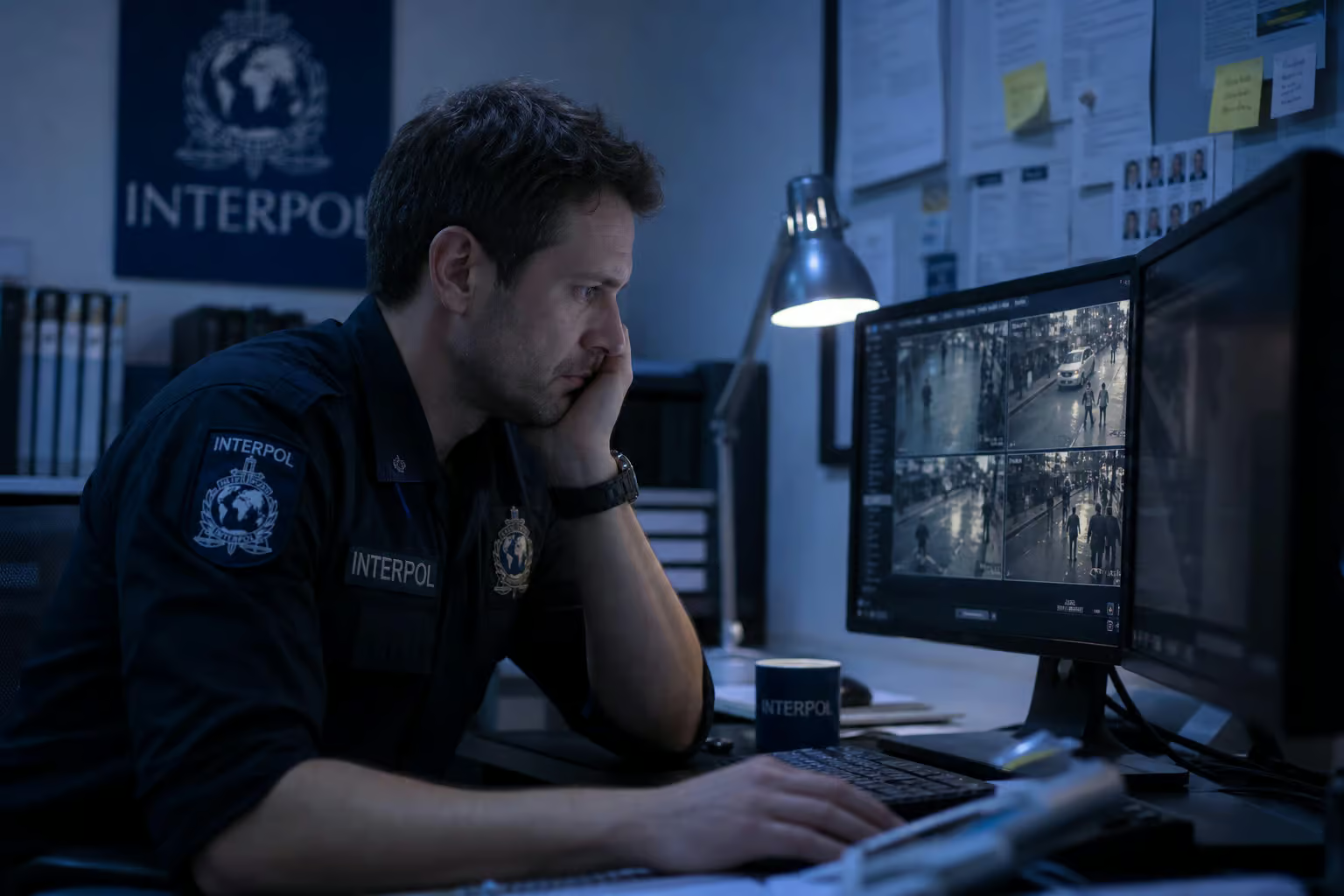
Costas Mandylor as Chief Henry has less to work with. Reviewers note his performance lacks urgency despite the role. He’s a familiar face doing B-movie work, but the script doesn’t give him any memorable beats. Vjekoslav Katusin also appears in the film.
Technical Quality
There’s a goof in the opening supermarket scene: a red shopping basket appears on a checkout counter and then vanishes when the camera angle changes. It’s a split-second thing, and I had to rewind to confirm I wasn’t imagining it. That basket is a metaphor for the production.

Boll reportedly uses every second of footage recorded, often multiple times, to pad the runtime. You can feel it. Scenes repeat angles, shots linger too long, and the nonlinear structure sometimes seems designed to disguise the fact that there isn’t enough material. One user review described the editing as “rough.”
The soundtrack includes “Touched with Fire” by In the Nursery—Klive and Nigel Humberstone, licensed from ITN Corporation Ltd. It’s a decent track, but it’s doing heavy lifting to make certain scenes feel more important than they are.
Critical Reception
Rotten Tomatoes: 44% from 26 critic reviews. Rotten, but not catastrophically so for a Boll film.
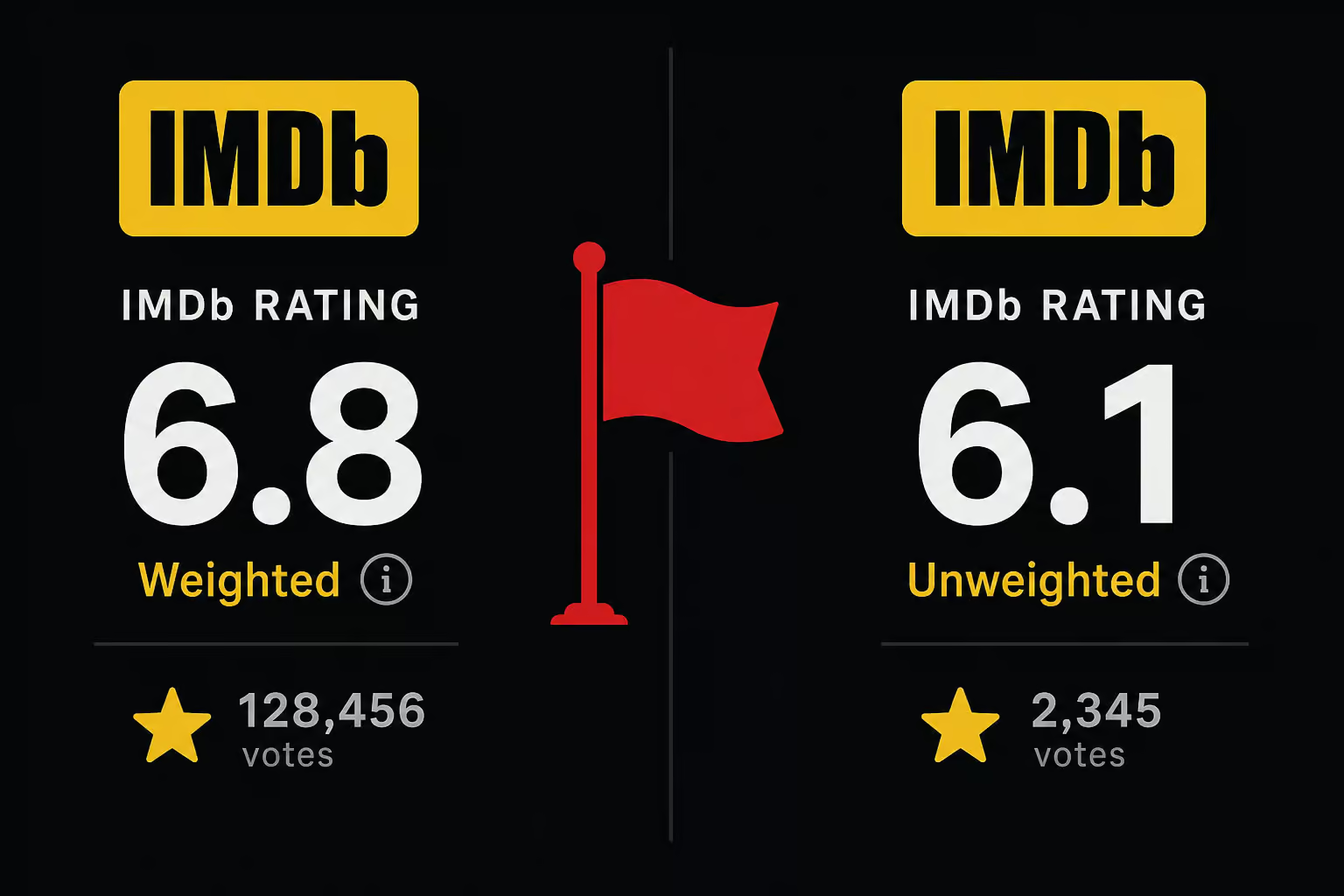
IMDb: 6.8/10 from 14,000 votes. The unweighed mean is 6.1. That gap between weighted and unweighted is worth attention.

Variety‘s review is brutal: “violent, incoherent, morally bankrupt exploitation.” They call it “ambulance-chasing” that disguises exploitation behind the pretense of exploring a topic. They compare it unfavorably to Boll’s own worst films—House of the Dead, Alone in the Dark, BloodRayne—but if you are trying to decide whether to watch it at all, a separate decision guide asks Is Citizen Vigilante worth watching and compares it to similar vigilante and geek-culture media.
User reviews tell a different story. Hannah127 calls it a bold, important message undermined by flawed execution, raising the question of are vigilantes good or evil in Citizen Vigilante. Some argue critics dislike the message, not the film itself—a defense for politically charged movies.
The 6.8 vs. 6.1 split has fueled review bombing allegations. One user claims there’s a coordinated campaign to boost the score, and the discrepancy lends credibility to that theory. It’s not proof, but it’s suspicious enough to raise the question.
Red flag: A weighted-to-unweighted IMDb gap of 0.7 points typically signals organized voting activity, not organic audience response.
The film is banned in Germany. That’s a real-world consequence that adds weight to the controversy.
Thematic Analysis
Its dedication to rape victims is a claim—and one critics say the movie doesn’t earn. The opening scene’s racial implications, the Quran confrontation, and Sanders’ anti-system monologues point to themes of vigilantism, institutional failure, migration, crime, and social media’s role in shaping public opinion.
The charitable reading: Sanders is an antihero meant to provoke, not endorse. The film raises questions people avoid. It warns against black-and-white thinking and encourages dialogue.
The critical reading: it’s exploitation dressed as provocation. The serious topics serve as cover for thrills and a morally thin revenge fantasy. “Ambulance-chasing,” as Variety put it.
Sanders’ line—The state, the court, police… they were never meant to give you justice. I’m here to help you take that control back—sums up the tension. Is that a legitimate critique of a broken system, or a recruiting pitch for a vigilante power fantasy?
I don’t think the film knows the difference, and that ambiguity is either its interesting feature or its deepest failure.
Genre Comparisons
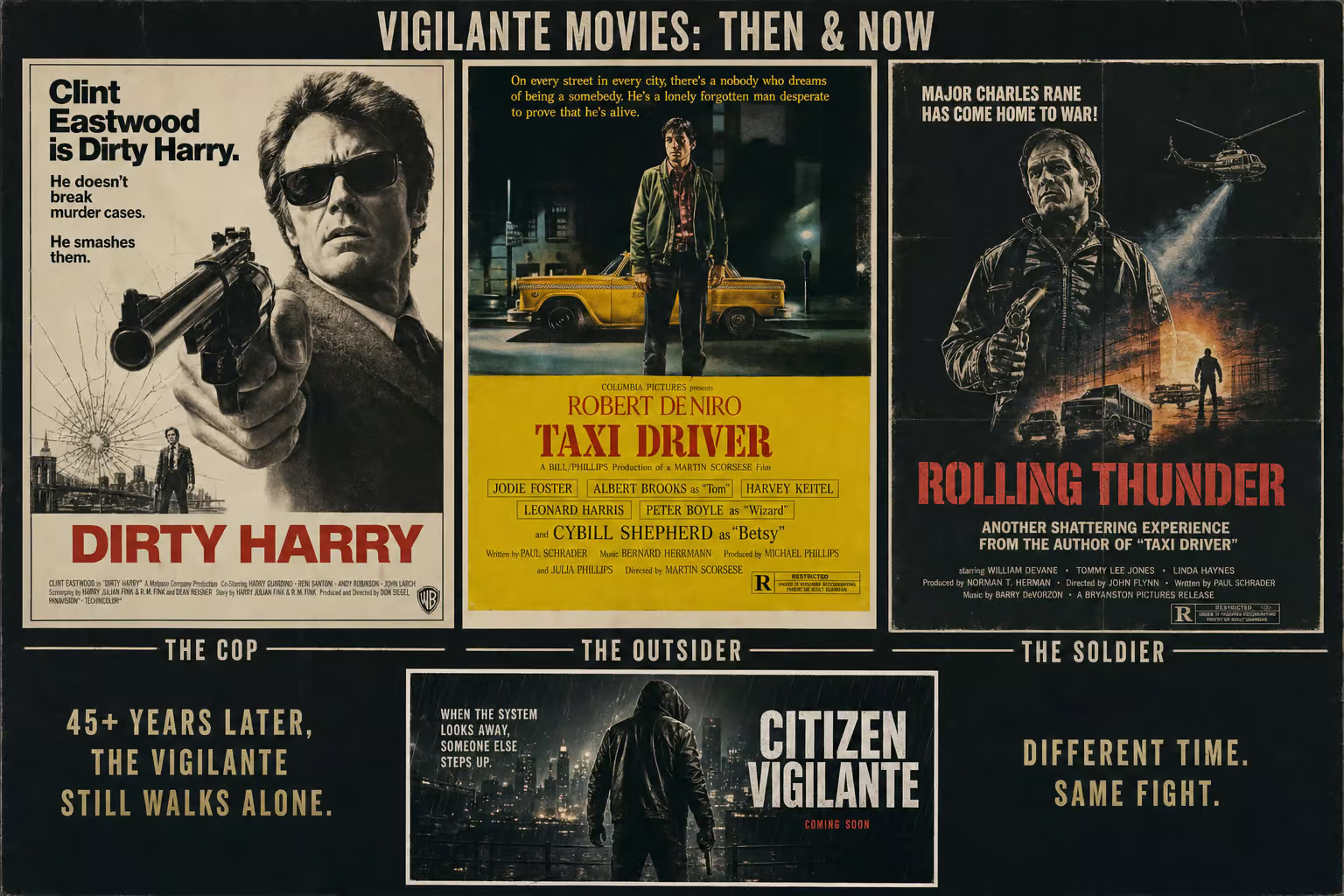
The vigilante canon runs deep: Dirty Harry, Taxi Driver, Rolling Thunder. Citizen Vigilante gets compared to all three and falls short of each. Those films had moral complexity and craft. This one has Sanders stopping mid-encounter with a sex worker to scold her about mold on the walls, and funds his crusade with inherited rent money — bizarre details that replace psychological depth with awkward eccentricity. The moral canvas isn’t just thinner; it’s uninterested in the ambivalence that made Travis Bickle or Harry Callahan unsettling.
A more fitting comparison is Jason Statham actioners—lower budget, less pretense, straightforward catharsis. The difference is that Statham movies don’t pretend to be about something bigger. They know what they are.
There’s a trivia note about Hitchcock’s Vertigo coming up in the context of editing padding, which is disconnected from reality. No, this isn’t Vertigo.
Verdict
Citizen Vigilante is technically flawed, morally messy, and impossible to ignore.
The editing is amateurish. The structure is pointless. The thematic ambitions outrun the craft. But Hammer’s performance is divisive in an interesting way, and the real-world controversy—the German ban, the review bombing accusations, the title fight with Warner Bros.—makes it a case study in polarized reception.
Who should watch it: anyone curious about the controversy, studying how films get caught in culture-war crossfire, or fascinated by the question of what happens when a B-movie director tries to Make A Statement.
Who should skip it: anyone who wants a vigilante thriller. You’ve seen Dirty Harry. Watch that instead.
The Reddit threads around this movie are worth reading—people arguing about review bombing, about whether the film has a point, about that shopping basket. That’s where the value lives: not in the film itself, but in the conversation it generates.
I can’t recommend it as entertainment. But as a cultural artifact? It’s fascinating. Don’t expect the basket to stay on the counter.
Frequently Asked Questions
Is a vigilante worth watching?
Only if you’re more interested in cultural controversy than a satisfying thriller. The film is technically flawed with amateurish editing and a pointless nonlinear structure, but its real value lives in the conversation it generates—review bombing allegations, a German ban, and the Warner Bros. title fight. If you just want vigilante action, watch Dirty Harry instead.
What are the reviews of the vigilante movie?
They’re split sharply along critic-audience lines. Critics gave it a 44% on Rotten Tomatoes, with Variety calling it ‘violent, incoherent, morally bankrupt exploitation.’ Audiences scored it 6.8/10 on IMDb, though the unweighted mean is 6.1—a 0.7 gap that typically signals organized voting activity rather than organic response.
Are vigilantes good or evil?
The film doesn’t land clearly on either side, and that ambiguity is its most interesting—or most damaging—feature. The protagonist is an antihero whose critiques of a broken system could be read as legitimate provocation, but the execution comes off more like a revenge fantasy. One user review calls it a bold message undermined by flawed execution.
Why is Citizen Vigilante banned in Germany?
Germany banned the film over its content—likely the opening scene showing a hooded black man killing a mother in broad daylight and a confrontation where parents insist they’re teaching their son Quran values. That real-world consequence adds significant weight to the controversy and the accusations that the film is morally bankrupt exploitation.
What’s the deal with the vanishing shopping basket in Citizen Vigilante?
It’s a continuity error in the opening supermarket scene where a red shopping basket appears on a checkout counter and then disappears between camera cuts. It’s a split-second goof that becomes a running metaphor for the film’s amateurish production quality—Boll reportedly reuses every second of footage, often multiple times, to pad the runtime.