
If you are putting real capital into forex trading, choosing the right broker matters just as much as your strategy. Modern trading platforms give investors access to global markets, automation tools, analytics, and APIs that make digital investing more flexible than ever. At the same time, traders still need to pay attention to regulation, platform transparency, and account security before committing funds.
A regulated broker with reliable infrastructure allows investors to focus on execution and long-term growth while reducing unnecessary platform risk.
Key Takeaways
Official regulator databases remain the single authoritative source for confirming a broker’s license.
A baseline of 75% of retail CFD accounts lost money, a risk profile that requires a strict defensive verification sequence before any funds are deposited.
Algorithmic aggregator tools evaluate 500+ data points across 32,000+ monitored brokers to preemptively filter scams.
Table of Contents
Extract Claimed License Data (and Ignore Footer Links)
Instead of clicking regulatory badges directly on a broker’s website, take a moment to verify the details independently. Many legitimate brokers clearly display their FCA, SEC, ASIC, or FINRA registration information, which is usually a positive sign. Still, it is worth cross-checking the information yourself before committing funds for forex trading.
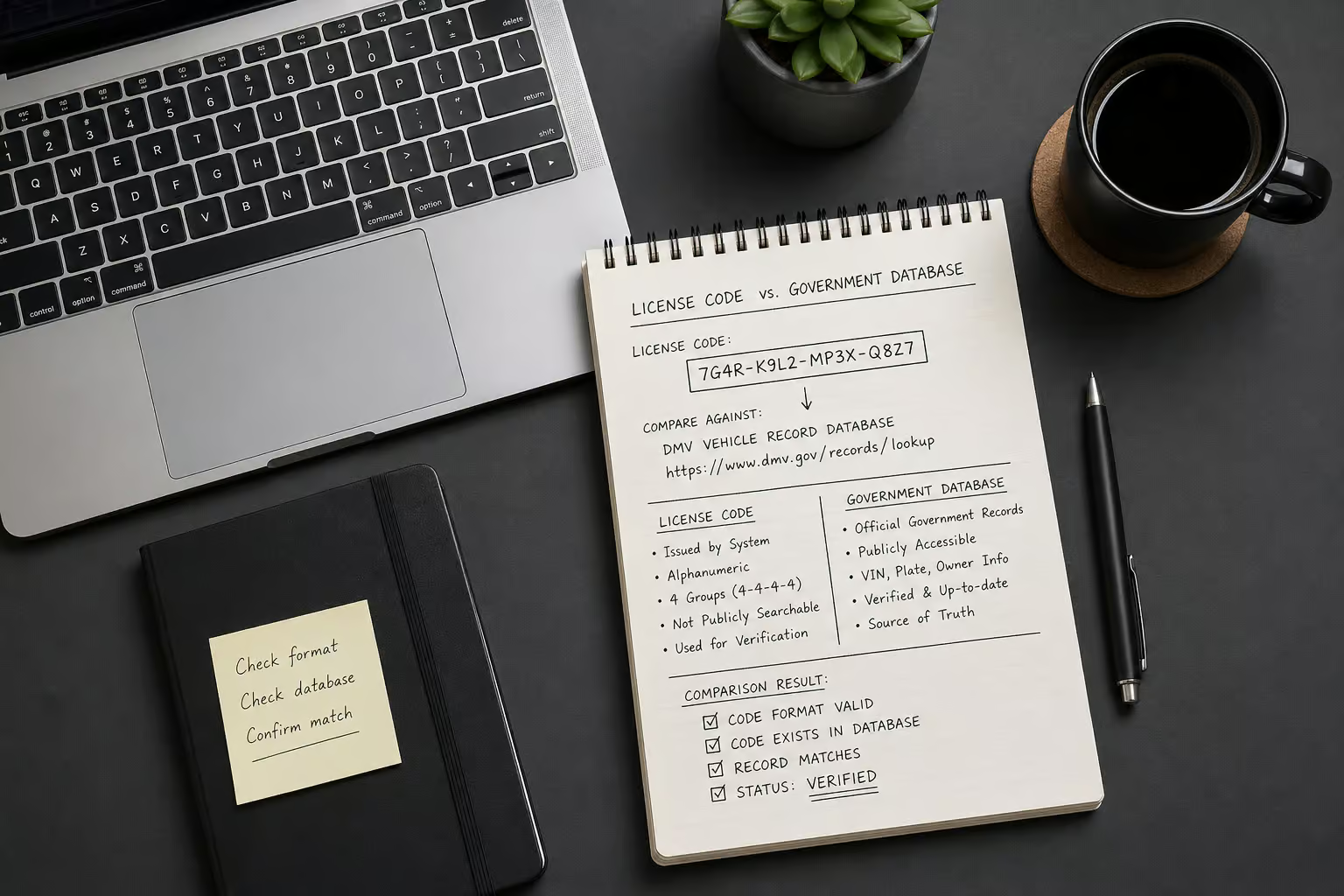
Write down the regulatory body they claim to be registered with and copy the exact licence number they provide. You can then verify the information directly through the regulator’s official database to confirm that the company name, approved domain, and registration status match correctly.
Query the Official Regulator Registry Directly
Finding the Authoritative Government Database
Now that you have the raw license string, you need to execute a manual query. Open a new browser tab and navigate to the regulator’s official “.gov” or “.org” portal. If you are verifying a firm in the United States and wondering how to check if a forex broker is regulated in usa, you’ll start with an SEC broker check via the Investment Adviser Public Disclosure (IAPD) site, or perhaps run a standard CFTC registration Search for commodity brokers. Don’t rely on third-party links to get to these databases; find them through a direct, clean search.
Searching by Alphanumeric License String
When you run your Broker-dealer check, always search using the specific registration number, not the company name. Corporate names are notoriously messy, heavily abbreviated, or subject to weird shell-company naming conventions that break search functions. For example, if you’re querying the UK’s Financial Conduct Authority (FCA), you’ll want to drop the exact Firm Reference Number (FRN) straight into their search bar to pull the exact unique database row for that specific entity.
Audit Granular Data to Expose Clone Firm Tactics
Positive database matches are common. Sophisticated exploits, specifically the ‘Clone firm’ tactic, leverage domain spoofing to bypass this step by grafting valid license numbers onto masquerading websites. Fraudsters often scrape valid credentials from entities like Interactive Brokers to falsely signal legitimacy while their infrastructure remains entirely illicit.

To bypass this, you have to cross-reference the granular data. Fraudsters will often lift a legitimate legal entity name from a regulatory database but operate under a different trading brand name on their polished frontend. Look at the authorized web domain, contact email, and corporate address explicitly listed on the government registry. If the official database says the broker’s domain ends in “.com” but you are being onboarded via a “.cc” or “.io” extension, that discrepancy should be investigated immediately.
Confirm Authorized Activities and Warning Statuses
Even if the domain and corporate identity match perfectly, you still need to parse the permissions attached to that registration. Scammers and low-tier operators frequently buy cheap, entry-level Investment Adviser licenses because they look professional on an “About Us” page. However, whether you verify these credentials manually or pull automated registration data using the best financial APIs, you need to dig into the authorized activities array to ensure they actually have legal permission to deal in leveraged derivatives, CFD products, or spot forex. If a license only authorizes “general financial advice,” it is legally meaningless for a platform holding your trade deposits.
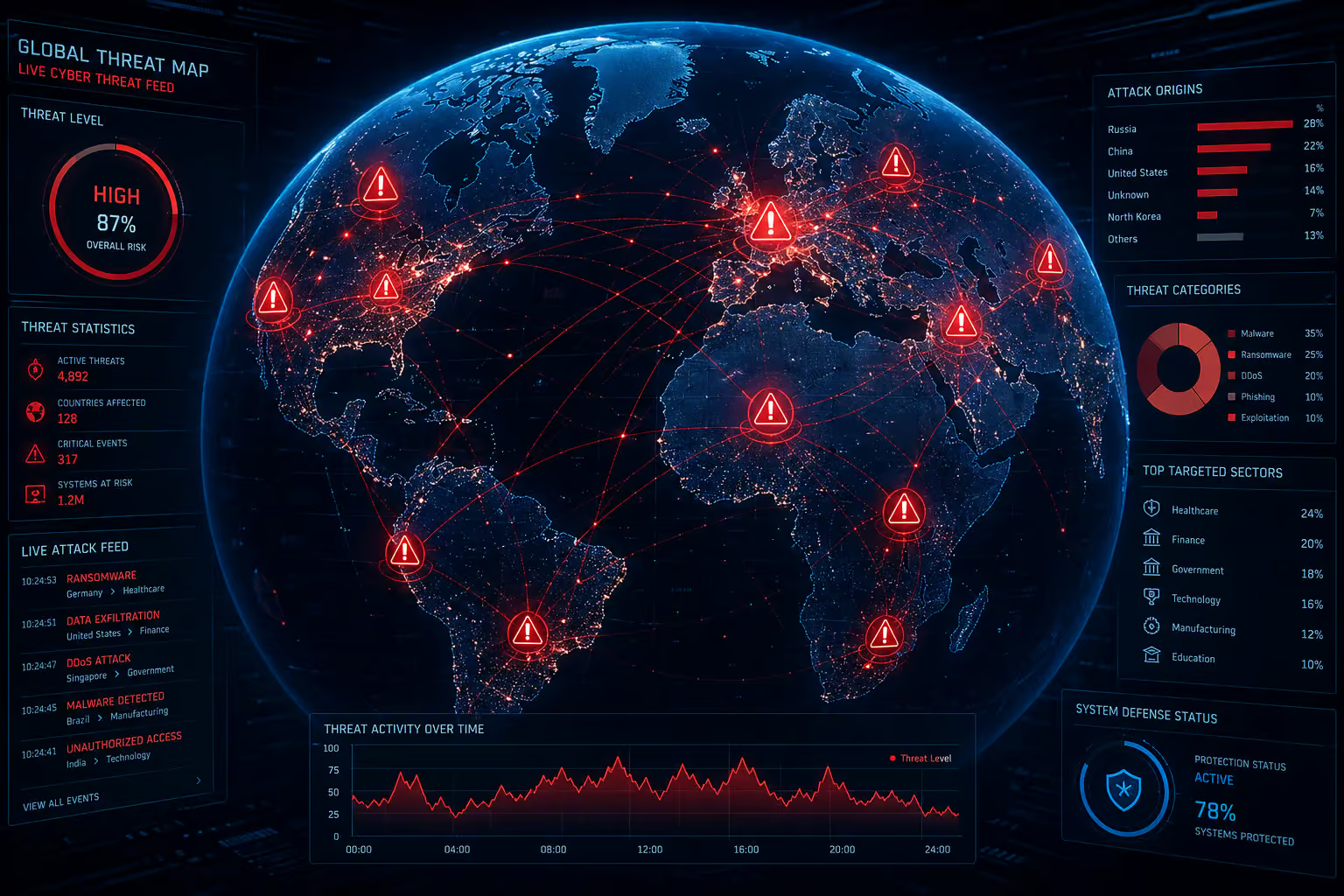
After confirming active license status, cross-reference the entity against a current regulatory warning list. Authorities like the Financial Conduct Authority and Securities and Exchange Commission publish these registers to flag firms currently under investigation for aggressive operations or client fund commingling.
Assess Jurisdictional Tier-1 Vs. Offshore Arbitrage
Global Corporate Structures
As you dig deeper into broker architectures, you realize that global networks operate through a web of regional subsidiaries. Excellent institutional platforms like Interactive Brokers maintain multiple legal entities to comply with localized laws.
High-risk Geographic Red Flags
There is an architectural difference in capital protection between tier-1 regulators and offshore jurisdictions. Tier-1 authorities strictly enforce fund segregation and transparent execution APIs. However, many global brokerages practice jurisdictional arbitrage, marketing their secure top-tier licenses while onboarding international retail clients through offshore subsidiaries in jurisdictions such as Vanuatu. Being onboarded to an offshore entity strips away protections enforced by the Financial Conduct Authority, Securities and Exchange Commission, or FINRA, leaving capital dependent on the broker’s internal risk management.
Use Aggregator Tools for Baseline Diligence
Manually checking government registers is non-negotiable before making a deposit, but if you are just starting your search for a solid MetaTrader host, third-party vetting algorithms can save you hours of manual OSINT work. Platforms like BrokerChooser have built robust verification engines specifically to filter out the noise.
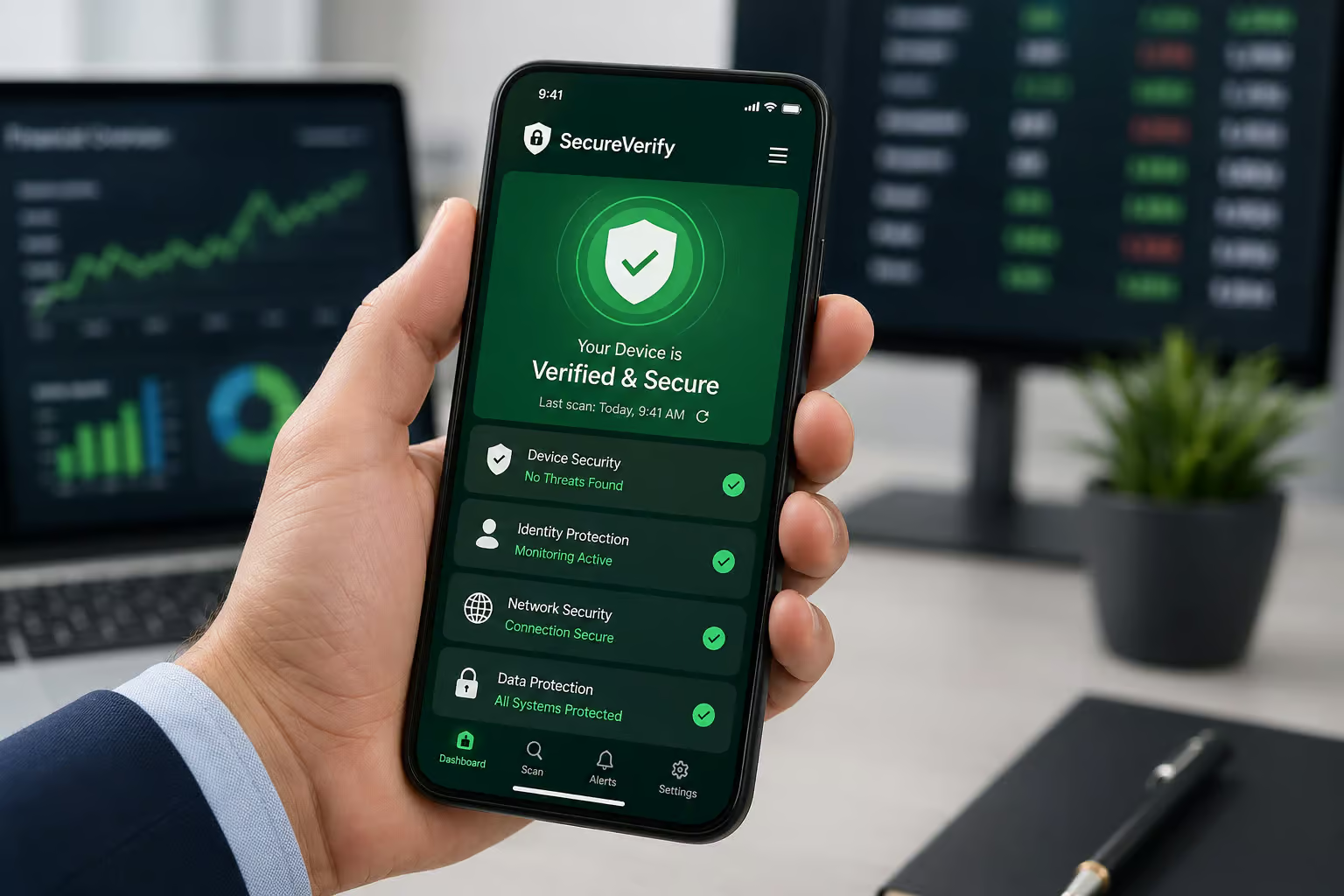
You might also utilize mobile tracking arrays like the WikiFX broker regulatory App. Scanning a WikiFX broker list or looking up a specific WikiFX forex Broker is an efficient way to red-flag an unlicensed entity out of the 32,000+ brokers monitored globally. Use these tools as an initial syntax check—if an aggregator throws an error on a platform, drop them. If they pass, you still run your manual government registry validation.
Verify Legal Bankruptcy Compensation Limits
The final step in your verification protocol is evaluating the potential fail state: broker insolvency. You need to know the statutory system limits on capital recovery if the platform’s backend financial architecture collapses.
Regulated tier-1 entities participate in specific compensation schemes (like SIPC in the US or the FSCS in the UK) that guarantee capital recovery up to a hardcoded ceiling. Unregulated or offshore entities offer exactly zero recovery infrastructure. Before you route a single dollar, verify the exact compensation fund attached to the specific regulatory tier your account falls under.
Frequently Asked Questions
How to know if a forex broker is legit?
Legitimacy is established by cross-referencing an entity against official government regulator databases, not by relying on a website’s footer links. You must verify that the license number, authorized domain, and corporate contact details in the registrar match the site you are dealing with exactly. Never trust hyperlinked badges on a broker’s page, as these are often spoofed.
How to see if a broker is regulated?
Navigate directly to the official government portal for the relevant regulator, such as the SEC in the U.S. or the FCA in the U.K. Search using the broker’s specific alphanumeric license string rather than its company name to avoid errors caused by shell-company aliases or complex naming conventions.
How to verify if a broker is legit?
Beyond confirming a license exists, you must audit the authorized activities connected to that registration. A broker may hold a professional-looking license, but if it is only for ‘general financial advice,’ they are not legally authorized to handle leveraged derivatives or spot forex. Always check the entity against regulatory warning lists to ensure they aren’t currently under investigation for fraud.
What’s the difference between tier-1 and offshore jurisdiction regulation?
Tier-1 regulators enforce strict fund segregation and provide statutory capital recovery schemes like SIPC or FSCS in the event of insolvency. Offshore entities often operate in low-friction zones that offer zero recovery infrastructure, leaving your capital vulnerable if the broker suffers a backend financial collapse.
How can I detect a ‘clone firm’ scam?
Clone firms steal legitimate credentials from reputable brokers to appear authentic. You can detect them by comparing the authorized web domain listed in the official government registry against the site you are using; if the registry specifies a ‘.com’ domain but you are being onboarded via a ‘.cc’ or ‘.io’ extension, it is a scam.
Why does jurisdictional arbitrage matter for my account security?
Even if a brand is famous, they may silently route your retail application to an offshore subsidiary in a ‘low-friction’ zone to bypass strict local oversight. This move strips away the protections mandated by Tier-1 regulators. Always confirm which specific legal entity is holding your funds, rather than assuming the parent brand’s prestige applies to your account.