
If you’re a balding nerd staring down an endless aisle of heavily marketed hair serums, you’ve probably realized that most cosmetic promises lack published clinical efficacy data. To evaluate a serum, we need to stop looking at the cosmetically dead hair strand and start treating the scalp like a hardware teardown. At GeekExtreme, we view this as a strict physiological bottleneck problem. Hair growth physically originates at the localized environment of the follicle, making the scalp the primary bottleneck for success—just like poor case ventilation throttles a high-end CPU.
Clogged buildup, restricted blood supply, and unchecked inflammation suffocate the root. Rather than falling for generic before-and-after promises, you should evaluate an active serum’s viability based on whether it uses an integrated, multi-mechanism approach—like the layered formulation of the Traya serum—to comprehensively restore the physiological conditions required for a follicle to survive.
Key Takeaways
Redensyl targets hair follicle stem cells to push follicles from the resting phase back into the growth phase.
The Procapil combination complex combats localized hair loss by using oleanolic acid to counter DHT, apigenin to improve blood flow, and biotinoyl tripeptide to feed the follicle.
Sustained application of layered serums outperforms occasional high-dose shocks, as overloading the scalp with maximum chemical concentrations triggers an irritation cycle that worsens shedding.
Table of Contents
Activating Stem Cells and Forcing Phase Shifts
Redensyl’s Mechanism of Action
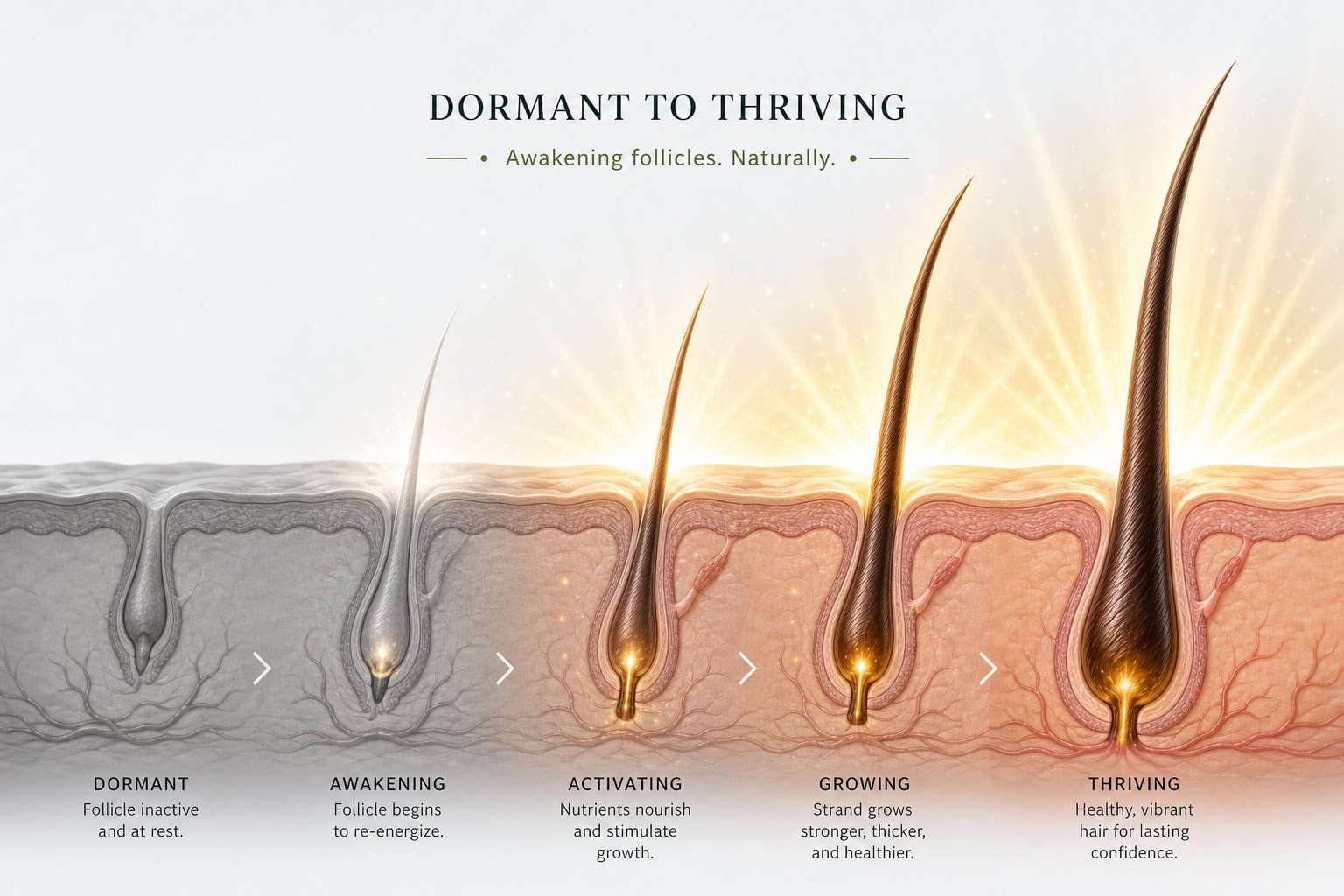
Redensyl functions as a direct cellular trigger that forces targeted stem cell activation inside the bulge of the outer root sheath. By engaging these dormant cells, Redensyl acts as a biological override designed to reactivate miniaturized follicles, rescuing the fragile hair strand before cellular degradation results in a permanently bald patch. It’s a biochemical reboot command for your scalp, pushing follicles from a resting state back into active production.
Anagain and the Resting Phase
The hair cycle consists of three distinct phases: anagen (growth), catagen (transition), and telogen (rest). Anagain, a plant-derived compound, operates as a metabolic trigger that encourages the shift from the telogen phase to the anagen phase. This state change is critical if you’re tracking diffuse thinning, a frustrating condition where hair density drops globally across the scalp without the centralized balding that often drives people toward surgical procedures like Elon Musk’s hair transplant; Anagain instead pulls those stalled follicles out of an extended resting phase so they can resume building the structural strand.
Targeting DHT and Engineering Follicular Defense
You can’t just force immediate growth; you also have to patch the vulnerabilities that cause strands to detach in the first place. This is where structural defense compounds come into play.
The Procapil Trio
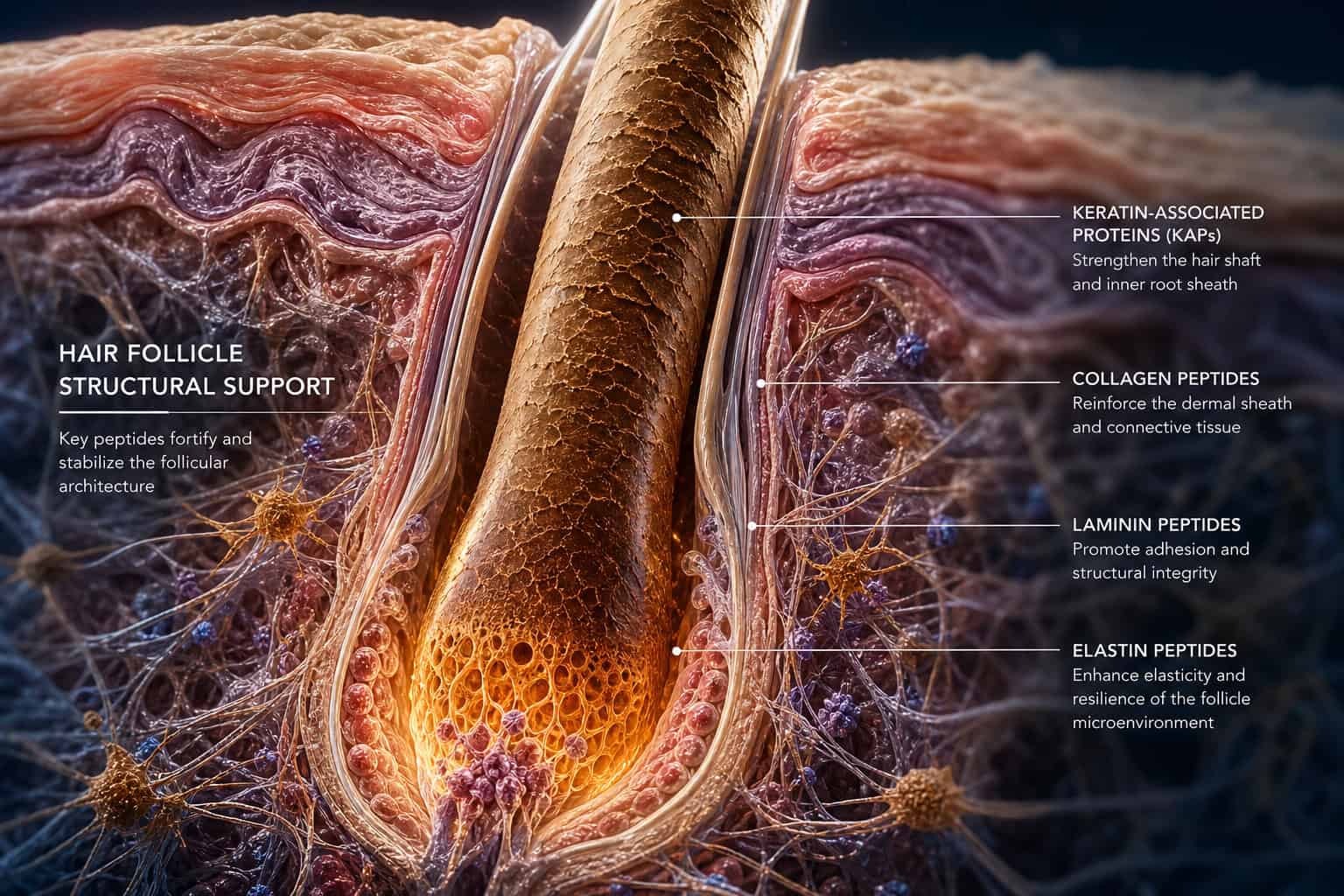
Procapil is an engineered trio compound that breaks down into three localized defense mechanisms: it combines apigenin for localized blood flow, biotinoyl tripeptide for direct follicle nourishment, and a targeted acid inhibitor. Procapil deploys oleanolic acid to counter the tissue-level effects of DHT, the primary hormone responsible for shrinking follicles in a typical balding nerd male pattern. You’re pushing back against the molecular signal that chokes out the root.
“You’re pushing back against the molecular signal that chokes out the root.”
Peptides as Anchoring Compounds
Many dermal peptides are marketed as growth stimulants despite data showing they function primarily for cellular anchoring. We should reframe peptides as vital maintenance compounds engineered for strong hair anchoring. Their biological job is structural survival—strengthening the cellular matrix around the sheath to keep the hair you haven’t lost yet firmly in place, rather than miraculously regrowing dead zones.

Background Barrier Workers Vs. the Topical Biotin Myth
If you’re asking what ingredients to avoid in hair products, topical biotin is the key marketing gimmick you should explicitly avoid overpaying for. Topical biotin application often fails due to the molecule’s physical size and limited absorption across the dermal barrier. Because topical biotin faces Dalton rule constraints regarding surface penetration, paying a premium for it is like buying a high-refresh-rate monitor and plugging it into a dusty VGA port—the pipeline cannot deliver the required data. Instead, the real heavy lifting happens with unglamorous background minerals.
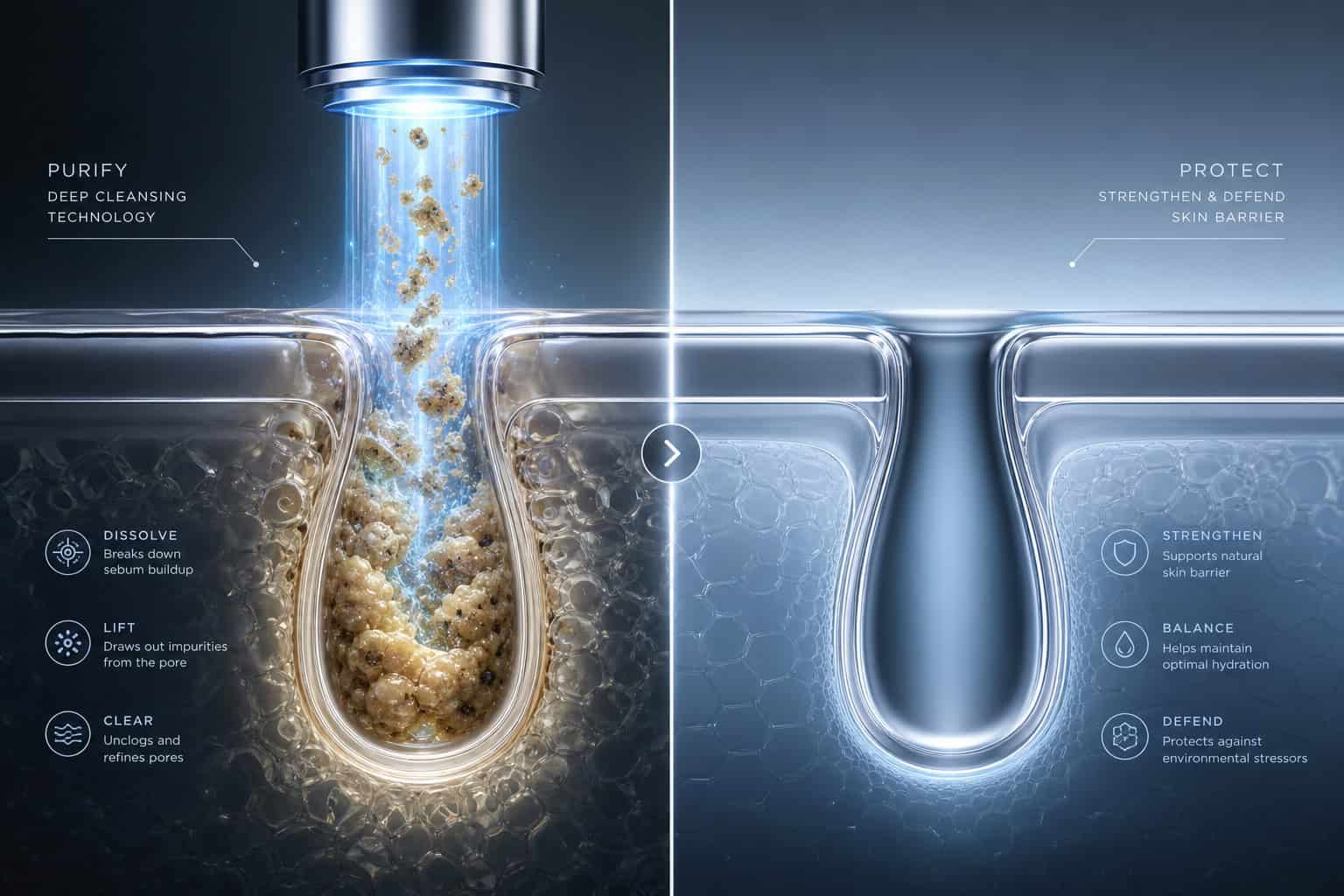
Zinc PCA effectively balances sebum regulation by inhibiting 5-alpha reductase and clearing follicular pore buildup behind the scenes, ensuring the hair root doesn’t drown in hardened oil inside the localized environment of the follicle. Meanwhile, your scalp needs chemical stability; Niacinamide stabilizes the crucial dermal barrier function to block friction and shedding-induced skin irritation, while Caffeine operates beneath the surface to stimulate localized blood flow at the cellular level.
The Efficiency Trap and the Irritation Cycle
A common failure pattern occurs when users treat their scalp like a test tube, layering multiple high-percentage actives in hopes of faster turnaround times. In practice, this often triggers an irritation cycle where localized inflammation causes the scalp to shed hair faster, leaving the user far worse off than when they started. Chasing the highest percentage of an acid or stimulant backfires because the dermis is reactionary. Brands utilizing multi-mechanism formulas like Traya emphasize that sustained application of a balanced serum outperforms sporadic, high-dose chemical shocks, as the latter trigger an irritation cycle.
Systemic Realities Beyond the Top Layer of Skin
Topical serums are limited by dermal absorption rates and cannot influence systemic hormonal DHT levels. This explains the debate regarding prescription systemic DHT inhibitors—such as oral finasteride or dutasteride—versus topical hair maintenance routines. Internal variables—like compounding hormonal imbalances that spike systemic DHT levels, acute stress, and severe nutritional deficiencies—are the root-level permissions aggressively overwriting your hair cycle. Surface formulas are local tools, but they yield results when positioned inside a broader diagnostic strategy that investigates the internal hardware of your endocrine and immune systems.
Frequently Asked Questions
Can balding men still be attractive?
Attractiveness is subjective, but addressing scalp health can improve the appearance and retention of the hair you currently have. By treating the scalp like a hardware bottleneck, you can optimize follicular environment and blood flow to support healthier strand anchoring and density.
What is the best look for a bald guy?
The most effective approach is focusing on physiological maintenance rather than chasing cosmetic miracles. A well-maintained scalp, managed through multi-mechanism serums that address inflammation and DHT-induced miniaturization, provides the strongest foundation for whatever style you choose.
Why does topical biotin often fail to regrow hair?
Topical biotin is ineffective for most users due to Dalton rule constraints, which dictate that the molecule is too large to penetrate the dermal barrier successfully. Treating it as a miracle cure is like connecting high-end hardware to a low-bandwidth connection; the pipeline simply cannot deliver the required nutrients to the follicle.
How does Redensyl actually stimulate hair growth?
Redensyl functions as a biological override that targets hair follicle stem cells located in the outer root sheath. It forces these dormant cells to exit the resting phase and return to the active growth phase, effectively acting as a reboot command for miniaturized follicles.
Can I speed up growth by applying higher concentrations of hair serum?
No, overloading your scalp with maximum chemical concentrations is counterproductive and often triggers an irritation cycle. Sustained application of a balanced, multi-mechanism formula outperforms high-dose chemical shocks by avoiding the inflammation that causes premature shedding.
What is the difference between growth stimulants and anchoring peptides?
Growth stimulants like Redensyl or Anagain work to shift follicles from a resting state into active production. In contrast, anchoring peptides focus on structural survival, strengthening the cellular matrix around the hair sheath to keep existing hair firmly in place.
Why do topical scalp serums sometimes fail to stop hair loss?
Topical serums are limited by dermal absorption rates and cannot influence systemic hormone levels. If your hair loss is driven by underlying endocrine issues, stress, or severe nutritional deficiencies, surface-level tools act only as localized maintenance rather than a comprehensive cure.