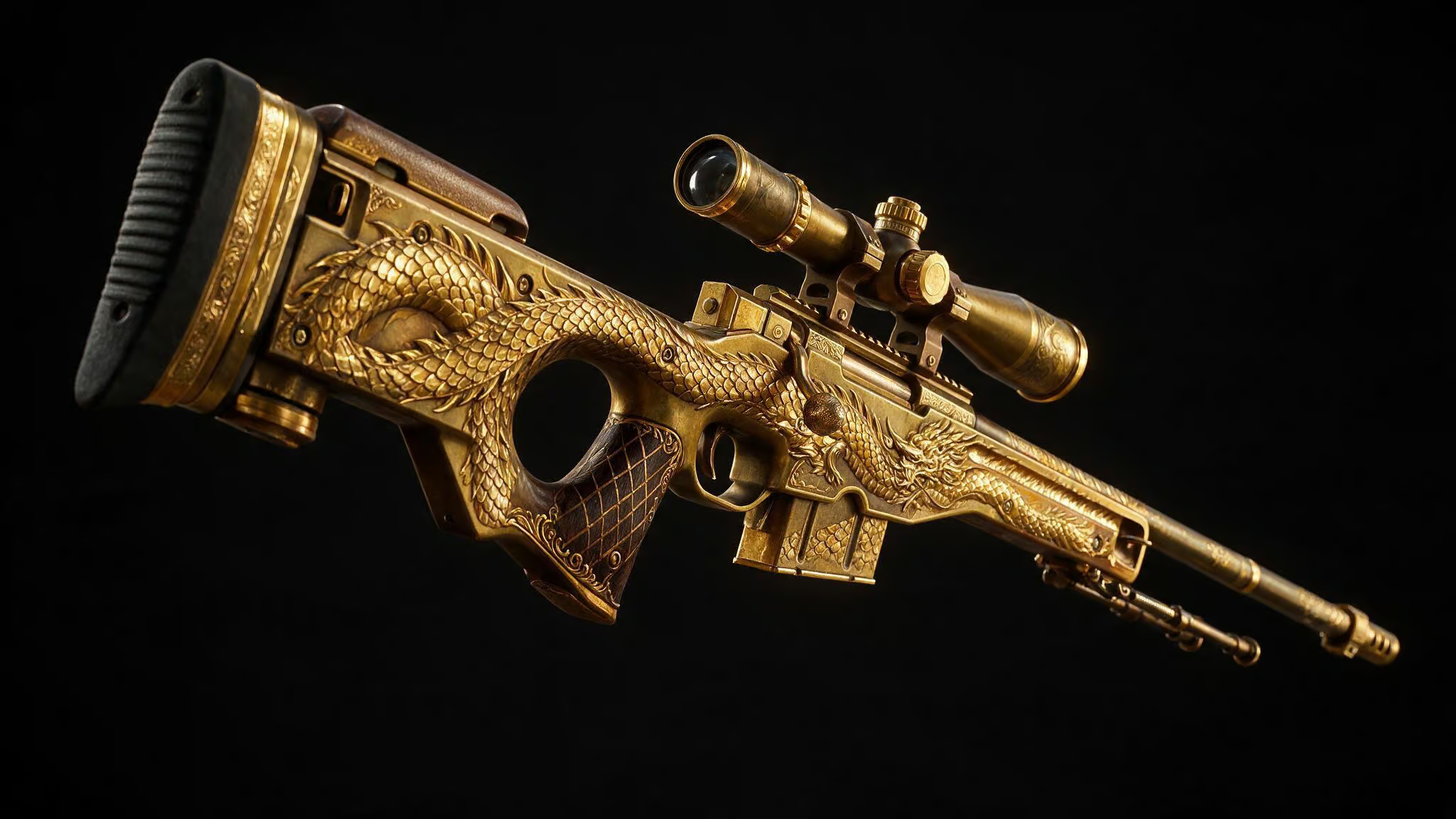
The AWP Dragon Lore is rare from two different angles, and 41 professional players carry it in their active loadouts right now. Market data reveals why this skin commands $11,500, and the answer isn’t “low supply, high demand.” The Dragon Lore is a Covert-grade skin from The Cobblestone Collection, released on 1 July 2014 during Operation Breakout. It runs a float range of 0.0 to 0.7, available in all five exteriors plus Souvenir — though there’s no Souvenir Battle-Scarred variant.
The dual drop chance produces a 0.64% rate from The Cobblestone Collection versus roughly 0.26% from case openings: you’re looking at a 0.64% chance from The Cobblestone Collection drops versus roughly 0.26% from case openings. The pattern index doesn’t change the appearance — the old legacy model means all variants share the same visual. It still pulls a 100% popularity metric with a 4.6/5 on CSGOSKINS.GG (7,700 votes) and a 4.5/5 on SteamAnalyst (59,028 votes). The in-game description reads: *The AWP is a high-risk, high-reward weapon known for its distinctive sound and one-shot, one-kill capability.
* How the AWP evolved in CS2 with CS2 AWP changes in the form of new smoke mechanics, visual updates, sound changes, and performance differences from CS:GO?
Key Takeaways
The Dragon Lore has a 0.64% drop rate from The Cobblestone Collection and roughly 0.26% from case openings, making it rarer than articles citing only one source of scarcity acknowledge.
Minimal Wear is the value sweet spot — at $8,941 it can look nearly identical to Factory New at $12,358 because the finish hides wear well, offering roughly a 30% discount for near-identical visuals.
The skin hit an All-Time High of $14,683 on Apr 20, 2023 and an All-Time Low of $0.04 on November 10, 2017, but the 1-year trend shows a -9.30% decline, signaling volatility rather than guaranteed appreciation.
Table of Contents
AWP Dragon Lore Price by Wear Grade – What Each Condition Costs Right Now
Here’s the price breakdown across every wear grade, with specific numbers you can compare against current listings. These are snapshot prices from HLTV and marketplace aggregators, so they’ll shift, but the relative differences stay consistent.
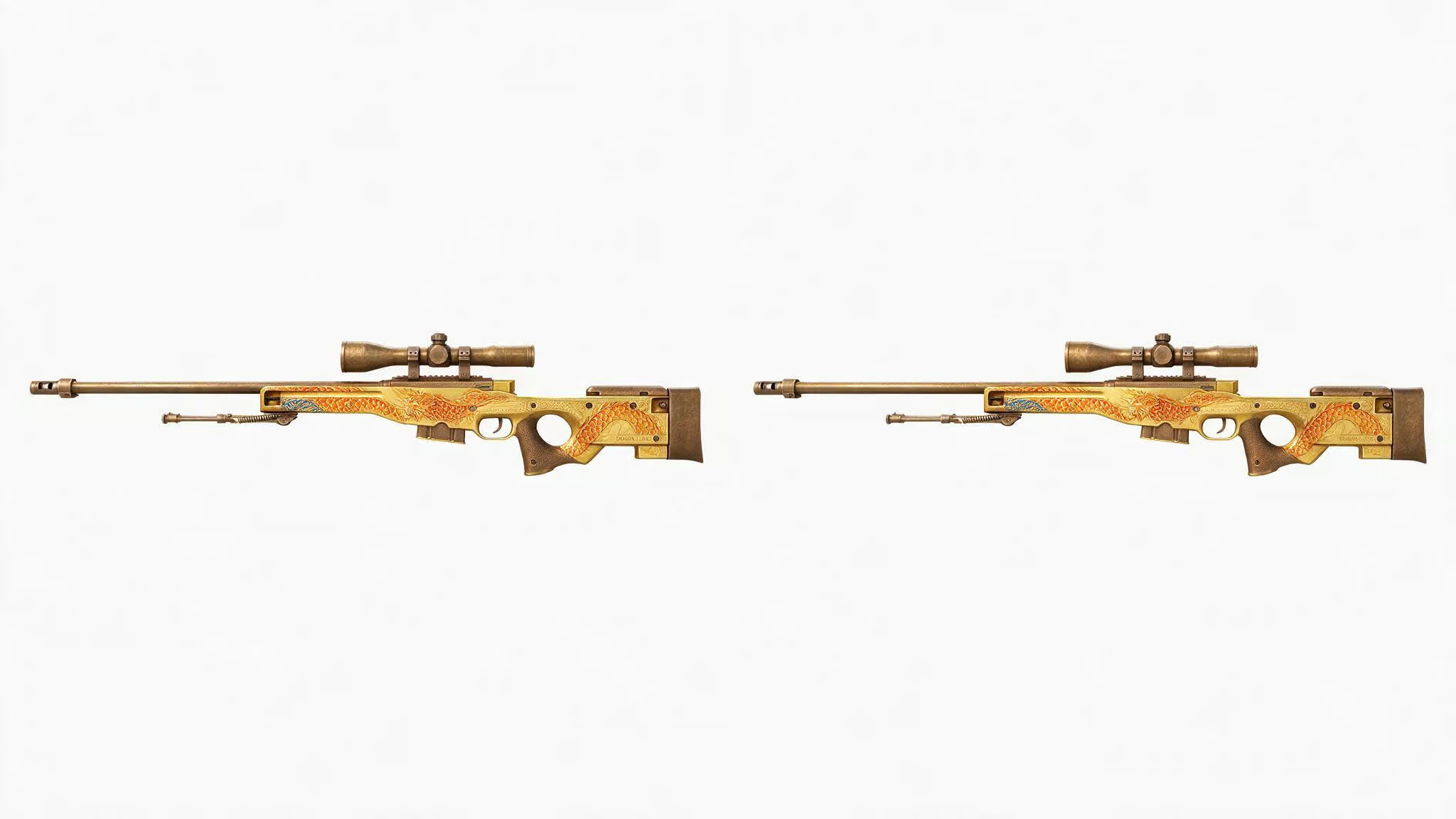
Factory New ($12,358+)
Factory New Dragon Lores carry floats from 0.00 to 0.07, with a median price around $13,276.33 according to SteamAnalyst. Listings start at $12,358 and climb fast from there. Buyers often assume any FN Dragon Lore is interchangeable — a Factory New with a 0.0001 float can cost thousands more than a 0.0699 float FN, even though both wear the same label. Sellers list at the high end of the range, so inspect the exact float value using inspection tools before committing.
Minimal Wear ($8,941+)
Minimal Wear floats sit between 0.07 and 0.15, with listings starting at $8,941. This is the contrarian value play. The Dragon Lore’s finish hides wear well because the pattern uses an old legacy model — scratches and scuffs barely register on the dark dragon scale texture. A MW Dragon Lore at $8,941 can look nearly identical to a FN at $12,358.
That’s a 30% discount for near-identical visuals.
Bottom line: A low-float Minimal Wear Dragon Lore offers 90%+ of the visual quality of Factory New for 30% less cost.
Field-Tested ($4,661+)
Field-Tested is the entry point for owning a Dragon Lore at $4,661. At $4,661 and up, you’ll see more noticeable wear on the stock and barrel areas, but the overall dragon artwork remains mostly intact. Field-Tested is the minimum acceptable condition for resale — anything below FT is harder to sell.
Well Worn and Battle-Scarred ($4,923+)
Here’s the pricing quirk: Well Worn and Battle-Scarred Dragon Lores actually list higher than Field-Tested in some cases, starting around $4,923. That happens because supply is thinner at these grades — fewer people unbox a Dragon Lore and wear it down to BS. The visual quality takes a hit though. The dragon scale texture gets patchy, and scratches spread across the body. For personal use on a budget, FT is the better call. If you’re investing, avoid BS entirely, it’s hard to sell.
The Souvenir Premium Explained
Souvenir versions of the Dragon Lore start at $6,652 and carry an average premium of $1,408 compared to a non-Souvenir version at the same wear grade. That works out to roughly 200x the regular version’s cost, according to MoneyMade. The premium comes from two factors: Souvenir packages are from limited-time events, and the skins come with gold stickers from the tournament matches. There’s no Souvenir Battle-Scarred variant, so the Souvenir supply is even more constrained than the base skin. The total supply of Dragon Lores across all variants is estimated at 5,800 units — and Souvenirs make up a small fraction of that.
Where to Buy or Sell – Marketplace Comparison and Fees
The fee difference between Steam and third-party markets directly affects the total cost you’ll pay or the amount you’ll walk away with. Here’s how the numbers shake out.
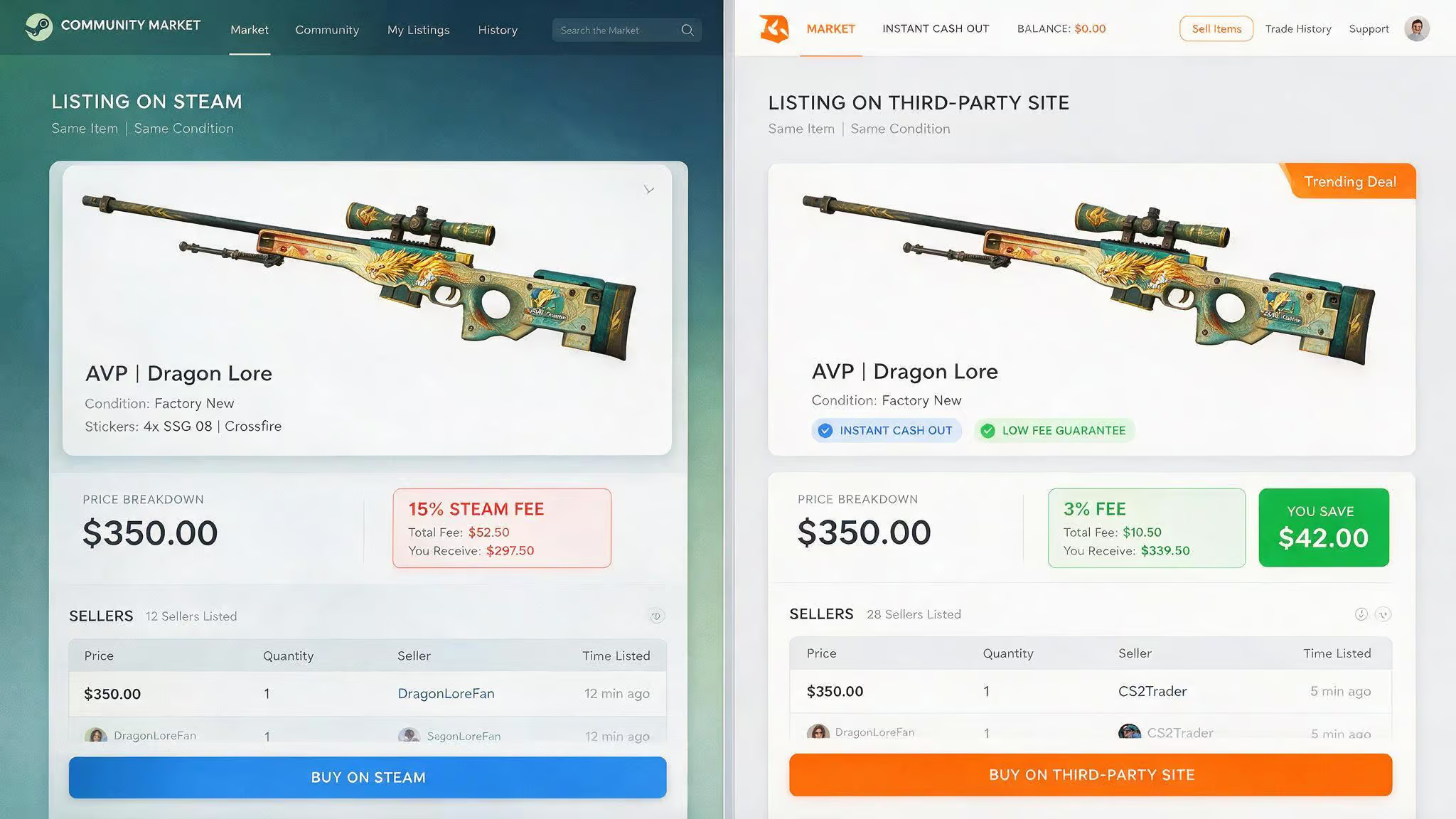
Steam Community Market vs. Third-Party Platforms
The Steam Community Market charges a flat 15% fee on every transaction, and skins you buy come with a 7-day trade hold before you can relist or trade them. That 15% fee means a Dragon Lore listed at $12,000 on Steam costs the seller $10,200 after fees — or costs the buyer $12,000 out of pocket. Third-party platforms like Skinport, DMarket, Buff163, CSFloat, cs.money, SkinBaron, and white.market charge between 2% and 10%, depending on the platform and whether you’re buying or selling, which is why people invest in Counter-Strike skins at this price level — that difference adds up fast.
Fee Comparison: 15% vs. 2–10%
At a $10,000 transaction, Steam’s 15% fee eats $1,500. The same transaction on a platform charging 2% only costs $200 in fees. That’s $1,300 in savings — enough to buy a nice FT Dragon Lore on its own. CSFloat currently has the lowest listing at $11,420.69 according to a PriceEmpire snapshot, which is already lower than most Steam listings before you even factor in the fee difference. You’ll typically see 5–20% price differences between marketplaces for the same skin, driven by fee structures and seller competition.
Trade Holds and Liquidity Considerations
Steam’s 7-day trade hold is a real logistical factor if you plan to flip the skin quickly. Third-party platforms generally have shorter or no trade holds, but they require account registration and sometimes a balance top-up. A first-time Dragon Lore buyer often checks Steam Market first, sees a high price, and assumes that’s the market rate. In reality, third-party markets often list the same skin 5–20% lower because their fees are lower. The tradeoff involves navigating account verification and understanding each platform’s escrow and withdrawal system.
Price History and Market Trends – Is This a Good Time to Buy?
A skin that once cost $0.04 now trades for more than a used car. The Dragon Lore’s all-time low was $0.04 on November 10, 2017. Its all-time high hit $14,683 on April 20, 2023.
Current prices sit around $11,500. Over the past 24 hours, it’s up a negligible 0.04% (+$4.95). The 7-day trend shows a -0.63% dip (-$72.73). The 30-day picture is a 3.96% uptick (+$438), which might look promising until you zoom out to the 1-year trend: -9.30% (-$1,179). The 1-year range spans $9,828 to $13,984, so there’s been movement within that window.
The 30-day uptick amid a 1-year decline signals volatility, not stability. The Dragon Lore is not a guaranteed upward asset — its 1-year trend is -9.30%. For comparison, the AWP | Gungnir ranges between $6,850 and $12,200, a similar tier of prestige skin with its own market behavior. A comprehensive look at the Counter-Strike AWP reveals its real-world origins, in-game mechanics, and cultural impact from 1.6 to CS2, but the Dragon Lore’s higher ceiling comes with more downside risk in the short term.
Investment and Buying Strategy – How to Buy Smart
Buy Minimal Wear, wait for quiet periods, and always check the float value using inspection tools. Let’s break that down.
The Condition Hierarchy for Resale Value
Battle-Scarred is hard to sell — avoid for investment. Field-Tested is the minimum acceptable condition. Minimal Wear is ideal for liquidity and price-to-quality ratio. Factory New is liquid but overpriced for what you get visually.
The Dragon Lore’s pattern hides wear so effectively that a low-float MW at $8,941 can offer nearly identical visuals to a FN at $12,358. Discontinued collections like Cobblestone tend to appreciate as supply stagnates — but the Dragon Lore’s 1-year decline shows that appreciation isn’t automatic. Supply is fixed, but demand fluctuates.
Timing the Market: Avoiding Hype Spikes
A failure pattern among investors is buying during a hype spike driven by a pro player or streamer unboxing. The tell is a 10–20% price jump within 24 hours. Those who buy at the peak see the price correct downward over the next 1–2 weeks. The approach is to wait for the correction.
Check 30-day and 90-day price trends before buying. If the price has jumped recently, wait for the correction. If it’s been flat or declining, that’s a better entry point.
Practical Buying Tips and Verification
Diversify across multiple items — don’t put everything into one skin. Verify the exact float value using inspection tools before you buy. Lower float within a condition tier commands a higher price, a 0.07 MW costs more than a 0.14 MW. A 0.07 MW Dragon Lore will cost more than a 0.14 MW Dragon Lore, even though both are labeled Minimal Wear. Use third-party markets with 2–10% fees, verify the float, and understand the trade hold before committing.
Why the Dragon Lore Is a Status Symbol – Pro Players, Streamers, and Cultural Demand
HLTV data shows that 41 professional players currently carry the Dragon Lore in their active CS2 loadouts. That includes names like torzsi, zont1x, donk, s1mple, f0rest, and adren. Articles name 2–3 famous players. The full HLTV count tells a different story — this isn’t a few players with expensive taste, it’s a substantial portion of the pro scene actively choosing this over other options.
Pro Players Can’t Be Wrong: The HLTV Data
These players have access to any skin they want — many get them through sponsorships, giveaways, or budget. They pick the Dragon Lore over alternatives like the Medusa or the Gungnir. CG Magazine has noted that the Dragon Lore and the Medusa serve as status symbols in the CS2 community — players wear them to demonstrate skill, taste, and wallet size.
How Streamers and Pros Create Demand Spikes
When a high-profile player like ropz or ZywOo uses a specific AWP skin in a major tournament, demand can jump 10–20% within 24 hours. Viewers see it in action, want to replicate the look, and search marketplaces. That spike is temporary — prices correct within 1–2 weeks, but it creates a recurring cycle of hype and correction that keeps the skin in the spotlight.
Market Dynamics and Speculation – What Really Drives the Price
But there’s a fourth factor that’s less discussed: speculators who create artificial shortages.
Speculators buy up promising skins to create the appearance of scarcity, then sell at a higher price. The Dragon Lore’s limited supply — 5,800 units estimated across all variants — makes it an attractive target for this kind of market play. When a speculator or group of speculators snaps up available listings, the visible supply drops, and prices tick upward even without new organic demand. This is why price jumps occur with no obvious catalyst like a tournament or streamer moment.
Game updates, new trading rules, and exchange rates affect prices. When Valve changes trading mechanics or introduces new cases, it shifts the entire market’s liquidity.
Frequently Asked Questions
What is the most expensive AWP?
The AWP Dragon Lore is widely considered the most expensive and iconic AWP skin, with Factory New versions starting around $12,358. Its price is driven by extreme rarity from a discontinued collection, high demand from pro players and collectors, and its status as a cultural symbol in Counter-Strike.
Why are AWP skins so expensive?
AWP skins can be expensive due to a combination of low supply from limited-time collections or cases, high demand from players and collectors, and cultural prestige. Skins like the Dragon Lore also carry a premium because they are status symbols used by professional players and streamers, which drives up their market value.