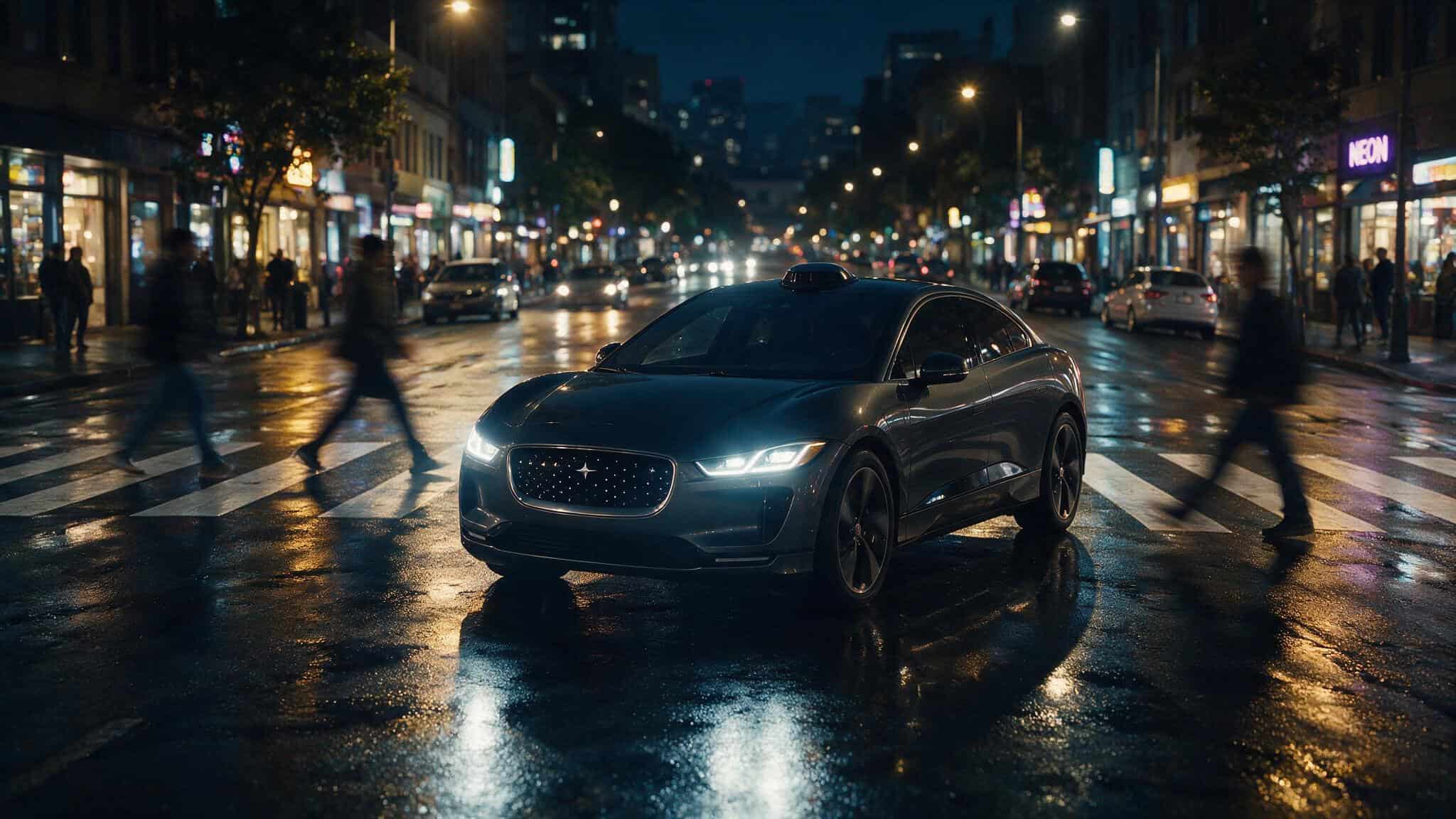
I fell into a legal rabbit hole recently, and it starts with a question: if a car with nobody driving hits something, who pays? The old rules assume there’s a human behind the wheel, ready to take the blame. Take that assumption away, and the system faces liability challenges because the driver is not always in control.
Over 90% of crashes involve human error, according to the National Motor Vehicle Crash Causation Survey. We’re replacing the primary cause of accidents with software, and current liability frameworks may not address accidents involving autonomous vehicles.
There’s no single federal law governing AV liability in the U.S. Instead, you get a patchwork of state rules, and the answer depends on three things: the automation level, what caused the crash, and where you are.
Key Takeaways
SAE automation levels are the legal cheat sheet: at Level 2 (like Tesla’s “Full Self-Driving”), the human is still responsible; at Level 4 (like Waymo’s robotaxis), liability shifts to the manufacturer
Traditional product liability lawsuits struggle because victims can’t access the training data and test logs manufacturers protect as trade secrets — information asymmetry is the real bottleneck
The clearest path forward combines existing product liability law with a “reasonable human driver” standard and stronger NHTSA regulation, according to Brookings analysis
Table of Contents
The Automation Level Problem: Who Is Actually Driving?
The SAE scale isn’t just engineering jargon — it’s the DNA of the liability answer. Level 0 is your regular car, straightforward. Level 5 is the sci-fi dream with no steering wheel, and liability sits entirely with the manufacturer. We’re not there yet, but everything between those endpoints gets complicated.
Level 2: The Human Is Still the Driver
This is a source of confusion, and Tesla is an example. Despite the name, “Full Self-Driving” is legally a Level 2 system. Tesla’s own fine print says you’re still the driver. The system is intended for a fully attentive human with hands on the wheel, ready to take over at any moment.
A Florida jury handed down a $243 million verdict against Tesla in an Autopilot fatal crash. The “but we warned them” defense didn’t fully work. That verdict signals that courts are holding companies accountable for how their systems behave, even when the driver is technically responsible.
Level 4: When There’s No One to Blame
Waymo operates Level 4 robotaxis in several cities — no safety driver, no human to blame. If something goes wrong, it’s Waymo’s problem. Tesla’s robotaxi service is running in Austin now, giving us a test case for this kind of liability.
Widen and Koopman, a law professor and safety engineer team, proposed a clean solution: create a new legal category called the “computer driver” with its own duty of care, evaluated by the reasonable human driver standard. Pin financial responsibility on the manufacturer. This avoids the philosophical debate about whether an AI can be a legal actor — treat the company as the driver in law.
The Four Liability Frameworks
Once you understand the levels, you need to know the legal tools available. Each framework solves a problem the previous one creates, but has its own flaw.
Traditional Negligence: The Black Box Problem
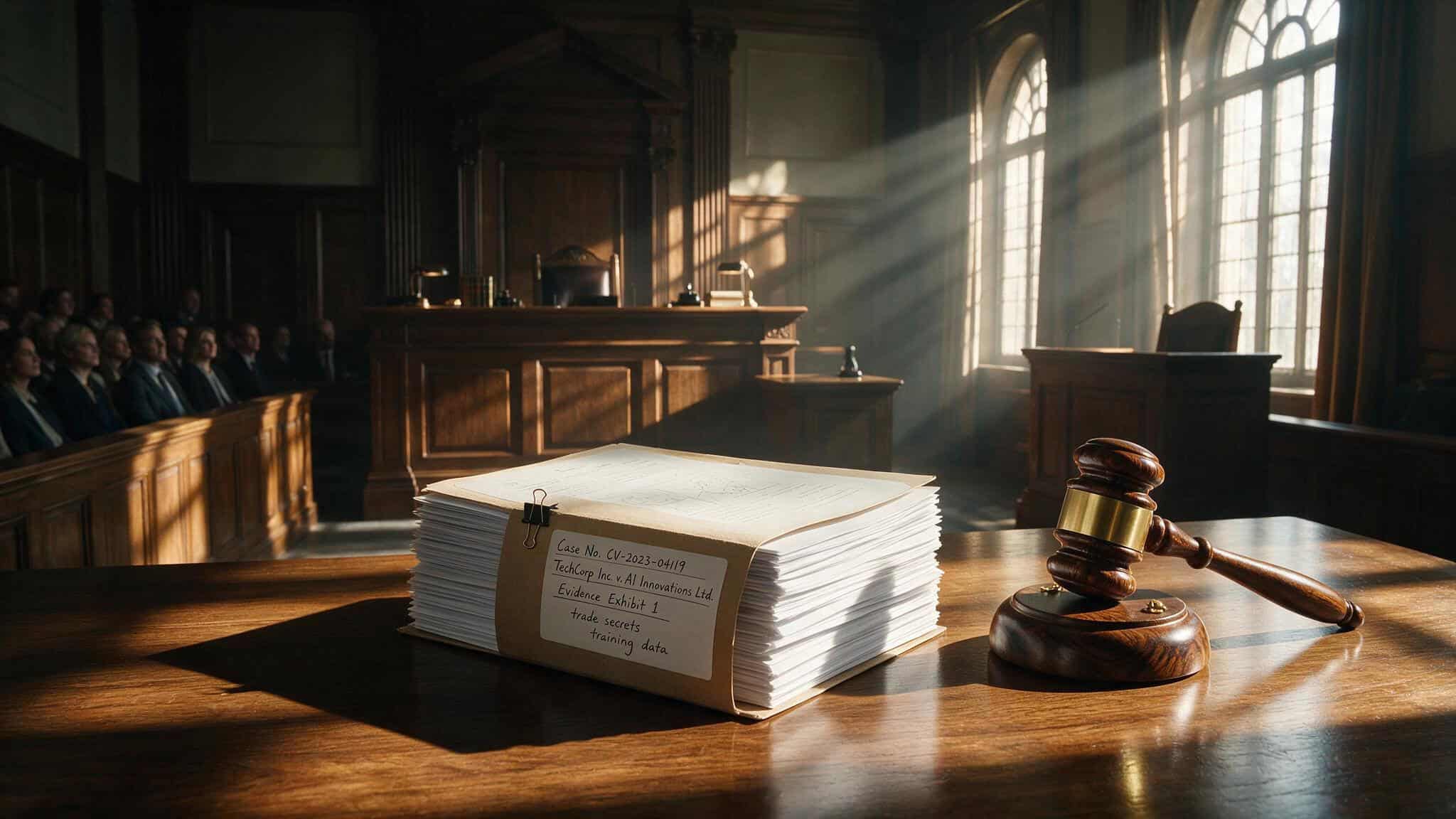
Under traditional product liability, you have to prove a design or manufacturing flaw. Sounds straightforward, but the victim has no access to the training data, testing logs, or software updates that might show what went wrong. Manufacturers protect all of it as trade secrets.
You’d need a safety engineering expert who understands self-driving systems to show the company didn’t take reasonable precautions. Those experts typically work for the companies you’re suing. Even the risk-utility test — proving a safer alternative design existed, is impossible when you can’t see the design docs.
Strict Liability: The Fix That Breaks Things
Strict liability flips the script: the manufacturer pays regardless of a specific defect. David Vladeck laid out four arguments for this: fairness for injured people, manufacturers’ ability to absorb costs, avoiding expensive litigation, and predictable liability for innovation.
But here’s the trap. Strict liability only works as a replacement for negligence, not a supplement. If you try to layer it on top, every accident gets litigated twice — first to figure out which regime applies, then to apply it. The point of strict liability is to avoid lawsuits, and this creates more of them.
Steven Shavell proposed a variant where the manufacturer pays the state instead of the victim. The idea is that buyers would demand safer cars if they knew the company was paying penalties. The problem: victims don’t get compensated.
Reasonable Human Driver: The Intuitive Benchmark
This standard asks: would a competent, unimpaired, attentive human driver have avoided this crash? If the computer does something a human wouldn’t have done, the manufacturer is liable.
It’s a minimum standard. But it gives manufacturers a target — be at least as good as a human, and creates an incentive to avoid mistakes. And manufacturers already claim their cars are safer than humans. This standard holds them to their own promises.
Bottom line: A “reasonable human driver” standard sets a clear, measurable floor — whatever an attentive human could have avoided, the manufacturer pays for.
Reasonable Computer Driver: The Wolf in Sheep’s Clothing
Kevin Webb proposed comparing the AV to other AVs, not to humans. Bryant Walker Smith reached a similar conclusion. On the surface, it sounds sophisticated — you should judge the car against its peers, right?
The problem: if the whole industry is mediocre, the standard becomes mediocre. You could end up with a standard where AVs far more dangerous than human drivers are deemed ‘reasonable’ simply because the industry cannot do better. The standard also risks collapsing into the design defect test, since courts would have to guess what’s technically and economically feasible.
The Litigation Bottleneck
Even with a legal framework, winning a lawsuit against an AV manufacturer is hard. The information asymmetry is the bottleneck. All the data that could prove what the car “saw” and “decided” sits inside the company’s proprietary logs.

This isn’t a theoretical problem — it’s a barrier. Plaintiffs face expensive discovery battles to reconstruct what the AV was thinking. And even then, proving that a company did not take reasonable precautions demands safety engineering expertise, which typically resides only within AV companies.
Real-World Precedents
This is where the theory meets the road, and the incidents tell a story than any legal brief.
Tesla: The $243 Million Signal
That Florida verdict is a data point for Level 2 systems. The jury decided Tesla was partially at fault despite the warnings. The verdict was about overpromising on driver monitoring, not a judgment on full autonomy. But it’s a clear signal that courts won’t let companies hide behind “the driver is responsible” when their systems behave dangerously.
Waymo and Cruise: Level 4 in the Wild
Waymo is a benchmark for Level 4 operation — robotaxis, no safety driver, operating in multiple cities. If one crashes, it’s on Waymo, but the legal landscape isn’t so clear, many states still lack firm rules about who is at fault when a self-driving car crashes, leaving insurers nervous about coverage. Clean and simple.
But Cruise provided an edge case. In August 2023, a Cruise AV drove into wet concrete in San Francisco. “That portion of the road has to be repaved, at Cruise’s expense.” That’s about as clear a “no reasonable human would do this” moment as you’ll get.
The Uber fatal crash in 2018 highlighted a liability gap. A Level 3/4 test vehicle struck and killed a pedestrian in Tempe, Arizona, with a safety driver behind the wheel who was distracted. The incident exposed the ambiguity of responsibility during testing — the safety driver was charged with negligent homicide, but questions about Uber’s system design and monitoring failures fueled debates about manufacturer liability in semi-autonomous modes.
The Xiaomi SU7 crash in China in March 2025 killed three people. It’s a reminder that the stakes are life and death, and the legal system is still figuring out how to handle these cases.
Mercedes-Benz and Volvo: Liability as Strategy
Here’s where it gets interesting from a business perspective. Mercedes-Benz publicly accepted liability for its Level 3 Drive Pilot system starting in September 2023. Volvo pledged full responsibility for crashes caused by their self-driving tech. They’re betting that consumer trust is worth more than legal protection.
Compare that to Tesla’s resistance to liability, and you see two different strategies playing out in real time.
The Insurance Transformation
KPMG projects a shift in insurance markets. Personal auto insurance is projected to fall from 87% of the market in 2013 to just 58% by 2040. Commercial auto insurance jumps from 13% to 28%. And product liability insurance — basically nonexistent today, is projected to hit 14%.
Your insurance bill might drop, but the cost of the car will rise to cover the manufacturer’s liability policies. The risk is shifting from personal policies to corporate ones. During the transition, usage-based insurance models like Metromile may bridge the gap between personal and commercial policies.
The Regulatory Patchwork
Across the U.S., autonomous vehicle liability is governed not by a single national standard but by a collection of state laws, creating uncertainty for manufacturers and victims alike.
No Federal Law
The SELF DRIVE Act of 2017 passed the House but never became law. So there’s no federal AV liability framework. The UK passed its own AV liability law in 2018, but the U.S. is stuck with a state-by-state patchwork.
State-by-State Maze
Mississippi passed the FAVE Act in 2023. Missouri passed its autonomous car legislation in 2018. Florida, California, Nevada, Rhode Island, Arkansas, Alabama, Iowa, Louisiana, Utah, and Tennessee all have AV laws on the books. But the specifics vary wildly, and most states don’t even specify what happens after a crash or who the “operator” is.
Your legal recourse depends entirely on your zip code. That’s a gap for a technology that will operate across state lines.
The Path Forward: Regulation Over Litigation
Here’s the Brookings bottom line, and honestly, it makes the most sense to me. We need a combined approach: keep traditional product liability for design and manufacturing defects, add a “reasonable human driver” negligent driving standard for the computer’s behavior, and let regulators push for better-than-human safety.
The human fatal accident rate is one in every 100 million miles driven. In 2022, Americans drove 3.2 trillion miles and had 42,795 traffic fatalities. That’s the baseline AVs need to beat.
Regulators can mandate things like faster reaction times than any human could achieve. They can set performance requirements that push the industry beyond human capabilities. Litigation is for compensating victims, but it’s not effective at making cars safer. That’s a job for NHTSA and state regulators like California’s DMV.
Lawsuits are for compensating victims, not for improving safety. If you want AVs to exceed human safety levels, you need proactive performance standards from regulators — not juries writing checks after the crash.
Until we sort out who’s responsible when nobody’s driving, the potential of autonomous vehicles is going to stay stuck in neutral.
Want to dig deeper into the tech behind self-driving cars? Check out our deep dive on the importance of autonomous vehicles and the top 5 dangers of self-driving cars. Or for something completely different, read about what happens if a cop pulls over a Waymo.
People Also Ask
Who is at fault if Tesla autopilot crashes?
Legally, the human driver is still responsible because Tesla’s ‘Full Self-Driving’ is classified as a Level 2 system, meaning the driver must remain attentive and ready to take over. However, a Florida jury awarded a $243 million verdict against Tesla in an Autopilot fatal crash, signaling that courts may hold manufacturers partially accountable when their systems behave dangerously, even if the driver is technically at fault.
Who is to blame for self-driving car deaths?
It depends on the automation level. At Level 2, the human driver is legally responsible, but manufacturers can face liability if their systems overpromise or lack adequate driver monitoring. At Level 4, where there’s no safety driver, the manufacturer is on the hook. The legal framework is still a patchwork, so the answer also depends on which state you’re in and what caused the crash.
Who is responsible if a Waymo kills someone?
Waymo is responsible. Its robotaxis operate at Level 4, meaning there’s no human driver to blame — the company is the driver in the eyes of the law. If something goes wrong, it’s Waymo’s problem, and the manufacturer bears financial liability for the crash.
How does the ‘reasonable human driver’ standard work for AV crashes?
It asks whether a competent, attentive human driver would have avoided the crash. If the autonomous vehicle did something a human wouldn’t have done, the manufacturer is liable. It’s a minimum safety benchmark that gives manufacturers a clear target and holds them to their own claims that their cars are safer than human drivers.
Why is it so hard to sue an autonomous vehicle manufacturer?
The biggest barrier is information asymmetry — all the data about what the car ‘saw’ and ‘decided’ is locked inside the manufacturer’s proprietary logs, protected as trade secrets. Victims can’t access training data, testing logs, or software updates to prove a defect, and the safety engineering experts who understand these systems typically work for the companies being sued.