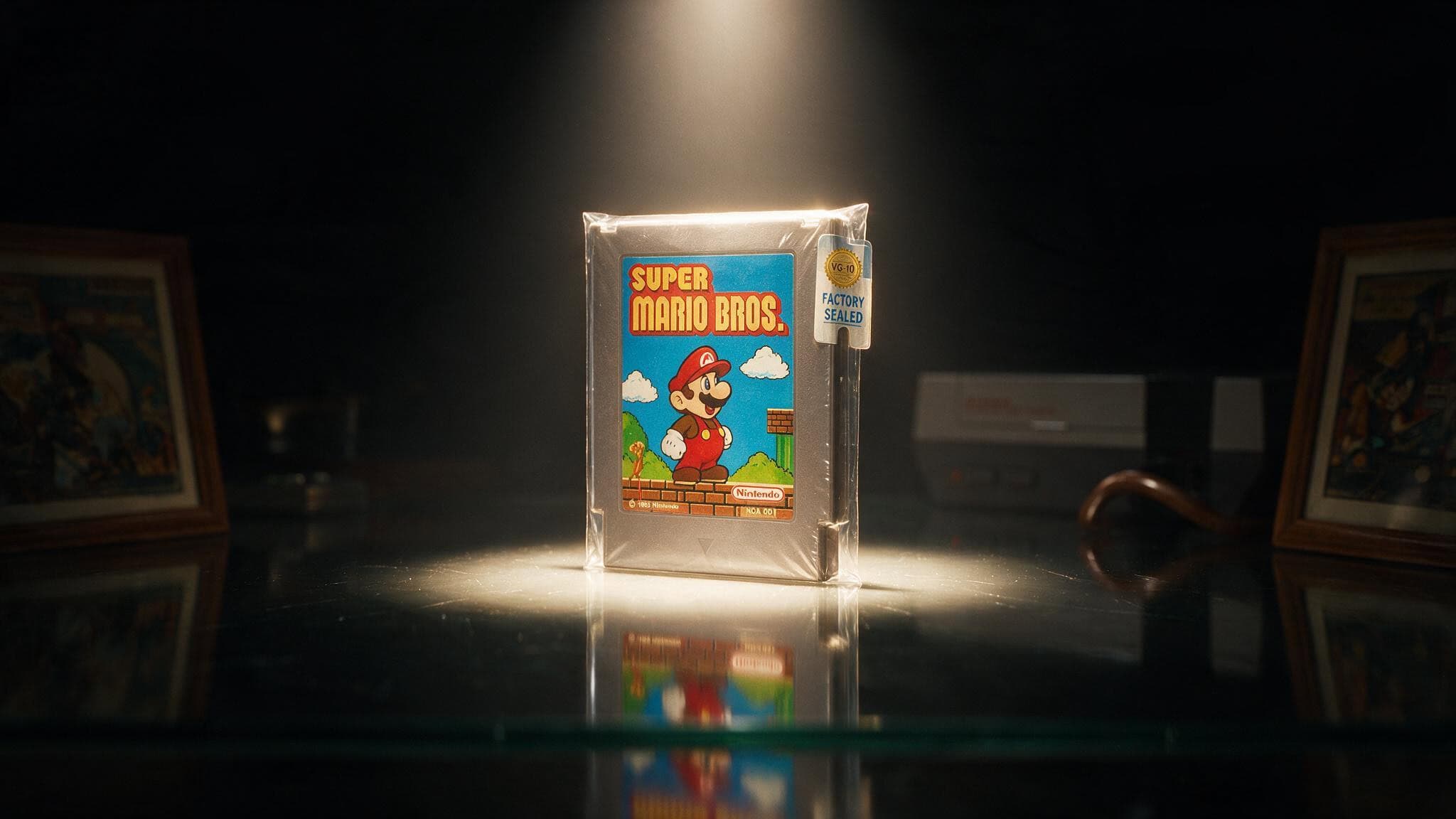
That beat-up copy of Super Mario Bros. you’ve been hauling between apartments since college? Loose, it’s worth about $10-20. But a pristine, factory-sealed copy? One sold for $2 million.
So some retro games are worth up to $2 million sealed. But most aren’t. The market breaks down into rarity (limited production runs) and demand (nostalgia and iconic status).
Key Takeaways
Rarity drives the highest prices: Tetris for Sega Mega Drive has only 10 known copies and is worth up to $25,000. Air Raid for Atari 2600 has 12 surviving copies and sold for $46,500. Stadium Events for NES has a maximum of 20 remaining cartridges and goes for $47,000.
Condition is the biggest multiplier: A sealed copy of Super Mario Bros. sold for $2 million. The loose version of the same game trades for $10-20. Pokémon Red sealed hit $84,000, while a loose copy is $20-50. That’s the condition cliff in action.
Most common games are worth under $10: Most of what you own — especially sports titles, annual franchises, and million-sellers like Madden or Tetris for Game Boy, is worthless. The exception is games that are both rare and in high demand, like Shantae (25,000 copies ever made, worth $2,300 sealed).
Table of Contents
The Value Equation: What Actually Makes a Retro Game Worth Money
A game’s value comes down to three interlocking factors: scarcity, desire, and condition.
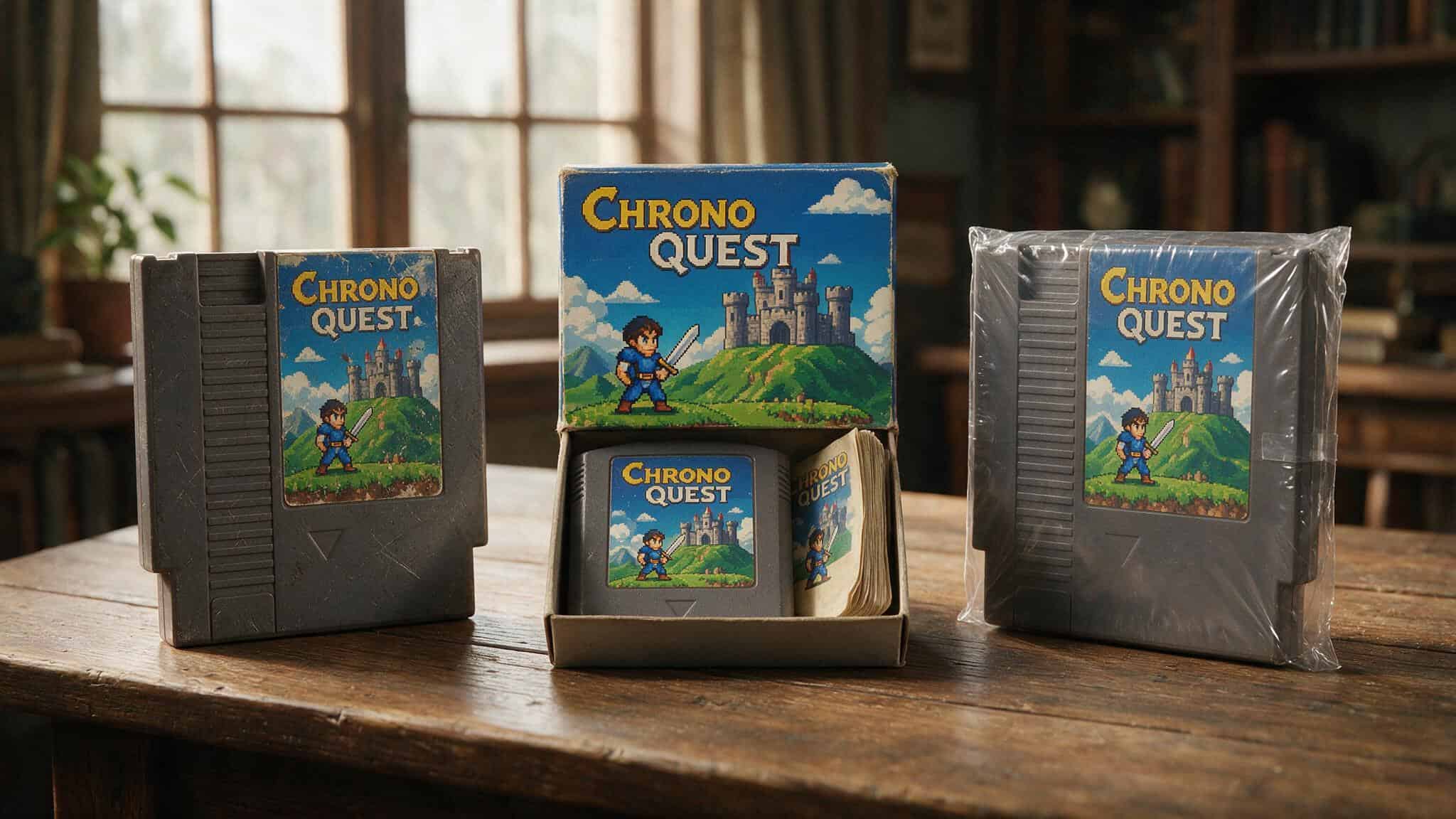
Scarcity is about limited production runs, poor sales, and distribution quirks. Shantae for Game Boy Color only sold 25,000 units, so a sealed copy is worth around $2,300. Meanwhile, Madden NFL 2004 sold millions, and you’d be lucky to get $2 for it.
Condition is the multiplier that separates casual collectors from serious money. A loose cartridge is usually 1-5% of the sealed value. Complete-in-box (CIB) sits somewhere in between — typically 2-10x the loose price. And sealed?
Pokémon Box: Ruby and Sapphire for GameCube illustrates this perfectly: sealed copies go for about $1,300, while used copies are around $500. That’s a 2.6x jump just for the shrink wrap.
Grading enters the picture when you’re dealing with high-value items. Services like Wata, PSA, and Beckett quantify condition on a numeric scale. A PSA 10 can be worth 5-10x a PSA 8. But grading costs $30-100+ per item, so it only makes financial sense for games already worth $200 or more loose.
Historical significance and provenance add another layer. A “no drill hole” copy of Final Fantasy VII — meaning it didn’t have the anti-theft hole punched in the cartridge, sold for $144,000, compared to standard sealed copies that fetch $10,000-20,000. The “desk drawer find” Super Mario Bros., a sealed copy discovered untouched in someone’s office furniture, went for $660,000.
Console Hotspots: Which Systems Hide the Most Treasure
Systems with small libraries, such as the Atari Jaguar CD, Sega Master System, and Pokémon Mini, have higher average game values than long-running mainstream platforms. If you have an Atari Jaguar CD, the average eBay price for a game is $1,082 — that’s 7x its original $149.95 retail price. A Sega Master System game averages $509, more than double its original $200. The Pokémon Mini averages $198, five times its $40 launch price.
On the flip side, the PlayStation 2 — the best-selling console of all time, has an average game value around $10. The PlayStation 2 library was so vast and so many copies were produced that almost nothing is rare.
Here’s a quick breakdown of which systems are worth your time to dig through:
Major Consoles with High-Value Games
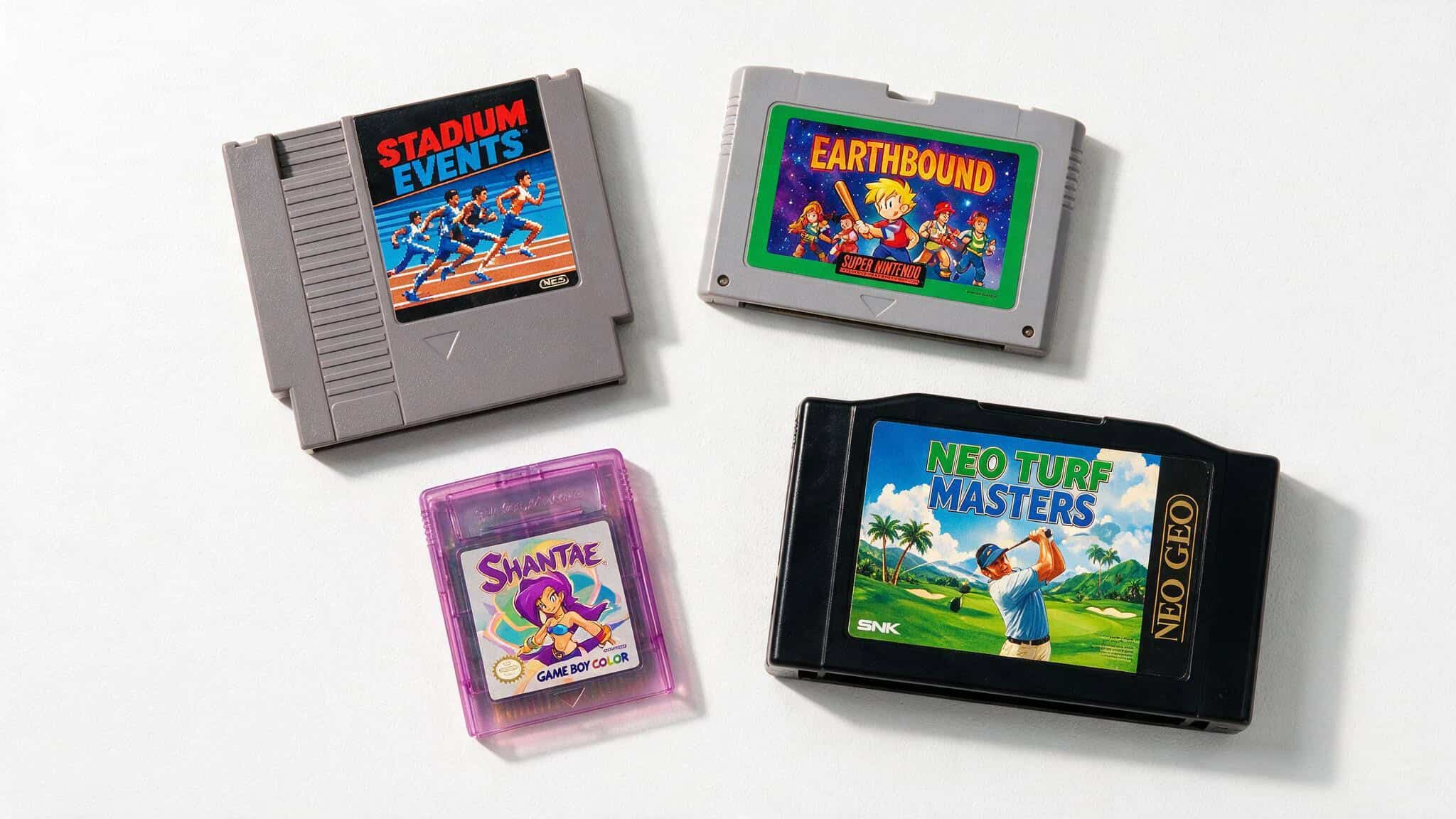
- NES: Most NES games are cheap, but the rare titles — Stadium Events ($47,000), Little Samson ($2,000-5,000), and the Nintendo World Championship Gold cartridge ($170,000), are where money lives.
- SNES: SNES games like Earthbound and Chrono Trigger command premium prices, but the console itself is common. Condition and completeness are everything here.
- Sega Genesis: Most games are affordable, but rare titles like Tetris for the Mega Drive ($25,000) and certain Sonic & Knuckles variants can be worth money.
- Game Boy: Game Boy exceptions include late-era releases like Shantae ($2,300) and Japan-only titles.
- PlayStation:
- Dreamcast: The Dreamcast console is affordable, but some PAL-region exclusives like Illbleed are rare and valuable.
- Saturn:
- Neo Geo AES: Consoles and games were expensive when new and remain so. Neo Turf Masters runs about $10,000.
Lesser-Known Consoles with Surprising Value
- Atari Jaguar CD: The average game is worth over $1,000, driven by the console’s small library and commercial failure.
- Sega Master System: Regional pricing differs — US copies are more valuable than PAL or Brazilian ones, but the console was a hit in Brazil and still sells there.
- Virtual Boy: The console itself has value as a curiosity, and some games are hard to find. Average eBay price for a game is around $100.
- Pokémon Mini: Tiny handheld, big prices. Average game is around $200.
- Atari Lynx: Some games are rare, with average eBay prices around $50.
- 3DO: The 3DO console has some value to completionists, with average game prices around $30.
- Vectrex: Games average around $75 on eBay, and the console itself commands a premium due to its distinctive technology.
- PC Engine / TurboGrafx-16: Average eBay prices hover around $60 for games, with rare shoot-em-ups and exclusives fetching more.
- 3DO: The 3DO console has some value to completionists, with average game prices around $30.
- Sega Saturn: Average eBay price for a Sega Saturn game is around $70.
- Dreamcast: The Dreamcast console is affordable, but some PAL-region exclusives like Illbleed are rare and valuable. Average game price on eBay is about $40.
Magazines and Collectibles
Early issues of Nintendo Power, Electronic Gaming Monthly, and GamePro can be worth money, especially in good condition. A pristine first issue of Nintendo Power can fetch over $100. Strategy guides for popular games also have a following. Condition is everything here too — to dive deeper into retro gaming culture, a pristine first issue of Nintendo Power can fetch over $100.
The Condition Cliff: From $1 Loose to $2 Million Sealed
A tiny tear in shrink wrap can drop a sealed game’s value by 80%. A missing manual can cut it in half.
Consider Pokémon Red: sealed at $84,000, loose at $20-50. That’s a 4,000x multiplier. Super Mario Bros. sealed at $2 million, loose at $10-20 — a 100,000x multiplier.
The “no drill hole” premium is a corner of this market. Early PlayStation games had holes drilled in the cartridges to deter theft. Copies that escaped this process are rare. A Final Fantasy VII no-drill-hole copy sold for $144,000, while standard sealed copies max out around $20,000.
Provenance stories add another dimension. The “desk drawer find” Super Mario Bros. — a sealed copy discovered in a writer’s desk, sold for $660,000 because it came with a documented origin story.
When Grading Makes Financial Sense
Grading isn’t free. You’ll pay $30-100+ per item, plus shipping and insurance. For a game worth $20 loose, that’s a terrible investment. But for a game already valued at $200+ loose, a high grade can multiply the price by 5-10x.
The key question: is the game worth enough that a grading fee is a meaningful percentage of the potential upside? If yes, grade it. If no, consider how do retro game stores buy games and sell as-is—they typically offer 30-50% of resale value, often preferring clean condition, and may give better trade credit than cash.
The Most Valuable Retro Games: A Console-by-Console Guide
Here’s what to look for on each major platform.
Atari 2600
Look for Air Raid. Only 12 copies are known to exist, and only three complete games have survived. A sealed copy sold for $46,500. Also check for Bounty Bob Strikes Back!, a late-era release that’s hard to find.
NES
Stadium Events (max 20 copies remain) fetches $47,000. Nintendo World Championship Gold (26 cartridges ever made) sold for $170,000. Little Samson is more attainable at $2,000-5,000 but still a major find. Also keep an eye out for Mike Tyson’s Punch-Out!! sealed — the common loose version is cheap, but sealed copies can be valuable.
SNES
Earthbound, Chrono Trigger, and Final Fantasy III (VI) are the heavy hitters. Complete-in-box copies of Earthbound sell for $1,000-2,000.
Game Boy / Game Boy Color / GBA
Shantae for GBC leads the pack at $2,300 sealed (only 25,000 units sold). Ninja Five-O for GBA is worth up to $1,000. Amazing Tater for original Game Boy is a cult puzzle game that commands a premium.
Sega Genesis
Tetris for Sega Mega Drive is the crown jewel — only 10 copies exist, worth up to $25,000. Legal disputes with Sony prevented a full release, though a limited number of copies were manufactured. Also look for complete-in-box versions of popular titles like Sonic & Knuckles with its lock-on technology.
PlayStation / PS2
Final Fantasy VII sealed (no drill hole) sold for $170,000. Haunting Ground for PS2 is a cult horror classic worth several hundred dollars. Shepherd’s Crossing 2 for PS2 is a rare obscure game with a limited print run. Most PS1 and PS2 games are cheap, but the survival-horror and JRPG niches hold value.
Nintendo 64
Super Mario 64 sealed sold for $1.8 million. Also check for Conker’s Bad Fur Day and the Banjo-Kazooie series — quality titles with limited prints.
GameCube
Cubivore: Survival of the Fittest ($500) and Pokémon Box: Ruby and Sapphire ($1,300 sealed) are the big finds. Also look for Gotcha Force and the Mario Party series in good condition.
Xbox / Xbox 360
Steel Battalion with its massive controller is the standout at $738 (original release restricted to 2,000 copies). Most Xbox games are cheap, but the Halo series in good condition and rare PAL exclusives can hold value.
Neo Geo AES
Neo Turf Masters is a golf game that sells for $10,000. MVS arcade carts are cheaper, but AES home carts are the collector’s premium tier.
Pokémon Cards: A Parallel Universe of Value
A single grade point on a Pokémon card can mean the difference between a used car and a house. And the most valuable Pokémon card isn’t Charizard — it’s Pikachu Illustrator, a card you’ve probably never seen.
The Ultra-Rare Tier
Pikachu Illustrator is the undisputed king. In February 2026, a PSA 9 copy sold at Goldin Auction for $16,492,000. It was originally awarded to winners of a contest in 1998 — only about 20-40 copies exist.
Trophy Pikachu No. 1 Trainer sold for $3,000,000 on eBay in September 2025. Trophy Pikachu No. 3 Trainer shows the power of grading: a NM/M 8 copy sold for $324,000, while a GEM MT 10 brought $1,769,000. That one grade point difference — from 8 to 10, is worth $1.4 million.
The Iconic Tier
First Edition Base Set Holo Charizard is the card everyone knows. In April 2026, a PSA 9 copy sold for $700,000 in a private sale. Also check for Lugia, Mewtwo, and Shadowless variants of the original set.
The Modern Spike
Some modern Pokémon cards have seen wild appreciation. Darkrai #BW73 and Squirtle #29 Reverse Holo both saw roughly 5,900% increases between late 2023 and early 2026. Squirtle #29 went from $250 to $15,000 in that time.
How Grading Changes Everything
One PSA point can swing a Pokémon card’s value by 10x or more. A First Edition Base Set Charizard Pokémon card at PSA 8 might be worth $100,000; the same card at PSA 10 could be $500,000. Grading costs $30-100 per Pokémon card, but for high-value cards, the investment is mandatory.
The Development Cost Fallacy
The most expensive video games ever made are often worth nothing used, while cheaply made flops can be treasures.
Grand Theft Auto V cost $265 million to develop. A used copy is worth $5-10. Call of Duty: Black Ops Cold War had a $700 million budget. Used copies sell for $10-15.
Cyberpunk 2077 cost $316 million. Good luck getting $20 for a used copy.
Meanwhile, Shantae was developed on a tiny budget. A sealed copy is worth $2,300. Air Raid for Atari 2600 was a low-budget release; one of the three complete copies sold for $46,500. Tetris for Sega Mega Drive was an accidental masterpiece limited by legal issues, and it’s worth $25,000.
The cancelled video games category is even more stark. Wonder Woman cost $100 million+ before being cancelled — zero collectible value. The Titan Project ($90 million), Fable Legends ($75 million), and This Is Vegas ($40-50 million) are all digital ghosts. No video game, no value.
Don’t assume a video game is valuable because it was expensive to make. Look at rarity, condition, and demand instead.
The Nostalgia Trap
If a video game sold millions of copies and isn’t in a sealed box, it’s probably worth less than the gas it took to drive to the game store.
Super Mario Bros. loose: $10-20.
Madden NFL 2004 loose: $1-2.
Tetris for Game Boy loose: $5-10.
Pokémon Red loose: $20-50.
Popularity of a video game does not equal value. The video games you played as a kid are the same games millions of other people played.
Sports video games and annual franchise titles are the biggest culprits. Madden, FIFA, NBA 2K, Call of Duty video games — each year’s release is essentially identical to the last, and they printed millions of copies.
The exception? Sealed copies of video games. A sealed copy of Mike Tyson’s Punch-Out!! is genuinely rare because most copies were opened and played. But loose?
It’s a $10-20 video game.
How to Appraise Your Collection in 10 Minutes
Here’s a step-by-step system to figure out what you’ve got in your video game collection.
Step 1: Sort by console. Group all your games by platform. A GameCube game is automatically more likely to be valuable than a PlayStation 2 game, just because of library size and rarity distribution.
Step 2: Check for rare titles. Use the console-specific video game lists above. Look for the video game names: Shantae, Stadium Events, Tetris (Sega Mega Drive), Cubivore, Steel Battalion, Air Raid, Neo Turf Masters.
Step 3: Assess condition. Loose? Complete-in-box? Sealed?
Loose video games are almost always worth less than $50 unless they’re extremely rare. Complete-in-box video games can be worth 2-10x loose. Sealed video games are the premium tier.
Step 4: Check for variants. Look for first edition markings, “no drill hole” status, regional differences (PAL vs. NTSC), misprints, and limited edition stickers on video games.
Step 5: Look up prices. Use PriceCharting for video games, which aggregates eBay sales across all conditions. Or go straight to eBay and filter by “sold items” — this shows you what video games actually sell for, not what people are asking. Always filter by condition for video games.
Step 5b: Check for counterfeits. High-value video games are frequently faked. Examine the label quality on video games — authentic labels have sharp, consistent printing, while fakes often show blurry text or off colors. Weigh the video game cartridge; many reproductions are lighter due to cheaper boards.
Verify serial numbers against known databases for video games, and for Pokémon cards, use a jeweler’s loupe to check for the rosette pattern in the holographic foil, authentic cards have a distinct diamond-shaped pattern that fakes cannot replicate. For video games worth over $200, consider using trusted authentication services like those associated with Heritage Auctions or Goldin before selling.
Step 6: Decide on grading. Only grade video games worth $200+ loose. If a video game is worth $20 loose, grading it for $50 is throwing money away. If a video game is worth $500 loose and you think it could grade at 9 or 10, the grading fee is a worthwhile investment.
Where to Sell and What to Avoid
You have three main options for selling video games, and each one trades money for convenience.
eBay is the best option for mid-range items ($50-5,000). You get the largest audience for video games, which usually means higher final prices. But eBay fees run 13-15%, so a $1,000 video game sale nets you about $850-870. You’ll also need to handle shipping for video games, customer questions, and the occasional return. For video games under $50, eBay fees eat too much of the profit.
Auction houses like Heritage Auctions and Goldin are the right call for items worth $5,000+. They handled the highest-value sales in this article — Pikachu Illustrator, Trophy Pikachu, the million-dollar video games. Fees are lower effective percentages for video games, but you’ll wait longer for the auction to close and you need to meet their minimum consignment value.
Local game stores are convenient but you’ll take a haircut. Expect 30-50% of resale value for video games. If you have a stack of common video games worth $1-5 each, a store will take them off your hands for maybe $0.50-1.00 each and you don’t have to deal with shipping. For low-value common video games or when you need cash immediately, this is the play.
Avoid selling high-value video games through Facebook Marketplace or Craigslist unless you know how to spot counterfeit buyers and fake payment methods. Always insure video games over $100.
Putting It All Together
The difference between a $10 video game and a $10,000 video game is often a sealed wrapper, a missing manual, or a rare print variant.
The hunt for video games is the fun part. Go dig through those boxes.
For the selling side, our guide on who buys retro video games breaks down every buyer type — from local stores offering 30-50% of resale value to auction houses handling $5,000+ items.
People Also Ask
What retro games are worth money?
The ones that are genuinely rare and in high demand. Think limited-run titles like Shantae for Game Boy Color (only 25,000 copies made) or Tetris for Sega Mega Drive (10 known copies). Condition is everything — a sealed copy of Super Mario Bros. hit $2 million, while the loose version is $10-20. Common games like Madden or most sports titles are basically worthless.
How do I know how much my old games are worth?
Sort by console first — a GameCube game is automatically more likely to be valuable than a PlayStation 2 game. Then check for rare titles using console-specific lists, assess condition (loose vs. complete-in-box vs. sealed), and look for variants like first editions or no-drill-hole copies. Use PriceCharting or eBay sold listings — not asking prices — to see what people actually paid.
Is a sealed game always more valuable than a loose one?
Almost always, and sometimes by a staggering margin. A sealed copy of Pokémon Red sold for $84,000 while a loose copy goes for $20-50 — that’s a 4,000x multiplier. But even a complete-in-box (CIB) copy typically sits 2-10x above the loose price. A tiny tear in the shrink wrap can drop a sealed game’s value by 80%, so condition within the sealed category matters enormously too.
Why are some cheaply made retro games worth more than expensive modern ones?
Production cost and collectible value have zero correlation. Grand Theft Auto V cost $265 million to make and used copies go for $5-10. Meanwhile, Shantae was developed on a tiny budget and sealed copies are worth $2,300. Value comes from rarity and demand, not development expense. Cancelled games that cost millions to develop are often worth nothing because no cartridges exist.