
Have you ever been dropped in a match so quickly that you didn’t even have time to aim down sights? One moment you’re holding a comfortable angle, and the next, an opponent slides around the corner, instantly jumps to break your camera tracking, drops to a prone position mid-spray, and secures a perfect headshot. In modern multiplayer culture, you lost—you got styled on by a “sweat.”
If you’ve spent any time in multiplayer lobbies recently, you’ve likely heard the term. But what does sweaty mean in gaming? The term identifies players who use meta-loadouts and advanced movement—such as slide-canceling, bunny hopping, and snaking—to maximize win probability during casual matchmaking. It’s the digital equivalent of trying to break a speedrun record during a casual Friday evening session with your friends, playing like there’s a million-dollar tournament prize pool on the line when everyone else is just trying to unwind.
Key Takeaways
Sweaty play is defined by ultra-high input frequency and mechanical performance, such as slide-canceling or snaking to manipulate game-engine hitboxes, rather than just basic effort.
The rise of strict skill-based matchmaking (SBMM) and competitive disparity in hardware (like 120Hz monitors versus high-latency living room TVs) forces casual players into lobbies where optimizing is the only way to survive.
Digital marketplaces like G2A actively monetize this competitive slang, indexing terms like “sweaty” in SEO funnels alongside hot listings like the Gothic 1 Remake (priced at 36.69 USD) or Forza Horizon 6 (priced at 40.32 USD) to capture gamer traffic.
Table of Contents
Defining the “Sweat” in Modern Arenas
The term originally migrated from high-stakes PC environments—like esports-infused MOBAs in League of Legends or tactical rounds of Counter-Strike—directly into the everyday battle royale and casual lobbies of titles like Call of Duty: Modern Warfare III.
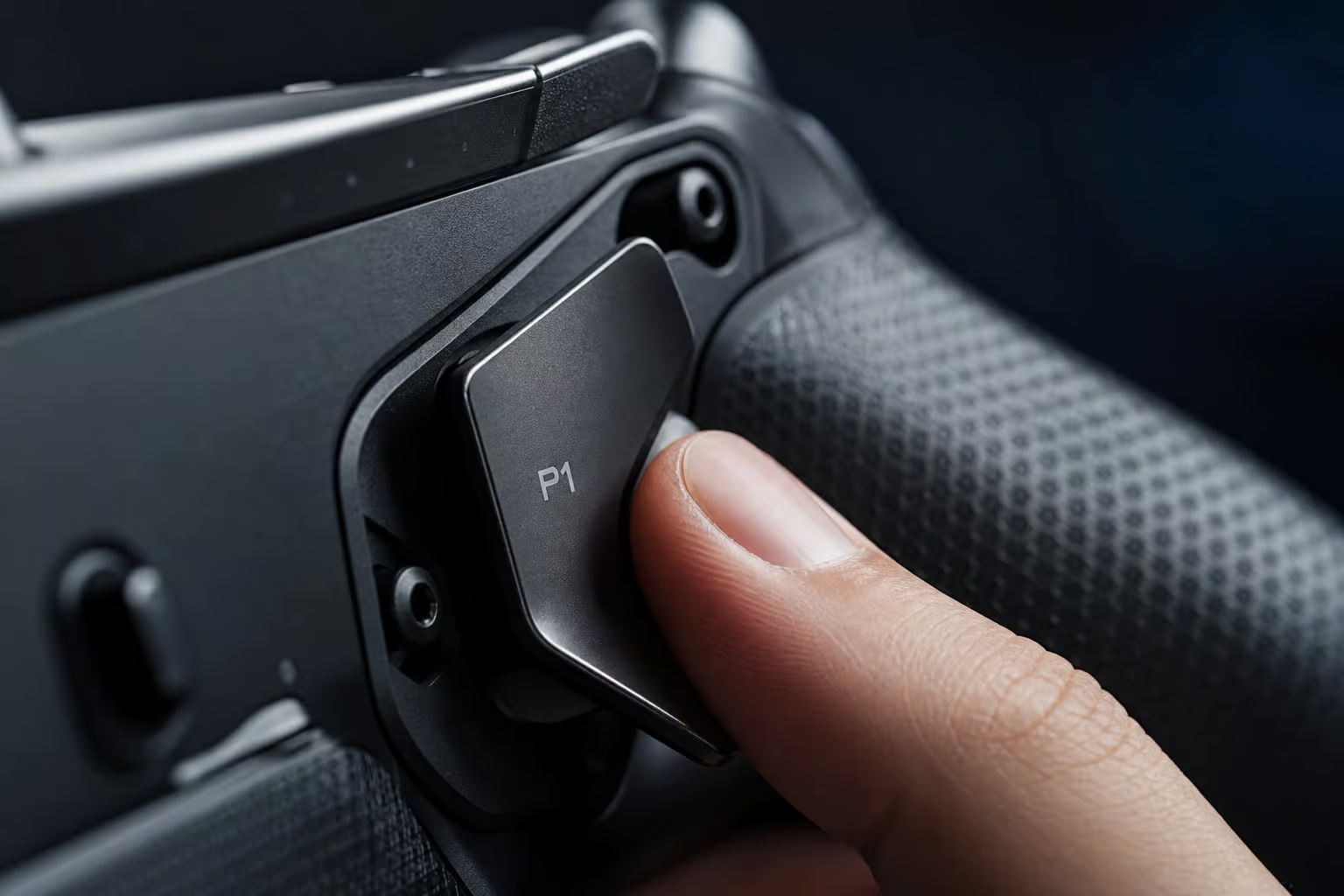
But there’s a vital, mechanical difference between a sweat and a try-hard. The classic “try-hard” is someone who wants to win desperately but often lacks the mechanical capabilities to back it up; they might copy a pro’s style but still end up at the bottom of the scoreboard because they lack fundamental awareness. In contrast, a true “sweat” has the mechanics down to muscle memory. They map back-paddles to controllers, optimize audio EQ for sound-whoring, and execute movement loops like drop-shotting and snaking with clinical precision.
For some, the badge of being a “sweat gamer” is a meritocratic point of pride, proving they can execute flawless, optimal play. For others, calling someone “sweaty” is a salty, convenient pejorative used to rationalize getting completely zeroed out by someone with better reflex integration.
The Mechanics of Sweat: Active Movement vs. Exploits
To understand why sweaty play feels so distinct, we have to look past the scoreboard and examine the actual frame-level physics of modern game engines. Sweaty players don’t aim better; they manipulate animations to break the opposing player’s target tracking.
Advanced Movement and Animation Manipulation
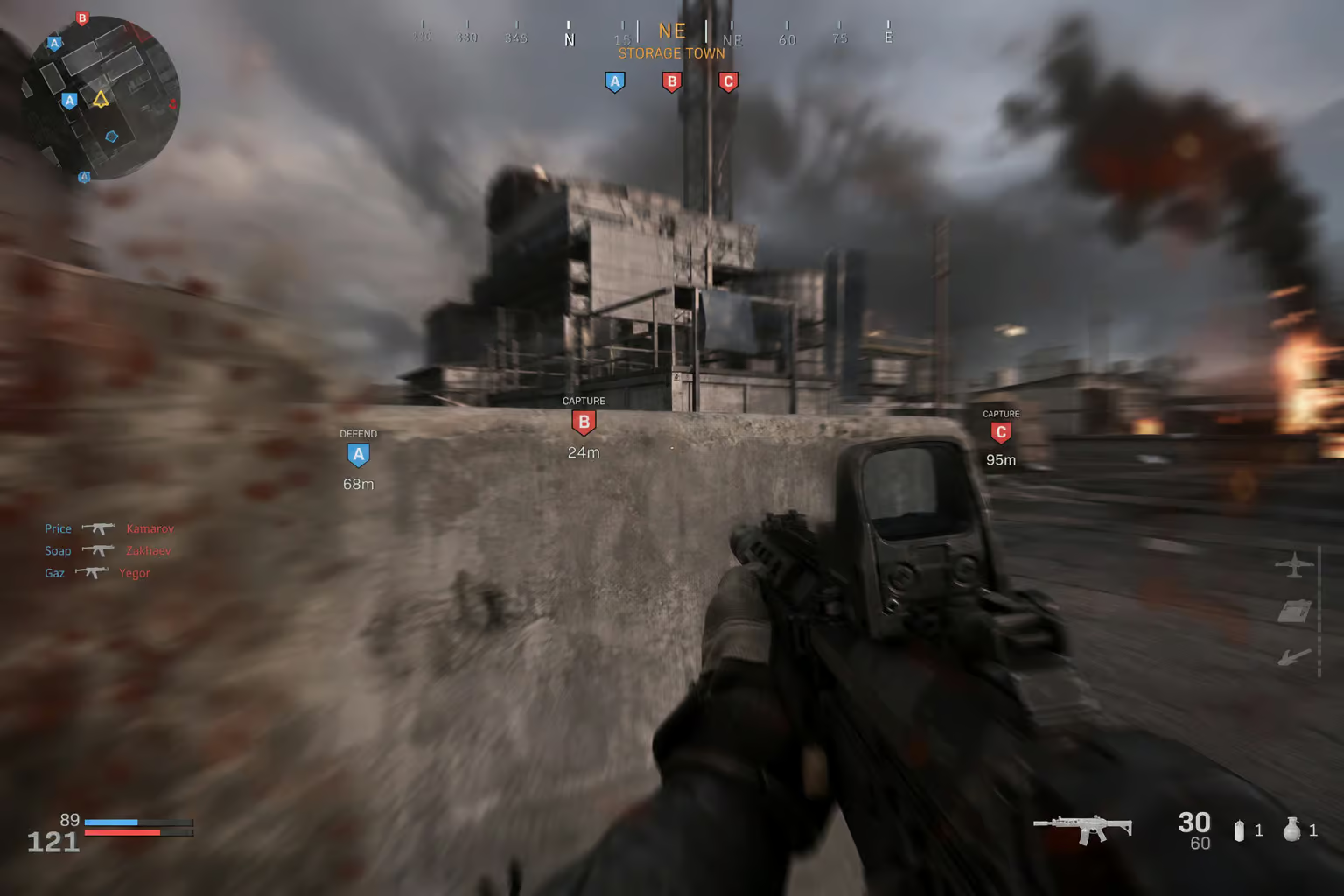
The foundational tier of the modern movement meta is built on a series of rapid, high-frequency inputs. In games like Modern Warfare III, you’ll see players constantly utilizing bunny hopping (jumping immediately upon landing to maintain momentum), slide-canceling (interrupting a slide animation to reset tactical sprint instantly), and drop shotting (going prone while holding down the trigger).
Beyond visual aesthetics, these moves allow for specific animation manipulation. Take “snaking,” a highly controversial mechanic—often discussed in videogame reviews on SuperBigWin—where a player rapidly alternates between crouching and standing behind low cover. By doing this at a speed that matches the game’s tick rate, the player can see over the barrier while keeping their own hitbox completely hidden or heavily distorted. It’s tiny wizardry: it forces the game engine’s netcode to struggle to update their real-time coordinates, making them difficult to hit.
Skill Versus Passive Exploitation
There’s a clear line, however, between high-skill mechanical execution and passive movement exploitation. While snaking and jump-peeking require precise, high-effort coordination, other tactics aim for cheap advantages with almost no skill input.
Field note: High-level movement tech leverages game engine physics to create an advantage, whereas passive exploits like shield-turtling negate the active skill engagement that defines meaningful gaming experiences entirely.
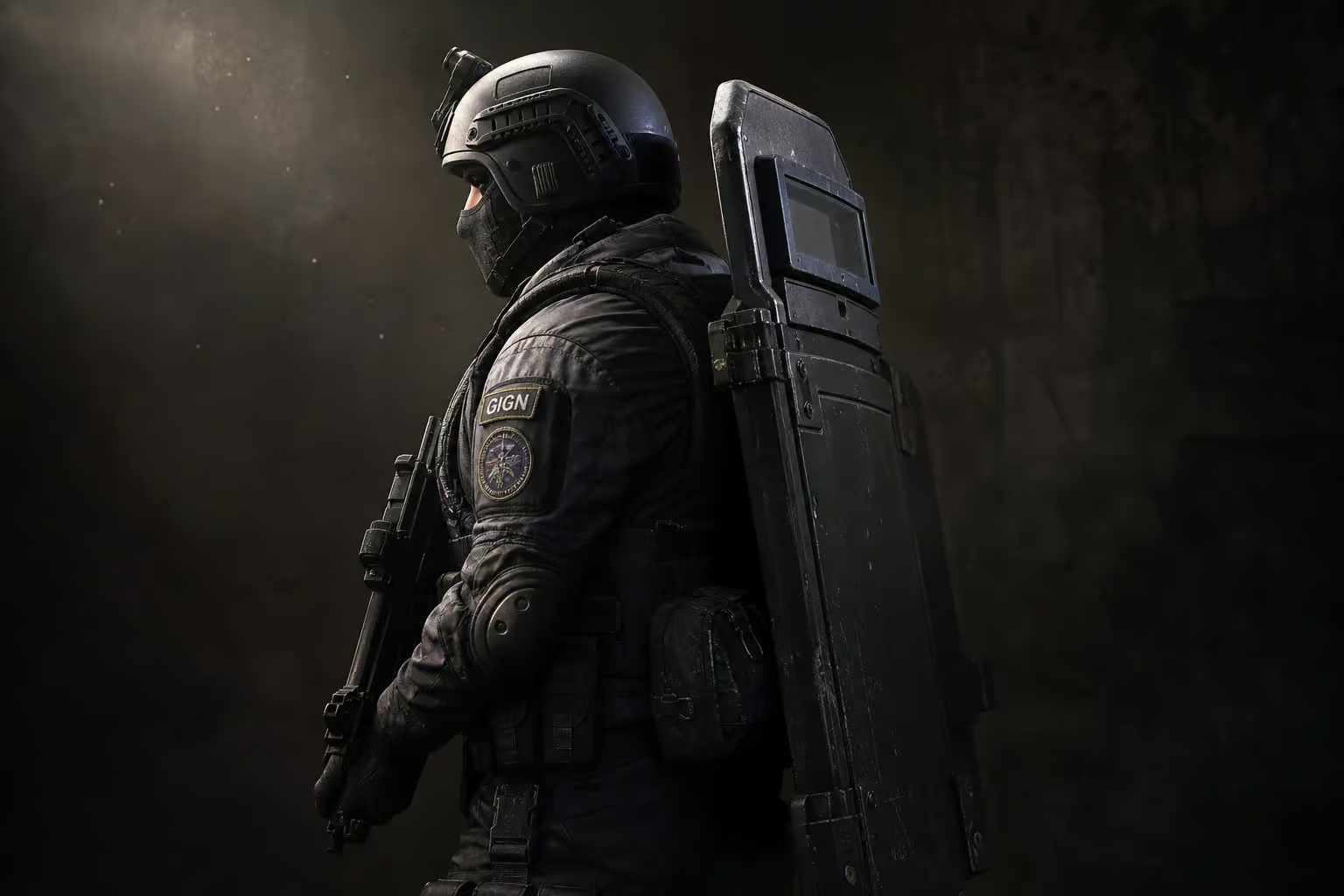
The most notorious of these is “shield-turtling.” This is where a player runs a primary weapon while carrying a passive riot shield slung on their back. The shield covers their rear hitbox, granting them passive protection from behind without requiring active tracking, movement, or defensive inputs. While high-level movement tech is elegant in its complexity, shield-turtling is despised as a low-skill fallback tool that dilutes the competitive integrity of casual lobbies.
Sweating Without Skill: Can You Be Bad and Still Try Hard?
The assumption that you have to be highly skilled to be deemed “sweaty” is one of the biggest misconceptions in gaming. In reality, sweatiness is a measure of behavioral intent, psychological tension, and physical energy output, not the quality of the final scoreboard. There’s a persistent phenomenon in multiplayer lobbies known as “low-tier sweat anxiety.”
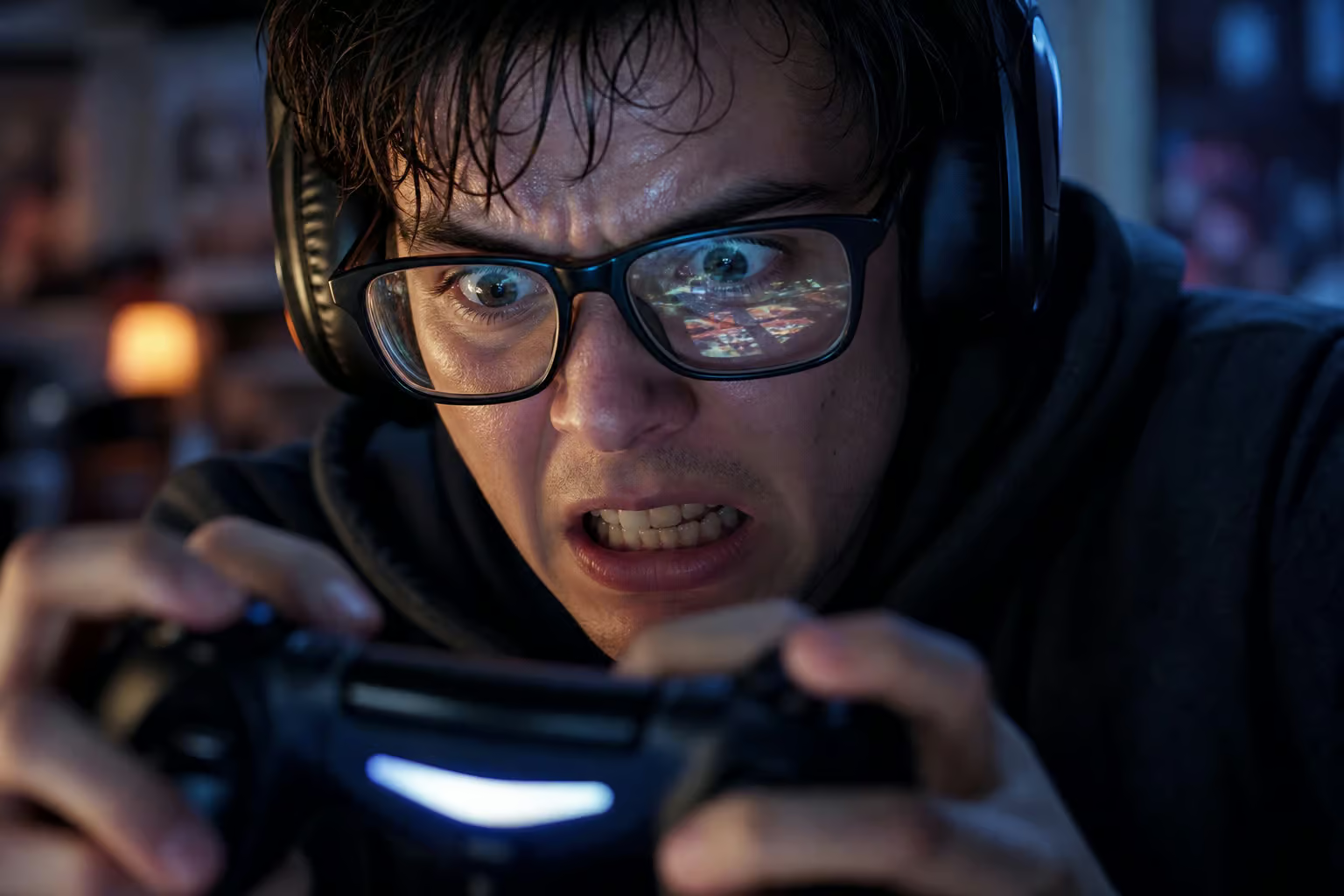
This manifests as a player constantly flicking their camera angles, furiously slide-canceling across empty corridors, and mashing buttons at 200 inputs per minute, only to miss half their shots and finish the match with a disastrously negative K/D ratio. A Reddit post by /u/NonLiving4Dentity69 in the Modern Warfare III community highlighted this exact baseline confusion, asking what exactly classifies as a sweat. As they observed, while some deaths come down to our own minor mistakes (missing a few shots, poor map awareness), there are other times we’re just outpaced by players dialed into maximum overdrive. If you’re expending cognitive effort, running a min-maxed meta loadout, and breaking your controller’s joysticks to dodge bullets but still can’t land a shot, you aren’t a pro—but you are sweating.
The Psychology of Accusation: Why We Shift the Blame
Friction between casuals and sweats stems from hardware disparities and skill-based matchmaking algorithms.
The Ego Defense Mechanism
Calling someone “sweaty” is often a classic ego-protecting coping mechanism. Community discussions, like those led by users /u/Jaziel_345 and /u/Cobess1, consistently point out that when we get outplayed, our immediate self-defense is to blame player insecurity or mock the opponent for “unethically trying too hard.” Labeling an opponent as a sweat provides a convenient narrative to dismiss the mechanical defeat of bot-walking into a sniper lane.
To see how bizarre this logic is, compare it to a professional boxer intentionally using heavy gloves or a golfer avoiding high-performance golf balls to handicap themselves. A golfer doesn’t voluntarily choose low-grade, scuffed golf balls for a friendly weekend tournament to “keep things casual.” A competitive boxer doesn’t request heavier, unoptimized training gloves for a match just to give the opponent a handicap. Yet in gaming, we often demand that our opponents voluntarily play worse or restrict their natural mechanics to match our casual mood.
The Competitive Discrepancy: Couch vs. Command Center
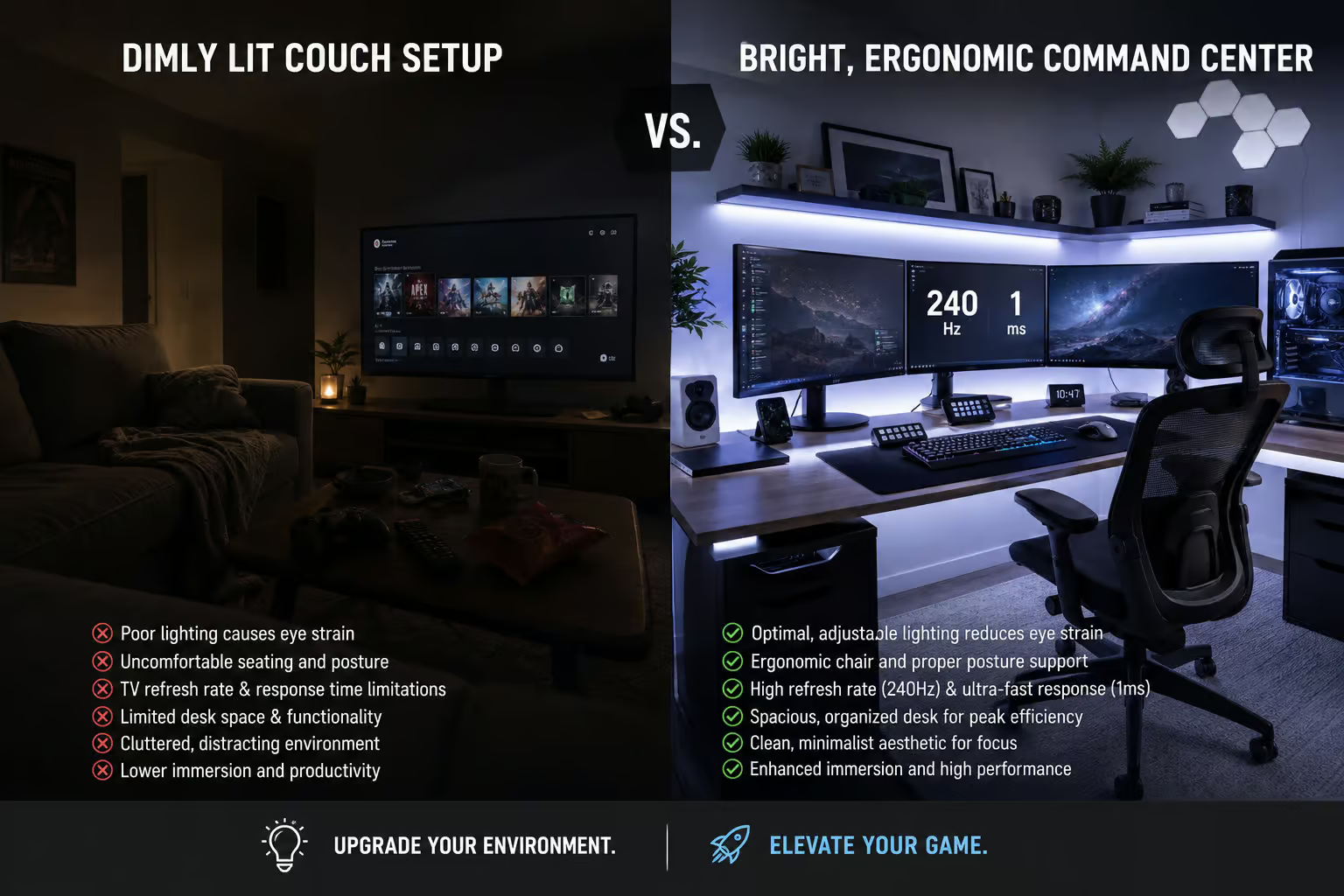
There’s also a hardware divide that fuels this resentment. Imagine a casual gaming session on an Xbox or PS5: you’re slumped back on a couch, looking at a 65-inch living room TV over high-latency HDMI, relying on TV speakers. This laid-back ergonomic setup is built for comfort, not performance.
Now look at your opponent’s command center: they’re sitting at a desk, staring at a low-latency 120Hz or 240Hz monitor. They’re using a custom controller with back paddles mapped to jump and crouch so they never have to take their thumbs off the thumbsticks. They’ve fine-tuned their audio EQ setups to maximize “sound whoring”—using premium headsets to pinpoint your exact location from the subtle audio cues of your footsteps. This competitive disparity is devastating. The high-refresh monitor alone makes target tracking easier, turning a casual console player on a couch into target practice.
How Matchmaking Fans the Flames
This gap is widened by modern skill-based matchmaking (SBMM) mechanics. In the old days of dedicated server lists, lobbies were a roll of the dice; you’d have pros, casuals, and complete beginners all in one chaotic match.
SBMM systematically erased those “casual lobbies.” By constantly pairing players with opponents at or near their mechanical performance ceiling, the system forces everyone to play at their absolute limits. If you want to use non-meta equipment or relax after work, SBMM forces players into lobbies where only meta-loadouts remain competitive to maintain a 1.0 K/D ratio. You are thrust into a feedback loop where you must sweat to maintain a flat 1.0 K/D ratio, turning every public match into a meta-heavy tournament grind.
Commercializing the Culture: How the Industry Capitalizes on Competitive Friction
High-volume digital storefronts capitalize on this debate by integrating “sweat”-related queries into their SEO funnels.

A prime example of this commercial content optimization is G2A. Platforms like G2A—a digital marketplace known for its wide-ranging game keys—actively integrate slang terms like “sweaty” and “tryhard” into their editorial blogs, news portals, and search taxonomy systems. By defining these subcultures for search engines, they build direct funnels that guide curious gamers from forum debates straight to their marketplace product carousels.
These curated carousels link ‘sweaty’ nomenclature to product pages, such as Gothic 1 Remake for 36.69 USD and Forza Horizon 6 for 40.32 USD. For example, if you’re searching for terms related to high-focus gaming, the system might surface competitive titles or capitalize on organic search traffic to recommend highly-anticipated non-competitive releases. You might find listings for the upcoming Gothic 1 Remake (priced at 36.69 USD) or Forza Horizon 6 (priced at 40.32 USD) placed in the paths of users who were trying to look up gaming slang. It’s retail taxonomy: converting community banter into key acquisitions.
Defining Competitive Integrity: Is the “Sweat” Actually Toxic?
This brings us to the ultimate question: is being “sweaty” actually toxic? In games like Fortnite, the term is often thrown at players who instantly “crank 90s” and build massive towers the micro-second a single bullet whizzes past them. Similarly, across competitive spaces, skilled female players face the “sweaty girl” label—a double-standard slang term frequently weaponized by players with fragile egos to demean high-level execution as somehow desperate or unnatural.
But trying to win using the game’s designed mechanics isn’t toxic. In fact, optimizing a tactical advantage is the very point of a competitive space. True toxicity lies in the entitlement of expecting your opponents to hold back, play down to your level, or act as passive targets just so you can have an easy match.
Whether you’re playing on an Xbox Series X, a PS5, or a high-end PC, competitive integrity means letting players use every tool in the toolbox. If someone wants to invest in a low-latency monitor, map their back paddles, and focus entirely on mastering target tracking, they’re simply respecting the game’s boundaries. It might be annoying to run into them during a casual night, but they aren’t ruining the game—they’re playing it to its limits.
Frequently Asked Questions
What does sweaty mean in gaming?
Being sweaty describes a player who uses high-intensity mechanics, meta-loadouts, and advanced movement to maximize their win probability at all times. It involves treating a casual public match with the same level of focus, effort, and technical optimization as a professional tournament.
What is a sweaty lobby?
A sweaty lobby is a match where the average skill level and competitive intensity are extremely high. This is often caused by skill-based matchmaking algorithms, which force players to perform at their absolute limits just to remain competitive rather than allowing for a relaxed, casual experience.
What is sweaty Fortnite?
In Fortnite, being sweaty refers to players who immediately utilize advanced building techniques, such as cranking 90s, the moment they take damage. These players demonstrate high-frequency input and rapid construction to gain a tactical advantage, which casual players often find frustrating when they are just trying to play for fun.
What’s the difference between a sweat and a try-hard?
A sweat is a player who possesses the mechanical skill to back up their high-effort playstyle, having mastered movement loops and reflex integration. A try-hard, by contrast, is often defined by their desperate desire to win without the actual mechanical capability or game awareness to successfully execute high-level strategies.
Can I be sweaty if I’m not actually good at the game?
Yes, sweatiness is defined by your intent, psychological tension, and physical input frequency rather than your final scoreboard performance. A low-tier sweat may exhaust themselves with fast-paced movement and constant button-mashing, yet still struggle to land shots or maintain a positive kill-death ratio.
Why does hardware make a difference in sweaty gameplay?
Competitive gaming often relies on a hardware divide where players with low-latency monitors and custom controllers have a massive physical advantage over casual players on living room TVs. This technical disparity, combined with audio EQ tuning for sound-whoring, makes target tracking and reaction much easier for the optimized player, effectively turning the casual opponent into target practice.
Is using meta-loadouts and advanced movement considered toxic?
No, using a game’s designed mechanics to play at the highest level is not inherently toxic. Toxicity typically stems from the expectation that opponents should intentionally play worse or nerf themselves to accommodate someone else’s desire for a less challenging match.