Why This List Exists
Let’s start with a number: 42,795 people died on U.S. roads in 2022. That’s a Boeing 737 Max crashing every single day. 94% of those crashes involved driver behavior or error. Not bad roads, not mechanical failure, not a once-in-a-century ice storm. Just people making mistakes that a machine can’t make.
We’ve spent decades trying to fix this with public safety campaigns, stricter enforcement, better driver education. And the death toll hovers around 40,000 every single year. Autonomous vehicles offer a different approach: remove the variable that causes 94% of the problem.
I dug through NHTSA data, Waymo‘s real-world fleet numbers, academic research, and policy documents. Here’s what the evidence shows.
Key Takeaways
94% of crashes involve human error, and AVs don’t get distracted, tired, or impaired — they eliminate categories of failure that public safety campaigns have never managed to fix
Waymo’s real-world fleet data shows 88% fewer serious injury crashes and 93% fewer pedestrian crashes compared to human drivers, though they benchmark against an unimpaired, attentive driver rather than the average
Crash reduction alone could save $190 billion per year in the U.S. from lower insurance costs, fewer emergency services, reduced healthcare expenses, and avoided property damage. The environmental benefits are deeply conditional, ranging from 40% less energy to 105% more.
Table of Contents
Eliminating human error — the 94% solution
The foundational argument for AVs isn’t that they’re perfect. It’s that humans are terrible at a task we designed them to do for hours on end.
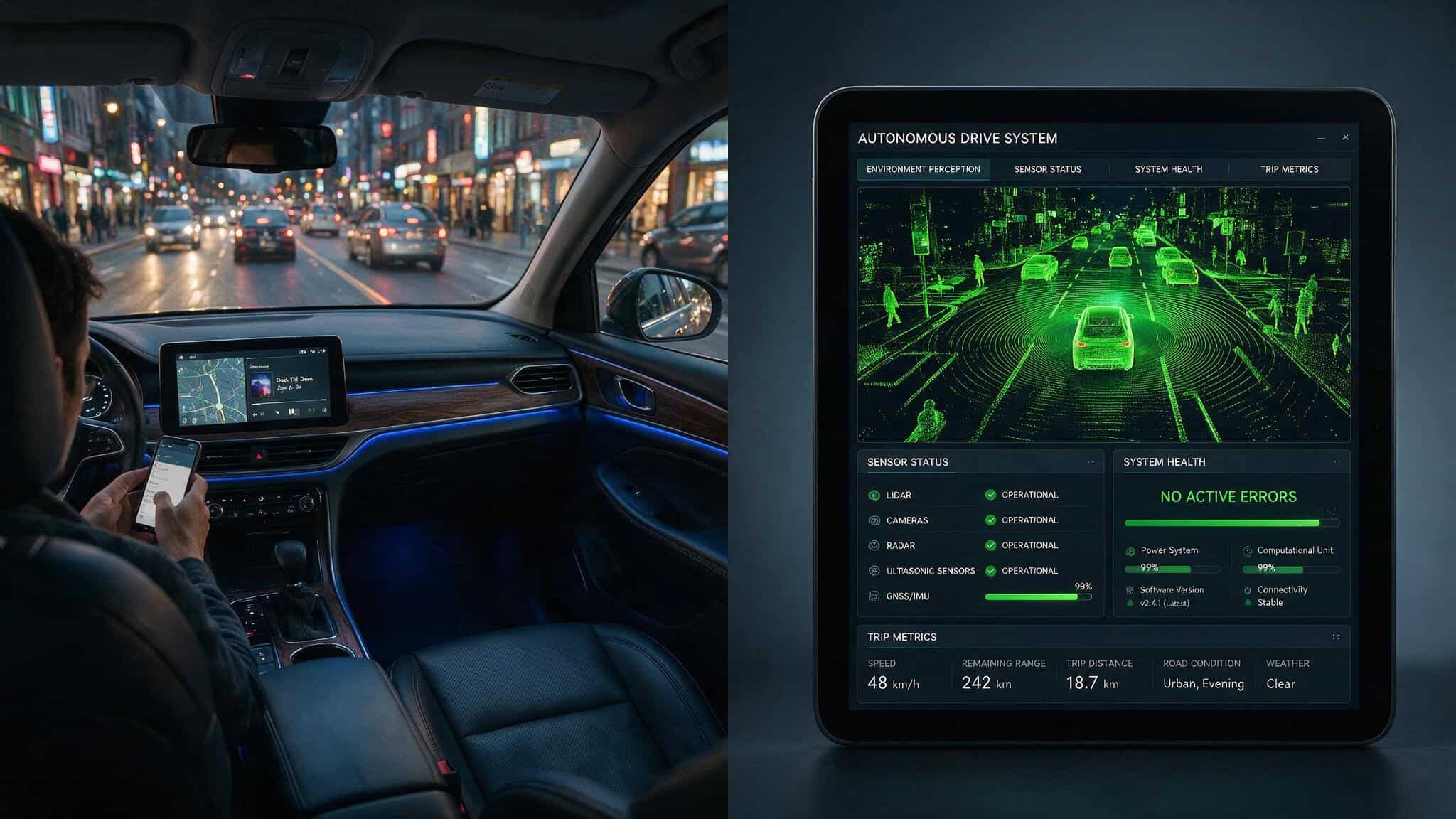
Drivers who are fatigued have double the odds of making errors. Teens crash at several times the rate of experienced drivers. drivers.
Impaired driving accounts for roughly a third of road fatalities. Distraction, speeding, misjudgment — these aren’t bugs in the system; they’re features of human physiology and psychology.
The car doesn’t get tired at 2 AM on a long highway stretch. It doesn’t check its phone at a red light. It doesn’t have a “learning curve” — the software on day one is the same as day 1,000.
94%: the number that changes everything
“Human error” sounds vague until you unpack what it actually means in crash data. Distraction. Fatigue. Impairment from alcohol or drugs.
Inexperience. Speeding. Misjudging distance or speed. Failing to check blind spots.
Public safety campaigns have been running for half a century and haven’t moved the needle past 40,000 annual deaths. Enforcement is reactive and inconsistent. Driver education produces competent beginners, not safe veterans. The problem isn’t that we haven’t tried — it’s that the core variable is a distractible human brain.
Beyond human limits: 360-degree awareness and faster reactions
The sensor stack — cameras, radar, lidar, gives the car a complete picture of its surroundings in every direction simultaneously. No blind spots. No turning your head to check. The car “sees” in 360 degrees and reacts in milliseconds.
Rear-end collisions are the most common crash type, and automated emergency braking is already reducing them. in today’s ADAS-equipped cars. High-speed crashes account for 22% of fatalities — AVs don’t have a lead foot. Fixed-object collisions — hitting a tree, a barrier, a parked car, account for 17.5% of fatalities. The car sees those objects and doesn’t drive into them, period.
Tesla‘s Autopilot data claims 85% fewer accidents compared to the U.S. human driver average. That’s self-reported and comes with caveats — Autopilot operates mostly on highways, which are safer than surface streets. But even accounting for selection bias, that’s a reduction. The caveat is real, but the signal is hard to ignore.
Ending impaired driving for good
This is the cleanest argument for AVs, and it’s simple: a car that doesn’t drink is a car that doesn’t crash because it’s drunk.
Impaired driving causes roughly one-third of all road fatalities.
These two activities are incompatible, yet we’ve never found a way to reliably separate them. We’ve tried tougher laws, sobriety checkpoints, designated driver campaigns, ignition interlocks for repeat offenders. The death toll from impaired driving barely budges.
If you can’t drive the car because the car drives itself, your blood alcohol content becomes irrelevant. The car’s reaction time and decision-making ability don’t degrade after three drinks.
This is the kind of technological fix that sounds obvious. But think about what it actually means: a category of preventable death — one that accounts for tens of thousands of lives every year, could be eliminated not by convincing people to stop drinking and driving, but by making it impossible for them to be in control when they do.
Protecting pedestrians and cyclists
The safety gains from AVs aren’t just for the people inside the car. In some ways, they’re larger for the people outside it.
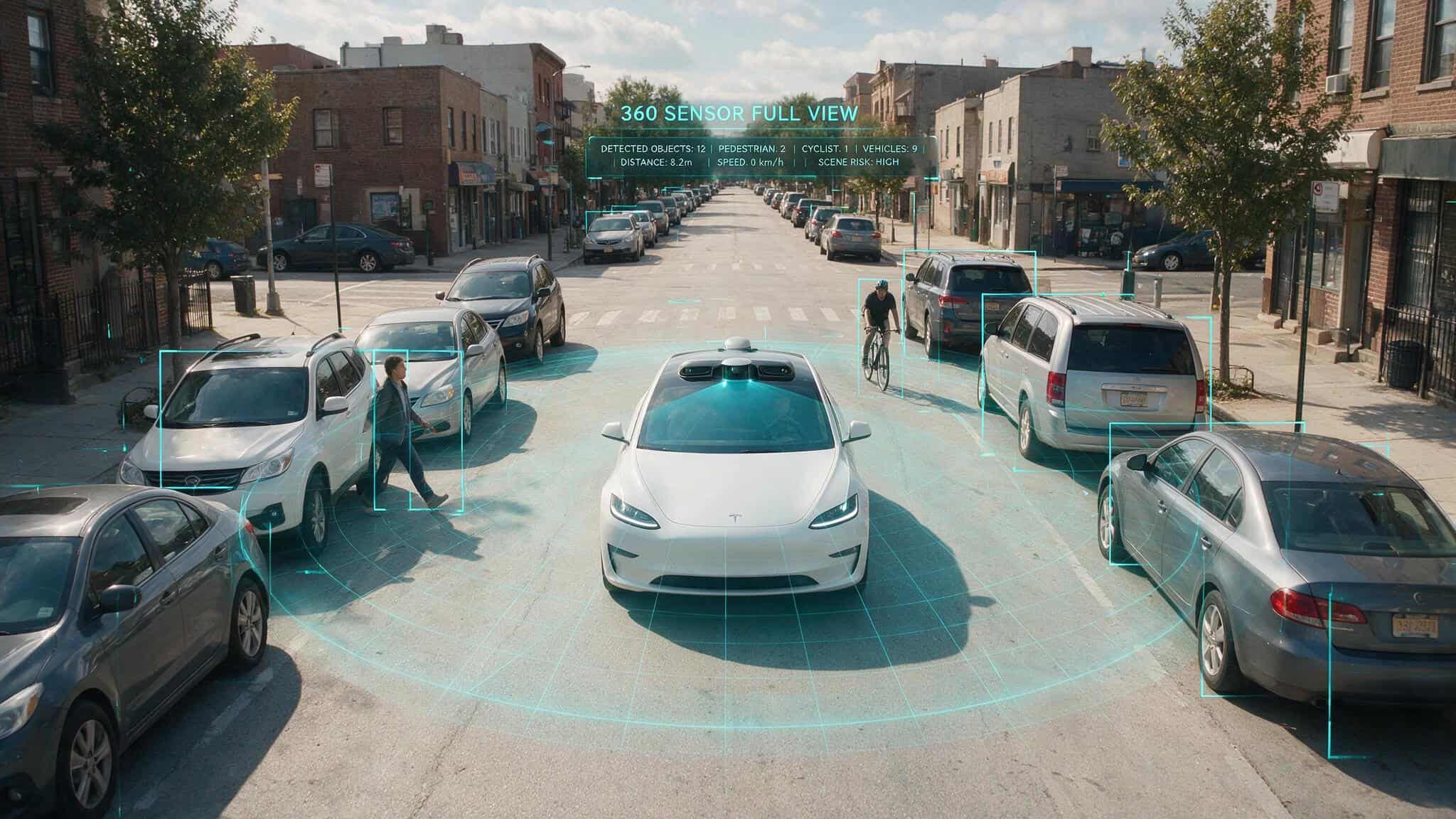
Waymo‘s published data — and they’re the only U.S. company operating driverless commercial fleets at scale, shows 88% fewer serious injury crashes and 93% fewer crashes involving pedestrians compared to the average human driver.
How? The 360-degree sensor array gives the car awareness humans lack. A pedestrian stepping out from between parked cars? A cyclist in a blind spot?
A child running into the street? The car sees them. Not might see them if the sun isn’t in the driver’s eyes. Sees them.
There’s an important caveat here. Waymo compares its performance not to the average driver but to an unimpaired, attentive driver — which is a higher bar. The average driver is tired, distracted, maybe a little stressed or rushed. Waymo‘s benchmark is “perfect human attention.” And they’re still beating it by margins in their operating areas.
That said, this data comes from specific geofenced environments — mostly parts of Phoenix, San Francisco, Los Angeles, and a handful of other cities. It’s not universal proof. But it’s the strongest real-world evidence we have that AVs can be safer for vulnerable road users.
Independence for the elderly and disabled
This is essential service, not cool tech.
There are millions of people in the U.S. who can’t drive due to age, disability, or medical conditions.
Johns Hopkins research found something revealing: public support for AVs doubles when trips are reserved for medical appointments or grocery store access. store access. People understand this as the highest-value application. It’s not about robotaxis for able-bodied commuters. It’s about giving mobility back to people who don’t have it.
The tech solves a problem that public transit has never addressed: fixed routes and schedules don’t work when you need flexible, on-demand transportation. AVs can provide door-to-door service at any hour, for any trip, without requiring the passenger to drive. For someone whose vision, reflexes, or physical condition prevents them from getting behind the wheel, that’s not “a nice feature.” It’s life-changing.
Getting time back during your commute
Let’s talk about what makes the personal value proposition click for most people.
The average American commute is 27 minutes each way. That’s an hour a day — 240 hours a year, spent staring at brake lights, gripping a wheel, and not reading, working, relaxing, or doing anything useful. In a fully autonomous vehicle, everyone is a passenger. That time becomes yours.
You can answer emails. Read a book. Watch a show. Nap.
Have a conversation with someone sitting next to you. The commute transforms from deadweight loss into usable time. An hour a day reappears in your schedule.
The honest caveat: This could increase total miles traveled. If commuting becomes less painful, people might commute farther. Some scenarios project a 4-60% increase in energy use from what they call “induced demand.” Cheaper, easier travel means more travel.
That’s a concern, and it ties directly into the environmental picture we’ll get to in a moment. But from an individual perspective, reclaiming that time is the most obvious “I want this” benefit.
Fuel efficiency and lower emissions
This is the most nuanced section: the environmental outcome depends on how we deploy these things. The range is wide — from a 40% decrease in road transport energy to a 105% increase. Both numbers come from the same academic modeling. The difference is policy choices.
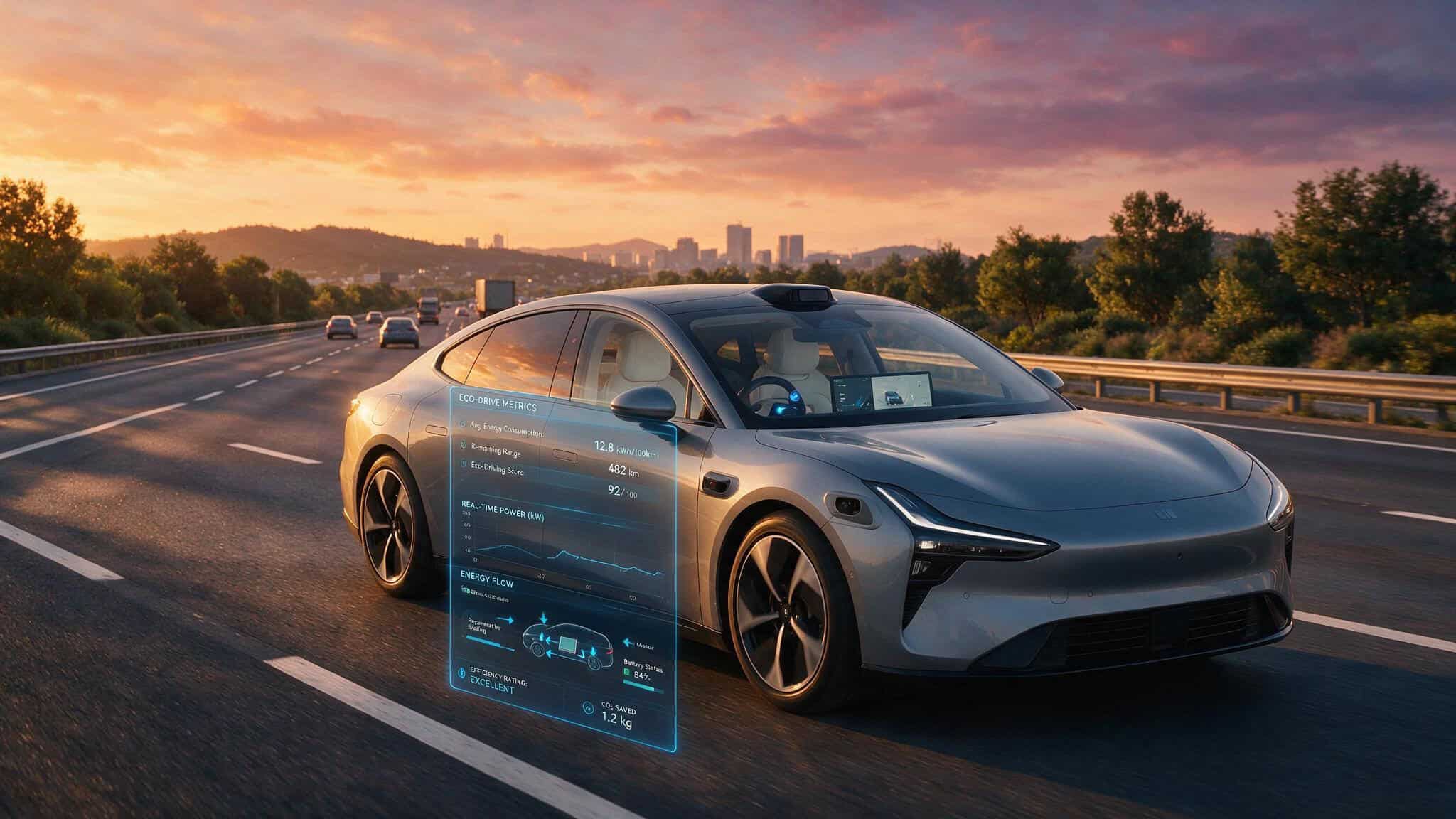
But let’s break down the specific mechanisms.
Eco-driving: the 20% improvement
AVs drive smoothly. They don’t stomp the gas when the light turns green, brake hard at the last second, or accelerate and decelerate in the stop-and-go accordion that destroys fuel economy. Predictive, smooth driving — called “eco-driving”, can reduce energy use by up to 20% on its own. The car drives like a hypermiler, just via software.
Vehicle right-sizing: 21-45% energy savings
When you own a car, you buy one that handles your worst-case trip — maybe a weekend with the family, a trip to the hardware store, or a snowy commute. You drive a vehicle that’s overengineered for 90% of your trips. In a shared AV model, you match the vehicle to the trip.
A solo commute gets a small, efficient pod. A grocery run gets a slightly larger one. You don’t drive a three-row SUV to pick up coffee and a loaf of bread.
That right-sizing can cut energy use by 21-45%, because the biggest energy consumer in transportation is vehicle weight.
Crash avoidance enables lighter vehicles
If AVs make crashes rare enough, manufacturers can reduce weight and materials — saving 5-23% in fuel use. However, recent data shows that AI errors have caused at least 25 deaths in self-driving cars alone, underscoring that this technology isn’t yet perfect.
Lighter vehicles need less energy to move, which means less battery or fuel, which means lighter vehicles. Virtuous cycle.
The big picture: a 40% decrease — or a 105% increase
The pessimistic scenario is real. If AVs make travel cheaper and more convenient, people drive more. If the fleet isn’t electrified, that extra driving means more emissions. If algorithms prioritize speed over efficiency — and there’s no regulation saying they can’t, fuel economy could get worse. The downsides, job displacement, cybersecurity vulnerabilities, ethical dilemmas in crash algorithms, high costs, and the ‘edge case’ problem that keeps L5 autonomy elusive, reveals the 10 disadvantages of self-driving cars, and the worst-case projections show a 105% increase in road transport energy.
Conversely, if AVs are paired with electrification, shared mobility models, and smart infrastructure — the “seven principles” framework from the Union of Concerned Scientists — you get the 40% decrease. The technology exists for both outcomes. The difference is whether we steer it toward the good one.
Bottom line: The environmental case for AVs isn’t automatic — it’s a fork in the road, and policy decides which path we take.
Saving $190 billion a year from crashes
Let’s talk about money, because $190 billion per year is the kind of number that makes policymakers sit up straight.
That’s what crash reduction could save annually in the U.S.
Healthcare costs for crash victims. Property damage to vehicles and infrastructure. Lost productivity from injuries and fatalities.
That $190 billion is money going to body shops, hospitals, and insurance companies instead of… anything else. A 20-year-old’s college fund. A family vacation. A new roof. Every dollar saved from not crashing is a dollar that can be spent on something useful.
Less traffic, smoother commutes
Here’s the thing about traffic, and it’s counterintuitive: individual robot cars don’t fix congestion. Connected robot cars do.
Connected AVs communicating with each other (vehicle-to-vehicle, or V2V) and with traffic infrastructure (vehicle-to-infrastructure, V2I) can smooth out the accordion effect in real-time.
When eco-driving is combined with smart intersections and coordinated traffic flow, the energy and GHG reduction is 9%. Not a silver bullet, but measurable. Platooning — trucks driving closely together on highways to reduce aerodynamic drag, can also reduce highway congestion and improve fuel efficiency.
The honest caveat: Most current AVs don’t actually use V2V or V2I communication. That’s still a future capability. The traffic benefits are real but modest without the infrastructure piece. And if AVs make driving cheaper and more pleasant, you might see more total vehicle miles traveled, which could offset the per-vehicle gains.
Lower transportation costs
The expensive sensor suite (lidar can cost thousands) makes more sense for fleet vehicles that run 20+ hours a day than for personal cars that sit in a driveway 95% of the time.
The economic logic works for shared mobility. A robo-taxi that operates around the clock amortizes that sensor cost across thousands of trips per month. For you, the rider, that means lower per-trip costs compared to current ride-hailing because there’s no driver to pay. No hourly wage, no tips, no insurance differential for a human driver.
Last-mile AV shuttles use 33% less energy than private vehicles for short trips. Reduced crashes mean lower insurance costs across the board. Less need for parking infrastructure and the cost of parking. There’s a savings story here, but it’s tied to sharing, not ownership.
Better communities and quality of life
This benefit requires the most intentionality.
Fewer parking lots, cleaner air, safer streets. In the average U.S. city, parking takes up huge amounts of land — sometimes more than housing or commercial space. If shared AVs reduce the number of cars needed, and if cars are used more efficiently rather than sitting parked for 23 hours a day, that land can become parks, housing, public spaces, or green infrastructure.
Cleaner air follows from reduced congestion, electrified fleets, and fewer miles driven in gas-powered personal vehicles. Asthma rates, cardiovascular disease, and other pollution-related illnesses have connections to vehicle emissions.
Safer streets encourage walking and biking. It’s a feedback loop: when people feel safe walking or biking because cars are less dangerous, they do it more, which means more physical activity, better health outcomes, and fewer cars on the road.
AVs may also promote greater adoption of car-sharing models, reducing the total number of vehicles on the road. Fewer cars means less congestion, less parking demand, lower material consumption from manufacturing.
The role of smart policy
The Union of Concerned Scientists laid out seven principles for AV policy that make the distinction clear:
- Policy must improve safety for all road users — not just people inside the car.
- Pair AVs with clean vehicles and incentivize ride-hailing over personal ownership.
- Use AVs to connect transit hubs, not replace mass transit.
- Don’t worsen inequities based on income, age, race, disability, or geography.
- Support career transitions for displaced workers.
- Enable data-sharing while protecting privacy and security.
- Prioritize community needs over individual vehicles.
These are choices, not inevitabilities. AV technology could lead to more sprawl, more congestion, and more emissions. Or it could lead to fewer cars, cleaner air, and safer streets. The tech doesn’t decide — policy does.
The road ahead
Waymo is operating driverless in half a dozen cities. No manufacturer has made a fully autonomous personal vehicle you can buy. Level 5 — full autonomy everywhere, in all conditions, won’t happen before 2035, if then. The U.S. AV market is projected to grow to $75 billion by 2030 (a 350% increase from 2023), but that growth is concentrated in fleet services, not personal cars.
Waymo‘s 88% and 93% reductions in serious and pedestrian crashes aren’t going anywhere. The potential to eliminate impaired driving, protect vulnerable road users, and give mobility to people who can’t drive — these are concrete, measurable benefits.
The regulatory patchwork is a mess — no national safety standards, state-by-state rules, a failed federal framework that Congress couldn’t pass. Public trust is low: 68% of people fear self-driving cars, and only 9% trust the technology, per AAA surveys. Equity concerns are real — studies show AV vision systems may be less accurate at detecting people of color and children. Job displacement for millions of driving professionals is an economic cost.
The technology exists to save lives. The question is whether we deploy it in a way that does. The benefits are real. But they’re not automatic. They’re a choice.
People Also Ask
Who is at fault if a driverless car crashes?
Currently, fault depends on the specific circumstances and state laws, but it often shifts from the driver to the manufacturer, the software developer, or the fleet operator. Since there’s no human behind the wheel, liability typically falls on the company that designed, built, or operates the autonomous system. This area of law is still evolving as more AVs hit the road.
How do self-driving cars eliminate impaired driving?
Simple: a car that doesn’t drink doesn’t crash because it’s drunk. AVs remove the impaired operator from the equation entirely — if the car drives itself, your blood alcohol content becomes irrelevant. The car’s reaction time and decision-making don’t degrade after three drinks, making it impossible for a drunk person to be in control.
Are self-driving cars actually safer for pedestrians and cyclists?
Real-world data from the only company operating driverless fleets at scale shows 93% fewer crashes involving pedestrians compared to human drivers. The 360-degree sensor array sees things humans miss — a child running into the street, a cyclist in a blind spot, a pedestrian stepping out from between parked cars. The car sees them and reacts in milliseconds.
How much money could self-driving cars save from crash reduction?
Eliminating most crashes could save $190 billion per year in the U.S. alone. That figure includes lower insurance premiums, fewer emergency services calls, reduced healthcare costs for crash victims, less property damage, and avoided lost productivity. Every dollar not spent on crashes is money that can go toward something useful instead of body shops and hospitals.
Can elderly and disabled people benefit from self-driving cars?
Yes, and it’s arguably the highest-value application. Millions of people who can’t drive due to age, disability, or medical conditions currently rely on family, expensive paratransit, or staying home. AVs provide door-to-door, on-demand mobility at any hour without requiring the passenger to drive — turning independence from a negotiation into something automatic.