The core promise: human error causes 94% of crashes, so take the human out of the loop and you save tens of thousands of lives a year. That’s the marketing pitch, and it’s not wrong — it’s incomplete.
The ethical alignment problem bleeds into the trust paradox. The supervision paradox makes edge cases more dangerous. Environmental promises get contradicted by induced demand. And through it all, the regulatory framework is still being scribbled in pencil.
Here are ten disadvantages that explain why the road to zero crashes is rockier than the headlines suggest.
Key Takeaways
The Agent-Deed-Consequence (ADC) model from NC State offers a promising but unproven framework for ethical AV decision-making, yet recent pedestrian injuries prove simple “stop and pull over” rules are already failing.
Automation’s supervision paradox — hands off, eyes off, mind wandering, leads to slower reaction times exactly when the tech is most likely to struggle, creating a double whammy of risk.
Real-world data from a Sacramento study shows chauffeur-access households traveled 60% more, with mass transit use dropping 70%, while a 2021 survey found partially automated vehicle owners drove 5,000 extra miles per year — confirming induced demand, not just theory.
Table of Contents
The Ethical Alignment Problem (Not the Trolley Problem)
The real engineering challenge is the alignment problem — making sure an AI system realizes human values rather than following a brittle rule set.
Veljko Dubljevic’s group at NC State has been working on the Agent-Deed-Consequence (ADC) model, which moves beyond crude binary choices and tries to encode a more nuanced ethical calculus. It’s promising, but it’s unproven at scale. Meanwhile, recent pedestrian injuries involving autonomous vehicles show that simple “stop and pull over” instructions aren’t cutting it. The car needs to understand why it’s stopping, what the downstream consequences are, and how to weigh competing values.
The Supervision Paradox: Automation Erodes Your Skills
Jing Feng’s research at NC State traces a disengagement arc: hands off wheel, eyes off road, mind wandering. First your hands come off the wheel. Then your eyes drift from the road.
Then your mind wanders entirely. By the time an emergency hits and the system flashes a takeover alert, your reaction time is measurably slower.
The worst part? That delayed reaction is most dangerous in the situations where the autonomous system is already struggling — bad weather, weird road geometry, a mattress falling off a truck. Remote supervision, where a human in a call center can take over, has been proposed as a fix, but it introduces its own latency and human-factors problems.
The Trust Paradox: Why Reliable AVs Go Unused
Colleen Patton, another NC State psychology professor, points out something: self-driving cars introduce automation in high-risk situations where drivers already feel confident. You trust your washing machine because laundry isn’t a life-or-death task. You trust cruise control because you’re still holding the wheel. But handing your driving over to a computer when you think you’re a perfectly good driver? That’s a psychological wall that data alone can’t break—a wall that becomes even more apparent when you consider the disadvantages of self-driving delivery trucks.
And even when the crash statistics improve, that subjective feeling of control loss keeps the adoption rate stubbornly low.
Technical Fragility: The Edge Case Wall
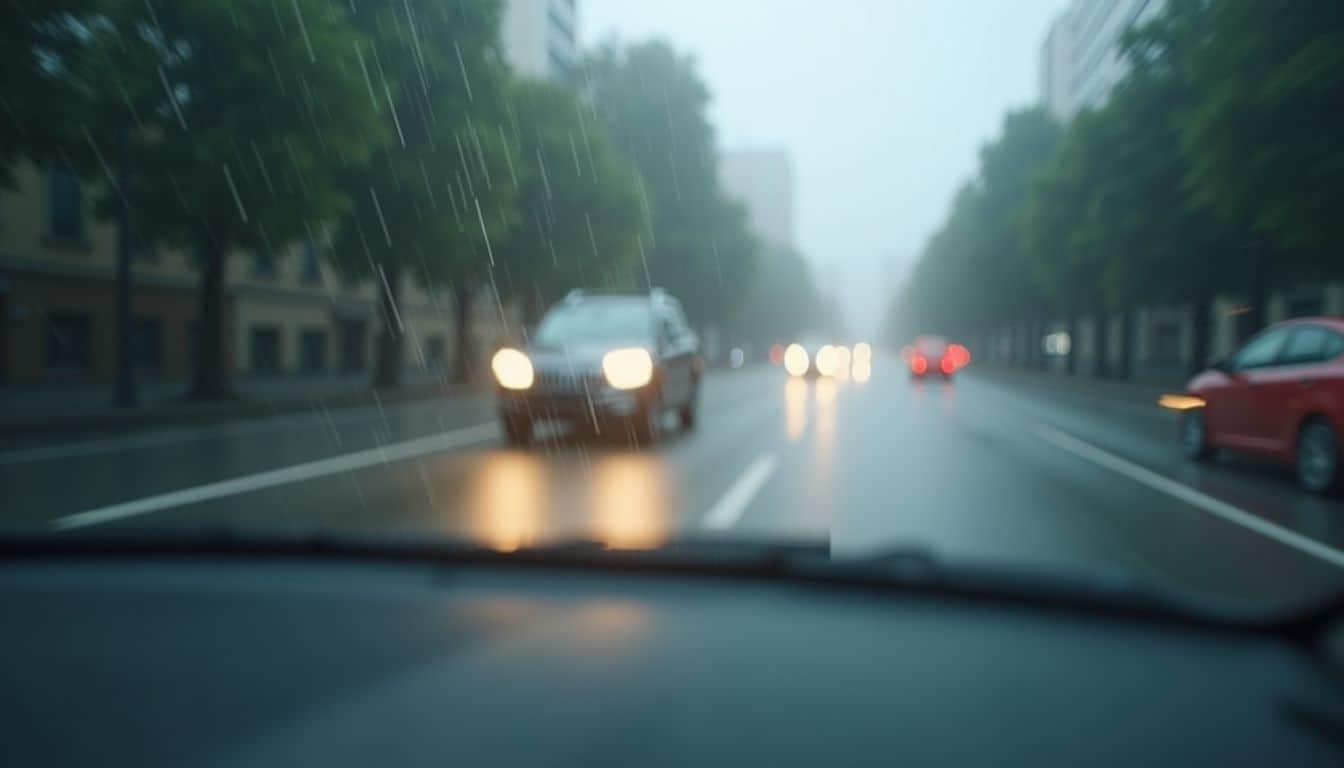
Sensors aren’t magic. Cameras, lidar, and radar work beautifully on the sunny test track in Arizona. Take them to Washington — heavy rain, mountain snow, fog, aging roads with faded lane markings, and suddenly the car’s “vision” turns into a blurry mess. Construction zones, debris on the road, a kid chasing a ball into the street: these are exactly the kinds of unpredictable edge cases that make up the top 5 dangers of self driving cars, where autonomous systems tend to stumble.
No manufacturer has produced a fully automated personal vehicle you can buy. Waymo operates driverless ride-hailing in about half a dozen cities, but those are on carefully mapped, well-maintained routes. General-purpose Level 5 autonomy — driving everywhere, under all conditions, remains a distant goal.
Accessibility Gaps: Who Gets Left Behind?
For blind and visually impaired people, the first and last mile problem is brutal. The AV can get you close to your destination, but how do you navigate that final block to the front door? The car’s sensors need to reliably detect a white cane or a guide dog and understand what that means — that’s a non-trivial computer vision problem, and this gap underscores the importance of autonomous vehicles in making good on their accessibility promises.
And studies have shown that computer vision systems can be worse at detecting people of color and children. The performance of vision-based models is dependent on the training data used and may not reflect the demographics of the areas where self-driving vehicles are operated.
The Environmental Double-Edged Sword
I spent time reading the University of Michigan Center for Sustainable Systems report on this. Automated eco-driving — smooth acceleration, minimal braking, can cut fuel consumption by 15–20%. But the extra computing power, sensor weight, and data transmission required for autonomy can increase energy use and greenhouse gas emissions by 3% to 20%, with the final impact depending entirely on what powers the grid.
The kicker is induced demand: a 2019 Sacramento study found that households with chauffeur access (a proxy for AV availability) traveled 60% more. Mass transit, ride hailing, biking, and walking trips dropped by 70%, 55%, 38%, and 10% respectively.
These trends were confirmed in a 2021 survey on partially automated vehicle owners. A 2021 survey found owners of partially automated vehicles drove an average of 5,000 miles more per year than conventional vehicle owners. AVs allow people to send their cars on ‘zero-occupancy’ trips: instead of paying for parking, one could decide to send the car back home while at work. More miles means more emissions, even if each mile is slightly cleaner.
Coal-power your AV fleet and you’re shifting the pollution source.
Cybersecurity and Privacy: Rolling Surveillance Devices
Your self-driving car is a connected computer on wheels. That makes it a target for hackers and vulnerable to software glitches that could have catastrophic real-world consequences. Autonomous cars gather continuous location and passenger data, raising surveillance and privacy concerns.
Beyond hacking, there’s the continuous data trail. Every mile, every pickup, every stop is recorded. Washington regulators are still working to address these concerns.
The Union of Concerned Scientists’ Principle #6 calls for public accountability and data security, but the federal incident reporting requirements are still being finalized. Until the rules are written, your location history is unregulated gold for whoever can grab it.
The Liability Labyrinth: Who Pays?
When a driverless vehicle causes harm, responsibility may lie with the human supervisor, manufacturer, or software developer.
The people who wrote the software? Right now it’s a state-by-state mess. Texas has its own law (Transportation Code § 545.454) governing AV operation. Washington’s comparative fault system allows injured parties to pursue compensation from multiple responsible parties.
And here’s the ticking clock: the system logs and sensor data that could prove what happened can be overwritten in minutes. If you don’t secure that evidence immediately, it’s gone.
Economic Costs and Job Displacement
Recalibration is required after an accident, adding to expenses.
Autonomous ride-hailing and self-driving trucks are a threat to the livelihoods of taxi drivers, Uber/Lyft operators, and long-haul truckers — millions of jobs in the US alone. The Union of Concerned Scientists’ Principle #5 calls for a “just transition” with career pathways for displaced workers, but policy is lagging far behind the technology.
The Rationality of Skepticism
The evidence I’ve laid out — the alignment problem, the supervision paradox, the induced demand, the equity gaps, the legal fog, adds up to a technology with unresolved tradeoffs.
That does not mean the technology is doomed. The benefits — safety, mobility for the elderly and disabled, traffic efficiency, are real and worth pursuing.
People Also Ask
What is the biggest problem with self-driving cars?
The biggest problem isn’t the trolley problem — it’s the ethical alignment problem: making sure the AI actually understands human values instead of just following brittle rules. Even simple ‘stop and pull over’ instructions have failed in recent pedestrian incidents, and more nuanced frameworks like the Agent-Deed-Consequence model remain unproven at scale.
Who is at fault if a driverless car crashes?
Right now it’s a state-by-state legal mess. You could potentially sue the human supervisor, the manufacturer, or the software developers, and some states like Washington use a comparative fault system that lets you go after multiple parties. The problem is that the sensor data proving what happened can be overwritten in minutes, so evidence disappears fast.
Does the supervision paradox actually make self-driving cars more dangerous?
Yes, and it’s a double whammy. Research shows a predictable disengagement arc: first your hands come off the wheel, then your eyes drift, then your mind wanders entirely. By the time the system flashes a takeover alert, your reaction time is measurably slower — and that delayed reaction is most dangerous in the situations where the autonomous system is already struggling.
Are self-driving cars actually better for the environment?
It’s complicated. Automated eco-driving can cut fuel consumption by 15–20%, but the extra computing power, sensor weight, and data transmission can increase energy use by 3% to 20%. The real kicker is induced demand: a Sacramento study found chauffeur-access households traveled 60% more and used mass transit 70% less, and a 2021 survey showed partially automated vehicle owners drove nearly 5,000 extra miles per year.