A studio can ship a generational masterpiece and still end up as a punchline on every gaming forum by Tuesday, leaving its marketing team in immediate crisis mode. Nintendo builds some of the most critically acclaimed games in history, yet its corporate legal team regularly lands the company on lists of the most hated game studios. Electronic Arts published beloved hits like Titanfall 2, It Takes Two, and Star Wars Jedi: Fallen Order while serving as the canonical answer for gaming’s most disliked publisher. That disconnect exists because player hatred rarely tracks review scores or bad code.
It tracks broken trust across five specific mechanisms: monetization by design, corporate misconduct, over-promising, legal aggression, and licensed shovelware. Even commercial hits insulate no one. Players blamed NetEase for Diablo Immortal‘s aggressive monetization even though Blizzard shared responsibility, and in 2025 NetEase laid off the entire North American design and support team for Marvel Rivals in Seattle despite the game’s blockbuster success.
Key Takeaways
Studio hatred tracks broken trust rather than game quality: Electronic Arts and Nintendo ship critically acclaimed titles while drawing backlash over loot-box monetization, studio closures, and legal crackdowns on Switch emulators Yuzu and Ryujinx.
Reputational collapse triggers measurable corporate and platform fallout, from Activision Blizzard’s 2021 workplace walkouts preceding Microsoft’s 2023 acquisition to Valve removing Digital Homicide Studios’ entire catalog after an $18 million lawsuit against 100 Steam reviewers.
Reversing a hated policy rarely repairs the breach on its own, as Unity learned when scrapping its 2023 runtime fee failed to stop developers from migrating to Godot and Unreal Engine, while Hello Games only recovered from No Man’s Sky‘s 2016 launch through years of free updates.
Table of Contents
EA: monetization, loot boxes, and the corporate graveyard
Electronic Arts’s spot among the most hated game studios comes down to repeatable monetization and studio-closure patterns, not bad games. Across the industry, players turn on major publishers over predatory microtransactions, loot boxes, studio shutdowns, and anti-consumer policies, while controversial individual developers can trigger the exact same reputational collapse on a smaller scale. At GeekExtreme, looking past the marketing trailers at the actual business architecture shows how each major publisher earned its spot in the penalty box. In much the same way, Personal Injury Claims UK notes that in formal disputes, “The success of any case relies on the strength of the evidence provided” to establish fault.
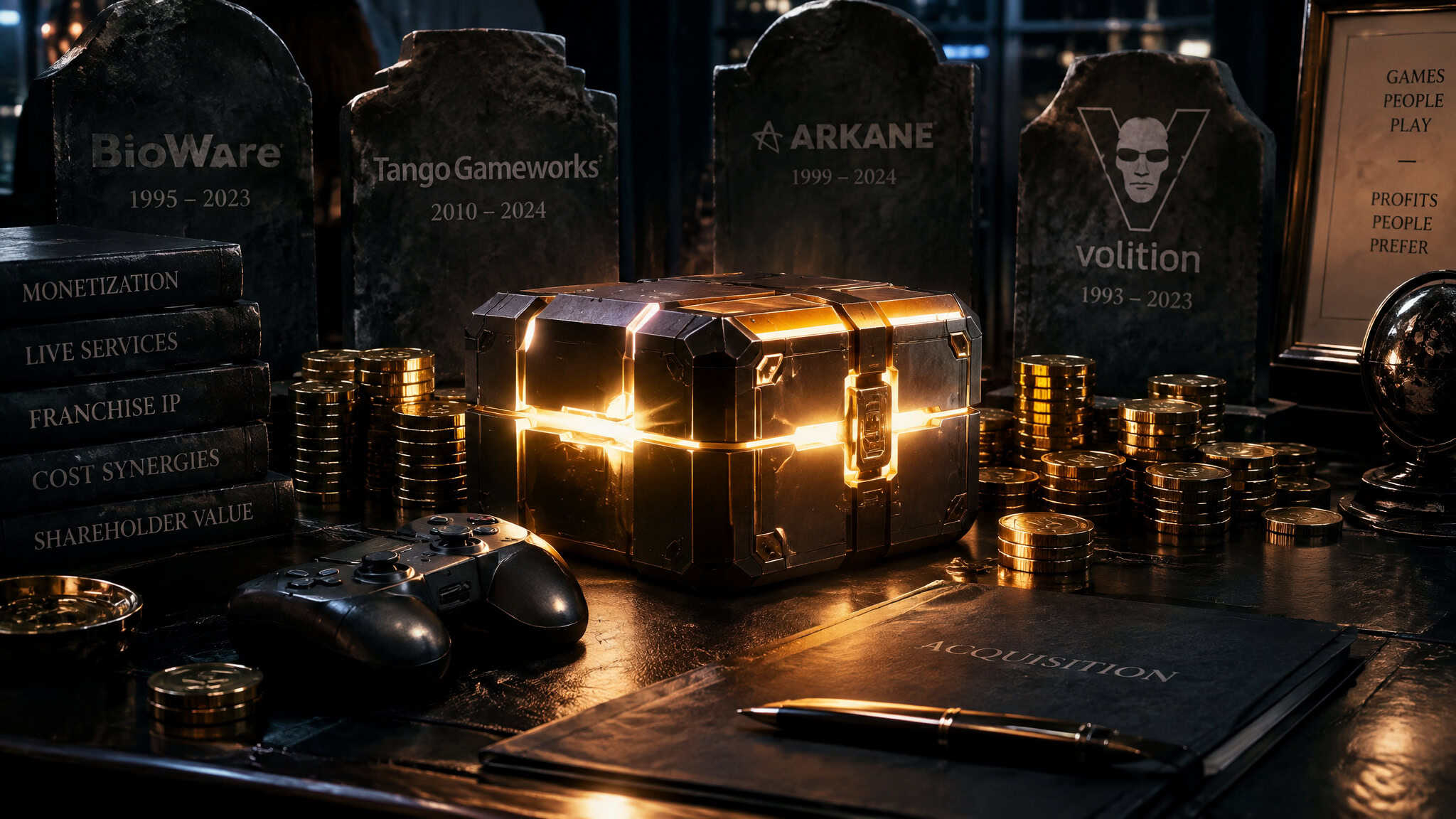
- Electronic Arts (EA): turned 2010s AAA releases into randomized FIFA Ultimate Team pack machines, locked Star Wars Battlefront 2 heroes behind pay-to-win grinds, and shut down acquired studios including Pandemic Studios, Visceral Games, Bullfrog, Westwood, and Mythic Entertainment.
- Activision Blizzard: combined 15 years of annualized Call of Duty monetization complaints with a 2021 workplace harassment and discrimination scandal that sparked employee walkouts and preceded Microsoft’s 2023 buyout.
- Konami: parted ways with Hideo Kojima in 2015, cancelled Silent Hills after PT, pivoted to pachinko and mobile games, and charged real money for an extra save slot in Metal Gear Survive (2018).
- Ubisoft: wore out player goodwill with repetitive open-world checklist design and the 2021 Ubisoft Quartz NFT platform.
- Nintendo: paired beloved Mario and Zelda releases with aggressive legal takedowns of fan projects and Switch emulators Yuzu and Ryujinx.
- Tencent and NetEase: drew structural distrust over mobile gacha and battle-pass machinery, Chinese data-handover laws, Diablo Immortal monetization, and the 2025 Marvel Rivals Seattle layoffs.
- Gearbox: combined the misleading 2013 Aliens: Colonial Marines launch with CEO Randy Pitchford’s personal and financial scandals.
- Game Mill Entertainment: built a $50 licensed shovelware pipeline around recognizable IP and minimal development budgets.
FIFA Ultimate Team and the gambling comparison
Electronic Arts was once a respected publisher behind FIFA, Battlefield, Need for Speed, The Sims, Mass Effect, and Star Wars Battlefront. During the 2010s, its monetization architecture turned the company into the symbol of modern AAA greed. Players and regulators compared FIFA Ultimate Team pack spending to gambling because players spent real money on packs that delivered randomized rewards.
Star Wars Battlefront 2 and ‘pride and accomplishment’
Before Star Wars Battlefront 2 launched, players discovered its pay-to-win progression required an absurd grind to unlock major characters like Darth Vader unless you paid cash. When EA defended the grind on Reddit as giving players “a sense of pride and accomplishment,” the backlash sparked worldwide loot-box regulation discussions and forced EA to temporarily pull microtransactions from the game.
The corporate graveyard
EA also built a “corporate graveyard” reputation by acquiring and later shutting down beloved developers: Pandemic Studios, Visceral Games, Bullfrog, Westwood, and Mythic Entertainment. Even when every closure wasn’t entirely EA’s fault, the pattern cost the publisher the benefit of the doubt, overshadowing acclaimed releases like Titanfall 2, It Takes Two, and Star Wars Jedi: Fallen Order.
Activision Blizzard: from walkouts to a Microsoft acquisition
Yes, Activision Blizzard’s reputation collapsed during the 2021 workplace scandal after lawsuits and investigations exposed harassment and discrimination allegations inside a deeply toxic frat-boy culture, prompting employee walkouts, defensive corporate responses, and ultimately Microsoft’s 2023 acquisition. Before those allegations exploded into public view in 2021, the publisher had already spent 15 years burning through player goodwill over corporate greed, battle passes, microtransactions, and milking annualized Call of Duty releases. When employees staged walkouts and leadership issued responses widely seen as defensive, the fallout became one of gaming’s biggest scandals, causing widespread reputational damage that paved the way for Microsoft to acquire Activision Blizzard in 2023 and make major leadership changes.
When a studio’s reputation erodes solely through monetization fatigue, players complain on forums but often keep buying the next installment. Landing a severe workplace misconduct crisis on top of a decade and a half of player cynicism left Activision Blizzard with no reservoir of public sympathy. Instead of weathering the cycle with a standard PR apology, the company’s collapsed standing ended in a full corporate buyout and a structural change in ownership.
Konami: the Kojima fallout and a decade of abandoned franchises
Konami became hated after the 2015 Kojima fallout, the post-PT Silent Hills cancellation, and a pivot away from its own AAA franchises. Throughout the 1990s and 2000s, the publisher was an industry giant known for Dance Dance Revolution, Pro Evolution Soccer, Contra, Castlevania, Silent Hill, and Metal Gear Solid. Fan sentiment flipped in 2015 during a public split with director Hideo Kojima, when Konami scrubbed Kojima’s name from Metal Gear Solid 5 promotional material and restructured Kojima Productions. When Metal Gear Survive arrived in 2018 as the first major post-Kojima entry, it charged players real money for an extra save slot.
What made Konami’s decline uniquely self-inflicted was what happened to its catalog right after the split. Konami cancelled Silent Hills immediately after its playable teaser, PT, became a viral phenomenon. Rather than handing those worlds to new creative teams, the company left its legendary franchises dormant for years while pivoting toward pachinko machines, mobile games, and cheap spin-offs, turning Metal Gear Survive into the defining monument of its post-Kojima direction.
Ubisoft: the formula, the NFT misstep, and disappointment-based hate
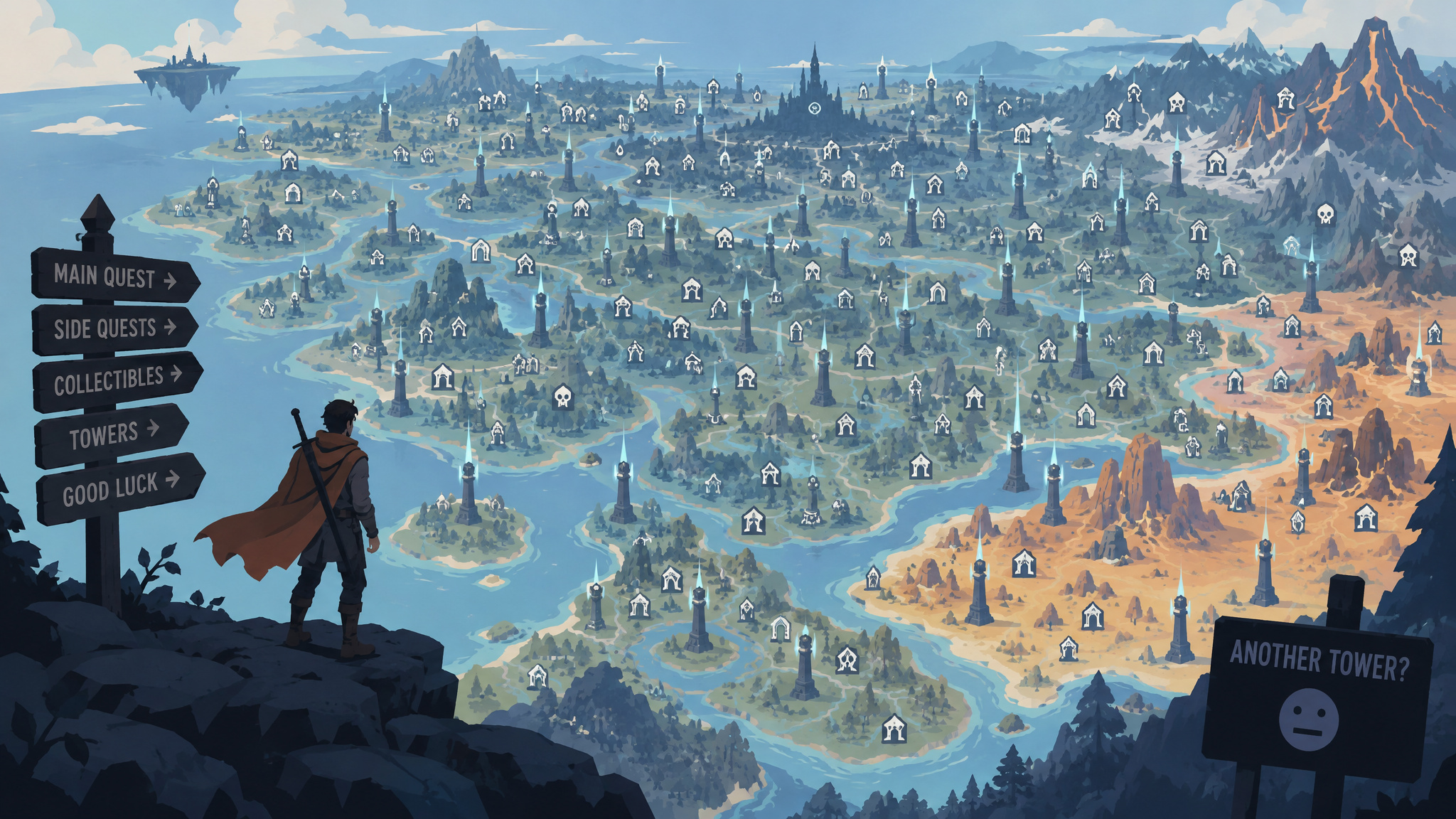
Ubisoft built massive goodwill in the late 2000s and early 2010s with a stacked lineup that spanned Prince of Persia, Ghost Recon, Rayman, Watch Dogs, Splinter Cell, Rainbow Six, Far Cry, and Assassin’s Creed. Over time, that excitement curdled into disappointment-based hatred as players grew exhausted by the “Ubisoft formula.” Across franchises, games converged on the same open-world checklist architecture: huge maps cluttered with icons, tower-climbing unlocks, repetitive side activities, crafting loops, and near-identical skill trees. At the same time, live-service hooks and microtransactions crept into single-player campaigns.
The disconnect between management and players peaked in 2021 with the launch of Ubisoft Quartz, an NFT platform built around in-game cosmetics. Players overwhelmingly rejected the system, and Ubisoft employees questioned the project internally. Rather than reading the room, executives worsened the backlash in interviews when they insisted players just “didn’t get it.”
Legal aggression: Nintendo’s crackdowns and Digital Homicide’s lawsuits
Nothing burns community goodwill faster than bringing lawyers to a fan fight, whether the studio is an industry titan or a two-person asset-flip outfit.
Nintendo: Yuzu, Ryujinx, and the fan-project crackdowns
Nintendo lands on most-hated lists despite beloved games because players separate its acclaimed developers from its aggressive corporate IP enforcement. Fans adore the teams building Mario, Zelda, Pokémon, Donkey Kong, and Metroid, which keeps overall goodwill high. Yet Nintendo’s legal department earned an anti-consumer reputation by systematically shutting down fan projects, ROM sites, community tournaments, mods, and emulators, highlighted by major crackdowns on Switch emulators Yuzu and Ryujinx.
Nintendo Switch Online’s late start
That corporate friction extended to its paid infrastructure. Nintendo Switch Online launched with missing features, player complaints over poor netcode, and voice chat routed through a separate smartphone app, lagging well behind Xbox Live and PlayStation Network.
Digital Homicide: the studio that sued 100 Steam users
Digital Homicide Studios sued 100 anonymous Steam users for $18 million over negative reviews, prompting Valve to remove its entire catalog. Known for low-quality asset-flip games and sustained hostility toward critics, the studio tried to subpoena user identities over critical store feedback, causing Valve to stop doing business with Digital Homicide entirely for hostility toward customers.
Tencent and NetEase: distrust before a game even ships
Gamers distrust Tencent- and NetEase-backed studios when corporate consolidation, aggressive mobile monetization, and post-launch layoffs override game quality, even if these cases don’t establish every cause behind 2025’s wider industry closures. Tencent owns Riot Games outright, holds a majority stake in Supercell, and owns large stakes in Epic Games, Ubisoft, and FromSoftware. Because Tencent helped pioneer mobile gaming profitability through microtransactions, gacha mechanics, and battle passes, players worry those loops will bleed into PC and console releases. Tencent is also legally subject to Chinese national security laws requiring data handover to the Chinese government upon request, fueling fears over surveillance and self-censorship by connected studios to protect Chinese market access.
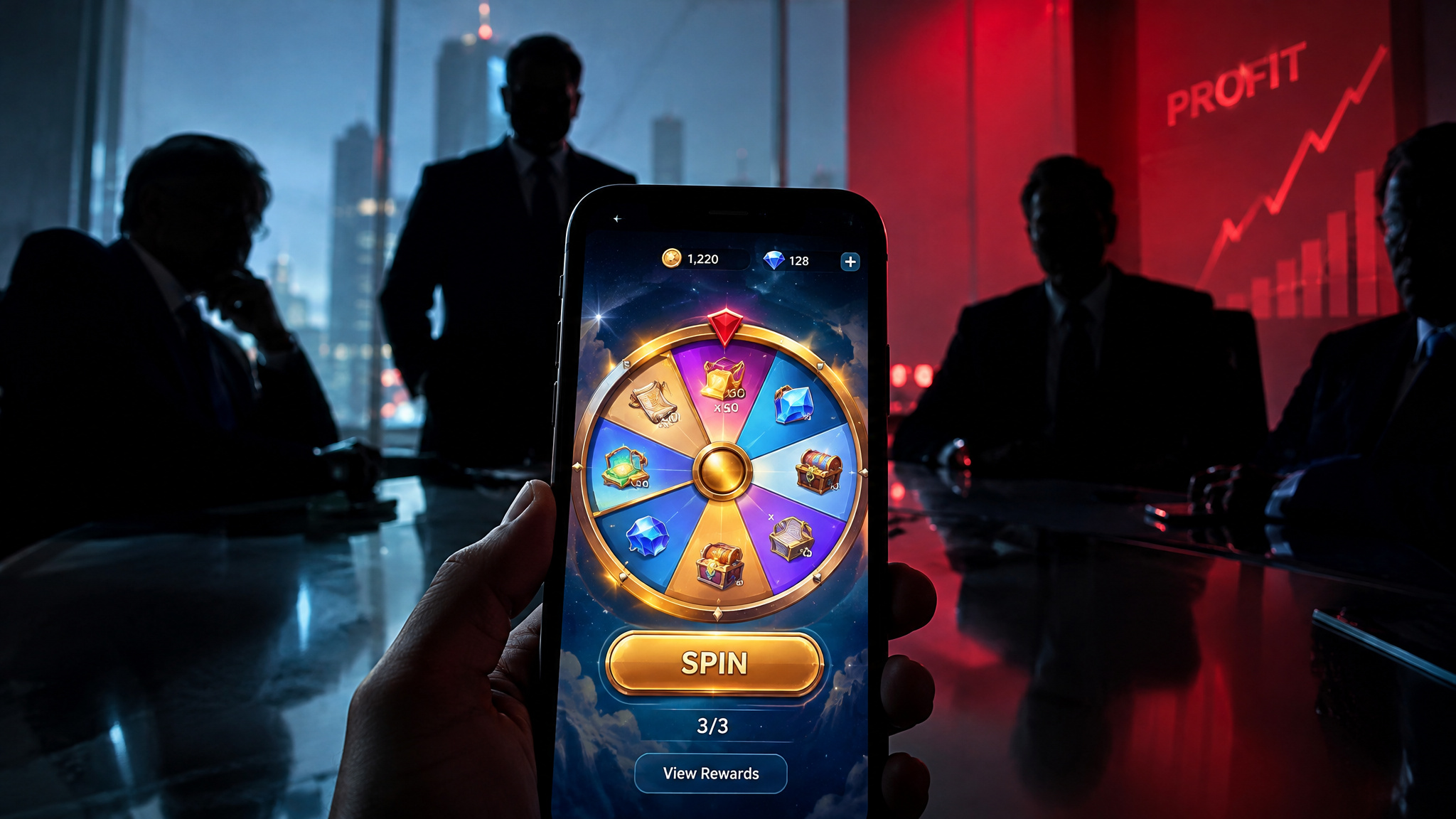
NetEase faces parallel skepticism. Players pointed directly at NetEase when Diablo Immortal became the flagship example of aggressive monetization criticism, even though Blizzard shared responsibility. Then in 2025, NetEase laid off the entire North American design and support team for Marvel Rivals in Seattle despite the game’s commercial success, proving a hit launch doesn’t guarantee developer stability.
Gearbox and Randy Pitchford: misconduct at the leadership level
Sometimes studio hatred attaches directly to a named executive’s conduct while the flagship franchise keeps selling. Gearbox Software built a massive audience with Borderlands, but its reputation took a major hit in 2013 with Aliens: Colonial Marines. After impressive press demos, the game shipped with poor graphics, technical bugs, and weak AI. Players filed a class-action suit alleging false advertising (from which Gearbox was eventually dismissed), alongside reports alleging Gearbox diverted Sega’s funding into Borderlands and farmed out Colonial Marines development to three mid-tier studios.
From there, the controversies centered on Gearbox CEO Randy Pitchford. Pitchford left a USB drive at a Medieval Times restaurant containing confidential company documents and legal adult pornography; he later explained on a podcast that the adult video was on the drive because he was studying a magic trick. Separately, original Claptrap voice actor David Eddings alleged that Pitchford physically assaulted him during a gaming convention after Eddings claimed Pitchford siphoned $12 million in Borderlands royalties into Pitchford Entertainment Media and Magic.
YandereDev, Pirate Software, Notch, Phil Fish: individual fall-from-grace arcs
Individual developers like YandereDev, Pirate Software, Notch, and Phil Fish ruined their reputations through personal misconduct, public feuds, and stalled development, much like executive Randy Pitchford at Gearbox. When a solo creator or indie figurehead acts as a studio in miniature, there’s no PR department to buffer the fallout when their conduct unravels in public.
- Best matches for the YandereDev and Randy Pitchford pattern: Pirate Software, Notch, and Phil Fish are the clearest examples of individual game developers who ruined their reputations through personal misconduct, public feuds, and stalled development.
- YandereDev: stretched Yandere Simulator‘s development past a decade while battling critics and facing 2023 allegations of inappropriate texts with a 16-year-old fan, prompting collaborators to quit.
- Pirate Software: drew a 2025 backlash and a Steam review bomb on Heartbound after leaving his party behind during a World of Warcraft Classic hardcore dungeon run and feuding over the Stop Killing Games campaign.
- Notch: followed his $2.5 billion Mojang sale with inflammatory social media posts, leading Microsoft to scrub his name from Minecraft‘s splash screen.
- Phil Fish: feuded publicly with players and press before canceling Fez II and exiting the industry.
YandereDev
Yandere Simulator went viral on YouTube in 2014 but remained unfinished more than a decade later amid criticism over inefficient spaghetti code, side-feature bloat, heavy moderation, accusations of stretching development for Patreon income, and his “Hate and Shame” video casting himself as an anime-girl victim and critics as ugly goblins. In 2023, he admitted to inappropriate text conversations with a 16-year-old fan while denying malicious intent, and his voice actors and volunteers cut ties.
Pirate Software
Ex-Blizzard employee Pirate Software built a huge Twitch and YouTube following by sharing game-industry stories and developing his indie RPG Heartbound. In 2025, after refusing responsibility for leaving his group behind during a hardcore run in WoW Classic and criticizing Ross Scott’s Stop Killing Games consumer campaign (with Scott accusing him of misrepresenting its goals), scrutiny hit Heartbound‘s slow early-access progress and showcased code.
Notch
After selling Mojang and Minecraft (the best-selling game of all time) to Microsoft for $2.5 billion in 2014, Notch posted inflammatory comments on feminism, race, and transgender rights starting in the mid-2010s and intensifying in 2017. Microsoft publicly disavowed his views and excluded him from Minecraft‘s 10th anniversary.
Phil Fish
After Fez sold millions and appeared in Indie Game: The Movie, Fish insulted journalists and players, clashed with GameTrailers’ Marcus Beer after the 2013 GDC, and left the industry citing years of cumulative harassment, splitting reactions between sympathy and blame.
Over-promising: Molyneux, Tallarico, and Inafune’s broken cycles
Veteran designers break trust through a four-step cycle: pitching on past glory, delaying, underdelivering, and funding the next project before the last ships.
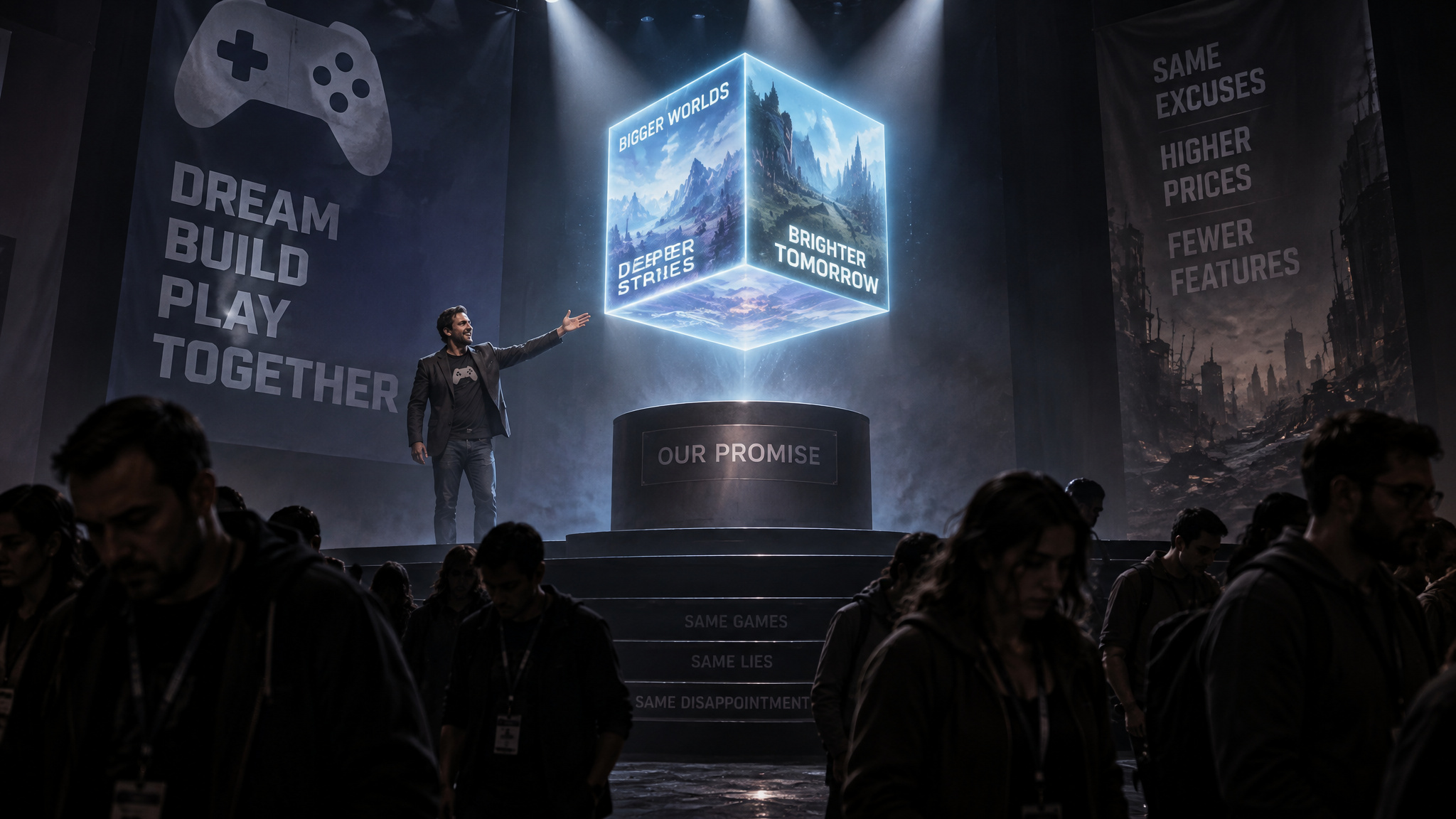
Peter Molyneux and the Curiosity winner who got nothing
God-game pioneer Peter Molyneux (Populous, Dungeon Keeper, Black & White, Fable) promised the winner of his 2012 mobile experiment Curiosity: What’s Inside the Cube (which drew millions of players) the virtual god role and a profit share in Godus, delivered neither to winner Bryan Henderson, and stepped back from press after a 2015 Rock, Paper, Shotgun interviewer opened by asking, “Do you think that you’re a pathological liar?”
Tommy Tallarico and the Amico that kept slipping
Video Games Live founder and Intellivision Entertainment president Tommy Tallarico announced the family-friendly Intellivision Amico in 2018 followed by repeated delays, while his claim of personally creating and owning the Roblox “oof” sound was disproven by Hbomberguy.
Keiji Inafune and the Mighty No. 9 Kickstarter
Mega Man co-creator Keiji Inafune left Capcom to found Comcept, raised over $4 million on Kickstarter for Mighty No. 9 only to ship a delayed, bland game missing promised goals, and launched Red Ash crowdfunding before Mighty No. 9 released.
The licensed shovelware tier: Game Mill, Ghostbusters, and $59.99 cash grabs
Game Mill Entertainment, Activision, and Ubisoft make some of the worst licensed shovelware games: Game Mill anchors its catalog on $50 releases competing against superior $12.99 alternatives, Activision applied $59.99 pricing to movie and TV tie-ins like Ghostbusters (2016), and Ubisoft flooded handheld shelves with its roughly 40-game Imagine series of low-quality carts. Across the licensed-game tier, these publishers follow a predictable extraction loop: grab recognizable IP rights, underfund development, charge full retail prices timed to a movie release or franchise anniversary, and let the game get delisted once the license expires.
Game Mill’s $50 model
Rejecting criticism with an “it’s for kids” defense, Game Mill shipped $50 titles like Miraculous: Rise of the Sphinx, Zombieland: Double Tap (about 1.5 hours long and later delisted), and Little League World Series Baseball 2022. Priced at $50 against the $12.99 Super Mega Baseball it copied, Little League featured broken hit detection, PS2-era graphics, auto-playing batting, and robotic fielders looking like children running an EXE file to throw.
Activision’s licensed failures
Activision published the twin-stick shooter Ghostbusters: The Video Game (2016) at $59.99 (28 years after the original) with 15-to-20-minute linear levels, staircases that required mashing the A button, bloated hit boxes, shared perks, no weapons or power-ups, and zero difficulty, making Black Ops 1‘s side mode Dead Ops Arcade superior at a quarter of the price. Developer Fireforge Games went bankrupt three days after launch, and the game was digitally delisted. Activision also shipped the WWII Call of Duty clone History Channel Battle for the Pacific, which lacked sensitivity settings and standard controls, alongside Bond’s 50th-anniversary FPS 007 Legends, which a reviewer mocked as a generic linear shooter with trivialized gadgets that could be renamed “Duty of Call” without anyone questioning it.
Ubisoft’s shovelware back catalog
Ubisoft occupied the handheld shovelware tier that EA avoided, publishing roughly 40 Imagine series games (Imagine Wedding Designer was a bare tapping loop), the four-game Jake Power series (where Firefighter and Policeman are reskins), Hell’s Kitchen DS, Batman Beyond: Return of the Joker (beatable in under an hour), and Hooters Racing.
The historic bottom tier
Those join historic notoriously bad developers like LJN and Data Design Interactive (Puppy Love Spa and Resort, 2007, Nintendo DS), alongside infamous releases like Disney’s Party (95% uninspired mini-games), X-Men Destiny (casting you as Samuel with four abilities total and inconsequential story choices like throwing a solar frisbee), 007 Racing (where forklift enemies only die to explosive boxes and accidentally destroying a box forces a restart), and the $60 G.I. Joe: Rise of the Cobra (backed by a 4.5-hour recording of the character staring at a wall).
Command & Conquer 4 and the hated-games question
When players argue over the most hated game in the world, the answer splits between broken standalone releases like Big Rigs Over the Road Racing or Ghostbusters: The Video Game (2016) and franchise-killing studio decisions like Command & Conquer 4: Tiberian Twilight. A broken bargain-bin truck game is easy to laugh off because nobody had a decade of emotional investment riding on it. Command & Conquer 4 represents a much deeper kind of hatred because it actively betrayed an established audience.
Coming immediately after the well-received Red Alert 3: Uprising, Command & Conquer 4 stripped out base building and resource management, the two core mechanics the entire real-time strategy series was built on. Even if a newcomer could find small combat elements to enjoy in isolation, it was the exact opposite of what series veterans wanted. Much of the development team was fired shortly after launch, and 16 years after release, Command & Conquer 4 remains one of the worst-rated games on Steam ever.
How communities enforce a studio’s reputation
Player communities hold studios accountable through a clear sequence of escalating pressure, moving from forum criticism and review bombing to hashtag boycotts, creator walkouts, and eventual storefront delisting. On Reddit and across gaming forums, player outrage only forces a studio’s hand when it moves past comment threads and hits storefront metrics, live-event lineups, or in-game visibility.
- The 2025
#boycottthehatchwalkout: Roblox players joined the prominent studio teams behind Jailbreak, Pressure, Doors, and Piggy to boycott Roblox’s 2025 event The Hatch over creator Teddy’s inclusion, forcing a permanent ban. - Storefront review bombing: Steam users review-bombed Pirate Software’s indie RPG Heartbound in 2025 over the developer’s World of Warcraft Classic dungeon dispute and his criticism of the Stop Killing Games campaign.
- The ARC Raiders leaderboard protest: the top three players on the ARC Raiders weekly trials leaderboard hijacked the rankings with their usernames to demand Embark Studios rework the mode.
The Teddy case and #boycottthehatch
Roblox creator Teddy built “condo games” featuring sexualized interactions that racked up hundreds of millions of visits. When Roblox invited Teddy to its official 2025 event The Hatch, the community launched #boycottthehatch and the developers of Piggy, Doors, Pressure, and Jailbreak withdrew from the event. Roblox removed Teddy from The Hatch and issued a permanent ban once it verified a severe, unfixable breach of its community standards. Even when a company corrects course, the window has already closed: Roblox removed Teddy from the event, but by then the damage had already been done, and the time for a new big-budget live-service looter to claim a piece of the market has arguably passed.
Review bombing and the escalation ladder
While Steam review bombing often punishes creator behavior outside the game itself, players also use in-game systems for targeted, constructive protest. In ARC Raiders, frustration with the ranked weekly trials system, uninteresting tasks, poor incentives, randomness, sniping gatekeeping, and solo players being disadvantaged against trios, led the top three leaderboard players to rename themselves EMBARK_PLEASE, REWORK, and TRIALS_SYSTEM to get Embark Studios’ attention without hating the studio itself.
When enforcement destroys the thing it loves
Community enforcement turns toxic when driven by fan entitlement. Game dev YouTuber Danny, whose videos regularly topped 10 million views (attracting collaboration interest from MrBeast and spawning viral Twitch hits like his janky survival game Muk), was harassed and threatened across every platform by fans demanding his unreleased FPS parkour dream game Carlson (known for its milk cartons). The pressure drove him into radio silence with no uploads in over two years.
Unity’s runtime fee: when the developers are the audience
Studio hatred also runs developer-side, where engine makers can break trust with the people building the games rather than the players buying them. In 2023, Unity announced a per-install runtime fee that sparked furious developer backlash over install tracking, piracy, charity bundles, and reinstalls; although Unity partially reversed the policy and later scrapped the runtime fee entirely, many developers never forgave the breach of trust and migrated their projects to Godot or Unreal Engine.
The counterweight: developers who banked goodwill instead
The developers with the best reputations earn them through three consistent practices: free post-release updates, blessing fan projects, and transparent pricing. Instead of treating player goodwill as a resource to monetize, these studios treat it as infrastructure.
Eric Barone (ConcernedApe) developed Stardew Valley single-handedly over four years, sold over 30 million copies, stays deeply engaged with his community, and pledged never to charge for DLC or updates even as he works on a new game. Toby Fox created Undertale (2015) and composed its entire soundtrack solo, maintaining a near-perfect reputation by actively approving fan creations like Undertale Yellow rather than sending legal takedowns. Landfall Games built lasting affection through affordability and transparency, releasing a free-to-play game every April Fool’s Day, including the 2024 release Content Warning, which went viral on Twitch.
Can a hated game studio recover?
A hated studio can recover its reputation when it delivers years of free post-launch updates and transparent communication like Hello Games did, whereas legal hostility or corporate distancing only amputates the damage. When No Man’s Sky shipped broken and missing promised features at its 2016 launch, Sean Murray and Hello Games faced intense hatred even though the game sold over 1.1 million copies in its first week. Rather than attempting a PR rebrand or charging for fixes, the studio spent years shipping consistent free updates with humility, turning one of gaming’s biggest launch disasters into a benchmark for redemption.
By contrast, reversing a bad policy after trust breaks is rarely enough on its own, as Unity discovered when scrapping its 2023 runtime fee failed to stop developers from moving to Godot and Unreal. When individual conduct or hostility toward customers crosses the line, as with Notch at Mojang, Teddy on Roblox, or Digital Homicide on Steam, parent platforms rely on corporate distancing and delisting to amputate the reputation and protect themselves, which acts as a final consequence rather than a cure.
Frequently Asked Questions
Why are gaming studios closing?
Studios shut down for reasons ranging from corporate acquisition cycles and sudden publisher layoffs to catastrophic launch failures. Electronic Arts built a reputation as a corporate graveyard by acquiring and later closing developers like Visceral Games, Pandemic Studios, and Westwood, while Fireforge Games went bankrupt just three days after launching the $59.99 licensed flop Ghostbusters: The Video Game in 2016. Even commercial success isn’t a shield, as NetEase proved in 2025 when it laid off the entire Seattle design and support team behind the blockbuster Marvel Rivals.
Which game studios are currently the best?
The most beloved developers earn player trust by treating goodwill as infrastructure rather than a monetization target. Eric Barone (ConcernedApe) built Stardew Valley solo, sold over 30 million copies, and pledged never to charge for updates or DLC, while Undertale creator Toby Fox actively blesses fan projects like Undertale Yellow instead of sending legal takedowns. Landfall Games wins fans with transparent pricing and yearly April Fool’s freebies like 2024’s viral hit Content Warning, and Hello Games turned No Man’s Sky from a hated 2016 launch into an industry redemption benchmark through years of free updates.
