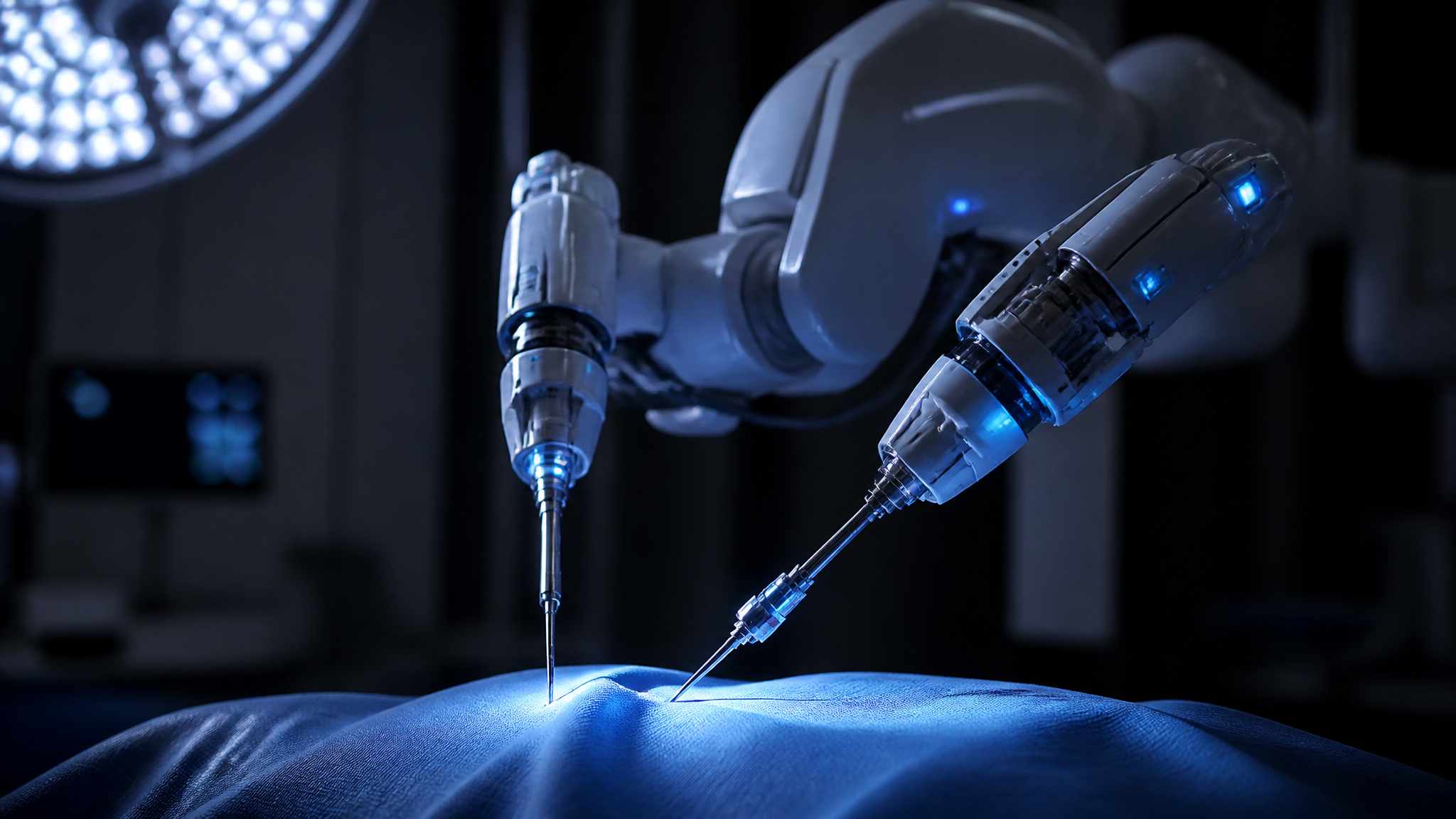
So I fell down a rabbit hole last week. It started because I wanted to write a piece about medical robot names, and it ended with me realizing that “robotic surgery” is one of the most successful misnomers of all time. The da Vinci system gets all the attention, obviously, but it’s one slice of a hospital ecosystem that includes germ-zapping droids, a baby seal that charges via pacifier, and delivery bots shuffling 53 miles’ worth of supplies through a single facility every day. The robots are everywhere: in the operating room, but also in the hallways, the pharmacy, the lab, and the physical therapy gym.
The CDC clocked 722,000 hospital-acquired infections back in 2011, and more than 250,000 people die from medical errors annually. Some of them deliver towels. None of them work alone, in fact, medical teams still rely on fax machines daily for patient information due to HIPAA privacy rules.
Key Takeaways
The da Vinci system, with over 1,700 installations, is used in roughly 75% of U.S. prostatectomies, but every one is fully controlled by a human surgeon using tremor-filtered wrist controls and 3D vision.
A typical 200-bed hospital moves 53 miles of materials daily, which is why logistics robots like TUG and Moxi are becoming medical workhorses; UCSF deployed 25 TUGs in 2015 and never looked back.
Surgical robots cost between $1 million and $2.5 million per unit, need about $1,500 in disposable supplies per procedure, and require 150-250 cases before a surgeon becomes adept, which re-frames the cost-benefit picture.
Table of Contents
Surgical Robots: The Precision Workhorses
Let’s start with the name you know. The da Vinci Surgical System from Intuitive Surgical hit the scene in 2000 when it became the first robot to get FDA clearance for general laparoscopic procedures. Over 1,700 units later, it’s the benchmark. The system senses the surgeon’s hand movements, translates them into scaled-down micro-movements, and filters out the natural tremor that every human hand has.
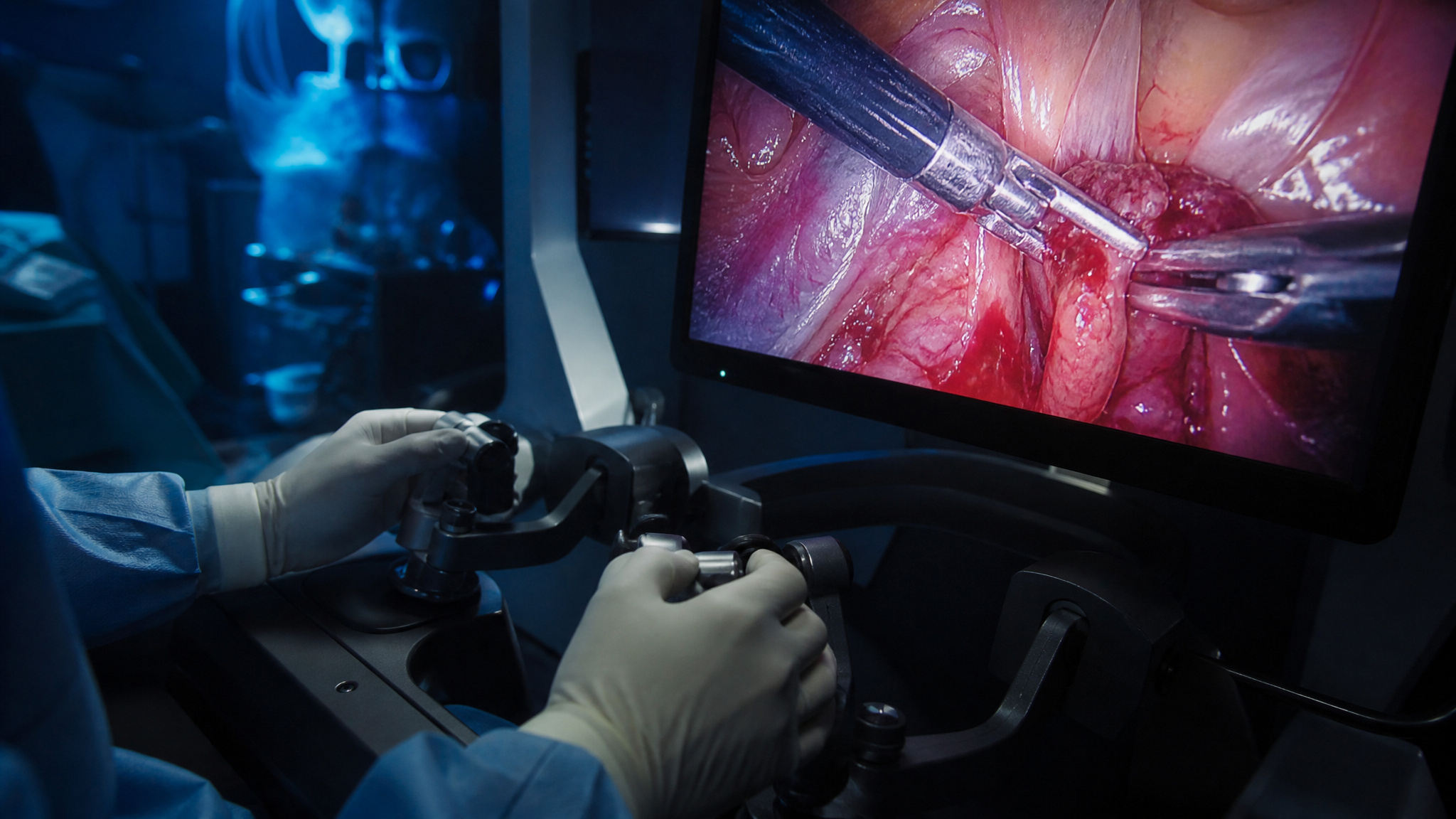
This is in roughly 75% of U.S. prostatectomies.
But da Vinci isn’t the only one in this game anymore. Way back in 2018 and 2019, a wave of challengers arrived. Ion by Intuitive Surgical, the same company as da Vinci, uses fiber-optic shape-sensing to help with deep lung biopsies. FDA clearance came in February 2019, and the setup lets a robotic catheter navigate small, twisty airways. The catheter locks in place and can sweep a full 180 degrees, which gives surgeons control.
Mako by Stryker is the joint-replacement specialist, handling partial knee, total hip, and total knee operations. Stryker paid $1.65 billion for that company in 2013, . NAVIO by Smith & Nephew does total knee replacement but skips the CT scan entirely, using intraoperative bone mapping instead. That means less radiation exposure for the patient, and the FDA gave it the green light in April 2018. The company even partnered with Osso VR to build a virtual reality training module, .
Monarch by Auris Health is another lung robot, but it uses a video game-style controller. J&J’s Ethicon paid up to $5.75 billion for that one. CyberKnife is a radiation therapy system, not a surgeon-guided tool, that delivers sub-millimeter precision for tumors in the prostate, head, neck, and liver. Hugo by Medtronic is a lower-cost modular system, and Versius by CMR Surgical, launched in 2019, uses independent modular arms that set up quickly. Meanwhile, Senhance by Asensus Surgical stands out for its haptic feedback, letting surgeons feel tissue resistance.
None of these machines operate themselves. The word “autonomous” never enters the equation. These are teleoperated tools that amplify human skill, not replace it.
A Brief History: How We Got Here
Once you understand the modern landscape, the history starts to look like a highlight reel of clever engineering and audacious bets.
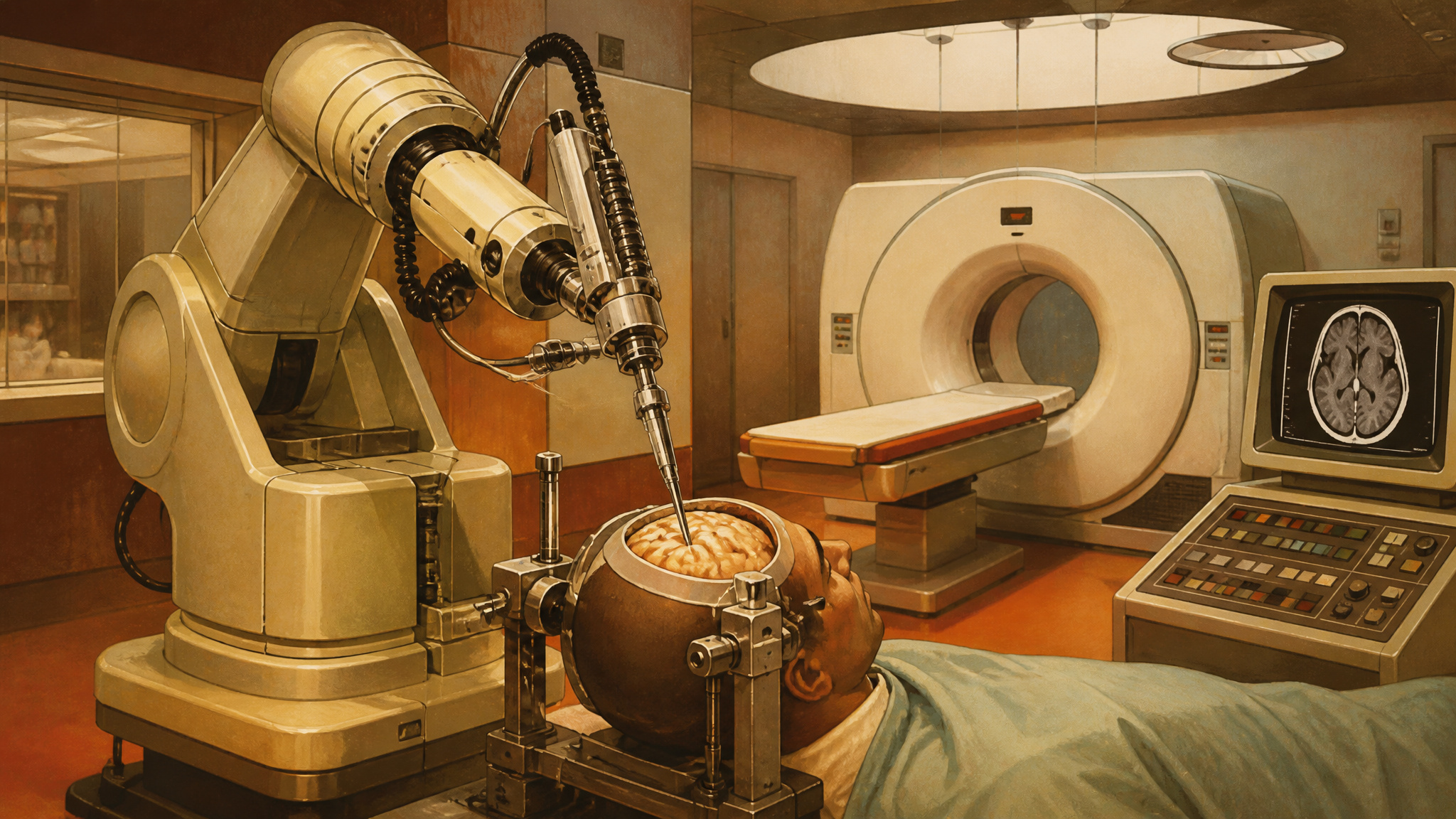
It starts with Arthrobot in 1983, developed in Canada for arthroscopic procedures. It was voice-command controlled, and in its first 12 months, it assisted in over 60 procedures. PUMA560 did the first brain biopsy under CT guidance with a robotic arm in 1985. PROBOT came along in the late 1980s at Imperial College London for prostatic surgery.
ROBODOC hit the scene in 1992 for hip replacements, and became the first surgical robot to earn FDA approval in 2008. AESOP became the first laparoscopic camera holder to get FDA approval in 1994, with voice control added in 1996.
Then came ZEUS in 1998, which marked the start of telerobotics and made headlines with the Lindbergh Operation in 2001, a remote cholecystectomy that proved distance doesn’t have to be a barrier when you have a solid data connection and steady hands. More recent additions include NeuroArm, the first MR-compatible robotic system for neurosurgery, and MUSA in 2017, the first robotic system designed for microsurgery.
All of this happened in four decades.
Disinfection, Therapy, and Logistics
While surgeons get all the glory, other robots are methodically solving problems that don’t care about headlines.
Disinfection Robots: Xenex and UVD
Xenex Germ-Zapping Robot looks like R2-D2 built to save lives, and that’s what it does. It uses pulsed, full-spectrum UV rays to disinfect an entire room in minutes. UVD Robots uses UV-C light to kill or inactivate microorganisms, and was even deployed against Ebola. They’re an extra layer of defense against the 722,000 hospital-acquired infections that occur every year.
Therapeutic Robots: PARO
PARO is a therapeutic robot shaped like a baby harbor seal, offering animal therapy benefits without a real animal. It responds to its name, develops a personality based on how you interact with it, and charges via a pacifier-shaped charger. Yes, really. It’s used to reduce stress and comfort dementia patients.
Hospital Logistics Robots: TUG, Moxi, and Others
A typical 200-bed hospital moves 53 miles of materials every day. That’s more than two marathons worth of linens, medications, meals, and lab samples. TUG from Aethon Inc. is programmed with hospital floor plans, uses sensors to avoid collisions, and politely asks people to stand aside. At UCSF Medical Center, 25 of them were deployed in 2015.
Moxi by Diligent Robotics handles delivering meds, PPE, lab samples, and supplies so human staff can focus on patients instead of errands, a shift that many medical residency loan holders will witness firsthand as they train alongside these robotic coworkers. They’re an extra pair of hands that doesn’t need a break.
The Specialists: Dental, Rehab, and Other Niche Robots
Now we’re getting into the corners of the hospital where robots are specialized.
Dental Robotics: Precision in the Chair
Neocis YOMI earned the FDA’s approval in 2017, covering implants, bone grafting, and full-mouth restorations. The first autonomous dental implant happened in 2017 in Xi’an, China, a robot performing what would have been a complex procedure without a doctor in the room. RemeBot is a Chinese company that made waves with its robot-assistant system and earned NMPA certification, and Yakebot is another Chinese implant system known for its precision and safety.
Rehabilitation and Prosthetic Robots: Recovery Assistance
Rehab robots help with hand mobility, arm mobility, and training assistance. Robotic prosthetics are getting closer to life-like limb functionality.
Telepresence and Emerging Tech
Telepresence robots let remote clinicians move and see from a distance, which is important for specialists consulting on cases from rural settings. Biorobots mimic human and animal cognition for future uses. AiM Medical Robotics is working on a portable neuro robot, having raised $8.1 million in Series A funding.
The Bottom Line: Costs, Caveats, and Real Talk
So you want to know if it’s worth the hype?
Robots cost between $1 million and $2.5 million per unit, and disposable supplies add about $1,500 per procedure. Those costs trickle down to patients. The learning curve is steep: it takes 150-250 procedures for a surgeon to become truly adept, and during training, operations can take up to twice as long.
Robotic surgery is associated with fewer complications, less pain, and shorter recovery for many patients. But a study from 2005 to 2008 found a mechanical failure rate of 2.4% (43 out of 1,797 cases), with a 1.3% instrument malfunction rate and a 0.17% conversion to open surgery. Data from 2000 to 2011 showed 34 permanent injuries out of 75 robotic hysterectomies, though that’s a small sample that may not generalize.
“Robotic surgery” is a misnomer that implies a level of autonomy that doesn’t exist. These are teleoperated tools that enhance human skill; they don’t replace it. For pancreatectomy, robotic surgery takes longer in the OR but results in lower blood loss compared to laparoscopic surgery. When you talk to your surgeon, ask about their experience with the specific robot and procedure, how many cases they’ve done, and whether a minimally invasive approach would work for you regardless of the robot. And ask about the full cost, both yours and the hospital’s.
The technology is impressive at its core: tremor filtering, motion scaling, 3D HD vision that gives you depth perception. It’s a tool that amplifies surgical skill, not a substitute for it.
Frequently Asked Questions
What is the most famous surgical robot?
The da Vinci Surgical System is the most famous surgical robot, with over 1,700 installations worldwide. It’s used in about 75% of U.S. prostatectomies and is the benchmark for robotic-assisted surgery, though it’s fully controlled by a human surgeon.
How does robotic surgery actually work?
Robotic surgery systems like da Vinci are teleoperated: the surgeon sits at a console and controls robotic arms with hand and foot controls. The system translates the surgeon’s movements into scaled-down, tremor-filtered micro-movements, and provides 3D high-definition vision. The robot doesn’t act autonomously—it amplifies the surgeon’s skill.
Is robotic surgery worth the cost?
Robotic surgery can cost $1 million to $2.5 million per unit, plus about $1,500 in disposable supplies per procedure. It’s associated with fewer complications and shorter recovery for many patients, but the learning curve is steep—surgeons need 150-250 cases to become adept. Whether it’s worth it depends on the procedure, the surgeon’s experience, and your specific situation.
What’s the difference between surgical robots and autonomous robots?
Surgical robots like da Vinci are not autonomous—they are teleoperated tools that a surgeon fully controls. Autonomous robots, like the Xenex disinfection robot, operate independently to perform tasks like cleaning a room. In surgery, autonomy is minimal; the robot enhances human precision but doesn’t replace the surgeon.
Can robots replace surgeons?
No, robots cannot replace surgeons. They are advanced tools that filter tremor, scale movements, and provide 3D vision, but every action is controlled by a human surgeon. The term ‘robotic surgery’ is a misnomer—it implies autonomy that doesn’t exist. Surgeons still need extensive training and experience to use these systems effectively.