
I’ve spent nine straight years making money online. I was fired from a job because my boss noticed my side business was pulling my focus. I’ve sat in a room feeling depressed while my five?month?old daughter slept in the next room. I’ve done an hour of work every morning on holiday just so everything still felt “running.” And I’ve watched the same pattern repeat: the internet is packed with people selling the dream of online income, while the people who actually earn it stay quiet.
Here’s the observation that stuck with me: 99% of the people who successfully make money online never talk about it. The ones teaching you how to do it are usually amateurs who haven’t done it themselves. Real success takes five years or more, not 30 days. The honest summary, the one you don’t see in the guru echo chamber, is that making money online takes blood, sweat, tears, and compromises—though I’ve had a lot of success with a platform like KashKick. KashKick pays real money for smaller, consistent efforts.
This article is a data?driven, hype?free assessment of the real ROI—time investment, realistic earnings, hidden costs, and the emotional toll most guides skip. No listicle of side?hustle ideas. Just a clear?eyed decision framework.
Key Takeaways
Real?world online income takes 5+ years of sustained effort, not 30 days—even popular platforms like YouTube require 1,000 subscribers + watch hours and a two?month ad?revenue lag before any money flows.
Hidden costs eat profits fast: Taskrabbit charges a $25 fee after approval, Etsy Ads are increasingly necessary to get noticed, and rideshare drivers must notify their insurance company or risk being uncovered in an accident.
Earnings ceilings vary wildly: Prolific pays $8–$15/hr but availability is inconsistent, while JustAnswer can bring in $2,000–$7,000/month—but only after proving credentials in a specialized field.
Table of Contents
The hype vs. the reality: what this article actually covers
Let’s start with the contradiction. Google “how to make money online” and you’ll find thousands of articles promising passive income in 30 days. Most are written by people whose main income comes from teaching others how to make money online—not from actually doing it.
I’ve been on the other side. I’ve failed (my AdSense?on?timdenning.com plan went nowhere). I’ve had customers compare my mastermind to a creator who had 2,000 email subscribers and one year of experience. I’ve seen the guy who prefers a regular job because he misses the office gossip. And I’ve learned that the people who quietly rack up real income—the ones running profitable Etsy shops, driving for Uber while scaling a fleet, or writing $100?per?hour white papers—rarely post about it.
This article is for anyone who’s tired of both the hype and the cynicism. I’ll walk through the major income categories: gig work, freelancing, selling stuff, content creation, asset?sharing, microtasks, and expertise sales. For each, we’ll look at setup time, time to first dollar, realistic earnings, and the costs nobody budgets for.
Gig economy: the real cost of “easy” money
Gig platforms are the most accessible on?ramp—no portfolio, no negotiation. But “easy” comes with fine print.
Uber and Lyft
Both are legit. You need an eligible car (four doors, good condition) and must pass a background check and driving?history review. Lyft requires at least one year of licensed driving experience depending on your state; Uber wants one year in the U.S., or three if you’re under 25.
The hidden cost most people miss: tell your car insurance company before you drive. If you don’t, you could be uncovered in an accident. That’s a real gamble.
On the upside, both offer instant payout to a debit card, so cash is available within minutes of ending a trip. But remember—you’re paying for gas, maintenance, and depreciation on your own car. The per?mile math isn’t as good as the per?ride number suggests.
Delivery (DoorDash, Instacart, Amazon Flex)
Delivery is more accessible than rideshare because a car isn’t always required. DoorDash lets you use a bike or scooter in some cities. Still, a background check is almost always mandatory. Pay comes weekly or faster, depending on the platform.
Taskrabbit
Taskrabbit charges a $25 fee after your profile is approved. In a low?demand market, that fee can eat 25–50% of your first job. Reddit users say it’s decent for a couple hundred extra bucks a month, but success is heavily location?dependent. You’re paid via direct deposit a few days after a job. Minimum age: 18.
Cost check: That $25 Taskrabbit approval fee can consume half your first gig’s profit in a slow market.
Rover and Wag
Rover takes five to ten business days to approve a profile; Wag takes about two weeks, plus a background check and a pet?care quiz. Both require you to live in a service area. Once approved, regular clients can push earnings above $300 per month—again, location is the swing factor.
Care.com and Sittercity
These are the old?school gigs on modern platforms. You must be 18 to list as a caregiver. Clients may request a background check, and you typically get paid when the gig is completed—no waiting weeks for a payout. Babysitting rates vary wildly by area.
Freelancing: skills alone won’t pay the bills
Freelancing is one of the more practical side hustles to start, but only if you use skills you already have. Certified financial planner Chelsea Ransom?Cooper puts it simply: “The key is using skills you already have—instead of starting from scratch learning something new.”
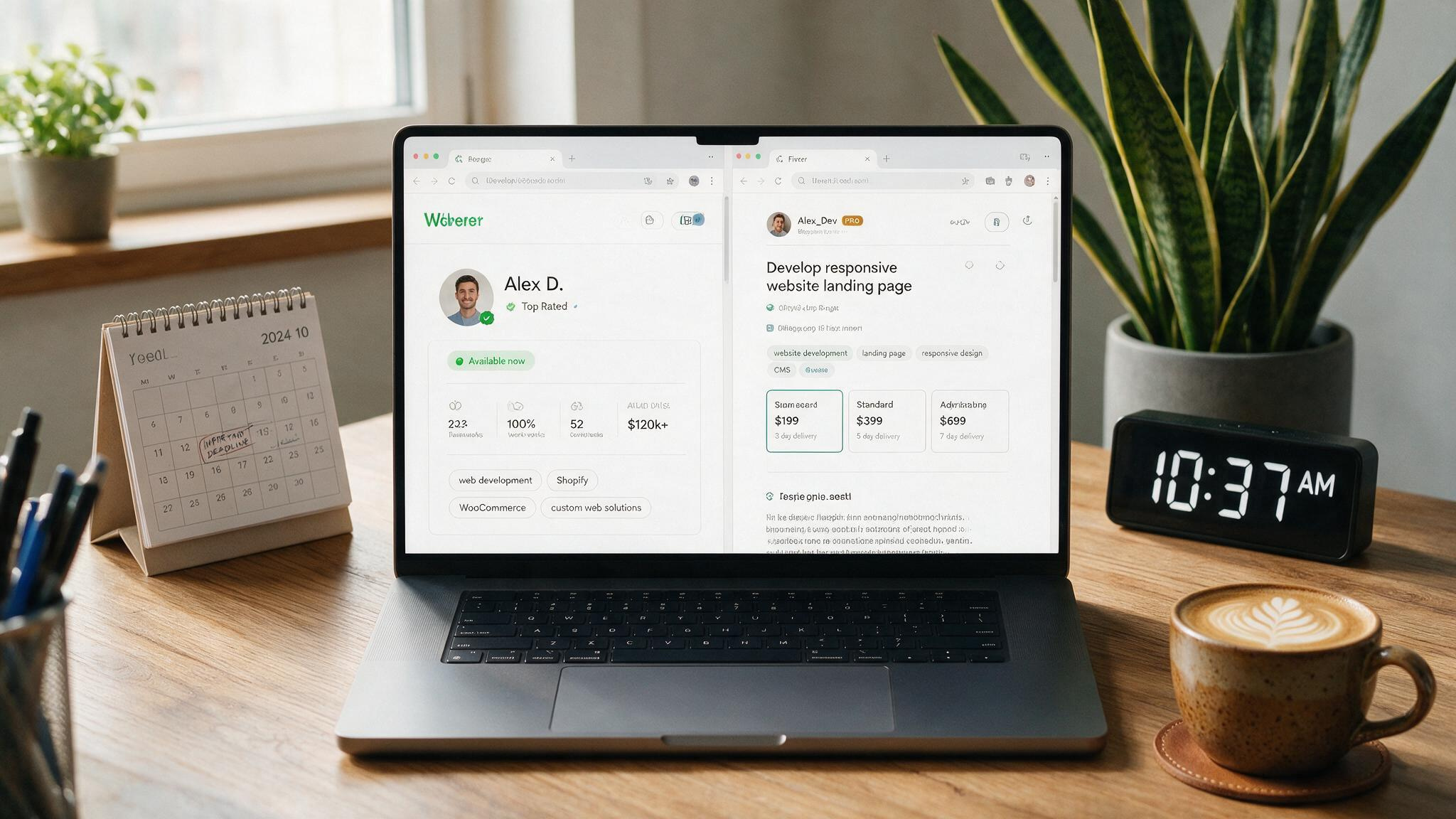
Some freelancers make $100 an hour or more for writing services. Soraya Ivette, a content marketing strategist on Fiverr, started freelancing part?time while home with young children. She was getting job requests within a couple of weeks and started making regular money every month after that.
Upwork vs. Fiverr
The payment?wait comparison matters:
- Upwork takes up to 48 hours to approve a profile. Hourly contracts bill weekly; you can withdraw funds 10 days later. Fixed?price contracts have a five?day wait after reaching a milestone.
- Fiverr won’t let you withdraw for 14 days after the work order is complete, though Top Rated Sellers get shorter waits.
That means the first real paycheck can land 17 days after you finish your first job—if you’re on Upwork with a fixed?price milestone. That’s a real onboarding cost.
Age gates
You must be 18 to sell on Upwork and Fiverr. Fiverr does allow users 13+ with a parent or guardian’s account and permission. Freelancer.com requires you to be at least 16 to use the platform.
The AI angle
Upwork’s own research found that human workers collaborating with AI agents increased project completion rates by up to 70%. So AI isn’t necessarily replacing freelancers—it might make them faster. Worth noting.
The reselling loophole
A known strategy: hire a $5 logo designer on Fiverr, then respond to Upwork jobs offering the same work for $50+. This only works with the designer’s consent—telling them upfront builds trust and avoids legal issues.
Selling stuff: from clothes to e?books
Selling physical and digital goods can be lucrative, but each path has its own friction.

Used clothing
You have two speed options:
- Plato’s Closet pays cash on the spot.
- ThredUp and other online consignment shops pay when items sell (or after inspection). ThredUp rejects items for pilling, fading, shrinkage, missing buttons, and stains. Online sales take at least a month.
Etsy
Etsy has 31.7 million active buyers. You can open a shop in a few hours and set payout schedules from daily to monthly. But the Reddit consensus is loud: lower?effort print?on?demand is saturated. Customizable physical goods—personalized jewelry, for instance—get more sales and better margins. Also, Etsy Ads have become almost necessary to get noticed; that’s a hidden cost.
Sellers under 18 (but over 13) can sell with extra minor policies, and you must hold IP rights for merchandise.
Gold and silver
Brandon Aversano, founder of The Alloy Market, describes a “flipper” category of people who find pieces on eBay sold for less than melt value. A whole community waits at thrift stores in the morning to grab silver.
Melt value depends on karat, weight, and the going rate minus the buyer’s cut. Payouts run 60–70% of metal value on the low end, 85–95% on the high end. Authentication tools—digital scale and neodymium magnet—cost as little as $40. Account setup with an online broker takes under an hour, and payment arrives a few days to a week after the buyer receives the item. You must be 18+ and provide a government?issued ID.
Gumroad (digital products)
Minimum age: 13. Payouts can be daily, weekly, monthly, or quarterly, but only after you’ve earned enough to be paid at least four times. A concrete example: a 280?page PDF cookbook with 47 positive ratings, priced at $39. The upside is real, but creating the product first takes major upfront effort — which is why many beginners prefer real ways to make money online for beginners that require no product creation.
Amazon KDP (e?books)
Up to 70% royalty per sale—that’s the maximum rate, but it requires pricing between $2.99 and $9.99. A 35% option gives more pricing flexibility. The $100 threshold for wire or check payments means you need to sell enough copies before you see any money. Competition is brutal: millions of titles in the Kindle Store.
Content creation: the long game
Content creation is the poster child for “it takes time.” Here’s the real timeline.

YouTube
You need 1,000 subscribers to apply for the YouTube Partner Program (ads). With 500 subscribers you can unlock other features like channel memberships. Even after approval, ad revenue takes at least two months to start flowing, and it pays between the 21st and 26th of the month after you hit the $100 threshold.
Tommy Tindall, a gear?review YouTuber, started his channel in 2021. At the time of writing, he still hadn’t reached the Partner Program threshold. That’s the multi?year reality in one example.
Twitch
You need Twitch Affiliate or Partner status before earning anything. Payouts arrive around the 15th of each month, with a $50 minimum for most methods ($100 for wire transfers).
Minimum age: 13. Affiliate networks typically pay out the month after a campaign is completed. Reddit consensus says the “lifestyle influencer” is being replaced by the “micro?specialist”—someone with a small, engaged audience (think DIY plumbing tutorials) that advertisers actually want.
Optional pattern
New creators often fixate on subscriber counts or views, not income conversion. It’s common to hit 1,000 subscribers only to earn a few dollars a month because the niche has low CPMs. So, how can I make $1000 a week from home online? Be honest about that.
Passive income? The truth about asset?sharing
“Passive income” is a marketing term. Here’s what it actually looks like.
Turo
Turo lets you rent your car by the hour or day. Setup takes about half an hour with a qualifying car. Drivers must be 21+ with a valid license. But Reddit calls it “not passive”—you’re cleaning, maintaining, and coordinating with customers.
Profitability is marginal on newer or luxury cars you’re still paying off; it’s better on cheaper cars you own outright. The sweet spot: a gently used, paid?off compact sedan near an airport. The business increasingly favors people who scale to a small fleet; single?car owners struggle.
Turo initiates payment within three hours of rental end; bank processing adds a few days. Getaround earnings accrue daily or monthly via direct deposit.
Neighbor
Rent out unused space—garage, basement, driveway, spare room. Earnings range from $100 to $500+ per month, depending on space, accessibility, and local demand. Insurance is typically included but terms vary.
Honeygain
Share your unused internet bandwidth. You’ll earn $5–$30 per month, depending on location, internet speed, and how long your device is online. It doesn’t slow your device or affect normal use. This is the clearest “this is not real income” data point in the article.
Wrapify
Turn your car into a moving ad space. Earnings depend on mileage, routes, and location—$200–$500 per month. That means you have to keep driving for the ad to earn. Opposite of set?and?forget.
Microtasks & surveys: pennies for your time
These are pocket?money generators, not income paths.
Prolific
Prolific pays $8–$15 per hour for academic research studies—decision?making, problem?solving, habits, memory, reactions to ads. It’s among the better?paying, more reliable survey options. But availability is inconsistent, and you can’t scale it.
UserTesting
$10–$60 per test, each taking 10–20 minutes. Approval can take a few days, and you must pass a sample test. Payment via PayPal 14 days after the test. Requirements: 18+, compatible device, internet, working microphone, quiet space. An unclear audio recording can get your test rejected.
Clickworker
The tasks pay $3–$9 per hour for microtasks—data categorization, short surveys, writing tasks, content checks. For those seeking how to make money online quickly, these gigs are paid via PayPal, though task availability changes daily.
Gigwalk
$10–$50 per task, location?based: verifying store displays, taking in?store photos, checking product availability. Task availability depends on location, language, and demographic matching. Sounds great until you check whether tasks exist near you.
General survey sites
Age thresholds range from 13 to 18. Expect micro?earnings, often in gift cards. Swagbucks and InboxPounds pay for watching ads or videos. This is spare?time pocket money.
Adjacent quick cash: selling unused gift cards
CardCash pays up to 92% of value. Takes minutes for popular stores. You must be 18+. Payment arrives a few days to about two weeks. Gift cards may need a minimum balance and no expiration date.
Selling your expertise: the high?barrier path
This is where real money lives—if you have credentials or experience.
Wyzant and Tutor.com
Wyzant tutors keep 75% of earnings—Reddit likes that split. Some tutors must be enrolled in a four?year university or hold at least a bachelor’s degree. Reddit also notes platforms are becoming saturated, which pushes rates down. Specializing in a niche like algebra 2 or trigonometry improves success.
Tutor.com requires a minimum of 5 hours per week. Application can involve interviews, background checks, or college transcripts. Typical rates: $18–$35 per hour.
JustAnswer
Experts answer paid Q&A in tech, legal, medical, automotive, home improvement. Active users report earning $2,000–$7,000 per month. But you must prove qualifications during the application. This is not a beginner path.
Cambly
Conversation?based English tutoring pays $0.17–$0.20 per minute base, plus bonuses. Pays by the minute, so earnings depend on call volume. It’s a low floor.
Voiceover
Lots of competition. Some sites charge premium memberships to boost your demo. You don’t need a studio—a high?quality microphone in a small home space works. Gigs range from $5 to hundreds.
Translation and virtual assistant work
Translation requires proving fluency and competency—typed text, live consultation, or recorded translation. Virtual assistant rates start around $17 per hour; clients generally want relevant experience. The common on?ramp: working for family or friends first to build references.
The hidden cost: your sanity
This is the part most articles skip.
I got fired from a job because my boss noticed my online business was a distraction. I’ve felt depressed with a five?month?old daughter in the next room. I’ve done one hour of work every morning on holiday just so everything still felt “running.”
Some strangers will hate you if you succeed. It’s jealousy in disguise. Daily overload: 200+ new emails a day, 40–50 newsletters to read each week. Every day there’s a new tool required, each with a steep learning curve. Subscription models force payment when a new feature is needed—software?trap costs that quietly tax every online business.
My survival tactics: all notifications off. Check email a few times a day. 98% of people never follow up on emails, so I reply to the 2% who do follow up. That’s not productivity porn—it’s the bare minimum to stay sane.
Scams and traps: how to spot them
Legitimate opportunities never ask for upfront fees, certification payments, Social Security numbers, or credit card numbers. That’s the first red flag.
Before committing, check community forums like Reddit and the Better Business Bureau for unfiltered reviews.
Hidden costs that recur across platforms:
- Taskrabbit’s $25 fee
- Growing necessity of Etsy Ads
- Rideshare insurance notification gap
- Tax?reporting thresholds (Form 1099?K for payments over $20,000 in more than 200 transactions)
Also watch for subscription lock?in. Software tools that force payment when a new feature is needed? That’s a silent profit?eater. And legal overhead like DMCA takedown requests is rarely discussed but real for anyone selling digital products.
Student?specific methods: quick cash with low barriers
If you’re a student looking for fast, low?risk money, these methods can inject cash without major commitment. Most are micro?earnings—honest pocket money, not income.
Paid surveys: some pay up to £3 ($5). Qmee rewards searches on Google, Bing, Yahoo, Amazon, and eBay via a browser extension—no minimum cash?out (first payout was 72p). GPT sites like Swagbucks, InboxPounds, User Interviews, and Toluna reward cash and vouchers for offers and videos.
Selling digital and physical: Kindle e?books (list at £1.49–£6.99 for 70% royalty; about 20 hours to create; non?fiction with real value sells best). Stuvia sells study notes—the platform takes a small cut. Textbook flipping: buy at end of academic year, sell after freshers’ week when demand spikes (Amazon Marketplace takes a commission). Old DVDs, Blu?rays, games: 10p to £20 per item.
Clothes via eBay, Depop, or Vinted. Slicethepie pays in USD for reviewing unsigned bands.
Delivery and tutoring: Deliveroo riders can earn up to £16/hour. Contact local takeaways or chains like Domino’s directly. Tutoring: £10+/hour; no high qualifications needed for GCSE or A Level. Babysitting: over £11/hour (basic DBS check needed in the UK). Pet sitting: around £10/hour.
One?off and passive: Parking spaces via Parklet or Just Park. Film locations—TV/film producers pay for houses (a Coronation Street scene was filmed in a Save the Student editor’s student house). Life modelling, clinical drug trials (pay but involve risks), film extra work (£60–80 per day). Selling stories: The Sun pays around £50; a Save the Student team member once sold a story about a pigeon smashing through their window to The Sun for £50. You’ve Been Framed up to £250.
Competitions like Pick my Postcode (£500 jackpot) are free entry but no guarantees. Domain flipping: register a domain from £4; VacationRentals.com sold for $35M in 2007—lottery?ticket stuff. Print?on?demand: design without holding stock. Property sourcing: find below?market?value properties and pass leads to investors for a cut.
Recycling old phones, student tax refunds (emergency tax code overpayment), cashback sites (Top Cashback, Quidco, Swagbucks). Sweatcoin/Macadam paid?walking apps, street fundraising (~£20 commission per sign?up).
Disney Blu?ray flipping: Disney restricts supply of classics for 8–10 years before re?release windows. Example: Beauty and the Beast 3D bought for £24.99 in 2011 later sold on Amazon for £74.99. Bambi and The Lion King Diamond Editions were recommended vault titles.
eToro: 40M+ users, CopyTrader, $100k virtual practice portfolio, £/$10 minimum trade. Important: 50% of retail investor accounts lose money when trading CFDs.
The ROI snapshot: time vs. money
Here’s an at?a?glance comparison of methods by typical earnings and timing friction:

| Method | Typical earnings | Timing friction |
|---|---|---|
| Prolific | $8–$15/hr | Setup same day; availability inconsistent |
| UserTesting | $10–$60/test (10–20 min) | Approval takes days; PayPal 14 days after test |
| Clickworker | $3–$9/hr | Setup same day; pay varies |
| Gigwalk | $10–$50/task | Location?dependent |
| Foap | $5–$50 per sale/mission | Depends on brand demand |
| Shutterstock | $0.25–$0.40 per download | Ongoing uploads needed |
| Redbubble | $20–$1,000+/month | Example: $15 t?shirt with $5 markup = $5 per sale |
| Honeygain | $5–$30/month | Setup in minutes; ongoing |
| Neighbor | $100–$500+/month | Requires managing access; terms vary |
| Wrapify | $200–$500/month | Depends on driving mileage/routes; car wraps for advertising |
| Cambly | $0.17–$0.20/min + bonuses | Pays by the minute |
| JustAnswer | $2,000–$7,000/month | Requires proven qualifications; monthly payout |
| WeGoLook | $15–$50/gig | Location?based; needs transportation; on-site photo and verification tasks |
| Second to None | $20–$100/assignment | Location/demand dependent; mystery shopping |
| HealthyWage | Up to $1,000+/challenge | You lose your stake if you miss the weight target |
Can you make $100/day? It’s possible, but only through high?barrier routes—JustAnswer with credentials, freelance writing at $100+/hour, or digital products after a long creation cycle. Survey and microtask methods alone won’t get you there.
Financial tips for online earners
The taxman won’t forget, even if you try to.
- Track all earnings, including gift cards. The IRS expects you to report all income, even if you don’t receive a tax form. If a payment doesn’t arrive, check with the client or platform.
- Consider a separate checking account for online earnings—keeps bookkeeping clean and helps you see which sites actually pay.
- If you’re self?employed and expect to owe at least $1,000 for the current year, you must pay estimated quarterly taxes.
- Third?party payment networks (PayPal, Stripe) must report payments on Form 1099?K if they exceed $20,000 in more than 200 transactions.
- Think about a small?business retirement plan—SEP IRA or self?employed 401(k)—on top of a personal IRA or employer?sponsored plan.
- Professional liability insurance (errors and omissions insurance) can shield personal assets from client damages.
The unsexy truth: what actually works long?term
There’s no plan that works from the start. You try a few things and collect data. My strategy: focus on one online platform until you reach mastery and the income levels that come with it. Learn from practitioners with at least five years of experience—not from someone who made a course after six months.
Nicolas Cole put it well: Once you win an online game, you must unlearn what made you successful to play the next higher?level game. That quote explains why people plateau right after their first win. The skills that got you to $1,000 a month won’t get you to $10,000. You have to rebuild.
The productivity survival rules are non?negotiable:
- Notifications off everywhere.
- Check email a few times a day.
- 98% of people never follow up, so reply to the 2% who do follow up.
Moving from side hustle to full?time online income is a psychological and financial risk—not a victory lap. Treat it like training for the Olympics: sustained effort over years, not a 30?day sprint.
Is it worth your time? The final answer
Here’s the conditional verdict.
If you can commit five years or more, absorb the emotional cost (burnout, guilt, isolation, inability to disconnect), and focus on one platform until you’re genuinely excellent: yes, making money online can be worth your time. The numbers work for those who survive the grind.
If you need fast money, or you can’t handle the toll that constant optimization takes on your sanity, a traditional job is the better bet. Office gossip and a steady paycheck have real value.
Making money online, in my own words, “takes blood, sweat, tears, and compromises.” That’s not defeat—it’s the honest price of admission. At GeekExtreme, we cut through the marketing hype to find what’s actually worth knowing. This article is exactly that.
So ask yourself: are you ready for the five?year grind? If the answer is yes, start with one platform, collect data, and don’t quit when it gets hard. If the answer is no, that’s fine too. Knowing the cost is the first piece of real income you can earn.
Frequently Asked Questions
Can you make $100 a day online?
Yes, but only through higher-barrier routes like freelancing at $100+/hour, selling expertise on a platform like JustAnswer, or creating digital products after a long creation cycle. Survey sites and microtask platforms like Clickworker or Gigwalk will not get you there on their own. The methods that pay real money require credentials, specialized skills, or significant upfront effort.
How can I make $1000 a week from home online?
Consistent $1,000-per-week income typically requires a high-value skill like freelance writing, specialized tutoring, or selling expertise on a platform like JustAnswer where active users report $2,000–$7,000 per month. It is not achievable through microtasks, surveys, or most gig economy work alone. The reality is that reaching this level takes years of building a client base or proving qualifications, not 30 days.
Does making money online really work?
Yes, but the honest timeline is five years or more of sustained effort, not the 30-day promises you see in most guides. Real success comes from focusing on one platform until you reach mastery, absorbing hidden costs like insurance gaps and software subscriptions, and surviving the emotional toll of burnout and isolation. If you need fast money, a traditional job is the better bet.
How much does a typical Fiverr freelancer actually make after fees?
Fiverr won’t let you withdraw funds for 14 days after completing an order, and Top Rated Sellers get shorter waits. The platform takes a cut from each transaction, and hidden costs like the need for Etsy Ads or Taskrabbit’s $25 approval fee eat into profits on other platforms. For freelancing in general, rates can reach $100+/hour for writing, but the first real paycheck can land 17 days after starting a job.
What are the hidden costs most people miss when starting online income?
Rideshare drivers must tell their insurance company or risk being uncovered in an accident, Taskrabbit charges a $25 approval fee that can eat half your first gig’s profit, and Etsy Ads have become almost necessary to get noticed on that platform. You also face tax-reporting thresholds, subscription lock-in for software tools, and the emotional toll of 200+ daily emails and constant optimization pressure that most guides skip entirely.