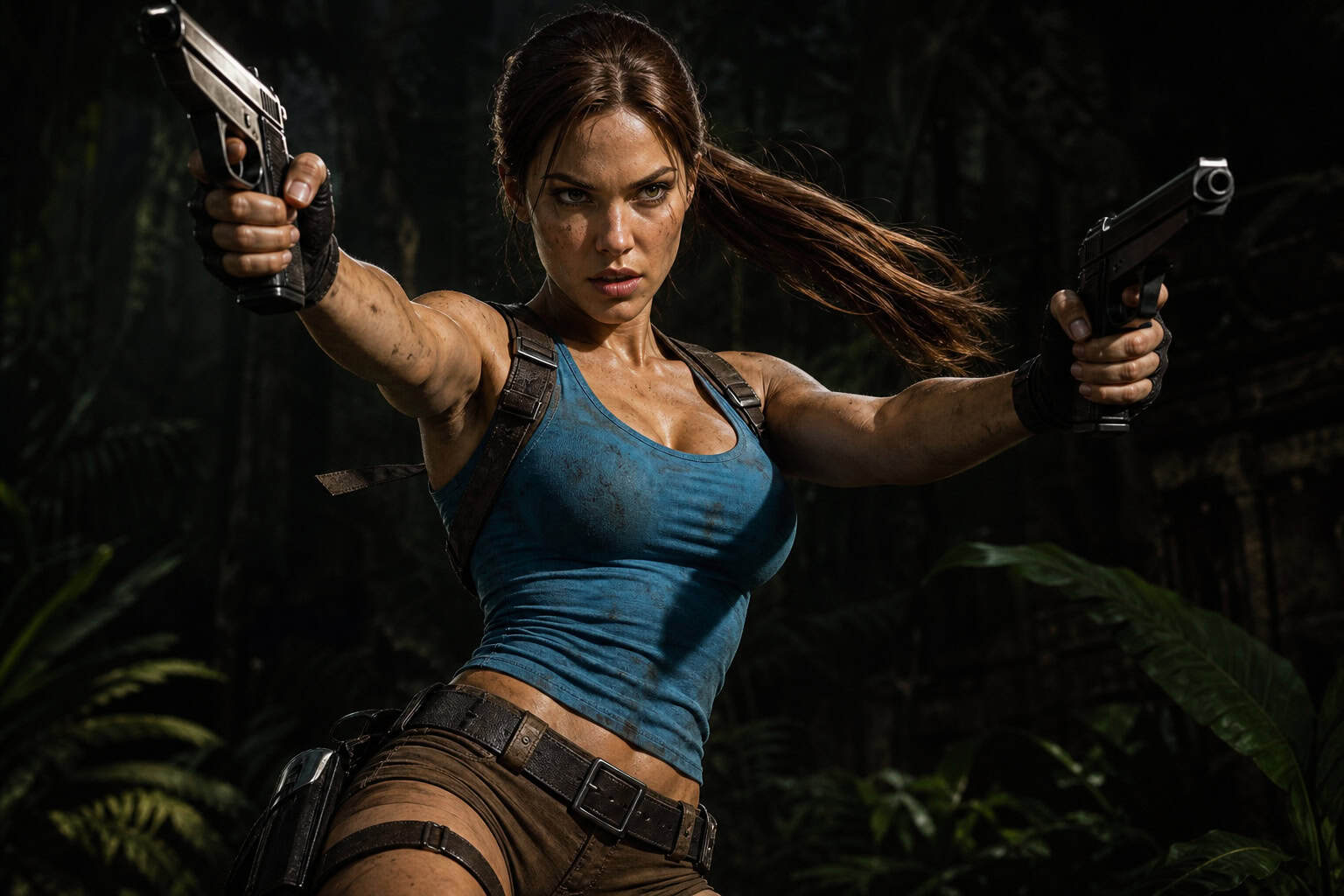
Since 1996, Lara Croft’s outfits have been argued over by people who never played the games — but the fight was never really about the clothes. It’s about who controls her image. On one side is Toby Gard, the Core Design animator who created her in 1996 as a witty, capable British heiress who could handle herself in any situation. On the other side is Eidos, the publisher who saw a pinup to sell magazines and energy drinks. The tension between those two visions shaped every single outfit Lara Croft has worn, in games and on screen.
Gavin Rummery, a developer on the original games, put it simply: “She’s not that kind of girl.” The games themselves never sexualized her; the ‘nude cheat’ never existed. The marketing did. And that split — between what the creators intended and what the market demanded, is the only way to understand why Lara’s wardrobe has been such a battlefield.
Key Takeaways
The classic blue tank top, brown shorts, and braided ponytail were designed for readability on 1996’s low-resolution displays — a functional superhero silhouette, not a fashion statement.
Eidos hired model Rhona Mitra in 1997 and plastered Lara’s image on magazine covers and a Lucozade ad, creating a pinup persona that directly contradicted the capable explorer in the actual games.
No live-action adaptation has perfectly replicated a game outfit; Angelina Jolie’s tactical cargo pants, Alicia Vikander’s polished practicality, and Sophie Turner’s deliberate Tomb Raider II throwback each choose a different priority between nostalgia and realism.
Table of Contents
The Classic Game Era (1996–2000)
This era established Lara Croft as a gaming icon, defined by technical constraints and creative ambition that set the stage for her enduring legacy.
Introducing Lara Croft (1996)
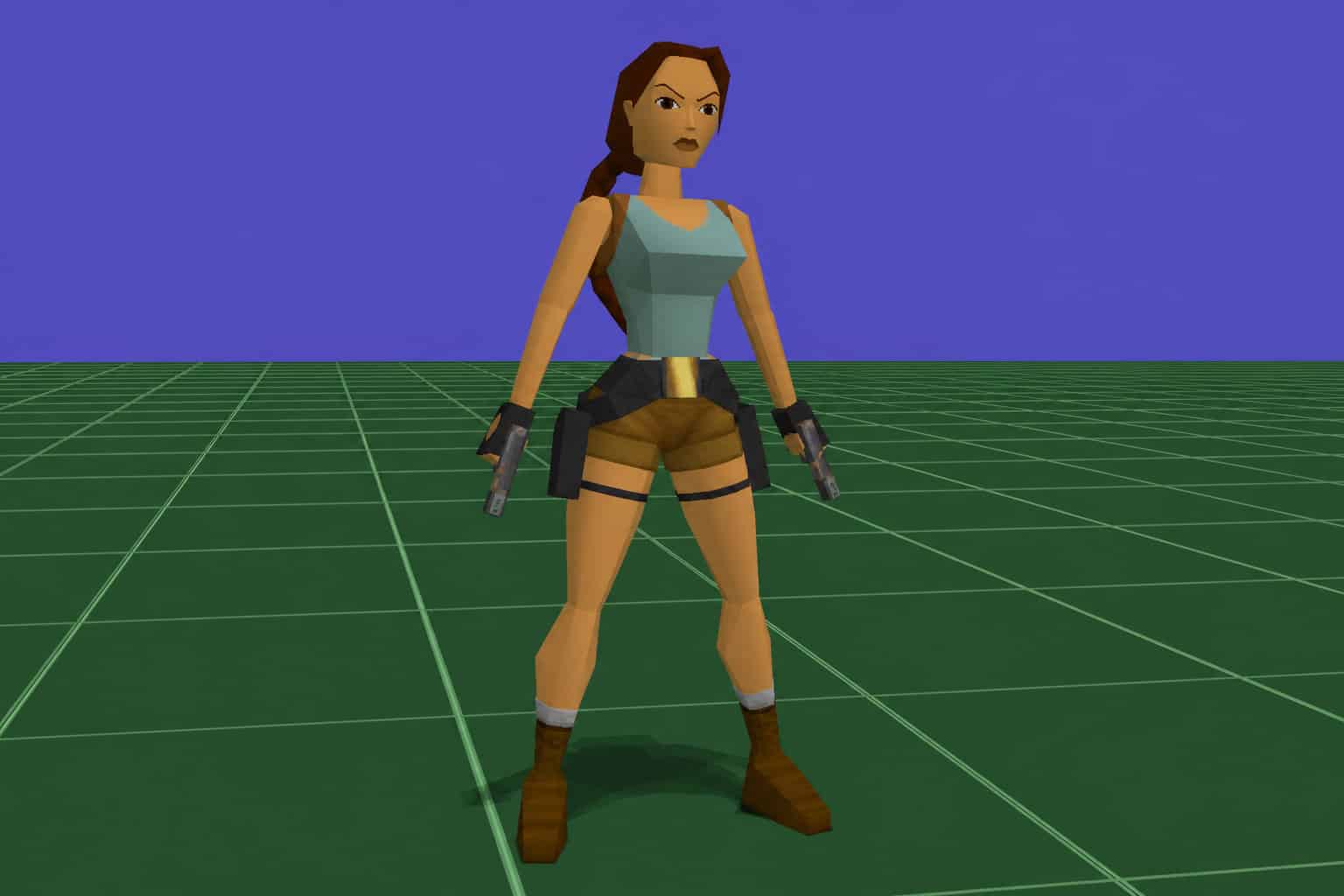
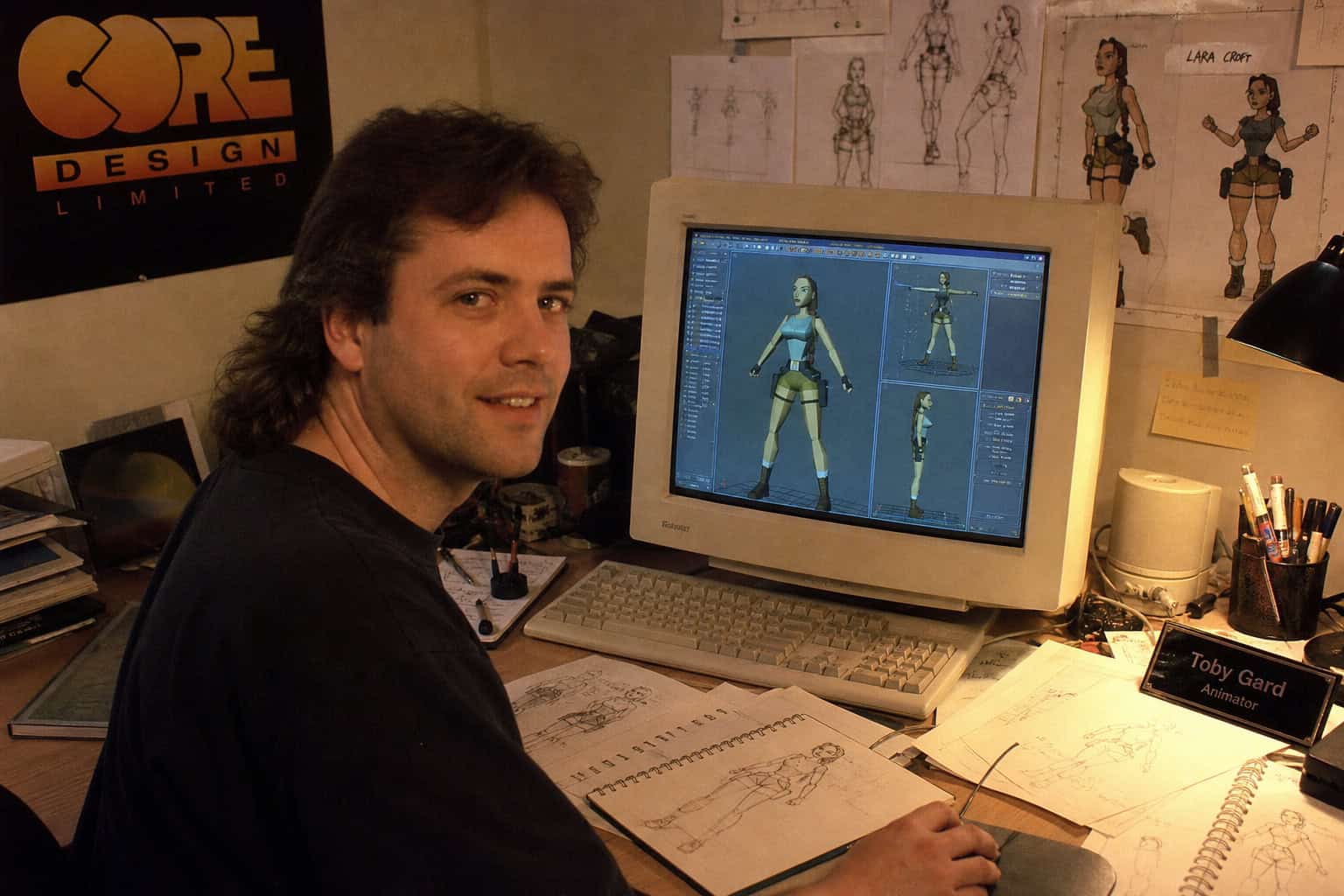
Toby Gard originally conceived Lara as a male character before deciding to make her female — a deliberate choice in a genre dominated by muscle-bound action heroes. The first game launched on PlayStation in 1996, developed in a converted Victorian house in Derby by a small team at Core Design. Lara was one of the first big 3D action characters in gaming, and she became one of the best-selling games of all time.
The classic outfit — blue tank top, brown shorts, knee-high boots, braided ponytail, dual pistols, wasn’t a fashion choice. It was a technical necessity for readability on 1996’s low-resolution displays. On the low-resolution displays of the time, characters needed bold, simple silhouettes to be readable from a distance. The ponytail wasn’t a style; it made her head distinguishable when the camera pulled back. The outfit functioned like a superhero costume: instantly recognizable, even in a blocky polygon world.
Tomb Raider II (1997) and the Accelerated Franchise
Tomb Raider II came in 1997 — an eight-month turnaround that pushed the team hard. Lara Croft became a pop culture phenomenon: partially nude on magazine covers, appearing in a 1997 Lucozade ad, and even touring with U2. Toby Gard left Core before work on Tomb Raider II, upset by how Eidos was marketing his creation as a ‘cyber-bimbo’. The marketing team ignored his input entirely.
Rummery remembers the disconnect: “There was always a gap between the marketing and the games.” Gard was “riled up” by it. But the marketing worked. Lara Croft broadened gaming’s appeal beyond teenage boys — she felt “real, like a movie star.”
Tomb Raider: The Last Revelation (1999) Nearly Kills Croft
By the fourth game, the franchise was exhausted. Core Design considered beheading Lara onscreen. Instead, they ended the game ambiguously, with a pyramid collapsing around her. The subtitle said it all: “The Last Revelation.” They were ready to kill the character.
Tomb Raider Chronicles (2000) Salvages the Legacy
Tomb Raider Chronicles (2000), the fifth game in five years, had players navigating memories at Lara’s funeral — a melancholy framing device. It sold fewer than 2 million units, the worst in the series at that point. The franchise was fading.
The “Nude Cheat” Myth (Debunked)
Let’s settle this once and for all: no nude cheat code ever existed in the Tomb Raider games. Period. Tomb Raider II includes a scene where Lara prepares to shower, then shoots the camera — a joke aimed at the persistent rumor. The developers were in on the gag. The myth says more about the audience’s expectations than about the game itself.
Tomb Raider: The Angel of Darkness (2003) Crashes the Franchise
Tomb Raider: The Angel of Darkness (2003), the first Tomb Raider on PS2, nearly killed the series. Core Design’s team grew to over 100 people, causing confusion and lack of focus. Eidos cut large portions of the project at the last minute, resulting in a disjointed and unpolished game. The result was disjointed and unpolished.
Half the things that were supposed to be going on weren’t there anymore, one developer said. This disaster led to Crystal Dynamics taking over the franchise from Core Design.
The Marketing Machine: How Eidos Created a “Cyber-Bimbo” (1997–1999)
If you only knew Lara Croft from magazine covers in 1997, you might assume she was a pinup. If you actually played the game, you’d wonder what magazine they were reading. That gap wasn’t accidental — it was the entire marketing strategy, later amplified by the Angelina Jolie Tomb Raider outfit cultural impact on fashion and the portrayal of female action heroes in cinema.
Field note: The gap between game content and marketing was so wide that players who knew Lara from the Tomb Raider games barely recognized the figure on magazine covers. The games never showed her in provocative poses.
Rhona Mitra as the Sexy Pinup (1997)
Actress Rhona Mitra was hired by Eidos in 1997 as a real-world model to embody Lara Croft for marketing. Core Design had no idea their character would become a mainstream celebrity, inspiring a thriving community of Lara Croft fan art on sites like Redbubble. The disconnect between the box art (often showing Lara in provocative poses) and the game content (a capable explorer solving puzzles and fighting animals) was stark. Gavin Rummery later explained that the marketing plan aimed to turn Lara into a mainstream celebrity, not just a game character.
The Lucozade Ad and Mainstream Crossover
Lara Croft appearing in a 1997 Lucozade advertisement turned her into a pop culture figure. Rummery acknowledges the uncomfortable truth: the marketing plan was vital to the franchise’s global success. Even if the creators hated it, the marketing worked.
Angelina Jolie’s Movie Lara (2001, 2003)
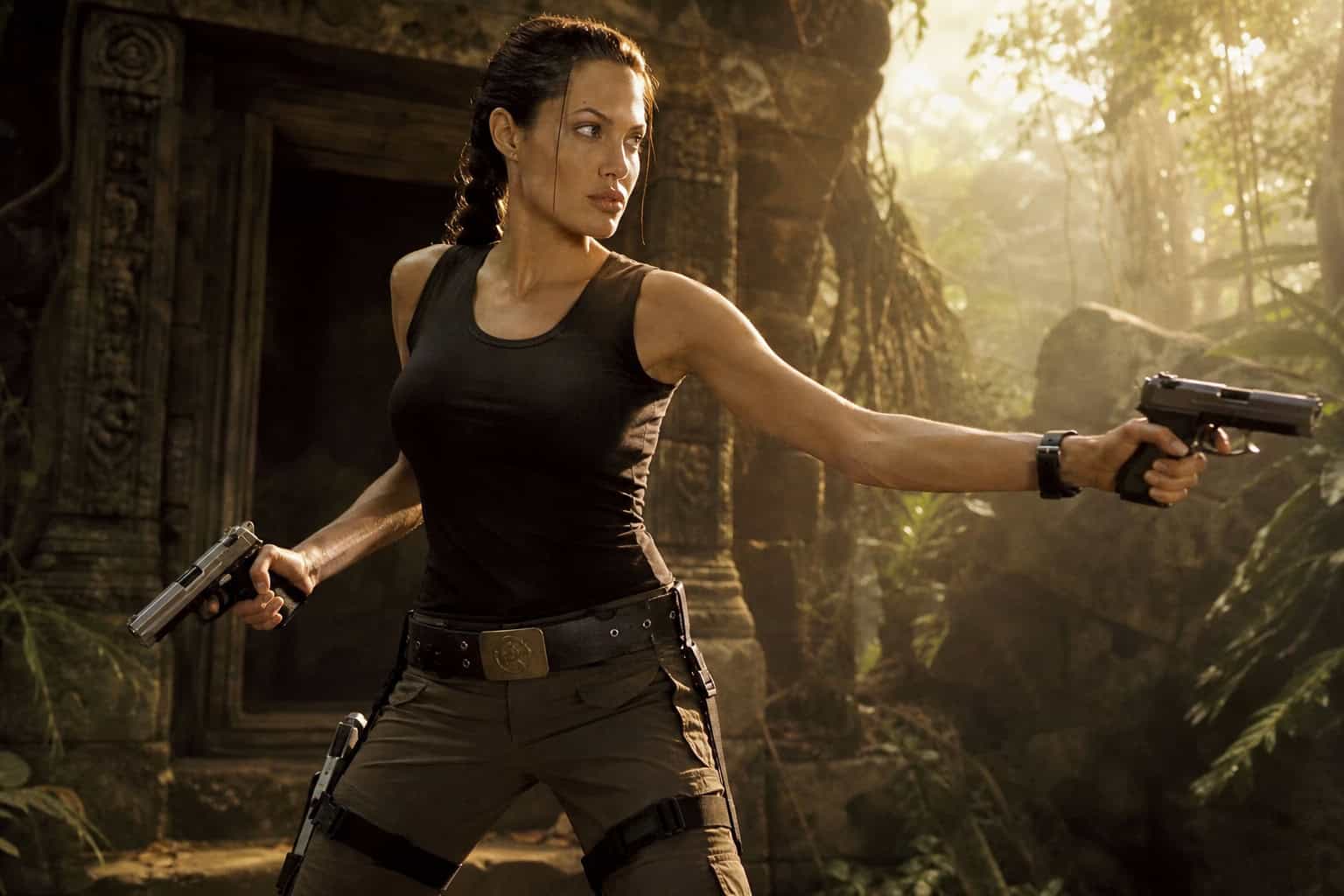
When you cast Angelina Jolie, you don’t put her in beige. Director Simon West wanted Jolie for her “dark, crazy, wicked” reputation — and he had to fight to get her approved. Paramount considered “safer” actresses like Jennifer Lopez and Ashley Judd. Jolie was the risky, interesting choice.
The 2001 film earned $131 million domestically, at that time the highest-grossing female-fronted action film. The costume fused Jolie’s edgy public image with Lara’s iconic silhouette: same tank top, boots, and braided ponytail, but darker colors, cargo pants instead of shorts, and added tactical webbing and holsters — a deep dive into the Lara Croft Angelina Jolie outfits reveals it was more Hollywood, more combat-ready, and less game-accurate, but still recognizably Lara.
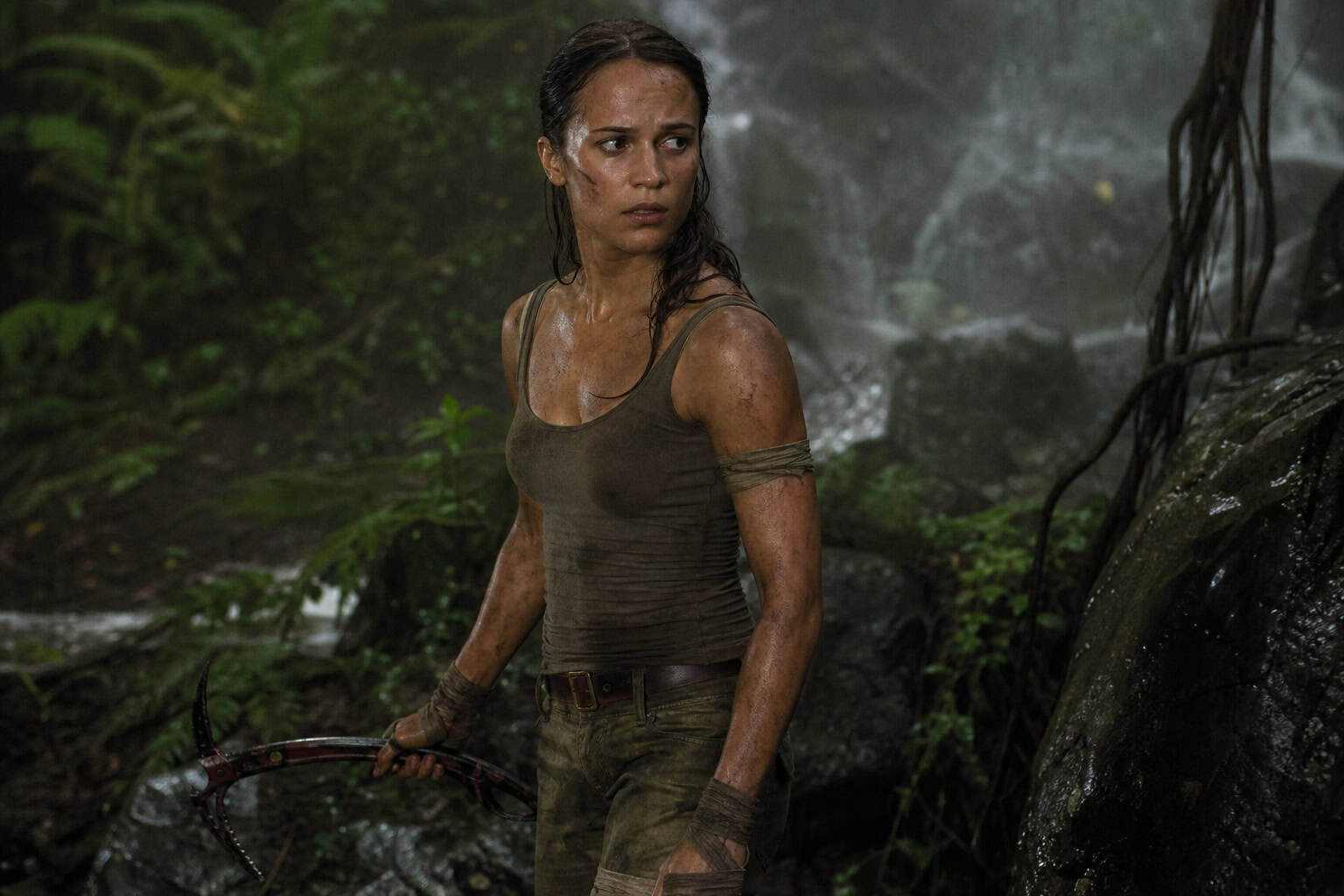
How Jolie’s Outfit Compared to the Classic Game Look
The silhouette remained similar: tank top, boots, ponytail. But the execution shifted. The shorts became cargo pants. The blue became a darker, muted tone.
The added straps and holsters gave it a tactical feel that the classic game never had. The overall effect: a Hollywood filter over a game icon.
The Middle Era: Crystal Dynamics Refines the Look (2006–2008)
After The Angel of Darkness nearly sank the franchise, Crystal Dynamics took over the franchise from Core Design and delivered Tomb Raider: Legend in 2006 — a critically lauded reboot for PlayStation 2 that kept the classic look (blue top, shorts, braid) but added the texture and detail that PS2 hardware now supported. This was the classic look in HD: the same outfit, but with realistic materials and fabric textures. Crystal Dynamics retained the classic elements—blue top, shorts, braid—while updating the graphics to take advantage of the PS2’s higher resolution, adding realistic fabric textures and improved lighting.
Tomb Raider: Underworld (2008), released for Xbox 360 by Crystal Dynamics, continued the aesthetic with higher fidelity. It sold about 3 million units worldwide — solid, but not spectacular. The franchise was stable, but it needed something bigger.
The Survivor Reboot (2013–2018): Practicality Over Style
While the 1997 marketing presented Lara as a fantasy figure, the 2013 reboot portrayed her as a person. Writer Rhianna Pratchett led a massive franchise reboot in 2013, deliberately aiming to ‘make Lara an average London student who worked bar jobs’ — a grounded, relatable character. Out went the aristocratic heiress with unlimited resources; in came a young woman who had to earn everything.
The Design Philosophy Behind the New Look
The brown tank top, cargo pants, boots, and climbing axe communicated one thing: this person is not prepared. Every piece of gear had to be earned through the story. The outfit was designed for survival, not style. The ponytail remained, but everything else was stripped back and practical.
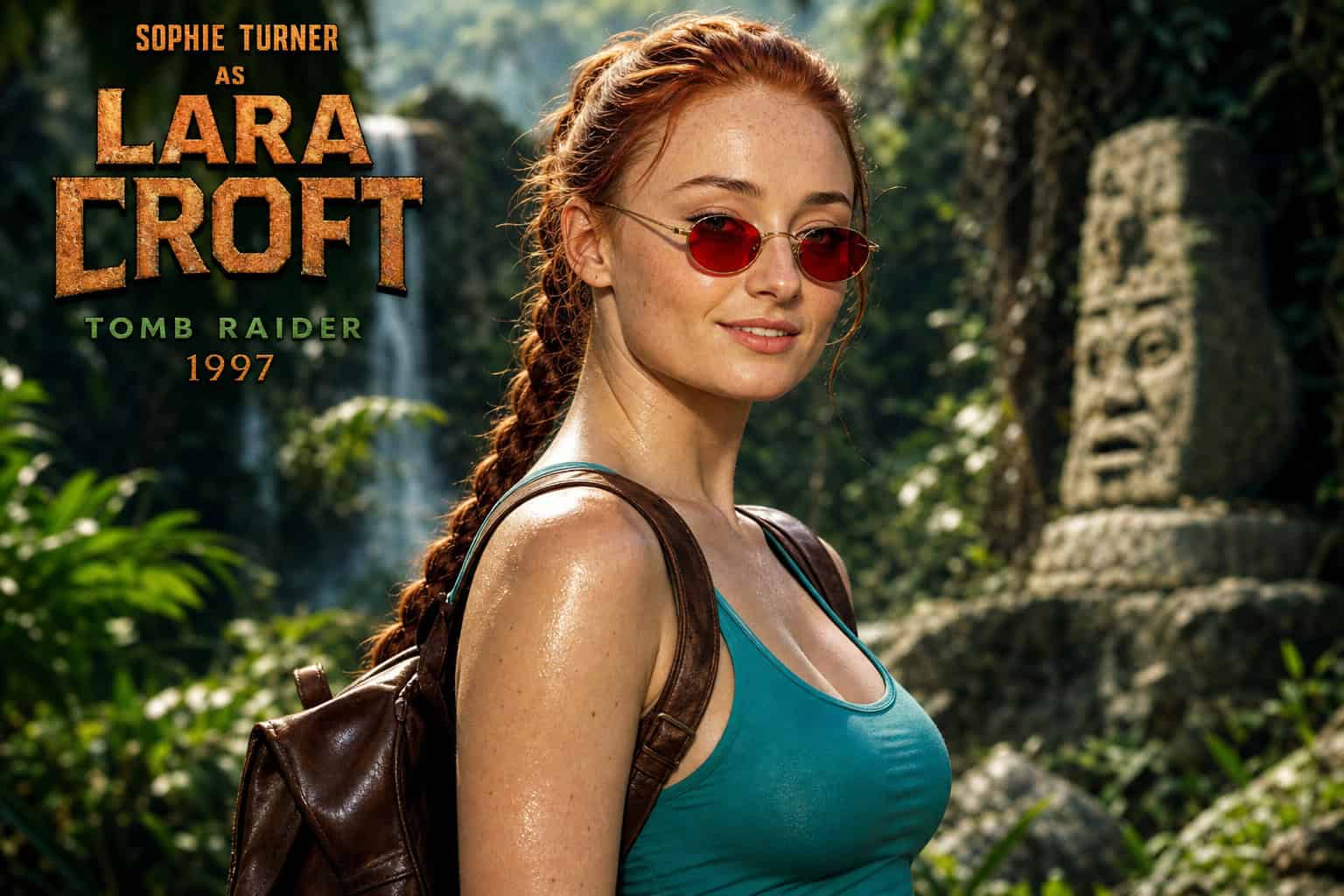
The Survivor Trilogy Outfits (2013–2018)
Camilla Luddington voiced Lara Croft through Tomb Raider (2013), Rise of the Tomb Raider, and Shadow of the Tomb Raider. The core silhouette stayed consistent across all three games, with minor upgrades in gear and material durability. The message was clear: this is the same person, growing into her role.
Alicia Vikander’s Movie Lara (2018): Cinematic Realism
The 2018 film starring Alicia Vikander borrowed the reboot’s grounded approach. Vikander emphasized Lara’s physical strength and capability, training specifically to make the action hero role believable for her petite frame. Her costume mirrored the 2013 game’s tank top, cargo pants, and boots — but with a polished “movie finish” in better fabrics, tailored fit, and cleaner lines, allowing for a detailed analysis of Lara Croft outfit functionality in Tomb Raider movies.
The tradeoff was subtle but real: the game’s scrappy, improvised feel gave way to a look that read well on camera but sacrificed some of the gritty authenticity. It was the reboot’s design filtered through Hollywood’s lens.
The Jolie vs. Vikander Comparison
Both actresses had won Best Supporting Actress Oscars before playing Lara Croft (Jolie for Girl, Interrupted; Vikander for The Danish Girl). Jolie was 26, Vikander 29. Both had brown hair. Both had negligible tomb-raiding experience — they’re actors, not archaeologists.
The similarities end there: Jolie’s Lara was a larger-than-life action star; Vikander’s was a vulnerable survivor finding her strength. Neither outfit was “right” or “wrong” — they were products of their time.
New Games on the Horizon (2025 and Beyond)
At the 2025 Game Awards, Crystal Dynamics and Amazon Game Studios announced two new titles: Tomb Raider: Catalyst and Tomb Raider: Legacy of Atlantis, with Alix Wilton Regan taking over as the voice of Lara Croft. Alix Wilton Regan, known for her work in Dragon Age: Inquisition, takes over as Lara’s voice. No outfit details have been revealed yet, but the franchise is clearly in revival mode.
Sophie Turner’s New TV Lara (2026): A Bold Throwback
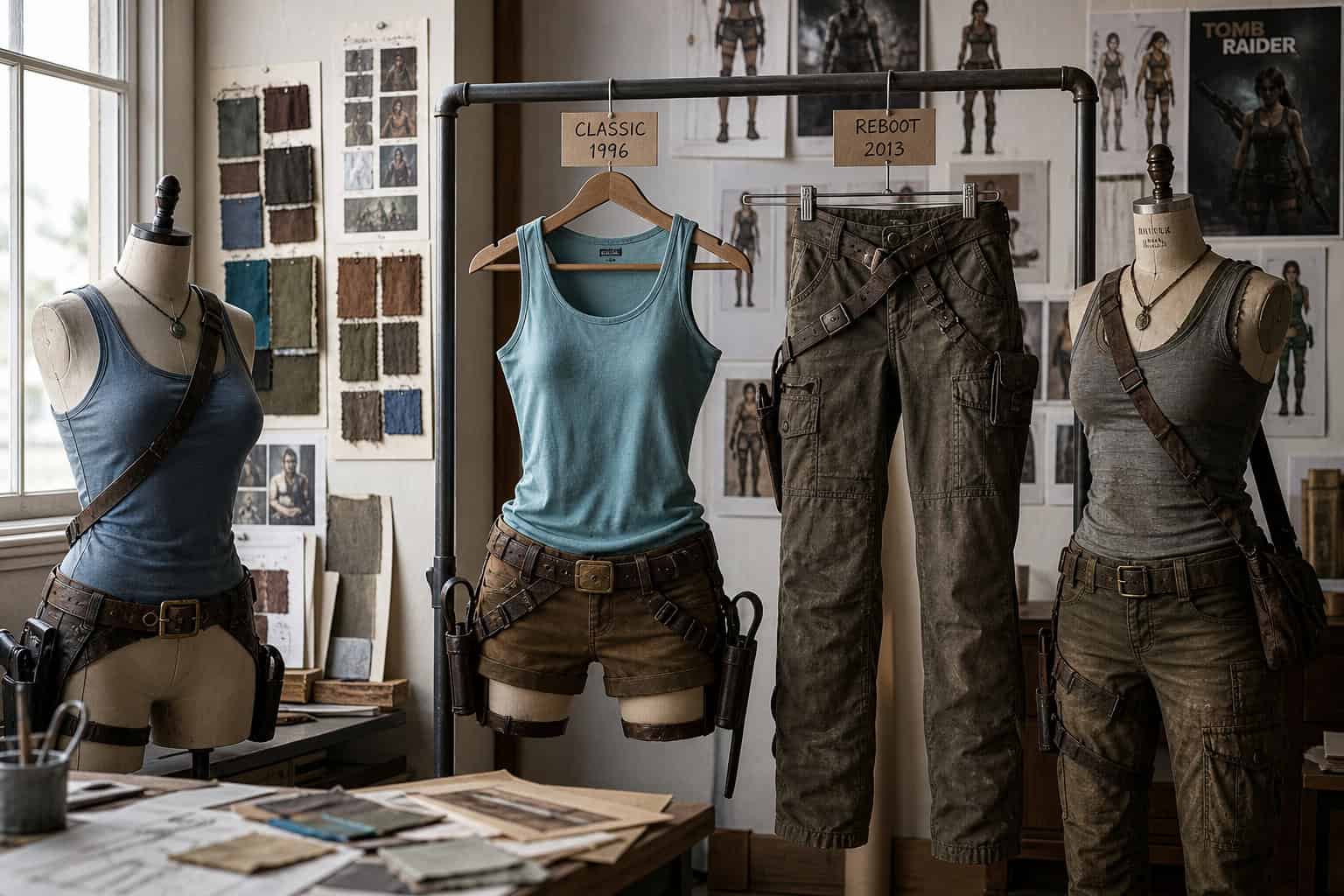
Following a decade of gritty reboots, Sophie Turner’s Lara walks onto set in short shorts and red sunglasses. That is not merely a costume choice — it is a statement. Phoebe Waller-Bridge’s 2026 live-action series channels Tomb Raider II specifically: teal tank top, leather backpack, braided ponytail, and those unmistakable red sunglasses.
The Tomb Raider II Aesthetic in Live Action
Every major element is a direct reference. The short shorts are a deliberate rejection of the reboot’s cargo-pants practicality. The red sunglasses scream 1997. This is the first live-action portrayal to say: let’s be fun again. The inclusion of butler Winston (played by Bill Paterson) reinforces the classic-game connection.
What This Choice Signals About the Show’s Tone
This is a show for fans who remember the original games fondly. It’s betting that nostalgia will win — that after years of survival-action grimness, audiences are ready for an adventurous, globe-trotting Lara who cracks jokes and wears shorts.
The Animated Bridge: Netflix’s The Legend of Lara Croft (2024)
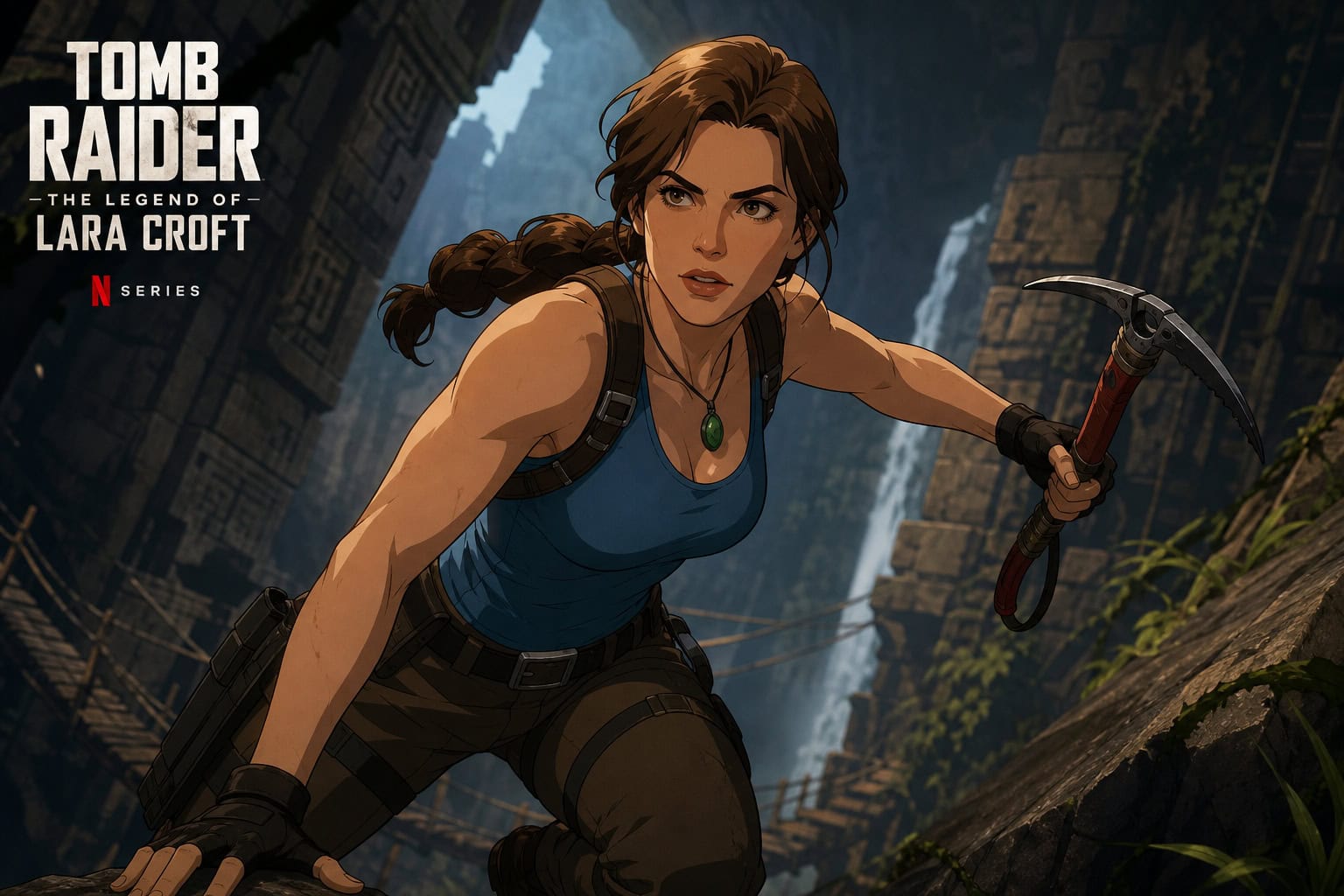
Before the Turner series, Netflix released Tomb Raider: The Legend of Lara Croft in 2024 with showrunner Tasha Huo and Hayley Atwell voicing Lara Croft. The story bridges the Survivor trilogy and the classic era — a narrative compromise reflected in the design. The animated medium blended reboot practicality with classic visual touches, making Lara feel grounded and iconic. Hayley Atwell’s performance brought a new vocal dimension to the character, bridging the gap between the gritty reboot and the adventurous classic.
Fan Reception: Why the Debate Never Ends
The real fight isn’t about which outfit looks better. It’s about what Lara Croft represents to different generations. Fans who grew up with the classic tank top and shorts want recognizability and iconography. Fans who met her in the 2013 reboot want realism and respect for the character. Neither camp is wrong.
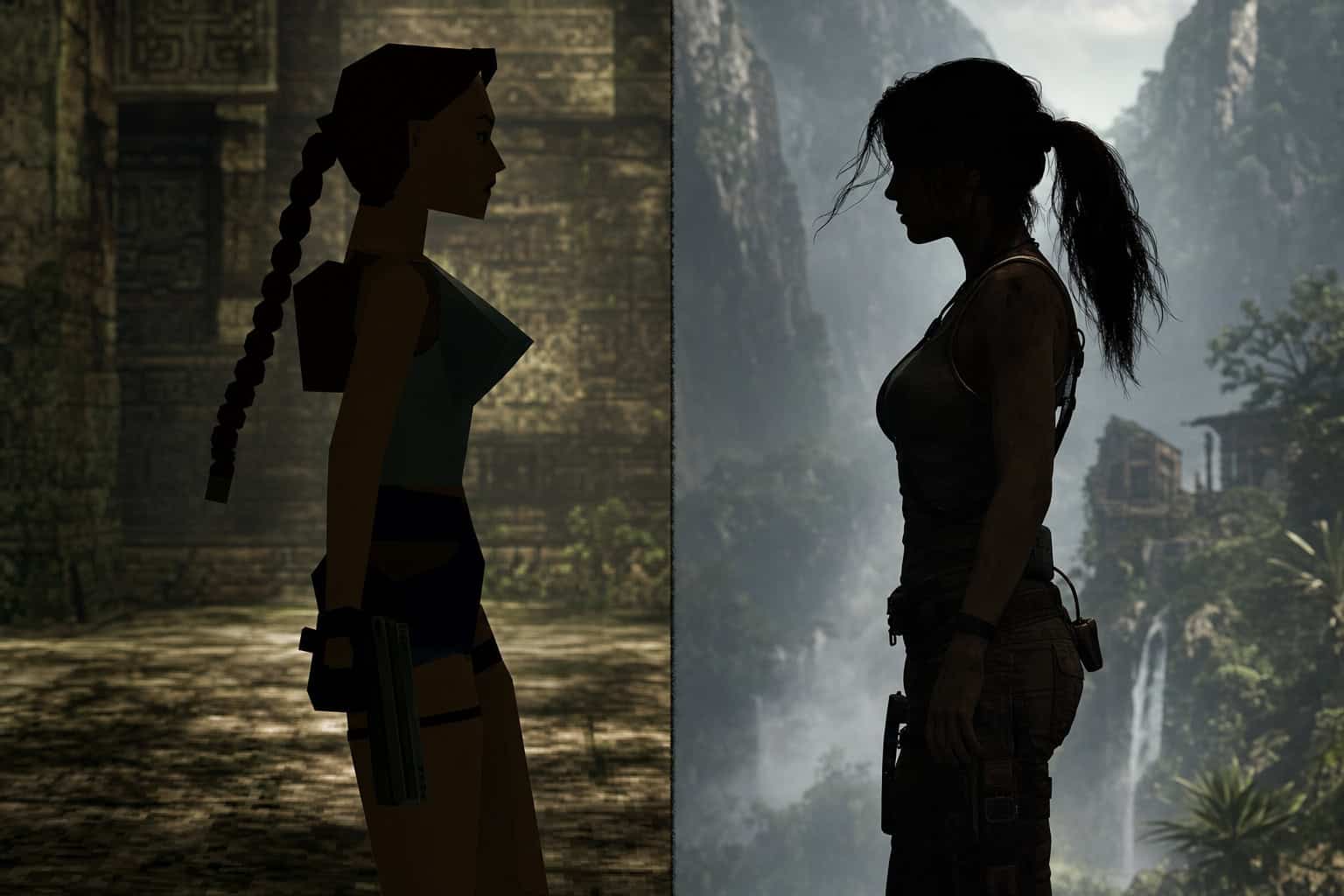
The Two Audiences: Nostalgia vs. Realism
Generational divide explains most of the heat. If your first Lara was the blocky polygons of 1996, the red sunglasses and braid are sacred. If you started with a traumatized survivor on a remote island, cargo pants make sense.
What the Developers Really Think About the Outfit Debate
The developers have been consistent: the games themselves never sexualized Lara. The nude cheat myth, the in-game shower scene where she shoots the camera — they were making fun of the very idea. The developers noted that they were constantly asked about the nonexistent nude cheat and even riffed on it at the end of Tomb Raider II. Toby Gard left because the marketing turned his creation into something he never intended.
What Lara’s Outfits Say About Her Journey
Are the movie outfits accurate? It depends entirely on which game era you’re comparing them to. Jolie’s tactical cargo pants match the classic silhouette but darken it. Vikander’s polished tank top honors the reboot but loses the scrappy edge. Turner’s short shorts are a direct channel of Tomb Raider II — the most accurate live-action outfit yet, if you’re measuring against 1997.
No live-action adaptation has perfectly replicated a game outfit because the two media are fundamentally different. Games let you be the character; movies and TV let you watch her. The translation changes everything.
But the debate itself — the endless arguments about shorts vs. cargo pants, realism vs. nostalgia, pinup vs. explorer, that debate reveals how much this character means to different people. Every outfit tells a story about who we wanted her to be at that moment. And the honest answer is that there’s no single “right” Lara. She’s been remade by forces outside her control for thirty years, and she’s still standing.
Frequently Asked Questions
Does it matter what outfit you wear in Rise of the Tomb Raider?
In terms of gameplay mechanics, no — outfit choices don’t affect stats or abilities. But they matter a lot thematically: the reboot’s outfits are designed to show Lara’s survival journey, with each piece of gear earned through the story rather than chosen for style.
Why did they redesign Lara Croft?
The 2013 reboot redesign was a deliberate move away from the pinup marketing that had defined the character externally. Writer Rhianna Pratchett aimed to make Lara an average London student who worked bar jobs — a grounded, relatable person rather than an aristocratic fantasy figure.
What kind of outfit does Lara Croft wear?
It depends entirely on the era. The classic look is a blue tank top, brown shorts, knee-high boots, and a braided ponytail — designed for readability on 1996’s low-resolution displays. The reboot swapped shorts for cargo pants and added a climbing axe, prioritizing survival practicality over iconography.
What’s the difference between Angelina Jolie’s and Alicia Vikander’s Lara Croft outfits?
Jolie’s outfit kept the classic silhouette — tank top, boots, ponytail — but swapped shorts for tactical cargo pants and added dark colors and webbing for a combat-ready Hollywood look. Vikander’s outfit mirrored the 2013 reboot’s tank top and cargo pants but with a polished ‘movie finish’ that sacrificed some gritty authenticity.
Why does Sophie Turner’s Lara wear short shorts in the 2026 series?
It’s a deliberate rejection of the reboot’s cargo-pants practicality and a direct channel of Tomb Raider II’s aesthetic. The short shorts, teal tank top, and red sunglasses signal that this version prioritizes fun and nostalgia over the survival-action grimness of the previous era.