
About five years ago I ended up in Poland for a crypto conference. I went for the talks and came out of it thinking something I hadn’t expected to think: this country was looking further ahead than most rooms I sit in, and the room was packed with sharp people. That impression stuck around. So when the question came up recently, is Poland a tech hub, my answer was already yes.
But one conference impression isn’t evidence, so I went digging, and the numbers kept getting better. Twelve unicorns, including a decacorn. The largest tech talent pool in Central and Eastern Europe. Intel’s biggest EU R&D center.
A gaming industry that gave us The Witcher and Dying Light. There’s also one weird regulatory story about gambling laws that I want to argue out loud, clearly labeled as my own hypothesis rather than settled fact. And because a yes you can’t stress-test isn’t worth much, I’ll spend real time on where this story wobbles.
Key Takeaways
Yes, Poland is a tech hub: 778,800 ICT professionals (the largest pool in Central and Eastern Europe), a $31.59B ICT market in 2025, and 12 unicorns including ElevenLabs, the country’s first decacorn at an $11B valuation.
Eight city hubs each carry a specialty: Warsaw for VC and scale, Kraków for DeepTech density, Wroc?aw for MedTech, Rzeszów for aerospace, plus an EU AI factory in Pozna? and Intel’s largest EU R&D center in Tri-City.
Hiring runs roughly 45% below US salaries (vendor-sourced, directional), but budget for about 20% in employer social contributions and decide early between employment contracts and B2B contractors.
Table of Contents
Is Poland a tech hub? The evidence
Poland is a tech hub by any working definition of the term, and the definition matters, because a tech hub needs talent scale, capital, globally recognized companies, and infrastructure. Check each box and every one comes back with a number attached.
- Talent: 778,800 ICT professionals per Eurostat data cited by Alcor, the largest pool in Central and Eastern Europe. A more conservative count puts it at 650,000+. I’m giving you both because the honest answer is a range, not whichever figure flatters the thesis.
- Market size: the ICT market hit $31.59B in 2025 and is projected at $34.75B in 2026 and $56.01B by 2031 at a ~10.02% CAGR, per Mordor Intelligence. A second forecast puts it at $51.23B by 2030 at 10.15% CAGR. Those aren’t contradictions, just different forecast windows, and both describe the same thing: steady compounding around 10%, not a hockey stick.
- Rankings: #33 on the Global Startup Ecosystem Index, up two spots year over year. That’s respectable but climbing, not elite, and I’d rather say so than spin it. #11 globally in robotics, though, is a genuine surprise.
- Exports: €14.25B in IT services exports in 2023, up 22.2% year over year.
- Company density: 60,000+ tech companies, and 1,290+ software firms listed on Clutch. Go count them yourself; it’s a rabbit hole and a fun one.
- Macro frame: the sixth-largest economy in Europe, per WEF framing. One individual has argued for fourth-largest, and that claim belongs to him, not to a dataset.
For scale context, the US has 3.18M developers per JetBrains Research. As for which country is number one in IT globally, the evidence here doesn’t crown one, and I’m not going to invent a ranking to fill the slot.
Poland’s gaming engine and the gambling-law paradox
Poland runs a top-three European gaming workforce, behind only the UK and France, and the industry numbers back it up: 824 studios, 14,568 specialists, 65 university programs feeding the pipeline, €1.3B in annual revenue, and 97% of productions sold globally, per PARP’s 2025 report. They build it here, the world buys it. The flagship studios: CD Projekt Red made The Witcher and Cyberpunk 2077, and Techland made Dying Light.
Now my hypothesis, and I want to be explicit that it’s a hypothesis: Poland’s strict gambling laws may have paradoxically pushed engineering talent and capital toward software and game development instead. If betting is legally constrained, one plausible contributor to the gaming boom is that the money and the math brains had to go somewhere else. What I’ll say is that the technical depth in that conference room five years ago makes the story feel earned.
Poland’s digital economy by segment
Poland runs a $31.59B ICT market in 2025, and the segments prove it better than any adjective could.

Fintech and cloud
Poland leads Central and Eastern Europe with 383 active fintechs, a record high, and roughly 86% of them report being profitable, which almost no ecosystem can say. The fintech market sits at $2.9B in 2025, projected at $7B by 2033 per DataCube Research. On cloud, 64% of enterprises had adopted cloud services in 2024 per Mordor Intelligence; public cloud spending grows at an 18.23% CAGR, while GM Insights sizes the broader cloud market at $10.2B growing at 16.1%. Two different scopes from two sources, so I’m keeping them separate.
Cybersecurity
Cybersecurity spending jumped roughly 25% in 2025 to about $1B, per Trade.gov, with the market projected at $2.26B by 2031. It’s a national priority, which explains the jump.
Digital transformation, e-commerce, and EU investment
The digital transformation market runs $83.3B in 2025 toward $144.9B by 2030 per Mordor. Per KPMG, 28% of Polish organizations deploy AI tools and another 30% plan to within a year. E-commerce is projected at $31B by 2027, up 40% from 2023 per Thunes, and 93% of Polish internet users bought something online in the past six months per Ecommerce Europe 2025, spending that runs from retail to entertainment platforms like NVCasino Online 2026 (https://nv.casino/pl/category/slots). Healthcare IoT is the fastest-growing ICT vertical at 14.91% CAGR through 2031, driven by telemedicine, AI diagnostics, and hospital imaging moving to cloud. Underneath it all: over $1.5B for broadband and $100M+ for public administration digitization under the recovery plan, plus over $8B directed to Poland under the EU Digital Decade.
What are the major IT hubs in Poland?
Poland’s major IT hubs are Warsaw, Kraków, Wroc?aw, Katowice, Pozna?, Tri-City, ?ód?, and Rzeszów, and the right way to read that list is as a network rather than one big city with satellites. Thirteen Polish cities rank in the global startup-ecosystem top 1,000, three of them newcomers in 2025, so the map is still expanding. Hub choice is a fit question, not a size ranking. Each hub has a specialization. AI and VC in Warsaw, DeepTech in Kraków, MedTech in Wroc?aw, aerospace in Rzeszów, business services in ?ód?, and the tradeoff shows up as a pattern across site selections.
The biggest pools, Warsaw and Kraków, mean competing with every captive center for the same people. Second-tier hubs grow faster on thinner senior benches: Rzeszów’s ecosystem grew 38.1% in 2025, Katowice’s 33.3%, ?ód?’s 14.3%. Small bases, fast growth, and fewer seniors to fight over.
Warsaw: Poland’s startup and VC capital
If you’re choosing between Warsaw and Kraków, Warsaw is the pick for VC capital, startup density, and scale, while Kraków wins on specialist density and DeepTech anchoring. Warsaw is the capital and largest city, and it ranks 91st globally as a startup hub, which is mid-tier and worth saying plainly. Warsaw ranks #3 among Europe’s major cities on fDi’s European Cities of the Future, behind only London and Dublin, and the top city in Central and Eastern Europe. Robotics is a special strength at 21st globally, feeding the national #11. Scale-wise, roughly 156,000 tech specialists live here, somewhere between 20% and 24% of the national tech workforce, with 684 active startups and about €800M raised across 180 transactions in 2025 per SSK&W. The Wola district has transformed since 2018 from construction sites into one of the city’s most sought-after areas, and the data-center market is projected at 500 MW by 2030 at 20% CAGR.
Kraków: DeepTech and ICT density
Don’t sleep on Kraków. It’s Poland’s second-largest city, and it packs 100,000+ ICT specialists, the highest concentration in the country, plus the largest number of IT companies, which makes talent competitive for exactly the reason the tradeoff section predicts. The differentiator is the GAIA AI Factory, which anchors an emerging DeepTech identity distinct from Warsaw’s capital-markets story. The ecosystem is valued at €9.1B, and the startup scene ranks #3 in Poland with 253 active startups.
Big multinationals quietly build serious R&D here, and the university bench is deep: Jagiellonian University, AGH University of Science and Technology, and Kraków University of Technology. Agiliway, for context, operates a software development and IT consulting hub in the city.
Wroc?aw: the Polish Silicon Valley
Wroc?aw gets called the Polish Silicon Valley, and I’ll admit the nickname makes me wince a little, because every mid-sized tech city on Earth has one of these now. Then the city’s own numbers show up and the jab feels affectionate instead. Around 78,000 tech talents, roughly 10-12% of the national workforce. MedTech ranked 16th globally, which is the weirdly good one: this city is quietly excellent at medical tech.
The Wroc?awski Park Technologiczny (WPT) connects 200-220+ companies across R&D, MedTech, and advanced engineering, an actual campus rather than a metaphor, with the range reflecting different snapshot dates of a growing park. The startup ecosystem ranks #2 in Poland and #11 in Eastern Europe with 239 active startups, and the city’s two main universities graduate about 1,400 STEM students a year. The bench keeps refilling.
Katowice: from coal to code
Katowice is the sleeper pick. It sits in Poland’s largest urban area, the Silesian Metropolis, so the metro is the scale story, not the city proper. The coal-to-code shift is measurable: about 32,000 people work across 135 business services centers, and IT accounts for 44% of that workforce. That share means this isn’t just a call-center economy.
Katowice ranks 6th among Europe’s major cities on fDi’s ranking, a legitimately strong stat for a city this far under the radar, and nearly 200 companies have expressed interest in locating operations there, with “expressed interest” meaning exactly that and not signed deals. The startup ecosystem counts 46 active startups and grew 33.3% in 2025. Small base, fast growth, both true at once.
Pozna?: EU AI factory between Warsaw and Berlin
Pozna? is the pragmatic one. It has 44,200 tech professionals with strengths in enterprise software, fintech, gaming, and AI for business applications, plus strong C++, Java, and .NET talent. It sits midway between Warsaw and Berlin, which is geography as a practical feature rather than a poetic one. ManpowerGroup counts 80 IT and R&D business service centers, and about 1,500 new tech specialists graduate annually.
The startup ecosystem has 115 active startups and grew 18.4% in 2025, with low cost of living and business-friendly policies making it easy to run a team there. And then the frontier credential: the EU selected Pozna? as one of six AI factories, with $143M channeled into the Pozna? supercomputing and networking center. One of six places in Europe, and it’s Pozna?.
Tri-City: Intel’s largest EU R&D center
Intel’s largest EU R&D center isn’t in Munich. It’s on the Baltic. Tri-City, which is Gda?sk, Gdynia, and Sopot functioning as one coastal ecosystem, hosts roughly 4,000 Intel staff working on AI/ML and autonomous vehicles, backed by a €72-73M expansion. That’s the single largest named corporate R&D presence in this whole article.
The region counts 52,650+ tech professionals, somewhere between 6.8% and 8.1% of national talent, and 60+ technology firms, which reads honestly as a focused cluster rather than a sprawling one. Tri-City is a top-five Polish destination for foreign investment, and Gda?sk University of Technology and the University of Gda?sk together turn out 1,000+ tech professionals a year. The seaside is a nice bonus, not the substance.
?ód?: from textiles to business services
?ód? is the second reinvention story, a textile manufacturing city turned business services hub, and it’s absent from most commodity city lists, which is exactly why its specifics are worth knowing. It has 134 service centers employing 28,510 professionals, and 66% of those centers operate globally, delivering analytics, IT, automation, and R&D. These aren’t back offices, and that’s the surprise. The centers invest in AI, automation, cloud, and cybersecurity; nationally, 74%+ of organizations use intelligent process automation, though that stat is national, not ?ód?-specific. The startup ecosystem counts 35 active startups and grew 14.3% in 2025, small but growing. My favorite detail: the University of ?ód? runs a postgraduate AML analyst program, universities building programs to match the local economy instead of the other way around.
Rzeszów and Aviation Valley: aerospace tech
Rzeszów is the specialist, and it anchors Aviation Valley, Poland’s first industrial cluster, established in 2003, with 194 member companies, 35,000 employees, and $3.5B in annual sales. A whole aerospace cluster, in the southeast. The city also hosts Asseco Poland, the largest software house in Central and Eastern Europe, a flex the city earns. Rzeszów University of Technology has 12,000+ students with an aviation and aerospace focus, and the Podkarpackie Science and Technology Park connects 50+ companies with about 6,600 employees through the AEROPOLIS incubator. The startup ecosystem has 31 active startups and grew 38.1% in 2025, the fastest growth on this map sitting on the thinnest senior bench, the extreme case of the tradeoff from the hub map. It doesn’t rival Toulouse or Seattle, and it doesn’t need to.
Poland’s AI and frontier-tech depth
The frontier-tech story is where Poland stops looking like a cost play and starts looking like a peer. Three things carry this section: the concentration of advanced AI talent, state-directed investment into AI and semiconductor infrastructure, and early but real quantum milestones. Each one points the same direction.
AI talent
Poland ranks #1 in Europe and #4 globally for Tier 2 AI talent concentration per Interface EU, 2026, where Tier 2 means advanced researchers building production AI systems, not just junior coders. AI/ML job postings are up 22% year over year, the fastest of any IT specialization.
State AI policy and infrastructure
Poland invested $11M in ElevenLabs via Vinci SA, a state investment vehicle run by BGK (Bank Gospodarstwa Krajowego), under the AI Lab Poland initiative, per Bloomberg on June 17, 2026. Over $6B went into AI and semiconductor investments in 2025.
Quantum milestones
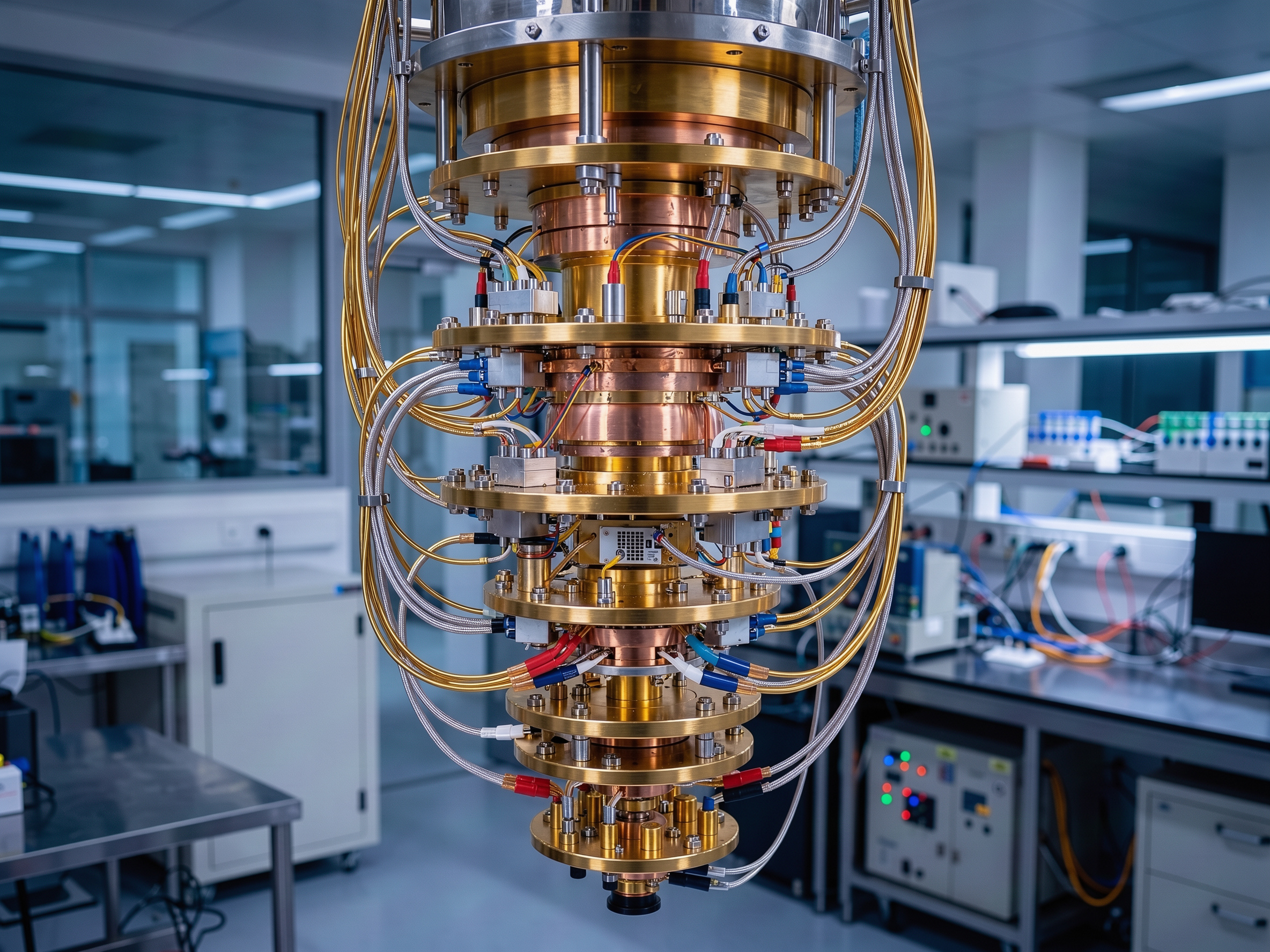
IQM deployed Poland’s first superconducting quantum computer in April 2025, and the PIAST-Q national quantum computer is operational in Pozna?; BEIT, Creotech, and ResQuant build quantum software and post-quantum cryptography, though this batch of claims comes from lower-confidence sourcing. The 2026 story is AI-era talent depth and sovereign infrastructure, not cost arbitrage.
Poland’s startup ecosystem: unicorns and depth
Poland has produced twelve unicorns, led by the country’s first decacorn, plus a deep bench behind them. Per Dealroom, there are 1,777 active startups and those 12 unicorns, and the #33 global ecosystem rank now comes paired with results rather than promises.
ElevenLabs
The holy-crap stat of this article: ElevenLabs raised a $500M Series D in 2026, becoming Poland’s first decacorn at an $11B valuation, and it has surpassed $500M in ARR, which makes the valuation feel less absurd. The company serves Spotify, Cisco, and Adobe across 70+ languages, built by founders Mati Staniszewski and Piotr D?bkowski.
Funding breadth beyond the mega-rounds
Polish startups raised PLN 3.37B ($840M) in 2025, up 25% year over year, and here’s the killer detail: growth was 28% even excluding the ElevenLabs and ICEYE mega-rounds, per Dealroom and The Recursive. Strip out the giants and it still grew 28%. That’s the depth argument, not one-company luck. The bench: Nomagic with $84M+ raised and 220% contracted ARR growth in 2024 for its AI warehouse-picking robots, Jutro Medical with a €36M Series A and 20 AI-first clinics serving 120,000 patients, CampusAI at $15M with 35,000 users and 60 enterprise customers, Synerise with €25M in EIB debt and 200+ enterprise clients, and ICEYE.
Why big tech is betting billions on Poland
Big tech companies are investing in Poland because the talent, the costs, and the EU position justify it, and corporations vote with capital. Named multibillion-dollar commitments with dates attached are the strongest third-party yes evidence there is, the market’s own due diligence:
- Microsoft committed PLN 2.8B (~$700M) by June 2026 for cloud and AI infrastructure. Committed money.
- Amazon planned a $6.23B expansion in logistics and cloud infrastructure across 2026-2028, per MarkNTel Advisors. Planned is doing work in that sentence.
- Intel runs its largest EU R&D center in Gda?sk, about 4,000 staff on AI/ML and autonomous vehicles with a €72-73M expansion, and separately committed $4.6B to the largest greenfield semiconductor project in Polish history, 2,000 direct jobs. Two separate Intel facts; the chip fabrication is not happening at the R&D site.
- Foxconn leads Taiwanese tech firms in a multibillion-dollar AI server and EV parts hub plan, per Nikkei on September 23, 2026.
- Poland ranks #8 among emerging markets on Kearney’s 2025 FDI Confidence Index, cited for technological and innovative potential.
Why companies outsource software to Poland
Poland competes for software outsourcing on cost, skills, English, and EU compliance, and the rationale stacks up cleanly: a talent pool of 778,800 ICT professionals with versatile domain expertise, enterprise-grade quality at rates far below US and Western European levels, GDPR and ISO certification compliance so the compliance box is largely pre-checked, plus SEZ tax incentives and EU membership as structural advantages. The global setup explains the timing: 72% of employers worldwide struggle to find skilled talent per ManpowerGroup’s 2026 Global Talent Shortage Survey, and companies expand their search to Poland after hitting hiring walls elsewhere. You max out your local LinkedIn, and this is the natural next step.

Poland vs Ukraine and India
The honest version of this comparison is axis-based, because the evidence offers no direct head-to-head data on the competitor countries. On cost, Polish salaries run roughly 45% below US levels. On skills, Poland ranks #3 of 32 on Reinvantage’s IT Competitiveness Index and #1 in Europe for Tier 2 AI talent. On English, it ranks 15th globally.
On compliance, EU membership means GDPR applies natively. Weigh those axes against whatever rates and depth you can get elsewhere.
When outsourcing to Poland makes sense, and when it doesn’t
It makes sense when time-zone overlap, EU data compliance, and senior engineering depth matter more than the lowest possible rate. It fits less well when budgets demand rock-bottom rates or when deep in-house cultural integration is the priority. Both halves are true, and skipping the second one is how outsourcing projects go sideways.
What it costs to hire software developers in Poland
Hiring software developers in Poland costs roughly 45% less than in the US before hidden costs, with senior ML engineers at $8,300 a month against $18,500 in the US. The headline figure comes from Alcor’s 2026 remuneration research, which is vendor-sourced and directional rather than independently verified, so treat it as a strong directional signal, not gospel. Savings run up to 55% for ML Engineers and 59% for Blockchain Developers, and the pattern is consistent: the hotter the specialty, the bigger the spread. The most quotable version: two senior developers in Poland cost about the same as one in the US.

| Role (senior, monthly USD) | US | Poland |
|---|---|---|
| ML Engineer | $18,500 | $8,300 |
| LLM Engineer | $19,500 | $8,500 |
| Data Engineer | $14,750 | $6,900 |
| DevOps | $14,000 | $7,500 |
| Blockchain Developer | $14,250 | $5,900 |
Senior monthly salary benchmarks, vendor-sourced via Alcor’s 2026 remuneration research; directional figures, not independently verified.
For a $5,000 gross per month full-time employee, the employer pays roughly 20% extra in social security contributions: 9.76% retirement, 6.5% pension, 0.67-3.33% disability, 2.45% Employment Fund, and 0.1% FG?P. Under the B2B contractor model, contractors handle their own taxes and contributions, so the employment-contract-versus-B2B choice is a real budget variable you should decide early. Recruitment fees run 15% for mid-level, 20% for senior, and 25%+ for leads, against a typical 25-35% in the US. Benefits average about $5,000 per year versus $15,400 in the US.
Cost check: Budget roughly 20% on top of gross salary for employer social contributions, and pick employment contract versus B2B before you start hiring.
The common first-cycle mistake is budgeting for salary arbitrage alone and then getting surprised by the social contributions and the contract-model decision. On the vendor side, Alcor promotes a fully-backed R&D center model, recruitment, employer-of-record, legal, and office operations bundled together, with claims of launching 30 specialists in 3 months or scaling from 10 to 100+ engineers in 12 months without entity setup. Their case studies, all vendor-reported: Backstory, founded by ex-People.ai leadership, hired 25 engineers in year one, grown to 50, with a 98.6% probation pass rate, 2.5+ years average tenure, an office set up in four weeks, and engineers core to an AI platform used by Zoom, Cisco, Nvidia, and Okta at a $1.1B valuation. BigCommerce reportedly got 80 engineers in one year, and GoTransverse got CVs in 5 days and a 5-engineer team plus a PM in six weeks. Flagging all of that as promotional material once, clearly, instead of pretending it’s market research.
Working with Polish engineers: fit and logistics
Working with Polish engineers fits most Western teams without friction: English proficiency ranks 3rd in Eastern Europe and 15th globally per the EF EPI 2025, and most developers speak at B2 or higher, which in plain terms means real working conversations, not tourist phrases. A Hofstede comparison shows Poland and the US with comparable achievement motivation and long-term orientation, one common comparison rather than hard science, and the resulting ownership mindset explains why Polish teams retain clients, not just win them. What makes that ownership concrete is how Polish engineers pair a disciplined approach with critical thinking and emotional intelligence, they’ll push back on a bad spec instead of quietly building it. Poland sits at GMT+2: 1-3 hour flights to Western Europe with fully overlapping work hours, and the 6-7 hour difference with the US enables the classic follow-the-sun setup, where your ticket queue gets worked while you sleep.
The honest limits of Poland’s tech hub story
The real risks of building a software team in Poland are worth naming, and so is the question of whether community skepticism is worth reading: yes, it is, as a counterweight to official stats, with the caveat that online grumbling and argued critiques sit closer to noise than to the capital-commitment signal. The skepticism cuts both ways. Warsaw did not appear in one top-10 list of best European tech startup locations, and Dominik Andrzejczuk argues some startup rankings carry political or PR-driven bias. The cheerleading and the snubbing are both noise; capital commitments like Intel’s $4.6B are the signal.
The cultural critique, attributed and hedged as one investor’s argued position rather than verified fact about Polish culture: management is often older and resistant to international expansion, and weak self-promotion plus a historical inferiority complex hold the country back. His proposed remedy is repatriating diaspora talent, following the pattern of Polish-connected founders and investors in global quantum computing. Andrzejczuk’s own arc fits it: a Villanova physics graduate, VC investor in Rigetti Quantum Computing, and founder of Atmos Ventures with the Polish Development Fund and QDC, backing Oxford Ionics and ORCA Computing, both tied to Polish academia.
Poland’s job market and talent pipeline
Poland is good for IT jobs if you want deep demand and rising AI specialization at salaries below US benchmarks, though the evidence here was written mostly for employers, so job-seekers get a partially answered picture. On demand: 60,000+ tech companies, AI/ML job postings up 22% year over year as the fastest-growing specialization, and salary context of roughly 45% below US benchmarks.
The graduate pipeline
Poland produces about 74,000 ICT/STEM graduates annually per Alcor, with a broader alternative claim of 100,000 IT graduates; the spread is definitional, so I’m noting both rather than averaging them. Twenty Polish universities appear in the QS 2026 rankings, 68 universities offer STEM majors, 70.2% of IT specialists have a bachelor’s or master’s degree, and 56.4% studied computer science per Bulldogjob’s 2025 data. Boot camps like Coders Lab and Codecool expand access beyond degrees.
Talent-quality proxies
Some quality signals, paired with their confidence levels: 15-20% of contributors on GitHub and Bitbucket repositories had distinctly Polish-sounding surnames, a low-confidence proxy but an unusual one. Poland ranks #17 globally and #1 in Eastern and Central Europe on TopCoder, #4 in Eastern Europe for overall skills and #3 in data science per Coursera’s 2025 report, and #3 of 32 on Reinvantage’s index, topping the Talent category. NVIDIA teams have praised Polish ML developers for deep foundational math, the calculus, differential equations, and linear algebra kind. 43% of Polish tech startups have women on the executive team.
Frequently Asked Questions
Is Poland a tech hub?
Yes, by any working definition. Poland has the largest ICT talent pool in Central and Eastern Europe (778,800 professionals per Eurostat data cited by Alcor), a $31.59B ICT market in 2025, twelve unicorns including decacorn ElevenLabs, and Intel’s largest EU R&D center. The honest caveat: it ranks #33 on the Global Startup Ecosystem Index — respectable and climbing, not elite.
How much does it cost to hire software developers in Poland?
Roughly 45% less than in the US before hidden costs, per Alcor’s 2026 remuneration research (vendor-sourced and directional). A senior ML engineer runs about $8,300/month in Poland against $18,500 in the US, with savings up to 55% for ML engineers and 59% for blockchain developers. Budget roughly 20% on top of gross salary for employer social contributions, and decide early between an employment contract and a B2B contractor model.
What are the risks of building a software team in Poland?
The main risks are competitive talent markets in the biggest hubs (Warsaw and Kraków mean fighting every captive center for the same people), thin senior benches in fast-growing second-tier cities, and management culture — one investor argues older management can resist international expansion and that weak self-promotion holds the country back. That critique is one argued position, not verified fact, and capital commitments like Intel’s $4.6B are the stronger signal than either the cheerleading or the snubbing.
Is Poland good for IT jobs?
Yes, if you want deep demand and rising AI specialization at salaries below US benchmarks. There are 60,000+ tech companies, AI/ML job postings are up 22% year over year (the fastest-growing IT specialization), and the pipeline produces about 74,000 ICT/STEM graduates annually. The picture is written mostly for employers, so job-seekers get a partially answered view — but demand and specialization trends are real.