
Much like repeatedly hitting the spin button on real money slots, a traditional clicker game asks you to actively mash a button to generate resources. A true incremental game, however, asks you to build a system that eventually taps that button ten thousand times a second without your input. You’re playing a game by engineering yourself out of a job, shifting your strategy away from tactical action and into systemic optimization.
Key Takeaways
The genre originated with the 2002 launch of Progress Quest, functioning as a parody of RPG grinding before evolving into complex simulation frameworks like Cookie Clicker.
Offline progression is typically an illusion powered by mathematical delta-time calculations that fast-forward your state upon login, not a continuously running background server.
The most engaging titles optimize for 30m to 2h rhythmic check-in sessions rather than constant manual play, operating as low-intensity background entertainment.
Table of Contents
Idle Games: Why the ‘Number Go Up’ Loop is Evolving into Strategy
Incremental games, such as Cookie Clicker, are defined by systems designed to automate resource acquisition to fuel exponential growth. You are essentially engineering yourself out of a job, shifting your strategy away from moment-to-moment tactical action and into systemic optimization. By prioritizing long-term planning over active input, these titles transform basic clicking into a complex simulation framework.
The Genesis of the Idle Genre: From 2002 Satire to Modern Design
If you look into the genre’s history, you’ll find it started as a joke. Developers looked at the grueling, highly repetitive grinds of early MMORPGs and decided to write code that openly mocked them. When Eric Fredriksen launched Progress Quest back in 2002, he built it as a satirical parody of character stat progression and auto-combat. You created a character, turned it on, and watched automated text logs do everything for you.
Surprisingly, players loved it. The concept found an early home on the gaming platform Kongregate, where chat-integrated idle experiences allowed the community to accrue in-game currency while their numbers climbed quietly in the background. But the genre codified into a design framework in 2013, sparked by Julien ‘Orteil’ Thiennot and his release, Cookie Clicker. By introducing exponential resource scaling and upgrade dependencies, Orteil transformed a browser joke into the catalyst for modern incremental game mechanics.
The Psychology of the “number Go Up” Loop
Idle games do not demand constant manual attention; instead, they operate as digital fidget spinners. The optimal way to structure your gameplay engagement is by adopting a low-pressure, 30m to 2h rhythmic check-in cadence.
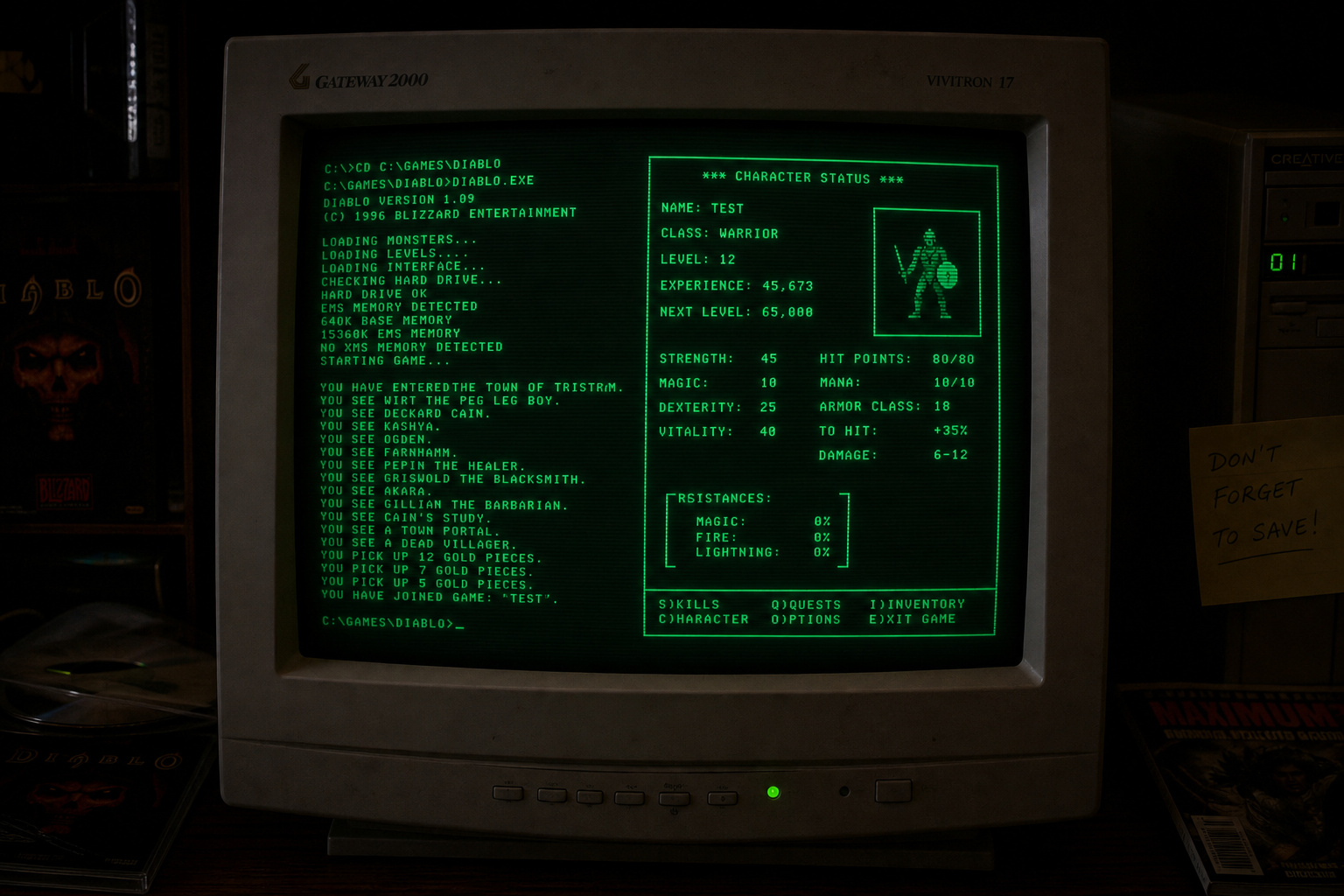
Instead of demanding your absolute, undivided focus, this drawn-out dopamine loop effectively turns the game into a digital fidget spinner tailored perfectly for busy adults. The genre’s appeal stems from the satisfaction of building a system that runs itself while you focus on something else—it’s not about adrenaline, but about the rewards of optimization.
“The psychological hook isn’t adrenaline; it’s the satisfaction of setting up a system and watching it execute while you focus on something else.”
Anatomy of the Loop: Automation and the Offline Illusion
The core loop of any great idle title relies on deprecating human input. Automation and Auto-Clickers serve as the primary methods for removing manual reliance, effectively transforming a player from an active participant into a systems architect. Here’s how the math and architecture handle that transition.
The Managerial Shift
In classics like AdVenture Capitalist, every run starts with you doing the heavy lifting, clicking endlessly to gather your first few coins. But the gameplay loop is intentionally geared to transition players from manual participants into high-level systems managers. You manually generate resources long enough to stockpile enough in-game currency to afford the building or upgrade that automates the process. Replacing your physical effort with a systemic variable is the essence of incremental mechanics.
Delta-time Calculations and “always On” Gameplay
One of the wildest technical misconceptions surrounding the popularity of casual games is that these applications are running intense simulations on a server or your phone’s background memory while they’re closed. In reality, developers achieve the illusion of offline progression simply by writing retrospective delta-time calculations. When you log back in, the game looks at the timestamp of your last session, subtracts it from the current time, and multiplies the elapsed duration by the current income per second to simulate what you would’ve earned. Because this client-side math relies on your local device clock, it is highly vulnerable to device-clock cheating, a stark contrast to server-authenticated multiplayer idle games that strictly enforce progression timelines.
When industry expert Anthony Pecorella discussed the genre at the GDC (Game Developers Conference), he pointed out that hardcore players generally view custom auto-clicker scripts not as cheating, but as incredibly valid optimization tools. If the goal is efficiency, writing a macro is the final puzzle piece.

Strategic Optimization Vs. Active Play: Surviving Exponential Walls
Eventually, resource costs scale so aggressively that standard integers break down, forcing game engines to rely on specialized numerical libraries and scientific notation (like 1×10^34) to handle the wildly escalating exponential progression. To ensure players don’t hit progression walls too early, developers utilize carefully balanced mathematical formulas. Early upgrades typically rely on polynomial cost multipliers for a smoother ramp-up, reserving true exponential cost multipliers for late-game scaling. To get around these ultimate limits, developers use the ‘prestige’ mechanic.

If you ever hit a late-stage exponential cost wall, the intended strategy is to intentionally wipe your hard-won progress to initiate a prestige loop, trading all your current wealth for permanent multipliers applied to your next run.
This creates a “New Game Plus” structure where the early game that previously took you a week to conquer now takes three minutes. Some developers take this concept to extremes. Titles like Realm Grinder turn a simple reset button into a highly complex, interconnected strategy via intricate prestige layering—forcing you to choose between abdicating, reincarnating, or ascending, each offering entirely different mechanical advantages.
Exploring the Narrative Outer Limits
While exponential math forms the backbone of the genre, several notable games actively avoid infinite looping. You can find incremental titles that use limited progression trees structured around unfolding narratives or exploration mechanics.

A perfect example is A Dark Room, which cleverly hides a puzzle-like structure behind an incredibly minimalist, text-based interface. You start by stoking a fire to generate in-game currency, but the game unpacks into a layered RPG survival experience. Once you finish the story, it ends. There is no infinite scaling, proving that idle mechanics are flexible enough to deliver compelling, capped narratives without relying purely on endless escalation.
The Monetization Trap and the Philosophical “non-game” Debate
Because incremental mechanics are built around wait times, they create a precarious line between fair monetization and psychological exploitation. Monetization and Predatory Design remain significant points of contention between developers and players.
Predatory FOMO and Time-warps
Free-to-play economics in this space can sink into a quagmire of artificial throttling, incorporating a randomized gacha system to lock the most efficient automation managers behind paywalls. If you encounter a mobile title built entirely around predatory FOMO, the developers are usually making the pacing unbearable so you feel forced out of frustration to purchase premium time-warp boosts just to skip the friction. The best games in the genre give you strategic choices to overcome time barriers; the predatory ones charge you cash for the privilege of continuing to play.
Distilled Gameplay or Skinner Box?
Even Julien Thiennot initially classified his genre-defining hit as a “non-game.” Detractors often dismiss the genre as a ‘glorified spreadsheet’ devoid of real interaction. However, a strong contrarian argument insists that incremental titles represent the ‘purest form of RPG progression’ by stripping away pesky mechanical bottlenecks entirely.
The genre thrives because it deconstructs standard gaming mechanics. By replacing tactical inputs with exponential resource scaling, these games isolate the core satisfaction of progression. It’s a genre defined by math, functioning as an automated design experiment.
Frequently Asked Questions
What is the difference between a traditional clicker game and a true incremental game?
A traditional clicker game requires you to manually mash a button to generate resources, while an incremental game focuses on building systems to automate that process. The ultimate goal in an incremental game is to engineer yourself out of the repetitive work, shifting your role from an active clicker to a high-level systems architect.
How do idle games calculate progression while they are offline?
These games do not actually run simulations in the background while closed. Instead, they use delta-time calculations that compare the timestamp of your last login to your current one, multiplying the elapsed duration by your income rate to retroactively award the resources you would have earned.
Why do idle games use prestige mechanics?
Prestige mechanics are used to bypass ‘exponential walls’ where resource costs become too high to climb through traditional means. By resetting your progress in exchange for permanent multipliers, you can speed through early-game milestones that previously took days to complete, creating a ‘New Game Plus’ loop of increasing efficiency.
Is it considered cheating to use auto-clicker scripts in idle games?
Hardcore players generally do not view auto-clickers as cheating, but rather as valid optimization tools. Because the ultimate goal of the genre is systemic efficiency, writing a macro or script is often seen as the final logical step in perfecting your automated engine.
What is the optimal way to play an incremental game?
The most effective engagement strategy is to move away from constant manual play and instead adopt a rhythmic check-in cadence of 30 minutes to two hours. This approach treats the game as low-intensity background entertainment, rewarding your long-term planning and system design rather than your moment-to-moment reflexes.
How can you tell if an idle game is using predatory monetization?
Predatory titles intentionally throttle your progress to create artificial friction, then offer paid ‘time-warps’ or gacha-locked managers to force you to pay to bypass the wait. Good games offer strategic ways to overcome these time barriers without opening your wallet, while manipulative ones rely on FOMO to extract cash.