
There’s a version of shopping where you grab what you want, walk out the door, and the charge has already landed on your card, or on a gift card, the kind of stored-value payment that even casinos that accept gift cards now handle at their own checkout terminals. No cashier, no receipt handoff, no terminal to tap. The first time I started pulling on how that charge actually registers, the whole system got interesting, because it turns out the store itself is the payment machine.
That’s the core of how automation is changing the way consumers shop and pay: cameras and sensors run the checkout, forecasting loops run the shelves, and a 24-word search query decides which products you ever see. This piece traces the pipeline at the retailers actually running it, including Amazon Go, Zara, Carrefour, and H&M, plus the honest limits: where the tech is clever but barely deployed, which claims come from the companies selling it, and why every timeline in this space has run early.
Key Takeaways
Amazon Go charges your card automatically on exit using computer vision and shelf sensors; the concept began rolling out in 2016 and now spans over 25 locations.
Retail AI services are forecast to grow from $5 billion to above $31 billion by 2028. The retail automation market is a separate number: $12.2 billion grossed in 2021, forecast to hit $33 billion by 2030.
Autonomous AI agents heavily drive research traffic but aren’t completing purchases yet, while LLM-driven search queries average roughly 24 words versus about six for traditional Google searches.
Table of Contents
What automation in retail actually means
AI in retail is the working definition Kosta Popov, CEO of Cappasity, gave in a July 11, 2023 article: automation, data, and machine learning pointed at customer experience, performance, and profit. On the e-commerce side you’ll see it framed as AI plus automated systems doing tasks with little or no human intervention, which is vendor-authored phrasing, so treat it as scaffolding rather than scripture. The lineage, per one vendor’s telling (not neutral record): primitive vending machines around the 1800s, then barcode scanners, POS systems, eCommerce, and Amazon Go’s checkout-free rollout in 2016.
The receipts: AI services in retail are forecast to climb from $5 billion to more than $31 billion by 2028. The retail automation market grossed $12.2 billion in 2021 and is forecast to reach $33 billion by 2030. And per an Incisiv and Verizon Business study, by 2025 retailers intend to hand as much as 70% of their routine work over to automation. The economic logic underneath all of it is simple: easier shopping leads to easier spending.
The rest of this piece follows the system’s three buckets: the front end you touch, the inventory layer that keeps shelves full, and the supply chain that moves goods.
The technologies behind automated retail
Automated retail stores run on six technologies: computer vision, IoT sensors, robotics, predictive analytics, smart shelves, and eCommerce integration. Here’s what’s actually in the box.
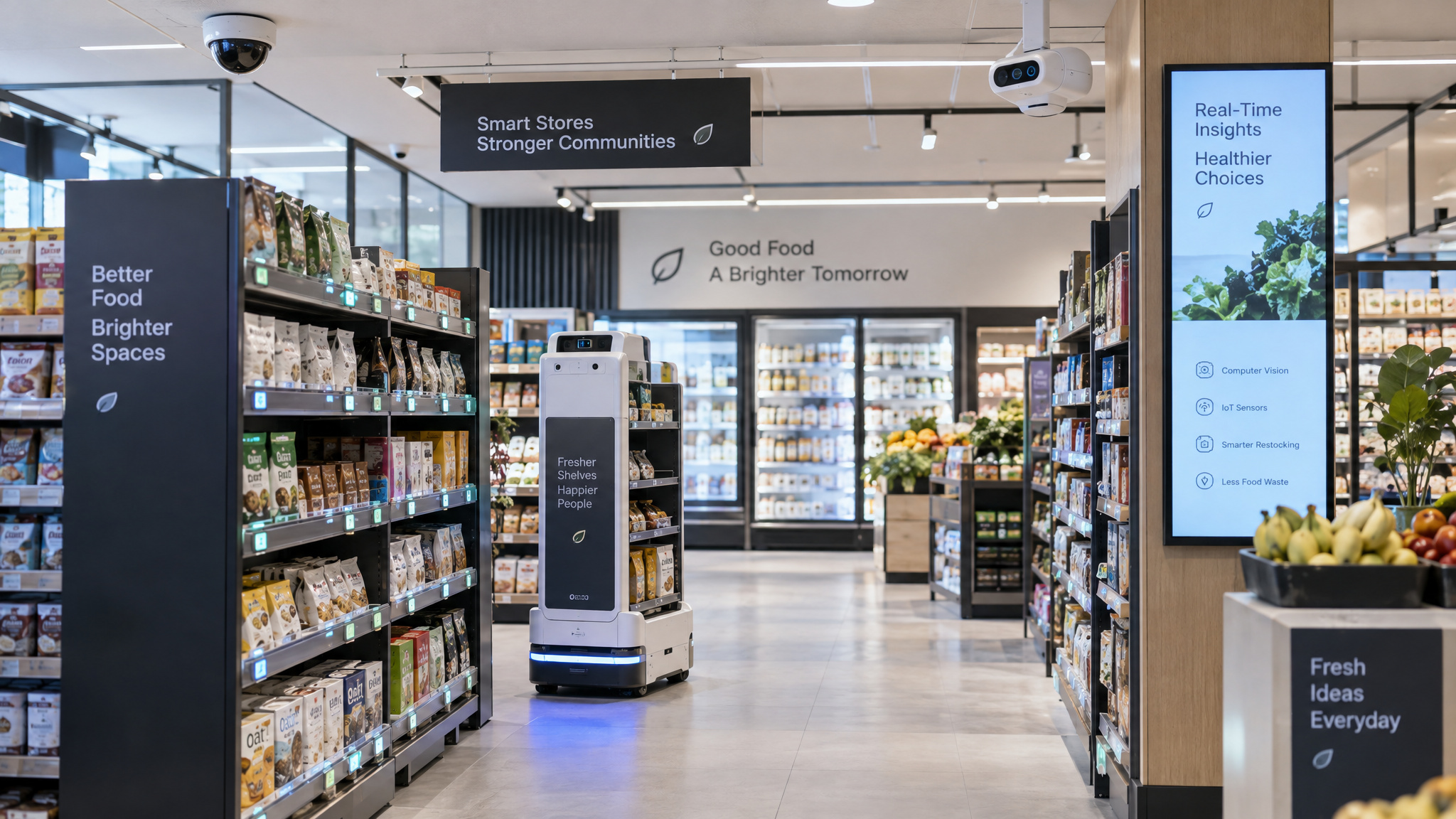
Computer vision
Cameras plus AI watching shopper behavior and tracking products. Three jobs: keep shelves stocked, understand purchases, and enable cashier-free checkout, including scan-and-leave payment where the charge happens without a register interaction. This is the tech behind the walk-out store.
IoT sensors
Tiny sensors on shelves or floors tracking items in real time. The payoff is that the shelf files its own ticket when it’s empty, so inventory fixes happen faster.
Robotics
Machines that check shelves, help customers find items, and pack warehouse orders. A workhorse, not a marvel: time saved and stores that keep running smoothly.
Predictive analytics
Data from shoppers and staff feeding staffing levels and reorder timing. Worth saying straight: staff data is an input here. It’s forecasting, not fortune-telling.
Smart shelves
Shelves that sense when stock runs low and suggest similar products to whoever’s standing there. The detail that deserves the longest beat: some change prices based on demand or expiration dates. The tag can move under you.
eCommerce integration
Order online, pick up in-store, or get delivery. The glue layer that makes online and physical stops act like one system.
Under all of it sits a glue-script layer: robotic process automation (RPA) and no-code platforms, which let companies rewrite workflows quickly without a dev team per change. When Heimatverse describes “automated removal of non-value-added activity” from transactional processes, that’s consultant-speak for deleting the steps that don’t help the customer.
Inside the checkout-free store: how payment happens
Amazon Go is a cashier-less store where you walk in, take items, leave, and get charged automatically. The sequence: the app recognizes your arrival, cameras and sensors track what you take, and your account or bank card is charged on exit. The concept began rolling out in 2016, built on AI, sensors, and computer vision, starting as an experimental Seattle grocery store. It now spans over 25 locations. That’s genuinely clever tech with a still-limited rollout, and it’s worth saying both halves of that sentence.
Amazon One: your palm is the token
Automated payments like palm scanning are exactly what Amazon One sounds like: scan your palm, payment done, no line. Your palm becomes the payment token, biometric authentication at a store with no register. The plain-language trade: a body part is now linked to your money, and there’s no human double-check between your hand and your account.
Carrefour’s corner-store variant
Carrefour’s Paris store is the European counterpoint, and the interesting part is the footprint: 85 square meters. Checkout-free tech in a corner store, not a flagship. The recipe differs too: AI, RFID tags (small radio-identification tags), and mobile apps instead of pure camera vision. There’s more than one way to remove the checkout.
The broader payment arc
Beyond walk-out stores, the paying itself changed. Mobile scan-and-pay apps turn your phone into the POS: scan and pay as you shop, no front-of-store ritual, and some use computer vision so you pick up and leave with payment automatic. Self-service kiosks round out the trio; you know what those are. And cashless, contactless payment makes checkout frictionless or gone entirely.
PwC once predicted 85% of transactions would be cashless by 2019; that’s a dated forecast now, and its track record is a useful calibration for every prediction in this article. On the digital side, Attentive’s Two-Tap and conversational commerce remove friction too, per sponsored content, which is the provenance worth knowing.
One pattern from early checkout-free deployments, offered as a composite observation rather than a documented incident: shoppers hesitate at the exit, unsure the charge registered. Removing the receipt handoff removes the familiar confirmation moment, and nothing replaced it. Pair that with the money risk in plain terms: payment happens with no cashier checkpoint, so a misread gets caught on your statement, not at the door. That’s the trade.
Automating the rest of the store visit
The evidence shows automation supporting staff rather than replacing them, and the available sources never directly confront job displacement, so neither will I in either direction. What the deployments actually show is specific fixes to specific bottlenecks.
Zara’s is the fun one: AI robots that fetch products from the back of automated stores, a warehouse-picking problem moved to the sales floor. The why is a fix-begets-fix arc: Buy Online, Pick-Up In Store (BOPIS, now you know the acronym) created pickup lines, waiting became the new bottleneck, and the robots speed up in-store collection. Marty, the floor-QA robot roaming Spot & Shop and Giant Food Stores, detects spills and hazards so staff deal with customer issues instead of mopping. Smart fitting rooms use sensors to suggest clothes or check stock.
And there’s the Walmart/GM detail worth savoring: Bluetooth beacons hidden inside LED light bulbs, pinging shoppers’ phones with offers as they browsed. AI personalization crossed into physical stores, with customer data driving specific promotions, recommendations, and loyalty programs through ads, emails, and in-store kiosks.
Personalization: what you see, what retailers learn
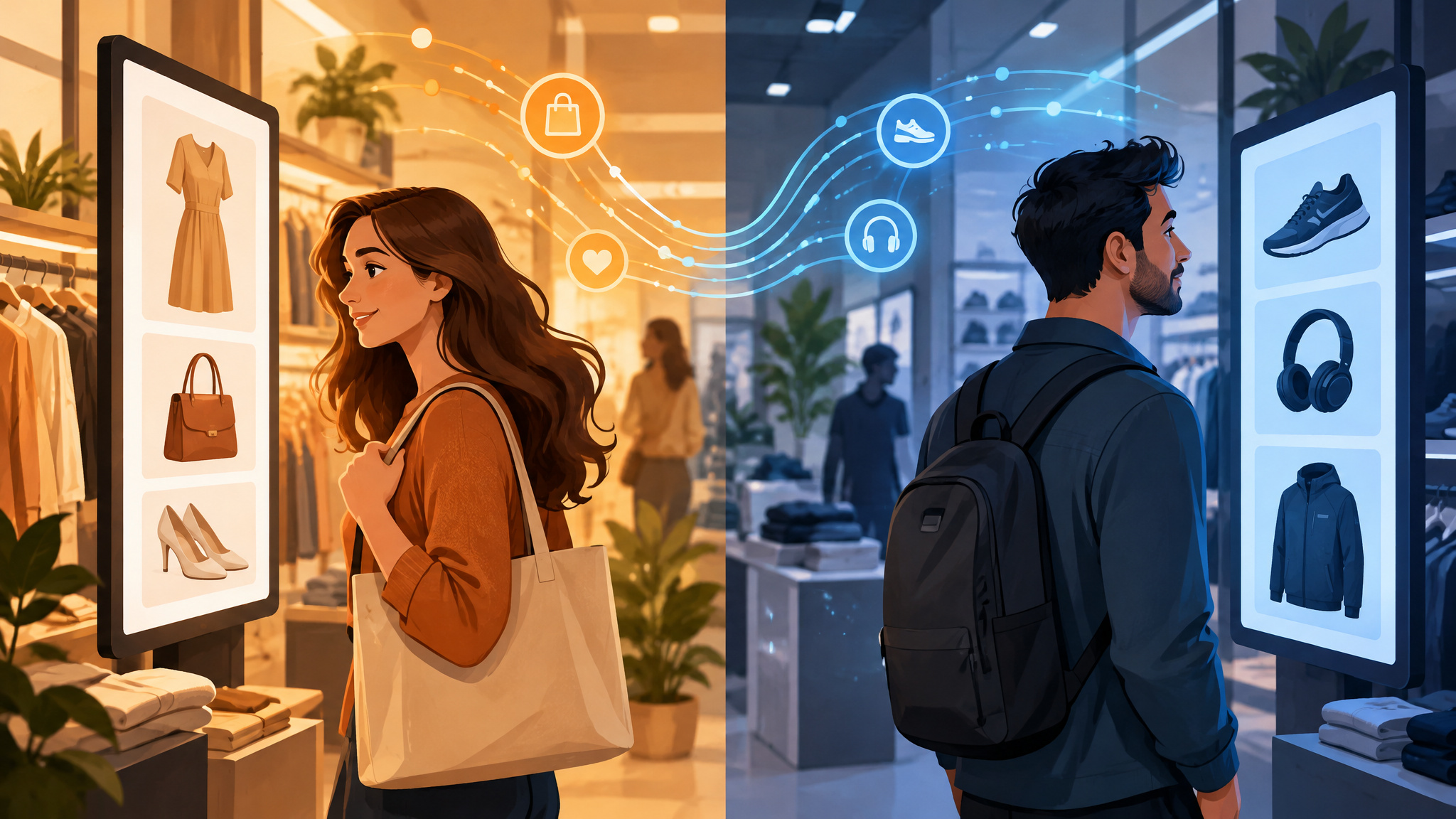
AI personalization is the reason two shoppers can visit the same store and see different products, because systems built from your past behavior decide what gets surfaced. The visible layer is the one you’ve already touched: recommendation engines matching products to your history, dynamic customized landing pages, targeted offers, and chatbots handling FAQs 24/7 so humans get the interesting problems. The vendor-cited stats say 75% of shoppers prefer stores offering personally tailored recommendations (preference data, not purchase behavior) and 72% of customers expect businesses to use chatbots (an expectation shift, not satisfaction proof). Behavior analysis on sites and apps feeds conversion, directionally; the material gives no percentage, so I won’t manufacture one.
The layer you don’t see is where it gets interesting. Jazmin Chebar, the Argentine fashion brand, uses Cappasity for 3D product content with AI analytics heatmaps tracking how customers rotate and zoom product images. If you’ve ever instrumented a web viewer with event telemetry, this is that, pointed at a jacket. Julieta Maidana, the brand’s e-commerce manager, called it a new stage of product representation; that’s a customer testimonial, quoted as one.
The brand reported conversion-rate and time-on-page improvements, and “reported” is doing real work there since these are self-reported metrics. The elegant extension: heatmaps enable A/B testing of product packaging by comparing focus-group reactions side by side, without physical prototypes. Preference data you can act on, with less physical testing (not zero waste). The caveats: this only works when there’s 3D content to measure, and not every zoom means intent.
Then there’s the sponsored-content example that shows where this tips: three customers with similar profiles search for sunscreen and receive entirely different AI-adapted messaging, timing, and content in real time. Helpful when you can tell why it’s happening. Unsettling when you can’t. Marketing automation rides the same rails, with behavior-triggered emails replacing batch blasts and segmentation doing the grouping; you have your own opinions about email, so I’ll stop there.
How AI makes fast fashion more sustainable
The mechanism is attacking waste at the fit-and-returns stage, not packaging or sourcing. The values constraint behind it: an IBM Institute for Business Value survey found that 84% of consumers rank sustainability as very or extremely important to their brand choices. That’s a stated preference, not “84% buy sustainable.”
The pipeline story is H&M Group’s Body Scan Jeans pilot, launched in 2021 by one H&M Group brand with external partners. The build log: an in-store 3D body scan becomes a digital avatar for virtual try-on of denim colors and styles, then machine learning converts the scan into an actual paper pattern and measurement list, and the customer picks up the personalized item in-store. The ML output being a pattern you can sew is honestly kind of elegant. Linda Leopold, head of AI at H&M, framed the payoff this way: on-demand manufacturing “not only solves the problem of size and fit for the customer but also leads to fewer returns and decreased CO2 emissions.” Worth remembering, though: this was a 2021 pilot, not a scaled program, and the returns-and-emissions claim is hers, not independently verified.
How AI search changed product discovery
Traditional Google searches averaged about six words; average LLM-driven queries run roughly 24 words, packed with conversational adjectives and specific use cases, per Lucas Tieleman, CEO and co-founder of Opiversal, in Conversations with MarTech. Consumers no longer dumb down queries; they expect platforms to understand context, brand preferences, even family dynamics. The flip side: retailers now have to feed highly structured data, conversational attributes, and detailed FAQs directly into AI and advertising platforms to stay discoverable, because the old catalog pages built for six-word queries and blue links are obsolete.
Agentic shopping: hype versus reality
Not yet on the buying side. Autonomous agents, the agentic AI systems behind the hype, heavily drive research traffic, per the MarTech interview, but they are not completing purchases. Meanwhile bot traffic is soaring as LLMs crawl retail sites to answer user prompts, which is forcing marketers to rethink what impressions versus sales even mean.
The claim you’ll see elsewhere, that marketing has entered an “agentic phase” where AI generates content, orchestrates customer journeys spanning mobile, email, and the web, and adapts experiences in real time, comes from sponsored Attentive/Reuters Plus content. That’s marketing orchestration, a different context from purchase completion. Agents research and brands orchestrate, but the transaction still belongs to the human. The “AI agent buys for you” narrative is ahead of the evidence.
Behind the scenes: stocking, forecasting, pricing
AI predicts demand and triggers automatic replenishment, which is how shelves stay stocked and stockouts get prevented. The sequence: track buying trends, predict demand, stock the right products at the right time. Orders adjust to local demand, so what sells in a neighborhood gets stocked heavier there. The failure condition is stated plainly by the systems themselves: an incorrect forecast means excess stock or empty shelves. A system that admits its own failure modes deserves respect.
The inventory layer runs on stock tracking, shelf monitoring, and warehouse management via robotics and computer vision, with robots restocking shelves. That’s a real labor shift; I’m not going to doom it or whitewash it. Supply chain automation. AI software, robotic conveyors, analytics tools, improves visibility from supplier to delivery, which is part of why ordering stuff online got cheap and trackable. Micro-fulfillment centers stuff small automated warehouses inside stores to handle online orders, so the back room becomes a fulfillment node.
And pricing is dynamic now, responding to market conditions, demand shifts, and competitor actions in real time, with competitor price tracking and margin optimization as the named capabilities. Margin optimization, translated honestly: the price you pay is tuned to their profit, not just to demand. “The shelf was stocked” and “the price changed” are outputs of an invisible pipeline. Availability itself is now an AI product.
Paying safely when machines handle the money
Real-time AI fraud detection flags unusual order-value spikes and purchases from strange locations, blocking them or requesting more verification. The stakes: Juniper Research predicted $20 billion in global e-commerce fraud losses by 2025, a projection about losses, not a realized figure.
Here’s the trade made explicit: the same automation that removes checkout friction also removes human fraud review. Trust in a palm-scan or walk-out payment rests on AI systems flagging anomalies in milliseconds, and security shapes brand credibility and consumer confidence. What the available material doesn’t fill in: what data shoppers actually give up in palm-scan, vision-tracked, and behavior-analyzed retail. The coverage discusses trust from the brand’s perspective and says little about the shopper’s side of that ledger, and I’d rather state the gap than invent harms. Same for the shopper-side failure experience, a mis-tracked basket or a wrongly blocked payment: it’s an open question, not a documented problem.
When retail automation fails, and what works
The documented failure modes, read like postmortems: unclear goals, poor employee training, over-automation removing the personal touch, leadership doubts, outdated POS and legacy systems, and no clear strategy in place. That list is separate from the e-commerce-side barriers, which are different: significant upfront costs, the need for clean dependable data, integration complexity, and limited skill sets.
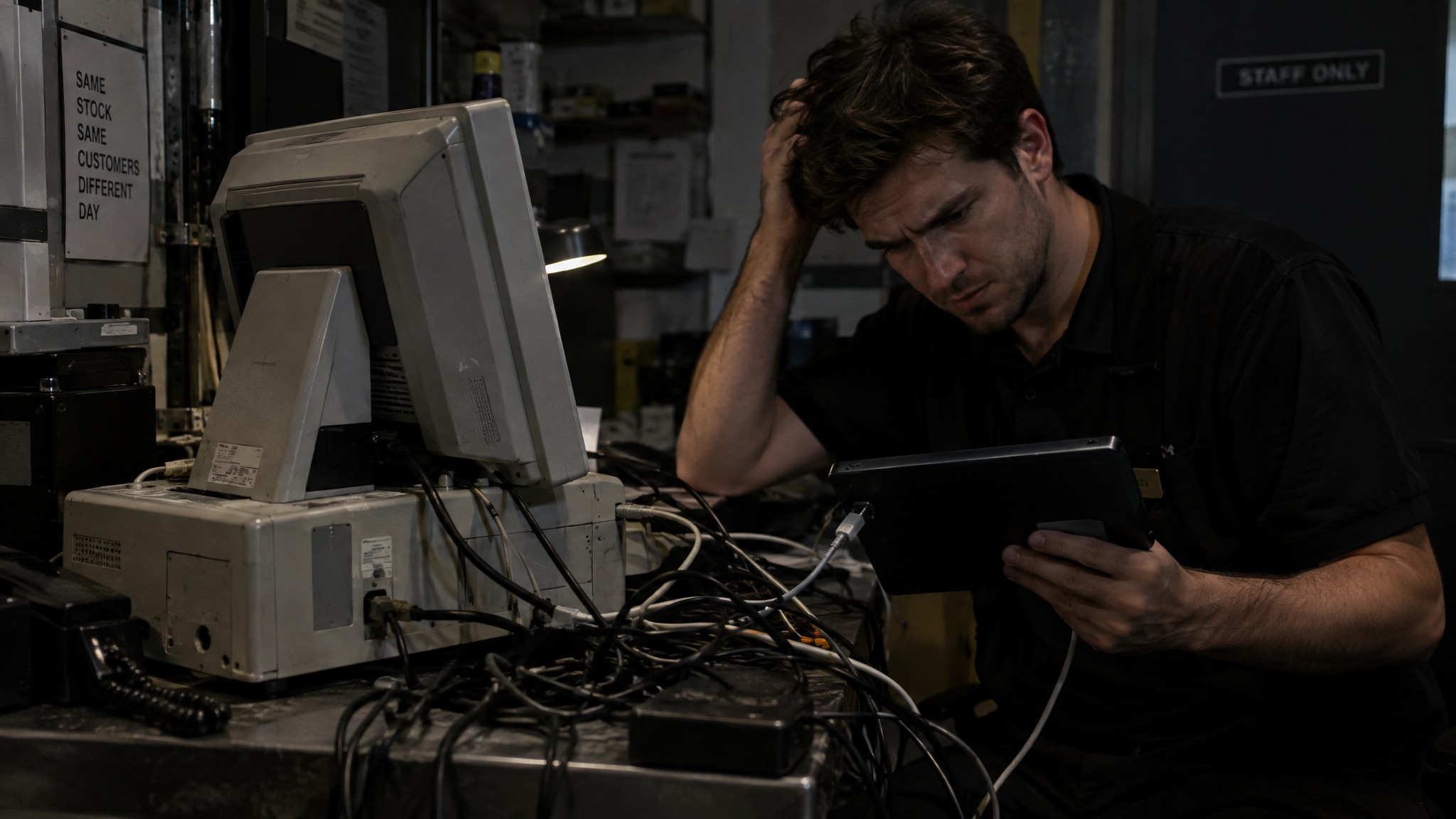
Is it worth it for retailers? Yes, when the prerequisites are met. Easier shopping leads to easier spending, and the market numbers back the direction: $12.2 billion in 2021 to a forecast $33 billion by 2030, plus the Incisiv/Verizon Business finding that up to 70% of routine tasks are slated for automation by 2025, hedges intact. The recurring composite failure pattern, tied to that challenge list: retailers pilot a flashy front-end feature before cleaning up their inventory data, and the automation amplifies bad data instead of fixing workflows.
“Unclear goals” translated: you’ve automated a process you didn’t understand first. And legacy POS is the cursed-dongle energy of retail tech, the new stack forced to talk to a machine from another era. The phased playbook that actually works: start with customer-facing or high-impact areas, clean and structure the source data first, pick scalable tools aligned to business goals over feature overload, and track performance continuously. Leadership doubts get eased the engineer way: data, case studies, working demos. COVID-19 proved the combo point under pressure, when retailers shipped curbside pickup and contactless payments alongside human staff assistance rather than instead of people.
Trust is the real ceiling on AI commerce
Trust, not technology or cost, is the binding constraint on AI-driven commerce. Per sponsored Attentive content, automation without restraint damages trust faster as AI amplifies marketing, and access to customer data is a privilege brands must earn. The sunscreen example is the proof: personalization tips from helpful into unsettling when similar shoppers receive visibly different experiences and can’t tell why. The same sponsored framing reaches back to the late-2000s smartphone boom, when the mobile number became the constant customer identifier and early movers around mobile identity gained a decisive edge, with three lessons carrying over to AI: speed matters, innovation must serve the customer, and trust is non-negotiable.
What shopping automation to expect next
Cashier-free stores are expected to grow fast in convenience chains over the next five years, with large grocery and retail giants adopting at larger scale within ten as costs decline. That’s a forecast, and the cost-decline driver is the mechanism, not a guarantee. The four emerging trends on the list: voice-enabled shopping, advanced personalization, visual search, and fully automated supply chains.
At home, e-commerce already enables 24/7 grocery ordering; Nielsen found one-quarter of online respondents order groceries online and 55% are willing to in the future. Smart refrigerators act as restocking assistants, some offering grocery shopping through their interfaces, and Amazon’s Dash wands and buttons handle instant ordering while Echo orders on command.
The meta-lesson is the part worth keeping.
Each automation wave removes a human intermediary, the clerk, the cashier, the search engine, and each era’s forecasts run overconfident on timing.
Gartner forecast over 26 billion connected devices by 2020 with a $151 billion IoT market; PwC predicted 85% cashless transactions by 2019. Both are historical now, which makes them the best calibrators in this piece. The technology keeps arriving ahead of the timelines, so the questions that matter are trust, data hygiene, and whether the automation actually serves the customer.
Frequently Asked Questions
How do cashier-less stores like Amazon Go work?
You walk in, the app recognizes your arrival, and cameras plus shelf sensors track what you take. When you leave, your account or bank card is charged automatically — no register, no receipt handoff. The concept began rolling out in 2016 as an experimental Seattle grocery store and now spans over 25 locations.
How is AI used to personalize the shopping experience?
Recommendation engines match products to your history, landing pages customize dynamically, and chatbots handle FAQs around the clock. The invisible layer goes further: brands like Jazmin Chebar use AI heatmaps to track how customers rotate and zoom 3D product images, essentially web telemetry pointed at a jacket. The catch is that personalization tips from helpful to unsettling when you can’t tell why you’re seeing what you’re seeing.
Do cashier-less stores cost jobs or remove the human touch from shopping?
The deployments so far show automation supporting staff rather than replacing them — robots at Zara speed up pickup lines, and Marty the floor-QA robot at Spot & Shop and Giant Food stores detects spills so staff can handle customers instead of mopping. That said, the sources never directly confront job displacement, so neither a doom scenario nor a whitewash is honest. Over-automation that removes the personal touch is, however, a documented failure mode for retailers.
What are the risks and downsides of automated retail for consumers?
Payment happens with no cashier checkpoint, so a misread basket gets caught on your statement, not at the door. Removing the receipt handoff also removes the familiar confirmation moment, and early deployments show shoppers hesitating at the exit unsure the charge registered. Dynamic pricing means the tag can move under you, and it’s still an open question what data shoppers actually give up in palm-scan and behavior-tracked retail.