
Building an iOS app sounds simple enough. You have a great idea, you hire a developer, and you launch. But the Hidden Costs of Building an iOS App are where the real trouble begins. In 2025, while the base price for development has stabilized, the surrounding expenses—from cloud services to that sneaky 30% App Store cut—have become the real budget killers.
I’ve seen too many founders panic when they realize their $50,000 budget is gone, yet the bills for server hosting, testing tools, and marketing keep rolling in. Want to know exactly where your money goes?
I’ll walk you through the numbers, the traps, and the smart moves that save you thousands.
Key Takeaways
Base Development vs. Reality: A basic iOS app in the US starts between $50,000 and $70,000, with hourly rates for skilled local devs averaging $100-$150. Complex apps easily pass $250,000 (Redwerk).
The Maintenance Tax: Expect to spend 15-20% of your initial build cost every single year on updates. For a $100k app, that’s $20,000 annually just to keep the lights on.
The Marketing Spike: Getting a user to actually install your app (Cost Per Install) on iOS in North America now averages between $2.50 and $5.00.
Apple’s Cut: Apple takes 30% of your revenue by default, though you can drop this to 15% if you qualify for the Small Business Program (earnings under $1M).
Infrastructure Shock: Real-time features are expensive. Google Maps, for instance, is changing its pricing model in March 2025, which could impact your free tier usage significantly.
Table of Contents
What Are the Upfront Costs Compared to Hidden Costs in iOS App Development?
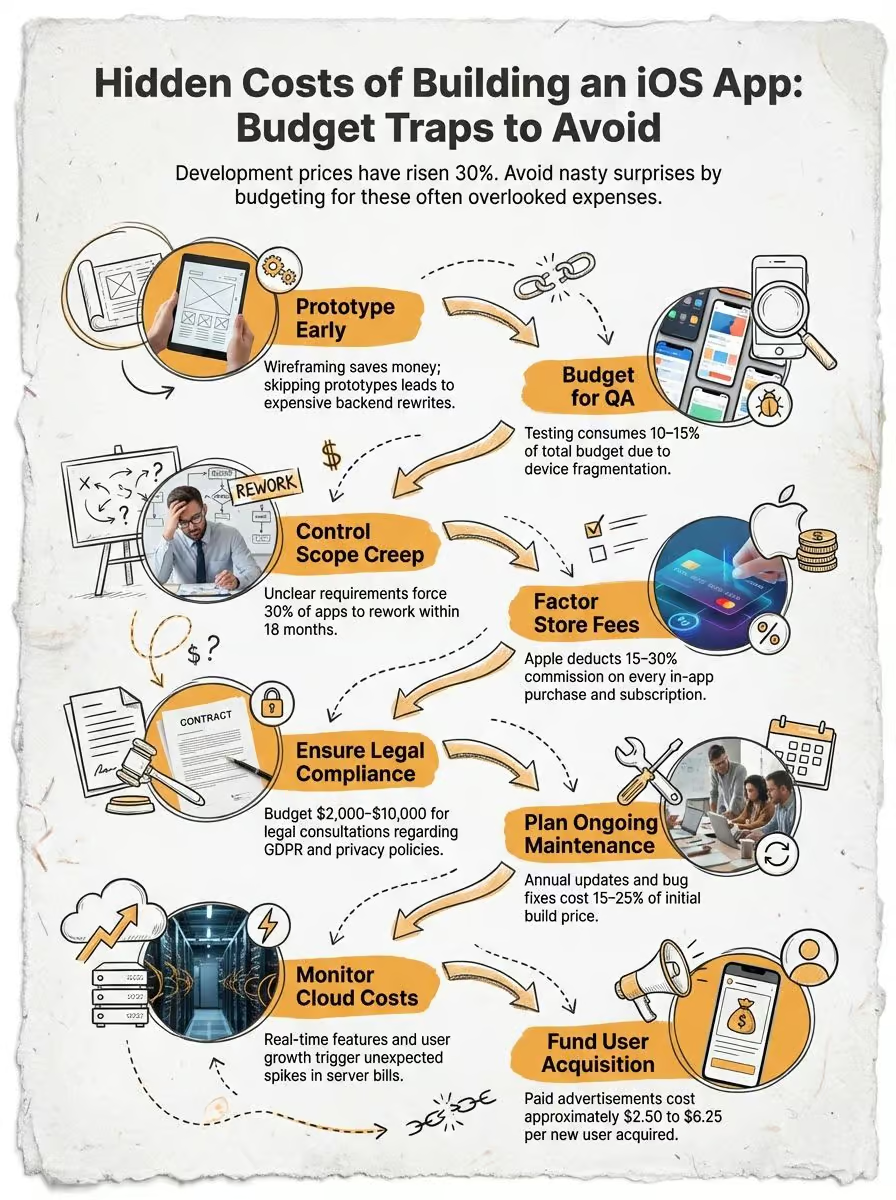
The visible price tag is misleading. You see the $99 annual Apple Developer fee and the quote from your agency, and you think you’re set. But that quote usually only covers writing the code.
Upfront costs are just the entry fee. In the US, hiring a senior iOS developer costs around $100 to $150 per hour. That’s why a “simple” app hits that $50,000 mark so fast.
Hidden costs are the ongoing fees that bleed your budget dry over time. Think of it like buying a car but forgetting about gas, insurance, and repairs.
Server hosting is a prime example. You might start with a low monthly bill, but as soon as you add real-time chat or push notifications, your costs on platforms like AWS or Firebase can jump from $50 to $500 a month. Security patches and iOS version updates are mandatory if you don’t want your app to crash on the new iPhone 16.
According to iOS app development services by Redwerk, even experienced technical leads underestimate these compounding costs.
“The price tag on day one isn’t the final bill. Hidden fees always creep in through maintenance doors.”
Pre-Development Hidden Costs
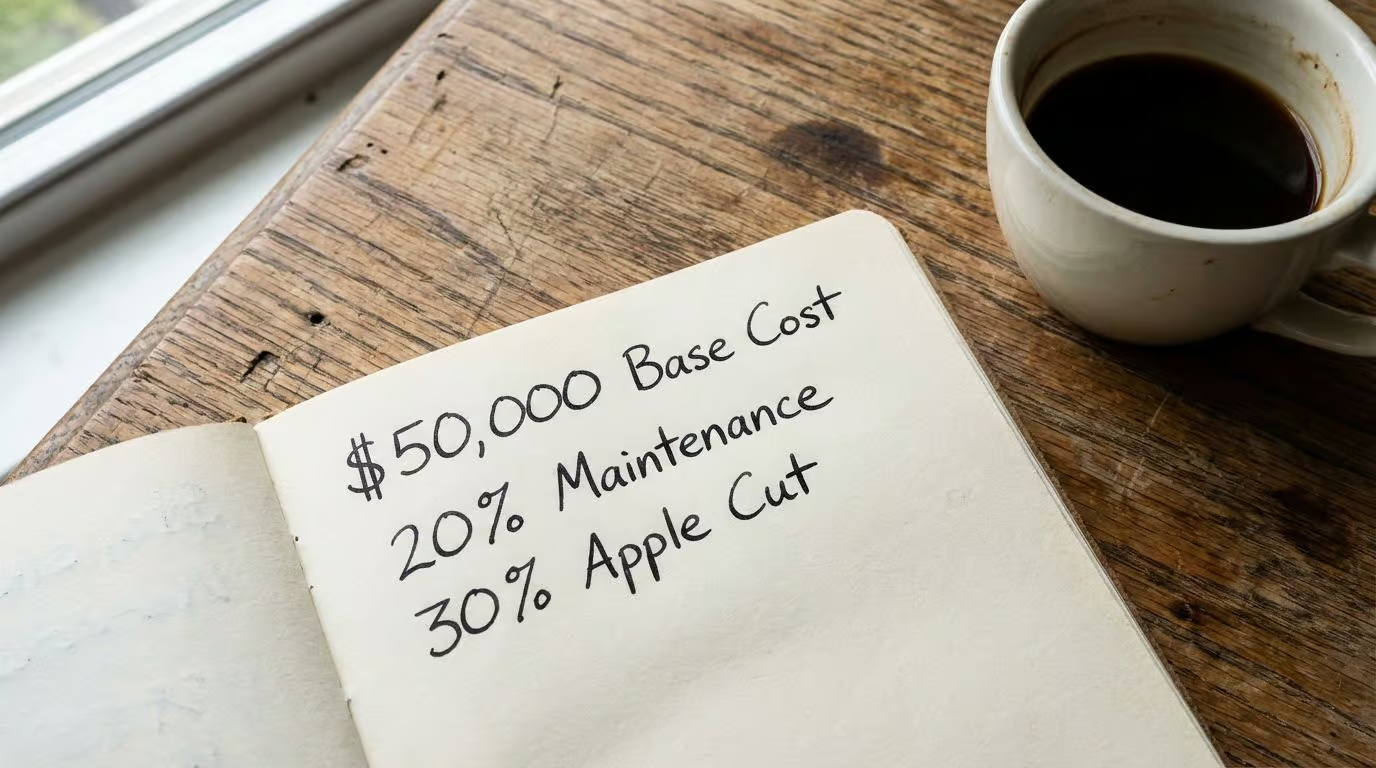
Before you build, you have to plan. This phase is dangerous because it feels like you aren’t spending “real” money yet, but the hours add up.
Tools like Figma for design aren’t free for professional teams—they cost around $12 to $15 per editor every month. That sounds small, but add in a product manager, a designer, and a stakeholder, and you’re paying hundreds just to look at the drawings.
How Do Market Research and Analysis Impact Your Budget?
You can’t just guess what users want. You need data. Market research tools like Sensor Tower or Data.ai offer incredible insights, but their enterprise plans are expensive.
Even a lean discovery phase—where you define exactly what to build—costs between $4,500 and $8,000. It feels like an extra expense, but it’s actually insurance. I once worked on a fitness app where the founders skipped this step. They built a feature nobody wanted, spent $20,000 doing it, and then had to scrap it entirely.
Spending $5,000 now to validate your idea prevents you from burning $50,000 on a product that fails. It validates your assumptions with real data instead of hope.
Why Are User Personas and Journey Mapping Important?
Knowing your user saves you from “feature bloat.” Creating detailed user personas prevents you from building tools for a “business pro” when your actual user is a “casual gamer.”
Mapping these flows takes time. Professional UI/UX designers charge substantial rates to map out every tap and swipe. If you skip this, you pay for it during development.
Changing a design in Figma takes an hour. Changing that same feature after it’s been coded takes days. That rework is where budgets die. A proper discovery phase with a team like Redwerk helps you lock these details down early.

What Is the Cost of Creating Prototypes and Wireframes?
A clickable prototype acts as your blueprint. It shows you exactly how the app works before a single line of code is written.
Expect to spend $15,000 to $30,000 for high-fidelity prototyping on a serious project. This involves around 50 hours for wireframes and another 50+ hours for the polished design. If you need custom animations or specific Core ML interactions, the price ticks higher.
This step is non-negotiable for me. I’ve seen projects where the client tried to save money here, only to realize halfway through development that the user flow was broken. Fixing it cost them three times as much as the prototype would have.
Pay peanuts now and you’ll pay elephants later. Skipping prototype reviews is the fastest way to guarantee a rewrite.
Development Phase Hidden Costs
Now the meter is really running. Writing code is the main event, but the side costs—integrations, testing, and changing requirements—are where the surprises hide.

How Extensive Should Testing and QA Be?
Testing isn’t just clicking around on your phone. You need to ensure your app works on the latest iPhone, the three-year-old iPad, and everything in between.
Testing and QA typically consume 15% to 20% of your total budget. If you’re building a $100,000 app, set aside $20,000 strictly for quality assurance.
You’ll also need tools. BrowserStack or similar services allow you to test on real devices remotely, but plans start around $29/month and scale up quickly for teams. Automated testing tools save time in the long run but require skilled engineers to set up.
If you cut corners here, you pay later. A bug found after launch costs roughly 100 times more to fix than one found during design. Negative reviews from a buggy launch can kill your install rate overnight.
To learn more about who handles this, check out senior engineering roles and responsibilities.
What Causes Scope Creep and Feature Changes?
Scope creep is the silent killer of app budgets. It happens when you add “just one small thing” halfway through the project.
A 2024 report suggests that nearly 30% of software projects experience significant rework due to shifting requirements. Every new feature requires design, coding, testing, and project management time.
The solution is a strict Project Scope Statement. If you want to add a feature, it goes into a “Phase 2” list or goes through a formal change request process where the cost is calculated immediately. This keeps your timeline honest and your cloud hosting costs predictable.
How Do API Integrations and Third-Party Tools Add Costs?
Few apps stand alone. You likely need API integrations for maps, payments, or social logins.
These aren’t always free. Google Maps Platform, for example, is updating its pricing in March 2025. While there’s a free tier, serious usage (over 10,000 requests for the Essentials tier) will start billing you. Payment gateways like Stripe take 2.9% + 30¢ per transaction.
Maintaining these connections costs money too. APIs change. When Facebook updates its login SDK, your developers have to stop what they’re doing and update your app code to match, or your users get locked out.
App Store submission is the next hurdle.
Post-Development Hidden Costs
Launching is just the start. The expenses that hit you after the app is live are often the ones that business owners forget to plan for.
What Are the Fees for App Store Submission and Compliance?
You know about the $99 annual Apple Developer fee ($299 for enterprise). But the real cost is the rejection cycle.
Over 40% of first-time submissions get rejected. Each rejection means your developers spend hours—at that $100-$150/hour rate—fixing the issue and resubmitting. It delays your launch and burns cash.
Then there’s the commission. Apple takes 30% of your revenue from apps and in-app purchases. However, you should immediately apply for the App Store Small Business Program if you earn under $1 million a year. This drops the commission to 15%, which is a massive saving.
How Do Legal and Regulatory Requirements Affect Costs?
Data privacy is serious business. If you have users in Europe, you deal with GDPR. In California, it’s CCPA.
Legal fees for drafting a compliant privacy policy can run between $2,000 and $10,000 depending on your complexity. If you need a dedicated Data Protection Officer (DPO) to manage strict compliance, consultant rates often start at $2,000 per month.
Ignoring this is not an option. Fines for non-compliance are massive, and Apple will reject your app if your privacy policy doesn’t match your actual data usage.
Why Invest in Data Security and Encryption?
A data breach ends your business. Security isn’t a feature; it’s a requirement.
A basic penetration test—where experts try to hack your app to find weaknesses—starts around $4,000 and goes up to $20,000+ for complex systems. You need this to find holes before the bad guys do.
If you handle sensitive data like health records (HIPAA) or finance, you need encryption at rest and in transit as part of effective sensitive data protection. Implementing this correctly takes senior-level developer time, which increases your initial build cost but saves you from lawsuits later.
Ongoing Maintenance Hidden Costs
This is the most overlooked category. You are never “done” building software.
How Much Do Bug Fixes and Performance Updates Cost?
Industry data shows you should budget 15% to 20% of your original development cost annually for maintenance.
For a $100,000 app, that is $20,000 a year. This covers fixing bugs that users discover, updating libraries, and minor tweaks. If you don’t pay this, your app slowly breaks as the world around it changes.
Technical debt accrues like interest. The longer you wait to update old code, the more expensive it becomes to fix it when it finally breaks.
Why Is Compatibility with New iOS Versions Necessary?
Apple releases a major iOS update every year. iOS 18, iOS 19—each one brings changes that can break your app.
Ensuring compatibility typically costs between $5,000 and $15,000 per year depending on your app’s complexity. You have to test on new devices (like the latest iPhone Pro Max) and update your code to use the new SDKs.
If you skip this, your app starts looking old, crashes on new phones, and eventually, Apple might remove it from the store for being outdated.
What Are the Costs of Server Hosting and Backend Infrastructure?
Your app’s brain lives in the cloud. Services like AWS (Amazon Web Services) or Google Cloud charge you for every gigabyte of data you store and transfer.
For a growing app, a basic server setup might cost $70 to $320 per month. But if you have a viral moment? That bill can spike to thousands overnight if you haven’t configured auto-scaling limits correctly.
Database costs also grow with your user base. Storing user photos, chat logs, and activity history eats up storage space, and cloud providers charge for that storage plus the “egress” fees to send that data back to users.
App Store-Related Hidden Costs
The App Store is a marketplace, and like any mall, there is rent to pay.
What Does the Apple Developer Program Fee Cover?
The $99/year fee grants you access to App Store Connect, TestFlight for beta testing, and technical support. It also keeps your certificates active.
If this subscription lapses, Apple pulls your app from the store immediately. It sounds harsh, but it’s their house rules. You also get access to the latest betas of Xcode and iOS, which is critical for that compatibility work we mentioned earlier.
How Does Revenue Sharing for In-App Purchases Work?
Apple processes all payments for digital goods and takes its cut off the top. You never see that money.
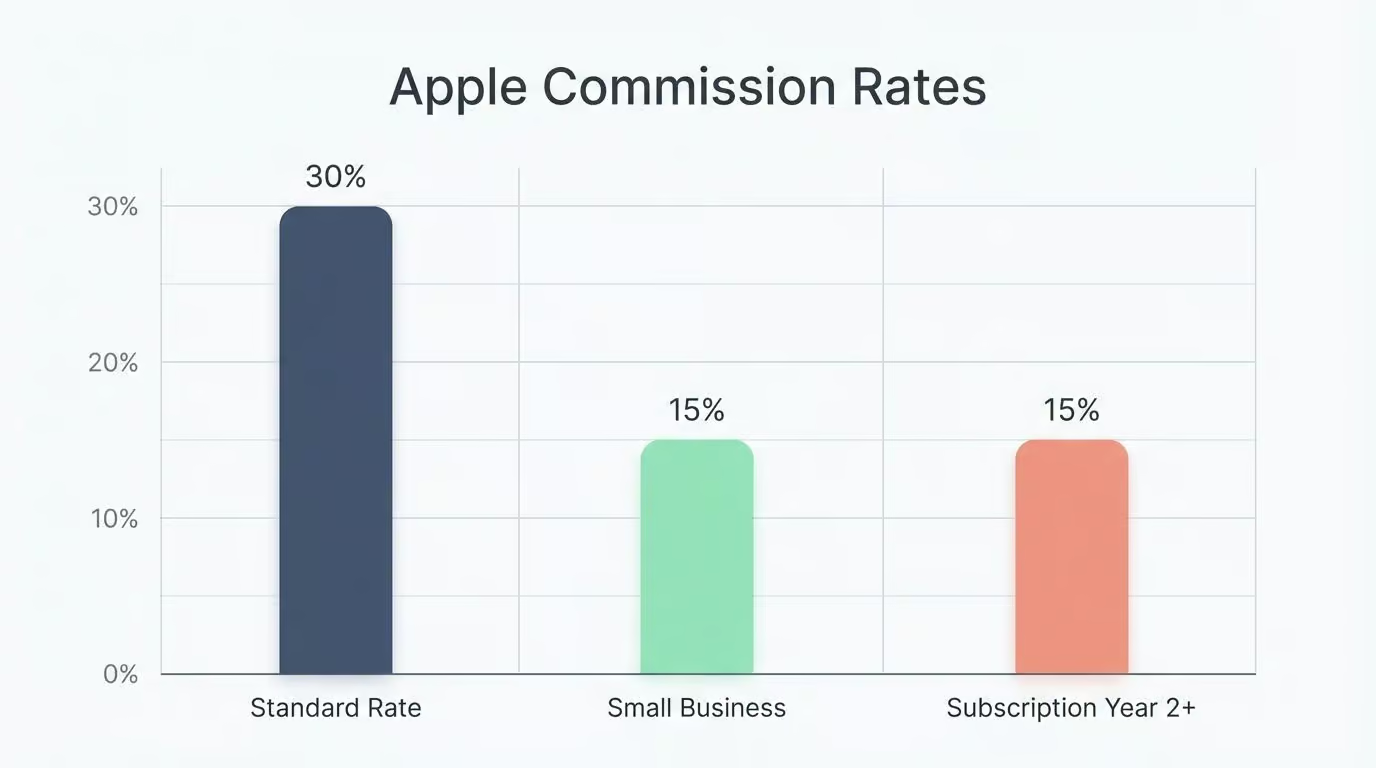
| Program | Commission Rate | Condition |
|---|---|---|
| Standard Rate | 30% | Annual earnings over $1 million |
| Small Business Program | 15% | Annual earnings under $1 million |
| Subscription (Year 2+) | 15% | User subscribed for >1 year |
You need to factor this into your pricing. If you sell an item for $10.00, you only get $7.00 (or $8.50). This margin impact is massive for profitability.
What Are the Benefits of App Store Optimization (ASO) Services?
You built it, but they won’t come if they can’t find it. App Store Optimization (ASO) is SEO for apps.
Tools like MobileAction or AppTweak give you data on keywords and competitors, but they cost anywhere from $60 to $500+ per month. Hiring an agency to manage your screenshots, keywords, and description can cost thousands, but it lowers your user acquisition cost in the long run by driving organic traffic.
Marketing and User Acquisition Hidden Costs
The “Field of Dreams” strategy doesn’t work here. You have to pay to get users.
How Important Are Pre-Launch Marketing Campaigns?
Building hype before you launch creates a waiting list of users who are ready to download on day one. This initial spike helps the App Store algorithm notice you.
Creating a landing page, running a small Google Ads campaign to collect emails, and producing a promo video all cost money. Even a modest pre-launch push can run $1,000 to $5,000, but it prevents you from launching to an empty room.
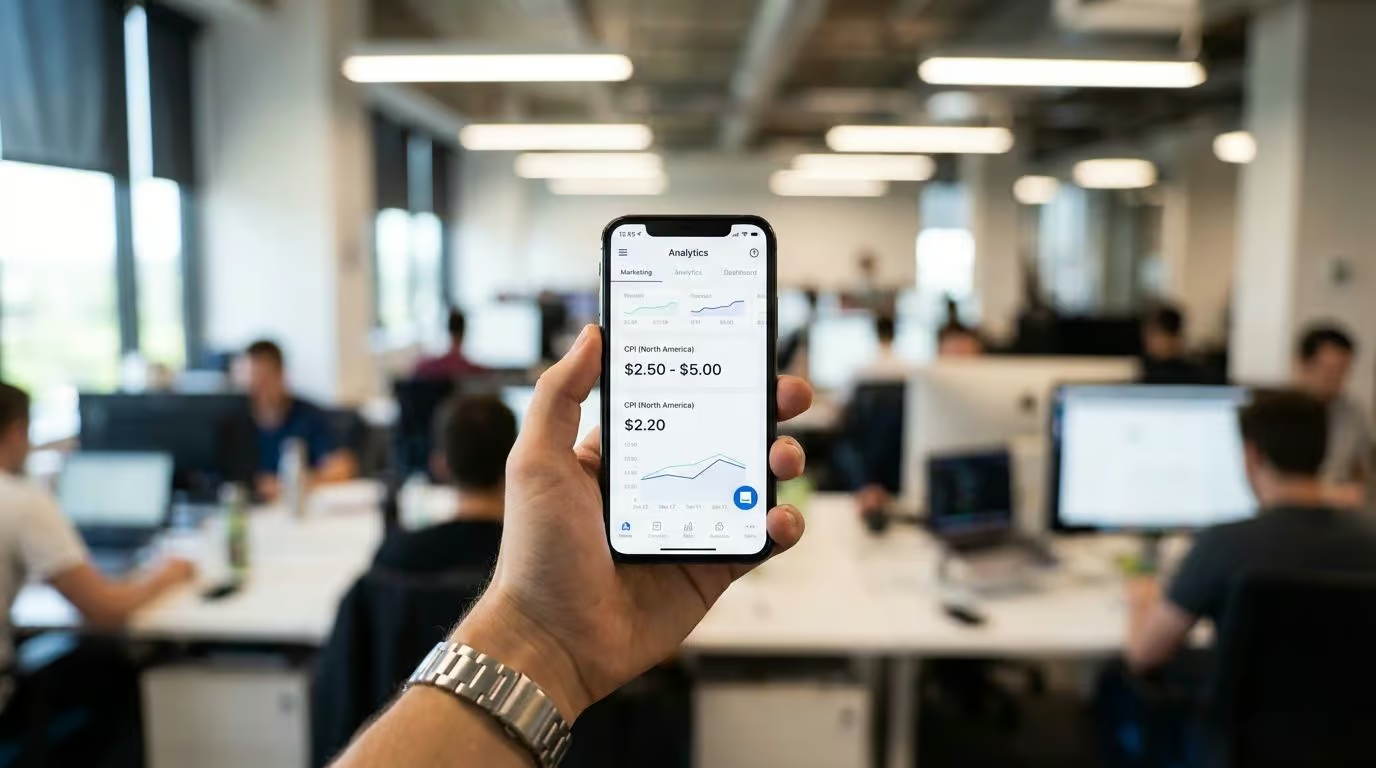
What Is the Cost of Social Media Advertising?
Paid ads are the fastest way to get users, but they are expensive. In North America, the Cost Per Install (CPI) for iOS apps averages between $2.50 and $5.00.
If you want 1,000 users, that’s $2,500 to $5,000 straight out of your pocket. For gaming apps, it can be even higher depending on the genre—hardcore games often see CPIs over $6.00.
You also need creatives. You can’t just run one ad; you need to test dozens of images and videos to find what works. That means paying designers or editors regularly.
How Do Influencer Partnerships Affect Your Budget?
Influencers work well, but pricing varies wildly. A “micro-influencer” (10k-50k followers) might charge $200 to $500 per post.
This is often cheaper and more effective than macro-influencers who charge tens of thousands. The trick is to find partners whose audience matches your niche perfectly. If you are building a productivity app, a tech YouTuber with 20k subscribers is worth way more to you than a lifestyle Instagrammer with 200k.
Infrastructure and Scalability Hidden Costs
Success has its own price tag. As you grow, your infrastructure bills grow with you.
What Are Cloud Storage and Server Costs?
We mentioned the $70-$320 range for basic hosting, but let’s talk about scale. If your app handles video or high-res images, your storage costs on S3 (Amazon Simple Storage Service) or Google Cloud Storage will creep up.
Data transfer is the real trap. You pay to send data out to users. If you have a media-heavy app, your egress fees can actually exceed your compute costs. Monitoring tools like Datadog or AWS CloudWatch are essential to catch these spikes before they empty your bank account.
How Do Real-Time Features Like Chat or Notifications Impact Costs?
Real-time is premium. Keeping a connection open for chat (using WebSockets) requires more server resources than a standard “refresh to update” app.
Services like PubNub or Pusher make this easy to build but charge based on usage. A successful chat app can easily rack up $500 to $1,000+ per month in real-time infrastructure fees alone as user counts grow.
Why Use Data Analytics and User Behavior Tracking?
You need to know what users are doing. Tools like Mixpanel or Amplitude are fantastic, but they get expensive fast.
They often have a free tier, but once you pass 100,000 monthly tracked events (which happens quickly), you jump to paid plans that start around $20 to $100+ per month. If you want advanced features like “cohort analysis” to see retention rates, the price jumps again.
Advanced Feature Development Costs
Want to add AI or Augmented Reality? Get your checkbook ready.
What Are the Costs of AI and Machine Learning Integrations?
Integrating ChatGPT (OpenAI API) is popular, but you pay per “token” (word fragment). For GPT-4o, you pay roughly $2.50 for every 1 million input tokens and $10.00 for output tokens.
That sounds cheap until you have thousands of users sending long prompts. A busy AI writing assistant app can burn through hundreds of dollars in API credits daily. Plus, building the logic to handle these prompts effectively requires specialized developers who charge a premium.
How Does IoT Compatibility Add to Development Expenses?
Connecting to hardware (Internet of Things) adds a layer of physical complexity. You have to test your app with the actual device.
This means buying the hardware for every developer and tester. It also means dealing with Bluetooth (BLE) connectivity issues, which are notoriously difficult to debug. Expect IoT projects to cost 30% to 50% more than standard apps due to this extra testing overhead.
What Is the Cost of AR/VR and Geolocation Features?
Augmented Reality (AR) using Apple’s ARKit is powerful but time-consuming. Building 3D assets is a completely different skill set from coding.
You’ll need 3D modelers and technical artists. A simple AR feature might add $15,000 to $25,000 to your project. Geolocation is cheaper but requires constant usage of GPS, which drains battery and requires careful optimization to avoid user complaints.
Budget Management Strategies to Avoid Hidden Costs
You can’t avoid all costs, but you can control them. Here is how to keep your wallet safe.
Why Start with a Lean MVP?
Build the Minimum Viable Product (MVP). Strip your idea down to the one feature that solves the core problem.
If you can build it for $40,000 instead of $150,000, you have $110,000 left for marketing and maintenance. This lowers your risk. If the market hates it, you haven’t lost everything. If they love it, you have budget left to scale.
How Can You Stick to Project Scope and Timeline?
Use an Agile approach but keep a firm grip on the “Must Haves.” Tools like Jira or Trello help you track every task.
If a new idea comes up, put it in the “Icebox” for later. Finish what you started. A delayed launch costs you money every day in lost opportunity and ongoing team burn rates.
How to Prioritize Features Based on ROI?
Ask yourself: “Will this feature make me money or get me more users?”
If the answer is no, cut it. Does a dark mode look cool? Yes. Will it get you your first 1,000 users? Probably not. Build the revenue-generating features first (like payments, core utility) and the “nice-to-haves” later.
Tools and Frameworks That Can Reduce Costs
You don’t have to code everything from scratch. Smart tech choices save money.
How Do No-Code and Low-Code Platforms Save Money?
For simple internal tools or basic prototypes, No-Code platforms like Bubble or Adalo let you build apps visually.
You can launch for a fraction of the cost—sometimes under $5,000. They have limits on performance and customization, but for testing an idea, they are unbeatable.
What Are the Advantages of Cross-Platform Development Tools?
This is my favorite budget hack. Frameworks like Flutter (by Google) or React Native (by Meta) allow you to write code once and run it on both iOS and Android.
This can reduce development time by 30% to 40% compared to writing two separate native apps. You maintain one codebase, which means one team, fewer bugs, and faster updates.
How Can Automation Help with Testing and Deployment?
Set up a CI/CD pipeline (Continuous Integration/Continuous Deployment) using tools like Bitrise or Jenkins.
This automates the boring stuff: running tests, building the app file, and uploading it to TestFlight. It saves your expensive developers hours of waiting around every week. It costs a bit to set up ($50-$100/mo for the service), but the time savings pay for it instantly.
How Will Hidden Costs in iOS App Development Change in 2025?
The landscape is getting more expensive, but also more powerful.
In 2025, the biggest cost driver is complexity. Users expect AI, they expect instant speeds, and they expect polished designs. Meeting this bar takes more time and specialized talent.
However, tools are getting better. AI coding assistants (like GitHub Copilot) help developers work faster. The key is to stay lean. Focus on your core value, watch your cloud usage like a hawk, and keep a 20% buffer in your budget for the unknowns.
Building an app is a marathon, not a sprint. Pace your spending, and you’ll make it to the finish line.
People Also Ask
What are some hidden costs when building an iOS app?
Beyond the initial build, you must budget for the mandatory $99 annual Apple Developer Program fee and recurring monthly server costs for backend services like AWS or Firebase. If you integrate third-party tools like Google Maps or payment processors like Stripe, those transaction fees will also start eating into your margins the moment you launch.
Why do maintenance expenses catch so many people off guard?
Industry data consistently shows that maintaining an app costs about 20% of your initial development budget every single year just to keep up with new iOS updates and security patches.
How does design complexity impact my project’s bottom line?
While standard SwiftUI elements are fast to implement, every custom animation or non-standard gesture requires expensive developer hours to build and test. A “pixel-perfect” custom interface often costs three times as much as a standard native layout because your team has to build the logic from scratch.
Can skipping proper market research lead to extra spending later?
Skipping validation is the most expensive mistake you can make because it usually leads to building “zombie features” that users never touch. It is infinitely cheaper to scrap a Figma prototype than to pay $150 an hour to rewrite thousands of lines of Swift code after a failed launch.
References
https://www.cubix.co/blog/ios-app-development-cost/ (2024-11-12)
https://thisisglance.com/blog/the-hidden-costs-of-mobile-app-development-most-businesses-miss (2025-06-17)
https://topflightapps.com/ideas/app-development-costs/ (2025-11-11)
https://www.aalpha.net/blog/ios-app-development-cost/
https://newagesysit.com/blog/ios-app-development-cost/
https://passion.io/blog/the-hidden-costs-of-app-store-submission-and-how-creators-can-avoid-them
https://www.netclues.com/blog/ios-app-maintenance-costs-2025 (2025-05-20)
https://moldstud.com/articles/p-hidden-costs-in-ios-app-development-what-you-need-to-know (2025-05-12)
https://www.simublade.com/blogs/hidden-costs-of-developing-a-mobile-app/ (2024-07-24)
https://www.groovyweb.co/blog/how-much-does-it-cost-to-get-your-app-on-the-app-store/ (2024-12-19)
https://developer.apple.com/programs/whats-included/
https://developer.apple.com/in-app-purchase/
https://www.consultmyapp.com/blog/the-importance-and-benefits-of-app-store-optimization-aso (2023-11-22)
https://www.businessofapps.com/marketplace/app-marketing/research/app-marketing-cost/ (2025-02-26)
https://curator.io/blog/costs-of-social-media-marketing
https://www.mdpi.com/0718-1876/20/2/111
https://www.backblaze.com/blog/the-hidden-cost-of-cloud-storage-what-400-it-leaders-wish-they-knew-sooner/ (2025-10-30)
https://thisisglance.com/learning-centre/how-much-extra-do-real-time-features-cost-in-apps (2025-09-30)
https://www.spaceo.ai/blog/ai-app-development-cost/
https://guarana-technologies.com/blog/iot-app-development-cost-a-comprehensive-guide-for-2025 (2025-06-18)
https://appinventiv.com/blog/iot-app-development-cost/ (2025-07-29)
https://www.yudiz.com/insights/cost-to-develop-ar-vr-app/ (2024-09-19)
https://djangostars.com/blog/how-much-does-it-cost-to-build-an-mvp/ (2025-09-11)
https://www.linkedin.com/pulse/what-hidden-costs-mobile-app-development-how-budget-smartly-mnikf
https://idalko.com/blog/hidden-costs (2025-07-23)
https://www.junkiescoder.com/blogs/maximize-roi-hidden-costs-mobile-app-development/ (2025-07-23)
https://papers.ssrn.com/sol3/Delivery.cfm/5010766.pdf?abstractid=5010766&mirid=1 (2024-12-20)
https://www.netguru.com/blog/cross-platform-mobile-apps-development (2025-09-10)