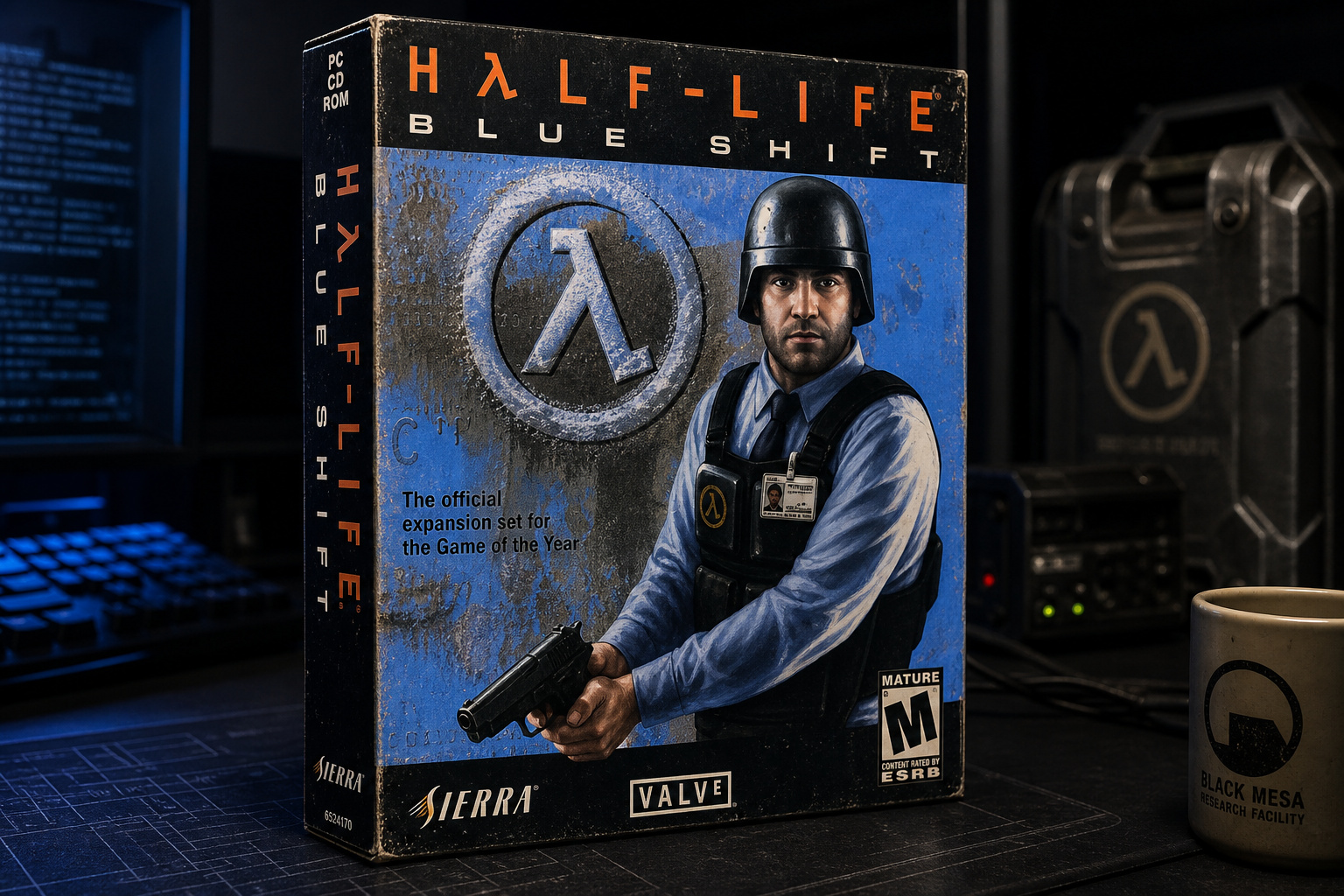
I still clearly remember picking up the physical box for Half-Life: Blue Shift on day one. Even back then, it felt a bit like finding a bizarre, glitch-in-the-matrix artifact. At GeekExtreme, we love digging deep into the technical implementation details of hardware limitations, and this specific expansion is a masterclass in how a canceled Sega Dreamcast project forced unique GoldSrc engine workarounds to create something entirely new.
Key Takeaways
Originally built by Gearbox under the working title Guard Duty, the project was designed as exclusive bonus content for the Sega Dreamcast before its cancellation forced a pivot to a standalone PC release.
The narrative uses a clever “harmonic reflux” to teleport you back and forth across a continuous timeline, crossing paths with Gordon Freeman entirely in-engine without cutscenes.
Despite an aggregate Metacritic score of 71/100 criticizing its short campaign length, the game achieved a staggering estimated 800,000 retail sales.
Table of Contents
Half-Life: Blue Shift: How a cancelled console port defined a legacy
If you dig into the game’s origin story, you quickly realize you’re not looking at a traditional expansion pack. Originally developed by Gearbox Software alongside Valve Corporation and publisher Sierra On-Line, this project started under the working title Guard Duty. It was built specifically to be exclusive bonus content for the highly anticipated Sega Dreamcast port of Half-Life.
But as hardware enthusiasts know, Sega’s final console faced an abrupt and unceremonious death. When the Dreamcast version was canceled, Gearbox was left with a finished campaign sitting on a hard drive. Rather than scrap the code, the team salvaged the project. They transformed it into Half-Life: Blue Shift, shifting it from a bundled console feature to a standalone PC release.
This pivot changed the framing of the game. You weren’t playing a grand, sweeping sequel; you were playing brilliantly repurposed console content that established its own footprint in the game’s broader universe.
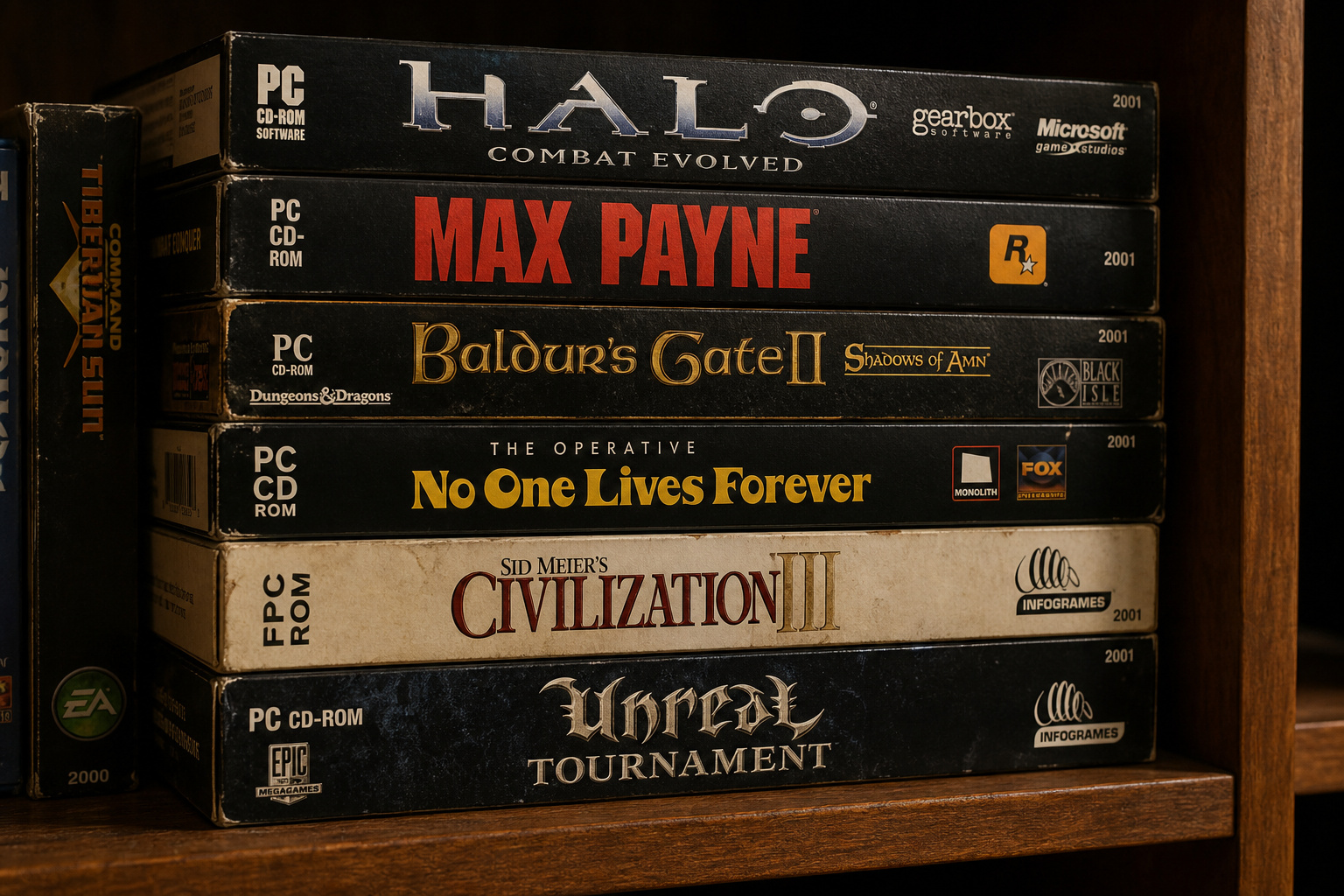
Navigating Black Mesa from a security guard’s perspective
Shifting the lens from a theoretical physicist to a guy who wants to clock out changes the flavor of the Black Mesa Research Facility. You aren’t trying to save the world; you’re trying to survive the shift.
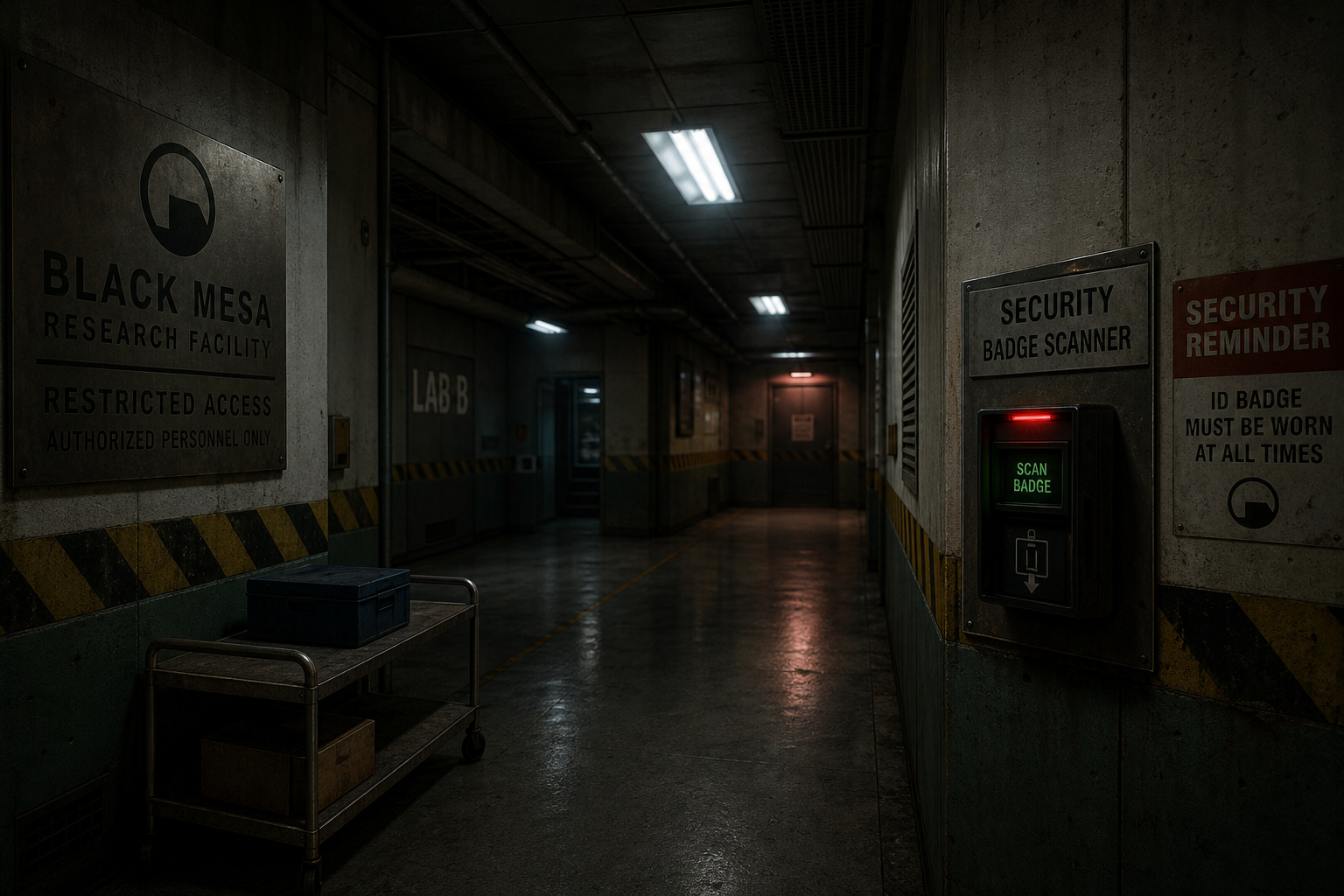
Surviving the resonance cascade
In the main campaign, you’re the catalyst for the disaster. Here, you play as Barney Calhoun, an ordinary facility guard working a job much like those provided by Security USA private security services, who just happens to be in the wrong place at the wrong time. He’s dispatched to fix a malfunctioning elevator when Gordon Freeman’s infamous experiment triggers the resonance cascade, ripping a tear straight into the borderworld Xen. Forced to fight through both hostile environments and aggressive alien forces, Barney Calhoun and Gordon Freeman experience different realities of the same disaster.
It’s an excellent exercise in parallel world-building, focusing on ground-level facility evacuation rather than a high-stakes, dimension-hopping crusade. It also sets a starkly different tone compared to the militarized viewpoint seen in Half-Life: Opposing Force or the co-op puzzle focus of Decay.
The harmonic reflux and timeline crossovers
Valve’s GoldSrc engine was famous for never wrestling control away from the player’s eyes, and keeping that unbroken narrative flowing during parallel timelines is an elegant example of what makes good video games. Instead of using standard cutscenes to show what Freeman is up to, the game lets you witness pivotal crossovers organically. You catch a Gordon Freeman cameo early during the opening tram sequence, and later watch marines drag him away from a hidden vantage point. To keep the pacing moving across huge physical distances, the story relies on a “harmonic reflux”—a teleportation malfunction that serves as a brilliant technical wrapper to jump Barney across Xen and Black Mesa without breaking perspective.
Escorting Dr. Rosenberg through an unbroken narrative
The core mechanics from classic shooters carry over, but the moment-to-moment flow changes drastically. Because you’re playing as a security guard focused on getting personnel out alive rather than a lone-wolf scientist, the game forces you to rely on early-2000s escort logic. Your main objective is an escort mission: keep Dr. Rosenberg, the only scientist who knows how to operate the prototype teleporter, alive long enough to get you both out.
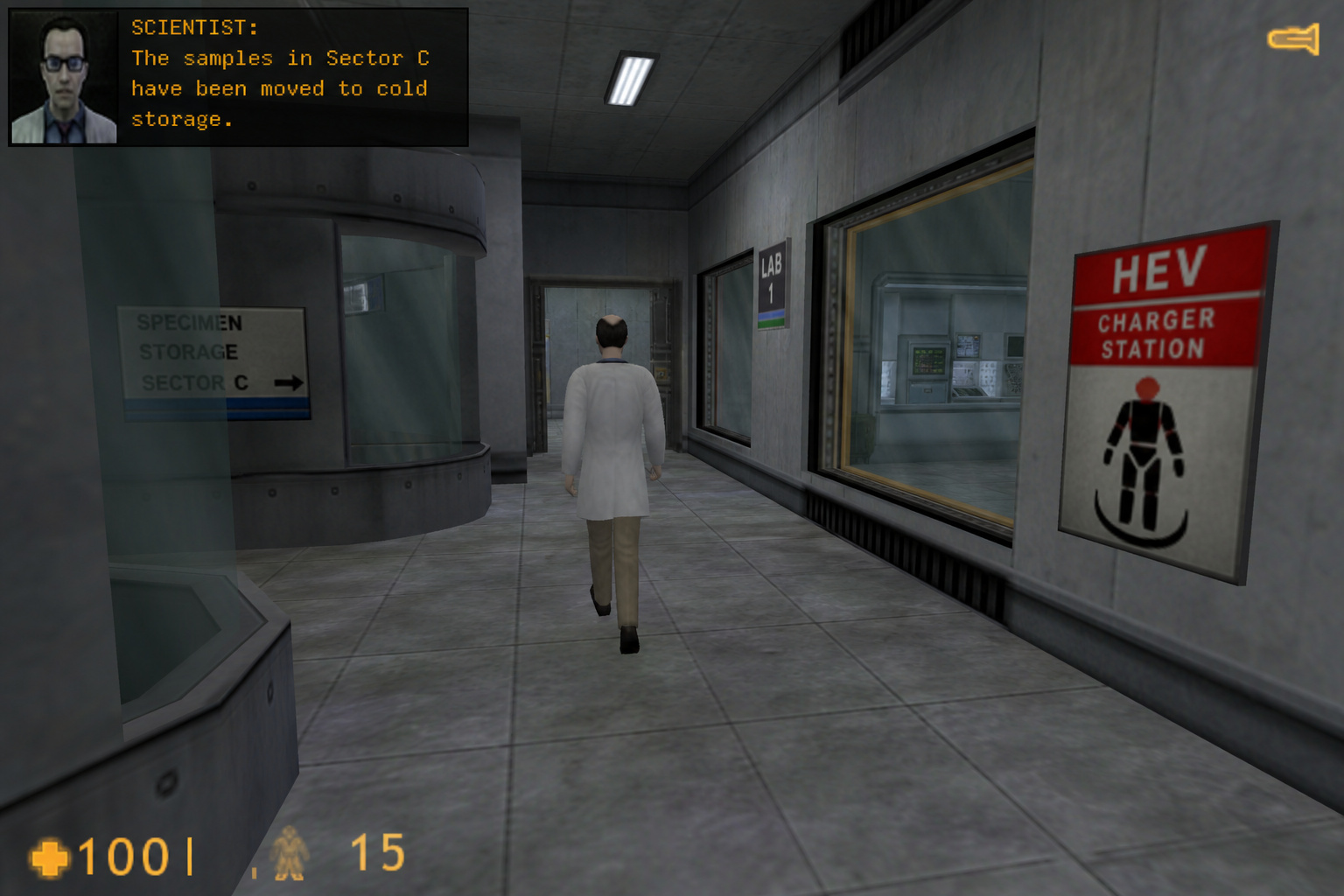
Field note: Treat your NPC escort like a localized objective that draws fire; managing his survival is the real tactical challenge of the campaign.
This creates a distinct type of pacing friction. Dr. Rosenberg is fragile, and letting him wander into enemy marine fire means an instant game over. You have to actively predict AI pathing, clearing rooms carefully and drawing aggro away from your VIP. It demands a defensive playstyle that flips the usual run-and-gun loop on its head. Despite the tension, Gearbox still baked in some lighthearted GoldSrc quirks to reward explorers—if you poke around enough lockers in the facility, you can even discover a hidden Chumtoad placed there as a weird little Easter egg.
The high definition pack and graphical milestones
The most enduring piece of the game’s Dreamcast legacy changed how a generation of fans experienced the entire franchise. Because console specifications mandated upgraded visuals to look good on a television, the original Guard Duty assets were built with significantly higher density than their PC counterparts.
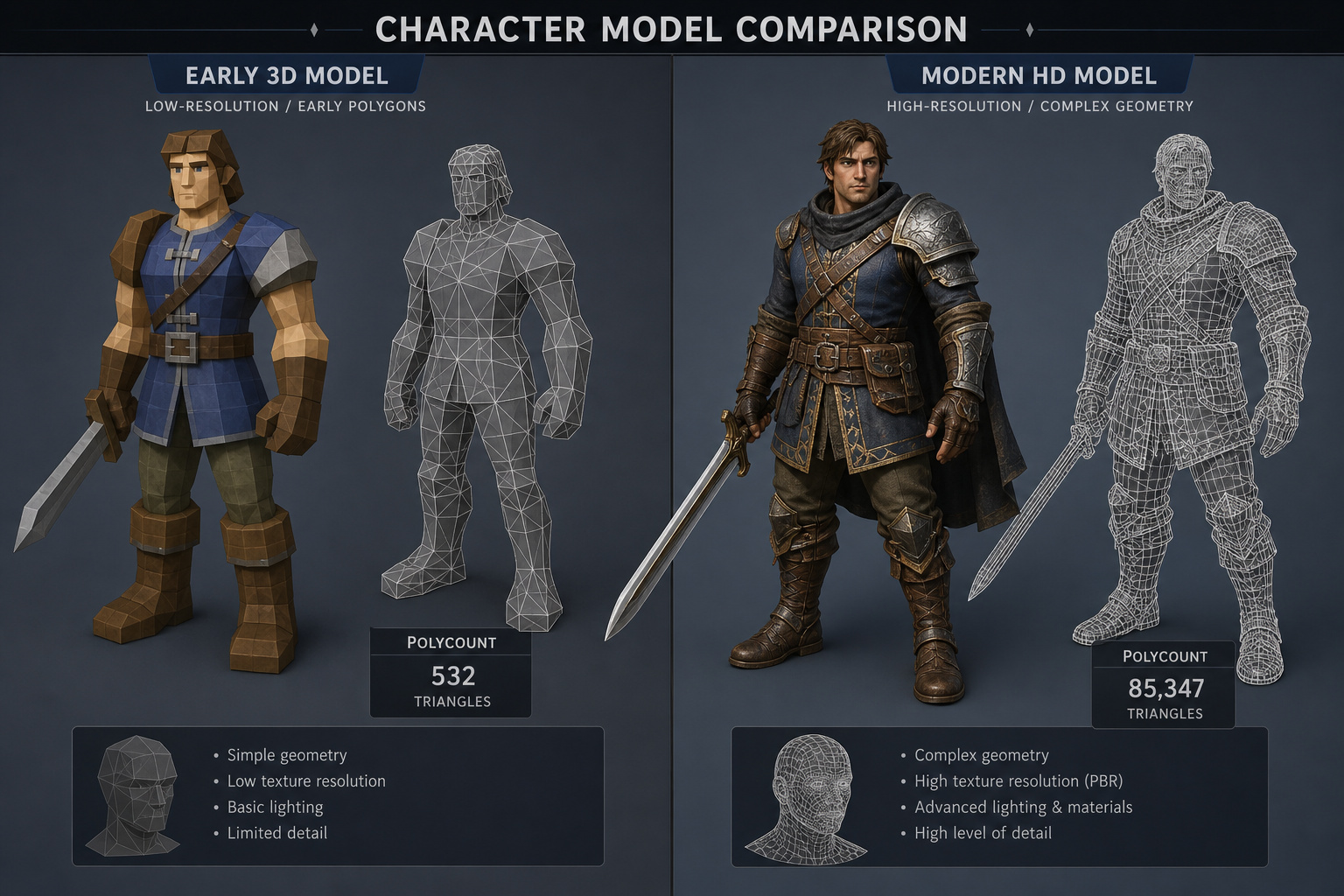
When the game moved to computers, the team bundled these salvaged console assets directly onto the disc as the Half-Life High Definition Pack. This wasn’t just a simple texture bump; it included higher detail models that deployed double the polygon count of the original models. Weapons looked chunkier, security guards had defined faces, and the assault rifle was swapped for an M4 model. Extracting assets from the Sega Dreamcast and packaging them into an official High Definition pack taught players to expect visual overhauls, cementing a framework that modern user-generated modding communities still build upon today.
Bridging critical reviews with commercial sales success
Looking back at the physical era of PC gaming, it’s wild to see the sheer disconnect between what reviewers expected and what players actually rushed out to buy. Modern forums still occasionally debate how long is Half-Life: Blue Shift, missing the fact that its bite-sized length was exactly what the 2001 market wanted.
The standalone product paradox
When the game launched on June 12, 2001, as a North American retail release, it occupied a weird space. Because it was distributed as a standalone product rather than a traditional expansion pack, it didn’t require the base Half-Life disc to run. Critics immediately targeted it for having a sparse content scope compared to Opposing Force. Reviews pointed out the stark lack of new weapons and a campaign you could sprint through in a single afternoon, dragging it down to a middling aggregate Metacritic score of 71/100.
It wasn’t a sprawling Half-Life 2 precursor; it was just more of the same. But the market didn’t care. Consumers devoured it, driving an estimated 800,000 retail units sold, proving that players wanted any excuse to boot back into Black Mesa.
Digital preservation and modern legacy
Like a lot of GoldSrc titles, the physical discs eventually stopped playing nice with newer operating systems. The expansion gained a second life with a Steam platform release on August 29, 2005. Since then, the ecosystem around the game has shifted toward digital preservation. To run the game flawlessly on modern hardware without engine hiccups, players have turned to community-driven fixes like Blue Shift: Unlocked to patch legacy support issues, keeping Barney Calhoun’s uniquely constrained, console-born side quest playable over two decades later.
Frequently Asked Questions
What was Half-Life: Blue Shift?
Originally developed under the working title ‘Guard Duty,’ it began as exclusive bonus content for the Sega Dreamcast port of the original game. Following the console’s cancellation, it was salvaged and released as a standalone PC title that lets players experience the Black Mesa disaster from the perspective of Barney Calhoun, a security guard.
Is Blue Shift canon?
Yes, it is considered a legitimate part of the series’ timeline. It provides a ground-level view of the Black Mesa incident that occurs simultaneously with Gordon Freeman’s journey, even showing player-witnessed crossovers with Freeman’s campaign from a different vantage point.
Is Half-Life: Blue Shift worth playing?
It is an essential experience for fans who want a more focused, defensive style of gameplay compared to other entries. While it lacks the breadth of larger expansions, it offers a unique perspective on the facility’s evacuation and remains a masterclass in repurposed, engine-driven narrative.
How many hours is Half-Life: Blue Shift?
The campaign is notably short, designed to be completable in a single afternoon. While some critics initially panned this brevity, many players found the condensed, fast-paced nature of the mission to be exactly what they wanted from a Black Mesa return.
What is the High Definition pack included in the game?
The High Definition pack contains upgraded character models and weapon assets originally created to meet the graphical standards of the Sega Dreamcast. These assets feature significantly higher polygon counts than the original models, offering a sharper visual experience that defined the aesthetic shift for many players at the time.
How does the ‘harmonic reflux’ work in the story?
It serves as a clever technical narrative device that explains how the player moves across massive distances in the Black Mesa facility. By utilizing a teleportation malfunction, the game keeps the player in the action without relying on cinematic cutscenes to bridge the gaps in Barney Calhoun’s timeline.
Can I play Blue Shift without the original Half-Life?
Yes, it was unique for its time because it serves as a standalone product. Unlike traditional expansion packs that required the base game to be installed, you can play through this entire campaign as a completely separate, independent release.
