
Searching for “party games for adults” usually returns the same tired results: family-friendly board game adaptations, games that assume drinking is the main event, or lists that don’t actually filter for what makes a game work when you’re 30 and your friends have different tolerances for cringe.
Here’s the thing: finding online social games for adults that don’t require downloads, don’t get awkward after two rounds, and actually respect your time is harder than it should be. Most lists just rank by popularity. This one ranks by what actually works for grown-up gatherings — the games that have survived real game nights with real friend groups.
Here’s what we looked for: browser-based (no downloads, no installs), minimal sign-up friction, supports the 4-10 player sweet spot, works in-room or over video call, and free-to-play prioritized. Nine of the top 10 are free. Every single one was chosen for adult-specific social dynamics — not because it happens to work for adults.
Key Takeaways
The top 10 list includes 9 free, browser-based games ranked by real social dynamics — Pretend You’re Xyzzy (#1, 4.2 rating) leads for its custom deck feature that keeps Cards Against Humanity-style play from getting stale
Gartic Phone (4.7 rating, 4-30 players) is the highest-rated free game because its telephone-drawing chain makes bad artists the best players — the more questionable the drawing, the funnier the round
The best party game for your group depends on your specific social dynamics, not ratings: competitive groups should start with Secret Hitler Online (#2, 4.5), creative groups with Venns with Benefits or Ransom Notes, and chill groups with Never Have I Ever Online
Table of Contents
The Top 10 Online Party Games for Adults (Ranked)
Here’s the quick-decision table. Scan it, find where your group lands, then dive into the write-up.
| Rank | Game | Players | Difficulty | Price | Rating | Best For |
|---|---|---|---|---|---|---|
| 1 | Pretend You’re Xyzzy | 3-20 | Easy | Free | 4.2 | Creative, inside-joke groups |
| 2 | Secret Hitler Online | 5-10 | Medium | Free | 4.5 | Competitive, betrayal-loving groups |
| 3 | Jackbox Party Pack | 3-16 | Easy | Paid | 4.7 | Mixed groups, zero-setup play |
| 4 | Never Have I Ever Online | 3-20 | Easy | Free | 4.0 | Icebreakers, casual hangouts |
| 5 | Gartic Phone | 4-30 | Easy | Free | 4.7 | Creative, big groups |
| 6 | Werewolf Online | 6-20 | Medium | Free | 4.2 | Intense social deduction |
| 7 | King’s Cup Online | 3-10 | Easy | Free | 4.1 | Drinking game nostalgia |
| 8 | Poker Now | 2-10 | Medium | Free | 4.6 | Strategy-minded groups |
| 9 | Spyfall Online | 3-12 | Easy | Free | 4.3 | Quick rounds, high tension |
| 10 | Truth or Dare Online | 2-15 | Easy | Free | 3.9 | Flexible, customizable vibes |
Pretend You’re Xyzzy
3-20 players, Easy, Free, Rating: 4.2
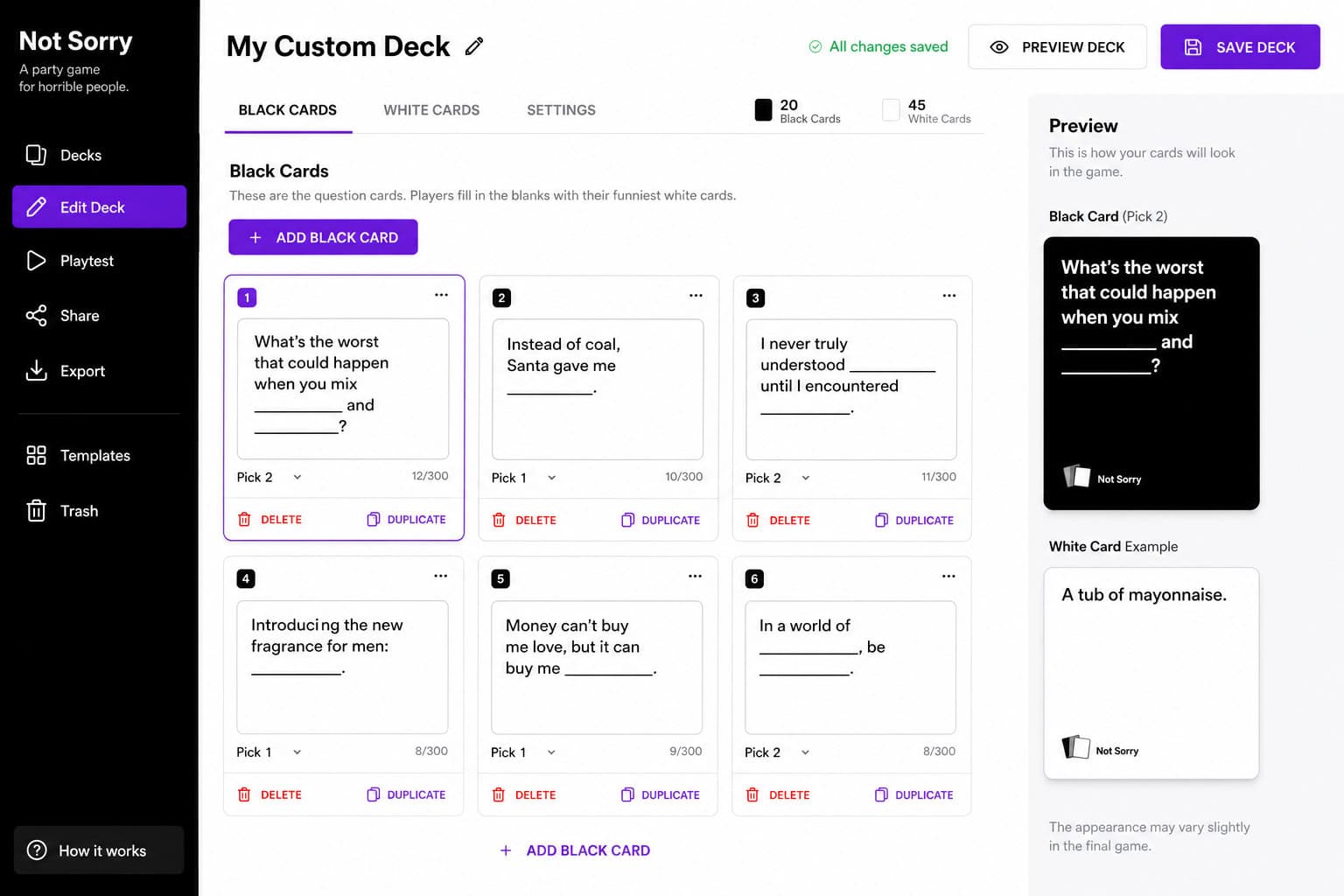
This is the digital version of Cards Against Humanity — free, browser-based, and the custom deck feature is the killer app. When the official game gets stale or you want to tailor the humor to your specific group, this is where you go. You can make your own cards or pull from community-created ones, which keeps things from getting old fast.
The 3-20 player range means it scales from a small hangout to a full house. No downloads, just a link. That’s the whole point of browser-based: zero friction, everyone’s in immediately.
Best for: Groups that love Cards Against Humanity but want fresh material, or friend groups with enough inside jokes to build custom decks around.
Secret Hitler Online
5-10 players, Medium, Free, Rating: 4.5
Political deception where trust is the only currency — and it’s always in short supply. Nothing splits a friend group faster. You’re constantly weighing who to trust and who’s feeding you lies, and it gets intense fast.
The medium difficulty is real. This is not a casual pick-up game. Your group needs to be ready to lie through their teeth and handle the fallout. When it clicks, though, it’s electric — every round is a battle of wits where the stakes feel genuine even though nobody’s actually losing anything.
Bottom line: Only for groups that genuinely enjoy betrayal as entertainment — if your friends take accusations personally, skip this one.
Best for: Groups that want real tension, not just casual fun. Skip this one if your friends take accusations personally.
Jackbox Party Pack
3-16 players, Easy, Paid, Rating: 4.7
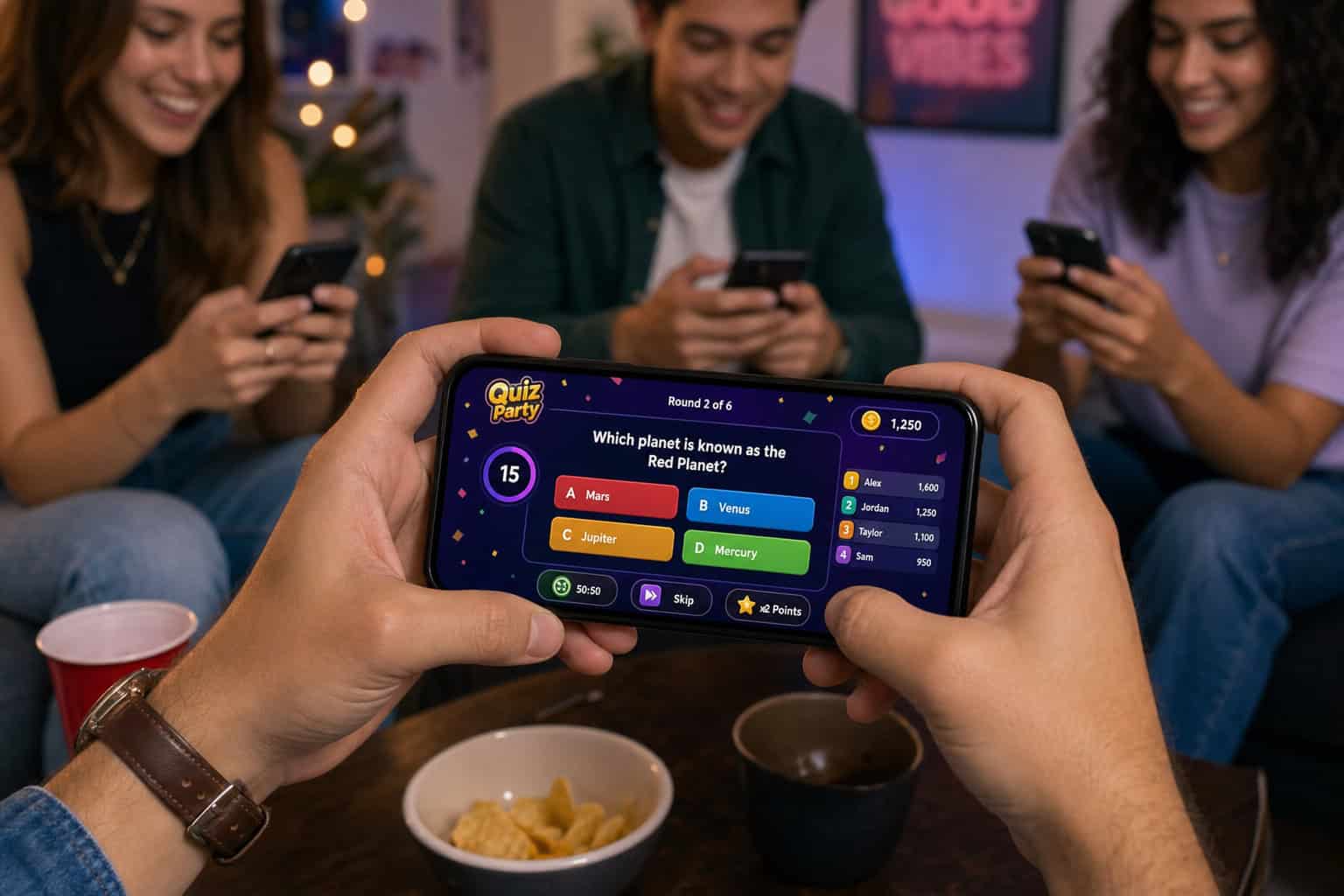
The only paid game in the top 10, and it earns every dollar. Multiple packs, each with a mix of games — Quiplash and Fibbage are the standouts. Phone-as-controller is genuinely genius: no extra hardware, no pairing issues, everyone just pulls up the game on their phone and you’re off.
The production value and polish justify the cost. Free alternatives are solid, but Jackbox is the one you actually pay for because the experience is that much smoother.
Best for: Mixed groups where some people are less into gaming. The zero-setup phone controller means even the most tech-hesitant friend is in within seconds.
Never Have I Ever Online
3-20 players, Easy, Free, Rating: 4.0
The classic pregame ritual, now digitized. Same game you’ve played a hundred times, but the digital interface keeps things moving — no physical cards, no awkward silence while someone thinks of a question.
Essential note: it works with whatever you’re drinking. Mocktails, soda, water — no pressure to drink alcohol if that’s not your vibe. The game is the same either way.
Best for: Familiar fallback game that requires zero explanation. Reliable for any group size.
Gartic Phone
4-30 players, Easy, Free, Rating: 4.7
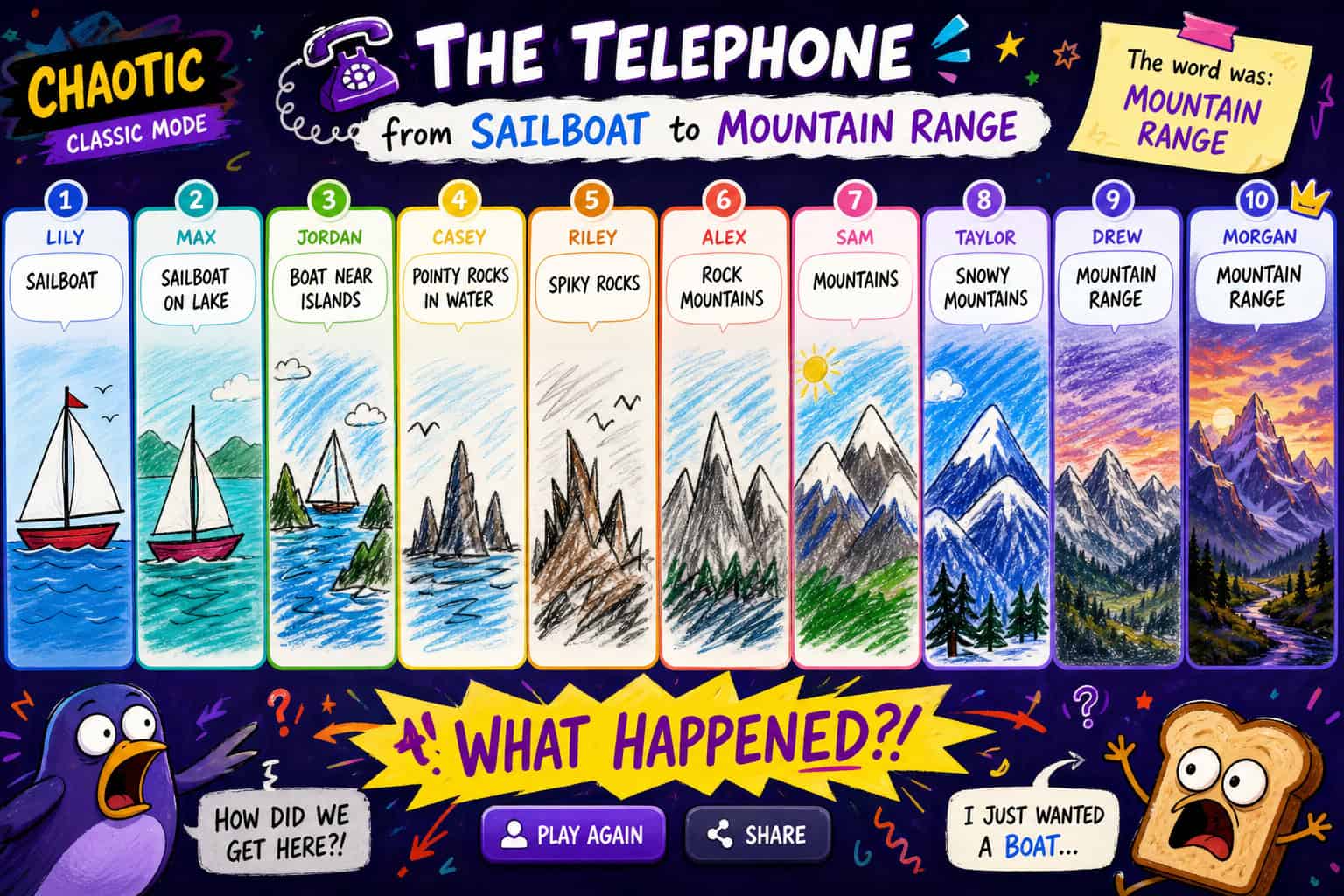
The highest-rated free game on the list, and for good reason. It’s Telephone meets Pictionary, and the results are comedy gold. The telephone chain is the whole point: you draw a prompt, someone guesses, someone draws the guess, and by the end you’ve got a masterpiece that’s completely unrecognizable from the start.
Here’s the key insight: being a “bad” artist makes you a better player. The more questionable the drawing, the funnier the chain. The grand reveal at the end — seeing how “sailboat” became “shark fin” became “mountain range”, is pure comedy.
The 4-30 player range makes it perfect for big groups or virtual hangouts where everyone wants in.
Best for: Creative groups, big gatherings, anyone who doesn’t take themselves too seriously.
Werewolf Online
6-20 players, Medium, Free, Rating: 4.2
Classic social deduction, browser-native. Villagers try to root out the werewolves before they get picked off one by one. Heated accusations and dramatic betrayals are the name of the game — it’s all about reading people and convincing the group.
Needs a decent-sized group to work — 6 is the minimum, and it really shines at 8+. When it clicks, every round is a battle of wits where your ability to read a room is your only weapon.
Best for: Groups that love Werewolf or Mafia already. Social deduction at its most intense.
King’s Cup Online
3-10 players, Easy, Free, Rating: 4.1
The classic drinking game, now fully digital. Same rules, same chaos, but no physical cards or cups to clean up. The interface handles the rules and card draws automatically, so you just follow along.
It’s the same game you know from college parties. All the fun, none of the mess.
Best for: Smaller groups that want a familiar game with a digital twist. Nostalgia factor is strong.
Poker Now
2-10 players, Medium, Free, Rating: 4.6
Private poker rooms where you can play with friends. No real money — just strategy and bluffing. This is the only game in the top 10 where skill actually matters. Poker rewards reading people and understanding odds, not just luck.
Private rooms mean you control who’s at the table. Perfect for a friendly game without randos dropping in.
Best for: Groups that want real strategy, not just party chaos. If your friend group has a poker night tradition, this is the browser-based version.
Spyfall Online
3-12 players, Easy, Free, Rating: 4.3
One spy, one location, zero mercy. Everyone knows where they are except the spy, who has to bluff their way through. The spy has to figure out the location without giving themselves away, while everyone else tries to smoke them out.

Quick rounds are perfect for between drinks or when you want to mix up the pace. Easy to jump in and out.
Best for: High tension in short bursts. Great warm-up game or palate cleanser between longer games.
Truth or Dare Online
2-15 players, Easy, Free, Rating: 3.9
The classic game with thousands of curated dares across three intensity levels. Hundreds of dares means you won’t run out of ideas. Three intensity levels let you dial it up or down depending on the crowd.
The lower rating (3.9) is worth acknowledging — dares can get repetitive after a few rounds, but the variety of content does help. Best used as a flexible option that works for any group size.
Best for: Groups that want customizable intensity. Start mild and escalate, or go straight to the spicy stuff.
Word Association & Rhyming Games
The key practical insight for this category: the timer. A 60-90 second timer forces spontaneous, funnier answers. Unlimited time kills the chaotic energy that makes these games work. It’s a simple fix most people miss, but it transforms the experience.
Ransom Notes
Word magnet game where you use random word cards to respond to a prompt. The judge picks the best (or funniest) response, and that player gets a point. Rotating the judge keeps the humor fresh — different people have different senses of what’s funny, so the game stays unpredictable.
The word magnets give you just enough constraints to be creative. You get a handful of random cards and have to build a response to a prompt. The results are often hilarious, sometimes surprisingly coherent.
Puns of Anarchy
Same genre, different approach. Massive pool of words means endless replayability — you can play for hours without seeing the same combination twice. You never know what combinations will come up, which is the whole point.
Best for: Game nights where wordplay is the main attraction. Skip if your group prefers visual or physical games.
Venn Diagram Logic Games
The real fun of this category isn’t the connection itself — it’s the debate and justification that follows. Turn logic into a performance.
Venns with Benefits
One player draws two random concepts (like “Taxes” and “Your Ex”), and everyone else submits a commonality. The example connection from the source: both “Ruin a Good Time.” The weirder the connection, the better.
60-second speed rounds keep the pace up — no time to overthink, just go with your gut. Playing in teams works well for larger groups, where you can collaborate on connections and argue about which one is best. Award creative points for out-of-left-field answers.
In practice, the weirdest connections often win because they spark the best debates. The judge’s pick is less important than the argument that follows.
Trivia & Bluffing Hybrids
Your ability to craft a convincing lie is often more valuable than factual knowledge. These games reward reading people, not knowing things. The person who wins isn’t the smartest — it’s the one who can lie most convincingly.
Quiplash (Jackbox)
Players submit bluffs, then everyone votes on which answer is correct. The bluffs that sound most plausible are the ones that trip people up. You score points for guessing right AND for each person who votes for your bluff. The dual scoring is the clever part — you want to be right, but you also want to be convincingly wrong.
Reading bluffs with a straight face is half the fun. The delivery matters as much as the content.
Fibbage (Jackbox)
Trivia bluffing. Players bluff answers to real trivia questions. The trivia questions are real, but the answers are all made up. You have to sound convincing even when you have no idea what the right answer is.
Wavelength
Tests how well you know your friends’ thought processes. You guess where your friends would place something on a spectrum — like “hot to cold” or “serious to silly.” Good-natured debate about where things fall on the spectrum is the core of the game, and the discussion is often funnier than the actual answer.
Best for: Mixed-skill groups where you want everyone on a level playing field. Knowledge isn’t the advantage — reading the room is.
Role-Playing & Improv Games
The magic happens when everyone buys into the absurdity. It’s not about performance — it’s about collaborative commitment. The “Yes, And…” golden rule applies: accept what someone establishes and build on it. These games make it easy to follow because the structure handles the awkward parts.
Fable-Fury
Fantasy adventure with light role-playing. Build wild characters and go on absurd quests without needing a heavy rulebook. Character example from the source: “a knight who’s afraid of squirrels.” No heavy rulebooks means you can jump in without a Dungeon Master or hours of prep. Just build a character and go.
Party Quirks
Four people act out a scene: one host, three guests. Each guest has a secret quirk the host doesn’t know about. Example quirk: sneezes when someone says a word starting with “E.” Another: pickpocket. The host has to figure out each guest’s quirk by interacting with them — asking questions, making observations, trying to catch them in the act.
Start with easy prompts, like “You’re trying to return a broken item to a store, but the clerk is a talking cat.” Keep a good pace with a facilitator to guide scenes and make sure no single person dominates.
Best for: Groups that enjoy performing, even badly. The structure handles the awkward parts.
Dexterity & Physical Challenge Games
Physical games create shared spectacle that purely cerebral games can’t match. The tension is real, the collapses are spectacular, and the victories feel genuinely earned. These are not just “filler” games.

Jenga
Remove blocks from a teetering tower. Simple, tense, and always a crowd-pleaser. A 30-second timer per turn keeps the pressure on — no time to overthink, just pull and hope. Create a stable arena on a solid, level table. You don’t want the tower to fall because the table’s wobbly.
Crokinole
Flick a disc across a board with precision. Steady hand required. Flicking a disc sounds simple, but the angles and force required make it surprisingly deep.
Throw Throw Burrito
Dodgeball card game. Combines card-matching with launching soft burritos at friends. It’s as ridiculous as it sounds. The burritos are soft, so it’s more funny than painful, but the chaos is real.
Ninja
Players stand in a circle. Countdown “Three, two, one, ninja!” Everyone strikes a pose. Then you can move one hand in a sweeping motion to try to hit another player’s hand.
If you hit someone’s hand, they’re out. The circle closes as players drop out. Go clockwise until down to two. First to hit the other’s hand wins.
The final showdown is always tense.
Best for: Groups that need to get up and move. Physical games create moments people remember and reenact.
Drawing & Sketching Games
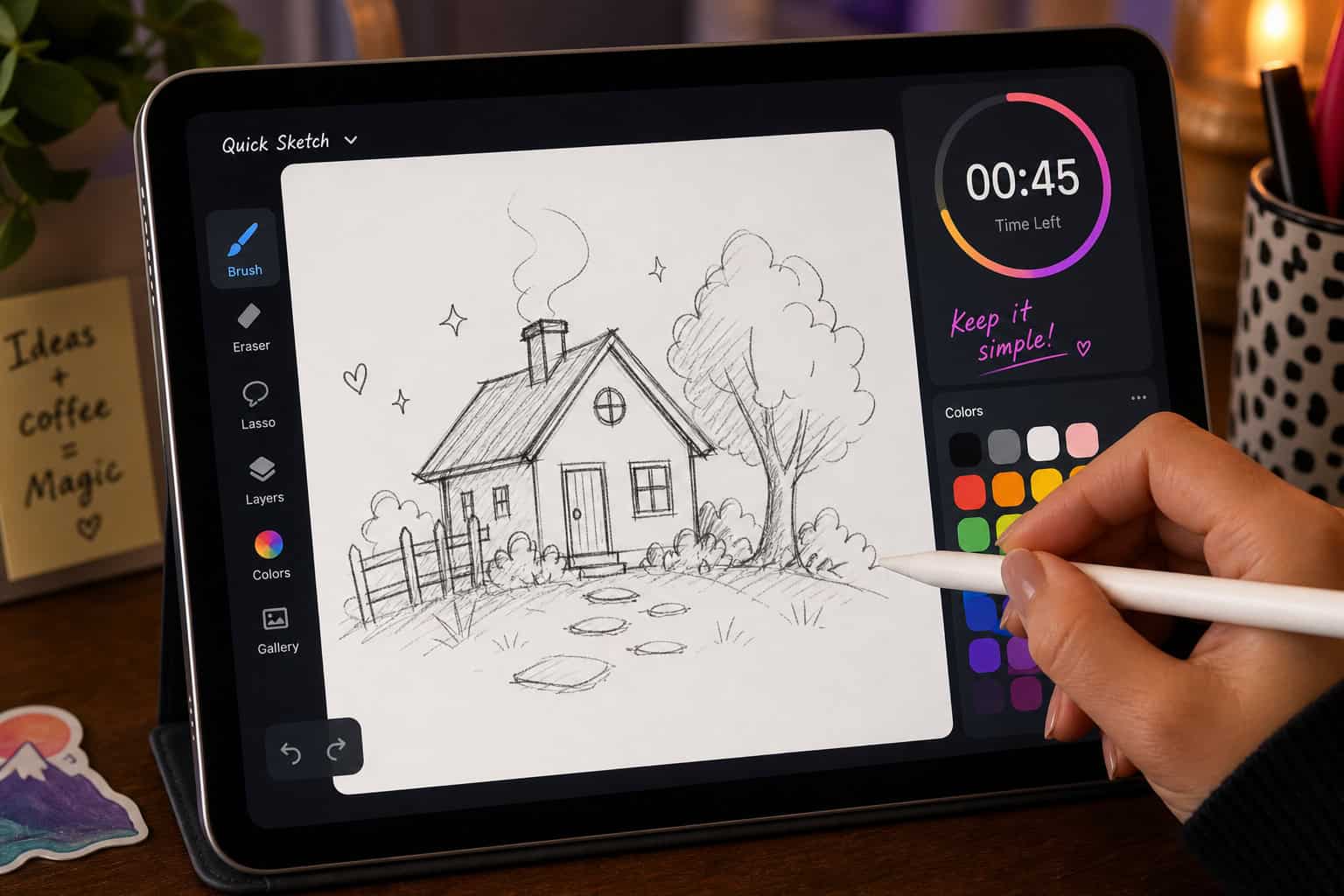
This category has a counterintuitive advantage: being a “bad” artist makes you a better player. The more questionable the drawing, the funnier the chain. The most memorable rounds come from players who embrace their lack of artistic talent. The ones who freeze up or refuse to draw miss the point entirely.
Telestrations
Drawing and guessing in chains. Each player gets a word, draws it, passes to the next person who guesses, then draws the guess. The chain continues until everyone’s had a turn. A 60-second drawing time limit keeps the pace up — no time to be a perfectionist.
The grand reveal at the end is where the magic happens. A chain transform like “sailboat” ? “shark fin” ? “mountain range” is pure comedy. Theme prompts add fun twists — “movies” or “things you’d find in a haunted house.”
Skribbl.io
Online drawing game, brings the fun to virtual hangouts. You draw a prompt, everyone guesses, and the first person to guess correctly gets points. Simple and effective.
Drawing Phone
Another digital take on the telephone drawing game. Similar to Gartic Phone, but with its own twist on the format.
Best for: Groups that love absurd visual humor. The worse the drawing skills, the better the game.
Hidden Role & Social Deduction Games
The most effective play comes from a group with diverse communication styles — one over-explainer, one deflector, one quiet observer who catches contradictions. The game shines when everyone finds their natural role.
Mafia
The original hidden role game. Villagers vs. mafia, with the mafia secretly eliminating villagers at night. Laid the groundwork for all modern social deduction — without Mafia, we wouldn’t have Werewolf, Secret Hitler, or Among Us.
The Resistance
Modern hidden role game that perfected the formula for smaller groups. No player elimination, just pure deduction. Spies vs. resistance, with missions and voting. Cleaner and faster than Mafia, and it’s one of the best social games free of quality you can find.

Among Us
Video game sensation that brought social deduction to the mainstream. Crewmates vs. impostors on a spaceship. The impostor mechanic is brilliantly executed — simple gameplay, real tension.
Bodies, Bodies, Bodies
Mafia variant where one player is randomly selected as the “murderer.” Lights are turned out, and everyone wanders in the dark. The murderer taps a player on the head to “kill” them. The killed player plays dead until discovered. When another player discovers the body, they shout “Bodies, bodies, bodies” — which triggers voting.
The more dramatic and drawn out the death, the better.
Murder Wink ‘Em
A person is killed when the murderer makes eye contact and winks. The more dramatic and drawn out the death the better.
Best for: Groups that love suspicion and deception. The drama is the point.
Cooperative & Team Games
A different kind of fun — the enemy is the game itself, not each other. The conversations and debates over the “best” move are often as fun as winning. Focus shifts from individual glory to shared success.
Pandemic
Cooperative disease curing. You’re all on the same team, trying to stop global outbreaks. Tense, strategic, and requires real coordination. The team-based approach creates genuine camaraderie — you win together or lose together.
Keep Talking and Nobody Explodes
One person sees the bomb, everyone else has the manual. Requires crystal-clear communication. The timer is ticking, the modules are complex, and you have to describe what you see while your friends look up the solution. It’s a test of teamwork and vocabulary.
Forbidden Island
Players collect treasures before the island sinks. Requires coordinating unique abilities — the pilot can fly, the engineer can shore up the island. You have to work together or you all lose.
Codenames
Team-based word association. Spymasters give one-word clues to help their teammates find their agents on a grid of words. All about making clever connections without hitting the assassin.
Gloomhaven
Epic campaign cooperative game. Not a quick party game — it’s a massive, long-term commitment. But for groups that want rich, ongoing storytelling, it’s incredibly rewarding.
Best for: Groups that prefer collaboration over competition. The shared win feels earned.
Storytelling & Narrative Chain Games
No winning or losing — only collaborative creation. The only goal is to create something wild and memorable together. Pioneered by the Surrealists a century ago, it’s still one of the best ways to create something weird and wonderful with friends.

Exquisite Corpse
Pioneered by the Surrealists. Each person adds a sentence or scene without seeing previous contributions. The results are often surreal, hilarious, and completely unexpected. No winning or losing — the process is the point. You’re making something together, not competing.
Fiasco
Adds rules and cards to guide the story. Prompts and constraints push the story in unexpected directions. The results are often chaotic and hilarious.
Once Upon a Time
Players use cards to build a fairy tale. Each card has a story element, and you have to weave them together.
Best for: Creative groups that want to make something together rather than compete.
Question-Based & Timer/Charades Games
These games move past surface-level chatter. You learn genuinely interesting or weird things about people you thought you knew. The structure handles the awkwardness of getting personal.
Two Truths and a Lie
Players write down guesses and reveal simultaneously to build suspense. The simultaneous reveal is key — prevents people from following the crowd. Vote in secret to keep it honest. Encourage storytelling after the reveal, the best part is hearing the stories behind the truths and the creativity behind the lie.
Taboo
Describe words without forbidden terms. It forces you to think sideways and often results in hilarious descriptions. 30-60 second timer keeps the pressure on.
The Game of Things
Players respond to prompts with written answers. Prompts like “Things you shouldn’t say at a funeral” or “Things that are overrated.” The judge picks the best one.
Charades
Act out words or phrases without speaking. Timeless, simple, always fun. 30-60 second timer per round.
Hot Seat
One player sits in the hot seat, everyone else asks questions. 1-3 minute timer. Questions can be juicy, thought-provoking, or silly. Example: “Who do you have a crush on right now?” — the kind of question that can get awkward fast, which is part of the fun.
Ruin A Movie By Changing One Letter In The Title
Change one letter in a movie title and summarize the new movie. Examples: Beauty and the Feast, Star Wart, Hairy Potter, Tot Gun. Each one is a mini-comedy sketch waiting to happen.
Best for: Groups that want to learn weird things about each other. These games work because the format does the heavy lifting.
More Hidden Role & Social Deduction Variants
Bonus games for groups that want even more options.

Mao
Only the dealer knows the initial rules. Players cannot be told the rules — they learn by watching the dealer’s actions. If you break a rule, you get a penalty card. It’s frustrating and brilliant in equal measure. The winner can create their own permanent rule, which makes each game unique.
What Are The Odds?
Daring challenge game. One player names odds, the other decides whether to accept a dare.
Pangea
Guessing connections between seemingly unrelated things. Like Codenames but with a different twist.
More Question-Based & Icebreaker Games
Sometimes you need variety. Here’s a catalog of simple, no-setup games.
Party Classics
- Reverse Charades: one person guesses while all others act it out. Best played with good friends because you will look ridiculous.
- Comedian: one person tries to make others laugh while they have a beverage in their mouth. If you spit out your drink, you lose.
- Mirror Charades: charades variant.
- Charade Whispers: combines charades and telephone game.
Wordplay
- **Before and After: ** chain word association. Going to school house rock the boat Captain Jack Sparrow.
- Dictionary: word-definition game.
- This or That: binary choices like “sugar or video games.”
- Wiki Top List Trivia: top 10 or top 20 lists used. Each person gets one or two guesses. Scoring: 1 point for #1, 2 points for #2, etc.
Silly Challenges
- Chubby Bunny: marshmallows added one by one until “chubby bunny” cannot be said.
- Cookie Pocket: someone sneaked 12 cookies into a coat.
- Ostrich Dance: This usually results in my students spinning around in a circle and attempting wrestling moves on each other.
- Balloon Duel: physical party game.
- Spoons: objective is four of the same cards. Spoons in the middle, one less than number of players.
Social/Question Games
- Drink While You Think: trivia questions while drinking.
- Bottle Up: spin a bottle, answer questions.
- Paranoia: write a secret about someone else, guess who wrote what.
- The Voting Game: example card — “Who would have the worst passenger rating on Uber?”
- Fishbowl/Monikers/Salad Bowl/Names in a Hat: requires pens, paper, and a bowl. Each player writes 3-5 names.
Guessing Games
- Sardines: classic hide-and-seek variant.
- Who Am I?: classic guessing game.
- What’s That Strange Thing?: visual guessing game.
How to Choose the Right Game for Your Group
The best party game for your group depends on your specific social dynamics, not on ratings or popularity. A competitive group will hate a chill drawing game, and vice versa.
Group size matters most. The 4-10 player sweet spot covers most adult gatherings. Smaller than 4? Go with Poker Now, Codenames, or cooperative games. Larger than 10? Gartic Phone, Werewolf Online, and Never Have I Ever Online scale well.
Setting changes everything. In-person games can include physical options like Jenga, Ninja, or Throw Throw Burrito. Over video call, stick to browser-based options with good turn structure — Jackbox, Gartic Phone, and Spyfall work across the gap.
Desired vibe is personal. Competitive groups: Secret Hitler Online, Poker Now. Creative groups: Pretend You’re Xyzzy, Telestrations, Ransom Notes. Silly groups: Gartic Phone, Throw Throw Burrito. Chill groups: Never Have I Ever Online, Two Truths and a Lie.
Time commitment varies. Quick rounds (under 10 minutes): Spyfall, Quiplash, Two Truths and a Lie. Medium sessions (20-40 minutes): Secret Hitler Online, Werewolf Online. Long sessions (hour+): Poker Now, cooperative campaigns.
Budget is rarely a barrier. Nine of the top 10 are free. Jackbox is the only paid option, and it earns the cost.
A Note on Responsible Play
Let’s address the alcohol question directly: drinking is always optional. Every game listed works with mocktails, soda, or a “sip of water” rule. No game requires alcohol to be fun.
Choose age-appropriate content for your group. Keep the raunchier decks for consenting adults only. For workplace or mixed-company game nights, favor the work-safe options: two truths and a lie, drawing games, social deduction.
The best adult party games are not defined by alcohol or shock value. They’re defined by social dynamics that adults actually enjoy.
Games for Large Groups and Remote Teams
Large group games need to scale without losing engagement. These are designed to solve the “too many people, not enough engagement” problem.
Ultimate Game Show
10 to 200+ participants. High-energy, fully facilitated.
Jury Duty
Nearly two hours. Suitable for long virtual events.
Space Station 13
Excellent for team building due to collaboration and unexpected challenges.
Just One
Requires little prep. Top online party game for large groups.
Powerline.io
Control a glowing line. Collect colorful dots to grow longer. Avoid other players’ lines or edges. Browser-based, no downloads.
Name Ten Things
Two teams take turns guessing items from a category within 60 seconds. One point per correct guess. Example categories: dog toys, board game titles, Marvel superheroes.
Balderdash Tournament
Dasher picks an obscure word. Other players create fake definitions. Players vote on which is real.
Coworker Feud
Based on Family Feud. Teams answer fun prompts. Brings out the competitive side.
Emoji Sentences
Players write sentences made of emojis. Others guess the meaning. Example: sick emoji + thermometer = “I am feeling sick today.”
Can You Hear Me Now
Speaker describes an image without showing it. Others draw based on description. Example: describing “sun” as Draw a circle in the middle of the page, with multiple triangles on the edges of your circle.
Best for: Remote teams, large gatherings, structured events.
The best game is the one that gets played. Skip the overthinking. Just pick one and start.
Frequently Asked Questions
What are some social games online?
Browser-based party games like Pretend You’re Xyzzy, Gartic Phone, and Secret Hitler Online let you play with friends without downloads. Most are free and support 4-10 players, making them ideal for adult game nights.
What’s the best free online party game for a group of 8 adults?
Gartic Phone handles 4-30 players and is the highest-rated free option. The telephone-drawing chain makes bad artists the best players, and the grand reveal at the end is pure comedy for groups that don’t take themselves too seriously.
What’s the difference between Gartic Phone and regular Pictionary?
Gartic Phone is Telephone meets Pictionary — you draw a prompt, someone guesses it, then the next person draws that guess, and so on. The chain transforms simple prompts into completely unrecognizable results, and being a bad artist actually makes the game funnier.