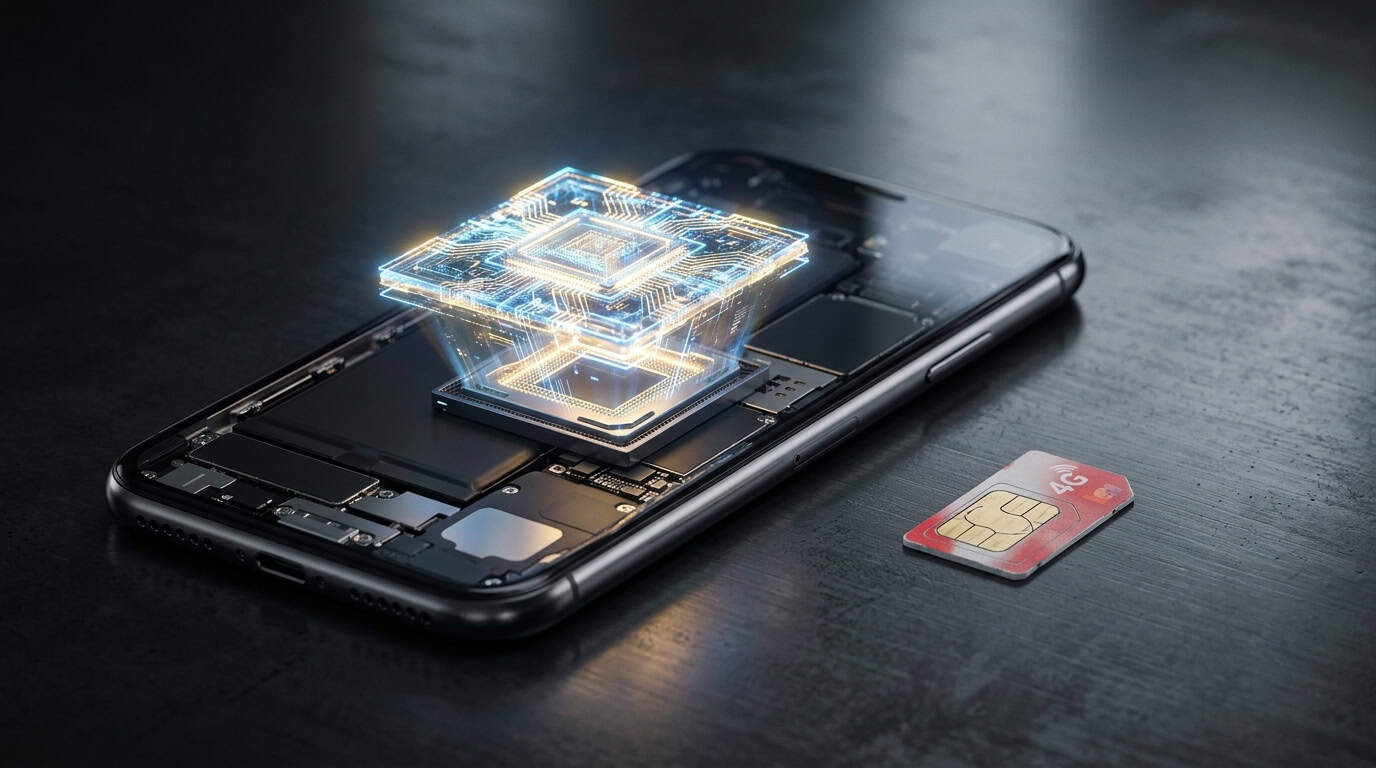
An eSIM and a physical SIM card perform the exact same authentication function to connect your device to a network, but migrating to a digital platform fundamentally upgrades functionality for travelers. I get asked this question constantly over at GeekExtreme, especially from parents and baby boomers who feel intimidated by losing tangible phone features, so let me be explicit.
Transitioning to a purely digital connectivity setup is an intentional user-experience upgrade, not just a confusing hardware deprecation forced by manufacturers. For people who love to jump borders, ditching the plastic for eSIMs is simply superior.
Key Takeaways
Legacy providers are actively punishing long-term customers, as highlighted by a CNET report showing your AT&T Unlimited Plan could cost $20 More Each Month starting in April 2026.
Across Apple’s 50-Year Legacy of product development, eliminating the physical tray—a controversial move solidified in the U.S. by the iPhone 14—marks a massive step in regaining internal chassis space for larger batteries.
An entirely digital setup secures a device biometrically, effectively neutering the passive security flaw of a thief physically ejecting an unauthenticated chip.
Table of Contents
Is an ESIM Better Than a SIM Card? a Complete Head-to-head Comparison
Yes, an eSIM is fundamentally better than a physical SIM card, specifically because it permanently eliminates the physical anxiety of traveling with easily lost, microscopic microchips. Bypassing exorbitant legacy carrier fees by downloading prepaid eSIM plans online instantly changes the economics of international travel, particularly if you rely on heavy data for streaming media while waiting in foreign transit hubs. This shift away from legacy hardware brings a massive, somewhat ironic benefit to older generations seeking simplified device interactions, completely avoiding the need to balance tiny components on an airplane tray table.
To make evaluating these options easier, here is a direct comparison of how the two standards stack up.
| Feature Category | Physical SIM Card | eSIM (Embedded SIM) |
|---|---|---|
| Form Factor | Removable, microscopic plastic chip | Motherboard-welded silicon chip |
| Activation | Manual insertion via specialized tool | Digital download via Wi-Fi |
| Travel Access | Requires visiting local stores abroad | Activate instantly upon arrival |
| Security Risk | Easily stolen or swapped if lost | Biometrically locked to device |
| Device Swapping | Instant, offline transfer to any phone | Requires internet and screen access |
To truly understand which standard is superior for your specific mobile setup, it helps to look at what is actually running inside your smartphone’s chassis.
How Exactly Does an ESIM Work Inside Your Phone Architecture?
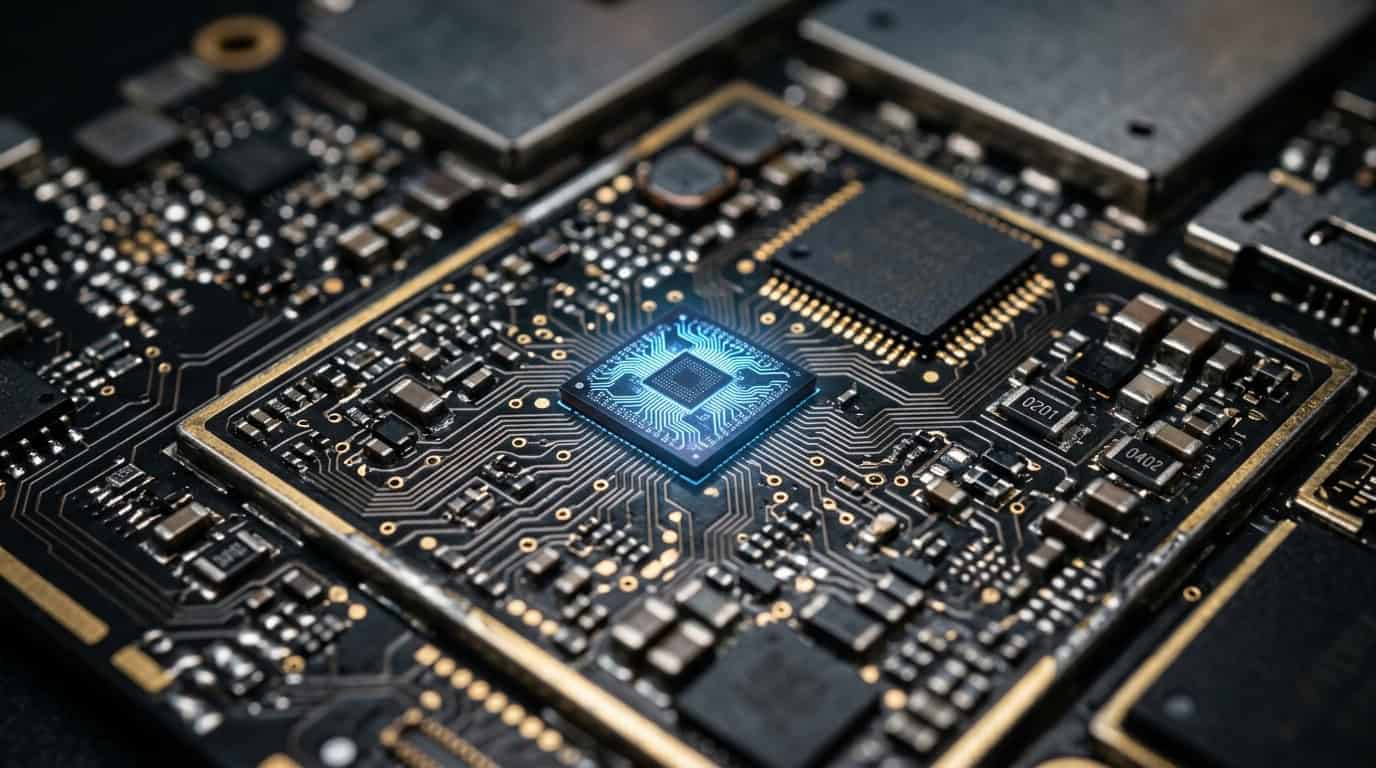
An eSIM is a permanent, rewritable security chip fused directly to your smartphone’s motherboard that downloads telecom profiles over Wi-Fi, functioning exactly like a physical card without the plastic shell. Unlike virtual software proxies like a Google Voice phone number, this is rigid hardware performing a cryptographic handshake with a cellular tower to authenticate your identity.
By eliminating the mechanical tray and external contacts found on traditional Nano-SIMs, smartphone manufacturers reclaim vital interior chassis space. This modern architecture allows for significantly larger batteries while removing a major vulnerability for water and dust ingress. Behind the scenes, the internal embedded hardware functions as a highly secure vault for your telecom identity. It shifts the entire verification process from an external string to a unique, internal EID number that mathematically locks your connectivity directly to the chipset.
The Passive Legacy of External Chips
A traditional physical chip is simply a memory module encased in a tiny piece of plastic. Its only job is to pass a unique verification key to your current network when instructed by the phone’s modem. Operating an external chip means the handset manufacturer must build a large mechanical tray mechanism into the edge of the device body. Reclaiming this chassis real estate allows designers to pack in more battery capacity while entirely eliminating a major point of water and dust ingress—a design philosophy largely similar to the industry shifting to Bluetooth audio and wireless earbuds over legacy 3.5mm headphone jacks.
The Integrated Motherboard Architecture
Instead of relying on an external card, an embedded digital chip accomplishes the exact same network authentication using internal hardware. Technically speaking, a traditional Nano-SIM relies on outdated external contacts, whereas bleeding-edge setups use an Embedded Secure Element (eSE) permanently soldered onto the logic board. Your device essentially acts as a secure vault for your telecom identity. Furthermore, older networks authenticate using an external IMEI string, while modern digital equivalents use a unique EID number generated specifically by the embedded hardware to lock your connectivity directly to the chipset.
Is an ESIM Safer From Hacking or Theft Than a Physical SIM Card?
Yes, an embedded digital profile is significantly safer from physical theft because a thief cannot manually eject the chip to bypass geographical tracking software or hijack your phone number. The hardware remains biometrically locked behind your device’s passcode, entirely disabling illicit access to intercepting calls or banking texts.
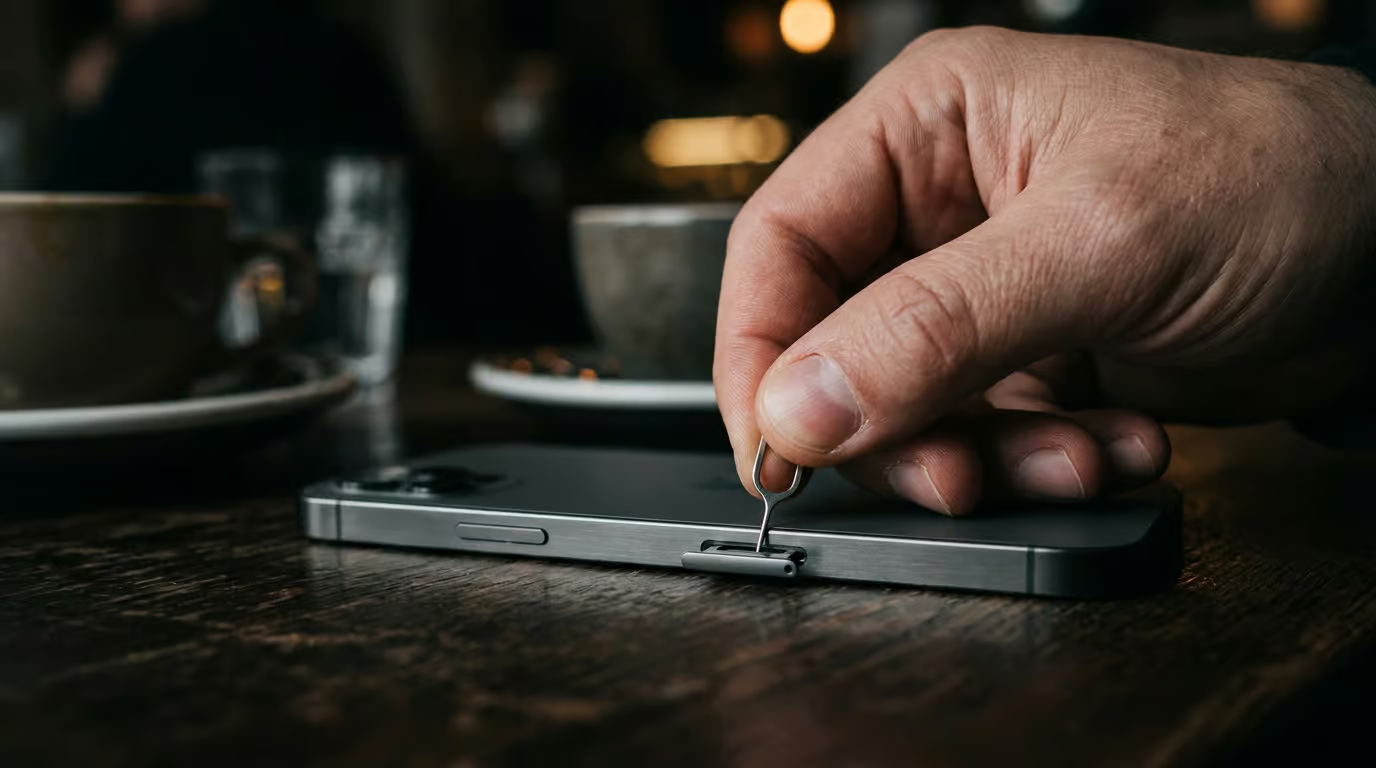
Relying on traditional removable media creates a massive, passive security liability that most users completely ignore. If a thief snatches an unprotected phone in a public space, they merely have to pop open the external tray with a basic tool to instantly silence the handset and vanish off the grid. Conversely, an integrated motherboard component acts as an invisible kill switch against these analog tactics. Without a physical card to remove, your stolen smartphone cannot sever its connection to nearby cellular towers, keeping the hardware trackable until the battery dies.
The Lingering Appeal of Manual Swapping
Despite the security upgrades, millions of users cling to traditional analog cards for a very specific type of familiarity. If your phone screen completely shatters—whether you are rocking an older Pixel 6 or a cheap backup phone—you can grab a substitute burner device and manually transfer your live connection in seconds without needing a Wi-Fi connection. This exact plug-and-play simplicity remains the primary defense for keeping tangible chips around. Moving delicate physical components between devices in a controlled office environment is easy, but performing the same swap organically while traveling is risky.

Passive Security Flaws and Mechanical Failure Points
Relying on removable media creates a massive, passive security liability that most users completely ignore. A thief who snatches an unlocked phone in public merely has to pop open the SIM Tray with a specialized Ejector Pin to instantly silence the device and vanish off the grid. Removing that physical component means your smartphone cannot ping nearby cellular towers. For anyone concerned whether eSIM phones are harder to steal, an embedded chip acts as an invisible kill switch that keeps a device stubbornly trackable until the battery dies.
“A thief who snatches an unlocked phone in public merely has to pop open the SIM Tray with a specialized Ejector Pin to instantly silence the device and vanish off the grid.”
Is It Cheaper to Buy an ESIM or a Physical SIM Card for International Travel?
Purchasing an automated digital profile through the settings menu of your iPhones, cellular tablets, or even an iPad is always cheaper for international travel than relying on your domestic carrier’s opaque daily usage fees. Utilizing a digital local provider directly prevents the predatory bill shock that often ruins post-vacation finances.

Bypassing Legacy Telecom Monopolies Instantly
Telecommunications providers unfortunately rely on consumer laziness to drive up their profit margins. Knowing that your domestic AT&T invoice might suddenly force you into paying $20 More Each Month due to aggressive pricing hikes is concerning enough at home, but competitors like T-Mobile 5G and Verizon 5G are equally relentless. Taking that same unoptimized phone overseas, where a single text string might trigger a massive daily access charge, is a punishing expense. Downloading a digital telecom profile via a hotel connection permanently overrides that carrier monopoly, shifting operational power strictly to the consumer.
The Demographic Advantage of Profile Aggregation
Digital integration offers a massive architectural feature known as profile aggregation, which lets a traveler store up to eight disabled secondary profiles on a single device simultaneously. Instead of paying ridiculous Data Roaming fees to a legacy monopoly, fliers simply activate a regional connection through a Local MVNO the moment their flight hits the tarmac. Getting online before passing through customs is remarkably convenient, and it fully eradicates the need to carry a vulnerable protective wallet filled with tiny microchips in your luggage.

Can I Have Both an ESIM and a Regular Physical SIM Active on the Same Phone?
Modern smartphones seamlessly support operating an embedded digital profile and a physical card concurrently, letting you allocate expensive internet access to a cheap travel profile while keeping your domestic line awake for text alerts. This combined approach elegantly disarms a common scenario known as the two-factor travel pitfall.
Most travel bloggers neglect to warn users that completely disabling a native connection abroad instantly severs access to critical banking notifications. If you pull out your home chip, financial portals relying on SMS 2FA will lock you out entirely since they cannot bounce texts to an unregistered secondary number. By configuring a dual SIM environment with Active Standby logic, an operating system selectively routes high-bandwidth tasks sideways without sacrificing crucial Primary Carrier Profile inbound messages. This configuration successfully answers if can I use WhatsApp with an eSIM — absolutely, because messenger protocols bind to an initial authentication text rather than checking the backend internet provider.

What Happens to My ESIM if My Phone Breaks or I Buy a New One?
Transferring a digital telecom profile to a replacement device specifically requires an active internet connection and a working screen to download the profile credentials from the cloud. This friction point is undeniably the most significant disadvantage of abandoning manual hardware swaps.
If you drop your brand-new iPhone 16, a high-end Galaxy S24, or a future device like the anticipated iPhone 17E on the pavement and shatter the digital display abroad, moving your active phone number off the destroyed handset requires logging into an online carrier portal from a secondary laptop or standalone Mac. Telecommunications companies frequently weaponize this exact activation process to trap users inside their ecosystem. When a device is anchored down by a Carrier Lock designed to prevent financing fraud, it creates deep friction against achieving true Network Agnosticism. Savvy consumers must proactively check system settings and independently verify their handset is globally unrestricted before processing travel data purchases.
What Are the Main Disadvantages of Switching to an ESIM?
The primary disadvantage of switching to a purely integrated system is surrendering offline control of your telecom profile when hardware inevitably breaks down. Beyond device failure logic, a secondary drawback lies in the clumsy carrier-mandated friction applied when swapping handsets without access to a secure digital portal.
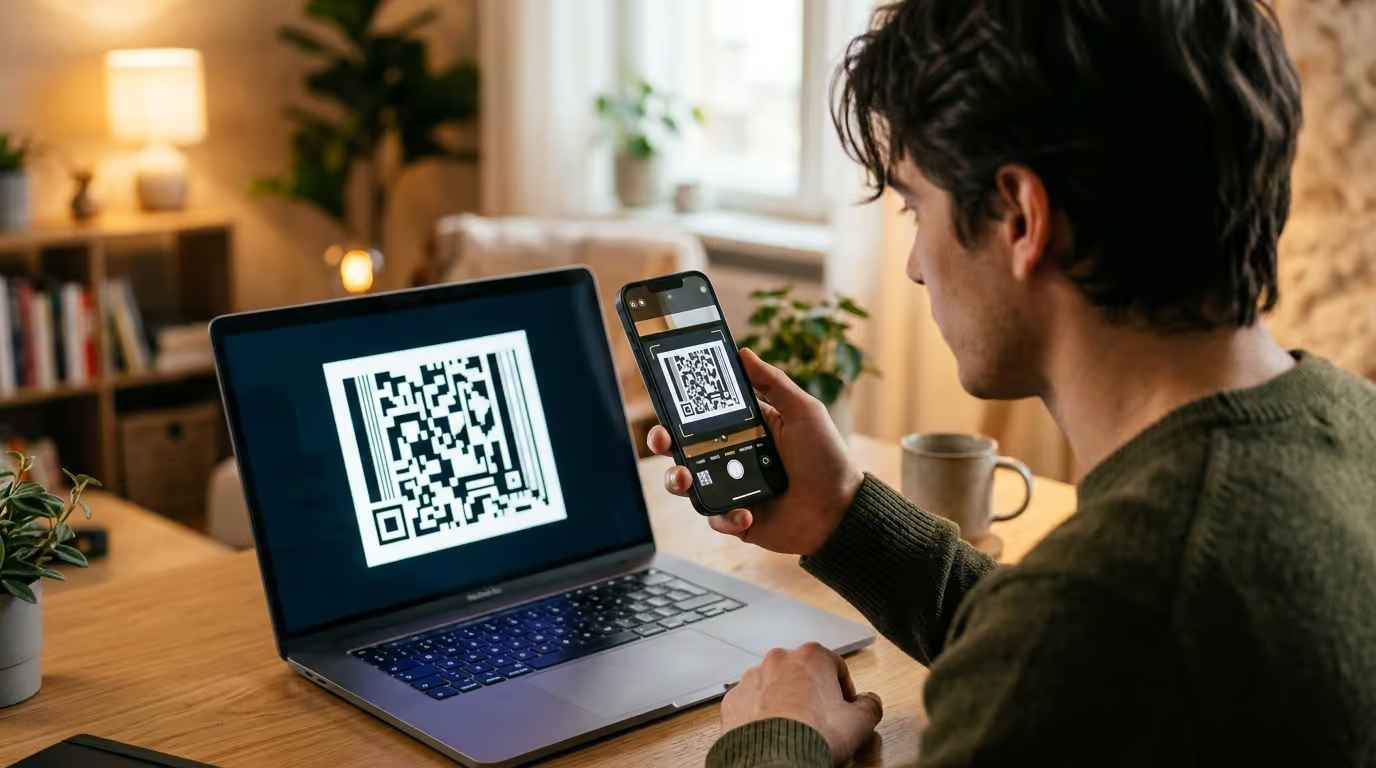
Despite those situational hurdles, the operational accessibility improvements objectively rewrite smartphone usability. Just as users successfully adapted to managing wireless connectivity via a cellular smartwatch, transitioning to direct software solves the severe physical dexterity hurdles of handling a physical microcircuit. Pointing a rear camera at an initialization block using QR Code Provisioning is infinitely cleaner than navigating the backend technical logic of the Remote SIM Provisioning (RSP) telecom standard. Ultimately, abandoning analog connectivity is an inescapable upgrade for anyone tired of juggling paperclips, fragile trays, and roaming anxieties.
Does an eSIM actually make my phone harder to steal?
Yes, because it acts as an invisible kill switch. A thief who snatches a physical SIM phone can just pop out the plastic card with an ejector pin to immediately silence the device and vanish off the grid. With an embedded digital chip, your connectivity is biometrically locked to the motherboard, meaning the phone stays trackable until the battery dies.
Can I use a cheap travel eSIM without losing my banking 2FA texts?
Absolutely. Modern smartphones use Active Standby logic to run an embedded digital profile alongside a native connection simultaneously. You can seamlessly route all your heavy browsing traffic through a cheap regional profile while keeping your home line awake strictly to catch critical incoming security alerts.
How do I transfer my eSIM if my phone screen shatters while traveling?
You will need a secondary device like a laptop and an active Wi-Fi connection to log into an online carrier portal and download your profile credentials from the cloud. This is the biggest drawback of ditching physical chips. You entirely lose the analog luxury of popping a piece of plastic into a cheap offline burner phone.
How does switching to a foreign eSIM affect my WhatsApp account?
It does not disrupt your existing account at all. Messenger protocols like WhatsApp bind to your initial authentication text, not the backend internet provider feeding them data. The new travel profile simply acts as an active data pipe to keep your chats and calls flowing securely.
What is profile aggregation and how many eSIMs can I actually store?
Profile aggregation is an internal architectural feature that lets you load multiple disconnected carrier lines onto a single handset. A traveler can store up to eight disabled secondary profiles on their phone at any given time. This allows you to pre-download regional connections over Wi-Fi and instantly activate them the second your next flight hits the tarmac.
What’s the difference between a virtual phone number and an internal eSIM?
Virtual telecom solutions like Google Voice are merely software proxies, whereas an eSIM is rigid, physical hardware. It relies on an Embedded Secure Element (eSE) permanently soldered right onto your device’s motherboard. Instead of reading external plastic contacts, it performs a cryptographic handshake with cellular towers using a unique hardware-generated EID number.
