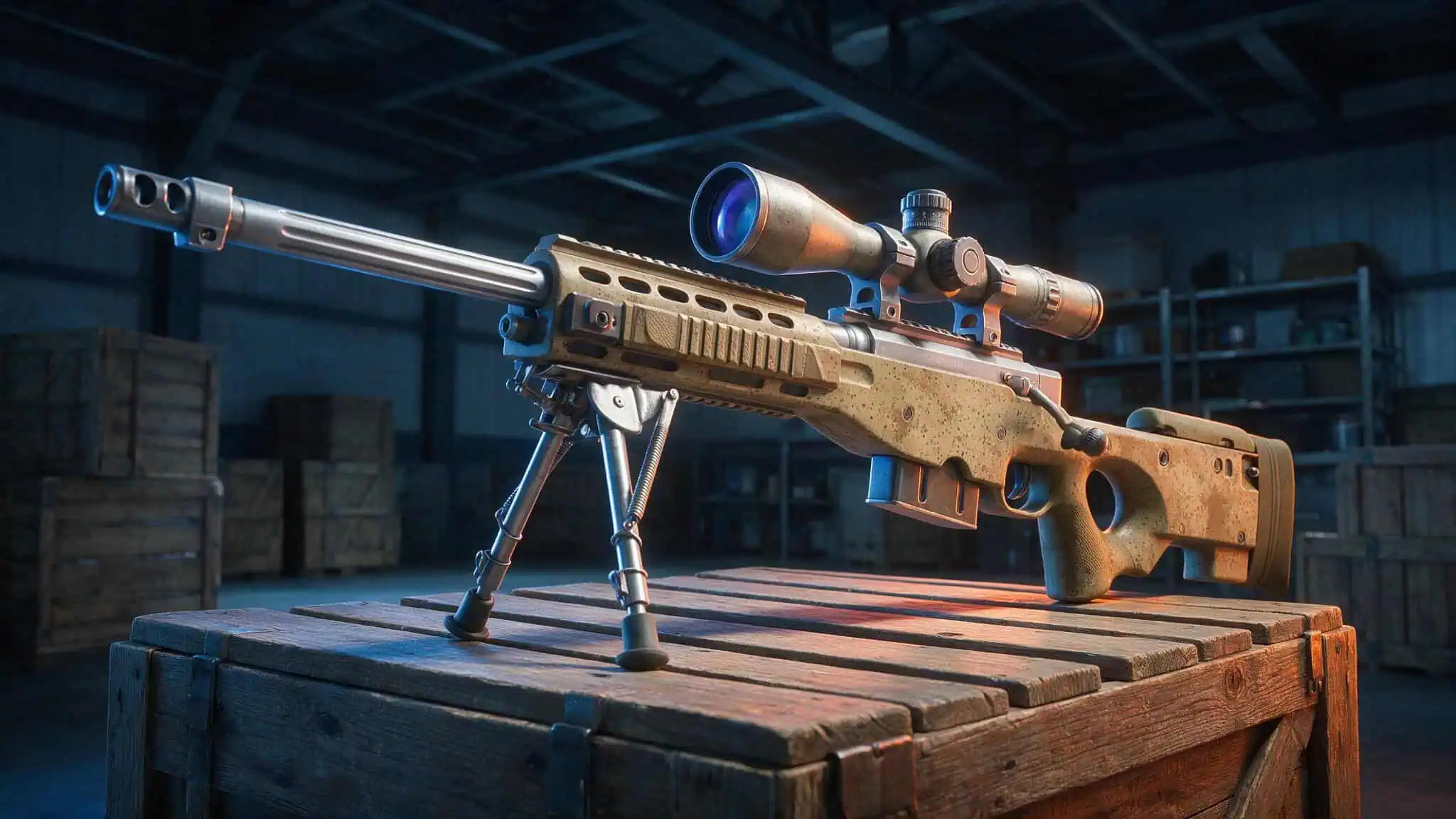
You know the AWP. It’s the weapon behind s1mple’s many insane flick shots, the reason coldzera’s jump shot on Mirage still gives you chills, the tool f0rest used to pull off legendary clutches in CS history.
One missed AWP shot leaves the player vulnerable to being swarmed by enemies. You’re useless for the next second and a half while that bolt cycles.
Enter the Operator. Valve’s alternative sniper doesn’t get the glory, but it doesn’t demand the same risk either. It fires faster, costs less, and forgives mistakes. It’s not a “baby AWP”—it’s a different tool designed for a different job.
Key Takeaways
The AWP’s one-shot kill to the chest has never been nerfed in the weapon’s history; every balance change has targeted mobility and handling, not damage
A leg shot with the AWP leaves the enemy at exactly 15 HP—not a kill, but an easy cleanup with a pistol or grenade
The AWP costs $4,750 and demands at least two rifles on your team before you even consider buying one
Table of Contents
Stats and Damage Comparison
Understanding the raw numbers behind each sniper reveals why they demand such different playstyles.
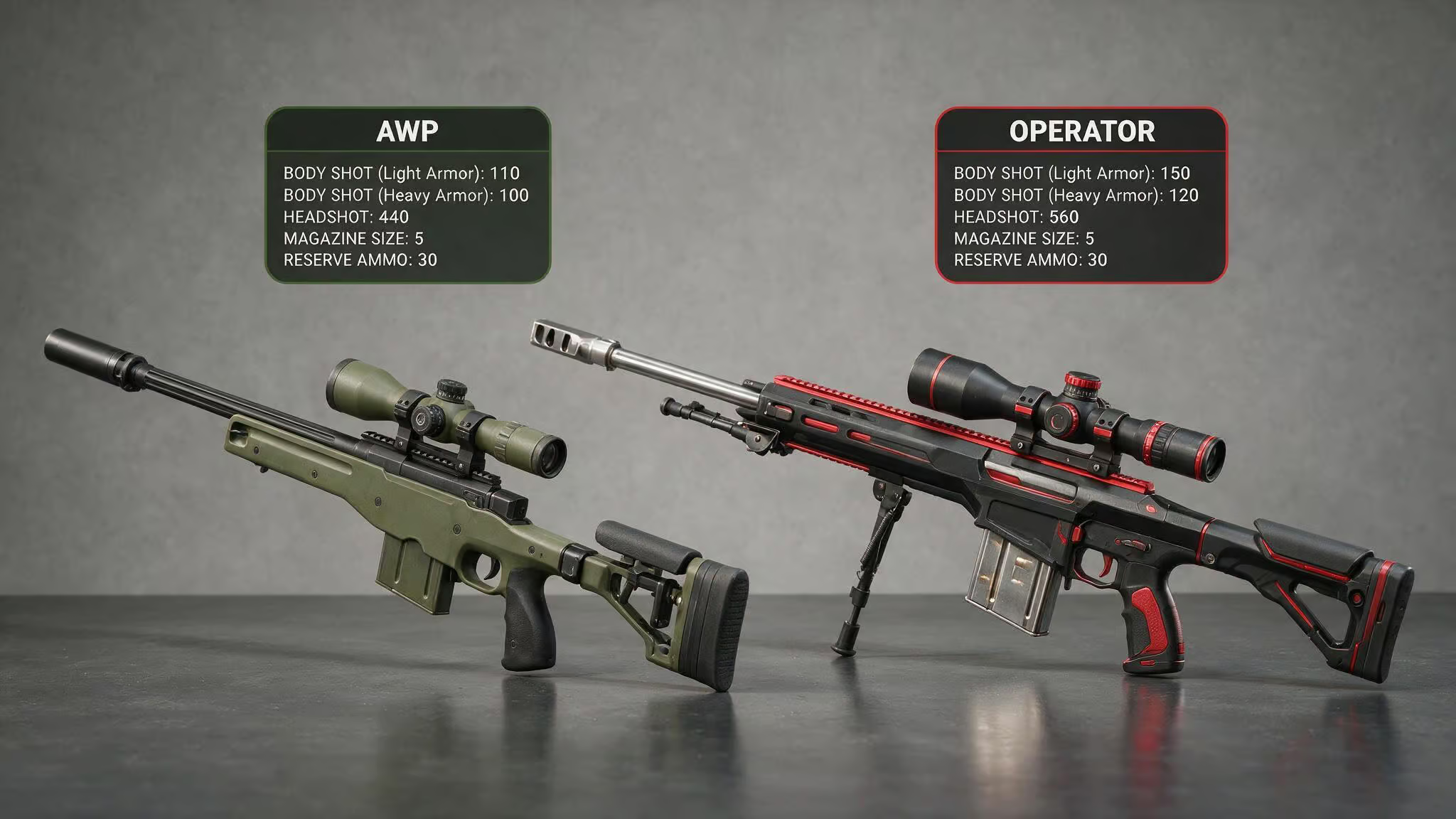
Damage profile — one-shot kill vs headshot requirement
The AWP kills with a single hit anywhere above the legs. Center mass is the sweet spot. You don’t need a headshot; you don’t need to aim high. Put the crosshair on the torso and click. That’s it.
A leg shot deals 15 HP. The enemy doesn’t die. They survive with a sliver of health, and now they know exactly where you are. One more bullet from a pistol or a well-placed grenade finishes them, but you’ve lost the element of surprise and the instant kill. Aim low, and you’ve wasted the round.
The Operator doesn’t have a one-shot kill to the chest. It requires a headshot for an instant takedown. Body hits deal significant damage but leave the target alive and fighting. This trades drama for consistency—you can fire again quickly if your first shot doesn’t land, but you’ll never get that single-click magic the AWP delivers.
Wall penetration and accuracy
The AWP has unrivaled penetrative abilities for shooting through walls. It punches through wood, metal, thin concrete—anything that isn’t a solid structure—and still lands a clean kill on the other side. You hear footsteps behind a crate? Shoot through it. The bullet will find them.
The AWP is perfectly accurate at all ranges, and the Operator is equally precise under the scope. The AWP has zero spread, zero bloom. The Operator is equally precise under the scope. The difference comes when you’re not scoped—and we’ll get to that.
Cost comparison and what it means for your buy
The AWP costs $4,750—the most expensive gun in the game. That’s a number; it’s a promise. You’re betting the round on that one weapon. If you die and lose it, your team is suddenly on pistols again.
The Operator costs $4,700—hundreds less than the AWP. That lower cost is the OP’s primary economic argument—it lets you buy a sniper without gutting the team’s utility budget or forcing everyone else on SMGs.
Skill Gap and Risk/Reward Analysis
The raw damage is unchanged; Valve has never touched it. But everything else about the weapon—movement speed, scope-in time, bolt-action delay—exists to make you pay for mistakes.
Why the AWP’s skill ceiling is higher
One missed shot, and you’re vulnerable for the full bolt reset. You need to know where to stand so you can duck back into cover after a shot. You need to predict enemy movement to pre-fire tight angles. You need to manage your economy like a fund manager.
Pick it up without the underlying game sense, and you’re just a slow-moving target with an expensive bullet.
How the OP’s lower risk changes the decision
The Operator fires faster. Its bolt-action cycle is shorter. If you miss a shot with the OP, you can re-peek and fire again before the enemy can close the distance. That forgiving window makes it more reliable for players who want consistent damage output rather than one-shot heroics.
The OP also maintains a crosshair when unscoped, unlike the AWP which shows nothing but a blur. This makes close-range encounters less random—you can track an enemy while not scoped and still land a shot when you scope in. Take the AWP | Dragon Lore or M4A4 | Howl—they’re statement pieces on the battlefield! The rarer they are, the more heads turn, while the AWP forces you to rely on no-scope luck.
Economy and Team Buy Strategies
How you spend your money determines your team’s entire round structure.
The two-rifle rule and why it matters
At bare minimum, your team should have two rifles available before you buy an AWP. This ensures there’s a solid backbone to trade kills and hold sites. If you buy an AWP while three teammates are on pistols, you’re creating a weakness—one pick on you, and the round flips.
The solo AWPer buys on a save round, gets a pick, then gets traded immediately because no one can support. Your AWP goes to the enemy, and now they’re the ones with the big green sniper that could have been one of the Best AWP skins in CS2.
Bottom line: Buy an AWP only when at least two teammates have rifles; the economic downside of an early purchase, explored in this Counter-Strike AWP deep dive, outweighs the pick potential otherwise.
When the OP makes more economic sense
Because the OP costs less, you can fit it into partial-buy rounds without crippling the team economy. You can still buy full utility, upgrade teammates’ rifles, and maintain a flexible equipment spread. The OP is the sniper for the money-conscious player who wants to reduce the team’s financial risk.
Positioning and Post-Shot Play
Where you stand and what you do after the shot can matter more than the shot itself.
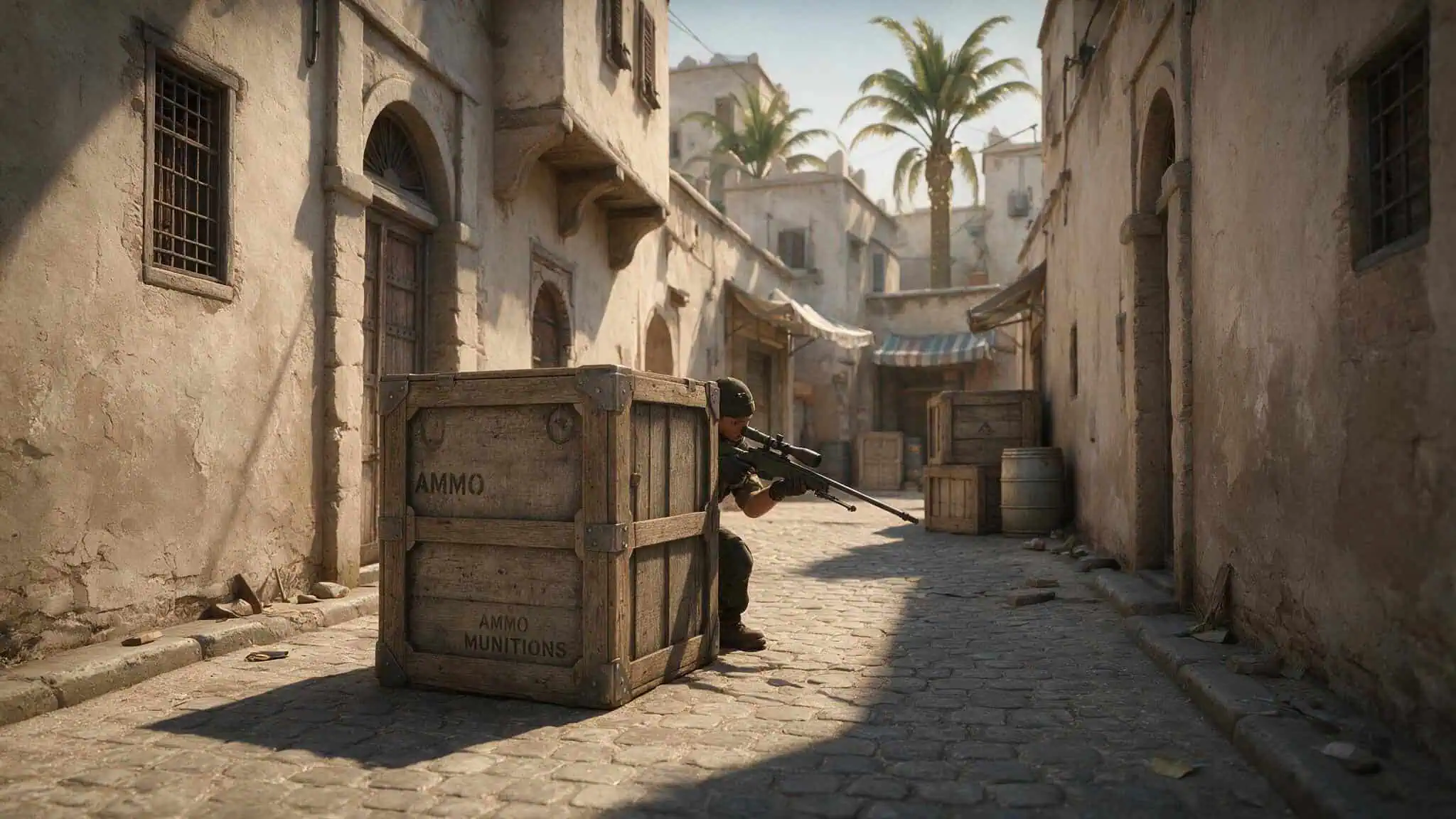
The knife-switch technique and why it matters
Switching from AWP to knife and back resets the bolt animation, cutting reload time in half. You go from scoped-in watching the bolt to back on target in a fraction of a second. It’s not a bug; it’s a technique every competent AWPer uses.
The OP doesn’t need this trick—its bolt speed is naturally faster. But the knife-switch remains essential for AWP players who want to maintain rapid follow-up pressure.
How to peek unpredictably with the AWP
Crouching behind cover, waiting longer, and moving left/right before standing up makes it hard for enemies to predict when and where the player will appear. If you always stand in the same spot, pre-fire timings will catch you.ch you. Move left, move right, change your exit from cover. Make them guess.
And once you take a shot, always have an escape route. Shoot, then immediately duck back into cover. Don’t stay exposed waiting for the bolt to reset.
Map-specific positioning: Mirage and Inferno examples
On Mirage as CT, you have three classic AWP spots: CT-spawn, stairs, and triple box. Each has tradeoffs. Triple box is aggressive—you’re exposed to both short and connector, and you can get sandwiched. CT-spawn is safer, letting you hold ramp and palace without worrying about flanks.
If you play triple box, have a teammate hold underpass from connector and another hold connector from short. It covers your flanks.
On Inferno, the long corridor offers two main positions: behind the pillar to watch mid, or in the corner to cover short, arch, site, and library. Pick based on your team’s setup. The OP’s faster handling lets you play more aggressively in these spots—you can re-peek quickly if you miss.
Close-Range and No-Scope Tactics
When enemies close the distance, your sniper’s behavior changes dramatically depending on which one you carry.
Understanding the AWP’s no-scope spread cone
No-scope spread works like a cone starting at the player’s head; bullet lands randomly inside the cone. The landing point is random inside that cone—pure RNG. No-scoping is a dice roll, not a skill shot. It only works at short to mid range. Beyond that, you’re just praying.
Crouching makes the no-scope spread cone smaller. It’s a small edge, but every bit helps when you’re desperate. Still, it’s a gamble.
The OP, by contrast, gives you a crosshair when unscoped. You can aim and fire with predictability. This gives the OP a close-range advantage—you can track targets and land shots without the randomness of the AWP’s no-scope.
Why you should upgrade your pistol
If someone gets close, your AWP is mostly useless. A Desert Eagle or P250 can save you in those tight spots. Always carry a strong secondary. The Deagle one-shots to the head; the P250 is cheap and reliable. Practice your pistol aim; it’s your lifeline when the enemy rushes.
Training Routines for Each Weapon
Here’s a routine that actually works.
The specific AWP training routine (100/50/50/10)
Start on the CSGOHUB Skills Training Map. It scatters bots in an open field—perfect for raw aim practice.
- 100 kills on scattered bots – This builds consistency. Just hit center mass, feel the rhythm of the bolt, learn the timing.
- 50 flickshots – Turn the bots static and practice snapping to them. Quick target acquisition.
- 50 kills in shuffle mode – Bots move unpredictably. This trains tracking and adjusting to movement.
- 10 minutes of FFA deathmatch – Real players, real pressure. No bots, no mercy.
A lot of FFA deathmatch servers limit AWP slots or lock them behind a paywall. Find a server that lets you grab the AWP without a fight.
Adapting the routine for the Operator
The OP rewards tracking more than flicking. Shift the focus: spend more time in shuffle mode, practice quick-scoping moving targets at medium range, and emphasize staying on target for follow-up shots. The 100/50/50/10 framework still works, but swap the flickshot portion for more tracking drills.
Historical Balance and Design Philosophy
Why does the AWP still exist in its current form? Why hasn’t Valve nerfed the one-shot kill?
The AWP can one-shot kill, which has never been changed. Every nerf in the weapon’s history—the movement speed reduction, the scope-in time increase, the slower reload—has targeted flexibility, not damage. Valve wanted the AWP to remain a tool that requires high skill to use.
The Operator fills the gap for players who want a sniper without that extreme risk. It’s not a replacement; it’s a different philosophy. The AWP is about making every shot count. The OP is about applying consistent pressure and surviving mistakes.
Conclusion: Which Sniper Should You Choose?
Choose the AWP if:
- You have strong map awareness and positioning skills
- Your team can afford it without sacrificing rifles and utility
- You want highlight potential and the ability to swing rounds with a single click
- You accept that a missed shot means you’re dead
Choose the Operator if:
- You prefer consistent fragging over high-risk heroics
- You play on a flexible economy and don’t want to drain the team’s funds
- You value speed and volume over one-shot lethality
- You want a sniper that forgives errors
Thor’s hammer analogy for the AWP’s effectiveness only in the right hands; the OP is precise, fast, and surgical. Both have their place in CS2, and the only wrong choice is the one that doesn’t fit your game.
Frequently Asked Questions
Is AWP a noob weapon?
No, the AWP has one of the highest skill ceilings in the game. A missed shot leaves you vulnerable for the full bolt cycle, and you need strong positioning, map awareness, and economy management to use it effectively. It punishes mistakes harder than almost any other weapon.
What does OP mean in Counter-Strike?
OP stands for Operator, which is Valve’s alternative sniper rifle. It costs less than the AWP, fires faster, and gives you a crosshair when unscoped, making it more forgiving in close-range fights. It trades the AWP’s one-shot kill potential for consistency and lower risk.
How powerful is an AWP?
The AWP kills with a single shot anywhere above the legs, making it the only weapon that can one-shot an enemy with a body hit. A leg shot leaves the enemy at 15 HP, which is an easy cleanup but wastes the instant-kill potential. Its damage has never been nerfed; all balance changes have targeted mobility and handling.
How much does the AWP cost compared to the Operator?
The AWP costs $4,750, making it the most expensive gun in the game. The Operator costs $4,700, which is hundreds less. That lower price lets you buy a sniper without gutting your team’s utility budget or forcing teammates onto SMGs.