
A single namespace collision in Alberta routes two different groups of people into the same search results. One crowd is looking for competitive video-game communities and local esports rosters, while the other is hunting for Alberta’s online casino guide, legal apps, account logins, and the rules behind the provincial iGaming statute. Mainstream coverage routinely blurs video gaming with online gambling, leaving players unsure whether a platform is legal, whether their money and data are protected, or where actual esports information lives. On the gambling side, the province replaced its single-site setup with a multi-operator market under Bill 48, the iGaming Alberta Act.
Service Alberta Minister Dale Nally introduced that legislation on March 31, 2025, pushed it through six weeks of readings, and saw it receive royal assent on May 12, 2025, after government analysis estimated that government-run PlayAlberta captured only 45% of provincial online gaming activity. The expanded system wires expected private operators into identical provincial rules and real-time API connections so the Alberta iGaming Corporation can monitor transactions, calculate taxes, and enforce player limits live.
Key Takeaways
Alberta opened its regulated online casino market to private operators under Bill 48 (royal assent May 12, 2025) after government analysis estimated that AGLC-run PlayAlberta captured only 45% of provincial online gambling, despite reaching $5.3 billion in wagers and $235 million in net revenue in 2023-24.
The Alberta iGaming Corporation oversees a three-tier licensing system requiring a $10-million performance bond for full platform operators, taxes up to 20% of gross gaming revenue for the General Revenue Fund, and wires 50 AGLC-registered brands into real-time API monitoring and unified self-exclusion rules.
Official provincial gaming filings govern 18+ real-money casinos and sportsbooks rather than local video-game esports, and the “Team Alberta” rosters that appear in gaming searches actually track the province’s amateur Canada Games athletic delegation, which won a record 118 medals in 2013.
Table of Contents
What ‘Alberta gamers’ means in 2026
In 2026, the phrase splits cleanly between two separate populations: online casino and sportsbook bettors navigating a newly opened multi-operator regulatory system, and video-game or esports players looking for local team rosters and community events. The 2026 regulatory overhaul transforms the online gambling side by shifting from PlayAlberta, the sole site operated by Alberta Gaming, Liquor & Cannabis (AGLC) since its October 1, 2020 launch, to multiple licensed private operators, while local video-game culture runs on a separate track and provincial Team Alberta records belong to amateur athletics.
Is online gambling legal in Alberta?
Yes, online gambling in Alberta is legal for players who are at least 18 years old and physically located within the province, making Alberta only the second Canadian province after Ontario to launch a regulated multi-operator online casino market, according to SportsLine. Before Bill 48 passed in 2025 to clear the way for private brands, government-run PlayAlberta served as Alberta’s sole legal online gaming platform following its October 1, 2020 debut under AGLC oversight, a baseline noted by both SportsLine and North Shore News.
That expansion traces back to August 2021, when federal lawmakers removed the prohibition on single-event sports betting and gave provinces full authority to regulate online gaming on their own terms. Under the multi-operator framework, PlayAlberta shifts from being the sole regulated option to one of several licensed platforms. Albertans who previously placed bets on unregulated offshore sites can switch to regulated platforms that offer the same game selection, backed by provincial transparency and direct revenue contributions to Alberta public services.
Why Alberta opened its iGaming market
Alberta opened its iGaming market to private operators for revenue recapture, after government analysis estimated that PlayAlberta had a 45% capture rate across Alberta’s entire online gambling market while the remaining 55% flowed to unregulated offshore operators. Even while missing 55% of the market, PlayAlberta’s climb to $5.3 billion in annual wagers and $235 million in net revenue by 2023-24 proved how much online betting was already happening in the province.
| Fiscal Period | Total Wagers | Net Revenue |
|---|---|---|
| October 2020 to March 2021 | $750 million (just under) | $37 million (approx.) |
| 2021-22 fiscal year | $3.1 billion | $147 million |
| 2022-23 fiscal year | $4.4 billion | $194 million |
| 2023-24 fiscal year | $5.3 billion | $235 million (+21% YoY) |
During second reading of the legislation, Service Alberta Minister Dale Nally argued that money spent with unregulated operators was leaving both the province and the country instead of staying home to fund hospitals, schools, and community programs. He reiterated during third reading that without a regulated market, that gaming revenue exits Alberta and Canada.
Bill 48 and the iGaming Alberta Act
Formally titled the iGaming Alberta Act, Bill 48 serves as the provincial law creating the legal and regulatory framework that lets private online casinos operate in Alberta alongside government-run PlayAlberta. Rather than cramming authorization and market mechanics into a single piece of legislation, the province decoupled the rollout across a two-bill sequence. Lawmakers first passed Bill 16 in 2024, which amended the Gaming, Liquor and Cannabis Act to authorize expanded legal online gambling in principle.
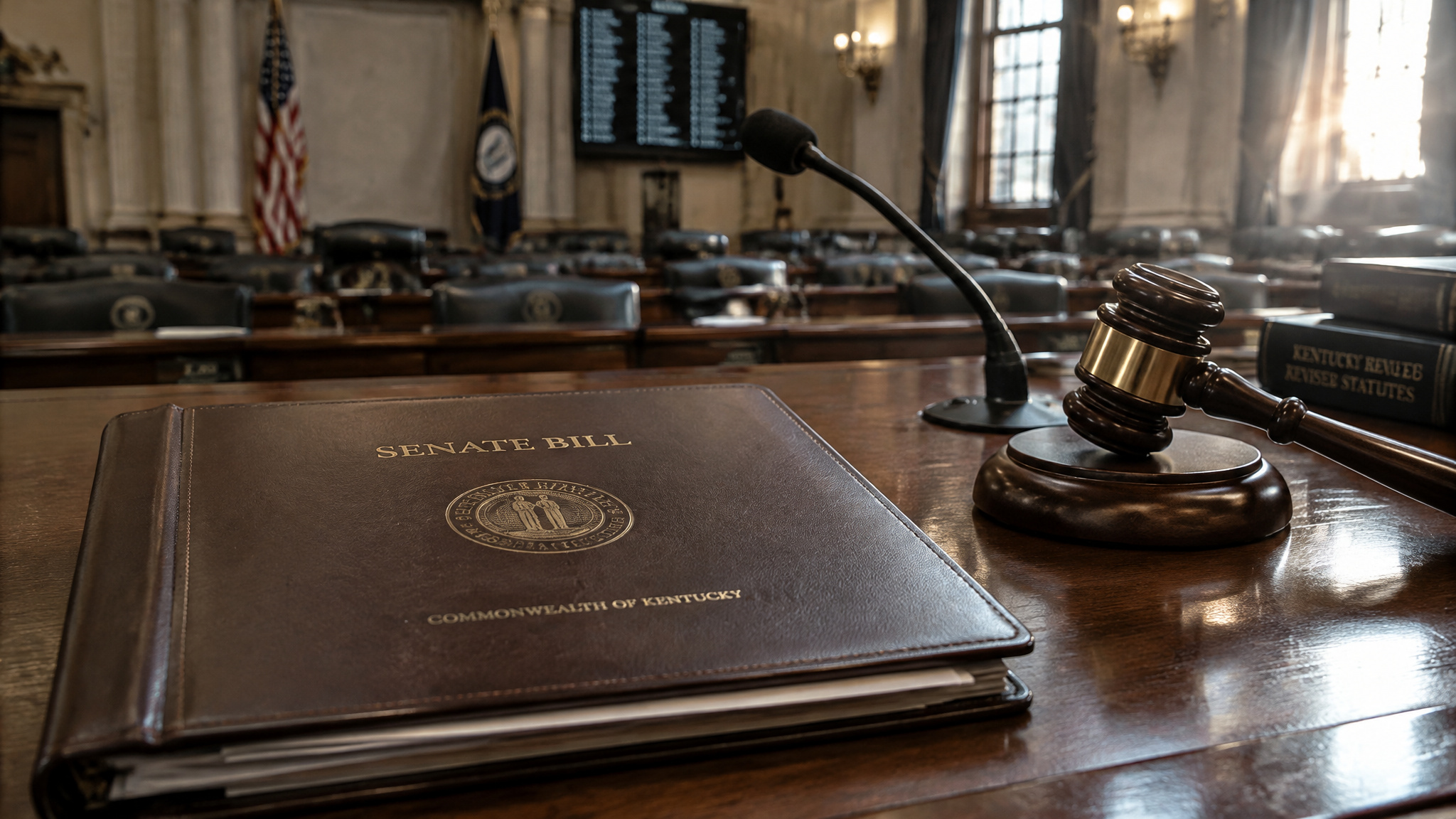
With that statutory foundation in place, Nally introduced Bill 48 on March 31, 2025. The bill moved through multiple readings over six weeks before receiving royal assent on May 12, 2025 to build out the actual market structure. Throughout second reading, legislative committee sessions, and a press briefing, Nally framed the iGaming Alberta Act not as a campaign to encourage new gambling participation, but as a mechanism to make existing online play safer while keeping revenue inside the province.
Who runs Alberta’s iGaming market?
The Alberta iGaming Corporation (AIC), a new Crown corporation established under Bill 48 that reports directly to the Minister of Service Alberta, manages the day-to-day market alongside AGLC’s regulatory brand-registration role. A seven-member board consisting of three government appointees and four independent directors governs the AIC and appoints its CEO, with operational staffing projected at approximately 120 full-time employees by launch.

Under the hood, the regulatory framework sorts the industry into a three-tier licensing system backed by a $10-million performance bond for top-level operators:
- Tier one covers full platform operators, who must demonstrate years of industry experience and post the $10-million performance bond.
- Tier two covers business-to-business (B2B) suppliers, such as payment processors and identity verification services, that build the backend plumbing without interacting directly with players.
- Tier three covers advertising partners that drive traffic to gaming platforms, a license category created specifically in response to aggressive marketing by offshore operators.
Applying for a license involves public notice periods, financial audits, and RCMP-assisted criminal background checks. In remarks to a legislative committee, Nally noted that applicants who fail to meet these criteria are barred from operating.
How Alberta taxes iGaming operators
Licensed private operators in Alberta pay a base tax rate of up to 20% of gross gaming revenue, and Service Alberta projects the market to generate between $700 million and $1 billion in new annual revenue within its first three years, assuming gradual usage increases. Rather than taxing total handle, the province defines gross gaming revenue by subtracting player prize payouts from total wagers, setting each operator’s exact rate during licensing.
Every dollar of AIC surplus goes into Alberta’s General Revenue Fund, where the province can direct those proceeds toward healthcare facilities, educational institutions, and municipal infrastructure. At a press conference, Nally described the three-year revenue projections as intentionally conservative, explaining that while actual returns could climb higher once the market matures, the government isn’t banking on a windfall and is instead planning around the volume of online play already happening in the province.
Which online casinos are licensed to launch in Alberta?
Alberta’s licensed online casino lineup is drawn from 50 brands registered with AGLC to operate in the province’s regulated iGaming market. Registration with AGLC is an administrative prerequisite rather than a guarantee that all 50 platforms go live on day one, and public filings don’t specify the exact day-one headcount. Based on launch reporting from SportsLine, the expected private operator roster features major North American sportsbooks and casino apps:
- BetMGM Casino and Caesars Palace Online Casino, cited by SportsLine as the two brands most synonymous with regulated online gaming.
- Horseshoe Online Casino and Caesars Sportsbook & Casino, two additional Caesars Entertainment-owned apps expected to launch, bringing Caesars Entertainment’s footprint to three distinct platforms.
- DraftKings Casino and FanDuel Casino, two operators cited by SportsLine as candidates to go live as early as July 13.
- theScore Casino, a Toronto-based operator with strong Canadian ties expected to join the launch lineup.
In newly regulated markets, players typically gravitate toward familiar national names first before comparing smaller or Canadian-tied platforms on welcome bonuses, payout speeds, and the presence of the official provincial seal.
When legal Alberta online casinos launch
The official launch date for Alberta’s regulated online casino market is Monday, July 13, 2026. Earlier coverage from North Shore News reported expectations that the market would open in the first quarter of 2026 with each licensed platform displaying the official Alberta iGaming seal, whereas SportsLine subsequently framed its coverage as the final countdown to a Monday launch after provincial officials circled July 13, 2026 as the official go-live date.
PlayAlberta vs private Alberta online casinos
The decisive difference between PlayAlberta and private Alberta online casinos is the shift from a single government-run monopoly to a multi-operator marketplace where PlayAlberta competes as one option among up to 50 registered brands under identical provincial rules. On operator model and launch history, AGLC launched PlayAlberta on October 1, 2020 as the province’s sole legal online gambling site, scaling it from just under $750 million in wagers during its initial October 2020 to March 2021 stretch to $5.3 billion in wagers and $235 million in net revenue in the 2023-24 fiscal year. Private operators bring multiple commercial apps, such as Caesars Entertainment’s three-app suite and Toronto-based theScore Casino, into that same regulatory perimeter, subject to the same AIC oversight, tax structure, and player-protection standards.
How to sign up for an Alberta online casino
Signing up for a licensed Alberta online casino is a regulated five-step verification process restricted to users 18 and older who are physically inside Alberta’s borders before making a real-money deposit. Because every licensed operator must enforce provincial age and border gates, users can’t fund an account or place a wager until both identity verification and geolocation checks pass on their device.
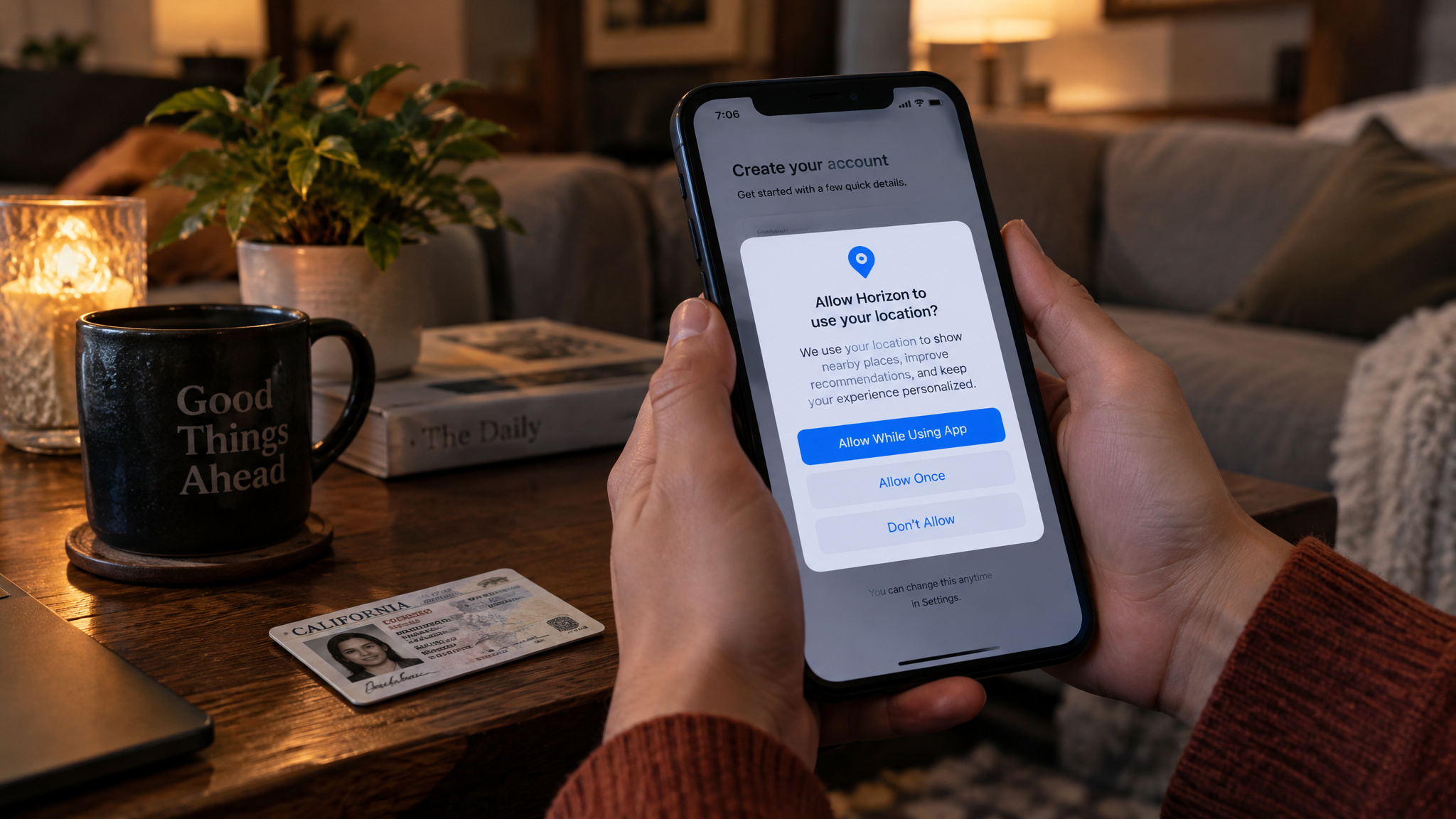
Across licensed platforms, account registration follows the same sequence:
- Visit the licensed operator’s website or download its mobile app, then select the Sign Up or Join button.
- Enter your full legal name, residential address, and birth date.
- Upload a photo or scan of a government-issued passport or driver’s license to complete identity verification.
- Enable and share geolocation services with the operator’s site or app to confirm you’re physically inside Alberta’s borders.
- Make a real-money deposit into your verified account and begin playing.
Those third and fourth steps are where first-time registrations most often stall. Players trying to sign up from the couch with browser or phone location permissions turned off, or Albertans attempting to log in and bet while travelling outside the province, get blocked before they can reach the cashier screen.
From a systems perspective, that onboarding friction is the whole point of the architecture. Pairing geolocation with identity verification enforces the strict provincial boundary required by federal and provincial law, ensuring an Alberta license only serves traffic inside Alberta. At the same time, requiring a passport or driver’s license check at the user level mirrors the financial audits and RCMP criminal background checks that the AIC enforces on the operators and B2B suppliers running the platforms.
Responsible gambling safeguards in Alberta’s framework
Yes, Alberta’s iGaming framework mandates uniform responsible gambling safeguards across every licensed operator, requiring platforms to enforce a unified self-exclusion system, default play limits with a seven-day waiting period on increases, and real-time AI behavioural tracking. Described in North Shore News coverage as among the strictest player-protection rules in Canada, the architecture reflects lessons Nally noted in final debate that Alberta gathered from PlayAlberta’s track record and from other regulated markets, built at a time when Research Co. polling shows 50% of Canadians view gambling as morally acceptable.
Self-exclusion and default limits
Every licensed operator must plug into a single, unified self-exclusion system that lets a player lock themselves out across all regulated platforms simultaneously for six months, one year, or permanently. Operators are required to present default limits for deposits, losses, and session durations during account setup. Players can lower those limits instantly, but players who set low limits at signup and later want to raise them run into a deliberate speed bump: a mandatory seven-day limit raise waiting period plus a short responsible-gaming knowledge quiz.
AI monitoring and the GameSense helpline
Platforms must run AI behavioural monitoring that tracks more than 40 data points, including sudden wager spikes, chasing losses, and late-night play. Crossing a risk threshold triggers an automated pop-up intervention and offers a cooling-off period. Play is restricted to adults 18 and older in Alberta, and anyone needing support can contact the GameSense responsible gambling helpline at 1-833-447-7523 or visit gamesenseab.ca.
How to verify a legal Alberta online casino
The official Alberta iGaming seal separates regulated platforms from grey-market clones, and it’s backed by Canadian data-centre hosting, real-time AIC API hooks, and annual RNG audits.
The Alberta iGaming seal and audit trail
Checking for the official Alberta iGaming seal on an operator’s site or app is the first step to confirming you’re dealing with a licensed operator backed by tier-one vetting, the $10-million bond, and RCMP background checks. Popping the hood on that seal reveals mandatory infrastructure built to stay current through 2030: all player data must reside in Canadian data centres, and live API hooks give the AIC real-time oversight to track transactions, assess taxes, and enforce player limits. Operators are also required to publish yearly third-party audits covering both payout percentages and random number generators (RNGs) alongside mandatory ESG reporting.
Offshore sites and sponsored coverage: what to watch for
Albertans who are part of the estimated 55% of online gaming activity previously flowing to unregulated offshore sites should switch to platforms carrying the Alberta iGaming seal if they want the same betting options backed by provincial oversight and tax contributions to local public services, though public filings don’t detail the specific financial, data-privacy, or dispute-resolution mechanics of staying on an unregulated platform. When you’re researching which sites are live, it pays to check operators directly against official AGLC and AIC listings rather than relying solely on media roundups. Much of the launch coverage involves commercial relationships: the North Shore News overview was published as paid sponsored material rather than an editorial staff review (and notes that gambling carries inherent risks and is not regulated in all provinces), while SportsLine‘s launch guide includes affiliate links that can earn the outlet a commission if readers register or place bets.
Alberta esports and the Team Alberta namesake
Official provincial iGaming filings don’t cover local video-game tournaments, game-development studios, or esports rosters, and the “Team Alberta” results that routinely surface alongside roster searches actually track the province’s amateur Canada Games athletic delegation rather than competitive video gaming.
Team Alberta’s Canada Games record
Competing in white, royal blue, grey, and black uniforms, Team Alberta won a record 118 medals at the 2013 Canada Summer Games in Sherbrooke and captured 100 medals as the host province at the 2019 Canada Winter Games in Red Deer. The delegation has also won four Centennial Cup awards for the greatest improvement over a preceding same-season Games (at the 1995 and 2019 Winter Games, and the 1997 and 2022 Summer Games), alongside the 2019 Jack Pelech Award honoring combined athletic results, fair play, sportsmanship, friendship, and cooperation.
Frequently Asked Questions
Which online casinos are licensed to launch in Alberta?
Up to 50 brands registered with Alberta Gaming, Liquor & Cannabis (AGLC) to join the regulated market alongside PlayAlberta, though registration alone did not guarantee a day-one debut for all 50 platforms. Major North American operators in the lineup include BetMGM Casino, DraftKings Casino, FanDuel Casino, and Toronto-based theScore Casino. Caesars Entertainment also entered the market with three distinct platforms: Caesars Palace Online Casino, Horseshoe Online Casino, and Caesars Sportsbook & Casino.
What responsible gambling safeguards does Alberta’s iGaming framework require?
Every licensed platform must connect to a unified self-exclusion network that lets players lock themselves out across all regulated sites simultaneously for six months, one year, or permanently. Operators also enforce default deposit, loss, and session limits during setup; lowering a limit happens instantly, while raising one triggers a seven-day waiting period and a mandatory responsible-gaming quiz. Behind the scenes, AI behavioural software tracks over 40 data points—such as chasing losses or late-night play—to send automated pop-up interventions, backed by support from the GameSense helpline at 1-833-447-7523.
Why is Alberta opening its iGaming market to private operators?
The province opened the market to recapture money flowing to unregulated offshore sites after government analysis showed AGLC-run PlayAlberta captured only 45% of provincial online betting. Even while missing 55% of the market, PlayAlberta still handled $5.3 billion in wagers and generated $235 million in net revenue during the 2023-24 fiscal year. Bringing private operators under provincial rules keeps that offshore spending inside Alberta to help fund schools, hospitals, and community programs.
