
You typed acid play pc games into a search box because you wanted a free download, and the results page handed you back a mess: a defunct-looking freeware portal, an obscure SourceForge repository, and a couple of PSP card-game spin-offs. Three unrelated things sharing one name. I went down the rabbit hole to sort them out, and this is the routing map: what Acid Play actually was, whether the site still works, how to judge an old download mirror, and where your actual need gets served today.
Key Takeaways
Acid Play is known as a 2000s-era curated freeware PC game download site at acidplay.com, offering standalone downloadable games; no reliable source documents its founding or current status.
The query collides three unrelated entities: the Acid Play download site, an MIT-licensed C++ Acid Game Engine registered on SourceForge on December 1, 2025, and Konami’s Metal Gear Acid PSP titles from 2004 and 2005.
Free PC games today come from three channel types: free-to-play storefronts like EA’s (Apex Legends), curated indie platforms and freeware archives like itch.io, and open-source hubs like SourceForge (LÖVE, Phaser, MonoGame).
Table of Contents
What is Acid Play? The freeware site behind the query
Acid Play is known as a 2000s-era curated freeware PC game download site that lived at acidplay.com. The model it stood for is simple to the point of feeling alien now: a complete game, one download, no account, no launcher, no recurring plan. You clicked, you saved an executable, you played it offline. That’s the freeware deal, and it’s what separates these sites from everything that replaced them.
No reliable source documents the site’s founding, its catalog, or how many games it listed. Almost every specific claim attached to the name today comes from search results referencing a preserved Acid-Play Archive. Those references do circulate, and I’m treating every detail hanging off them, title counts and named games included, as unconfirmed, because I can’t verify any of it. If hard detail about Acid Play exists anywhere, it lives in archived listings. That’s where you’d go looking, and the next sections give you the method.
Not that Acid: the game engine and the PSP spin-offs
Three unrelated entities compete for this query, and only one is a download site: the Acid Play portal, the Acid Game Engine on SourceForge, and Konami’s two PSP spin-offs. The telltale follow-up search, adding “free download” to the query, is usually the signal that the searcher wanted the portal.
Acid Game Engine
An open-source game engine called Acid exists: written in C++, MIT License, running on Linux, Mac, and Windows. It was registered on SourceForge on December 1, 2025, and it’s quiet, with few stars and thin documentation, still in the garage phase. It’s a contributor playground for custom engine design and useless if you’re hunting game downloads.
Metal Gear Acid and Acid 2
Konami shipped Metal Gear Acid for the PSP in 2004 and Acid 2 in 2005. Per IGN’s franchise coverage, both are alternate-timeline spin-offs outside the main canon. Worth knowing, wrong Acid.
Freeware vs. free-to-play: what “free” means now
Freeware is a standalone binary you own outright. One download, complete game, no account, no launcher, no plan, much like free penny slots, which cost nothing and sit on your machine without a storefront. Free-to-play is a different animal: free entry into a commercial service game. Apex Legends is the flagship example on EA’s PC library, and it’s gated behind EA’s store client and an EA account, because it’s a service, not a file.
Then there’s a third meaning that didn’t exist in the freeware era. EA Play reframes “free” as a subscription: a rotating library of EA’s biggest games on tap, with trials of select new releases, all under one recurring plan. EA’s library spans shooters, racing, and RPGs, with EA SPORTS FC and The Sims among the headliners.
That’s the generational gap in one sentence: the freeware-era searcher expects one download button with no strings attached, while modern official channels assume a launcher account and, for subscriptions, a payment method on file. That friction is why “free game” searches feel harder than they used to.
Is Acid Play still up? Mirrors, archives, and how to check
Downloading from Acid Play today means going through archives or mirrors, if the original site is reachable at all. No reliable source verifies the site’s current status, and search signals suggest plenty of people are hitting dead or moved pages. So the honest answer isn’t a verdict. It’s a verification method you can run yourself in about ten minutes.
How to check a legacy download site’s status
- Does the live domain resolve? A parked, ad-stuffed page means the domain is registered but the site is gone, and even a working homepage proves nothing about the download links behind it.
- Does a web archive snapshot preserve the catalog? The Wayback Machine will show you what the site looked like at various points, which is exactly where verifiable detail about what Acid Play offered would live.
- Who runs any mirror? If a third party hosts a copy, can you trace who they are? A mirror with no identifiable operator is just a stranger’s hard drive wearing a familiar name.
Quick test: Type the domain directly, then check a Wayback Machine snapshot before trusting any mirror’s copy of the catalog.
Old freeware sites frequently go offline or get parked: domains lapse, owners move on, and the installers survive only wherever someone copied them. I’m not asserting a shutdown date or a closure story here, because none can be sourced, and a confident-sounding verdict would just be fiction dressed as history.
The realistic download path today
If the original domain is gone, access runs through archived copies and third-party mirrors. Expect era-typical friction: dead links inside live pages, installers built for Windows versions two decades old, and re-uploads of unclear origin. That last one is the big one. A re-uploaded installer on an anonymous mirror is the lowest-trust artifact in this entire story, and the next section covers exactly why.
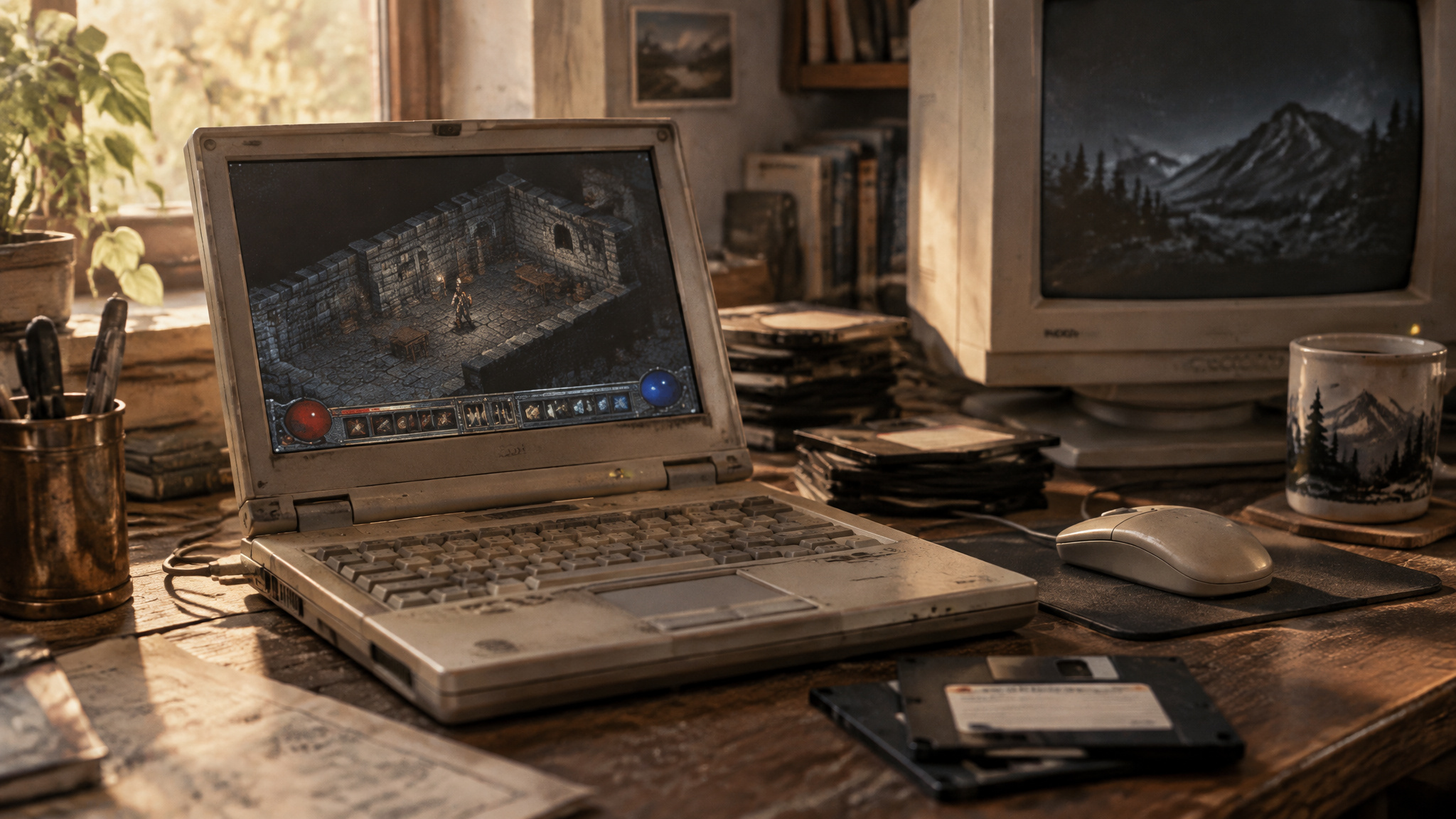
Are old freeware downloads safe? What the channel guarantees
The useful safety question isn’t “scan it with antivirus.” It’s “what does the distribution channel itself guarantee?” EA’s Great Game Guarantee covers digital purchases, and account-gated delivery creates accountability: a named company that has to answer if something goes wrong. An abandoned mirror structurally cannot offer any of that. There’s nobody to answer to.
Aging freeware downloads, from any site of that era, may bundle toolbars, lack code signatures, or fail on modern Windows. Nothing here implicates Acid Play itself in malware distribution; the point is what old channels can and can’t promise.
So, the practical rule: check whether the original developer or an active open-source hub still hosts the file before trusting a re-uploaded mirror. If they do, download there. And when the only source for a title you want is an orphaned mirror with unclear provenance, that’s the point where the risk stops being worth it for most readers.
Running legacy freeware on a modern PC
An old freeware title can still run. For the old stuff, DOSBox emulates the DOS environment those games expect. For later-era Windows titles, the built-in compatibility settings, pointing the executable at an older Windows version, often get things working.
What you’re trading is friction for ownership. You’ll spend time on emulation and compatibility tweaks, and in return you get full offline play with no launcher, no account, and no connection check. Free-to-play and subscription games can’t offer that, structurally.
There’s also the low-spec niche, and it’s bigger than people assume. Lightweight, small-footprint freeware suits old or weak laptops where modern free games won’t install or run at all. If you’ve ever searched for games for PC free offline because your machine chokes on a multi-gigabyte client, this is the branch that serves you.
Honest qualifier: not every legacy title is worth the compatibility work. The effort makes sense when it’s the specific game you actually want.
Where free PC games actually come from today
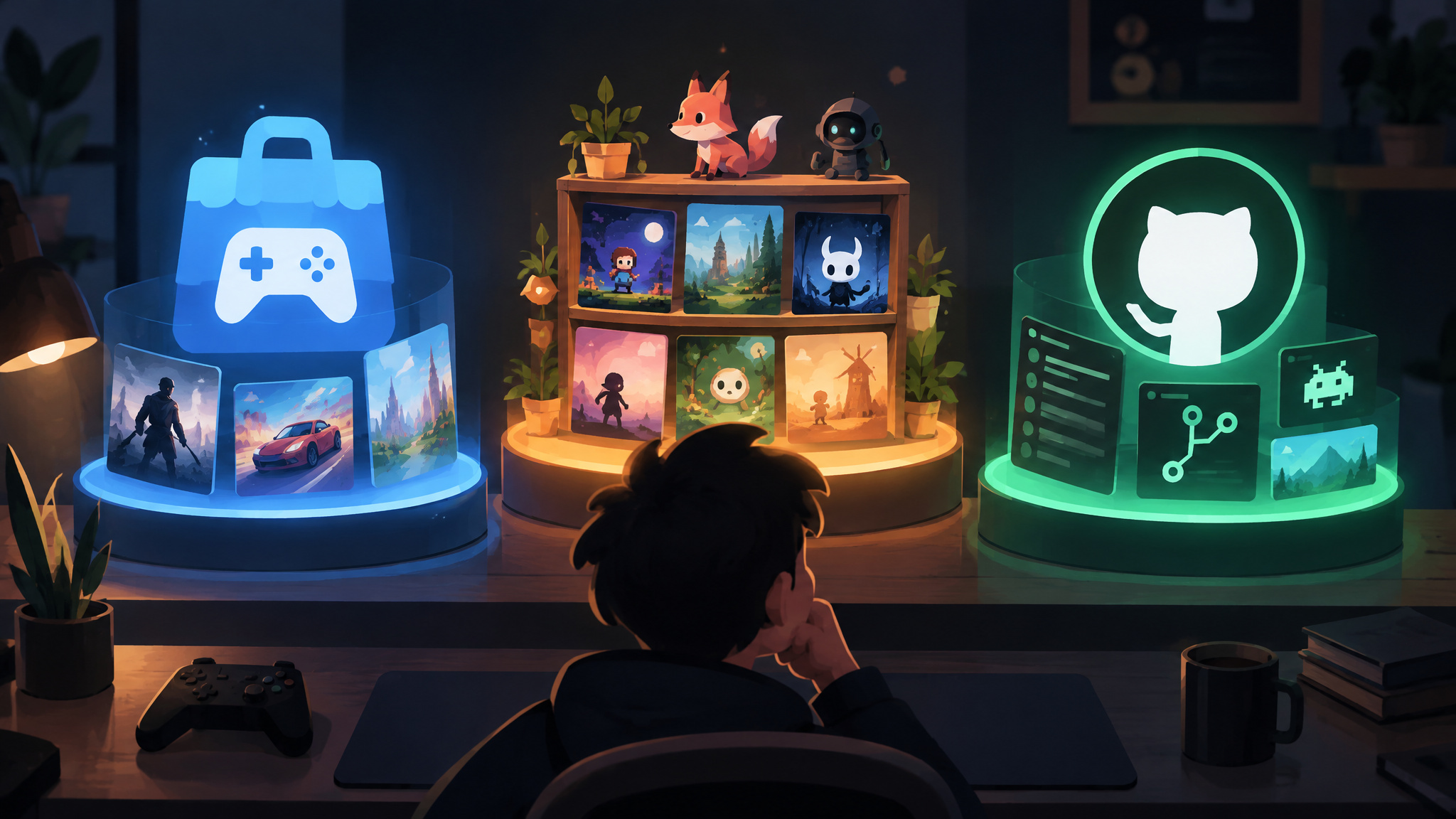
Free PC games today come from distinct channels that solve different problems, and matching the channel to the need is the whole game. The sites for games that actually work in the current era fall into three tiers, and each one is named for the reader condition it serves:
- Free-to-play storefronts and subscriptions. EA’s PC library spans shooters, racing, and RPGs, with Apex Legends as the free-to-play flagship and EA SPORTS FC and The Sims among the highlights. EA Play adds subscription access to top titles plus trials of select new games.
- Curated indie platforms and freeware archives. itch.io is the curated indie successor; freeware archives are the direct descendants of what Acid Play did.
- Open-source hubs and no-download browser games. SourceForge’s active free-game ecosystem covers the open-source side, and browser games eliminate the download question entirely.
The storefront tier
Apex Legends is the biggest name in this tier, and the cost is structural: an EA account, the store client, and for EA Play a payment method on file. In exchange you get the Great Game Guarantee, patches, and a catalog that spans shooters, racing, and RPGs. If your need is a big modern free game, this is the right tier.
Curated indie and freeware archives
itch.io is the closest living relative of the old freeware portal: small complete games, direct downloads, human curation. Twisted Tower is a live example of the indie side, a PC game developed over five years and circulating outside the major storefront channels. It’s been compared to Bioshock, and I’ll pass that comparison along as the pitch rather than grade it myself: it’s set in a rotting theme park off the coast of Wales built by washed-up billionaire filmmaker VC Twister, where protagonist Vincent climbs five floors, haunted hotel, mermaid water park, clown casino, to rescue his kidnapped fiancée Charlotte from the top of the ‘murder park’.
Open-source hubs and the no-download tier
SourceForge shows where the open-source side lives: LÖVE for Lua 2D games, Phaser for HTML5 with over ten years of active development, MonoGame for cross-platform C#/.NET. And browser-based games solve the “play online without downloading anything” problem: the game runs in the tab, nothing touches your drive, and the trust question shrinks to whether you trust the page you’re already on.
Which brings up the trust question directly: which download sites can you actually rely on? The tier structure is the answer. Channels with named accountability, storefronts, itch.io, active open-source hubs, give you someone to hold responsible when something breaks or turns out to be bundled with garbage. Anonymous mirrors don’t. You can verify that difference yourself: named channels publish an operator, a support route, or an active project page; anonymous mirrors publish neither.
Who legacy freeware still serves
Legacy freeware portals aren’t strictly obsolete. They remain the last good answer for a reader the free-to-play era structurally doesn’t serve. The comparison isn’t Acid Play versus Steam on library size or quality. It’s standalone ownership versus account-gated access, and lightweight files versus multi-gigabyte clients.
So the verdict depends on your situation. For offline, low-spec, no-account, tiny-download needs, a freeware archive wins. For safety guarantees, updates, and scale, storefront-backed channels win.
If your need is a complete, offline, no-strings game on modest hardware, here’s the concrete path: start from the original developer or an active open-source hub, verify any mirror’s provenance before you trust it, and pick the tier from the map above that matches what you’re actually after. That’s the whole method.
Frequently Asked Questions
When does downloading from old freeware game sites like Acid Play stop being worth the risk?
When the only source for a title you want is an orphaned mirror with unclear provenance — a re-uploaded installer on an anonymous mirror is the lowest-trust artifact in this whole story. The practical rule: check whether the original developer or an active open-source hub still hosts the file first, and only trust a mirror you can trace to an identifiable operator. If nobody stands behind the file, that’s where the risk stops being worth it for most readers.
Where can I find the best games for PC free to download offline?
Freeware archives are the branch that serves offline, low-spec needs: lightweight, small-footprint titles that run on old or weak laptops where multi-gigabyte modern clients won’t install at all. Start from the original developer or an active open-source hub, verify any mirror’s provenance, and expect to spend some time on emulation or compatibility tweaks in exchange for full offline play with no launcher or account.
What’s the difference between freeware, free-to-play, and subscription games like EA Play?
Freeware is a standalone binary you own outright: one download, complete game, no account or launcher. Free-to-play is free entry into a commercial service game — Apex Legends, for example, is gated behind EA’s store client and an EA account. EA Play adds a third meaning: a subscription giving rotating access to a library of EA titles plus trials of select new releases, all under one recurring plan.