If your daily routine consists of tracking runtime errors and doomscrolling X, Twitter, Facebook, or Reddit, you need a tactile reset. Geeky hobbies offer an intellectual escape from digital fatigue. Instead of passively consuming media, the best nerdy pastimes demand creative self-expression and mechanical problem-solving. For professionals seeking engaging, fulfilling pastimes to escape screen fatigue, these analog projects are mandatory.
According to the team at Geek Network, the most rewarding pursuits revolve around tinkering and immersing yourself in fascinating systems. The goal is not mindless relaxation. The goal is to offload the pressure of your daily grind onto a complex, low-stakes technical challenge. If you are ready to trade endless digital consumption for something generative, these are the exact disciplines worth mastering.
Table of Contents
Video game covers and amp modeling
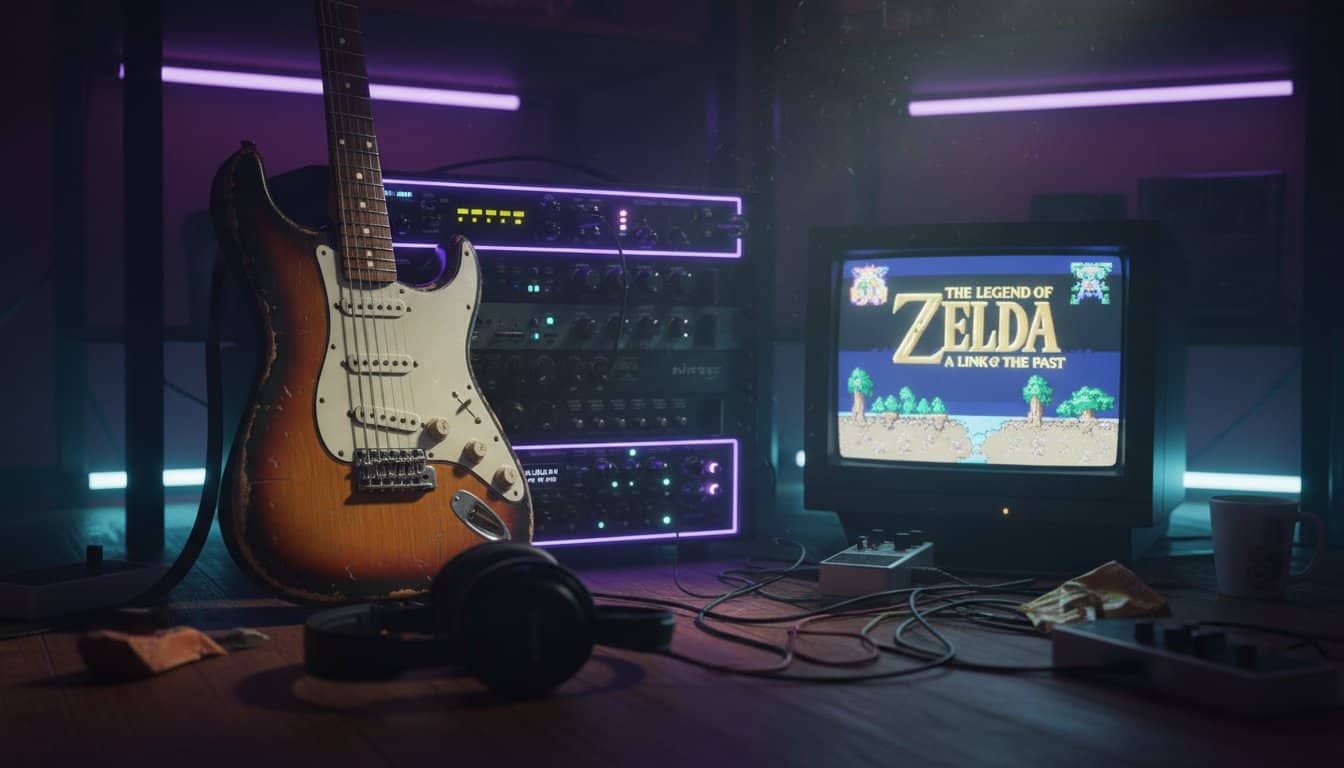
Video game music performance is the translation of classic 8-bit or 16-bit digital soundtracks into live instrumental arrangements. This probably isn’t the first thing that comes to mind when you picture a typical geeky pastime, but the technical crossover is massive. Transitioning from mindlessly playing a game to dissecting its underlying soundtrack forces you to analyze acoustic composition instead of just absorbing ambient noise.
I picked up a new guitar amp recently, and I have spent weeks practicing classic tracks from The Legend of Zelda and the Metroid series. The real draw here isn’t just the playing itself; it is the gear tuning. You spend hours manipulating digital processors, matching the exact decay of a vintage reverb, or dialing in specific high-gain distortion profiles.
This pairing of video game covers and amp modeling bridges heavy digital nostalgia with raw, analog skill. It turns music from a passive background element into an active, highly technical pursuit. You are reverse-engineering nostalgia.
Tabletop role-playing games (TTRPGs)
Tabletop Role-Playing Games (TTRPGs) are structured analog systems where players use dice mechanics and mathematical rulesets to navigate a shared narrative. Dungeons & Dragons remains the default operating system for this hobby, offering a classic high-fantasy framework, but the space extends deep into granular sci-fi and cyberpunk systems.
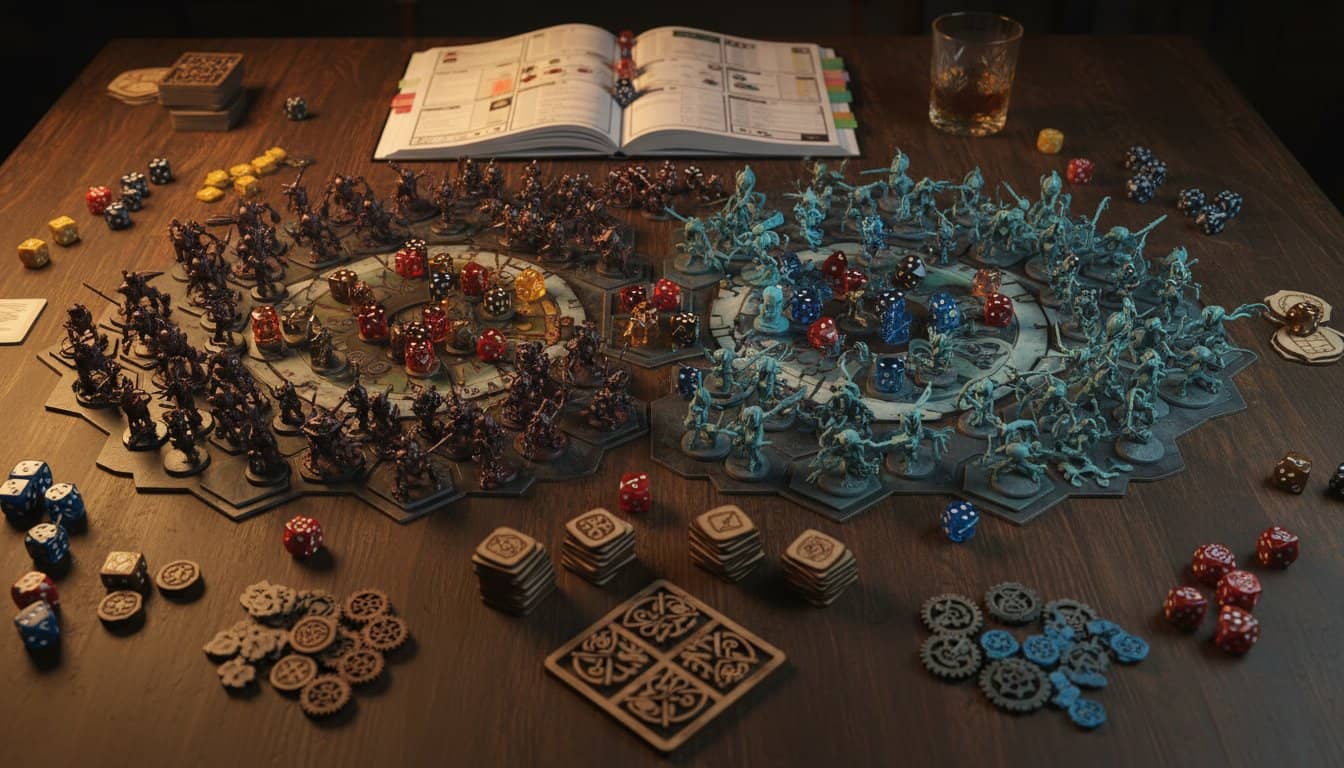
Geek culture is routinely stereotyped as an introverted, solitary pursuit. This is the opposite. Modern TTRPG campaigns thrive entirely on cooperative storytelling rather than lone-wolf victories, requiring intense face-to-face communication and problem-solving. You are constantly calculating probabilities, managing character stats, and improvising dialogue in real-time.
It acts as a forced, offline social framework. If you want a proven method to make friends as a geek, roll a 20-sided die. You cannot multi-task or parse a tabletop system behind a screen. It demands your full cognitive presence in the room, making it a highly effective form of social engineering.
Cooperative and asymmetric board games
Both board games and TTRPGs fall under the broader umbrella of ‘Analog World-Building.’ Modern board games are tabletop simulations that abstract complex resource management and conflict resolution into cardboard and plastic components. Throw out your preconceptions of roll-and-move games like Monopoly. The current era of Board Games spans heavy strategy, deduction, and cooperative survival.
The intellectual draw is entirely systematically driven. You sit down with a group simply to untangle a new ruleset. Players decode core gameplay mechanics and master asymmetric strategy, a specific design format where every single player at the table operates under a completely different set of rules and win conditions.
It is an exercise in collective logic. Learning a 40-page rulebook isn’t a barrier to entry; deciphering that system is the actual game. You are running physical algorithms to out-maneuver your friends.
“You are running physical algorithms to out-maneuver your friends.”
Custom mechanical keyboards
Building mechanical keyboards is the process of sourcing and assembling individual printed circuit boards, cases, and keycaps into a highly personalized external input device. For developers or database architects, this is the ultimate physical translation of a digital life.

Standard computer hobbies keep you trapped behind a monitor, but a custom board sits right at your fingertips. The obsession scales down to the millimeter. Tech enthusiasts spend hours carefully hand-lubricating tiny plastic stems to eliminate spring ping. Modifying mechanical switches to achieve the absolute perfect tactile feedback and acoustic profile is the primary goal.
Building Mechanical Keyboards scratches a specific psychological itch. Off-the-shelf consumer goods fail to provide total micro-engineering control. Hand-wiring your own workstation interface gives you absolute authority over the tools you interact with for eight hours a day.
Scale model railroading
Scale model railroading is the precise miniaturization of functional transit systems, combining structural engineering with artistic diorama construction. Model Trains are widely dismissed as simple childhood toys. This is a massive underestimation. Adult hobbyists treat these systems as complex electrical routing and spatial mapping projects.
According to the publication Only Trains, the process of building a model train set lets you design complex environments from the ground up. You shift from basic wooden tracks into serious scale modeling to map out intricate layouts that demand custom wiring, voltage management, and terrain sculpting.
You can restrict yourself to realistic depictions of historical transit routes, or drop a fully wired steam locomotive into an elaborate, scratch-built fantasy display—like a prehistoric Jurassic Park diorama. What begins as a train quickly becomes absolute environmental mastery.
Astronomy and stargazing
While astronomy relies on strict scientific data analysis, the experiential practice of Stargazing involves using specialized optics to locate, identify, and log astronomical phenomena from the dirt. If you need a solitary, quiet counterpart to heavily social tabletop sessions, this is the target. It requires nothing more than a quality telescope or heavy-duty binoculars.
The technical appeal lies in mastering the hardware to capture fleeting events. Logging satellite passes, predicting meteor showers, and executing persistent celestial tracking via precise optical observation turns the night sky into a massive database.
It appeals to the completionist mindset. Astronomy invites you to gather data and spot anomalies in real-time without hoarding any physical items. You are merely collecting proof of observation.
Real-world IDing and field observation
IDing is a genre of field observation that involves actively spotting and cataloging specific real-world subjects. Whether you are deep into Birding or tracking down early-production Electric Vehicle platforms via specialized Car Spotting, the neurochemical loop is identical. You apply a digital database to the physical world.
It hits the exact same psychological reward centers as catching Pokémon. You have to memorize spec sheets, migration patterns, or rare production variants. After studying the data, you step outside and deploy high-level pattern recognition to execute real-world IDing.
The environment becomes a live-action logbook. This discipline gets you away from your desk while directly appealing to the geeky urge to classify, categorize, and complete complex datasets.
Curated physical media collecting
Curated physical collecting is the intentional acquisition, preservation, and cataloging of culturally significant artifacts. Mindless accumulation is just hoarding. True collecting is strictly about archival preservation—grading classic gaming cartridges, organizing tabletop miniatures, or sourcing Pokémon cards, games, and figurines.
In a modern era where digital ownership is nothing more than a revocable server lease, maintaining physical items matters. It also serves as a critical bridge. Sharing a carefully indexed binder drives collection curation and generational bonding, giving you a tangible way to raise nerdy kids who actually respect the history of the medium.
Community initiatives like Geeks Stand Together frequently highlight how these shared generational interests create lasting familial stability. You pass down the hardware, the history, and the system simultaneously.
The generative power of adult play
Finding a new analog pastime is about challenging your brain in a different direction. Whether you are dialing in British amp distortion, logging an orbital satellite, or watching creators like Girl in Gamerland dissect industry hardware, the core value lies in the friction. The difficulty is the point.
Production networks like Metal Ninja Studios understand that true geek culture thrives on creation, not just consumption. The true metric of a hobby isn’t the subject matter. It is the depth of obsession and generative energy you pour into it. Pick one analog system this weekend, read the documentation, and start building.
Frequently Asked Questions
What is asymmetric strategy in modern board gaming?
Asymmetric strategy is a game design format where every player at the table operates under completely different rules and win conditions. Instead of everyone racing for the same unified goal, players must decode their unique mechanics while trying to out-maneuver their friends. This setup transforms the act of deciphering a complex, 40-page rulebook into the actual core gameplay.
Why does real-world IDing feel so similar to playing video games?
Field observation hobbies like birding or car spotting hijack the exact same psychological reward centers as catching Pokémon. You memorize complex databases of migration patterns or rare production specs, then deploy high-level pattern recognition in the physical world. It transforms your environment into a live-action logbook that perfectly feeds the geeky urge to categorize and complete datasets.
How does building a custom mechanical keyboard eliminate spring ping?
Spring ping is the hollow, metallic sound off-the-shelf hardware makes, and fixing it requires meticulous micro-engineering down to the millimeter. Tech enthusiasts spend hours carefully hand-lubricating tiny plastic stems inside individual mechanical switches to deaden the friction. This level of physical modification gives software developers absolute acoustic and tactile control over the interface they touch all day.
Is physical media collecting actually worth the effort in a streaming era?
Absolutely, primarily because modern digital ownership is essentially nothing more than a revocable server lease. Curated collecting focuses on the active archival preservation of artifacts like classic game cartridges or rare trading cards rather than mindless hoarding. Maintaining these physical items provides a permanent collection and a tangible way to bond with the next generation of geeks.
What’s the difference between covering video game soundtracks and just listening to them?
Passive listening is just absorbing ambient noise, while performing classic 8-bit or 16-bit soundtracks forces you to actively dissect acoustic composition. It requires heavy gear tuning, like using amp modeling to match the exact decay of a vintage reverb or dialing in specific distortion profiles. You are physically reverse-engineering digital nostalgia into a raw, highly technical analog skill.
Can I use tabletop RPGs to naturally make friends as an introverted geek?
Yes. Because analog systems like Dungeons & Dragons demand your full cognitive presence, they act as a highly effective, forced offline social framework. You cannot multitask or hide behind a screen while you are constantly calculating probabilities and improvising dialogue in real-time. It organically bridges the gap between solitary introversion and intense face-to-face problem-solving.
How much specialized gear is actually required for amateur stargazing?
You only need a quality telescope or heavy-duty binoculars to successfully get started. The intellectual draw isn’t about hoarding massive amounts of equipment; it’s about mastering your optics to log fleeting events like satellite passes and meteor showers. This provides a solitary, data-driven collection loop without forcing you to clutter your house with physical items.