Ask anyone on a convention floor to name the most famous cosplayer in the world, and Jessica Nigri is the name that surfaces first. That recognition usually pulls a cluster of follow-up curiosity right behind it: how a single 2010-era costume snowballed into a career, what she’s actually worth, and what happened to her as the hobby grew into an industry. Her career didn’t run on a lucky algorithm roll or a television network’s blessing.
Nigri’s trajectory runs on a viral Pikachu breakout that captured early nerd-culture blogs before cosplay went mainstream, a reality-TV appearance that amplified an audience she already owned, and an independent business infrastructure. She pairs subscriptions, merchandise, and sponsorships with steady convention work. Exact net-worth and earnings figures for Jessica Nigri aren’t public, so the real measure of her trajectory sits in the documented milestones that turned a grassroots costume hobby into a self-sustaining enterprise.
Key Takeaways
Jessica Nigri built her career across three compounding stages: a viral Pikachu cosplay in the early 2010s, mainstream television amplification, and an owned business stack combining convention photo shoots, news-outlet work, Patreon subscriptions, merchandise, and sponsorships.
Syfy’s 2013 reality series Heroes of Cosplay paid its nine-person main cast $400 per episode ($2,400 per season) with zero editing control, while Nigri appeared only as cast member Monica Lee’s already-famous best friend.
Nigri outlasted the 2010s television wave by stepping back after a pre-Katsucon burnout on a Final Fantasy X Lulu build, resetting with World of Warcraft, and still drives an estimated 90% of handmade Ranni cosplays alongside creator Sarah Spaceman.
Table of Contents
Who is Jessica Nigri and why is she famous
Jessica Nigri ranks among the most recognizable cosplayers globally. Working as a promotional model and internet personality, she makes a full-time living from cosplay through convention photo shoots and news-outlet work, as documented by the blog From Dice to Controllers and video essayist Sarah Spaceman. Rooster Teeth also featured her life and costume-making process in the documentary Becoming Jessica Nigri. She reached the top rank of standout female cosplayers by arriving just before the subculture went mainstream with a viral, photographable Pikachu build that spread across early nerd-culture blogs and forums and launched her into internet stardom.
The Pikachu breakout that started it
Timing acts as a force multiplier when a subculture is about to cross over. In the early 2010s, the general public barely knew cosplay existed, and television networks were only just starting to pitch reality formats framed like The Real Housewives or Big Brother in wigs. Dropping a striking, camera-ready Pikachu costume onto nerd blogs right before professional cosplay infrastructure existed let Nigri catch every subsequent platform wave from the front.
- Viral Pikachu breakout: A highly photographable build that circulated across early-2010s gaming and nerd-culture forums, turning her into an internet fixture before algorithms dictated reach.
- Character range and media profile: Her portfolio expanded to include characters like Deadpool, while Rooster Teeth’s documentary Becoming Jessica Nigri chronicled her behind-the-scenes crafting process and career arc.
- On-screen reputation vs. uncredited prestige: When she appeared on Syfy’s Heroes of Cosplay, cast member Monica Lee introduced Nigri’s schtick as liking to cosplay sexy characters and put her body out there, even though Nigri was already one of the most famous cosplayers in the world whose prestige went unrecognized on the show because she wasn’t part of the cast.
Cosplay before the mainstream knew it existed
Nobuyuki Takahashi coined the term “cosplay” in 1984 after attending a US science-fiction convention and watching fans bring characters to life. At the workbench level, the hobby is an art form and lifestyle requiring the fabrication skill to build a suit, plus the courage to perform as that character on a crowded floor. Builders take it on for personal expression or for pay, bonding across wildly different backgrounds over foam patterns and seam lines, even when materials cost serious money that convention contest prizes almost never cover.
Heroes of Cosplay: the TV exposure machine
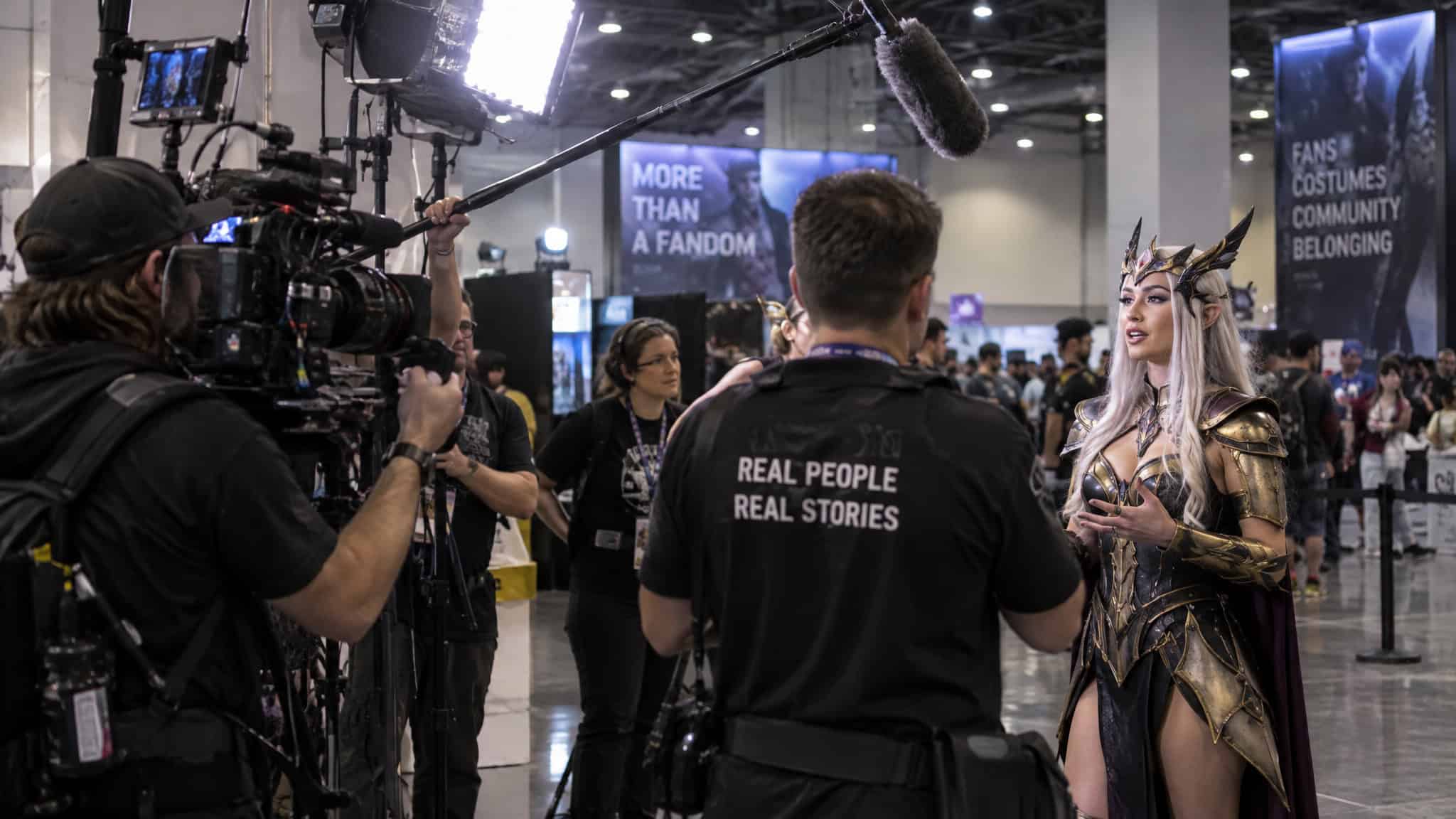
Jessica Nigri was an uncast guest on Syfy’s Heroes of Cosplay whose pre-existing internet fame the 2013 reality series amplified rather than created, even as the show’s production economics and editing failed its actual cast. Produced by 51 Minds Entertainment under NBC Universal with producer Mark Cronin, the first cosplay reality TV show shot in 2012 and aired in 2013. Syfy cancelled it after labeling its second run “season 1.5.” Nigri stepped on camera simply as cast member Monica Lee’s best friend to comfort her after judging.
The $400-per-episode economics
Episode one had to introduce cosplay itself to first-time television viewers, and the intro sequence framed the hobby as artistic, sexy, and cutthroat, with money, fans, and business opportunities on the line. The season-one ensemble featured Yaya Han as pseudo-host alongside eight other cosplayers, with women making up eight of the nine featured builders. Production followed them across Emerald City Comic-Con, Megacon, Anime Matsuri, Ottawa Pop Expo, Stan Lee’s Comic-Con, Wizard World New Orleans, and Animate Miami. Cast members were paid $400 per episode, totaling $2,400 per season, under contracts that handed NBC Universal and production final editing rights, barred cast control over their portrayal, and enforced non-disclosure agreements against disparagement.
Episode one: the cast won almost nothing
Monica Lee had attended Dragon Con since age 12. For the premiere, she built a fanart-based steampunk Poison Ivy using a giant can of barge cement with help from Holly Conrad and Jessica Marizan. On camera, she drew concern from Yaya Han that Nigri’s sexy style would seduce her away from craftsmanship. At the episode-one contest, Becky won an honorable mention, Holly and Jessica won Best Team, Victoria failed to finish her Lulu costume in time, and all top three places went to non-cast entrants, establishing a losing pattern that held across nearly every contest on the show.
How Jessica Nigri turned fame into a business
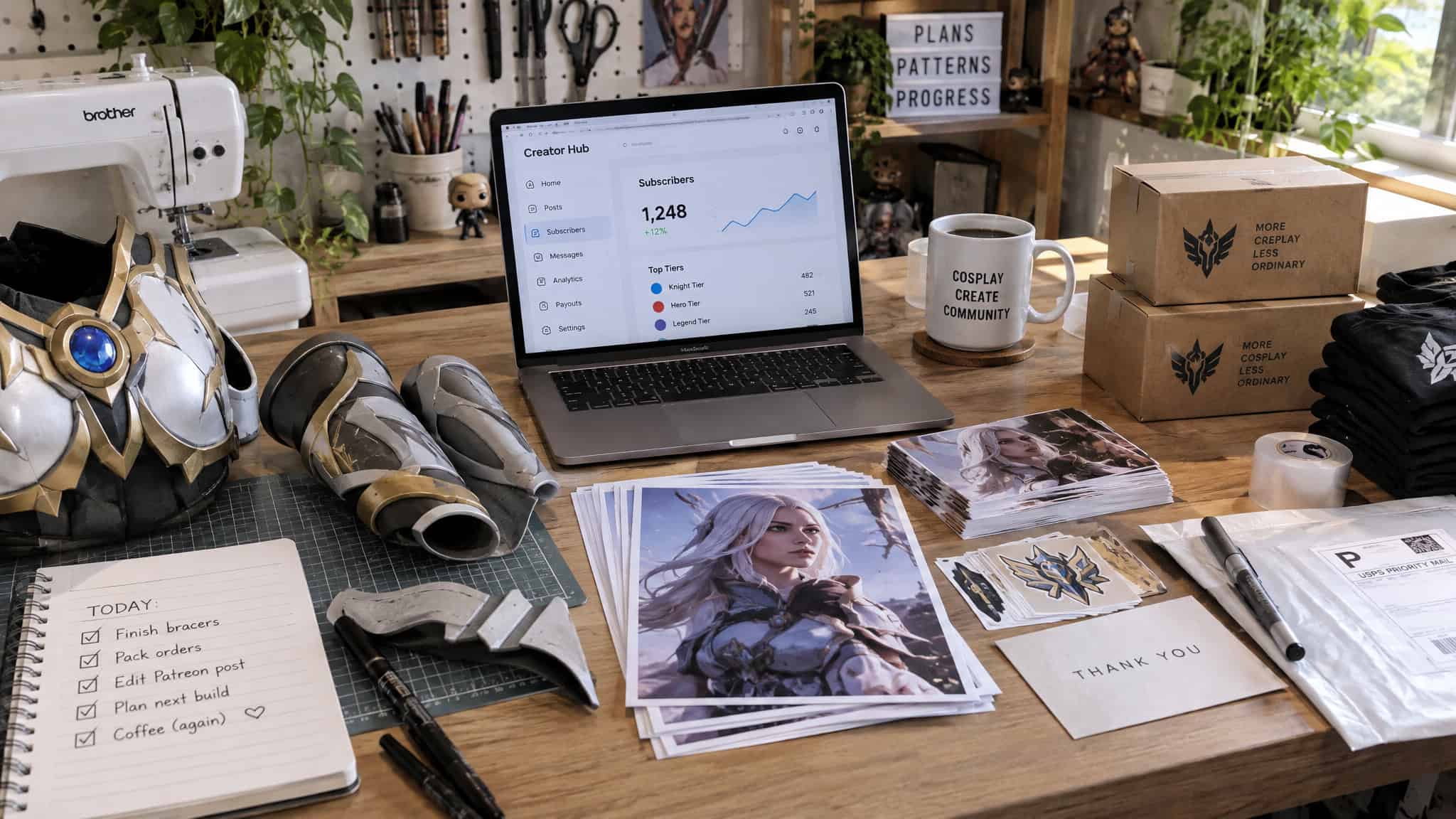
Jessica Nigri makes her living from cosplay by combining paid convention appearances, photo shoots, and convention news-outlet work with an owned monetization stack of Patreon subscriptions, merchandise, and brand and spokesmodel deals. While early convention circuits offered little more than modest contest prize envelopes and basic appearance stipends, she converted her initial viral traffic into direct-to-fan channels that gave her commercial leverage without tying her survival to a television network contract.
- Subscription platforms: Direct recurring support through Patreon, where fans fund ongoing costume builds and photo sets without an intermediary network taking editorial control.
- Convention floor and media work: Paid convention appearances, dedicated photo shoots, and on-camera reporting for convention news outlets.
- Merchandise sales: Direct print and physical merch operations that monetize each new build across her existing audience.
- Brand sponsorships and spokesmodeling: Commercial partnerships with gaming and geek-culture companies that pay to reach the audience she already owns.
Look at that setup like a system architecture and the resilience makes immediate sense. Viral attention is volatile if it stays trapped on someone else’s feed. By funneling early-2010s blog traffic into owned channels, Nigri built a self-reinforcing loop: audience scale funds bigger builds and regular streaming or crafting tutorials, which in turn generates the reliable reach that sponsors pay for. If a single social platform throttles reach or a television show gets cancelled after “season 1.5”, the underlying economics of cosplay income in her stack keep running.
Other veterans from the Heroes of Cosplay orbit solved the monetization problem through specialized fabrication shops rather than personal media empires. Cast member Jesse, who had five years of experience and had never competed before the show, channels his craft into running Midnight Armor, a prop and armor business tied into the fabrication community. Both routes treat cosplay as a real trade, though Nigri’s personal-brand pipeline operates at a different scale.
Does Jessica Nigri cosplay just for attention?
Jessica Nigri cosplays out of a genuine love for the craft rather than a bid for cheap attention, a reality proved by complex, covered-up builds like her Magneto cosplay and the baseline rule that her costume coverage follows the source character she’s portraying. During the Heroes of Cosplay run, critics and on-screen commentary pushed the opposite narrative: Yaya Han stated on the broadcast that Nigri’s content displays cosplay in the wrong light, showcases nothing beyond sex appeal, and lacks balance. That critique misses how character design works in gaming and comics.
When Nigri builds a revealing suit, the skin exposure is part of the character’s canon silhouette; when she builds Magneto, she demonstrates high-level armor and fabric execution without showing excessive skin. Cosplay can be sexy without sexy cosplay becoming the whole hobby, and a retrospective cast interview rightly calls the “sexy cosplay is the easy route” argument elitist. Viewers dissecting those decade-old reality-TV arguments today should also remember that the show’s conflicts were heavily edited and shouldn’t be used as an excuse to harass any of the cosplayers involved.
Why the fame lasted: burnout and her own definition of success
Jessica Nigri remains active and ranks among the most successful cosplayers in the world because she survived severe career burnout by stepping away from external expectations and re-anchoring her work in personal enjoyment and community relationships. Speaking with The Inner Gamer at a FAN EXPO Dallas 2018 panel, she explained that longevity in a monetized hobby requires building connections in the scene and still genuinely loving the art over a long span of time, rather than chasing validation from critics.
The pre-Katsucon burnout
Turning a creative passion into a full-time job carries a classic maker trap: building for the audience’s checklist instead of your own bench. As documented in a documentary and recounted at her 2018 Dallas panel, Nigri hit a wall while constructing an intricate Lulu costume from Final Fantasy X ahead of Katsucon. Mid-build, she realized she was doing the project for the wrong reasons and putting intense pressure on herself to impress people she didn’t need to impress. She quit the Lulu build, stepped back from cosplay completely, and spent time playing World of Warcraft until her natural excitement for making costumes returned on its own.
What success means to her
That reset established the operating boundary that keeps her career running. At FAN EXPO Dallas 2018, she defined a successful cosplayer as a creator who forges strong community ties, enjoys the process, and genuinely still loves the art over the long haul. She also keeps a hard kill-switch on her career: the moment she gets sick of cosplay, she’s out.
Castmate outcomes and the cosplay fame hierarchy
Tracking the Heroes of Cosplay roster after the cameras shut off splits the cast into three distinct camps: those who became more famous, those who quit, and those who were left behind. Television exposure alone didn’t mint lasting cosplay careers. Take Victoria: she was a 14-year veteran given just one week on the show for her Lulu build. She reached just under 12,000 Instagram followers from her TV stint and only recently returned to cosplaying. Becky kept cosplaying without a major career boost, Jessica Marizan shifted mostly to family life with occasional Halloween costuming, and Indra Rojas and Miguel faded from the scene.
The castmates who thrived either pivoted into adjacent media or specialized in studio fabrication. Holly Conrad found major success making Dungeons & Dragons YouTube content while still cosplaying, Meg Turney married Gavin Free and built a Twitch streaming career, Chloe became an award-winning filmmaker, Monica Lee became a Blizzard product manager, Jesse runs Midnight Armor, and Carl works as a full-time prop maker. Nigri, meanwhile, still drives what the community actually builds at the workbench: video creator Sarah Spaceman estimates that Nigri and Spaceman herself account for roughly 90% of handmade Ranni cosplays, an observer estimate that shows how Nigri’s tutorials and builds still set the crafting queue years after her viral debut.
What Heroes of Cosplay never showed about contests
Real cosplay competitions run by bodies like the International Cosplayers Guild and the World Cosplay Summit are decided in prejudging rooms where judges become roughly 90% sure of their rankings before the stage show even starts, a core mechanic Heroes of Cosplay completely omitted while its cast lost nearly every contest across Season 1 and Season 1.5.
Prejudging: where contests are actually decided
Before any stage walk-ons or skits happen, judges spend about three minutes per entrant up close flipping hems, inspecting wigs, and shaking props. Unlike closed studio competition formats such as Project Runway or Ink Master, Syfy filmed at real conventions against unaffiliated entrants, yet used two out of three episode-one industry-guest judges who didn’t understand cosplay and staged unnatural on-stage Q&A.
Skill divisions the show never explained
The broadcast never explained novice, journeyman, and masters skill divisions, why specific builds won or lost, or the standard etiquette that encourages builders to re-enter unplaced costumes at another event while treating the re-entry of prior winners as bad form.
Behind the camera: how the show was made
Producer Mark Cronin’s reality-TV machinery distorted the Heroes of Cosplay cast through zero participant editing control, grueling two-week build schedules across a six-week back-to-back convention tour, and deceptive cuts, often explained with a “hot dogs with mustard” editing example showing how cutting distorts statements, that pinned a controversial Superman comment on Yaya Han for a decade.
Staged drama and editing control
Cronin, who said he was drawn to cosplay for money and sex, cast for attractiveness after a “don’t you want to be a star?” Syfy pitch, and contrasted $500 contest prizes with $2,000 builds, gave the cast none of the producer power seen on RuPaul’s Drag Race. Production kept cast members tired and hungry, offered wine when filming soured, fed lines in isolated confessionals where 25-year veteran Yaya Han wore the same red dress across six episodes, faked a Wizard World Portland grand entrance, showed Monica’s photo instead of the real Godoka winner, and staged unpainted-to-painted rocket-pack drama and commissioned-jacket storylines.
The two-week build treadmill
Most cosplayers enter one or two contests a year, and even though Yaya can finish a build in three days, forcing a new cosplay every two weeks caused physical exhaustion, hospital visits, cast-funded prop shipping, and Yaya pre-making “cooking show” parts just to survive filming.
The Superman comment misattribution
Editing pinned the line warning that a 300-pound Superman cosplayer should expect awful comments on Yaya Han for ten years, costing her followers and signed merchandise despite her clarifications on Facebook and the Cosplay Crunch podcast that all sizes and skin tones should cosplay, until Rikki (Riddle) confirmed in an August 21 Facebook post that she had actually said it, all against a pre-MeToo convention backdrop where Dragon Con harassment only stopped once cast members had guest-badge security.
The mainstreaming tradeoff: damage and legitimacy
Heroes of Cosplay left a split industry legacy: Jessica Nigri’s independent career continued to thrive outside the show’s cast, while Yaya Han weathered the broadcast’s reputational damage to build retail legitimacy through Joann cosplay fabric lines, McCall’s sewing patterns, and a branded sewing machine. Han had originally pitched a documentary to protect how the hobby was portrayed, got handed a competition format instead, insisted on judging, and competed for the last time in her career at Planet Comic-Con on Cronin’s proposal.
Cast defenders argue the show was a net positive because it normalized cosplay for the general public and parents of young cosplayers while giving the first television mentions to handlers, competition communities, and fabrication materials like Worbla, EVA foam, XPS foam, resin, and Sintra. Critics counter that the Real Housewives-style production fostered contest cheating and bruised cast reputations. For anyone who wants to learn how the craft actually works without the reality-TV distortion, Yaya Han’s book remains the far better introduction to cosplay.
Frequently Asked Questions
How rich is Jessica Nigri?
Exact net-worth and income figures for Jessica Nigri are not publicly disclosed. What is documented is how she earns a full-time living: an independent business stack that combines Patreon subscriptions, merchandise sales, brand sponsorships, paid convention appearances, photo shoots, and convention news-outlet reporting.
Who is the most famous cosplayer and where does Jessica Nigri rank?
Jessica Nigri ranks at the very top of the global cosplay hierarchy and is typically the first name mentioned on a convention floor. She reached that tier by turning an early-2010s viral Pikachu breakout into mainstream media appearances—including Rooster Teeth’s documentary Becoming Jessica Nigri—and a self-sustaining independent business.
How did Jessica Nigri become the most famous cosplayer?
She caught the subculture right before it went mainstream with a highly photographable Pikachu costume that spread across early-2010s nerd blogs and forums. From there, her existing internet fame was amplified by television appearances like Syfy’s Heroes of Cosplay, and she locked in long-term reach by channeling fans into direct-to-consumer platforms rather than relying on network contracts.
Does Jessica Nigri cosplay just for attention or because she loves it?
She cosplays out of a genuine love for fabrication and character design, with her level of skin coverage simply matching whatever source character she is portraying. When a canon design is revealing, she builds it that way, and when she tackles heavily covered characters like Magneto, she proves her armor and sewing execution without relying on sex appeal.
