Ask any gamer, “Which country is no. 1 in gaming?” and you’ll likely spark a debate hotter than a GPU running Cyberpunk 2077 on ultra settings. Is it China with its sheer army of players? Or maybe the United States with its massive library of console hits?
I’ve spent years tracking these shifts. I’ve watched trends move from Tokyo arcades to Stockholm indie studios and now to mobile screens in Mumbai. The answer isn’t just about who has the most players. It is about who spends the most, who builds the best tech, and who shapes the culture.
Ready to see who actually wears the crown in 2026? I’ve crunched the latest numbers to show you exactly where the gaming world stands right now.
Grab a controller (or your phone), and let’s break it down.
Key Takeaways
China leads the world in player count with over 723 million gamers and is projected to hit $53.2 billion in revenue for 2025, driven by mobile giants and new AAA hits like Black Myth: Wukong.
The United States is a close second in revenue at $49.8 billion, fueled by high-spending console players and massive franchises like Call of Duty and Grand Theft Auto.
Japan remains the creative heart of the industry, generating $17.6 billion thanks to powerhouse companies like Nintendo and Sony dominating the hardware game.
South Korea continues to rule the esports scene with its unique “PC Bang” culture, while Germany hosts the world’s largest gaming event, Gamescom, attracting over 335,000 visitors.
India is the fastest-growing major market with 500 million gamers, where 95% of players use mobile devices to play titles like Battlegrounds Mobile India (BGMI).
Table of Contents
Top Countries Leading in Gaming
Some nations just get it. They don’t just play games; they live them. From the neon streets of Akihabara to the packed arenas of Cologne, a few key players define how we all experience this medium.
Let’s look at the heavy hitters shaping the industry today.
Why is China a leader in gaming?
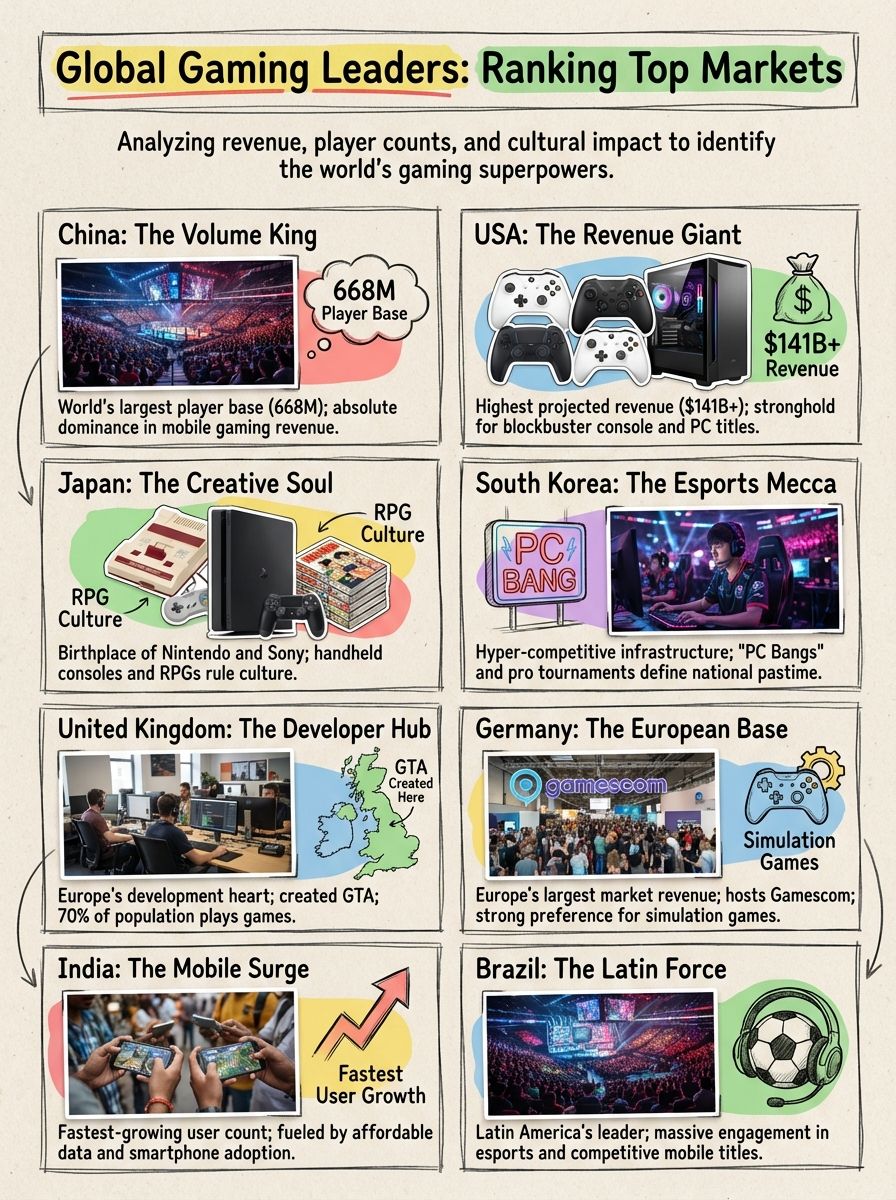
China is simply massive. It holds the title of the largest gaming market by player count, with a staggering 723 million gamers. That is more than double the entire population of the United States.
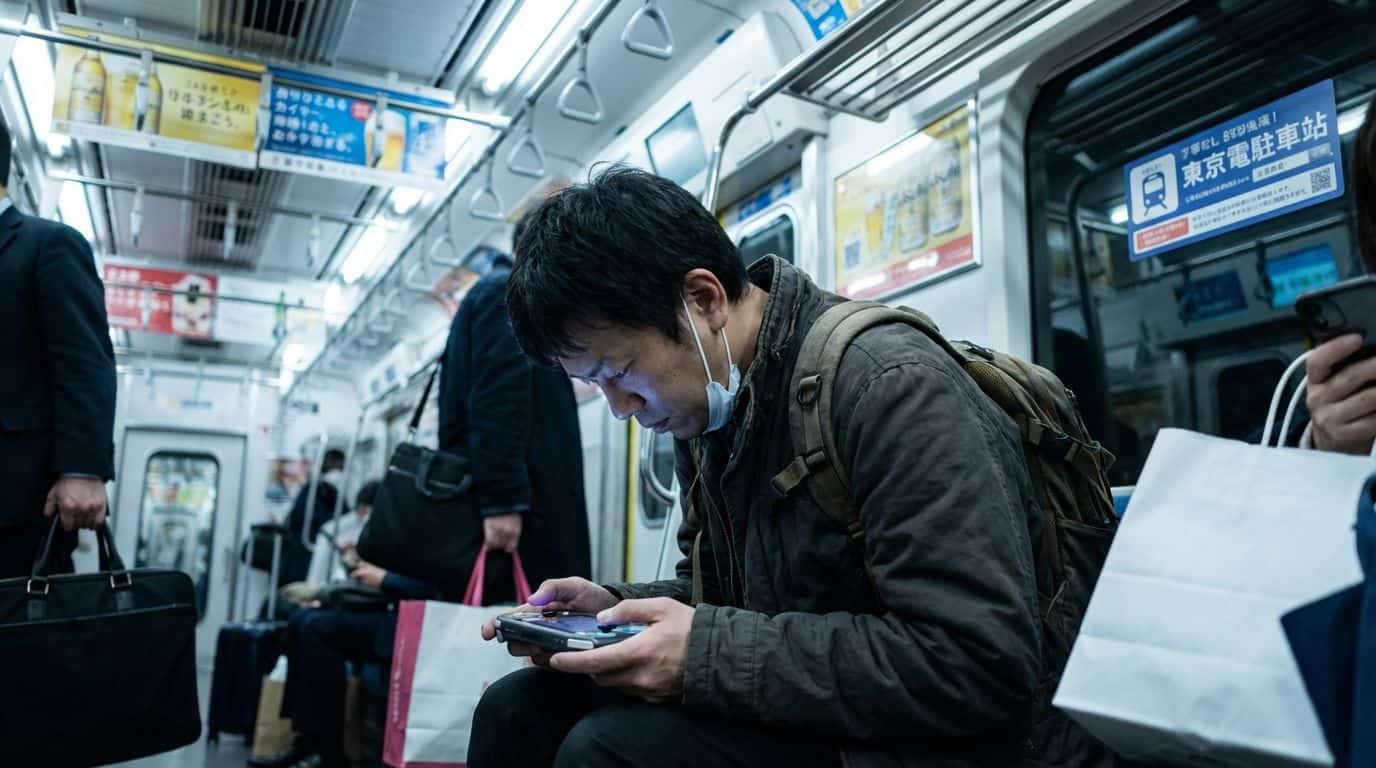
The real story here is mobile dominance. If you visit Shanghai or Beijing, you will see commuters on the subway laser-focused on Honor of Kings or Genshin Impact. These aren’t just casual time-killers; they are lifestyle apps. Chinese developers accounted for 47% of global mobile game revenue in recent years.

But the tide is turning toward high-end PC games too. The 2024 release of Black Myth: Wukong by Game Science proved that Chinese studios can deliver AAA blockbusters that rival any Western studio. It shattered records on Steam and signaled a new era for the region.
Insider Tip: If you want to try region-locked Chinese games, be prepared for high latency. Most serious players outside China use specialized “game boosters” or VPNs like UU Game Booster to stabilize their connection to Chinese servers.
The government plays a huge role here as well. While they have enforced strict rules—like the famous “three hours a week” limit for minors—they also invest heavily in esports infrastructure. Cities like Hangzhou have built dedicated esports towns to host global events.
What makes the United States top in gaming?
While China has the headcount, the United States brings the cash. American gamers are incredibly valuable to publishers because they spend heavily on consoles, subscriptions, and in-game items. The U.S. market is forecast to generate $49.8 billion in 2025.
This is the land of the console war. Microsoft (Xbox) and Sony (PlayStation) battle fiercely for American living rooms. You also have the PC gaming heavyweights here. Valve, the company behind Steam, is based in Washington, and Epic Games operates from North Carolina.
The culture here is built on blockbusters. When a game like Grand Theft Auto VI or a new Call of Duty drops, it’s a national event. You see lines at stores and server crashes from the sheer volume of players logging in at midnight.

| Feature | China Market | United States Market |
|---|---|---|
| Primary Platform | Mobile (95% dominance) | Console & PC |
| Top Revenue Driver | In-App Purchases (Gacha) | Premium Game Sales & Subscriptions |
| Key Regulation | Strict play-time limits for minors | Open market (ESRB ratings only) |
Another unique factor is the rise of dedicated esports venues. Places like the HyperX Arena in Las Vegas have turned competitive gaming into a spectator sport that rivals boxing matches. It is a must-visit spot if you are ever in Vegas and want to see how pro tournaments are run.
How does Japan influence the gaming industry?
Japan is the spiritual home of video games. If you grew up playing Super Mario, Sonic, or Final Fantasy, you have Japan to thank. This country generates a projected $17.6 billion annually.
Hardware is king here. Nintendo and Sony are both Japanese companies, and their influence is unmatched. The Nintendo Switch has been a dominant force, selling over 33 million units in Japan alone. You see them everywhere, from cafes to trains.
The “Otaku” culture in districts like Akihabara in Tokyo drives a unique market for physical games and collectibles. However, a pro tip for visitors: Akihabara is often a tourist trap now. For better deals on retro games and rare finds, check out Nakano Broadway or the Super Potato stores in Osaka instead.
Mobile gaming is also huge but different from China. Japan pioneered the “Gacha” mechanic (lottery-style unlocking of characters), which powers billion-dollar hits like Fate/Grand Order.
What role does South Korea play in gaming?
South Korea is arguably the most competitive gaming nation on Earth. This is where esports was born. In the late 90s, the government pushed for high-speed internet, leading to the creation of PC Bangs (gaming cafes). These aren’t just internet cafes; they are social hubs where gamers eat, drink, and train.
The market here is worth around $7.8 billion to $14.6 billion depending on what sectors you count. But the cultural impact is priceless. Pro players like Faker (Lee Sang-hyeok) are treated like A-list celebrities. His team, T1, even opened a premium PC Bang in Seoul called T1 Base Camp, which sells team merchandise and offers high-end rigs for fans to rent.
Koreans take gaming seriously. It’s a viable career path. Academies like the Nongshim Esports Academy train students to become pros, broadcasters, or coaches. If you play on a Korean server, bring your A-game, because the average skill level is notoriously high.
Why is the UK a global hub for game development?
The UK might be small geographically, but its code is everywhere. This country is a creative powerhouse, responsible for the Grand Theft Auto series (created by Rockstar North in Edinburgh) and the Forza Horizon series (by Playground Games in Leamington Spa).
Revenue is strong, sitting at roughly $6.6 billion. This financial success draws from a diverse spectrum of entertainment; beyond console blockbusters, there is a massive market for iGaming and slots, where titles like the angling-themed Big Bass Bonanza have become massive hits among British players.
Culturally, the UK loves a good simulation and strategy game. The Football Manager series is practically a religion here. There is also a great appreciation for gaming history. The National Videogame Museum in Sheffield is a fantastic spot that preserves playable exhibits of consoles from the past 40 years.
Why is Germany important in gaming?
Germany is the largest gaming market in Europe, generating about $7.0 billion. But its biggest contribution is bringing people together. Germany hosts Gamescom in Cologne, the largest gaming event in the world by attendance.
In 2024, Gamescom attracted over 335,000 visitors from 120 countries. Unlike E3 (which is gone), Gamescom is open to the public. You can buy a ticket, walk the floor, and play unreleased games. If you plan to go, book a “Wildcard” ticket months in advance for Tuesday entry to beat the worst of the crowds.
German players love PC gaming, especially simulators. Farming Simulator and various truck simulators consistently top the sales charts here. It is a market that appreciates technical depth and realism.
What factors make a country excel in gaming?
It’s not just about population. A true gaming powerhouse needs three things: high-speed infrastructure, disposable income, and a culture that embraces play. You need fast fiber internet to lower ping, and you need a population that can afford $70 games or $500 consoles.
How much revenue does gaming generate?
The numbers for 2025 are staggering. The global gaming market is moving toward $200 billion. Here is how the top contenders stack up in terms of pure revenue according to the latest Newzoo forecasts.
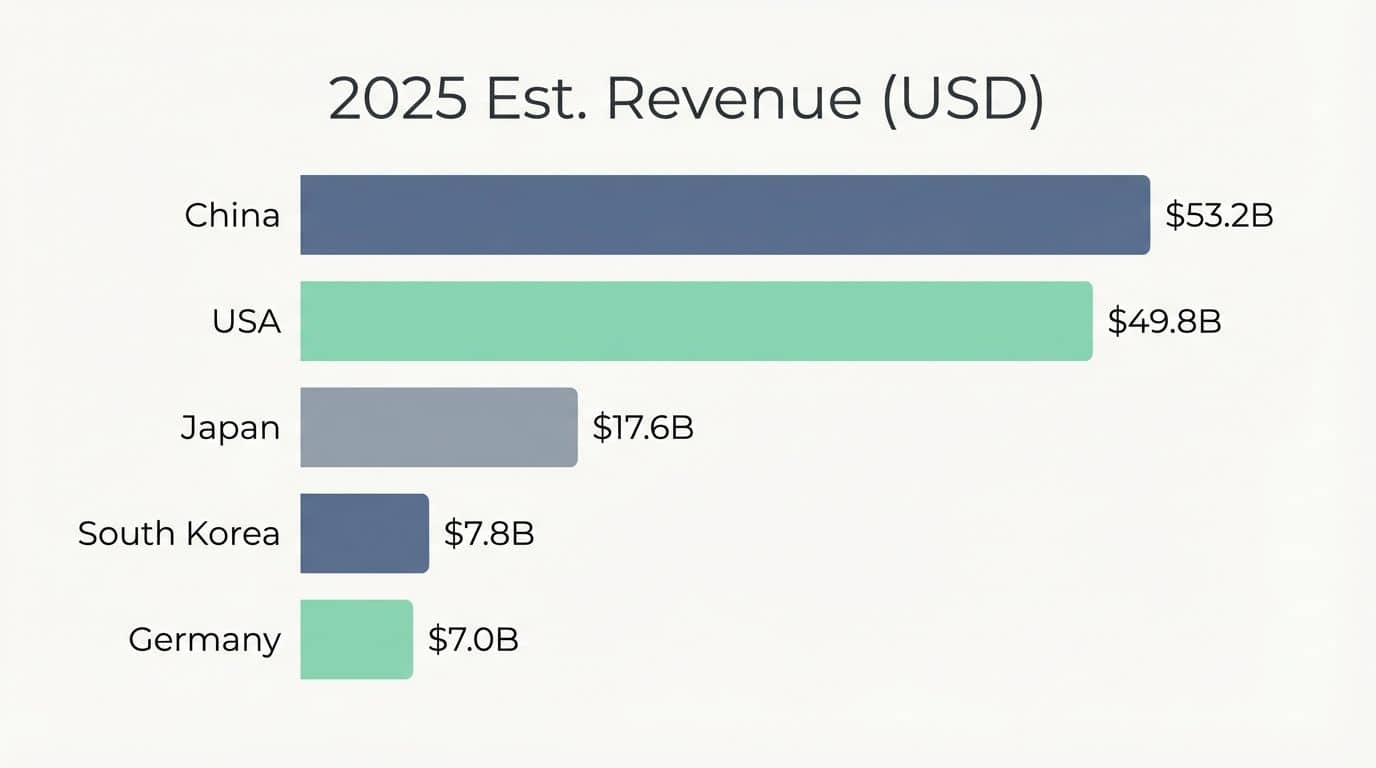
| Country | 2025 Est. Revenue (USD) | Top Local Favorite | Key Characteristic |
|---|---|---|---|
| China | $53.2 Billion | Honor of Kings | Mobile-first, massive scale, high government regulation. |
| United States | $49.8 Billion | Call of Duty / Fortnite | High spender per capita, dominates console market. |
| Japan | $17.6 Billion | Monster Hunter | Console hardware leaders (Sony/Nintendo), loyal fanbase. |
| South Korea | $7.8 Billion | League of Legends | Esports capital, PC Bang culture, competitive focus. |
| Germany | $7.0 Billion | FIFA (EA FC) | PC heavy, simulator lovers, hosts huge events. |
| United Kingdom | $6.6 Billion | Grand Theft Auto | Creative hub, “Silicon Spa” developer concentration. |
How many gamers does the country have?
Revenue tells one story, but player count tells another. If you want to find a person who loves gaming, your best odds are in Asia. The scale of the player base in these regions is hard to comprehend until you see the data.
Here is a breakdown of the active player populations.
- China: ~723 Million (The undisputed king of volume).
- India: ~500 Million (The fastest growing, mostly mobile).
- United States: ~224 Million (High engagement across all platforms).
- Brazil: ~112 Million (Huge engagement on social titles).
- Japan: ~74 Million (A mature market with an aging but active player base).
What is the gaming infrastructure like?
Infrastructure defines how you play. In South Korea, you can find gigabit internet speeds in almost any apartment for a fraction of what you pay in the US. This low latency is why Korean players are so mechanically gifted in fast-paced games.
In the US, the infrastructure varies, but the rise of Cloud Gaming is smoothing out the rough patches. Services like NVIDIA GeForce Now and Xbox Cloud Gaming are allowing people with older laptops to play high-end games by streaming them from data centers.
China has taken a different approach with 5G. They have rolled out the world’s largest standalone 5G network, which is critical for their mobile-first population. It allows for console-quality multiplayer experiences on a phone while riding the bus.
Emerging Markets in Gaming
The old guard is established, but the new challengers are exciting. Keep your eyes on these regions because they are growing faster than anyone else.
Why is India an emerging gaming market?
India is a rocket ship right now. With 500 million gamers forecast for 2025, it is a volume monster. The catalyst was the “Jio Revolution”—when the telecom provider Jio launched ultra-cheap 4G data plans, suddenly bringing hundreds of millions of people online.
Mobile is 95% of the market here. The game that changed everything was PUBG Mobile (now Battlegrounds Mobile India or BGMI). It became a cultural phenomenon, proving that India wasn’t just a casual market but a hardcore competitive one. Tournaments for BGMI now fill arenas.

Fun Fact: Female gamers are rising fast in India. Reports show women now make up nearly 40% of the gaming population there, largely driven by accessible mobile titles and social puzzle games.
How is Brazil growing in the gaming industry?
Brazil is loud, passionate, and massive. The country generated nearly $2.7 billion in video game revenue recently. Like India, mobile is huge, largely due to high import taxes on consoles like the PlayStation 5 making them incredibly expensive (often double the US price).
The standout story in Brazil is Free Fire. This low-spec battle royale game runs on almost any phone, and it became the nation’s obsession. It spawned massive esports organizations like LOUD, which became the first esports team to reach 1 billion views on YouTube.
Local development is also picking up. The “Brazil Games” government program helps fund indie studios to present their work at international events like GDC in San Francisco.
How Will the Global Gaming Landscape Evolve in 2026?
Looking ahead, the lines between platforms are blurring. By 2026, we expect “Cross-Progression” to be the standard. You will play a game on your PlayStation at home and pick up exactly where you left off on your phone via the cloud.
Generative AI is the next big frontier. Tools like NVIDIA ACE (Avatar Cloud Engine) are beginning to power non-player characters (NPCs) that can hold real, unscripted conversations with you. Instead of reading the same three lines of text, you might actually chat with a quest giver.
Finally, keep an eye on hardware updates. With the rumored successors to current consoles, we will likely see a jump in performance that brings 4K gaming to more affordable price points. The future isn’t just about playing games; it’s about living in them.
People Also Ask
Which country holds the top spot in global gaming markets?
China currently dominates as the final boss of the global market, generating an estimated $53.2 billion in 2025 revenue. The United States is a close second with roughly $49.8 billion, but China’s massive army of over 720 million gamers keeps it securely in first place.
What makes China such a powerhouse in gaming?
It comes down to a mobile-first culture where titles like *Honor of Kings* and *Genshin Impact* aren’t just games, but daily rituals for millions. This massive engagement means developers can rely on a steady stream of microtransactions and updates that keep the ecosystem thriving.
How do other countries like Japan and South Korea rank among top global markets?
Japan holds the third spot globally, largely fueled by the massive anticipation for the Nintendo Switch 2 and a culture deep in RPG history. South Korea ranks fourth but punches way above its weight class as the mecca of esports, where icons like Faker and top-tier infrastructure drive the industry forward.
Does spending more money mean better gamers come from those countries?
No, because skill has nothing to do with market revenue. While China and the US spend the most, smaller nations like Denmark consistently produce top-tier *Counter-Strike* talent, proving that a competitive culture matters more than a big budget.
References
https://apcoworldwide.com/blog/the-role-of-gaming-and-esports-in-chinas-innovation-strategy/ (2024-08-20)
https://www.china-briefing.com/news/chinas-gaming-industry-trends-and-regulatory-outlook-2024/ (2024-02-22)
https://newzoo.com/resources/rankings/top-10-countries-by-game-revenues
https://carterjmrn.com/blog/japan-the-driving-force-behind-global-gaming-innovation/
https://www.trade.gov/market-intelligence/japan-entertainment-video-games (2025-12-16)
https://www.theguardian.com/world/2025/dec/25/south-korea-video-game-powerhouse (2025-12-24)
https://www.webskitters.uk/uk-is-becoming-a-global-game-development-hotspot/ (2025-10-20)
https://www.trade.gov/market-intelligence/germany-video-game-market (2025-05-16)
https://www.gtai.de/en/invest/industries/digital-economy/gaming-industry
https://keywordseverywhere.com/blog/number-of-gamers-stats/ (2025-03-23)
https://explodingtopics.com/blog/number-of-gamers (2026-01-12)
https://www.ibef.org/blogs/india-s-thriving-gaming-market (2024-08-13)
https://www.ijprems.com/uploadedfiles/paper/issue_6_june_2025/42244/final/fin_ijprems1750159849.pdf
https://www.bcg.com/publications/2025/video-gaming-report-2026-next-era-of-growth