
Many people wonder, what is the practical use of cryptocurrency beyond just trading and investing? It’s a great question. Digital currencies have exploded from a niche tech hobby into a major global market.
In fact, the total value of the crypto market has reached over $2.5 trillion in recent years, with thousands of different coins now available.
This blog will show you eight real ways that blockchain technology is being used in daily life right now. From buying things online to sending money across borders with minimal fees, crypto is changing how we handle money.
Key Takeaways
Cryptocurrencies are now a practical tool for daily shopping, peer-to-peer payments, and cross-border transfers, with major companies and payment processors integrating them into their systems.
Crypto provides true ownership of digital assets in gaming through NFTs. Play-to-earn games like Axie Infinity allow players to convert in-game items into real money on marketplaces like OpenSea.
International money transfers using stablecoins can cost less than $1 and settle in seconds. This is a significant saving compared to traditional bank wire fees, which the World Bank reports average over 6% globally.
Smart contracts automate agreements and are the engine behind Decentralized Finance (DeFi). Platforms like Aave and Compound offer services like lending and borrowing without needing a bank.
Tokenization allows for fractional ownership of assets like real estate and art (NFTs). This technology is also key to providing financial inclusion for the 1.4 billion adults worldwide who, according to the World Bank, still lack access to traditional banking.
Table of Contents
Everyday Transactions

Crypto has definitely moved beyond theory and into the real world. You can now use digital currencies for your daily spending, from grabbing coffee to paying for online services.
Big names like Microsoft now accept Bitcoin for some services, while payment apps like Cash App make it simple to send crypto to friends without involving a bank.
Online shopping

Using crypto for online shopping is easier than ever and offers some great benefits. Many e-commerce sites have started accepting digital currencies directly. For those that haven’t, services like BitPay act as a bridge.
You pay BitPay in your chosen crypto, and they handle paying the merchant in traditional currency. This simple process opens up millions of storefronts to crypto users.
Using crypto for online purchases gives you back control over your data, turning a potential privacy nightmare into a secure, direct transaction.
One of the biggest advantages is privacy. Unlike credit cards that require you to share sensitive personal information, crypto transactions don’t expose these details, protecting you from data breaches.
Transaction costs are also often lower. By cutting out middlemen like banks and payment processors, both you and the store can save money on fees.

Peer-to-peer payments

Cryptocurrency is a game-changer for sending money directly to another person. P2P platforms like Paxful connect buyers and sellers across the globe, removing the need for banks.
For instant, tiny payments, the Bitcoin Lightning Network is a fantastic tool. It allows you to send fractions of a Bitcoin with fees of less than a cent, and it confirms in seconds, not minutes.
I recently sent money to a friend overseas, and the whole thing was done in about five minutes. Compared to a bank wire transfer that can take days and cost up to 10% in fees, the savings in both time and money were huge.
Gaming and Entertainment

The worlds of gaming and crypto have merged in exciting ways. Blockchain technology now allows players to earn real money and truly own their in-game items.
Play-to-earn models

Play-to-earn (P2E) games reward you with items that have real-world value. By playing, you can earn crypto tokens or unique digital items called NFTs (Non-Fungible Tokens). You can then sell these assets on marketplaces for other cryptocurrencies or cash out to your bank account.
Games like Axie Infinity became famous for this model, where players in countries like the Philippines were able to earn a significant income during the pandemic.
Play-to-earn is more than just a new feature, it’s a new economic model where your skill and time in a game build real equity.
This is all made possible by blockchain technology, which ensures you have true ownership of your digital assets. It’s similar to how a Bitcoin casino bonus gives you actual cryptocurrency value that you can use outside of the game itself.
In-game economies
Blockchain is creating real digital ownership within games. In the past, if you bought an item in a game, you never truly owned it. The game company could take it away or shut the game down. Now, your in-game items are yours to keep, trade, or sell on open markets.

Platforms like Enjin provide the tools for developers to integrate these secure, player-driven economies. This has led to a boom in virtual worlds where items can gain real value based on their rarity and usefulness.
Many gamers enjoy exploring these new economies, and some even check out a Stake Casino review to find crypto-friendly entertainment options.
Game developers use smart contracts to let you earn tokens through gameplay, which you can then trade for fiat currency like U.S. dollars. This creates a powerful feedback loop, making gaming both a fun hobby and a potential source of income.
Cross-Border Payments

Crypto makes sending money internationally incredibly simple and affordable. By using digital currencies like Bitcoin or stablecoins, you can bypass the slow and expensive traditional banking system. This allows you to send funds to family or business partners anywhere in the world in minutes, not days.
Lower transaction fees
One of the most practical uses of cryptocurrency is its ability to dramatically lower transaction fees for international payments. Traditional bank wires are expensive because of all the intermediary banks involved in the process.

The World Bank reports that the average cost of sending remittances globally is still over 6%. In contrast, sending a stablecoin like USDC on a network like Solana or Tron can cost just a few cents, regardless of the amount.
The power of crypto is sending value anywhere in the world, to anyone, without asking for permission and at a minimal cost.
This massive cost saving is a huge benefit for migrant workers sending money home to their families. Companies like Ripple and Stellar are building entire networks focused on making these cross-border payments more efficient for businesses and individuals alike.
Faster processing times
Beyond the lower fees, crypto offers a huge speed advantage. International bank transfers using the SWIFT system can often take 3-5 business days to clear. With blockchain technology, this waiting period is reduced to minutes or even seconds.
- Bitcoin (BTC): Transactions are typically confirmed in about 10-60 minutes.
- Ethereum (ETH): Transactions usually take a few minutes.
- Solana (SOL) or Ripple (XRP): Transactions can be confirmed in 3-5 seconds.
This speed is critical for businesses that need to move capital quickly and for individuals who need to send emergency funds to family abroad. Instead of waiting for days, the money arrives almost instantly.
This near-instant settlement is possible because the decentralized network operates 24/7 without needing approval from a central bank. When you buy coffee with your wallet address, the payment can clear before you even get your drink.
Investment and Trading

While this article focuses on uses beyond speculation, investing and trading remain a primary application for crypto. The market offers opportunities for both long-term growth and short-term gains. You can trade Bitcoin daily or hold Ethereum as a long-term investment in your portfolio.
Long-term investments
Many people view crypto assets, particularly Bitcoin, as a form of “digital gold.” They treat it as a long-term store of value that can hedge against inflation and traditional market downturns.
Beyond simply holding, you can also earn passive income on your investments through a process called “staking.” By locking up your coins on networks like Ethereum or Cardano, you help secure the network and get rewarded with more coins, often earning an annual percentage yield (APY) of 4-8%.
The best investment is in the tools of one’s own trade. – Benjamin Franklin
This offers a way to grow your holdings without actively trading. Because cryptocurrency is decentralized, you maintain control of your assets through your private keys, giving you a level of financial sovereignty that traditional investments don’t offer.
Day trading opportunities
For those with a higher risk tolerance, day trading in the crypto market can be profitable. The key difference from the stock market is that crypto markets never close. They run 24/7, providing constant opportunities.
The market’s famous volatility, while risky, is what makes day trading attractive. Prices can swing by 10% or more in a single day, allowing traders to profit from these movements.
Successful traders use a variety of tools to inform their decisions. They analyze price charts using platforms like TradingView and execute trades on exchanges like Binance or Kraken. It’s a high-stakes environment that requires focus and a clear strategy, but it’s a major use case for millions of people.
Smart Contracts and Decentralised Applications
This is where the practical use of cryptocurrency gets really interesting. Smart contracts are self-executing contracts with the terms of the agreement directly written into code. They run on the blockchain and power a new wave of applications that don’t require any middlemen.
Automation of agreements
Smart contracts bring powerful automation to all kinds of agreements. Written in programming languages like Solidity for the Ethereum blockchain, they can handle everything from simple payments to complex, multi-step processes.
For example, in supply chain management, a smart contract can automatically release payment to a supplier as soon as a shipment is verified at its destination. Companies like IBM’s Food Trust use this technology to improve transparency and efficiency.
This automation cuts down on paperwork, eliminates the need for costly intermediaries, and reduces the risk of human error. The code itself is both the agreement and the enforcer, creating a trustless system where business can be conducted more efficiently.
Decentralised finance (DeFi) platforms
DeFi is a financial system built on blockchain technology that operates without central authorities like banks. It uses smart contracts to offer services like lending, borrowing, and trading. The total value locked (TVL) in DeFi protocols has often exceeded $50 billion, showing just how much activity is happening in this space.
On platforms like Aave or Compound, you can lend out your crypto and earn interest, or use your crypto as collateral to take out a loan, all without filling out a single form. I tried yield farming last year and earned a 12% return on my digital assets, far more than any traditional savings account.
Because DeFi is open and permissionless, it provides access to financial services for anyone with an internet connection, regardless of their location or credit history. This is a powerful application that is reinventing finance from the ground up.
Privacy and Security

Cryptocurrency offers unique features when it comes to privacy and security. Transactions are secured by cryptography, and you can make payments without revealing sensitive personal information, which helps protect you from identity theft.
Anonymity in transactions
It’s important to understand the difference between anonymity and pseudonymity. Bitcoin is actually pseudonymous, not anonymous. All transactions are recorded on a public ledger, and while your name isn’t attached, the transactions can be traced back to your wallet address.
For users who require stronger privacy, there are specific privacy coins. Monero (XMR) is the most well-known example. It uses advanced cryptography to obscure the sender, receiver, and amount of every transaction, making it truly anonymous.
These privacy features have attracted regulatory scrutiny, as governments worry about their use in illicit activities. As a result, some major exchanges have delisted privacy coins. This highlights the ongoing tension between the desire for financial privacy and the need for regulatory compliance.
Protection against fraud
Crypto offers strong protection against certain types of fraud common in traditional finance. Because crypto payments are “push” transactions, you send the funds directly. This makes chargeback fraud, where a customer reverses a payment after receiving goods, impossible.
Furthermore, since you don’t need to provide personal data to make a payment, the risk of your financial information being stolen in a data breach is eliminated.
For ultimate security, users can store their assets on a hardware wallet, like those from Ledger or Trezor. These physical devices keep your private keys offline, making it virtually impossible for hackers to access your funds. This gives you a level of personal control over your money that is unmatched in the digital world.
Tokenization of Assets

Tokenization is the process of converting rights to an asset into a digital token on a blockchain. This is revolutionizing ownership by making it possible to buy and sell fractional shares of valuable assets like real estate and fine art, opening up these markets to a much wider audience.
Real estate
Real estate is a massive but traditionally illiquid market. Tokenization is changing that. Property owners can now divide their asset into thousands of digital tokens, which can then be sold to investors around the world.
Platforms like RealT and Roofstock onChain allow you to buy a fractional share of a rental property for as little as $50. You then receive your share of the rental income directly to your crypto wallet.
The market for tokenized real estate is projected to grow significantly in the coming years. This innovation makes real estate investing more accessible, liquid, and transparent, all thanks to smart contracts that automate ownership and payments.
Digital art and collectibles (NFTs)
Beyond physical items, crypto has transformed the world of digital ownership through NFTs (non-fungible tokens). An NFT is a unique token on the blockchain that proves ownership of a digital item, whether it’s art, music, or a collectible.
Marketplaces like OpenSea and Magic Eden make it easy to buy, sell, and trade these items. The artist Beeple famously sold an NFT of his digital art for $69 million at Christie’s auction house, which brought NFTs into the mainstream.
But the use cases go far beyond just art. NFTs are now being used for:
- Event Ticketing: Providing verifiable, fraud-proof tickets.
- Digital Identity: Creating a secure, user-controlled digital ID.
- Music Royalties: Allowing fans to invest in artists and share in their success.
This technology creates a direct link between creators and their supporters and provides a clear, verifiable record of ownership for any unique asset, digital or physical.
Use in Emerging Markets
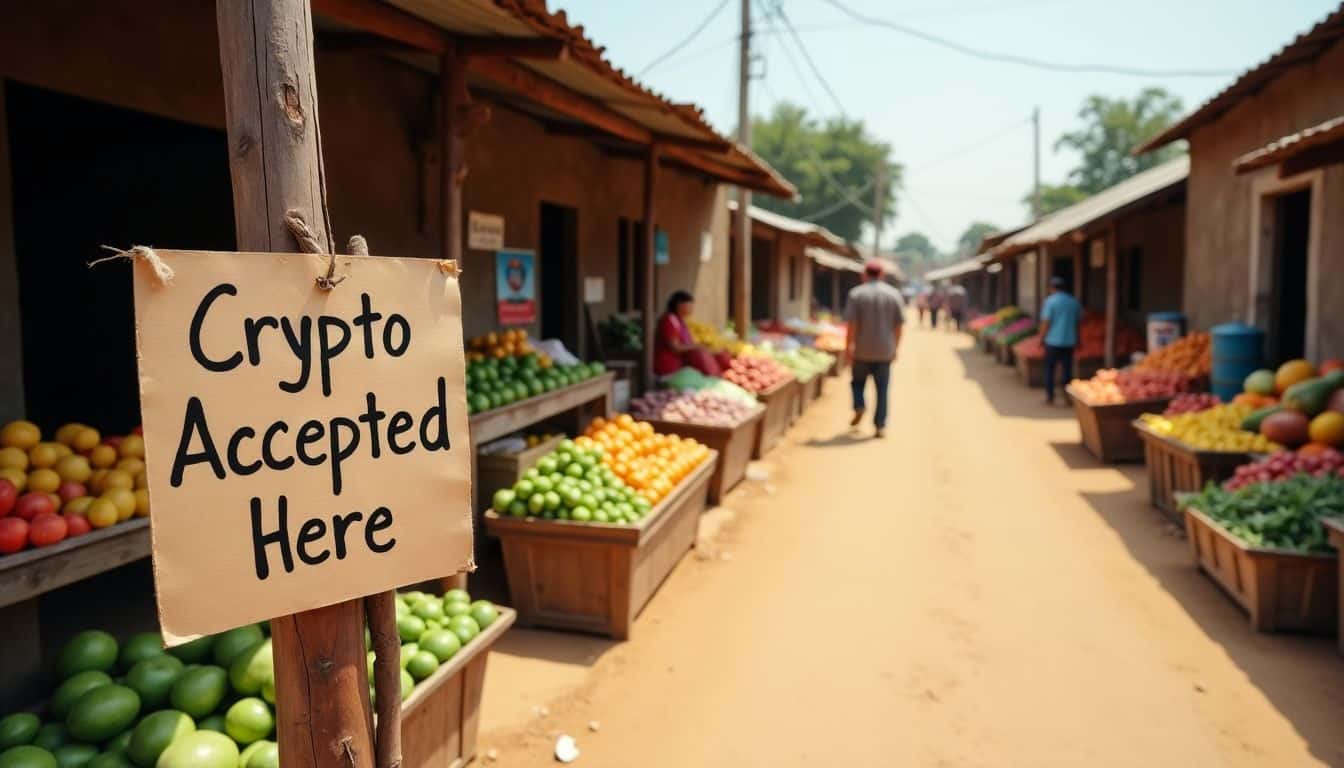
Perhaps one of the most powerful practical uses of cryptocurrency is its role in emerging markets. In countries with unstable economies and limited access to banking, crypto provides a crucial lifeline for millions of people.
Financial inclusion
Cryptocurrency is a powerful tool for financial inclusion. According to the World Bank, about 1.4 billion adults globally do not have a bank account. High fees, long distances to bank branches, and lack of proper documentation are common barriers.
With crypto, all you need is a basic smartphone and an internet connection. People can store value, make payments, and access financial services without needing a bank. I’ve seen stories of farmers in Africa who now convert crypto to cash to buy supplies, completely bypassing a broken banking system.
This ability to participate in the global economy is life-changing. Countries like Nigeria, Vietnam, and the Philippines consistently rank among the highest in the world for grassroots crypto adoption, according to research firm Chainalysis, because it solves real, everyday problems for their citizens.
Alternative to unstable local currencies
Beyond just access, crypto provides stability in countries with runaway inflation. In places like Argentina and Turkey, where the local currency can lose a significant portion of its value in a short time, Bitcoin and stablecoins offer a way for people to protect their savings.
Instead of watching their wealth disappear, citizens can convert their money into a digital asset that is not controlled by their local government’s monetary policy. Stablecoins like Tether (USDT) or USDC, which are pegged to the U.S. dollar, are particularly popular for this purpose.
For millions, blockchain technology isn’t just an investment, it’s a necessary tool for survival. It provides a reliable store of value when their own government-issued money fails them.
People Also Ask
What makes cryptocurrency different from regular money?
Unlike physical currency or fiat money like the dollar or euro, cryptocurrency exists only in digital form. It uses blockchain technology and cryptographic systems to secure transactions. Bitcoin, created by the pseudonymous Satoshi Nakamoto, was the first. These digital coins work on decentralized networks without banks or governments controlling them. While legal tender is backed by governments, crypto’s value comes from user trust and network effects.
How can I use cryptocurrency in everyday life?
You can use a crypto debit card from companies like Crypto.com or Coinbase to spend your holdings anywhere that accepts Visa or Mastercard. You can also use it for peer-to-peer payments through apps like Cash App. Many online retailers accept crypto through processors like BitPay, and you can send money internationally faster and cheaper than with a traditional wire transfer.
What are smart contracts and DeFi?
Smart contracts are self-executing agreements built on blockchains like Ethereum. They automatically run when certain conditions are met, without needing an intermediary. Decentralized Finance (DeFi) uses these contracts to create an entire ecosystem of financial services without banks. On DeFi platforms like Aave, you can lend, borrow, and trade assets in a permissionless way.
Are cryptocurrencies safe from scams?
No financial system is 100% safe. Crypto scams are real and include phishing attacks, fake exchanges, and Ponzi schemes. The best protection is education and caution. Use a hardware wallet (like a Ledger or Trezor) for security, enable two-factor authentication on exchanges, and never share your private keys or seed phrase. Be wary of anyone promising guaranteed high returns.
How does cryptocurrency affect taxes?
In the United States and many other countries, crypto is treated as property for tax purposes by agencies like the IRS. This means you may owe capital gains tax when you sell, trade, or spend your crypto at a profit. Every transaction can be a taxable event. It’s crucial to keep detailed records for tax reporting, and many people use specialized crypto tax software to help with this.
What’s the future of cryptocurrency and government money?
The future is likely a mix of both. Many governments are researching or developing Central Bank Digital Currencies (CBDCs), which are digital versions of their national currency. Unlike Bitcoin, a CBDC would be centralized and controlled by the government. These will likely coexist with decentralized cryptocurrencies, creating a more diverse and complex financial landscape.
Disclosure: The information provided is for informational purposes only and does not constitute financial advice. The author shares personal experiences and insights from involvement in the cryptocurrency space; readers are encouraged to conduct independent research and consult a certified financial professional before making any investment decisions. Affiliate links and sponsorships may be present.
References
https://paxful.com/university/en/crypto-use-cases-in-everyday-life
https://gamespad.io/play-to-earn-everything-you-need-to-know/
https://webisoft.com/articles/blockchain-applications/
https://www.mdpi.com/1999-5903/14/11/321
https://www.britannica.com/money/crypto-use-cases
https://paxful.com/university/crypto-use-cases-in-everyday-life
https://www.investopedia.com/terms/c/cryptocurrency.asp
https://hedera.com/learning/smart-contracts/smart-contract-use-cases
https://www.debutinfotech.com/blog/top-defi-use-cases (2024-11-27)
https://www.ulam.io/blog/is-cryptocurrency-anonymous (2024-12-30)
https://ninjapromo.io/the-ultimate-guide-to-real-estate-tokenization
https://www.britannica.com/money/nft-use-cases (2025-01-27)
https://evertas.com/news/the-role-of-cryptocurrency-in-enhancing-financial-inclusion/ (2024-10-29)
https://www.mdpi.com/1911-8074/17/10/467
https://www.sciencedirect.com/science/article/pii/S1566014122000796
